

The contract has to match the machine, not the other way round
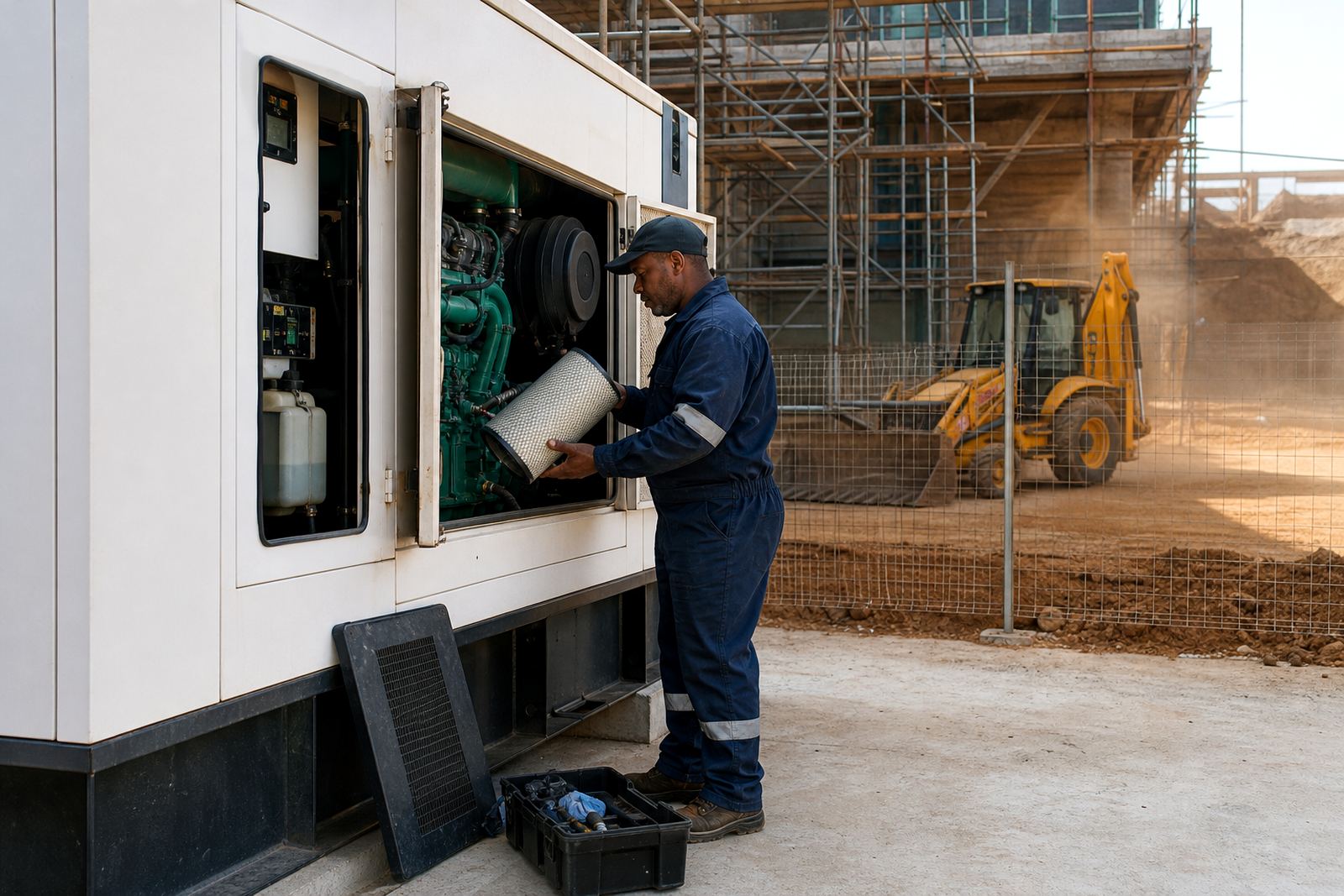
Standby sets that carry a business through outages need different attention to prime units that run longer hours, more often and under varying loads. A contract should reflect the engine size, hours worked, fuel quality, ventilation, salt air on coastal sites, dust on inland worksites and the way your plant is operated during load shedding or peak demand. We handle service contracts from Midrand across Johannesburg, Pretoria, Centurion, Sandton, Durban, Cape Town and Polokwane, with coverage shaped for commercial and industrial users.
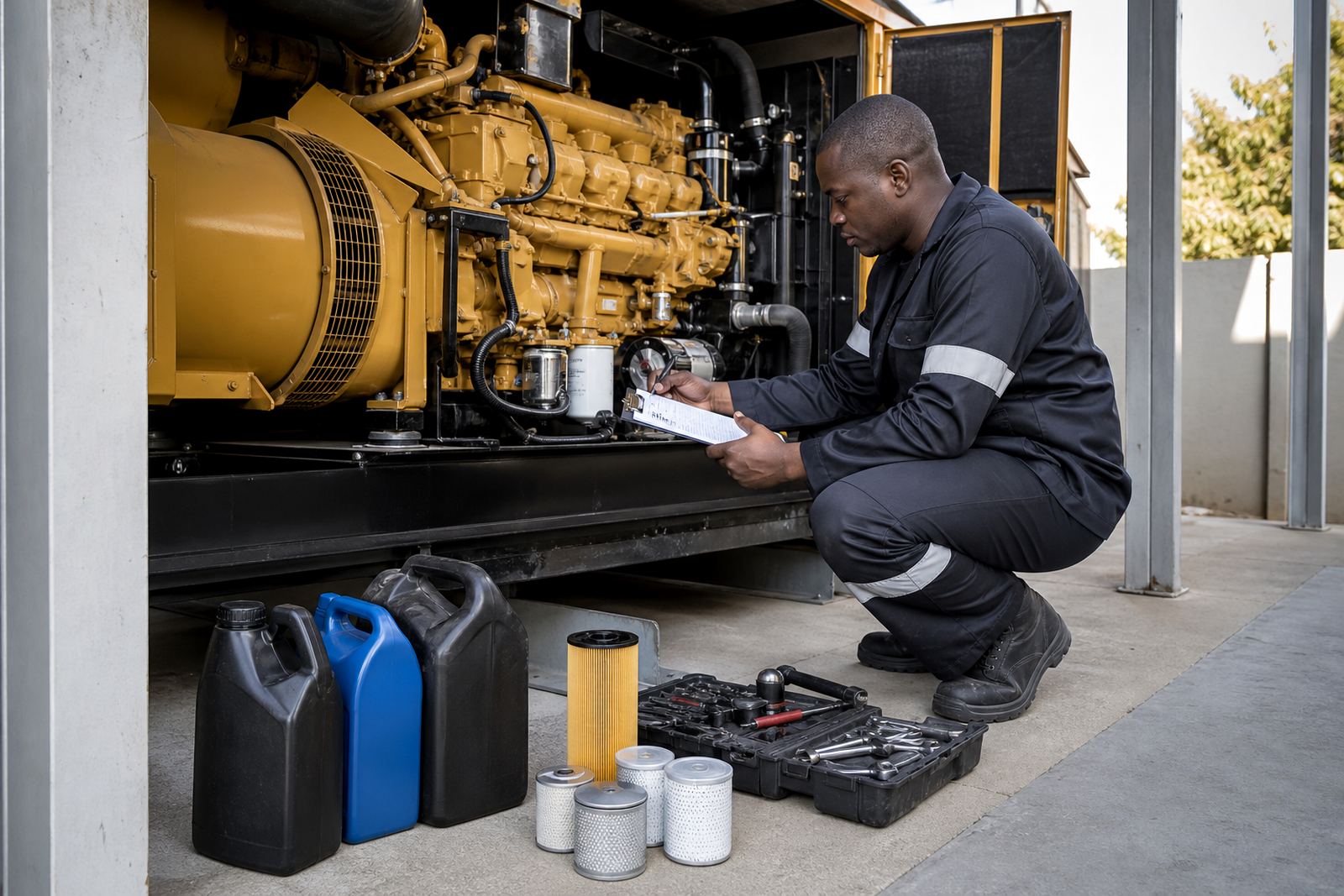
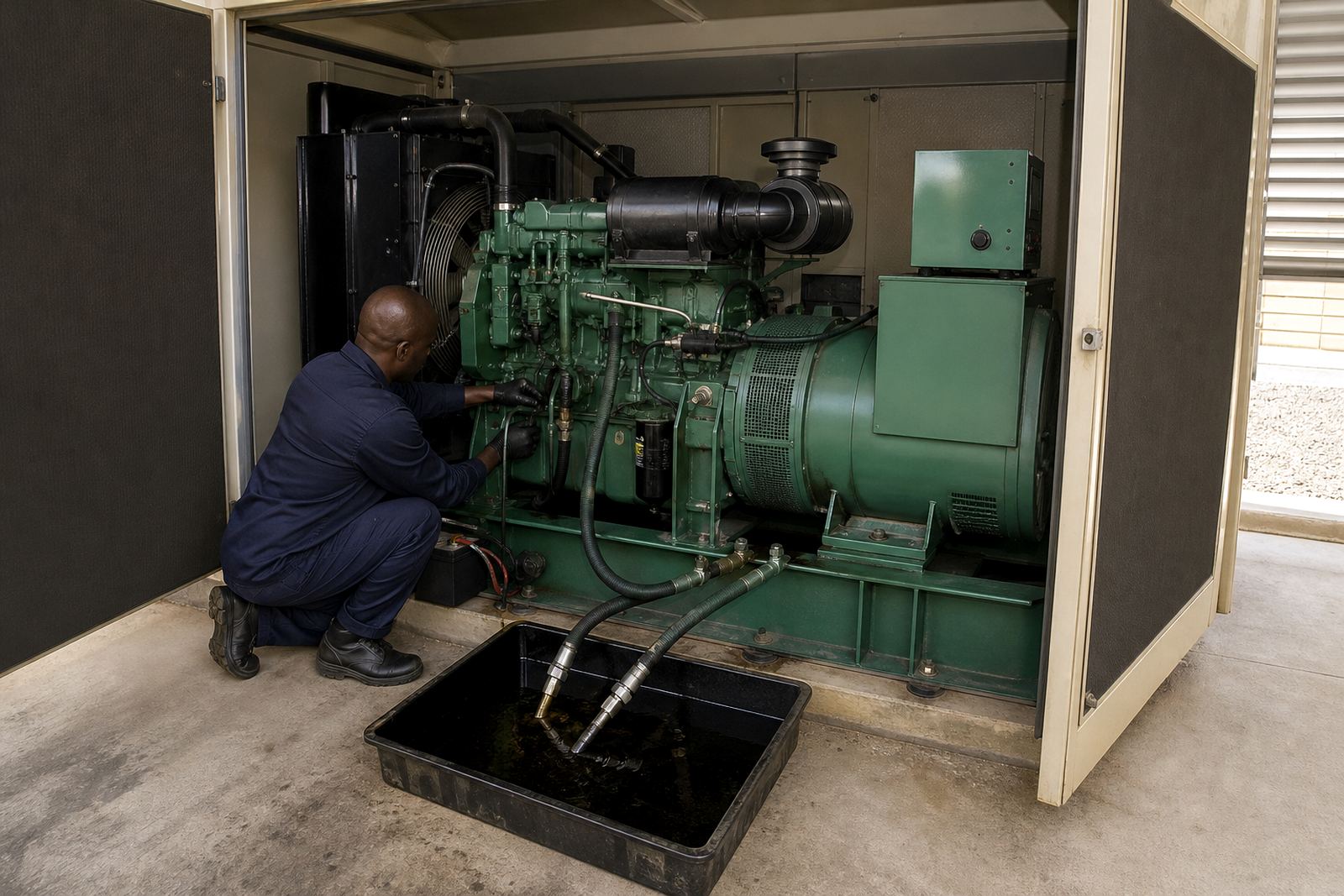
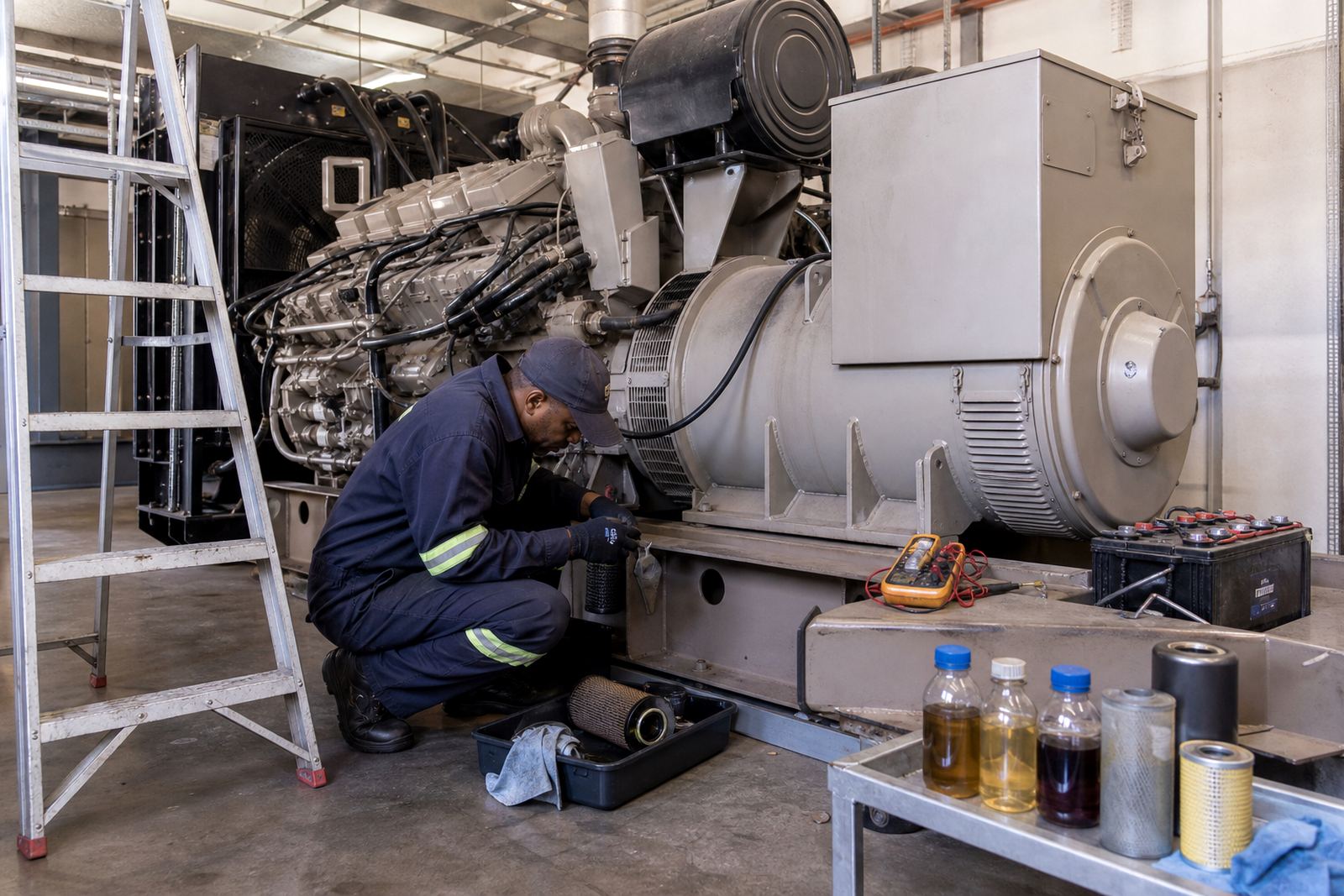
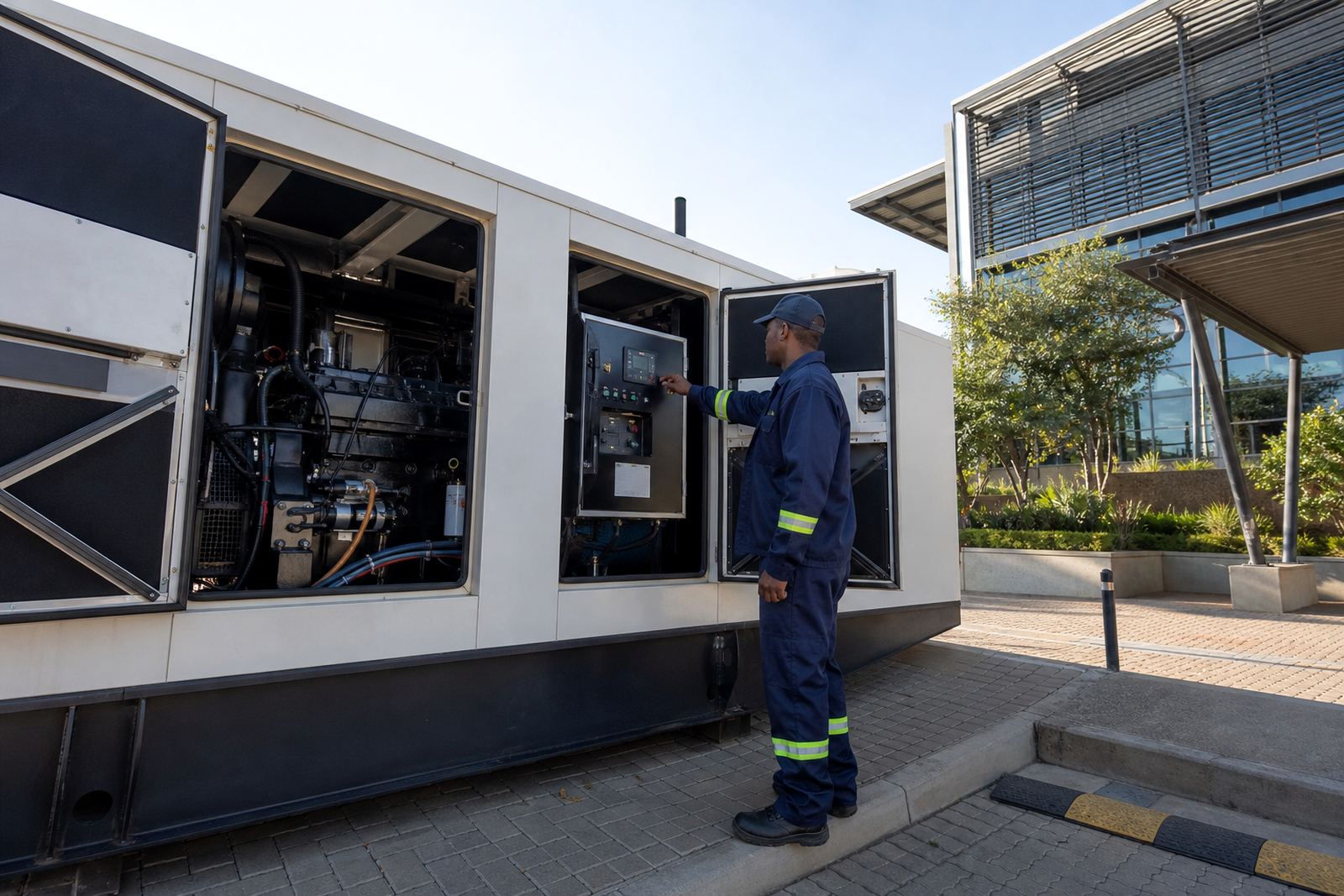
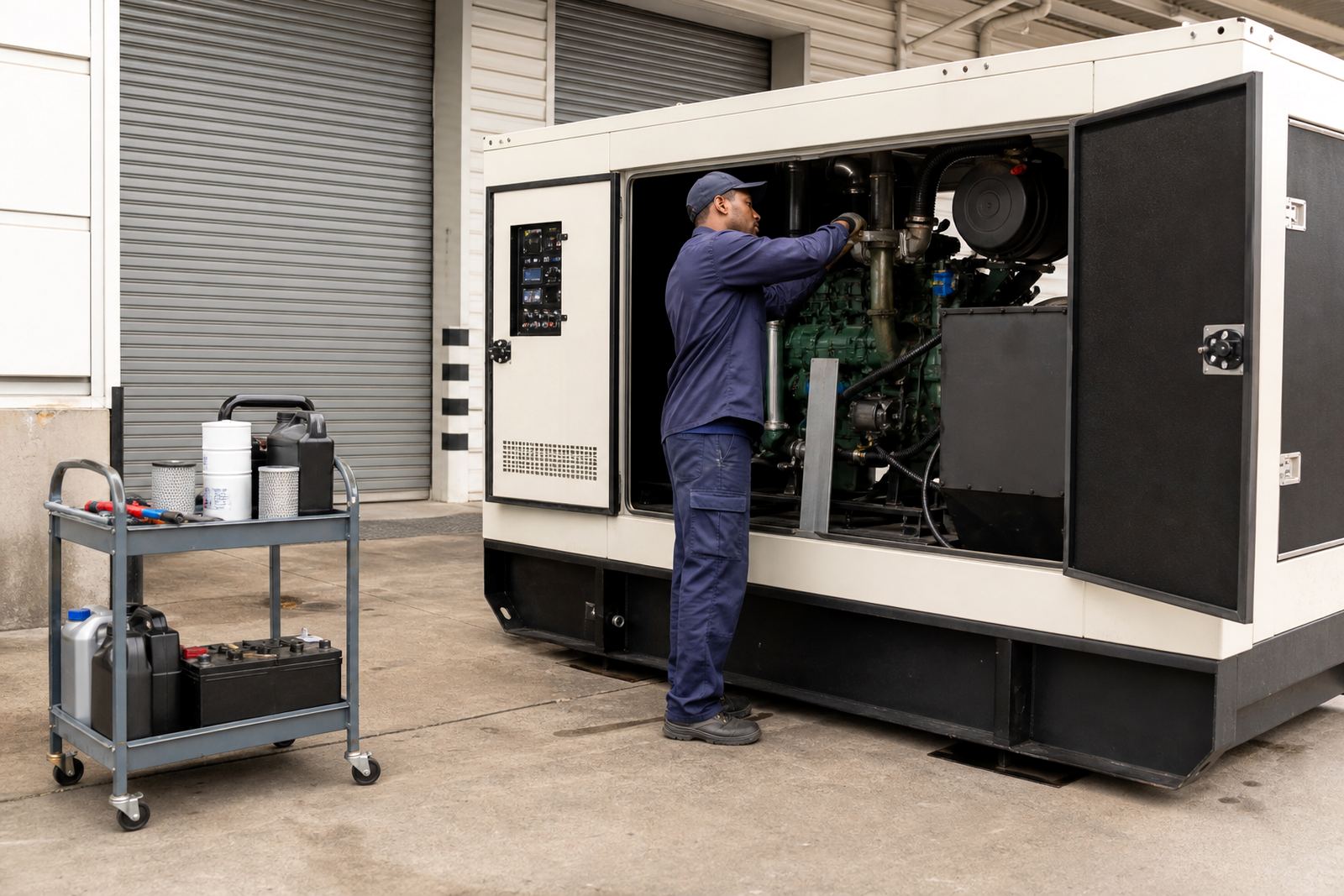
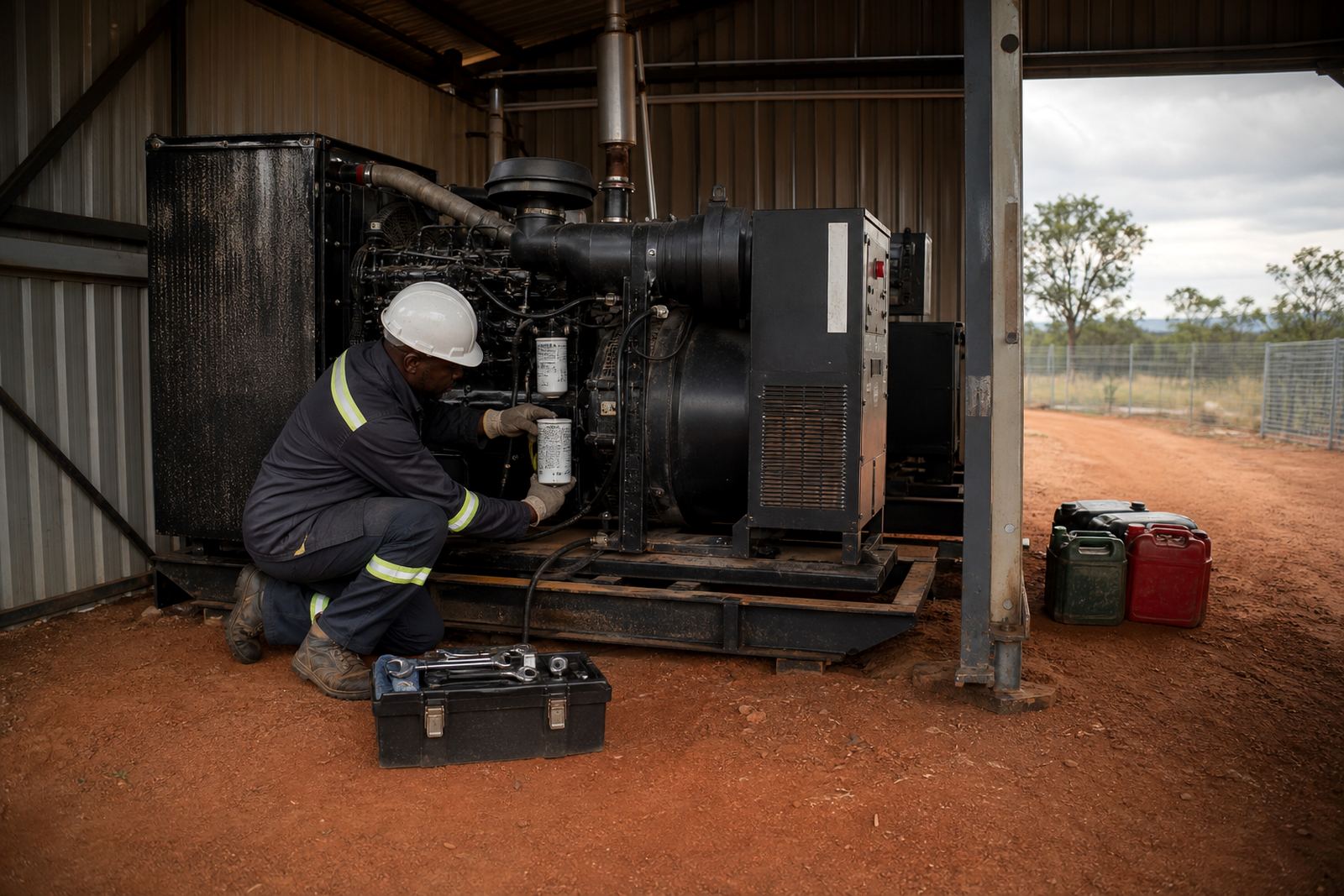
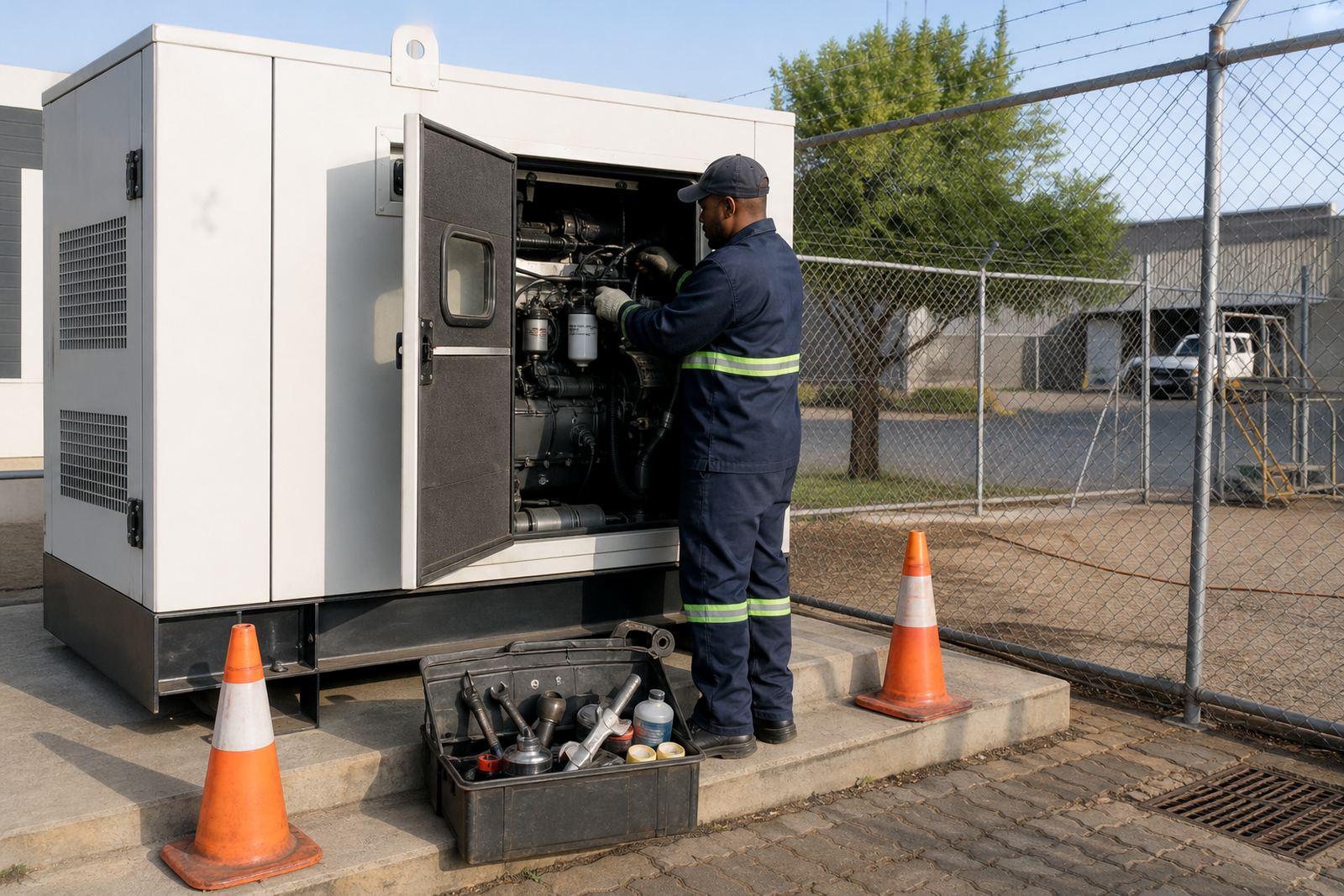
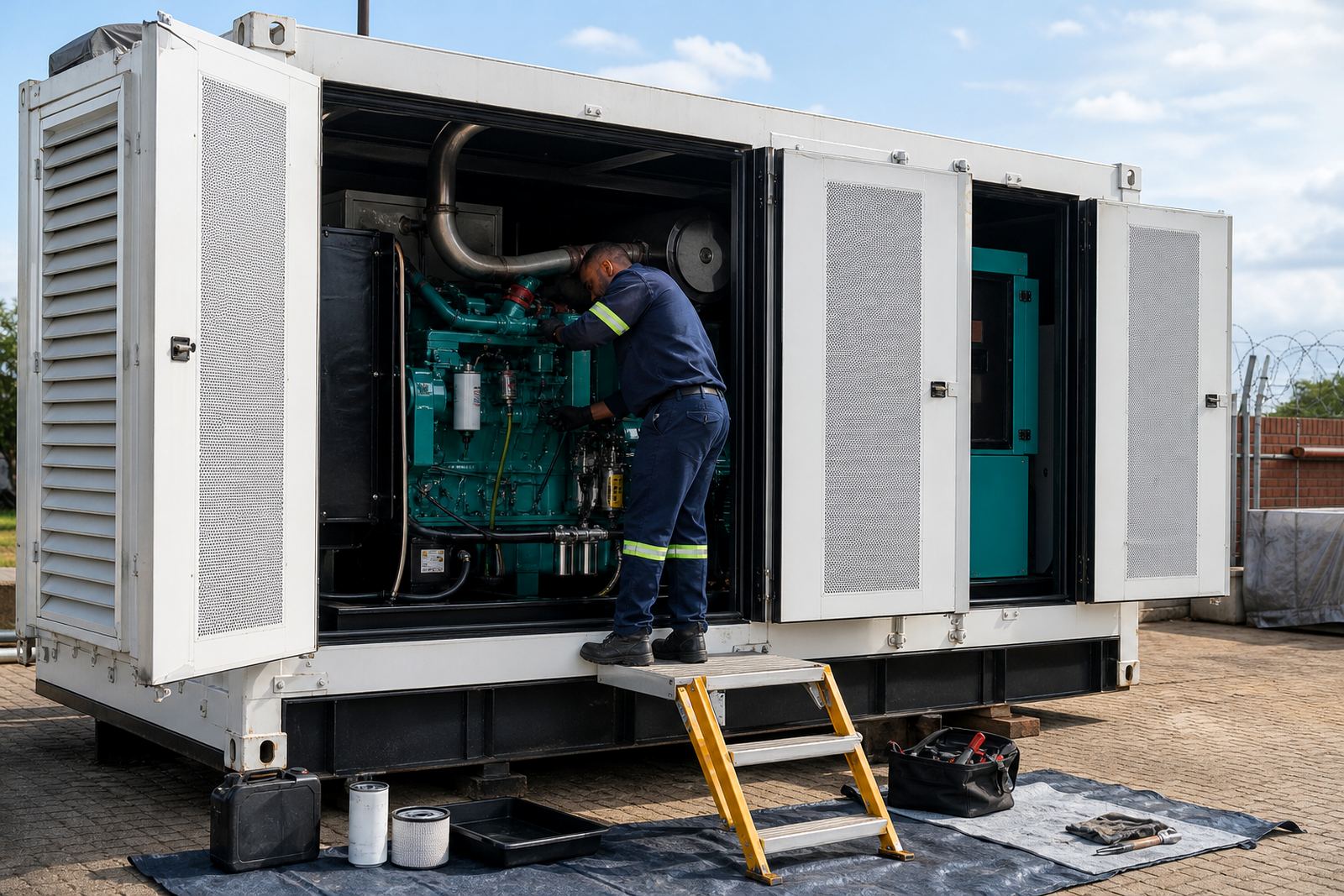
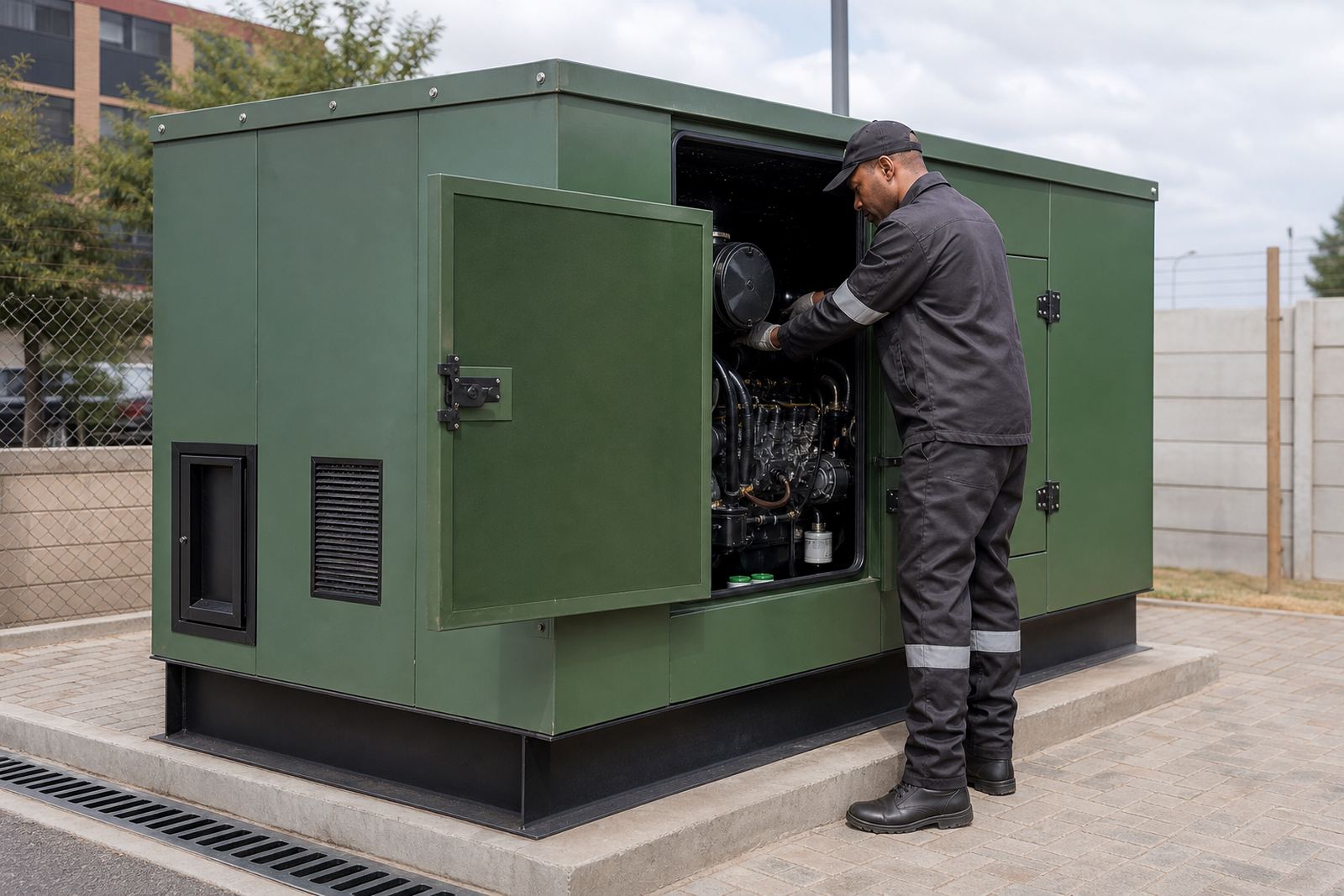
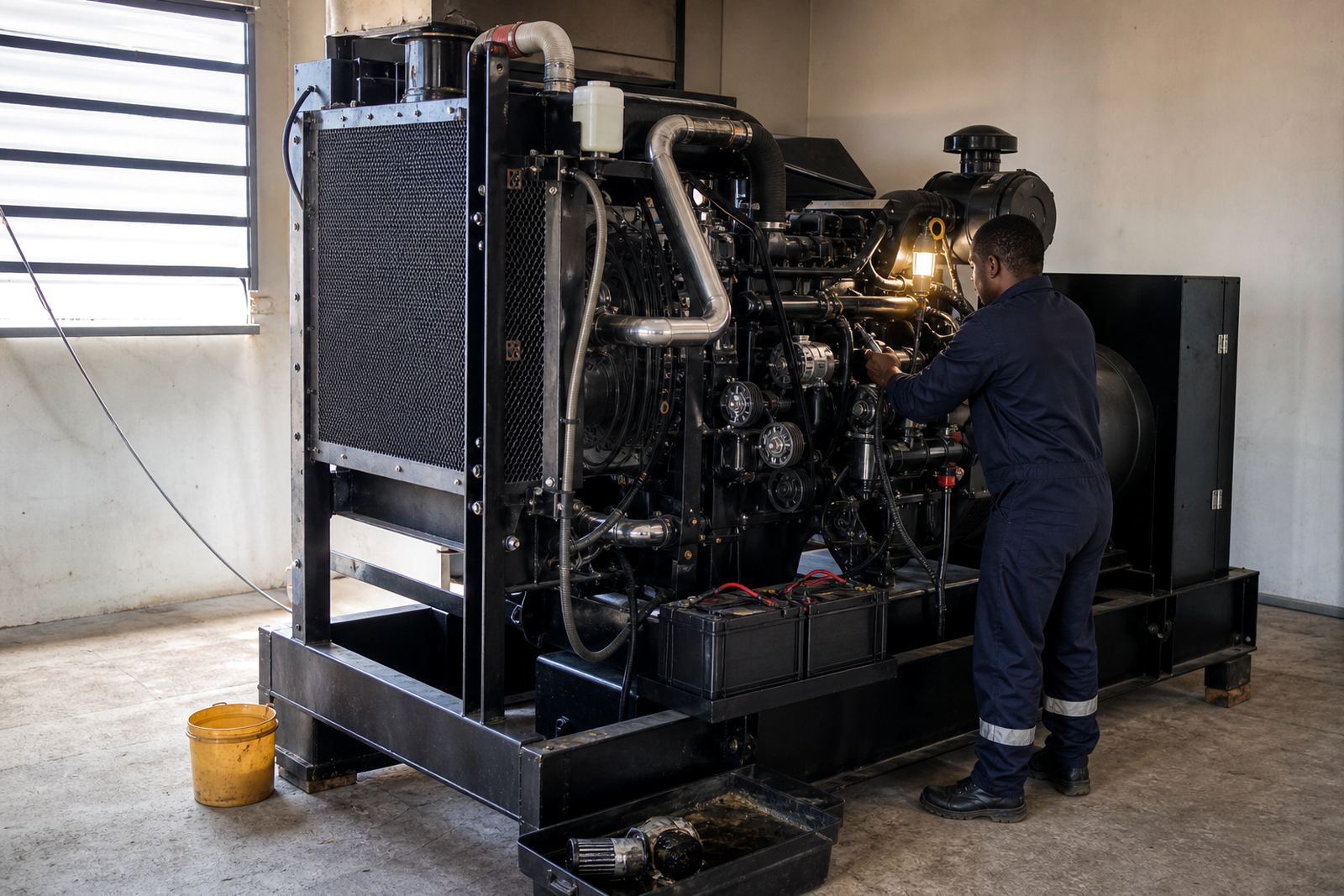
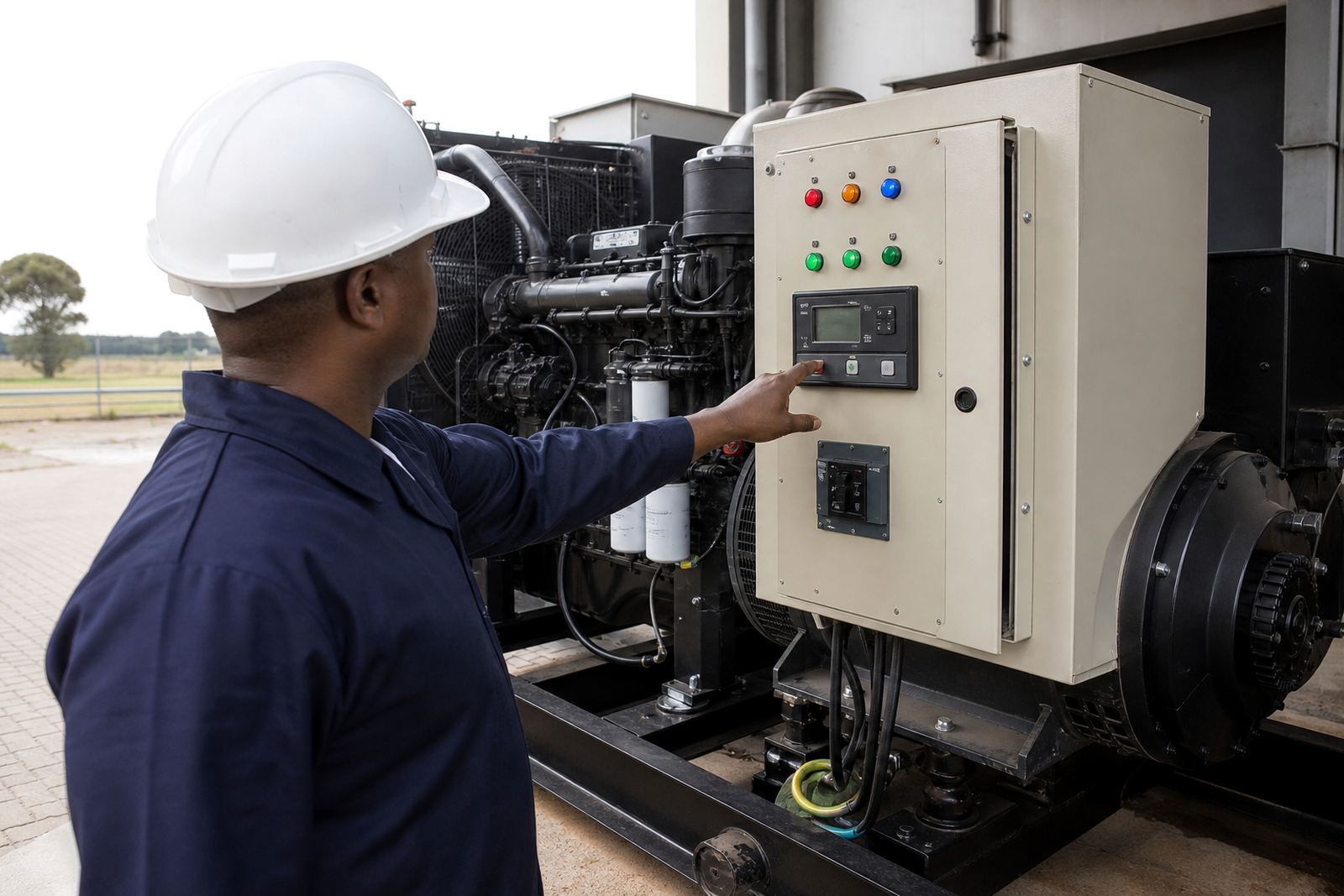
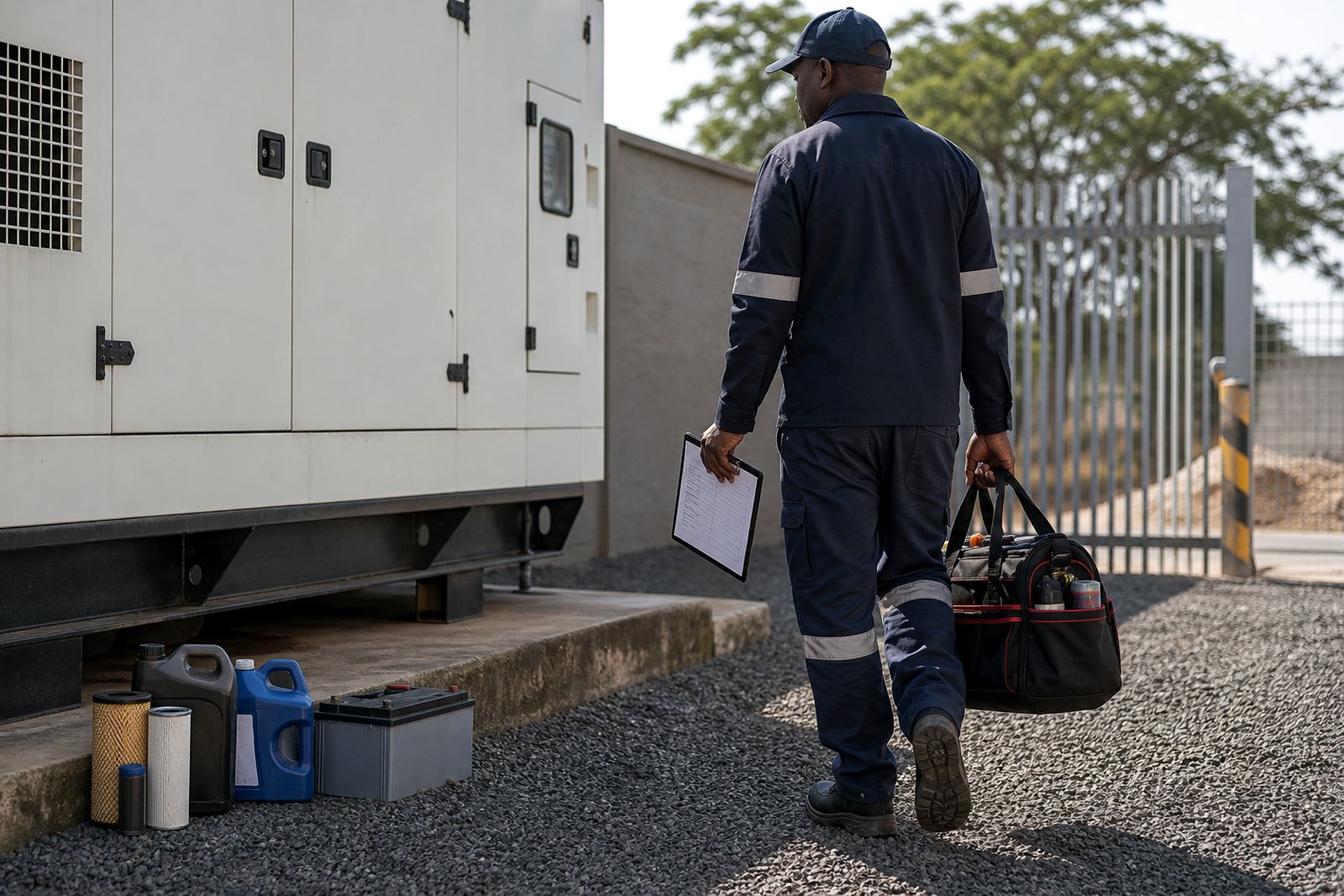
For many sites, the right arrangement starts with a site review and a look at the service history. From there we set a practical schedule for oil changes, filter replacements, coolant checks, battery testing and general condition monitoring. That approach helps reduce repeated faults and keeps the unit ready when it is asked to carry the full building load.
What sits inside a proper maintenance contract
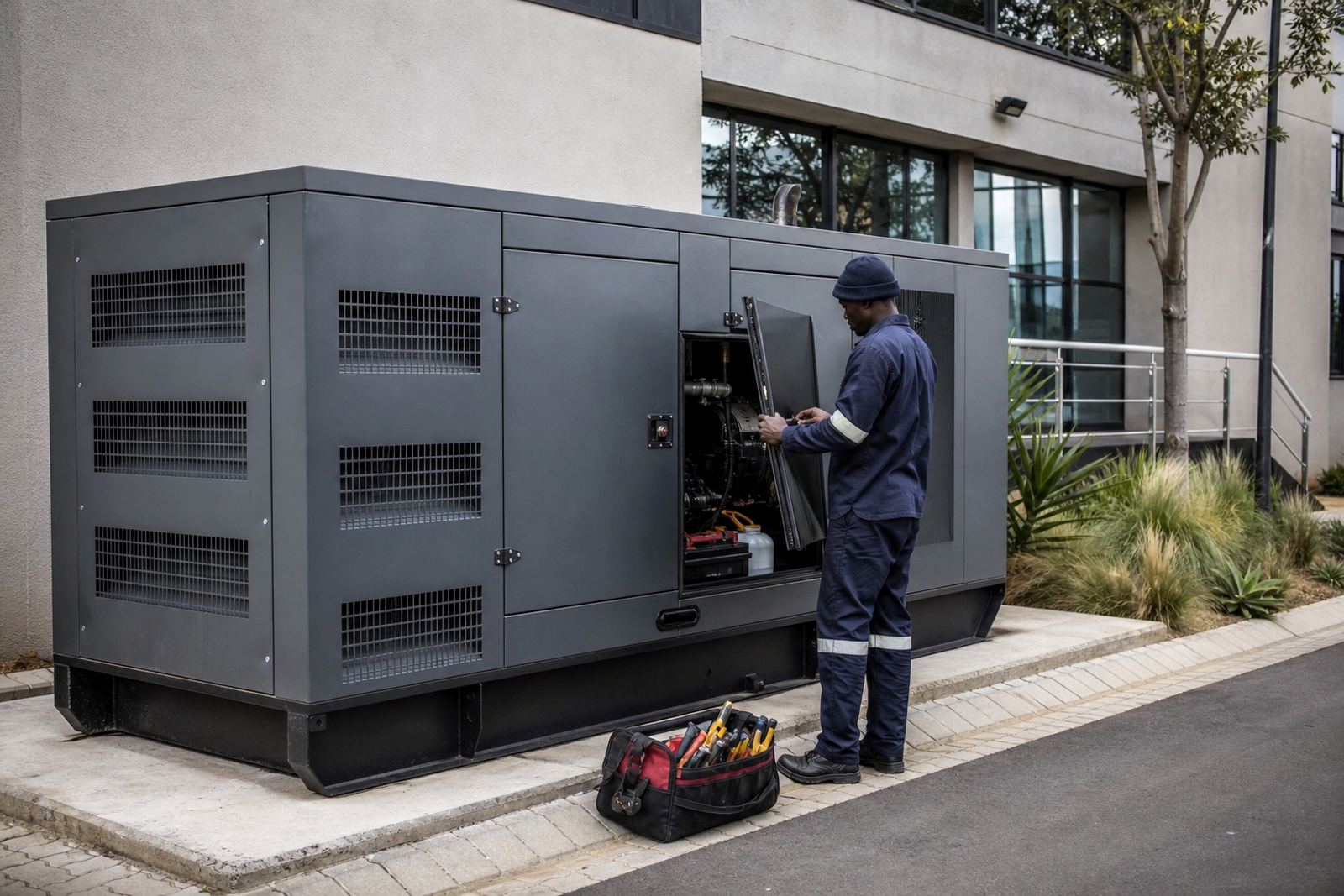
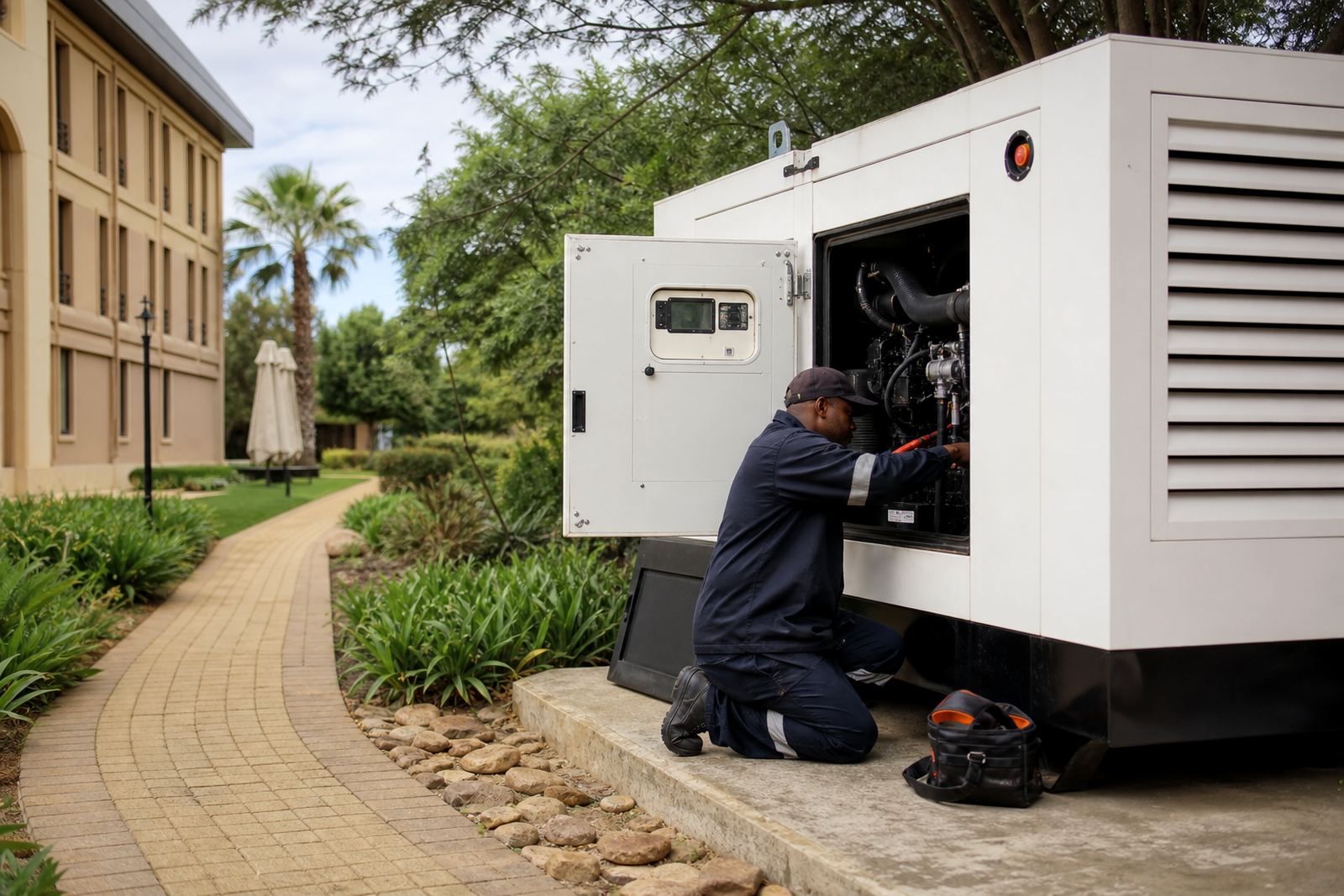
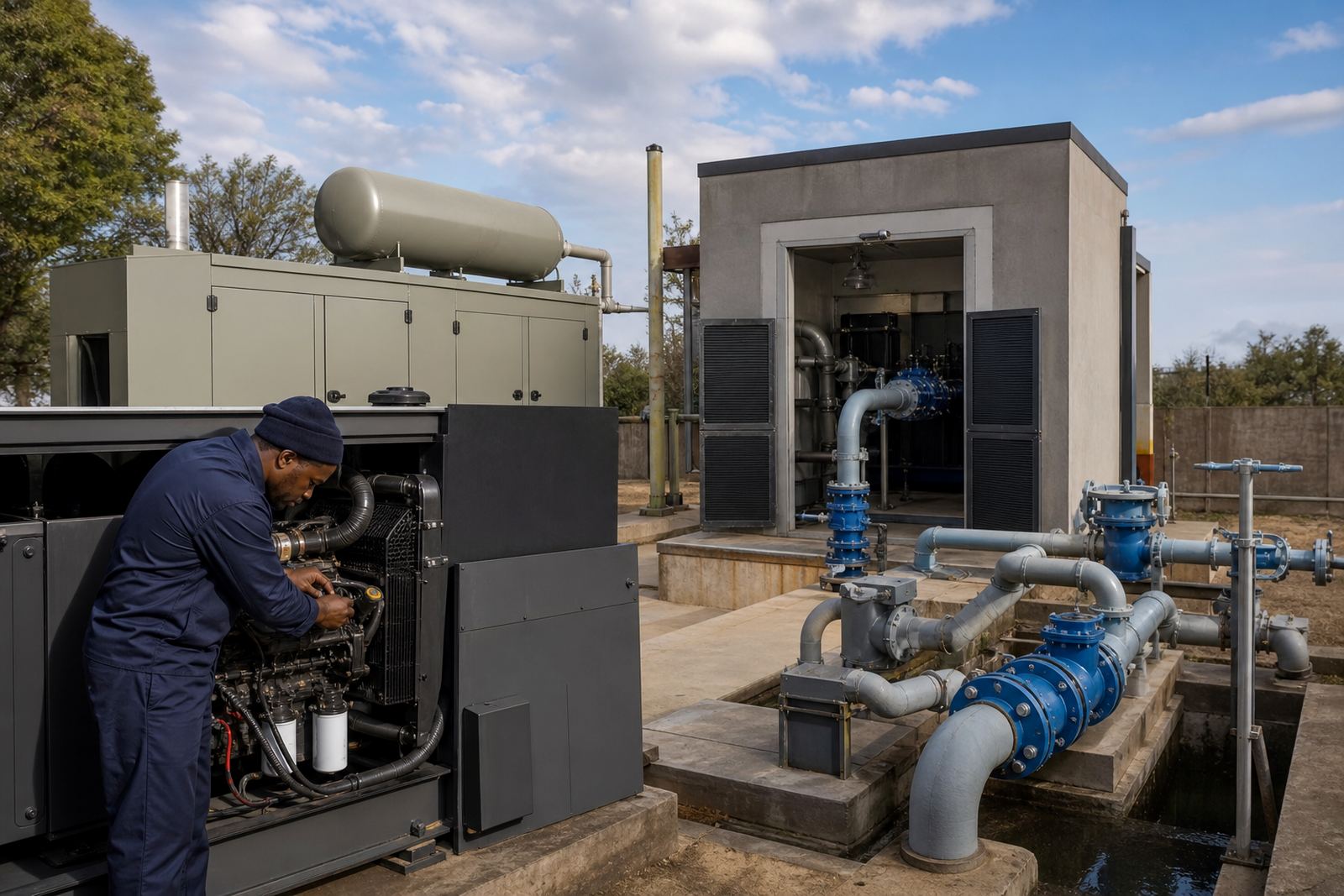
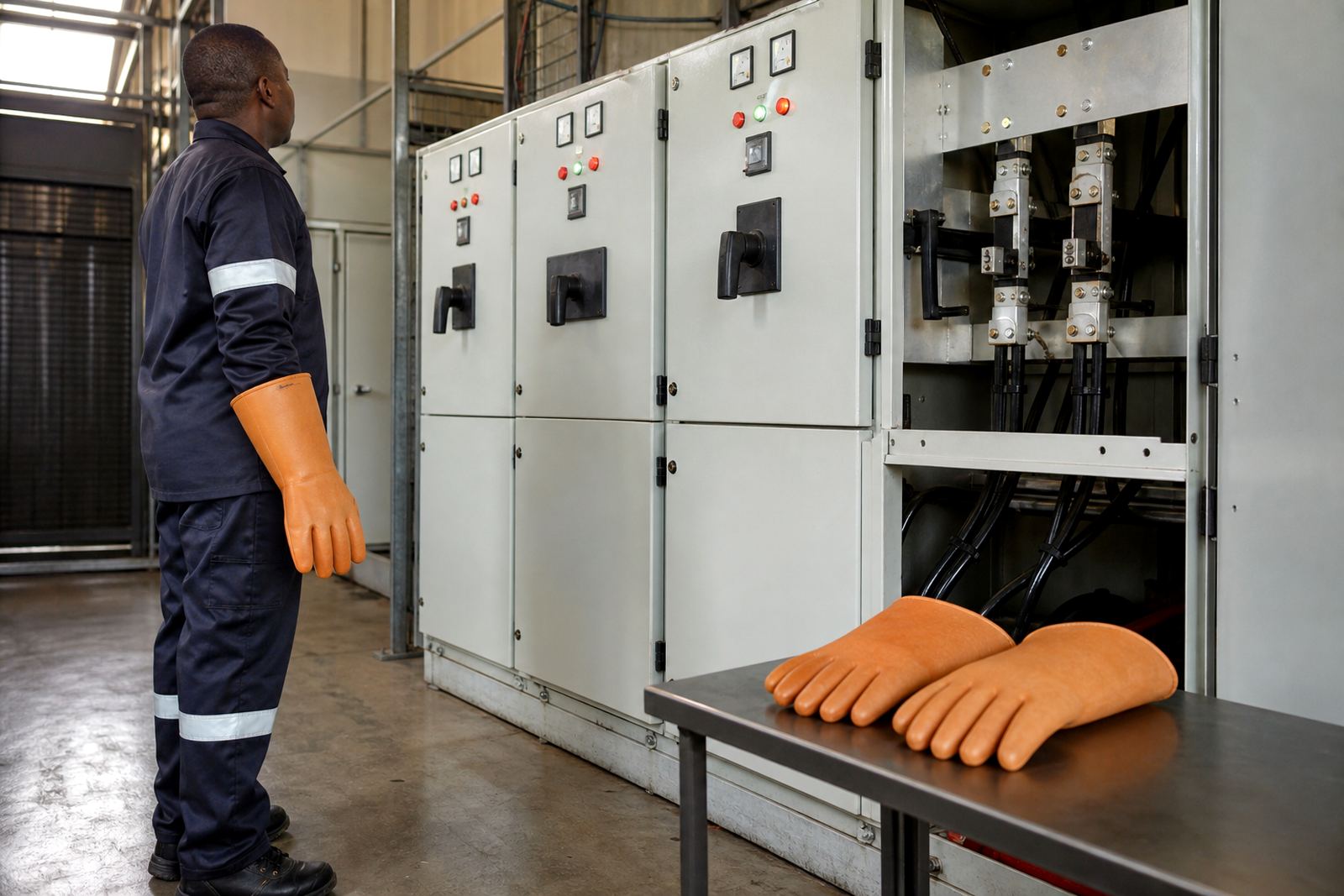
Our contracts can include routine servicing and planned inspections, with emergency support arranged around the needs of the site. Electrical work on alternators, changeover gear and related controls is only handled by qualified people in line with local regulations, because generator systems are not a place for guesswork. We also audit service records so the work done on site lines up with the hours shown and any fault trends that keep reappearing.
- Scheduled servicing at agreed intervals
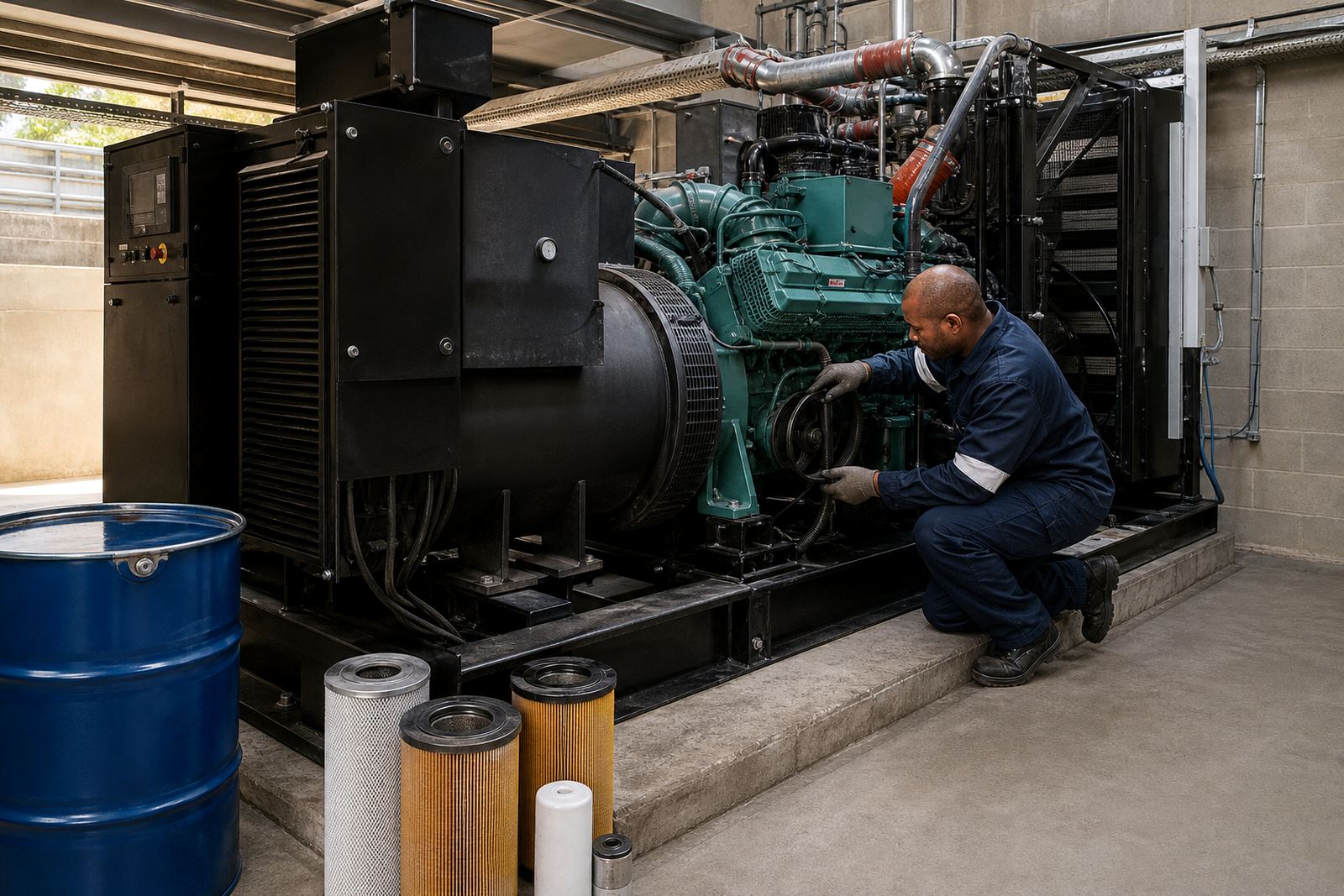
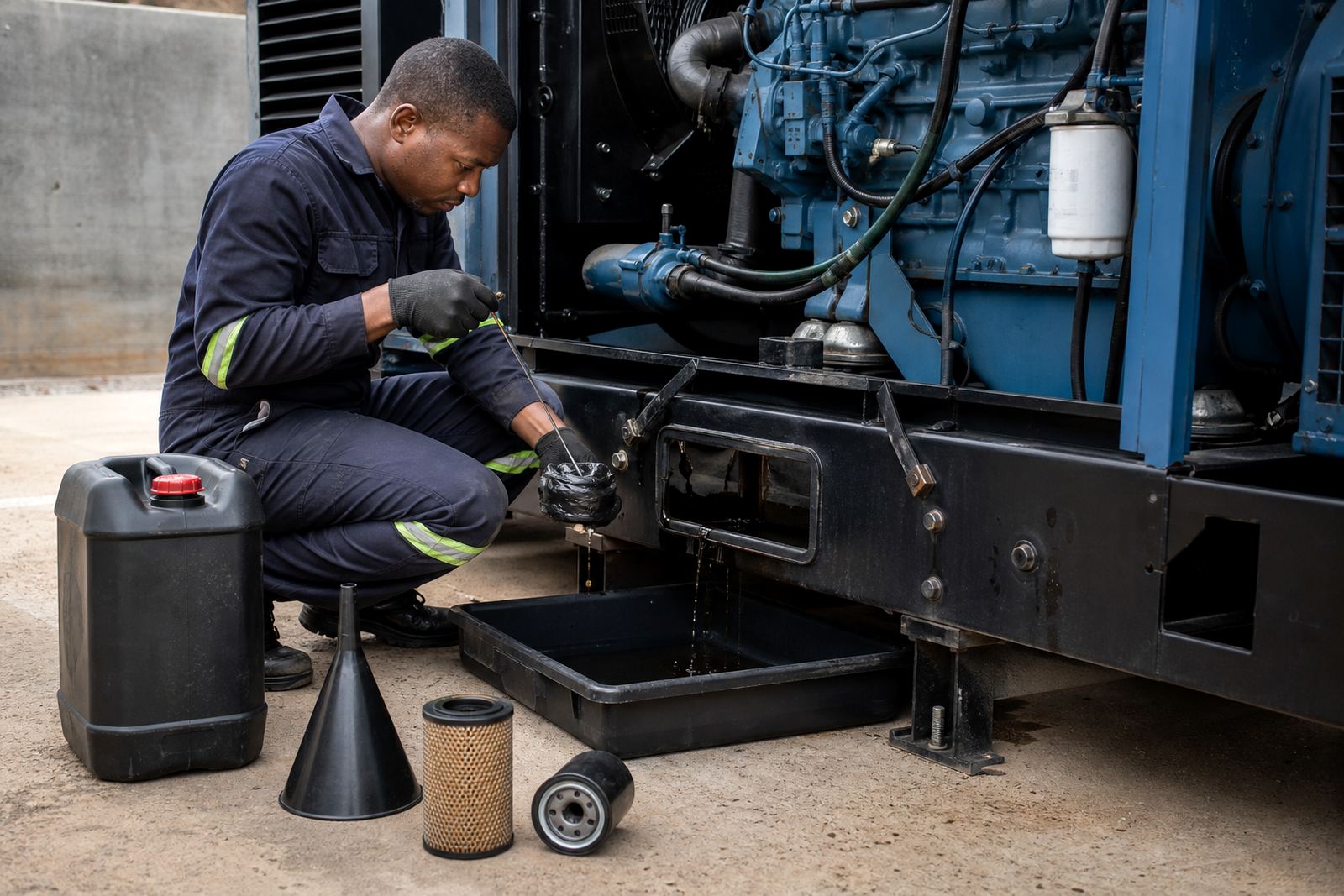
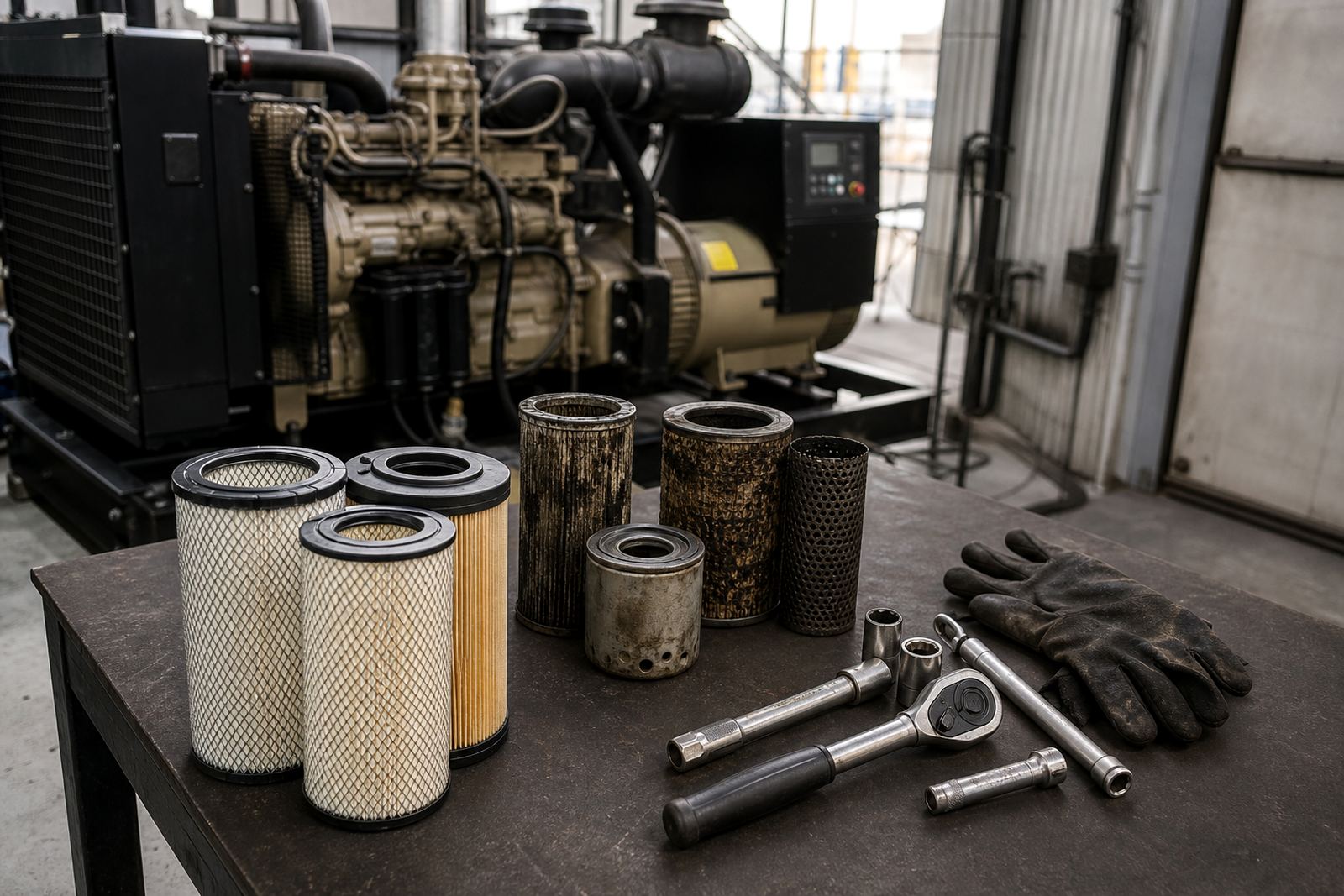
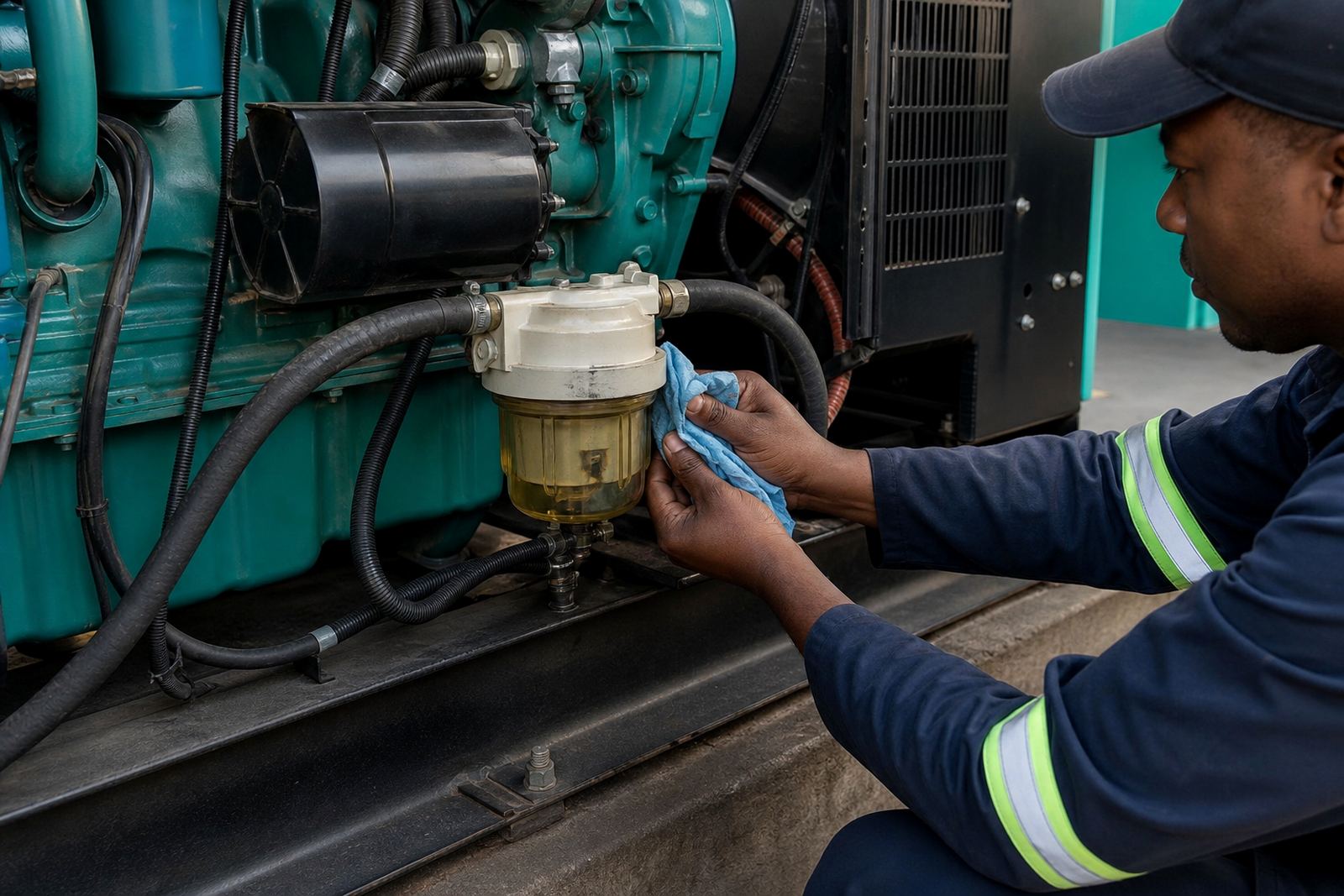
- Oil and filter changes
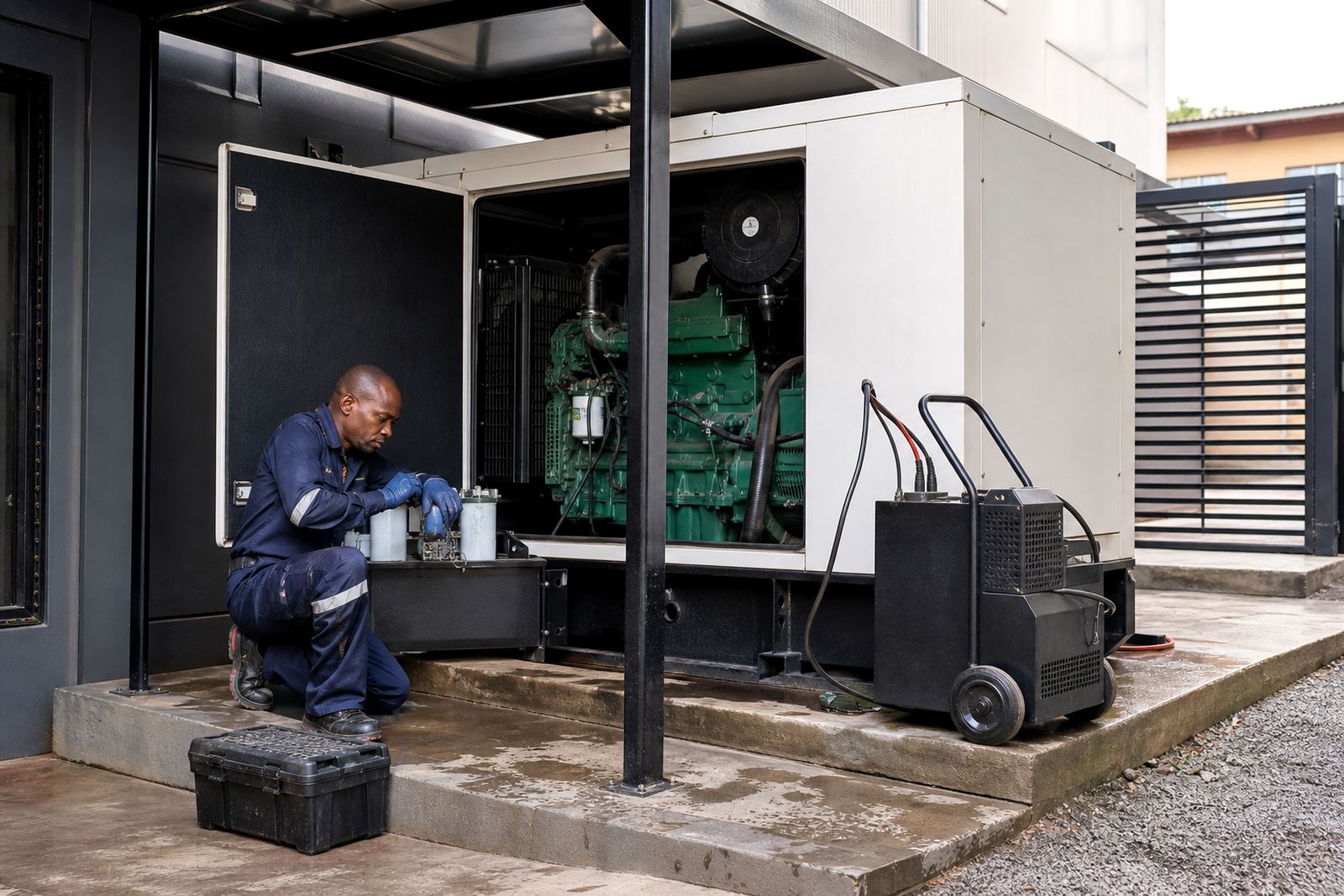
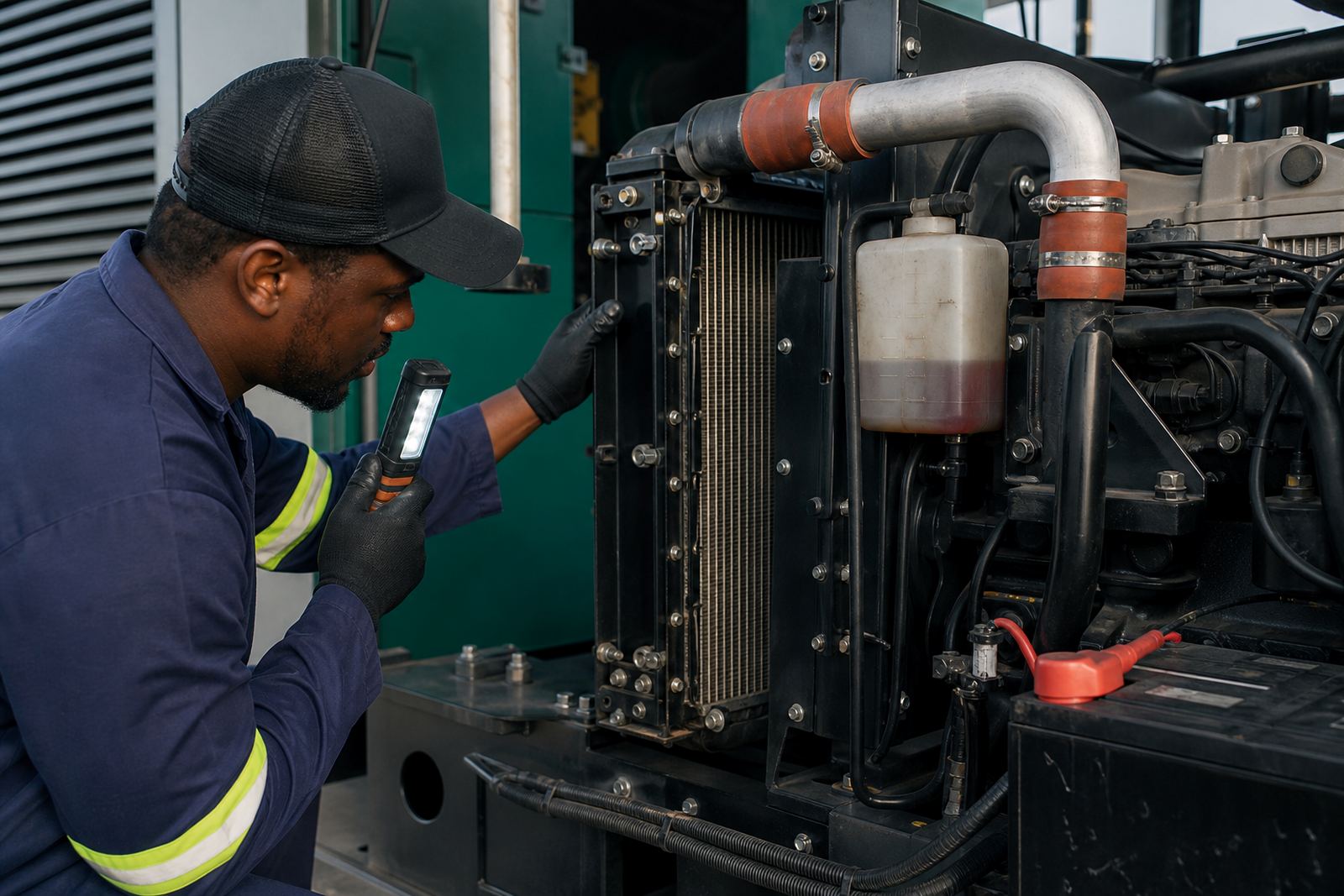
- Coolant system service and level checks
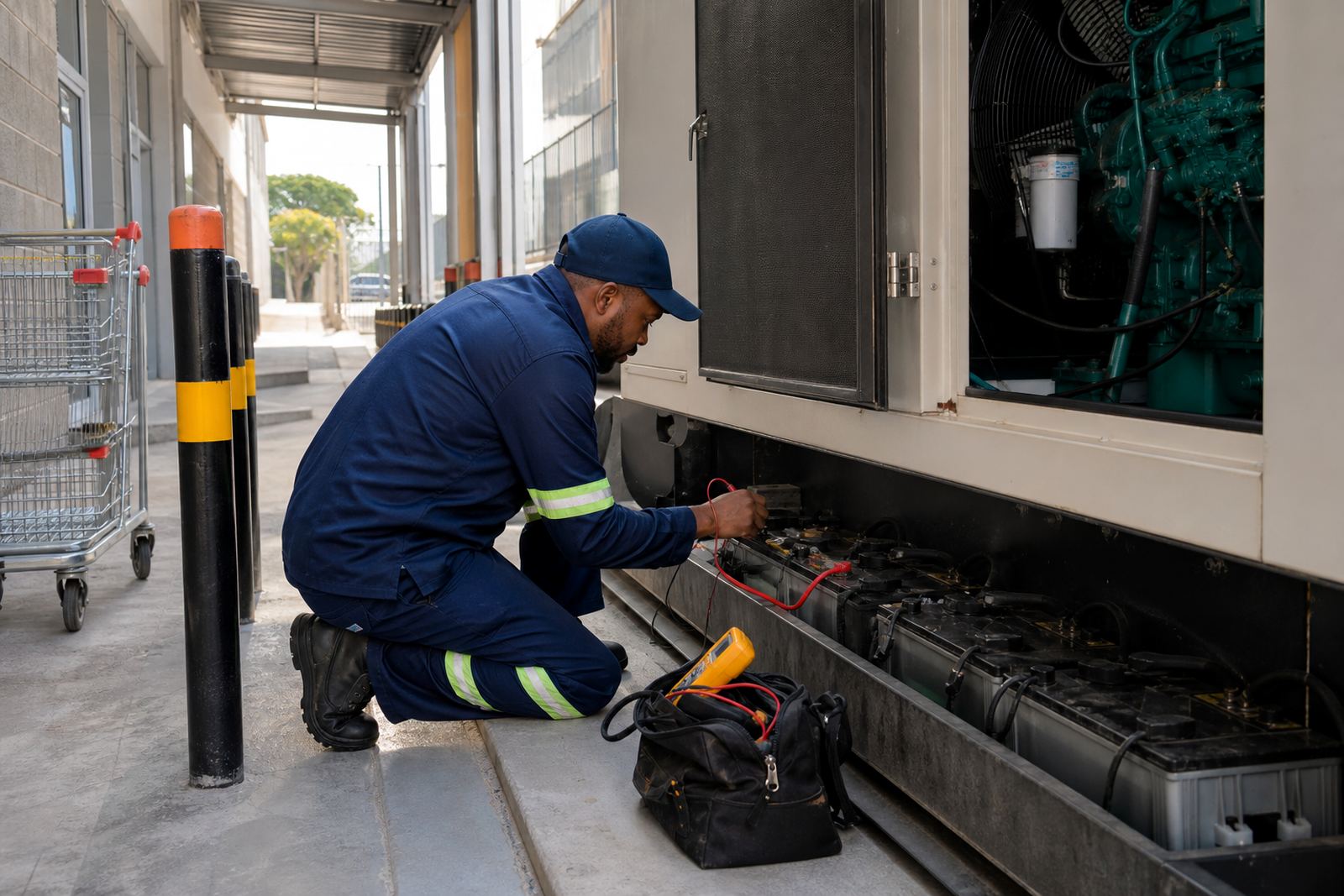
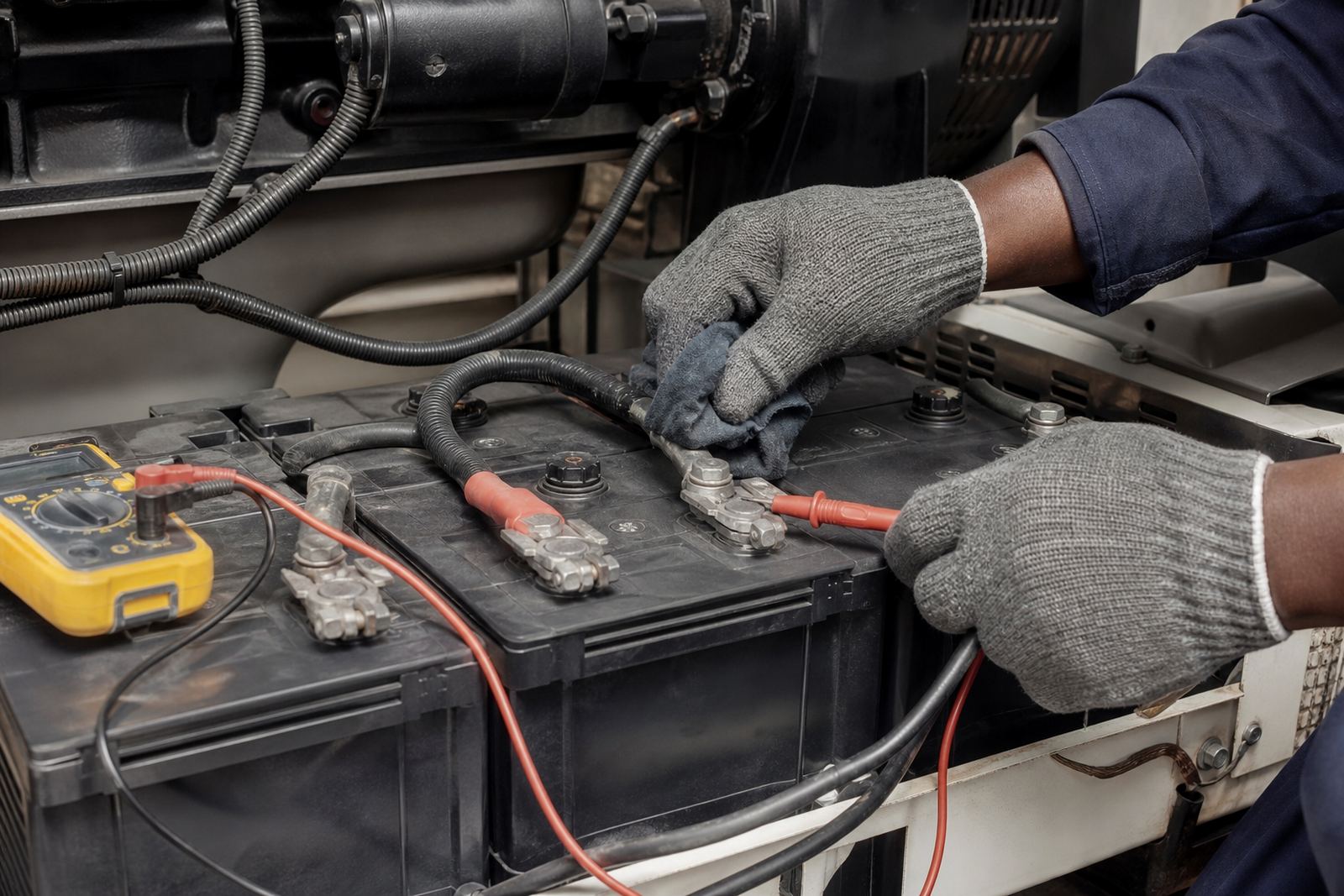
- Battery testing and starter system checks
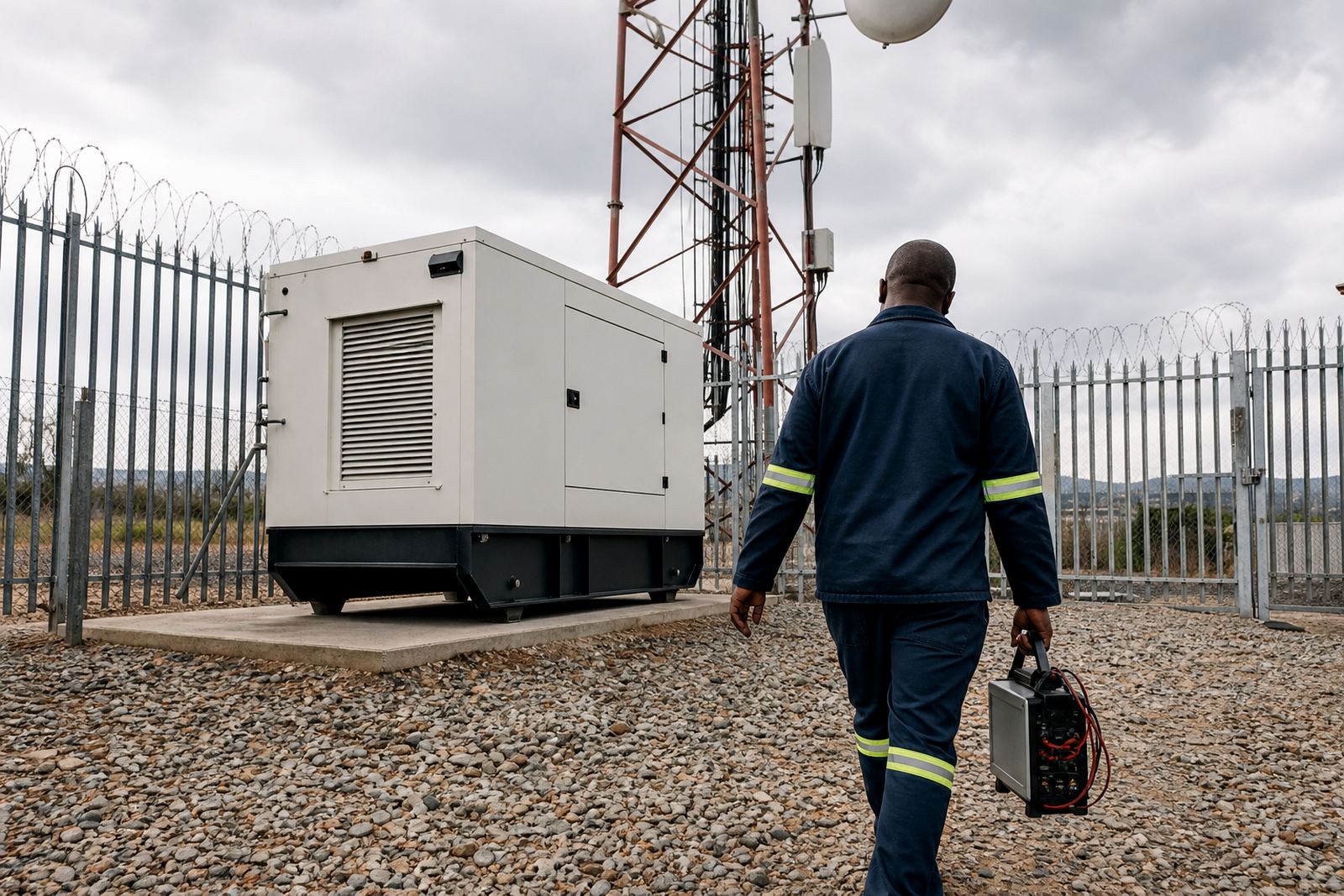
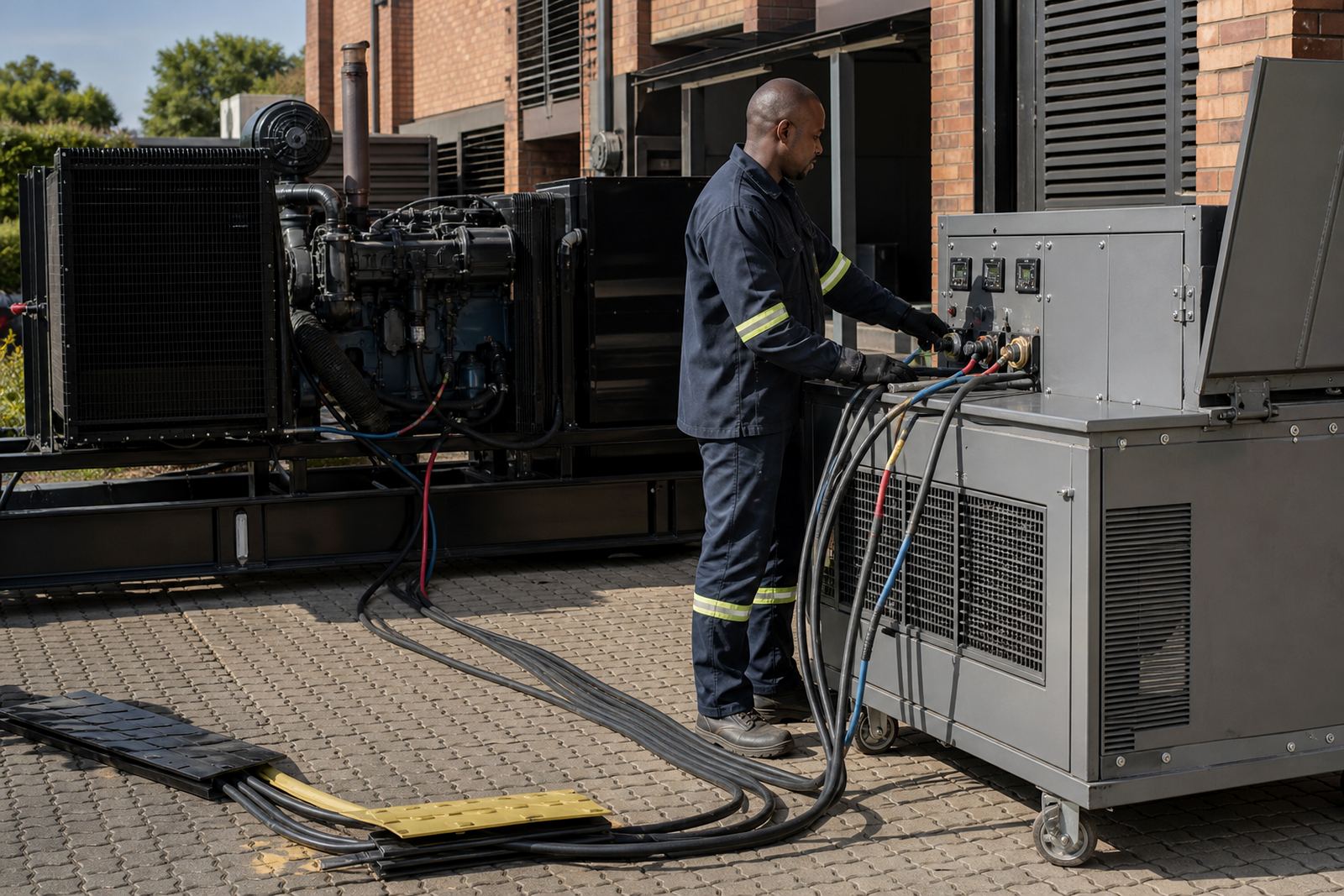
- Load bank testing for performance verification
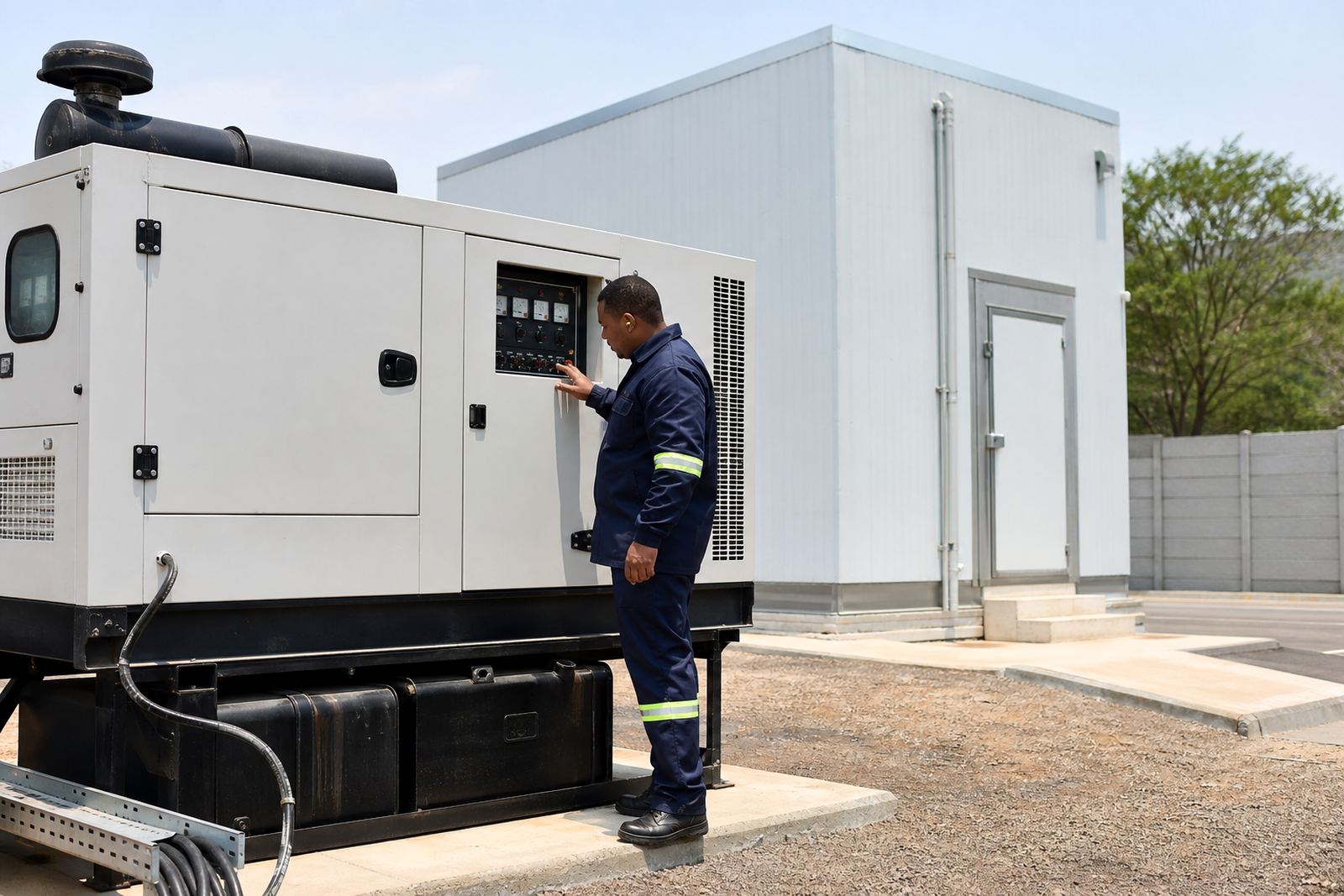
- Changeover switch checks and fault finding
- Fuel system repairs where the generator side needs attention
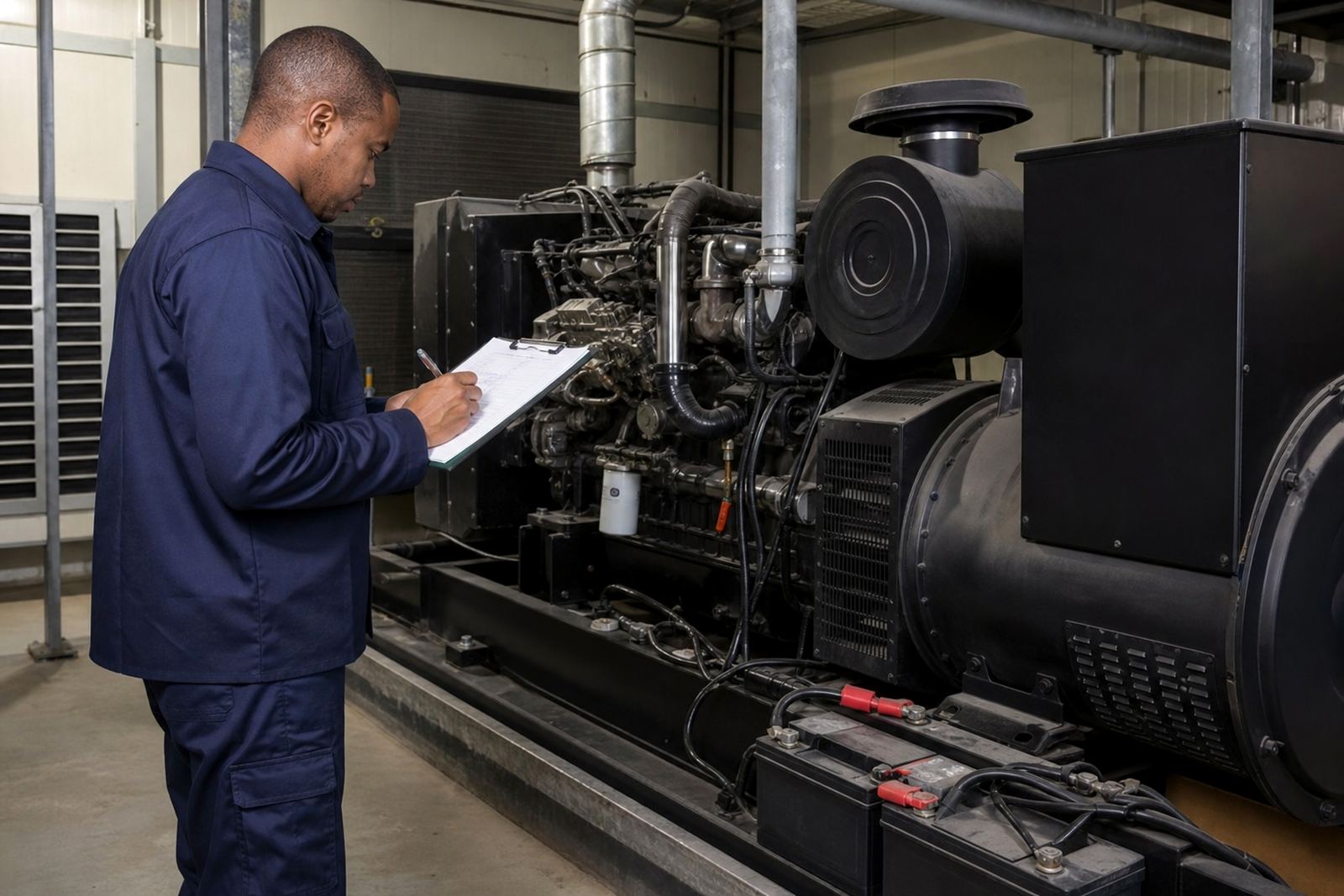
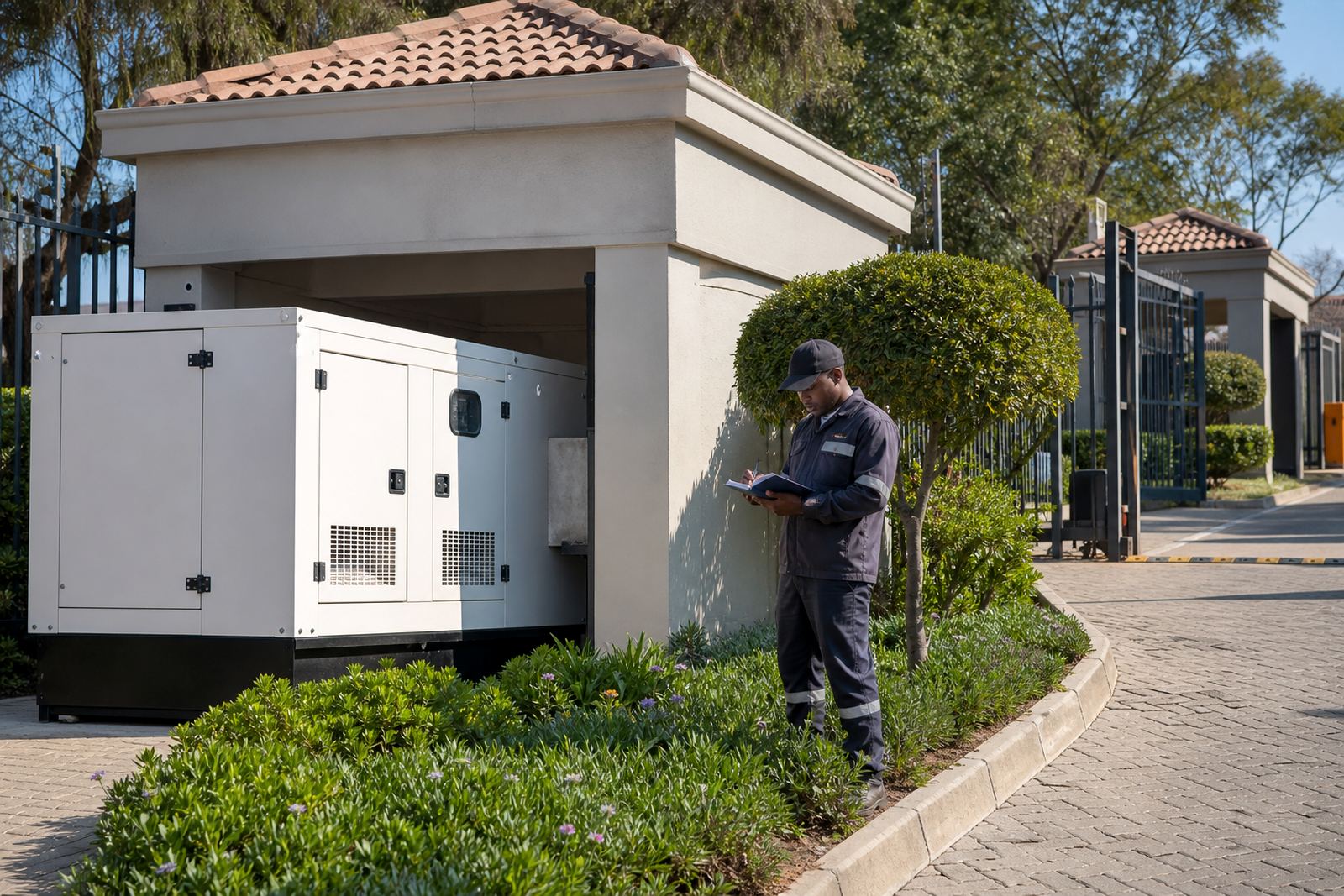
- Preventive site inspections and service record audits
How we shape cover around the way your site runs
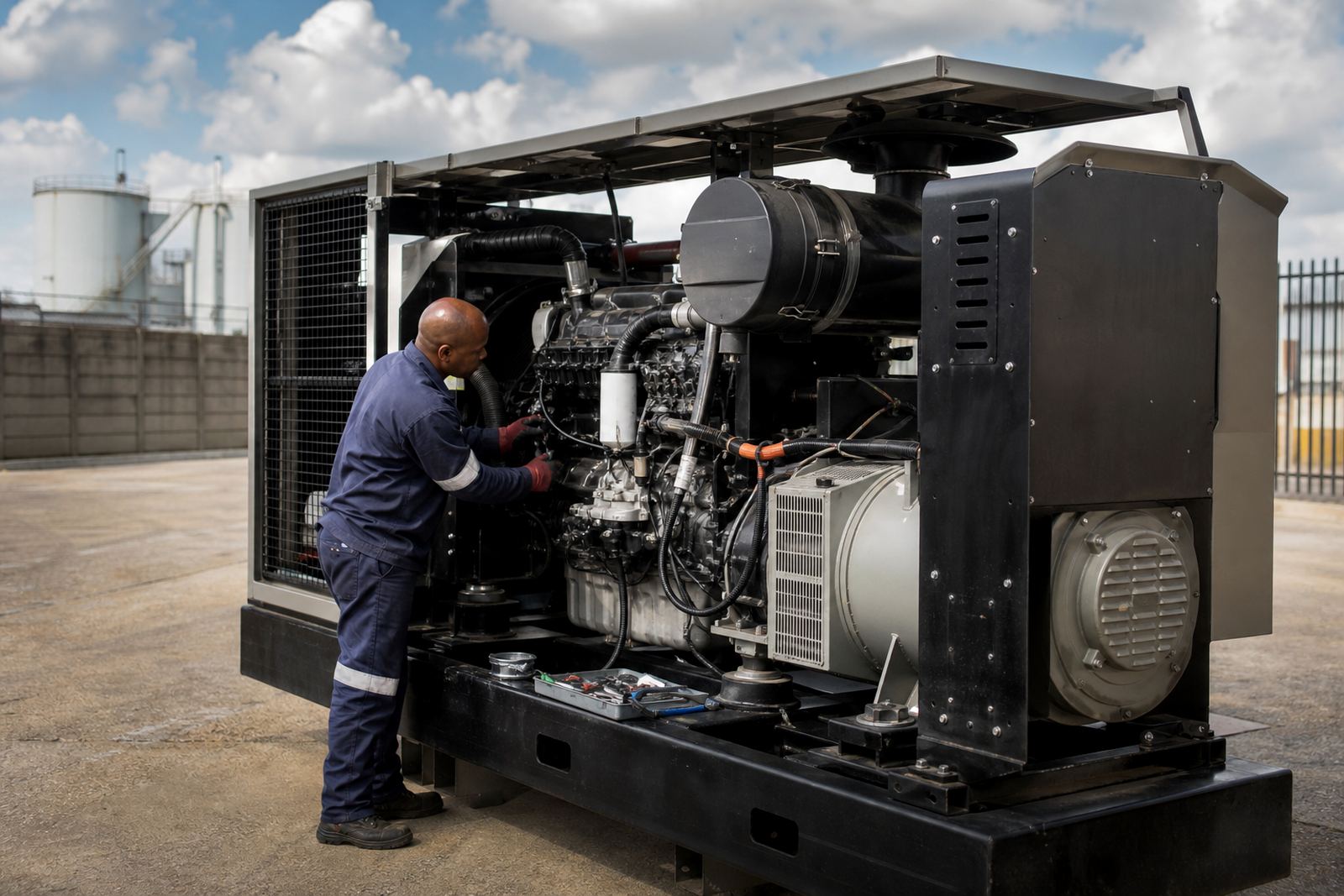
No two premises behave the same. A factory with long production runs, a retail centre with short but critical outage cover, and a construction site with moving demands all need a different service pattern. We look at hours of operation, whether the set is standby or prime duty, access to the plant room, fuel storage arrangements and whether the site has temperature swings, dust or high humidity that can affect wear. Where a unit sits in a coastal or semi-coastal area, corrosion risk and electrical contact condition need a closer eye.
If a generator is used less often, the danger is not always wear from running, it can be neglected batteries, stale fuel or a changeover switch that has not been tested under load. If it runs often, then oil condition, cooling and belt or hose wear become more important. That is why the contract scope should be practical and site specific, not broad and vague.
Signs the existing arrangement is too thin
Many businesses only notice the gaps in a service plan after a breakdown, which is never the best time to discover a weak point. If your records are incomplete, if faults repeat after each visit, or if the machine only gets attention when there is a complaint, the contract is probably not giving the site enough protection. In Midrand and the wider Gauteng corridor, many sites also have mixed electrical and mechanical pressure from scheduled outages, so reactive servicing becomes expensive quickly.
- Repeated low battery or no-start faults
- Cooling alarms in warm plant rooms
- Black smoke, uneven running or poor response under load
- Frequent tripping at the changeover gear
- Oil leaks, coolant loss or dirty filters appearing too soon
- Long delays between a fault and the next inspection
Emergency support is useful, but planned care saves the day-to-day pain
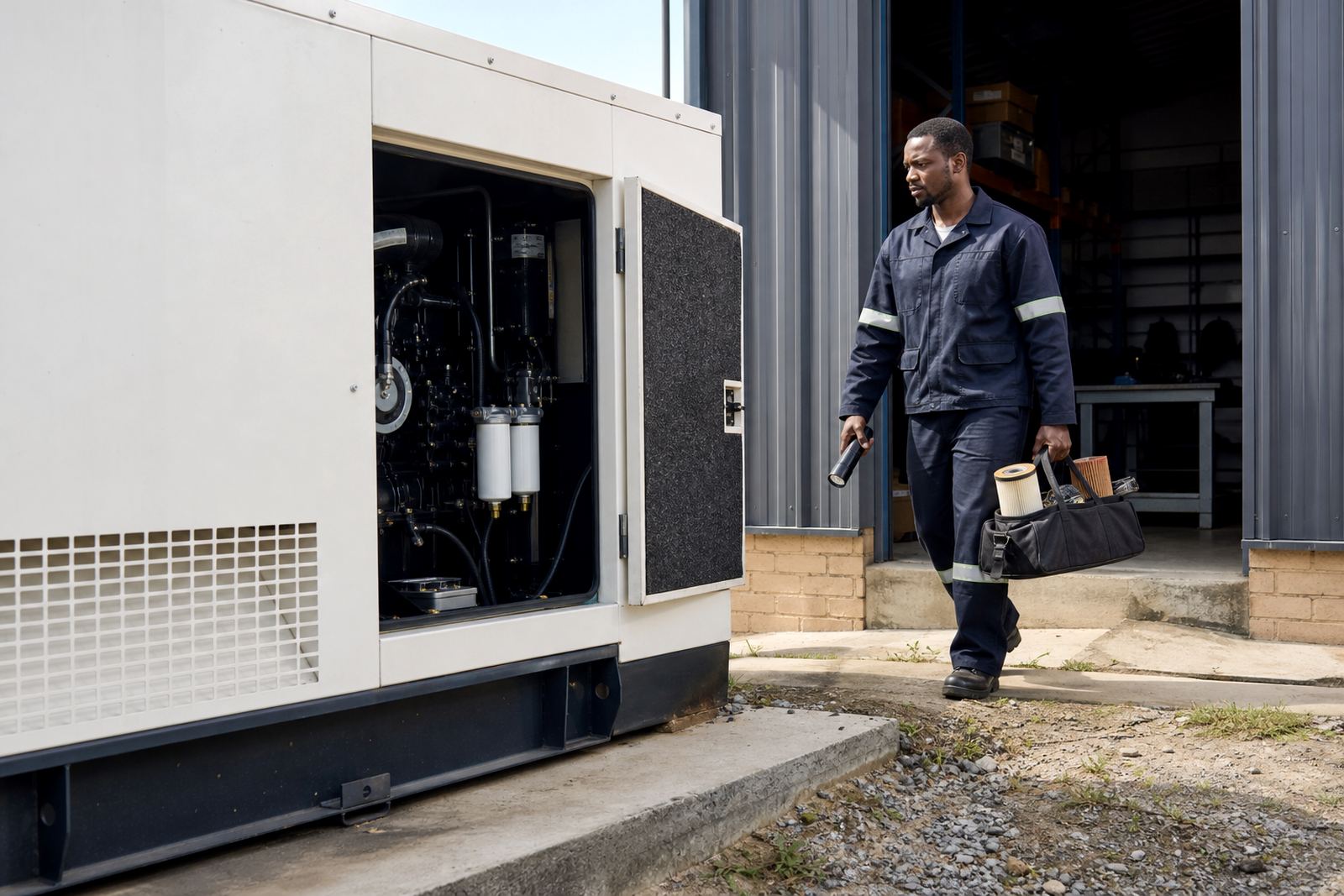
Emergency callouts have their place, especially where a site has just failed over or where a critical fault stops production. But a service contract should do more than wait for trouble. Planned checks help catch battery decline, blocked filters, coolant issues and starter faults before they become a late-night rescue. That matters when a business depends on the generator to bridge municipal interruptions, keep process equipment online or protect stock and refrigerated goods.
We keep the contract work practical, with clear attention to what can be inspected, tested and recorded on each visit. If a problem sits outside routine servicing, we flag it early and advise on the next safe step, whether that is repair, parts replacement or a deeper investigation.
Why the service record matters as much as the spanner work
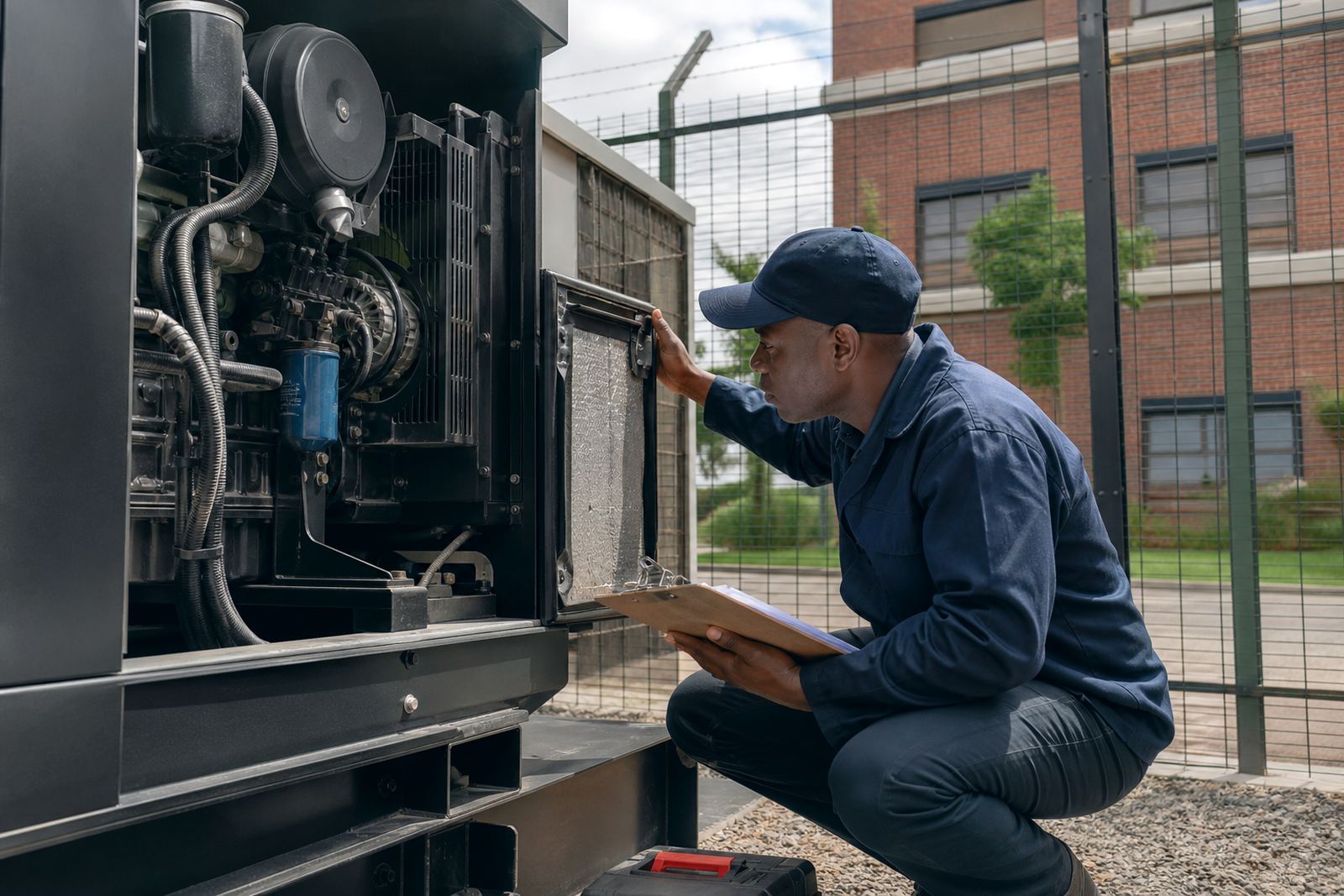
A good service history tells you how the machine has aged, what has already been replaced and where the weak points are likely to show up next. It also helps with compliance on site, especially where internal maintenance logs, contractor records or municipal inspections need to show that the generator is being cared for. We use service record audits to spot missed intervals, uneven servicing patterns and recurring faults that should not be ignored.
RelGen operates from Midrand under the direction of Thabo Engelbrecht, with support from Naledi Shezi, Johan Matlala, Ayanda Khoza, Muneerah Daniels, Sibusiso Wessels and Rikus Botha. For businesses across South Africa, that means a contract structure backed by an experienced team that understands both the machine and the pressure on the site.
Choosing the contract scope without overbuying
The best contract is the one that fits your duty cycle, site access and risk profile without paying for work you do not need. A standby generator at a Sandton office block may need a different schedule from a prime set supporting a depot in Polokwane or a workshop in Durban. If you are unsure how much cover is enough, start with the load profile, the age of the unit and the last three service records, then build from there.
Clients can send an enquiry through our contact page. From there we can review the site, the set type and the service history, then shape the right contract scope for the work ahead.