Campus power that must start when the bell rings
School Campus Contracts are planned servicing agreements for standby and prime generators used on school grounds, colleges and training centres. The work is built around the load patterns of classrooms, admin blocks, computer rooms, security lighting and borehole or pump duty where these are linked to the generator set. In Gauteng schools and coastal sites alike, batteries, filters, coolant and fuel systems need regular attention because short trips, dust, humidity and long idle periods can all affect starting and run quality.
RelGen works from Midrand and supports campuses in Johannesburg, Pretoria, Durban, Cape Town, Polokwane, Centurion and Sandton. The contract sets out visit intervals, service records and fault response so the generator is not left until a breakdown forces action during a term. Electrical work on changeover gear and related circuits must be done by qualified people in line with local regulations, and our service planning reflects that requirement.
What a school contract normally covers
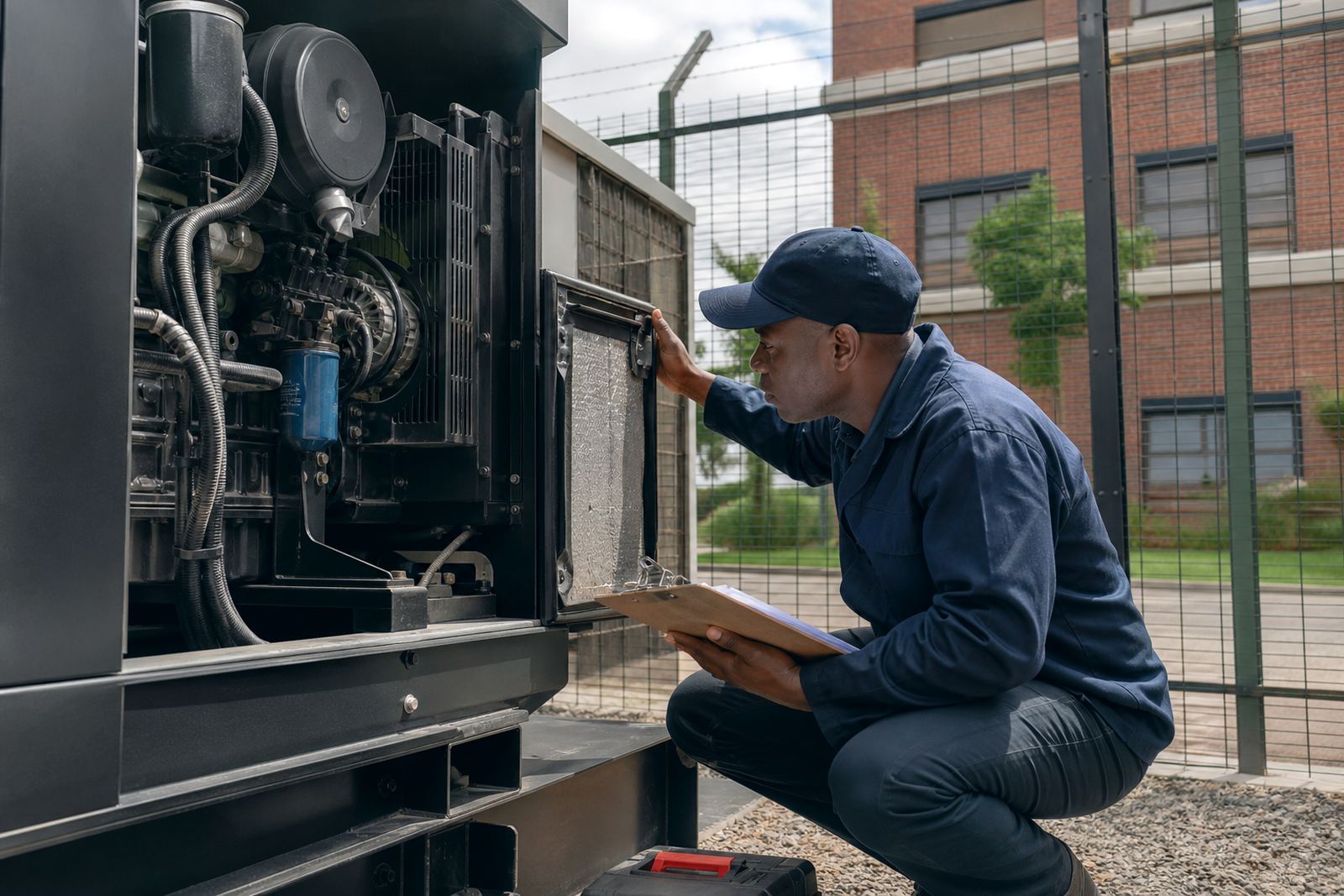
A campus contract is more than a once-off oil change. It combines routine servicing, inspections and fault tracking around the way the generator is actually used on site. That can include weekly or monthly checks, scheduled service visits, and callouts when alarms, starting faults or changeover issues are reported by the facility team.
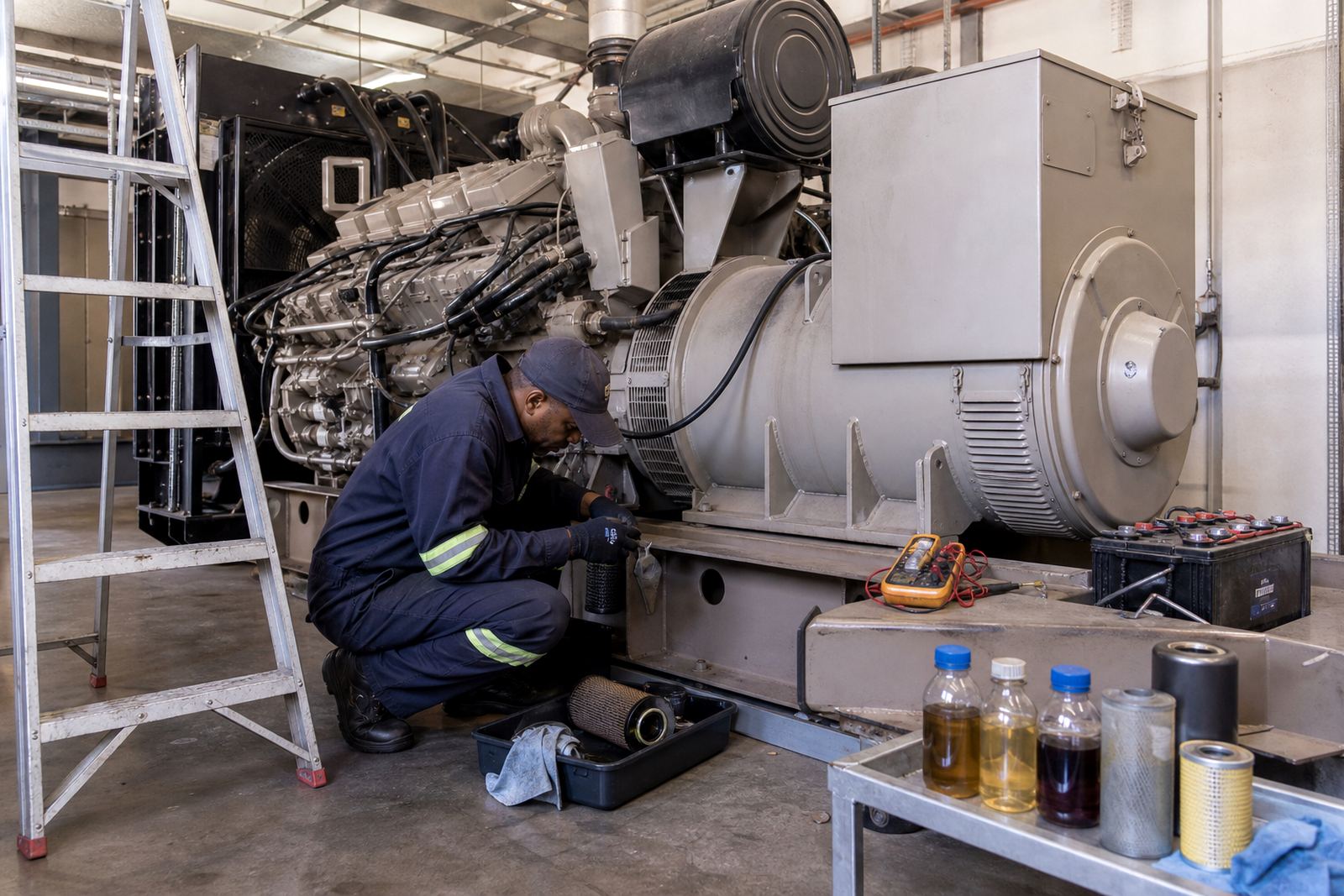
- Oil and filter changes at service intervals suited to the engine hours
- Coolant level checks, hose inspections and radiator cleaning where dust builds up
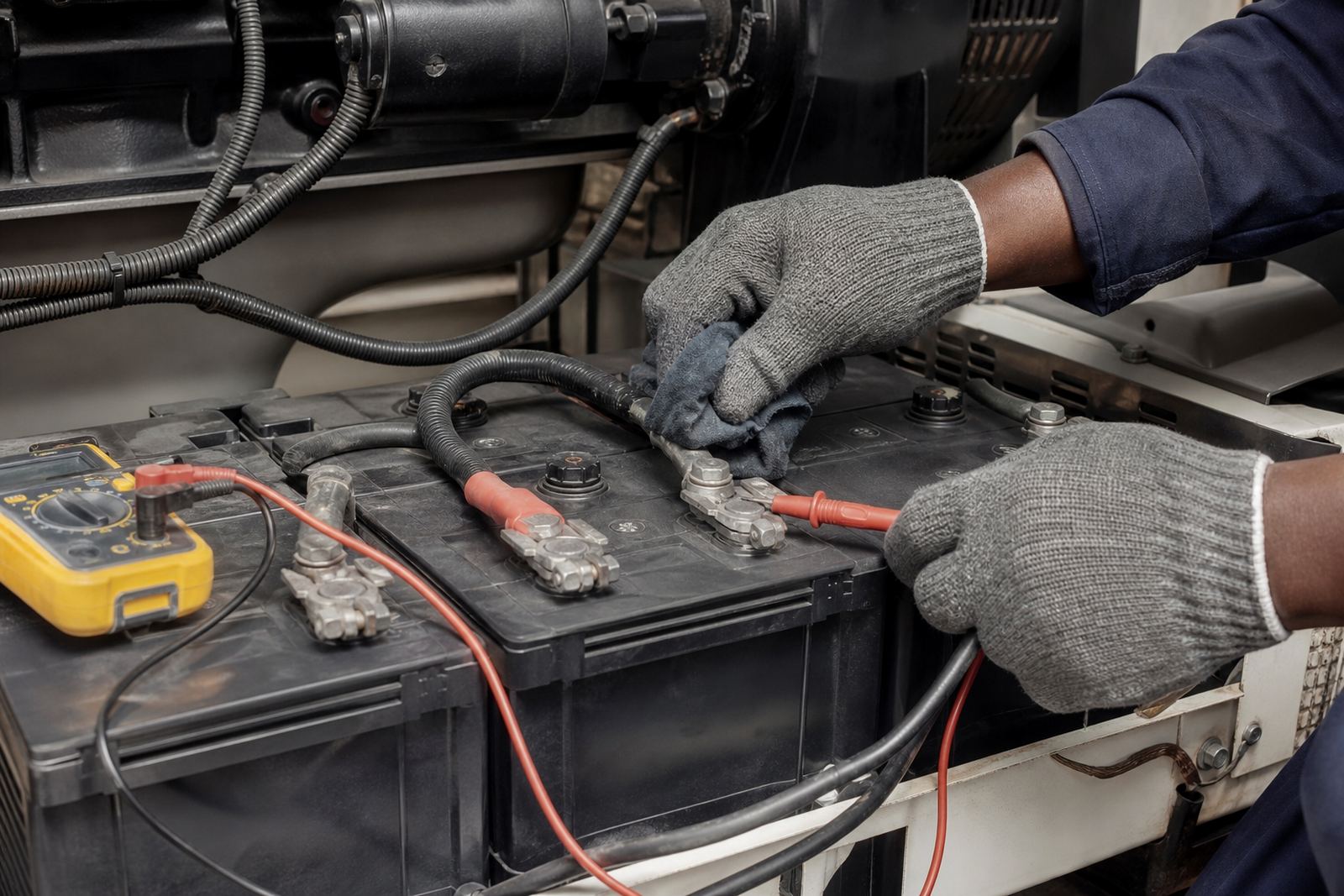
- Battery testing, terminals cleaning and charger checks
- Load bank testing to confirm the set can carry planned school loads
- Changeover switch checks by qualified electrical personnel
- Starter system repairs, fuel system repairs and fault finding
- Service record audits for compliance files and site logbooks
For schools with multiple blocks, we can schedule checks around exams, sports days and holiday maintenance windows so access is controlled and work areas stay orderly.
Sizes and set ups that suit different campuses
School campuses use different generator sizes depending on the number of buildings, the type of loads and whether the unit supports only essentials or a wider section of the site. Smaller schools may use compact standby sets for gate motors, lighting and admin equipment, while larger campuses often need medium to larger sets that support kitchens, ICT rooms, security systems and water pumps during outages.
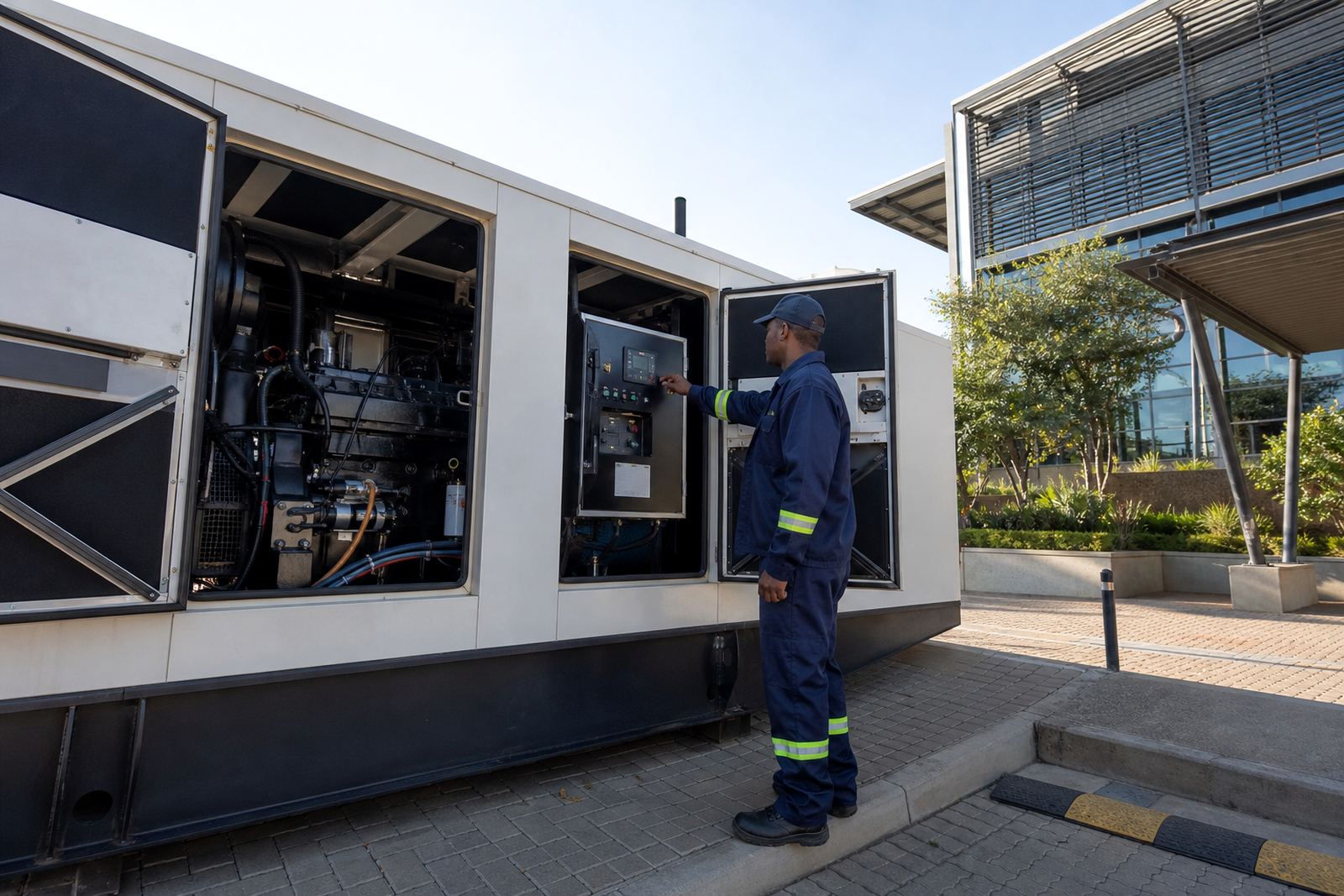
We service air-cooled and liquid-cooled diesel units, open-set installations in plant rooms, and weather protected outdoor sets commonly found in covered yard spaces or service enclosures. Where a generator is tied into automatic transfer gear, the site must be checked for safe access, cable condition and changeover arrangement before service work begins. For campuses near the coast, salt in the air can speed up corrosion on terminals, fixings and enclosures, so extra attention is needed on those sites.
- Small standby sets for security lighting, access control and admin offices
- Mid-sized units for classrooms, computer labs and staff facilities
- Larger prime or standby sets for full campus support where required
- Single set or multi-set arrangements for phased school expansion
Fitting needs before a contract starts
Before a maintenance contract is signed, the site details must be correct so the right spares, oil grades and service tools are planned in. We look at the generator model, rated kVA, fuel storage arrangement, service access, changeover arrangement and whether the unit is used automatically or with manual start procedures. If the school has a generator room, the ventilation, fire access and housekeeping around the plant area should also be checked.
The school team should confirm the service history, previous faults, current running hours and any known alarm codes or weak starting patterns. If the generator supports critical loads such as access control or laboratory equipment, that needs to be stated early so testing can be planned around those circuits. In some cases the set may be isolated for parts of the inspection and a safe operating plan must be arranged with the school management and maintenance staff.
How we keep campus sets in working order
Generator care on a school site is about consistency. Dust from sports fields, leaf litter near plant rooms and long holiday shutdowns can all cause issues if the set is left untouched. Our scheduled servicing helps keep the unit ready for term time, and emergency callouts are available when a fault stops the generator from starting or carrying load.
- Regular oil, filter and coolant checks to protect the engine
- Battery testing before load shedding seasons and exam periods
- Load bank testing where the school needs proof of carrying capacity
- Inspection of starter motors, relays, wiring and fuel delivery components
- Recording defects early so repairs can be planned before a full failure
- Verification of service intervals and parts replacement against the contract file
On sites with long periods of low use, we also advise periodic start and run checks so the machine does not sit idle for months. A school generator that is never exercised properly can fail on the first real outage, usually at the worst time.
Ordering details that help us quote the right contract
To set up a school campus contract properly, we need the generator type, kVA rating, make of engine if known, number of units on site and whether the set is used for standby or prime duty. It also helps to know the school size, the town or suburb, hours of access, and whether the campus has a single plant room or several generator points. Midrand, Johannesburg, Pretoria, Durban, Cape Town and Polokwane sites often have very different access arrangements, so a clear site description saves time.
Please also confirm the service interval you want, any previous faults, the date of the last oil and filter change, battery age if known, and whether the set has an automatic transfer arrangement. If the school has municipal or internal rules on site entry, security escort or after hours work, that must be included. RelGen’s team includes Thabo Engelbrecht, Naledi Shezi, Johan Matlala, Ayanda Khoza, Muneerah Daniels, Sibusiso Wessels and Rikus Botha, with support from our Midrand base for contract planning, parts control and field scheduling.
Key facts
| Service type | Scheduled generator servicing and emergency callouts on maintenance contract |
|---|---|
| Application | School campuses, colleges, training centres and education precincts |
| Generator sizes | Small, medium and large standby or prime diesel sets |
| Typical loads supported | Lighting, access control, security systems, admin equipment and selected essential services |
| Service areas | Midrand, Johannesburg, Pretoria, Durban, Cape Town, Polokwane, Centurion and Sandton |
| Contract work | Oil and filter changes, coolant service, battery testing, load bank testing, changeover switch checks, fault finding |