What a large generator contract covers on a working site
A large generator contract is a structured maintenance agreement for generator sets used on commercial, industrial and multi-tenant sites where power continuity is part of daily operations. It usually covers scheduled servicing, condition checks, load bank testing, battery testing, oil and filter changes, coolant system service, changeover switch checks, starter system repairs, fuel system repairs, fault finding, service record audits and preventive site inspections.
These contracts suit larger sets that carry office blocks, retail centres, factories, depots, farms, data rooms and production areas. The point is not only to keep the set running, but to keep service records clean and easy to follow when a landlord, facilities manager or insurer asks for proof of maintenance.
- Standby generator sets for backup supply during outages
- Prime generator sets used for frequent or planned running
- Single-site and multi-site service contracts
- Monthly, quarterly or hours-based maintenance plans
Set sizes, service intervals and contract options
Large generator contracts are normally arranged around the size of the set, how often it runs, and what the site needs during load shedding or planned shutdowns. On bigger units, oil capacity, filter type, coolant volume, battery configuration and access points all matter, because the service work is not the same as on a small domestic set.
Contract options can be built around set running hours, calendar intervals or a mix of both. A site with frequent outages may need closer attention than a plant that only starts during load shedding. Midrand-based teams also have to plan for travel to Johannesburg, Pretoria, Centurion, Sandton, Durban, Cape Town and Polokwane, so the service schedule needs to match the site’s operating pattern and access rules.
- Typical contract planning for larger sets: every 250 hours, 500 hours or 1,000 hours
- Oil, filters and coolant checks matched to operating hours
- Battery load checks and charger condition checks
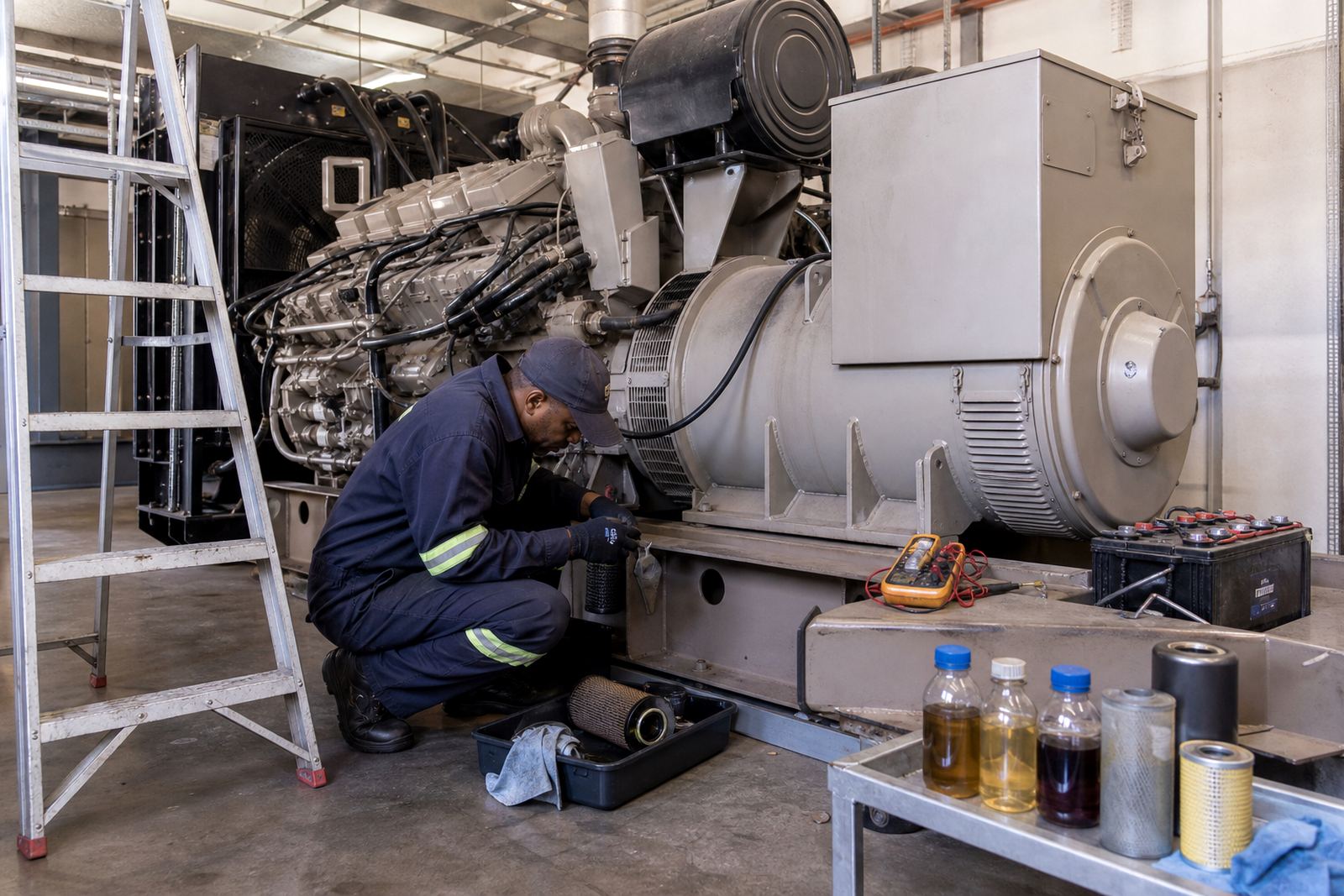
- Load bank testing where the site needs a controlled test under load
Where this service fits best, from factories to mixed-use buildings
Large generator contracts are a good fit where a stoppage interrupts production, tenant comfort, security systems or refrigeration. That includes manufacturing plants, warehouses, construction depots, medical rooms, office parks, shopping sites, residential complexes and remote facilities that rely on steady backup power through long outages or unstable municipal supply.
In coastal towns like Durban and Cape Town, humidity can shorten the life of batteries, terminals and control components if inspections are left too long. In Gauteng, dust and heat build-up can affect filters, belts, cooling and intake conditions. Sites that operate through load shedding also need regular changeover switch checks so the transfer arrangement is tested properly and the generator start sequence remains dependable.
- Industrial and process sites with strict downtime limits
- Buildings with multiple tenants and shared services
- Sites with generator use during planned load shedding
- Operations that need record keeping for audits and compliance files
Fitting, access and changeover details that must be right
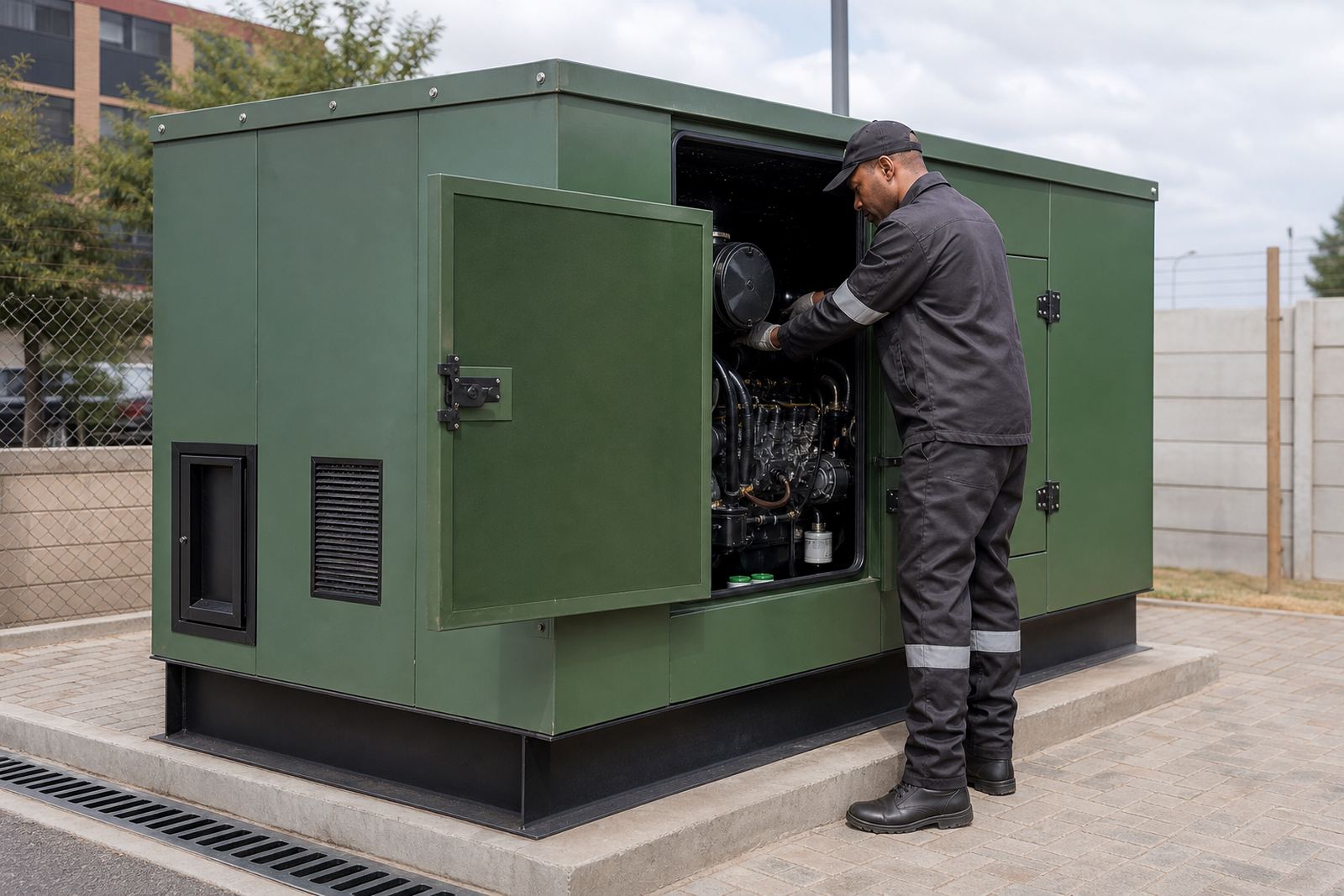
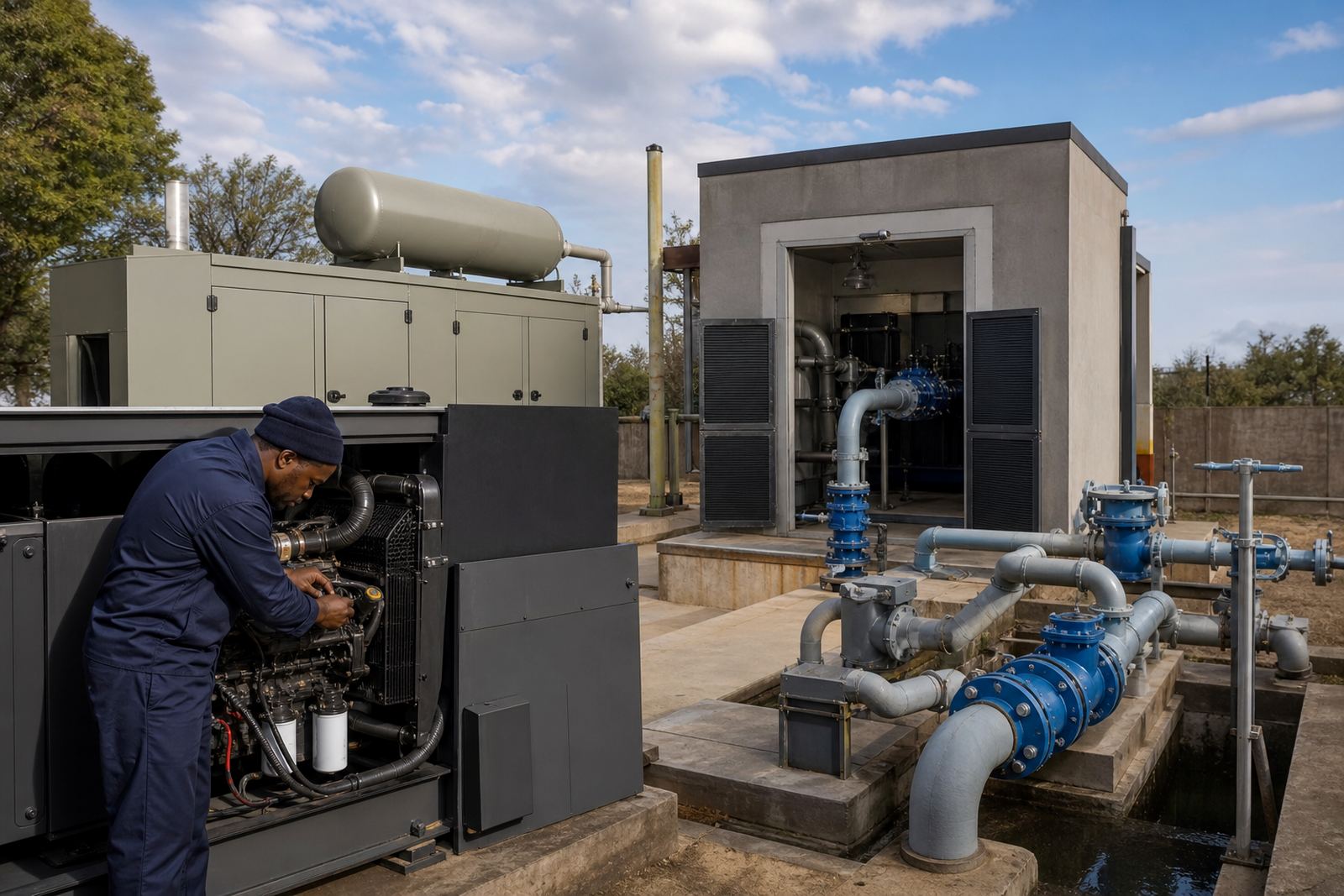
Large generator servicing often involves more than just the set itself. Access routes, ventilation, exhaust condition, cable terminations, fuel storage, earthing, and the position of the automatic changeover switch all influence how safely and easily the work can be done. Electrical work must be handled by qualified people under local regulations, especially where the changeover switch, control wiring or load transfer equipment is involved.
If a set is mounted in a plant room, outside yard or rooftop position, the site must allow proper access for tools, drain containers and testing equipment. Some installations need temporary shutdown planning so the service can be carried out without disrupting the rest of the site. For bigger units, a service visit may also include a check of mounting, vibration signs, hose condition and any leaks around the fuel or cooling system.
- Clear access for safe servicing and test equipment
- Ventilation and exhaust routing checked for safe operation
- Changeover switch and control checks done by qualified personnel
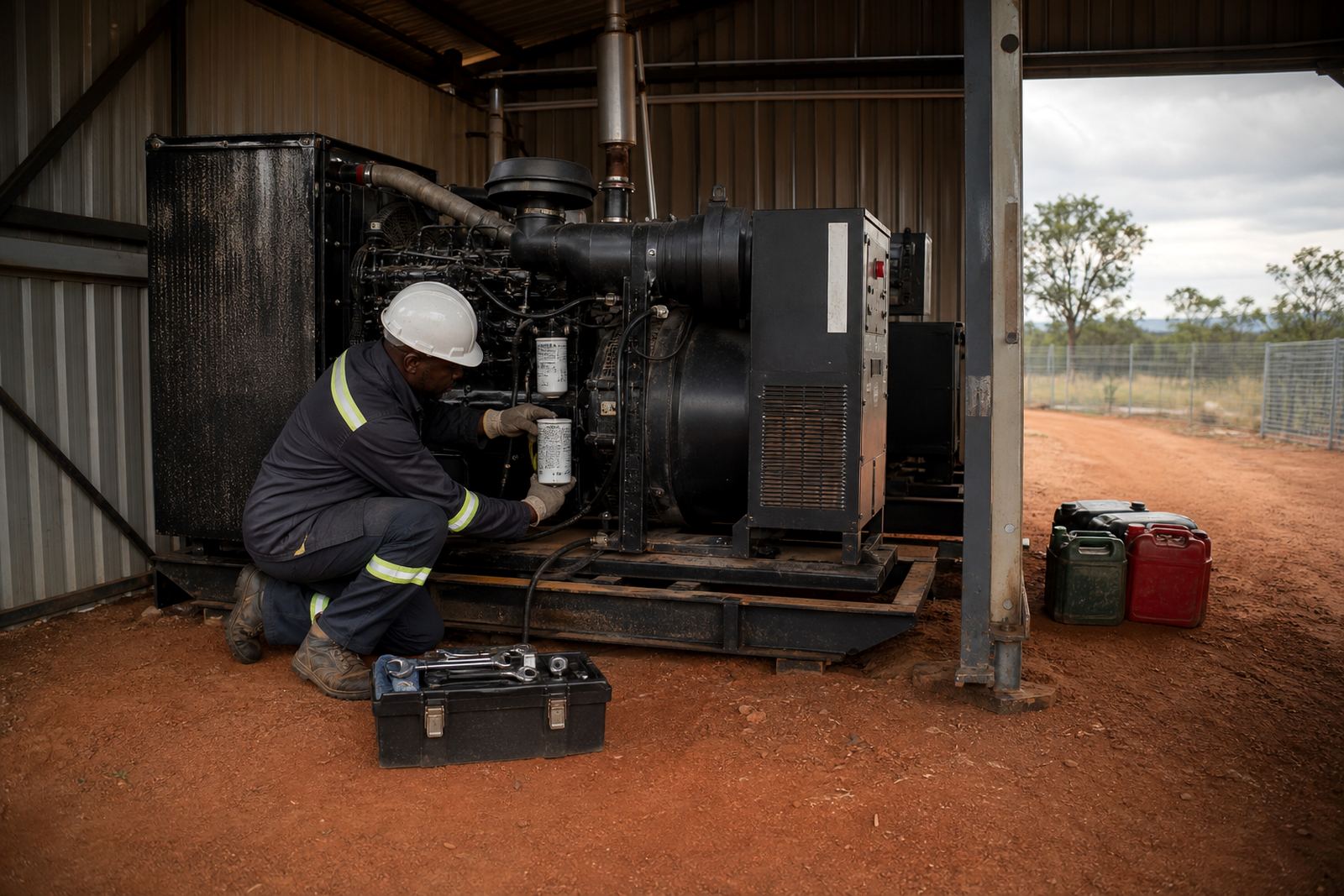
- Space for oil changes, filter replacement and coolant top-up
How the contract keeps the set ready between visits
Good generator care is not only about the service day. Between visits, the set should be kept clean, dry and easy to inspect, with fuel quality watched closely and any warning signs logged early. Battery condition, coolant level, oil leaks, blocked vents and poor starting are all things that can turn into a bigger repair if they are left too long.
On prime running sites, records matter even more because the set works harder and parts wear at a faster rate. A proper maintenance contract helps track filters, service hours, fault trends and repairs over time. It also helps spot recurring issues with starter systems, sensors, control faults or transfer problems before they cause an unexpected stoppage.
- Keep the service area free of dust, water and stored materials
- Log starts, trips, alarms and fuel top-ups
- Check for corrosion on terminals and battery connections
- Report any change in smoke, noise, vibration or starting delay
Details to confirm before a contract is opened
Before a large generator contract is set up, the site details need to be clear so the right service plan can be built. The generator make and model are useful, but the most important points are the set rating, fuel type, running history, access conditions and whether the site uses automatic or manual changeover. If there are multiple sets on one site, each unit should be listed separately.
It also helps to confirm the current condition of the service records, the last oil and filter change, coolant status, battery age, any recent alarms and whether load bank testing has been done before. Where a site has strict security or municipal access rules, those should be noted so the visit can be arranged without delay.
- Generator rating in kVA or kW
- Standby or prime duty classification
- Fuel type and tank arrangement
- Service hours, last maintenance date and current faults
How RelGen handles larger contract work in practice
RelGen supports larger generator sets with structured servicing, detailed inspection notes and practical follow-through for sites that cannot afford loose maintenance. The focus is on keeping the set ready, keeping records tidy and handling faults in a way that suits the site’s operating hours. That approach is useful for businesses across Johannesburg, Pretoria, Durban, Cape Town, Polokwane, Midrand, Centurion and Sandton.
For clients managing multiple branches or high-value operations, one contract can cover scheduled servicing, emergency callouts, service record audits and preventive inspections. The aim is to make generator care easier to control, especially where load shedding, long runtimes and compliance checks create extra pressure on site teams.
Key facts
| Service type | Scheduled maintenance contract for larger standby and prime generator sets |
|---|---|
| Typical intervals | 250 hour, 500 hour and 1,000 hour servicing, or calendar-based plans |
| Core checks | Oil, filters, coolant, batteries, starting system, fuel system and transfer equipment |
| Testing options | Load bank testing and operational start-up checks |
| Site coverage | Midrand, Johannesburg, Pretoria, Durban, Cape Town, Polokwane and surrounding areas |
| Documentation | Service records, fault notes, inspection findings and maintenance history |