Weatherproof sets that sit outside and still need proper care
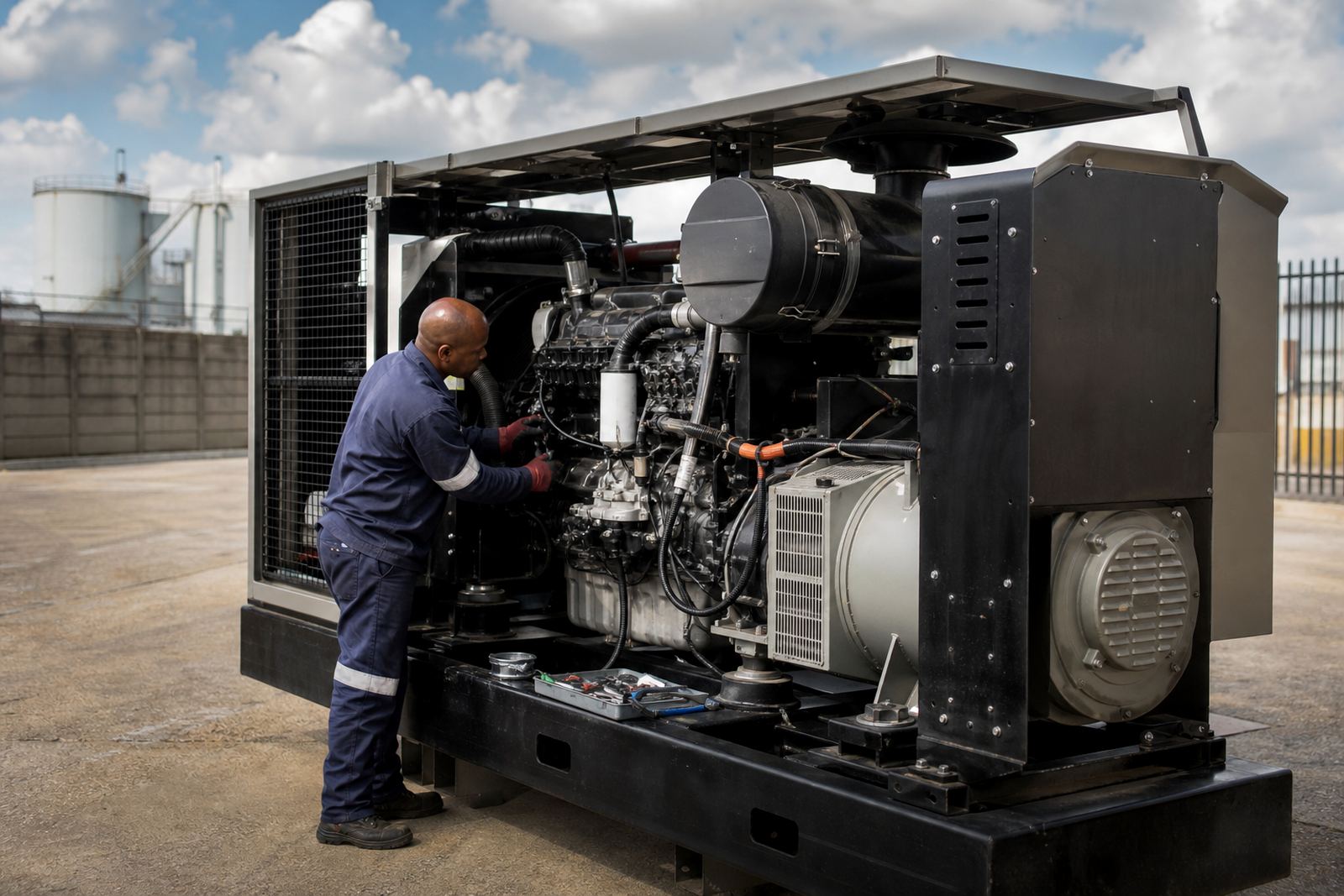
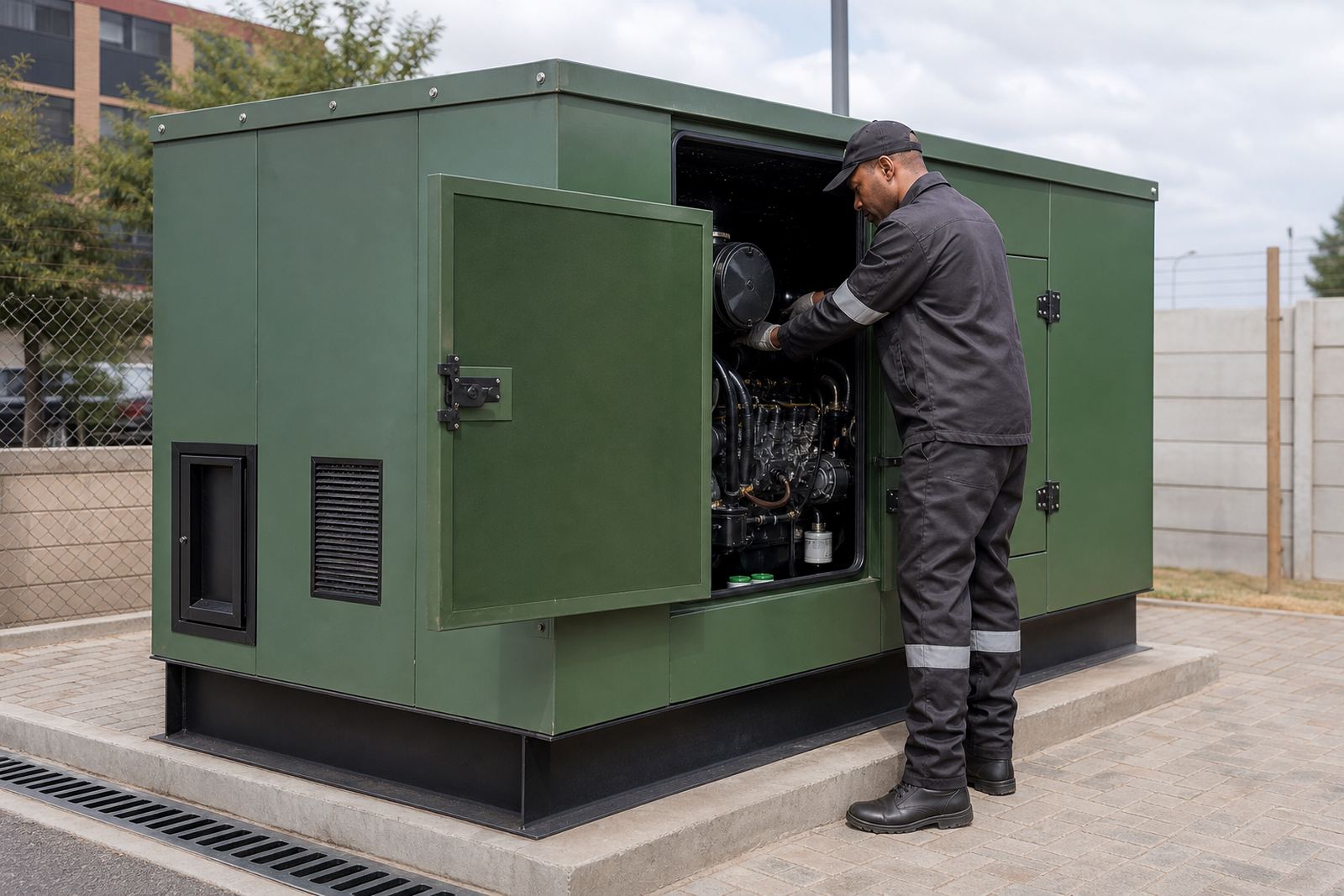
Canopy units are enclosed generator sets built for outdoor installation at factories, depots, shopping sites, warehouses and commercial yards where the engine and alternator must be protected from rain, dust and coastal air. The canopy keeps the set neat and secure, but it also traps heat and vibration, so the unit still needs scheduled servicing to stay reliable under load.
On many Gauteng sites the set lives beside a loading bay or plant room wall, while coastal sites in Durban or Cape Town deal with salt in the air and higher corrosion risk. That makes canopy condition as important as engine condition. We check access panels, latches, seals, ventilation paths and the general state of the enclosure as part of normal maintenance.
RelGen works on standalone outdoor sets and on systems linked to automatic changeover equipment. Electrical work is handled by qualified people in line with local regulations, especially where the generator connects to a building supply or changeover arrangement.
Sizes, layouts and enclosure options we service
Canopy units come in a range of sizes, from compact sets for smaller commercial premises to larger packaged units used at industrial sites and facilities with heavier demand. The right canopy has to match the generator footprint, airflow needs, service access and the site layout around it. A cramped enclosure can make oil changes, filter access and battery checks awkward, and that often leads to skipped maintenance.
We service open-field outdoor installs, low-profile canopies near boundary walls, and larger acoustic enclosures where noise control matters. Some units have side access doors, some have top access hatches and some are built with wider service spaces for easier maintenance. We also check whether the canopy still aligns correctly with the base frame after lifting, transport or settling on uneven ground.
Common practical details we ask for include the generator make and model, rated output in kVA, whether it is standby or prime duty, the enclosure dimensions and the type of control panel fitted inside the canopy. If the set runs in a high-dust or coastal environment, that changes the service schedule and the type of checks needed.
Where canopy units fit best on South African sites
These units are a practical fit for business premises that need a generator outdoors but still want it protected and tidier than an open frame install. We see them at distribution centres, workshops, commercial complexes, cold stores, agricultural packhouses, office parks and construction compounds. On some sites the canopy sits on a concrete plinth close to the main intake, while on others it is placed further away for noise control or compliance with site rules.
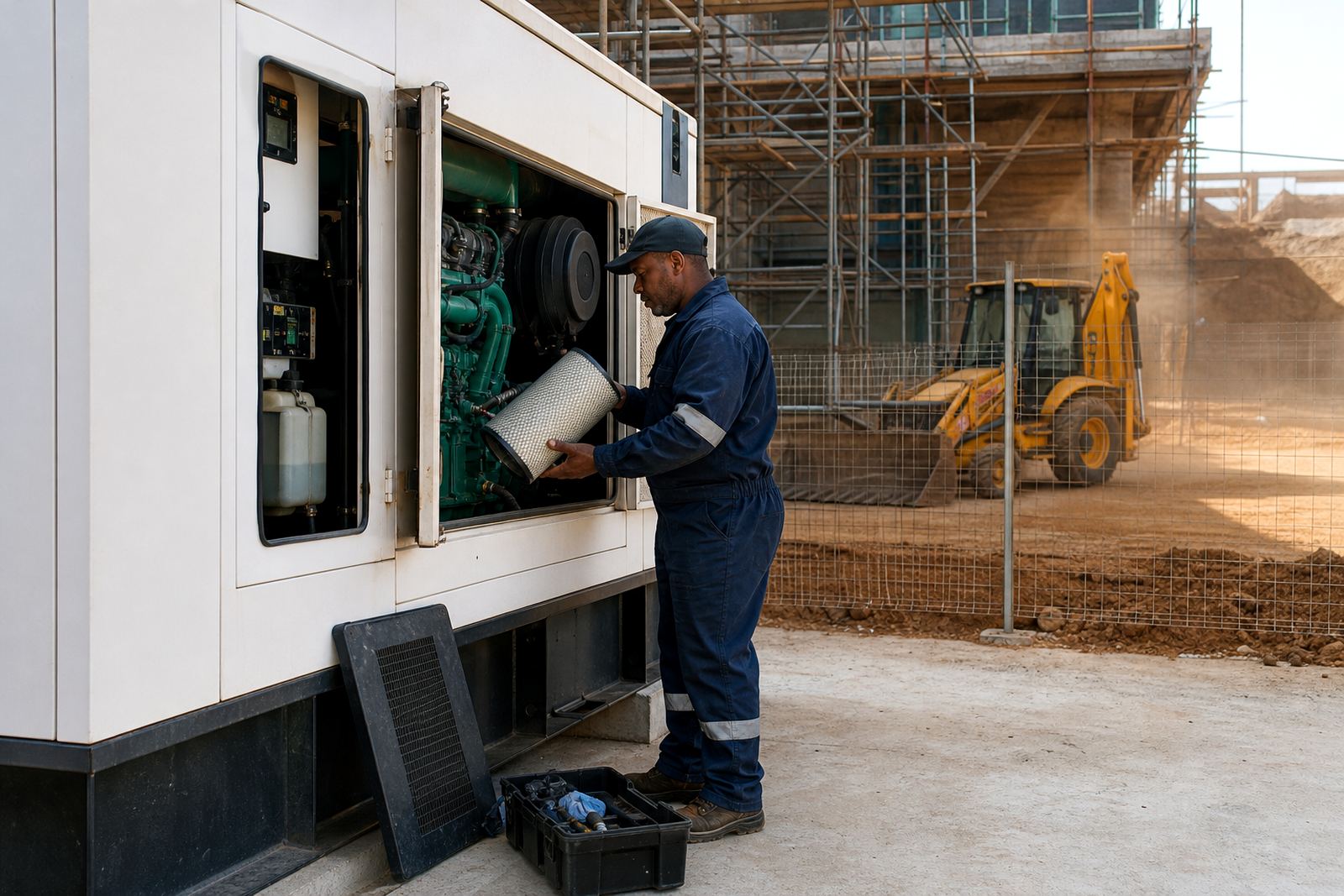
Because the generator sits outside, site conditions matter. Flood-prone areas, low-lying yards, coastal humidity and dusty industrial yards all affect service intervals and the condition of the enclosure. Proper clearances around the intake and exhaust path are important too, otherwise heat builds up and the set starts working harder than it should.
We also look at access for service vehicles and lifting equipment. If the unit is boxed in by fencing, pipework or stored stock, basic maintenance becomes slower and more expensive to carry out. Good access saves time and keeps the generator easier to inspect during preventive visits.
Installation and fitting details that must line up
Fitting a canopy unit is more than placing a generator on a slab. The base must be level, the mounting points secure and the enclosure must have enough free space for airflow, exhaust routing and future servicing. If the set is connected to a building supply, the changeover equipment and all related electrical work must be handled by qualified people in line with local rules and site procedures.
We service installations where the canopy is fixed in place, bolted to a prepared plinth or mounted on a skid arrangement. We can inspect the alignment of doors, cable entry points, louvers and any flexible connections that may have shifted after vibration. On sites with load shedding or prime duty running, the system needs regular checks because the load pattern changes more often than on standby-only sites.
Before ordering a new enclosure or planning a replacement, it helps to confirm the exact generator footprint, access side, ventilation direction, exhaust position and whether the unit has room for battery trays and control gear inside the canopy. Getting those points right prevents awkward field changes later.
Routine care that keeps the canopy unit ready for duty
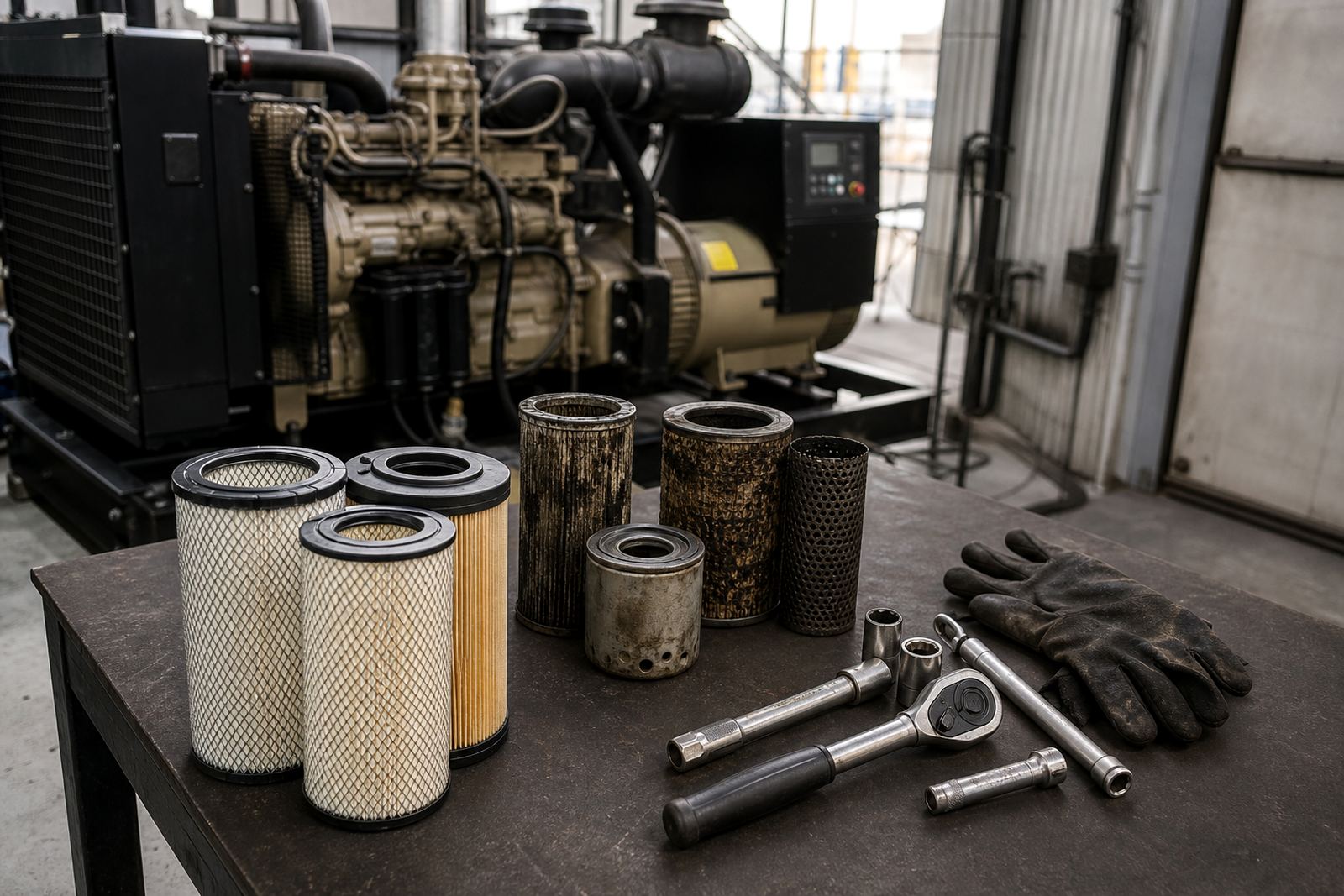
Our servicing covers the parts that most often cause trouble on outdoor generator sets. Oil and filter changes, coolant checks, battery testing, fuel system repairs, starter system repairs and service record audits all sit inside a proper maintenance plan. We also inspect the canopy itself for blocked vents, damaged seals, water ingress, loose fasteners and signs of corrosion around hinges and latches.
Load bank testing is important where the generator spends long periods on standby or light demand. It helps confirm that the set can carry load properly and that the cooling system, controls and exhaust path are behaving as they should. On canopy units, the extra heat inside the enclosure means cooling performance and airflow need close attention, especially during hot inland summers or humid coastal conditions.
Where required, we carry out preventive site inspections and emergency callouts for faults that affect starting, running or changeover performance. Service intervals depend on operating hours, site conditions and the duty cycle of the set, so we tailor the maintenance contract to the actual installation instead of using a generic schedule.
What to confirm before you order a canopy unit service
For accurate servicing or a maintenance quote, we need the generator rating, canopy dimensions, site suburb or town, access conditions and the current duty type. It also helps to know whether the set is used as standby back-up, prime supply or for a schedule that includes frequent starts and stops. If the canopy has suffered water entry, panel damage or corrosion, send those details too so the right technician and spares can be planned.
We also ask about any changeover equipment, fuel system issues, battery age, unusual alarms, overheating, smoke or difficulty starting. For business premises in Johannesburg, Pretoria, Sandton, Centurion, Durban, Cape Town, Polokwane and Midrand, local site conditions can differ quite a bit, so those details make a real difference to the service approach. A canopy unit in a salty coastal environment will not be treated the same as one in a dry inland yard.
RelGen handles generator servicing on maintenance contracts for businesses across South Africa, with practical support from Midrand and the surrounding commercial areas. Our team includes service contracts, field coordination, technical support and stores planning so the right parts and checks are lined up for the job at hand.
Key facts
| Product type | Weatherproof canopy enclosure for outdoor generator installations |
|---|---|
| Typical sizes | Compact commercial units through to large industrial packaged sets |
| Duty rating | Standby and prime duty applications |
| Common service items | Oil, filters, coolant, batteries, load bank testing, changeover checks |
| Installation setting | Outdoor plinth, skid or fixed base at business premises |
| Service area | Midrand, Gauteng and major business centres across South Africa |