

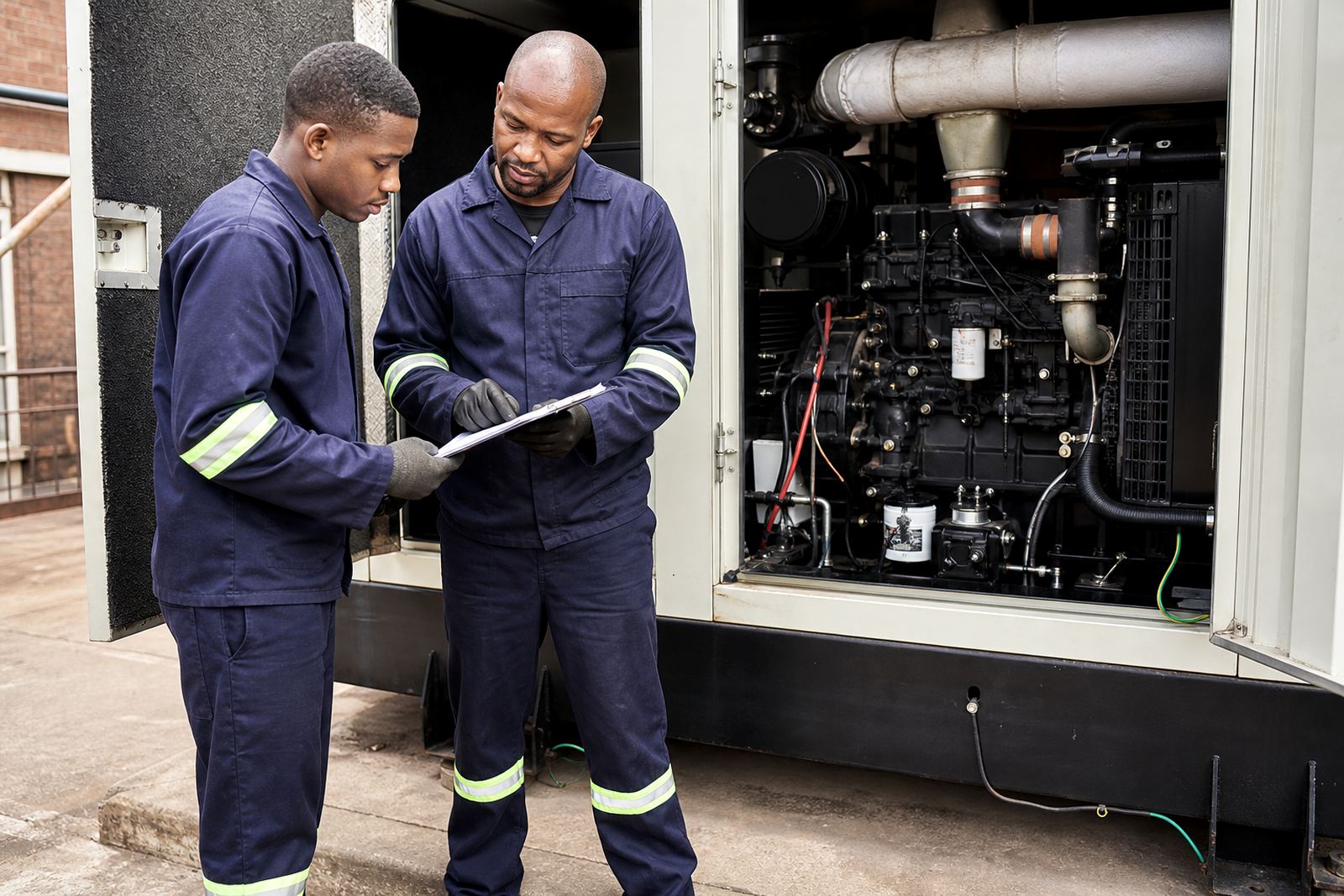
The kind of work our people handle day to day
Our career paths suit people who can work with generator servicing in real conditions, from hot plant rooms and coastal humidity to tight schedules during load-shedding periods. Depending on the role, the work can include oil and filter changes, coolant checks, battery testing, load bank testing, changeover switch checks and fault finding under the guidance of qualified technical staff. Electrical work is only carried out by people who are properly qualified and working within local regulations.
We support maintenance contracts for businesses in Midrand, Johannesburg, Pretoria, Centurion, Sandton, Durban, Cape Town and Polokwane, so the work is varied. One week may involve scheduled servicing at a warehouse, the next may be an emergency callout to a site that cannot afford another outage.
Roles we usually hire for
We look for practical people with strong habits, clean handovers and a steady approach on site. The team includes field technicians, service coordinators, contract administrators, stores and logistics support, and people who can manage records properly without cutting corners.
- Generator technicians and assistant technicians for scheduled servicing and fault support
- Service contract coordinators who keep visits, reports and client updates on track
- Stores and logistics support for parts, fluids and vehicle readiness
- Technical support staff who can read service records and spot repeat issues
- Operations support for planning work across multiple sites and branches
What earns trust on a RelGen team
We value people who arrive prepared, work safely and respect the site rules of each client. That includes wearing the right PPE, keeping tools organised, speaking clearly with plant staff, and leaving the work area tidy. A good attitude matters, but so does accuracy when checking batteries, filters, coolant levels or service records.
Experience helps, although we also recognise potential. If you can learn quickly, follow procedures and handle service work under pressure, there may be a place for you. We work across business districts, industrial sites and commercial properties, so reliability counts from the first day.
- Mechanical, electrical or service background is useful
- Ability to work on callouts and scheduled visits
- Good fault reporting and record keeping
- Respect for safety rules and site access procedures
Where the work takes place
Our base is in Midrand, Gauteng, and many of our jobs start there, but the team travels where contracts require support. Some days are local, others involve early starts, long drives or overnight planning for sites further afield. Because generators are often tied to business continuity, work can happen during quiet office hours, after trading hours or when a client needs urgent help.
That means you need to be comfortable working across different industries, with different access rules and different site conditions. In some places it is a clean office park. In others it is a factory floor, a logistics yard or a site with strict municipal and safety requirements.
How we hire people who fit the work
If you want to join RelGen, send your CV through the enquiry form on the contact page and note the kind of role you are interested in. We review applications for both technical and support positions, and we look for real experience, dependable references and a willingness to learn our contract processes.
- Tell us whether you are applying for field, technical or office support work
- List your generator, maintenance or electrical experience clearly
- Include your current location and whether you can travel
- Share any licences, trade papers or safety training you already have
What it feels like to work in a contract team
Our work is built around service discipline. That means planning jobs properly, keeping service records current, and responding quickly when a client has an alarm, a failed battery or a starter issue that needs attention. You will deal with real schedules, real deadlines and real sites where a missed visit can cause problems later.
People who do well here usually like practical work, know how to speak to clients without fuss, and understand that maintenance is not just about repairs. It is about preventing breakdowns, keeping equipment ready and making sure each visit adds value. There is pressure in this line of work, but there is also clear purpose.