

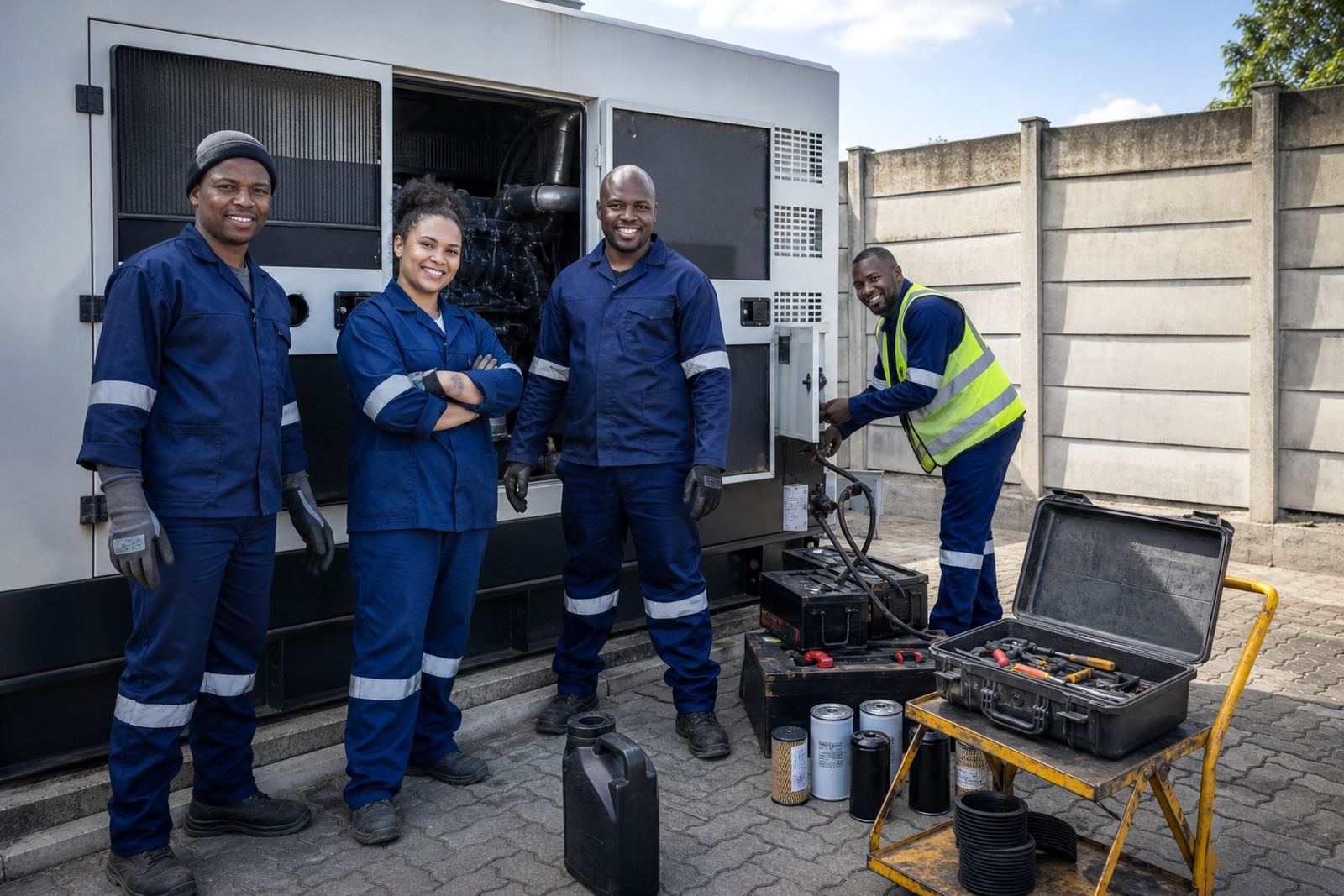
The hands behind every service visit
RelGen works through a small, experienced team in Midrand, with each person carrying a clear part of the job. That matters when a generator is down at a plant in Gauteng, a site in Durban is waiting on a filter change, or a Cape Town client needs a logbook checked before the next visit.
The team handles scheduled servicing, emergency callouts and contract work with the same approach: arrive prepared, record the facts, and keep the next step clear. Electrical work is always handled by qualified people in line with local regulations, especially when changeover switches, starter systems or fault finding is involved.
How the Midrand base keeps work moving
The Midrand base is where service schedules are lined up, parts are issued and site notes are matched to the next visit. In a country where load shedding, coastal humidity and dusty inland conditions all take a toll, good coordination saves time and reduces repeat faults.
- Service calendars are set around site risk and running hours
- Spare parts and consumables are tracked for planned maintenance
- Service records are checked before each visit
- Urgent jobs are routed to the nearest available field team
This behind-the-scenes work helps keep maintenance contracts practical for businesses in Johannesburg, Pretoria, Centurion, Sandton and beyond. It also means the team can respond faster when a fuel issue, battery problem or changeover fault needs attention.
Thabo Engelbrecht leads the service standard
Thabo Engelbrecht, the MD, keeps the business focused on dependable generator servicing rather than rushed fixes. He works closely with the rest of the team to make sure each contract has the right level of support, whether that means a weekly inspection on a busy site or a more detailed maintenance plan for a plant that cannot afford downtime.
His role is part oversight and part practical problem solving. When a client asks for tighter reporting, a clearer maintenance schedule or better follow-through on faults, Thabo makes sure the response stays grounded in what the site actually needs.
The people who run the contract work day to day
Naledi Shezi, Operations Manager, keeps the service workflow orderly from the first site note to the final report. Johan Matlala, Service Contracts Manager, looks after the terms, schedules and service expectations so clients know when visits are due and what will be covered.
Ayanda Khoza, Field Service Coordinator, matches technicians to the right sites and keeps callout movement practical across the regions we cover. Muneerah Daniels, Technical Support Lead, supports fault diagnosis, service record reviews and the technical questions that come up when a set is not behaving as it should.
- Naledi keeps the operation structured and on time
- Johan manages the contract detail and service scope
- Ayanda coordinates field teams and site access
- Muneerah supports diagnosis and technical follow-up
On the tools, on the site, on the fault
Sibusiso Wessels, Senior Generator Technician, handles the hard service work where experience matters most. He is the one who deals with oil and filter changes, coolant checks, battery testing, load bank testing and starter system repairs when a generator needs proper attention under real operating conditions.
Load banks are brought in when a set needs proper proving under load and the readings are recored. Sibusiso also works through fuel system issues, site faults and the practical checks that reveal small problems before they become a shutdown.
Because many sites operate in heat, dust or coastal humidity, a careful technician is worth more than guesswork. That is why the team keeps hands-on checks and clear records at the centre of the job.
Stores, spares and the small details that save a day
Rikus Botha, Stores and Logistics Supervisor, keeps consumables, filters, batteries and service materials moving to where they are needed. In generator servicing, timing can be everything. If the right part is not on hand, a routine visit can turn into a second trip and a longer wait for the client.
Rikus also helps the team stay ready for emergency work, where road access, loading bay rules or municipal site requirements can slow things down if the paperwork is not right. His work supports smoother visits in Midrand, Polokwane, Pretoria, Durban and Cape Town.
- Parts are prepared before scheduled servicing starts
- Service materials are matched to the site and machine type
- Logistics are planned around urgent callouts and long-distance travel
- Stock control helps reduce avoidable delays on maintenance contracts
What clients notice when the right people show up
Clients usually notice the same things first: the team arrives prepared, the questions are practical, and the service notes make sense later on. That is important when a business depends on standby power for offices, production lines, cold storage or process equipment.
RelGen’s team works with a steady respect for site rules and local conditions. From Sandton office parks to industrial yards in Johannesburg, and from the coast to the Highveld, the aim is the same: keep the generator ready, keep the paperwork clear and keep the next visit easy to plan.
To arrange support, clients reach the team through the enquiry form on the contact page. The right person then takes it from there, depending on whether the job is a routine service, a fault or a scheduled inspection.