

When a generator starts acting up
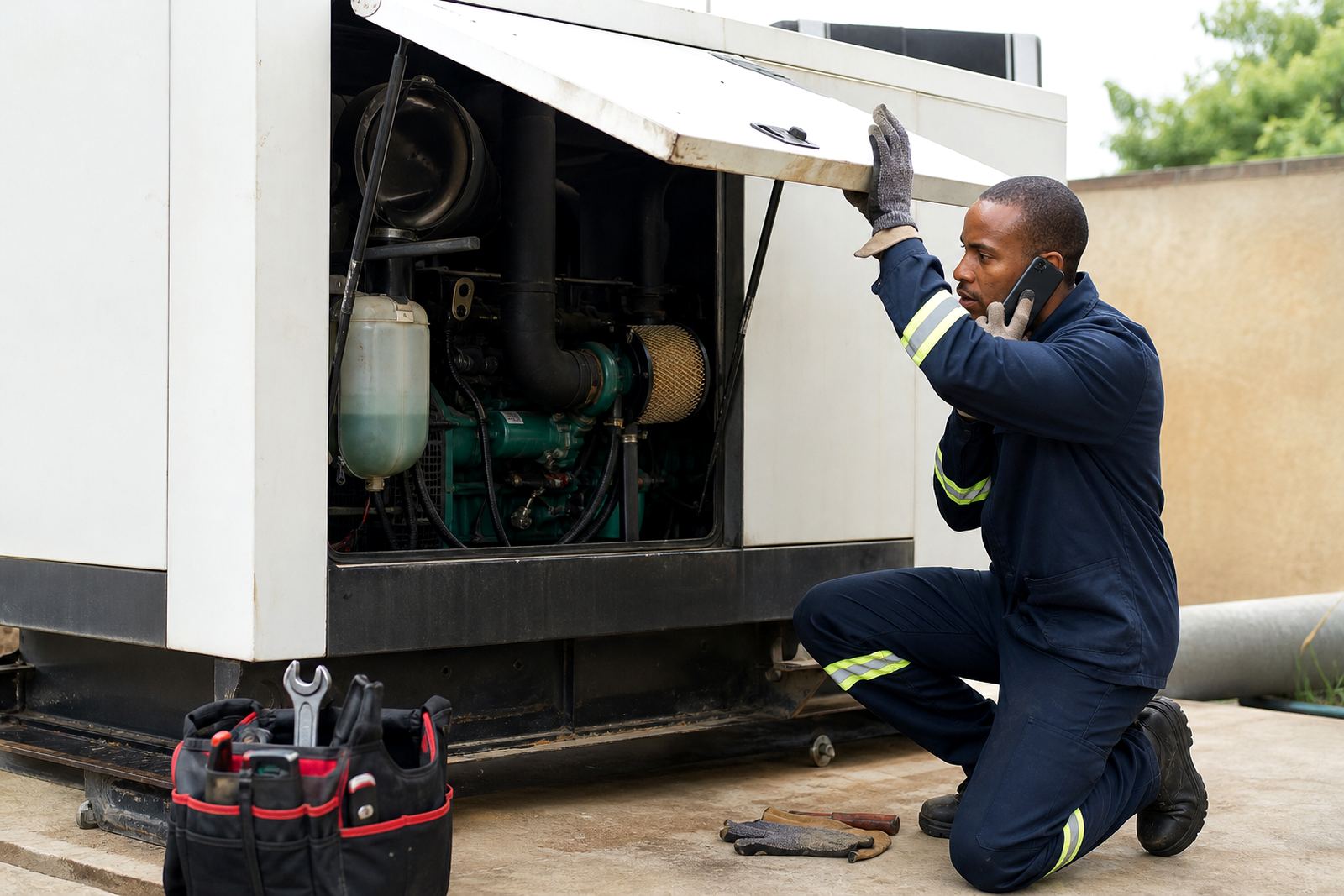
A generator often gives warning before a full breakdown, such as hard starting, low battery voltage, uneven running, visible leaks, overheating, or a change in exhaust smoke. On busy sites in Gauteng or on the coast, dust, heat and humidity can all affect how a unit performs, especially if routine servicing has slipped. We assess the fault, isolate likely causes, and decide whether the unit can be returned to service on site or needs deeper repair in a controlled setting.
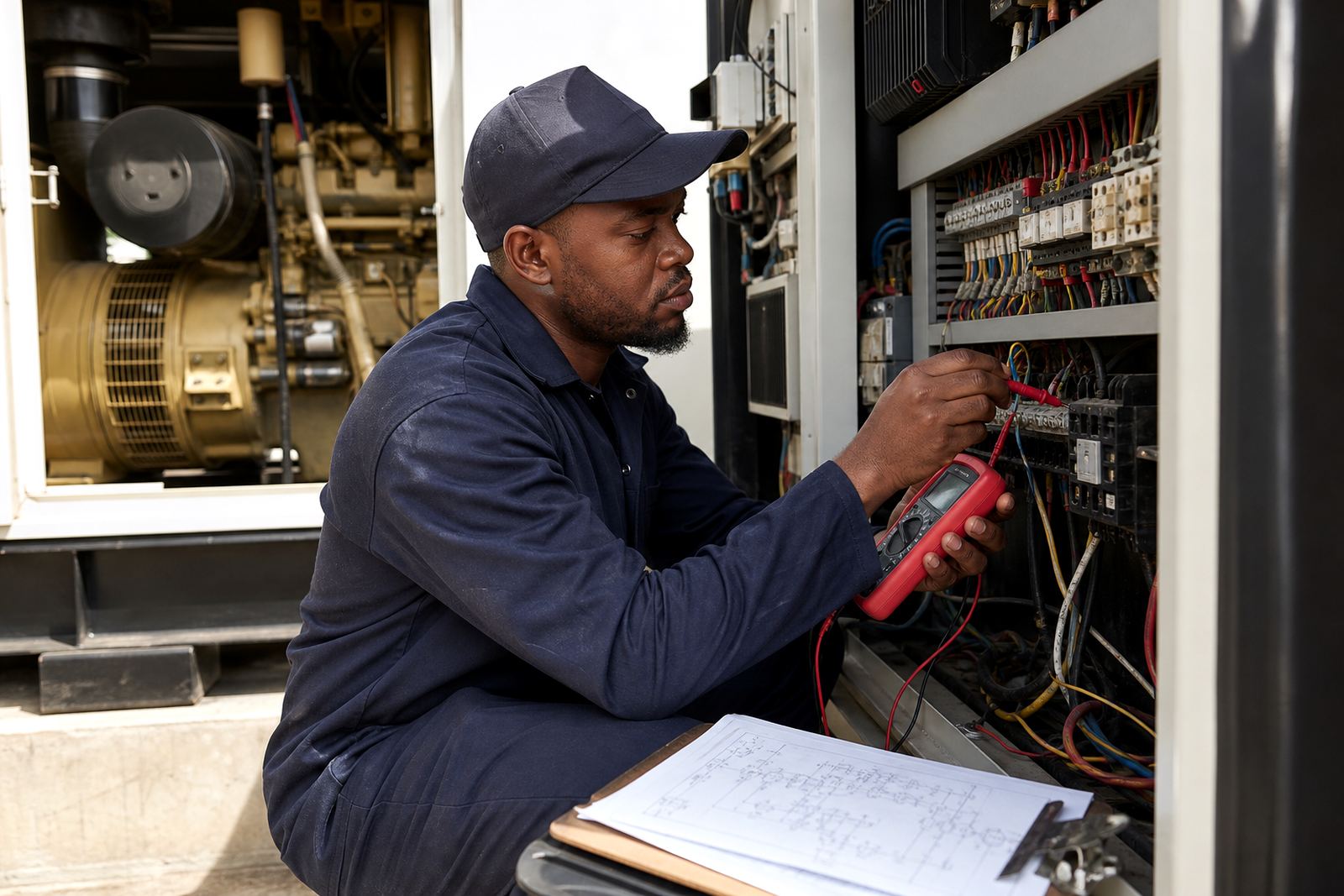
Electrical work is handled by qualified people and carried out in line with local regulations and site safety rules. That matters for changeover equipment, control circuits, safety interlocks and any repair where live testing would be unsafe. We do not treat a noisy alarm or tripping breaker as minor, because a small issue can grow into downtime pretty quickly.
Callout work that gets sorted first
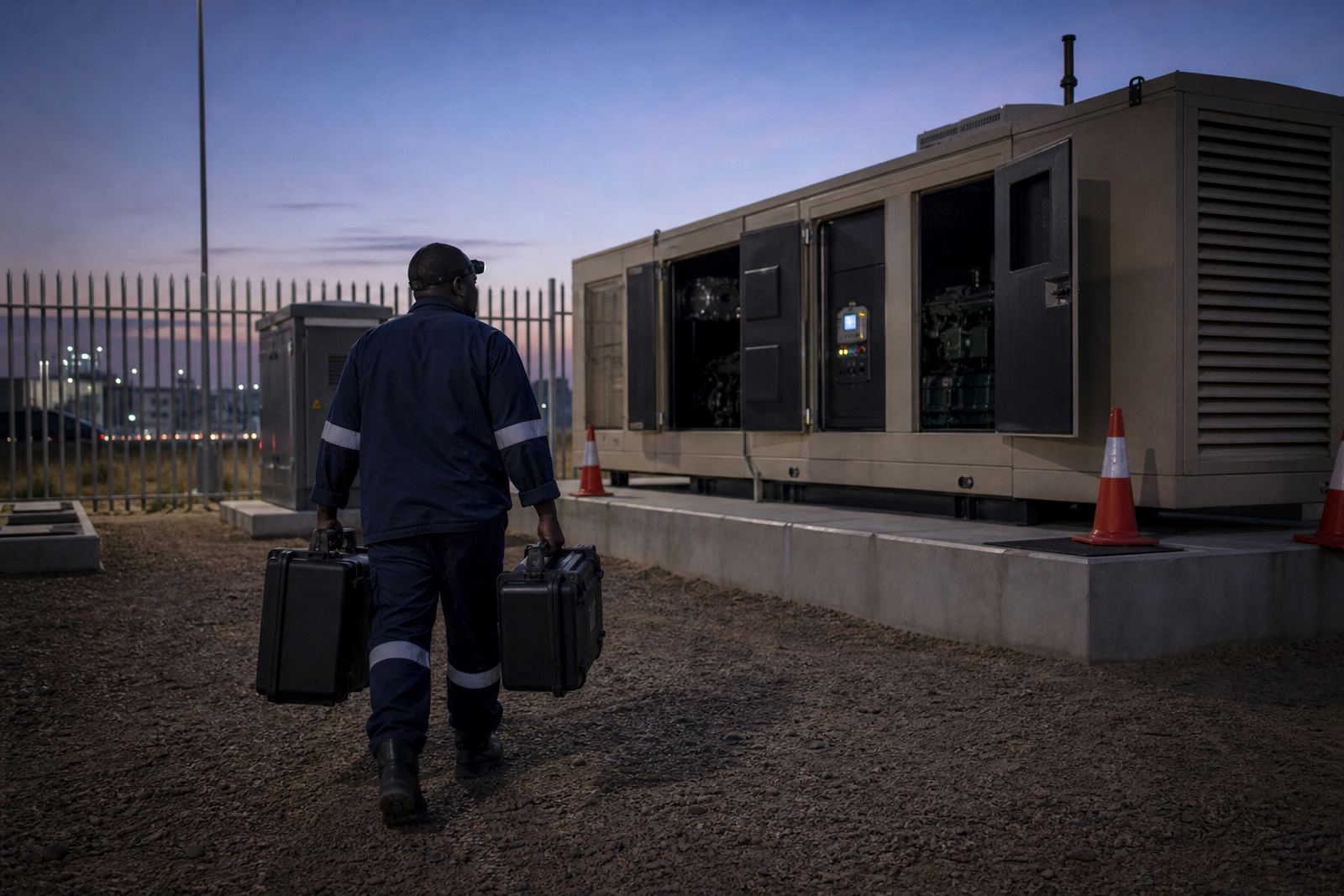
Emergency attendance is about stabilising the set, protecting the engine and avoiding damage to connected equipment. The first visit usually focuses on the things most likely to stop the unit from carrying load, then the less urgent items can be planned into the next service window. On contract sites we also check whether repeated faults point to a servicing gap, poor fuel condition or a failing starter system.
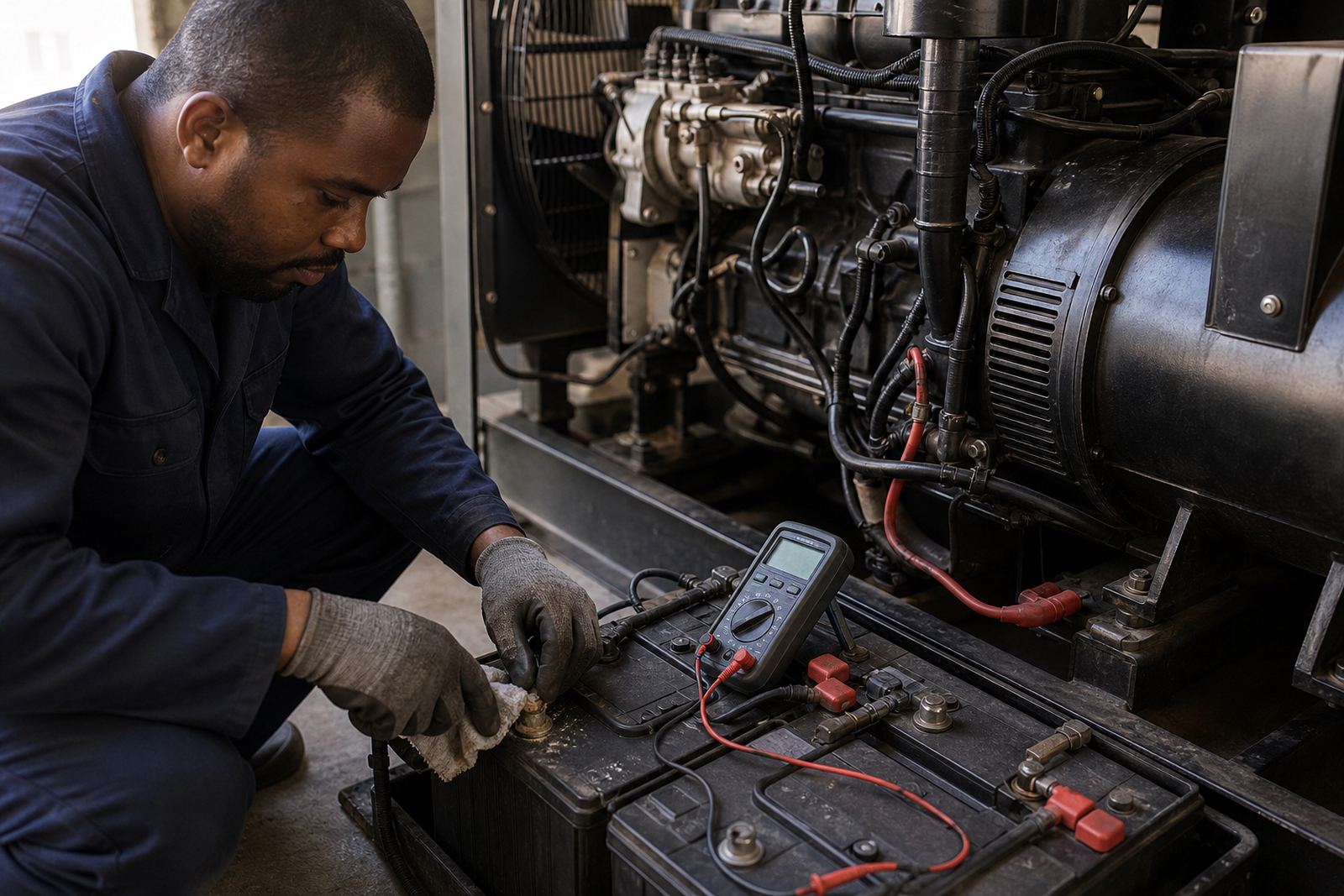
- Battery testing and starter circuit checks
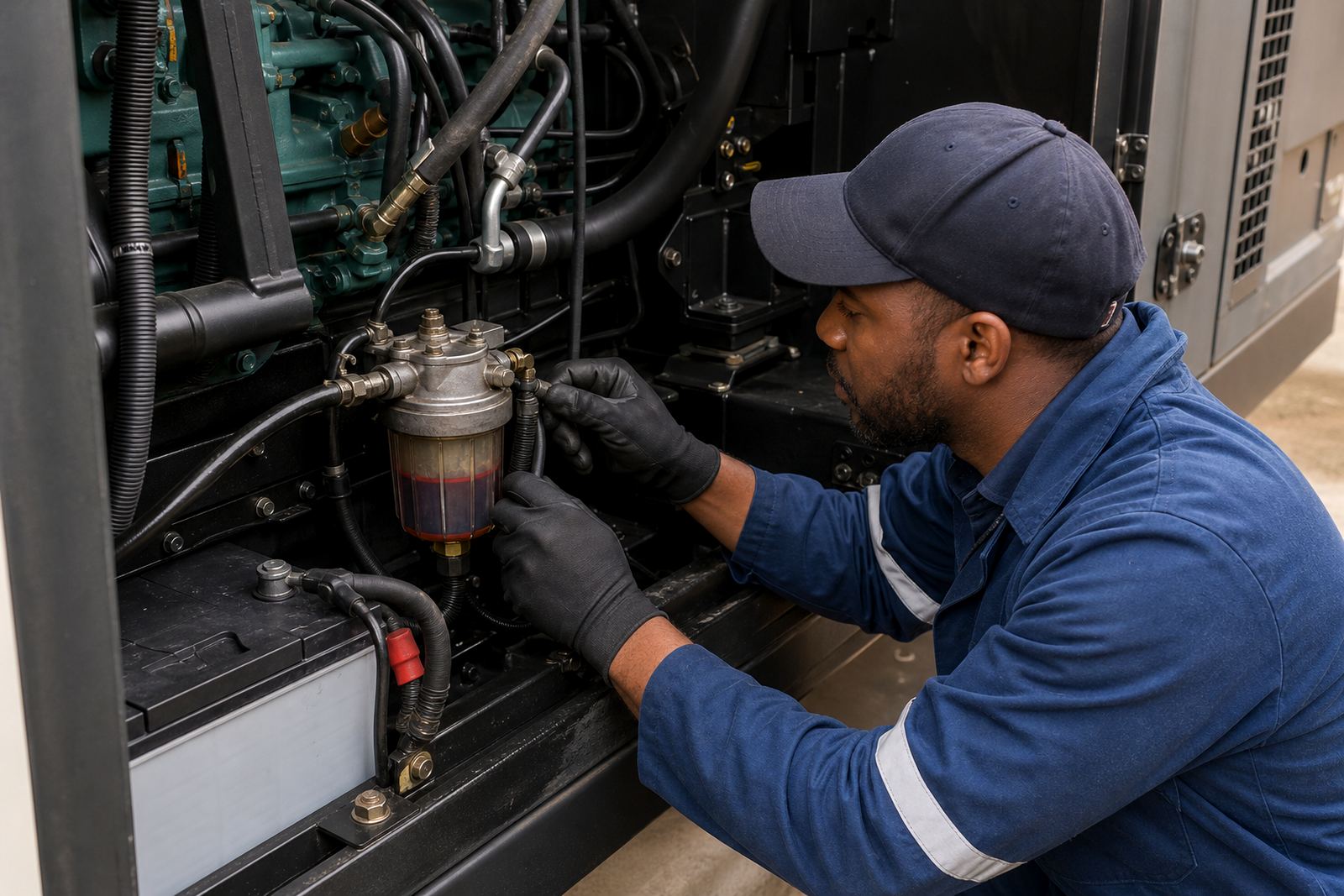
- Fuel system repairs and leak tracing
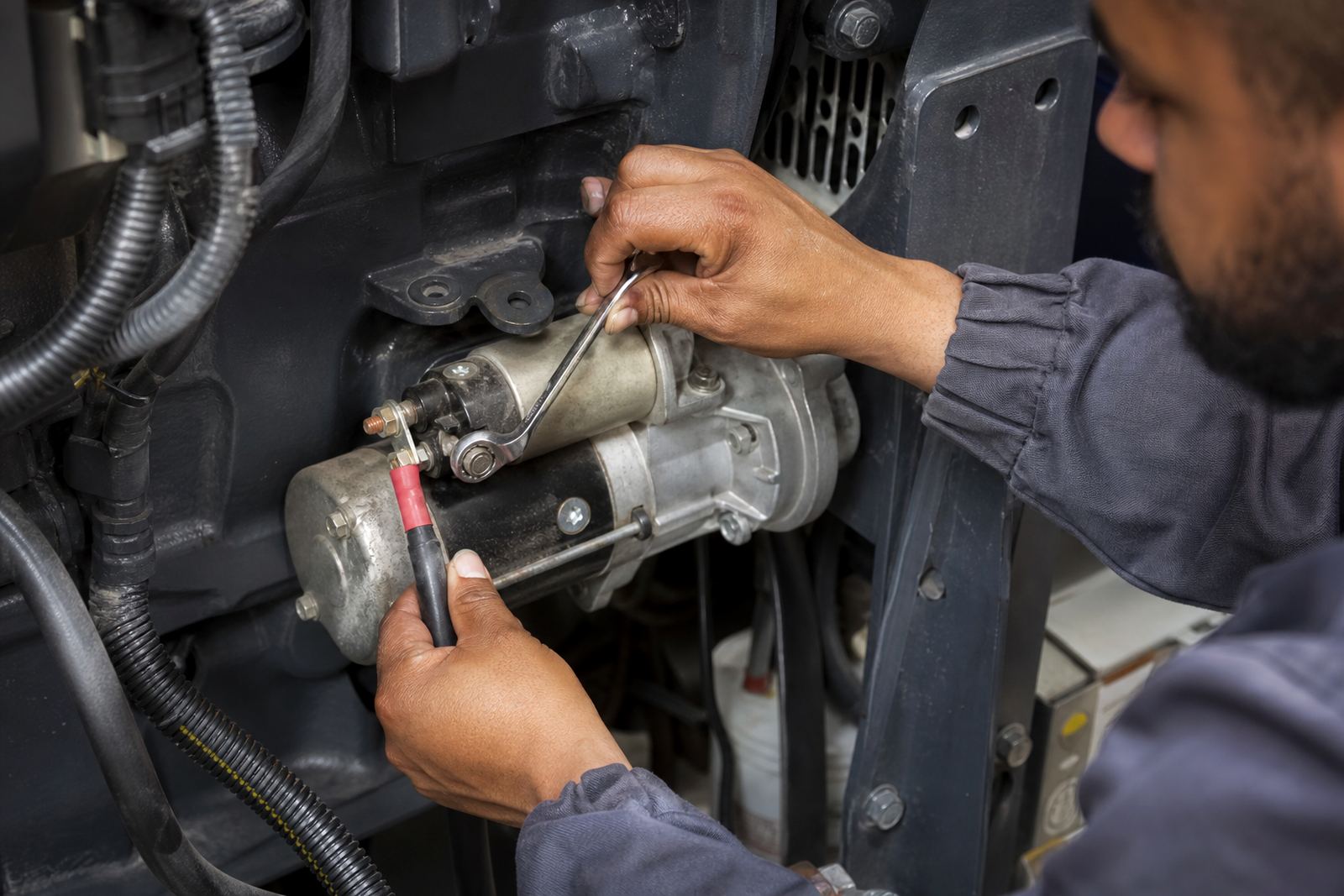
- Starter motor faults and crank no-start issues
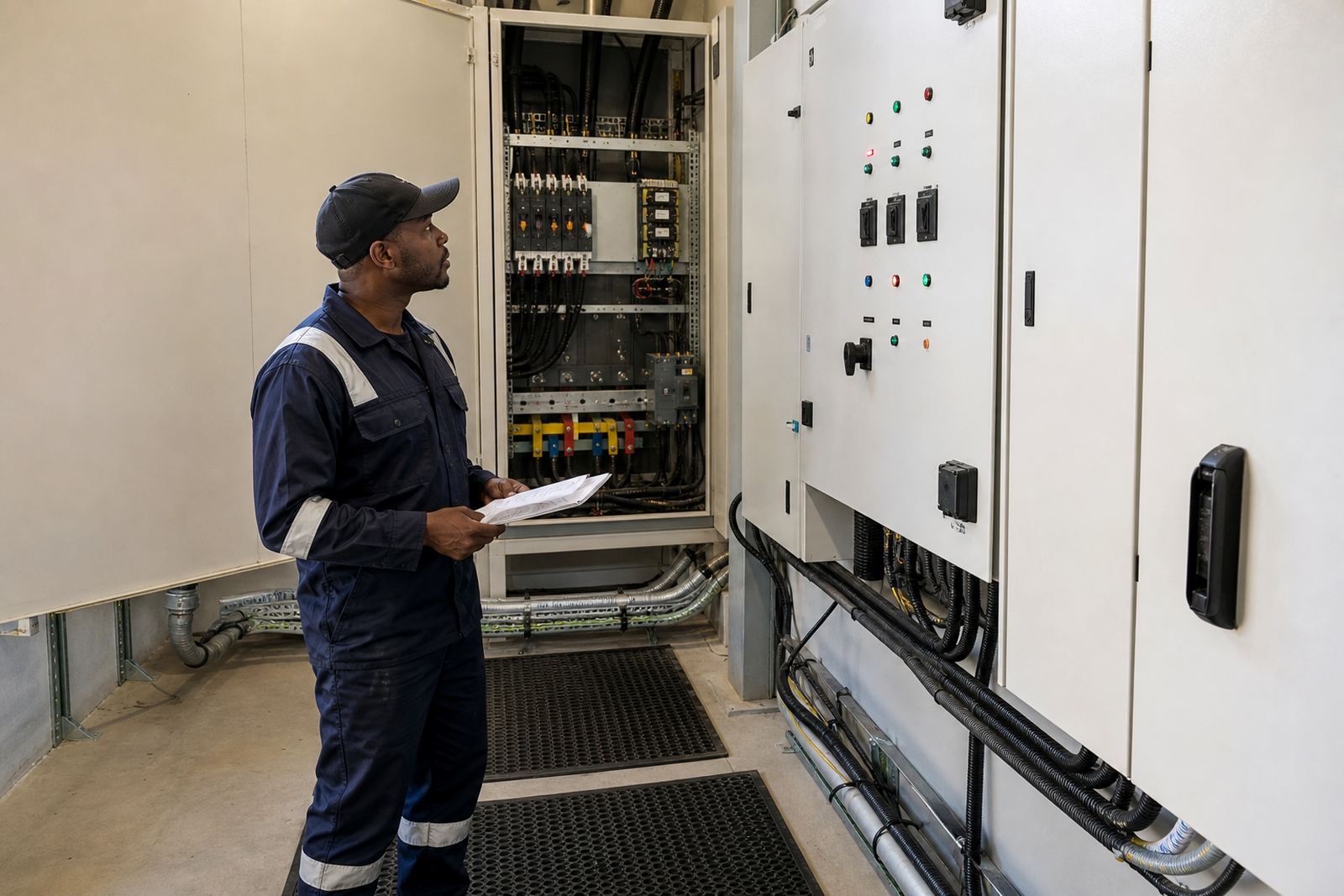
- Changeover switch checks and control fault finding
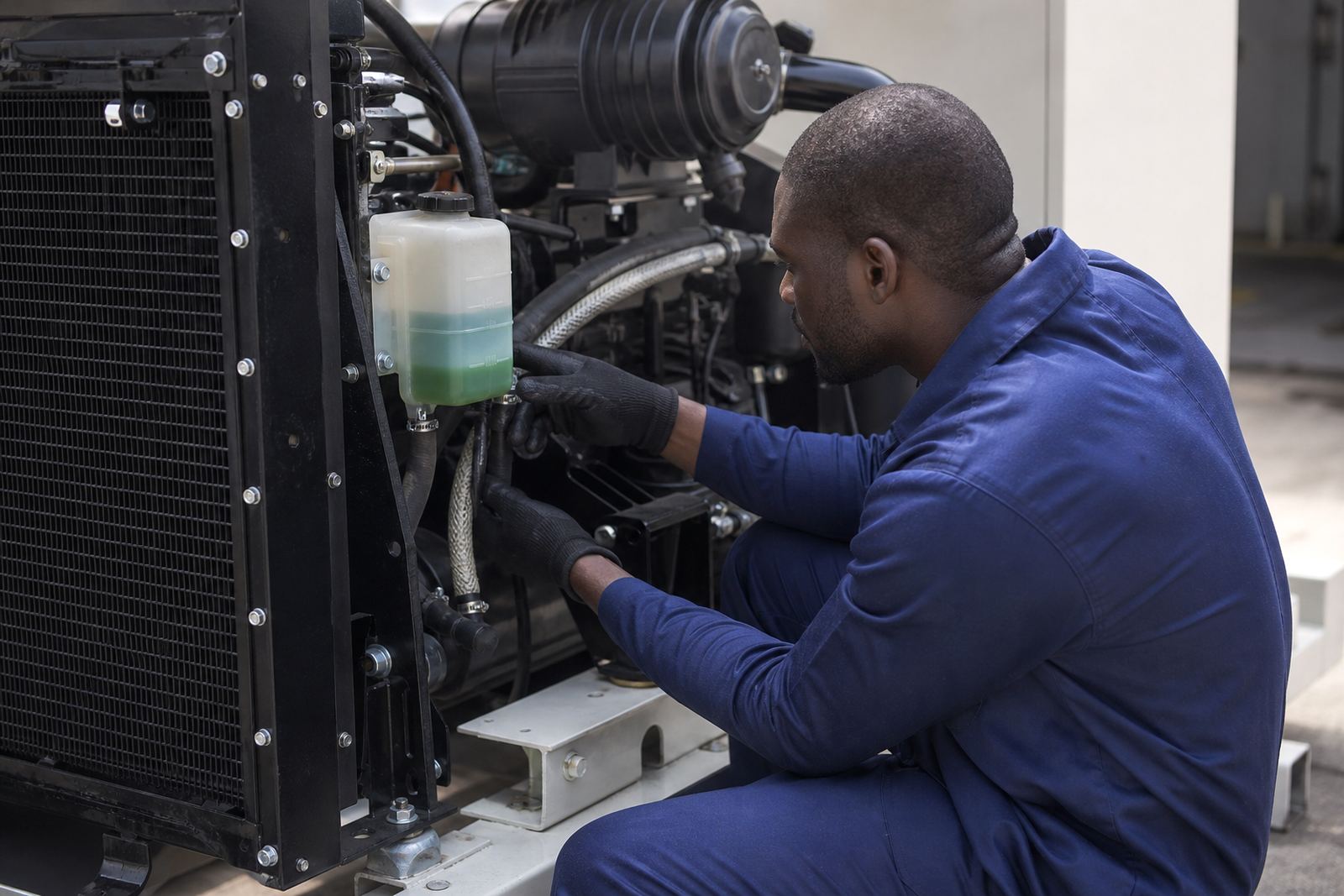
- Cooling faults, low coolant alarms and hose failures
Repair tasks that are usually worth doing together
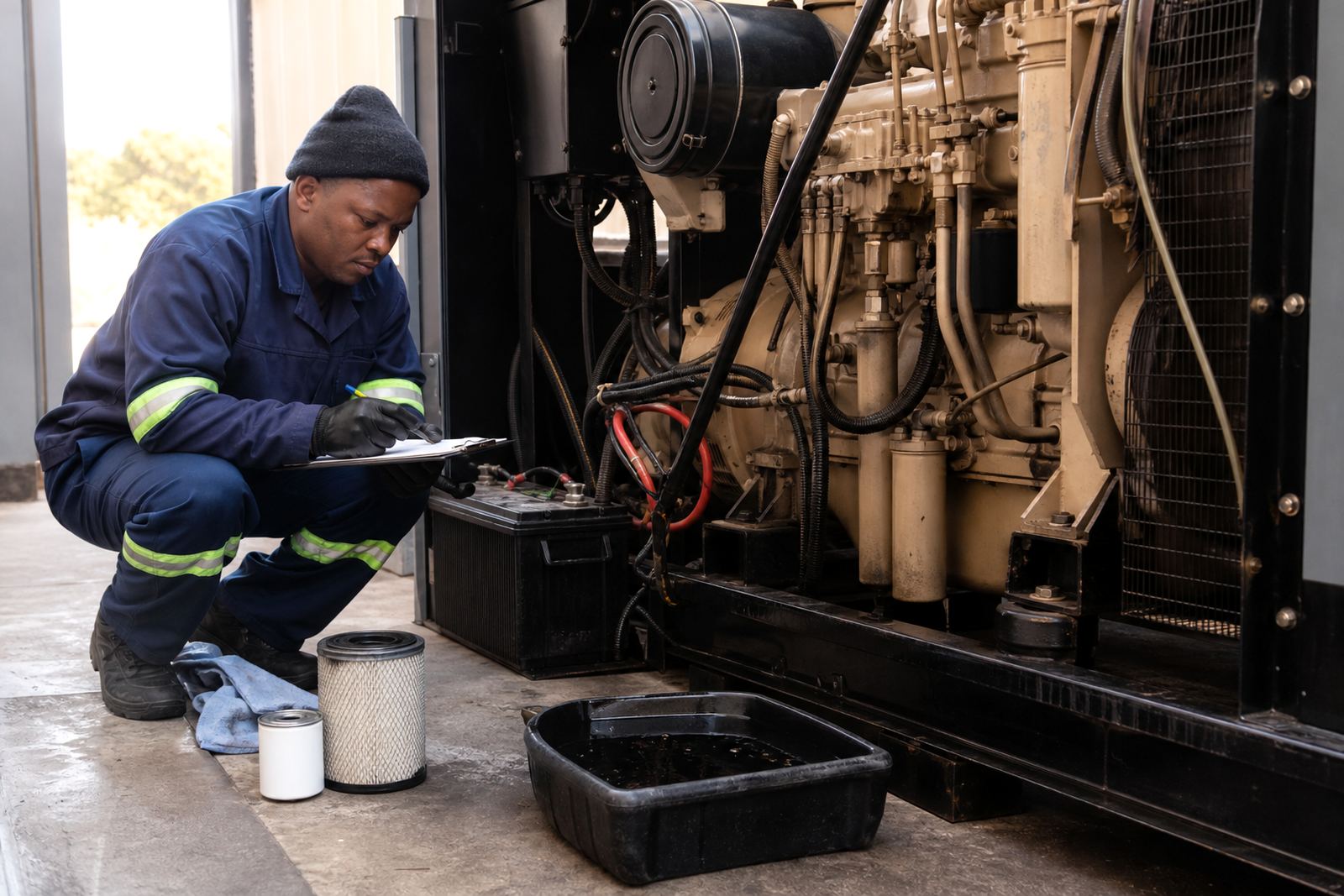
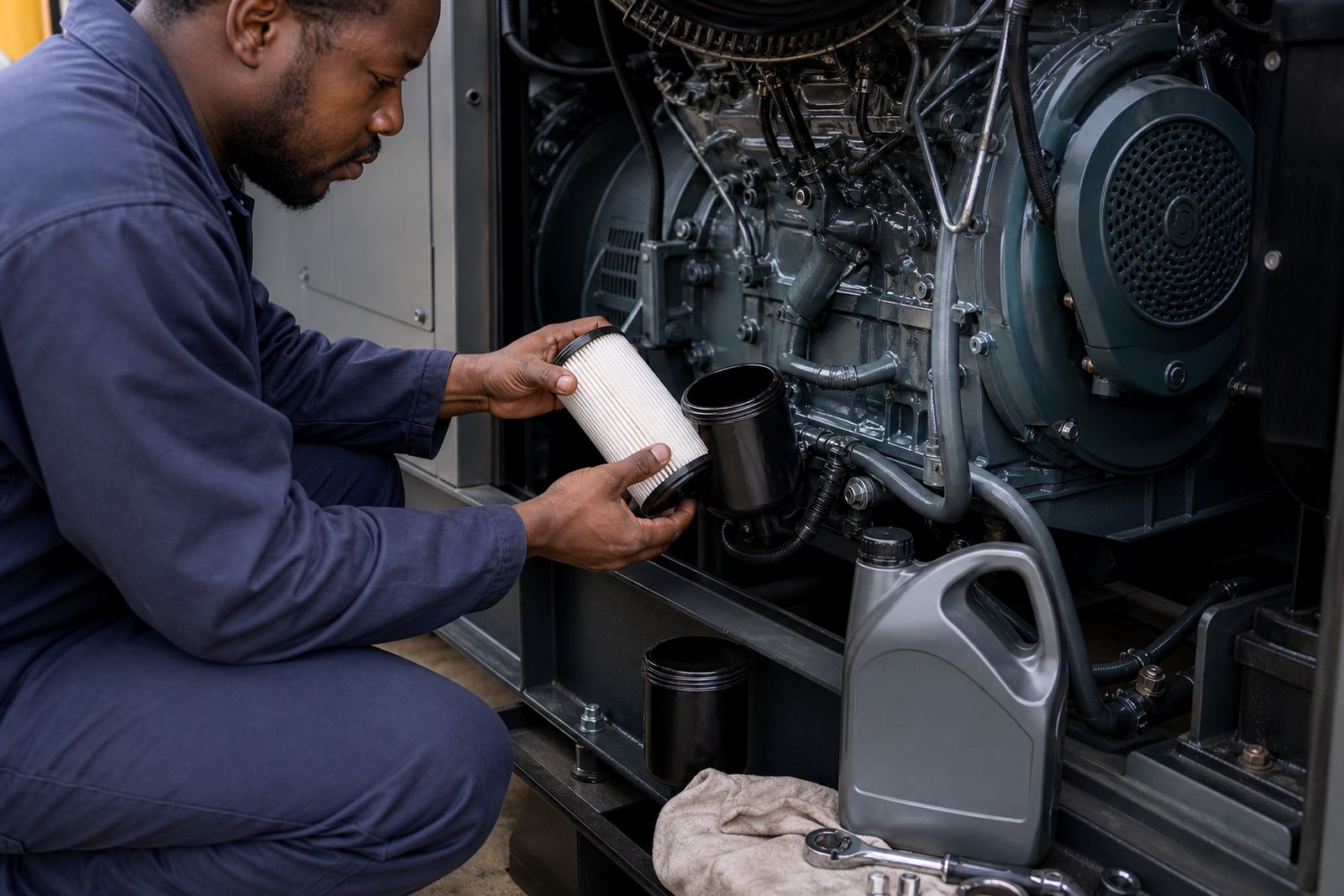
Many breakdowns happen because several wear items were left too long. If oil is tired, filters are clogged or coolant is weak, the set can run hot and lose reliability. We often combine the repair visit with the maintenance items that help prevent the same fault returning, rather than doing one patch and hoping for the best.
- Oil and filter changes after contamination or service overdue alarms
- Coolant system service for leaks, weak hoses and blocked radiators
- Battery replacement guidance when charging no longer holds
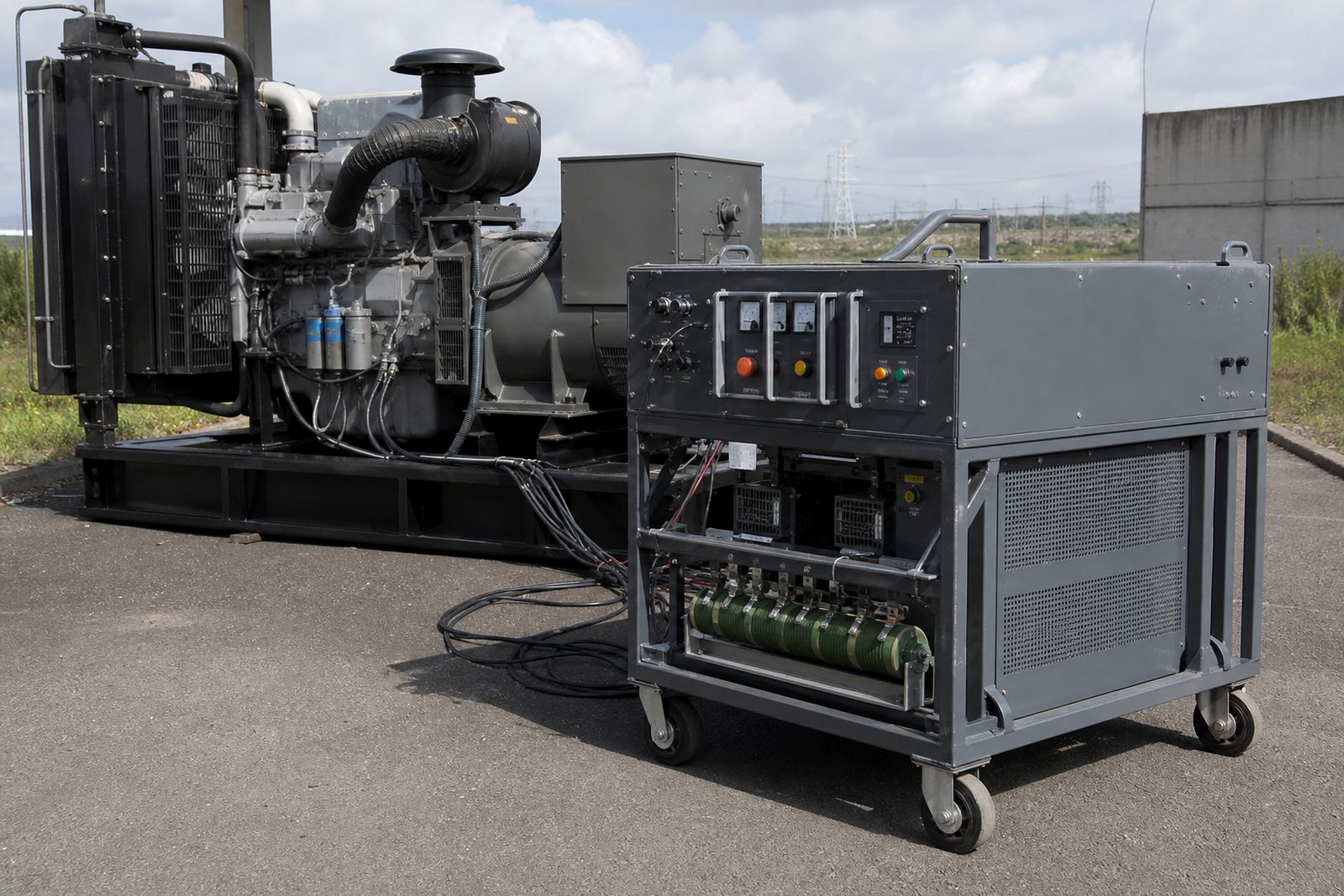
- Load bank testing after long idle periods or light loading
- Service record audits where the last few visits do not match the unit’s condition
This approach is especially useful for business generators that sit on standby for long periods then need to start immediately during load shedding or unplanned outages. A unit that looks fine on paper can still fail under load if hidden faults were missed.
How load testing helps with repairs
A generator that starts but cannot carry load is not doing its job. Load bank testing gives a controlled way to check output, temperature rise, governor response and overall stability without waiting for a real outage. It is useful after repairs, after a long quiet spell, or when a site needs proof that the set will carry the expected demand.
We use the results to confirm whether the repair actually solved the problem or only masked it. If the unit still struggles, the findings usually point toward fuel delivery, cooling issues, faulty controls, or a changeover problem that needs attention before the next real power interruption.
Changeover gear and the parts around it
Plenty of callouts are not caused by the engine at all, but by the equipment that moves the load from mains to generator and back again. A dirty contact, loose termination, damaged control wire or sticking switch can stop the system from transferring properly. That sort of fault needs careful checking, and it must be handled by qualified people who understand the site’s electrical setup.
We inspect the changeover arrangement, the associated controls and the logic that tells the generator when to start or stop. On some premises, especially where multiple tenants or process lines are involved, the fault is not obvious until each part is tested in sequence.
What a site visit usually includes
Every callout is different, but a decent visit should leave the site with a clear fault picture and a proper record of what was done. For maintenance contract clients, that record helps track recurring issues and plan the next intervention before the problem gets worse.
- Visual inspection for leaks, loose fittings and damaged cabling
- Checks on oil level, coolant condition and battery condition
- Functional testing of alarms, controls and start sequence
- Service notes for parts needed and follow-up repairs
- Practical advice on whether the unit can be trusted for the next duty cycle
Midrand sites often need fast turnarounds, while coastal depots may need extra attention to corrosion and moisture-related faults. Good repair work is not just about fixing the obvious item, it is about seeing what caused it in the first place.
Why businesses on contract ask for RelGen
Businesses want a repair partner who can attend, diagnose and explain the issue without wasting a half day. RelGen supports standby and prime generator sets across Johannesburg, Pretoria, Durban, Cape Town, Polokwane, Centurion and Sandton from our Midrand base. Thabo Engelbrecht leads the business, with support from a team that handles operations, service contracts, field coordination, technical support and logistics.
If your unit has a fault, a poor service history or a recurring issue that keeps returning, we can work through it in a practical way and keep the paperwork in order. Clients reach us through the enquiry form on our contact page, and from there the right repair or callout response can be arranged for the site and the machine.