When the set has stopped doing its job
Emergency callouts are for faults that affect standby readiness or site continuity, including failed starts, warning alarms, low battery voltage, fuel delivery problems, coolant loss, changeover switch issues and repeated breaker trips. On a live site, we first work out whether the generator can be made safe to run, or whether it needs isolation and planned repair before the next transfer. Electrical work is only carried out by qualified people in line with local regulations, and we keep the focus on the generator equipment itself.
Our technicians attend standby and prime generators on business sites, from factories and warehouses to offices, retail centres and processing plants. We support sites in Johannesburg, Pretoria, Durban, Cape Town, Polokwane, Centurion, Sandton and surrounding areas, and we understand that a callout in coastal humidity is not the same as one on a hot inland industrial yard. The response needs to match the fault, not just the clock.
- Failed start or no crank conditions
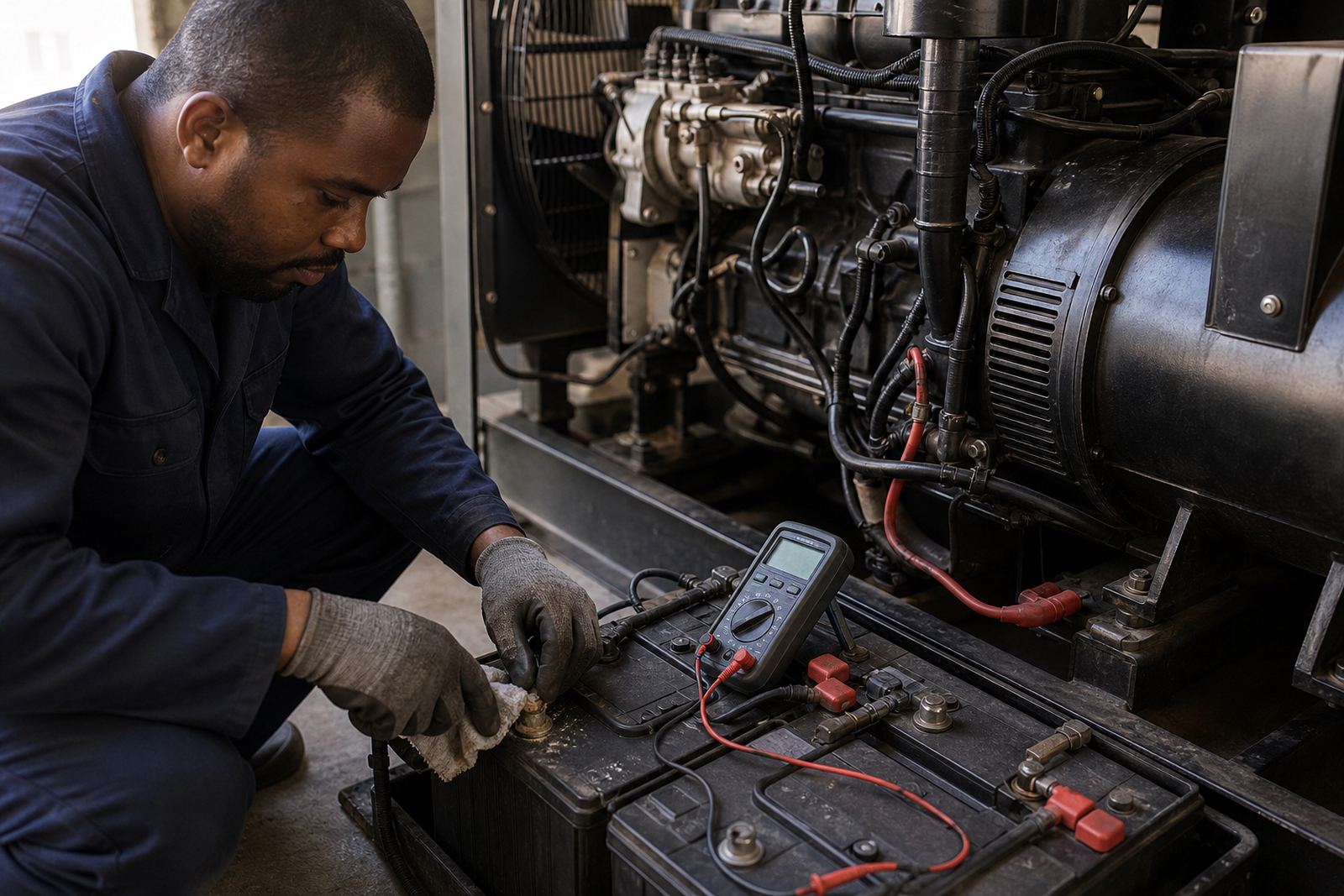
- Low battery voltage or charging faults
- Fuel starvation, air leaks or blocked filters
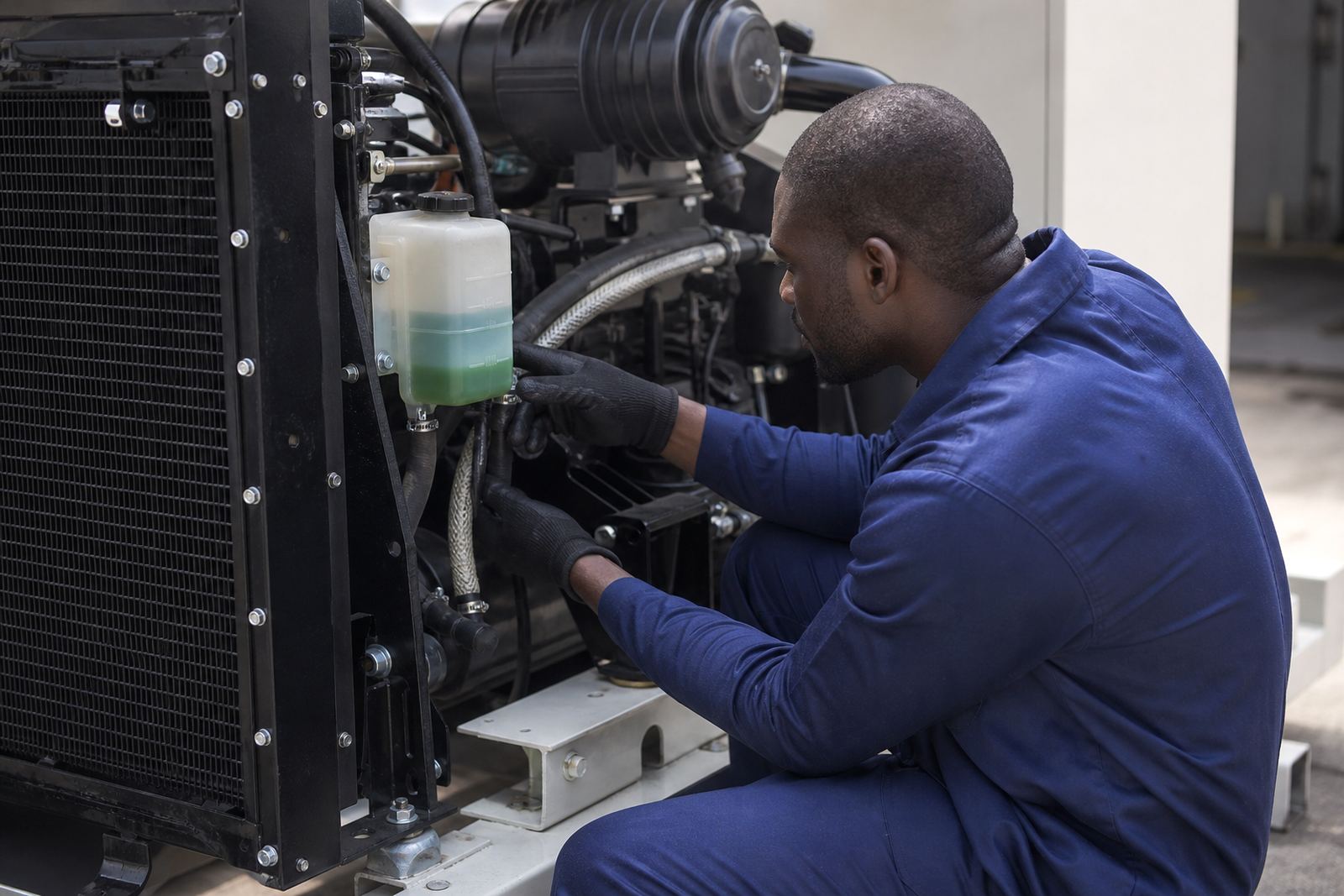
- Overheating, coolant loss or hose damage
- Changeover switch faults and transfer problems
What happens on site, step by step
Every urgent attendance starts with a short fault briefing so we know what the set did, what alarms appeared and whether the site is currently on mains or generator supply. We then isolate what needs isolating, inspect visible damage and test the likely cause before opening up the system further. If there is a simple fix on site, we do it there and then. If not, we give a clear report on the next action, parts needed and any temporary operating limits.
- Initial phone triage and fault confirmation
- Arrival, safety checks and site access coordination
- Visual inspection, alarm review and diagnostic testing
- Minor repairs, resets or temporary stabilising action where safe
- Written feedback with next steps for permanent repair
For standby systems, we also check whether the unit is ready to carry the expected load after the fault is cleared. For prime applications, we look harder at fuel condition, cooling performance and the strain placed on the alternator and starter system under repeated use. If the generator has been left to sit unused for long periods, battery condition and control panel health often tell the story.
Faults we see most often after a hard run
Emergency callouts usually reveal one of a few common issues. Oil leaks, dirty filters, low coolant, weak batteries and failed relays can turn into larger stoppages if they are ignored. Load bank testing is sometimes needed after a repair to confirm that the machine can accept load without overheating, hunting or voltage instability. In some cases the fault sits in the changeover switch rather than the generator itself, which is why the full standby system needs checking, not only the engine.
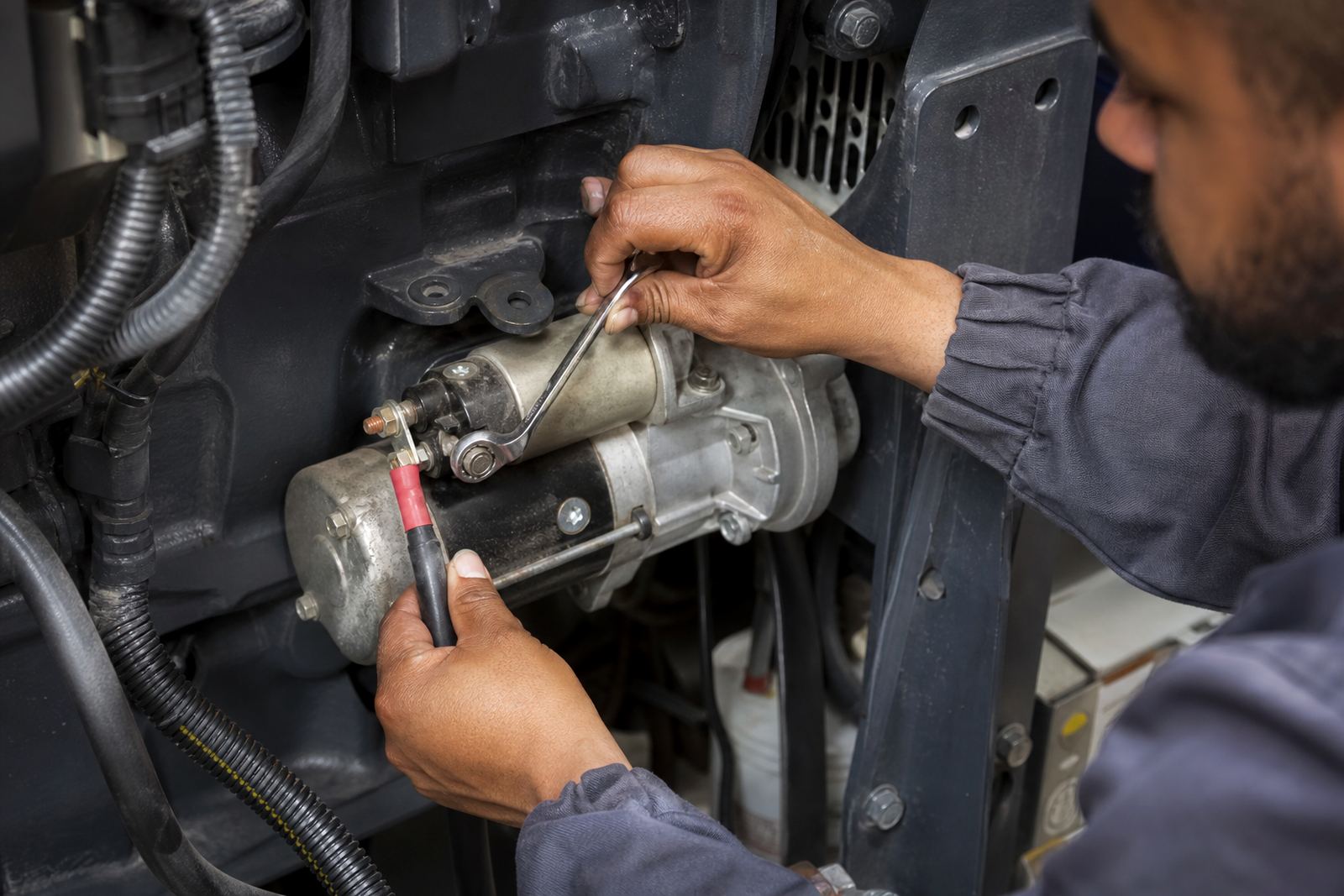
We also handle fuel system repairs, starter system repairs and service record audits where poor history has left the cause unclear. A site that has had repeated alarms or missed servicing often needs a proper clean-up of the paper trail too, because the same fault can keep reappearing if no one has tracked the earlier signs.
- Oil and filter contamination
- Coolant loss, blocked radiators or perished hoses
- Battery failure, loose terminals or charger faults
- Starter motor wear, solenoid problems or wiring damage
- Transfer switch wear, incorrect operation or control faults
Turnaround that fits urgent work, not office hours
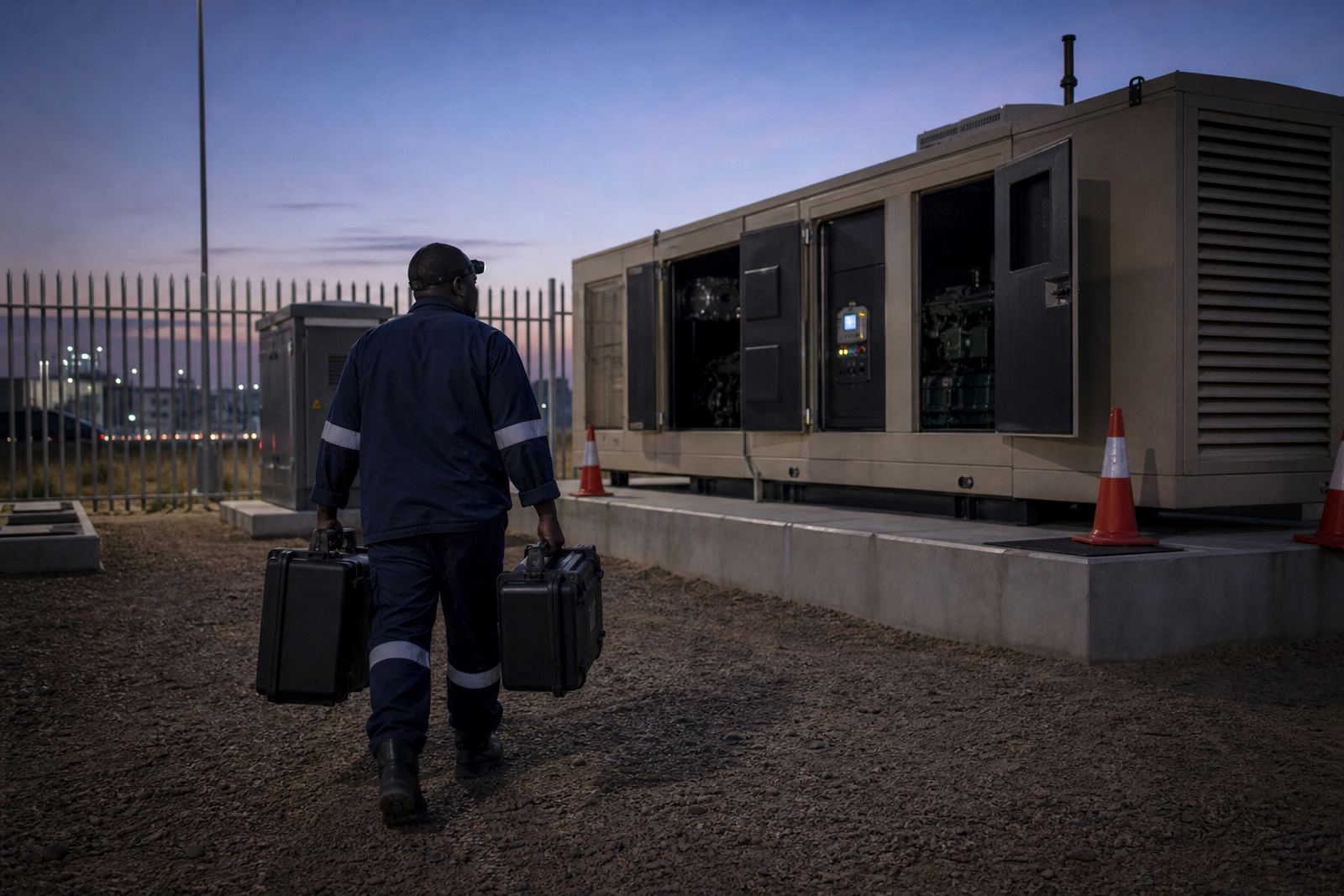
Urgent attendance is arranged according to the fault, the site risk and the distance from our Midrand base. If a generator has failed during business hours, the quickest route is usually a triage call, followed by dispatch once the likely fault has been narrowed down. For out-of-hours events, we prioritise sites where continuity is critical, especially where standby supply is needed for production, security, refrigeration or water systems. Traffic in Gauteng can slow a callout, so we plan routes with that in mind, not after the fact.
We keep realistic turnaround expectations. Some faults are resolved in one visit, others need a return with parts or deeper strip-down work. Where an immediate fix is not possible, we leave the site with a clear status report so management knows whether the set is safe, partially usable or down until repair. That honesty matters more than promising a finish time we cant stand behind.
How pricing is handled on emergency work
Emergency callout pricing depends on the nature of the fault, the distance to site, the time of attendance and whether the job is a diagnostic visit, a minor repair or a more involved restoration. We price the response around actual work required, not a flat promise that ignores travel, after-hours access or the need for specialist parts. If the issue is found to sit in a changeover switch, control system or starter circuit, we explain the labour and parts requirement before proceeding where possible.
There are no hidden extras tucked into the back of the invoice. If a job needs repeat attendance, additional testing, or a load bank test after repair, those items are set out clearly. For businesses on service contracts, urgent work can often be handled within the agreed terms, which helps keep the approval process moving when time is tight. Clear attention to the fault usually saves money, because chasing guesses costs more than proper diagnosis.
Aftercare once the fault has been cleared
Once the immediate issue is sorted, we do not leave the site with only a quick reset and a shrug. We record what failed, what was checked and what should be watched closely over the next few runs. If the generator has been standing unused, we may recommend a follow-up inspection of battery condition, fuel quality, filter condition and coolant level after the next test run. For sites with frequent load shedding or heavy backup reliance, that follow-up matters.
Our aftercare can include service record audits, preventive site inspections and scheduling of the next proper service once operations are stable again. If the emergency callout exposed a deeper wear pattern, we will spell out the likely risk points so the site team can plan ahead instead of waiting for another stoppage. That may include starter checks, fuel system attention or testing of the transfer gear under controlled conditions.
- Fault report with findings and action taken
- Advice on any temporary operating limits
- Recommendation for follow-up testing or parts replacement
- Clear record for facilities, operations or maintenance teams
The people behind the truck and the toolkit
RelGen operates from Midrand, Gauteng and supports businesses across South Africa through a team that knows generator downtime is never just a technical issue. Thabo Engelbrecht leads the business, with Naledi Shezi overseeing operations, Johan Matlala managing service contracts, Ayanda Khoza coordinating field service, Muneerah Daniels heading technical support, Sibusiso Wessels as senior generator technician and Rikus Botha managing stores and logistics. That structure helps us get the right people, parts and paperwork moving fast.
For emergency callouts, the value is in the practical details: the right diagnostic kit, the right replacement items, and a technician who understands how a generator behaves under real site conditions. Whether the fault is a weak battery in Pretoria, a fuel issue in Durban or a transfer problem in Cape Town, we work to restore safe readiness without unnecessary delay.
Key facts
| Service type | Emergency callouts for standby and prime generators |
|---|---|
| Base | Midrand, Gauteng |
| Coverage | Johannesburg, Pretoria, Durban, Cape Town, Polokwane, Centurion and Sandton |
| Typical fault checks | Oil, filters, coolant, batteries, fuel system, starter system, changeover switch |
| Testing options | Load bank testing and functional run checks where required |
| Compliance note | Electrical work only by qualified people under local regulations |