
When a battery looks fine but still lets you down
A generator battery can appear healthy and still fail under load when it is time to start. We see this on standby sets that sit through load-shedding cycles, as well as prime units working hard on construction sites, workshops and processing plants. A battery that is sulphated, undercharged, or affected by loose connections can still show a surface charge and then collapse when the starter draws current.
Our battery testing service is built around start reliability. We check the battery condition, the charging path, terminal condition and the way the starter circuit responds. That matters in Gauteng heat, coastal humidity in Durban and Cape Town, and dusty conditions around industrial sites where terminals corrode faster than expected.
What RelGen checks during a battery visit
We work through the starting system in a practical order so the fault can be isolated properly. Electrical work is handled by qualified people in line with local regulations, and any unsafe condition is reported before a restart is attempted.
- Visual inspection of batteries, trays, clamps and cabling
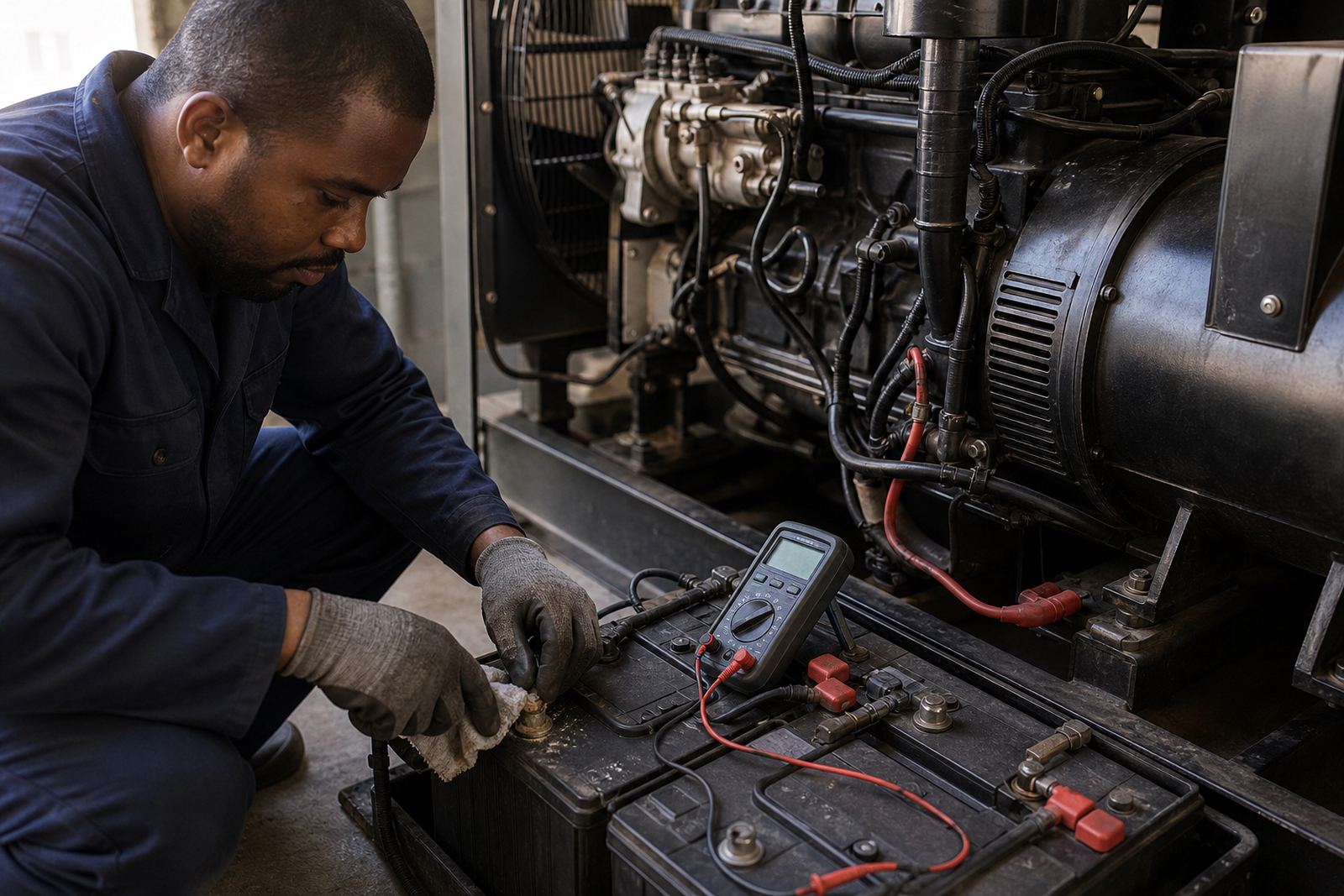
- Terminal cleaning and corrosion removal
- Voltage checks at rest and during cranking
- Charging review from the alternator or charger
- Specific gravity checks where battery type allows it
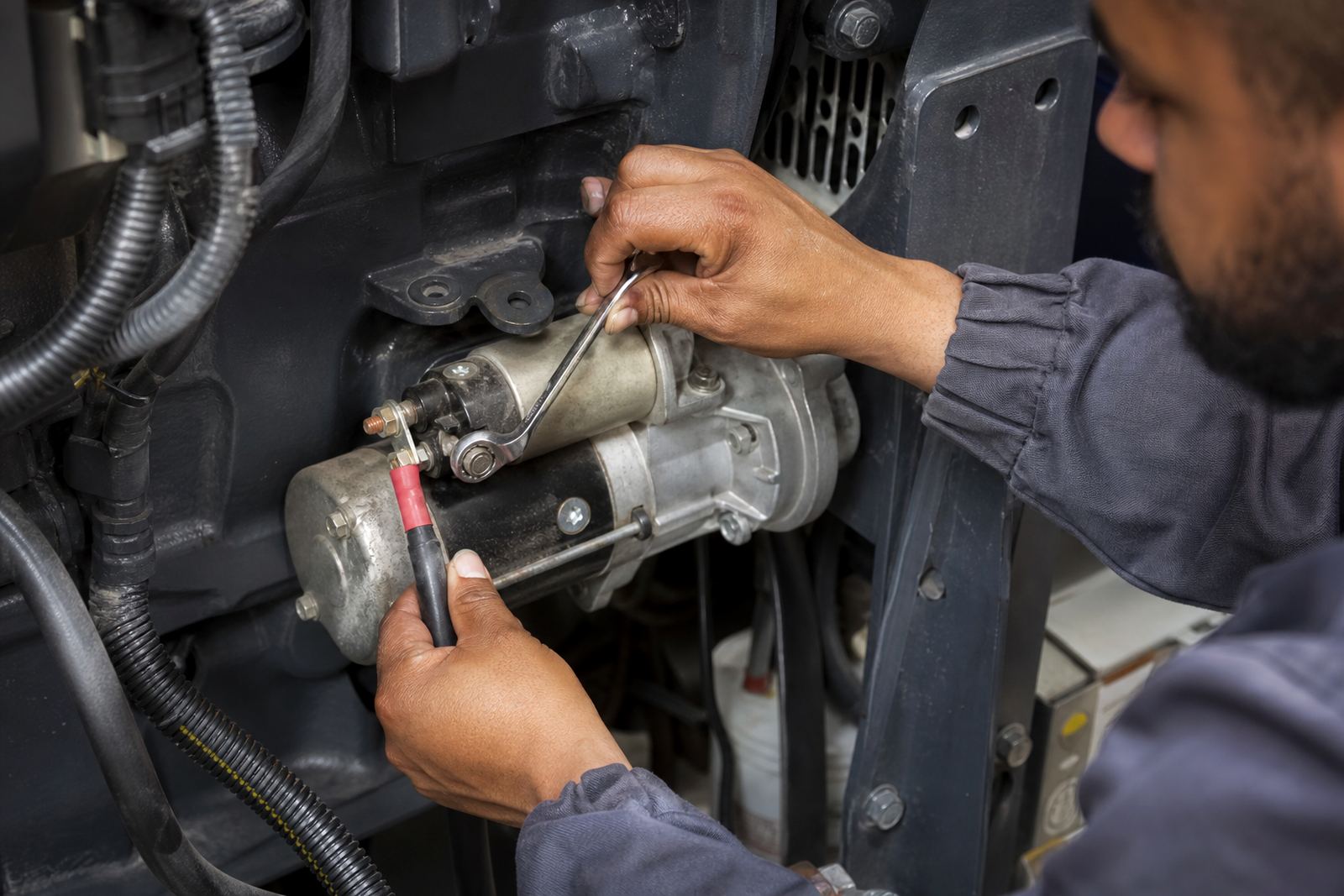
- Starter current response and cable condition checks
- Replacement planning where the battery is nearing end of life
We also look for signs of swelling, leakage, heat damage and repeated undercharging. If a battery has been repeatedly deep-cycled or left flat, it may still function for a short while but not reliably enough for standby duty. That is where replacement planning becomes part of the service rather than an emergency after failure.
How the testing process runs on site
Every visit starts with a short site check, especially where access is tight or the generator is in a plant room. We confirm the battery bank arrangement, isolate where needed and inspect the starting circuit before taking readings. If there is a charger fault, a loose terminal or a failing earth connection, we do not ignore it and hope for the best.
The process usually includes a baseline reading, a load or crank test, then a charging verification after the set has started. If there are multiple batteries in series or parallel, we compare readings across the bank so weak units can be picked up early. In many cases the problem is not the battery alone but a charging issue, dirty terminals, or a charger left set incorrectly after a previous visit.
- Initial inspection and identification of battery type and age
- Cleaning, tightening and protective treatment on terminals
- Measured test of starting performance under cranking load
- Charging output review while the set runs
- Report on condition, risks and recommended action
Replacement planning without guessing
Battery replacement should be based on condition and measured performance, not just appearance. We help clients plan ahead when a battery shows slow cranking, reduced capacity, repeated top-up needs or signs of plate wear. That is especially useful for operations that cannot afford a failed morning start or a missed transfer after a utility outage.
Where replacement is advised, we record the battery size, terminal layout, reserve capacity requirement and physical fitment constraints so the next installation is correct. We also check whether the charging system is the real cause, because fitting a new battery into a bad charging setup just creates another failure later on. A tidy battery tray and secure clamping matter too, since vibration loosens connections over time and can crack terminals.
Turnaround times that suit working sites
For routine battery checks on maintenance contracts, we plan visits around your operating hours and site access. Turnaround depends on the number of generators, the condition of the starting system and whether any parts are needed. In many cases we can complete inspection, cleaning and reporting on the same visit. If a battery needs replacement, the lead time depends on availability and the required size or configuration.
Emergency callouts are handled for urgent no-start situations where battery failure is suspected. Where a site has multiple sets, we can prioritise the critical generator first so production, security or cold storage is not left exposed. We keep the process practical and direct, with clear feedback on what was tested and what still needs attention.
Pricing that follows the site, not a flat guess
Battery testing pricing depends on the number of units, access conditions, the amount of fault-finding needed and whether the work forms part of a larger generator service. A small standby unit in Midrand is not the same as a bank of batteries on a plant site in Durban or a multi-set installation in Cape Town. We quote according to the actual work required, so the cost reflects the time, testing steps and any follow-up that may be needed.
For contract clients, battery testing is often included in the scheduled service plan or added as a planned item with the rest of the generator checks. That gives you predictable coverage without wasting money on unnecessary repeat visits. If extra repairs are found, we explain the issue clearly before any further work goes ahead.
- Best suited to standby and prime generators under service contract
- Quoted on site conditions, battery count and fault complexity
- Suitable for single units and larger generator rooms
- Can be grouped with oil, filter and load bank services
Aftercare for batteries that must start every time
After testing, we leave you with a practical report covering battery condition, charging status and any items that need attention before the next service visit. If the battery is serviceable, we note what to watch for, such as slow cranking, weak charge recovery or repeated terminal corrosion. If replacement is due soon, we flag it early so you can plan stock and downtime properly.
We also remind site teams about a few everyday checks that reduce trouble, including keeping the battery area clean and dry, making sure the charger is active, and reporting any repeated flat starts. In coastal areas and on sites with strong vibration, a little extra attention goes a long way. That is often the difference between a generator that starts cleanly and one that gets dragged into a fault at the wrong time.
Key facts
| Service type | Generator battery testing and starting system checks |
|---|---|
| Typical focus | Starting batteries, terminals, charging review and replacement planning |
| Readings taken | Resting voltage, cranking performance and charging output |
| Common battery sizes | 12 V and 24 V starting systems, including linked battery banks |
| Service areas | Midrand, Johannesburg, Pretoria, Durban, Cape Town, Polokwane, Centurion and Sandton |
| Support model | Scheduled maintenance contracts and emergency callouts for standby and prime generators |