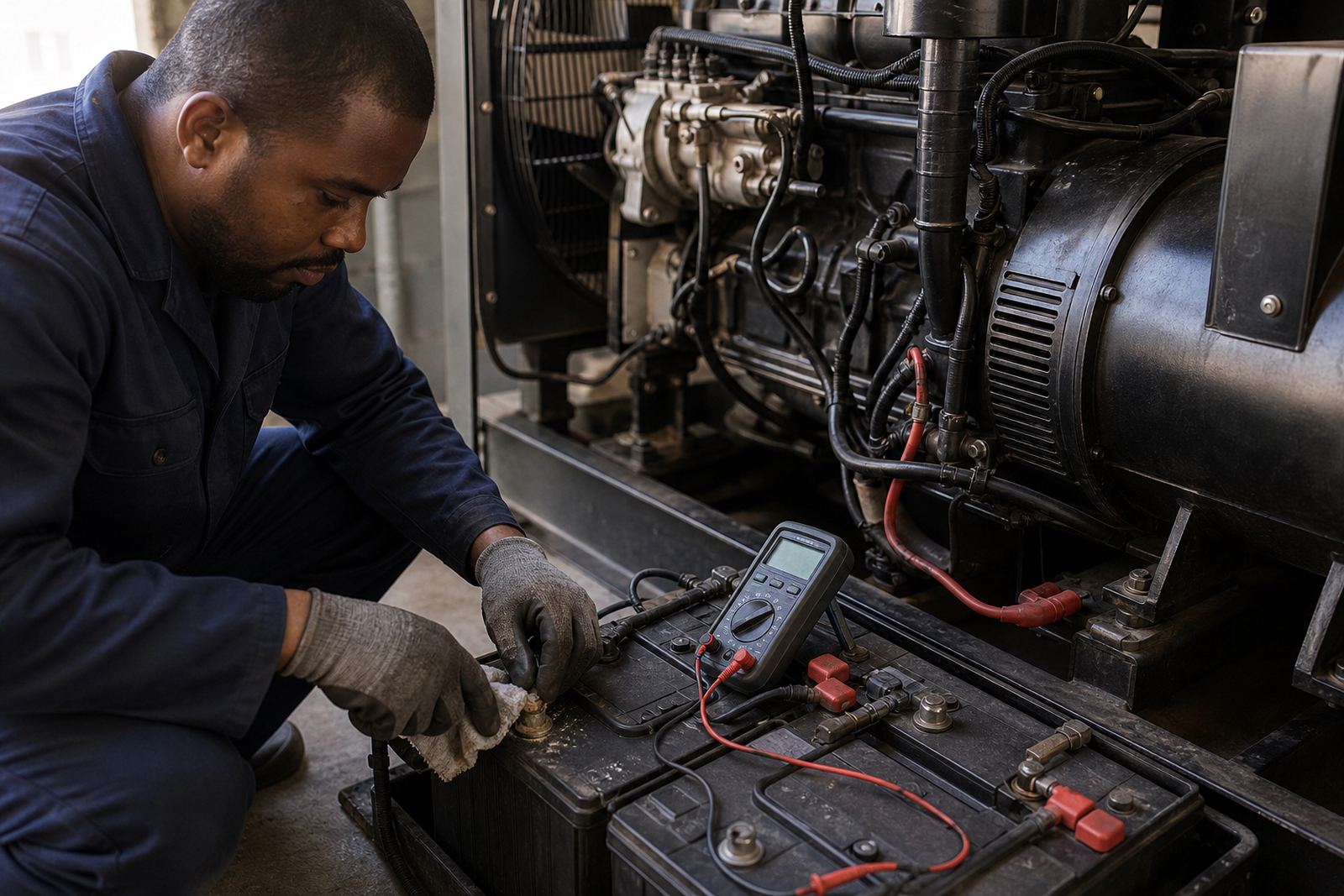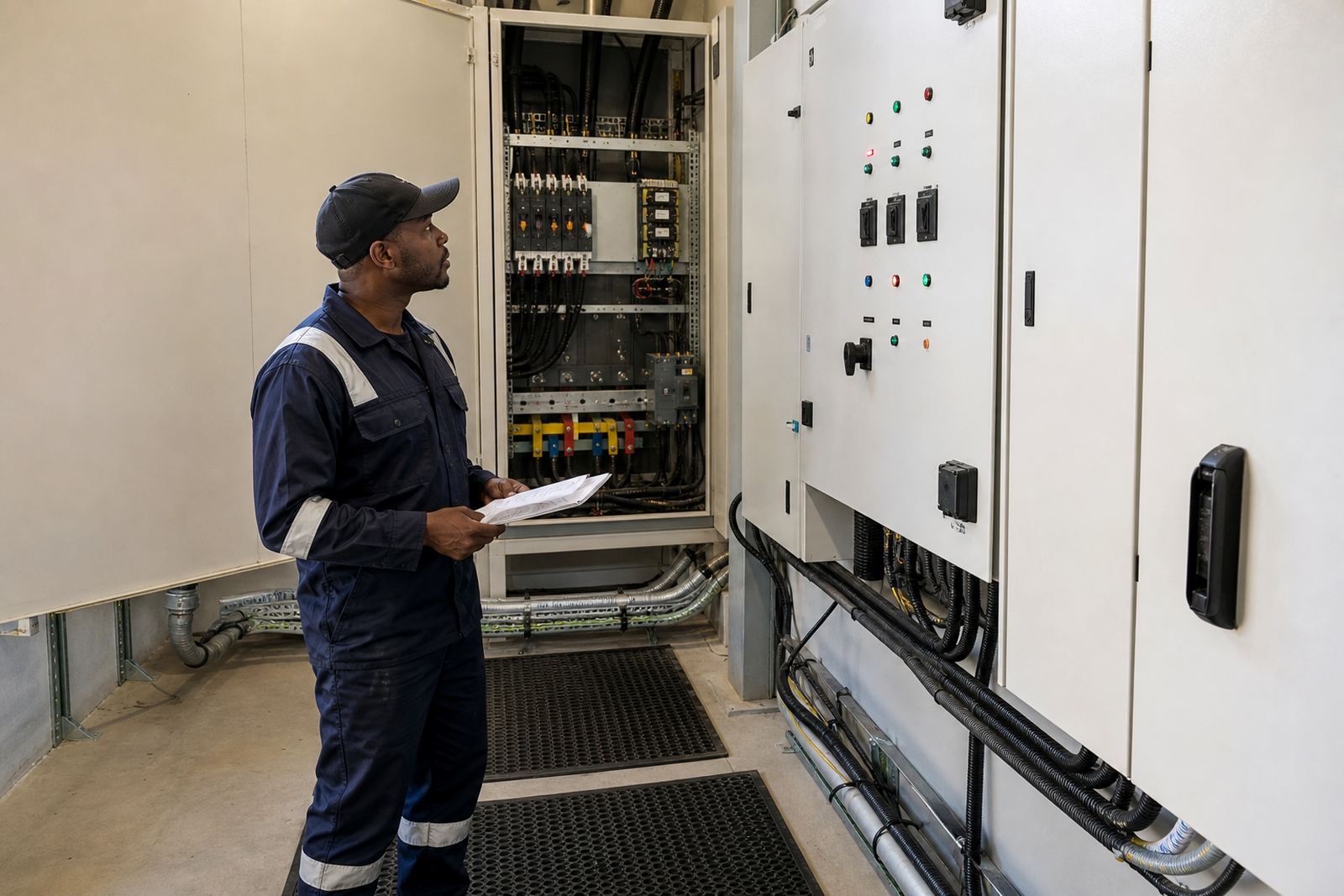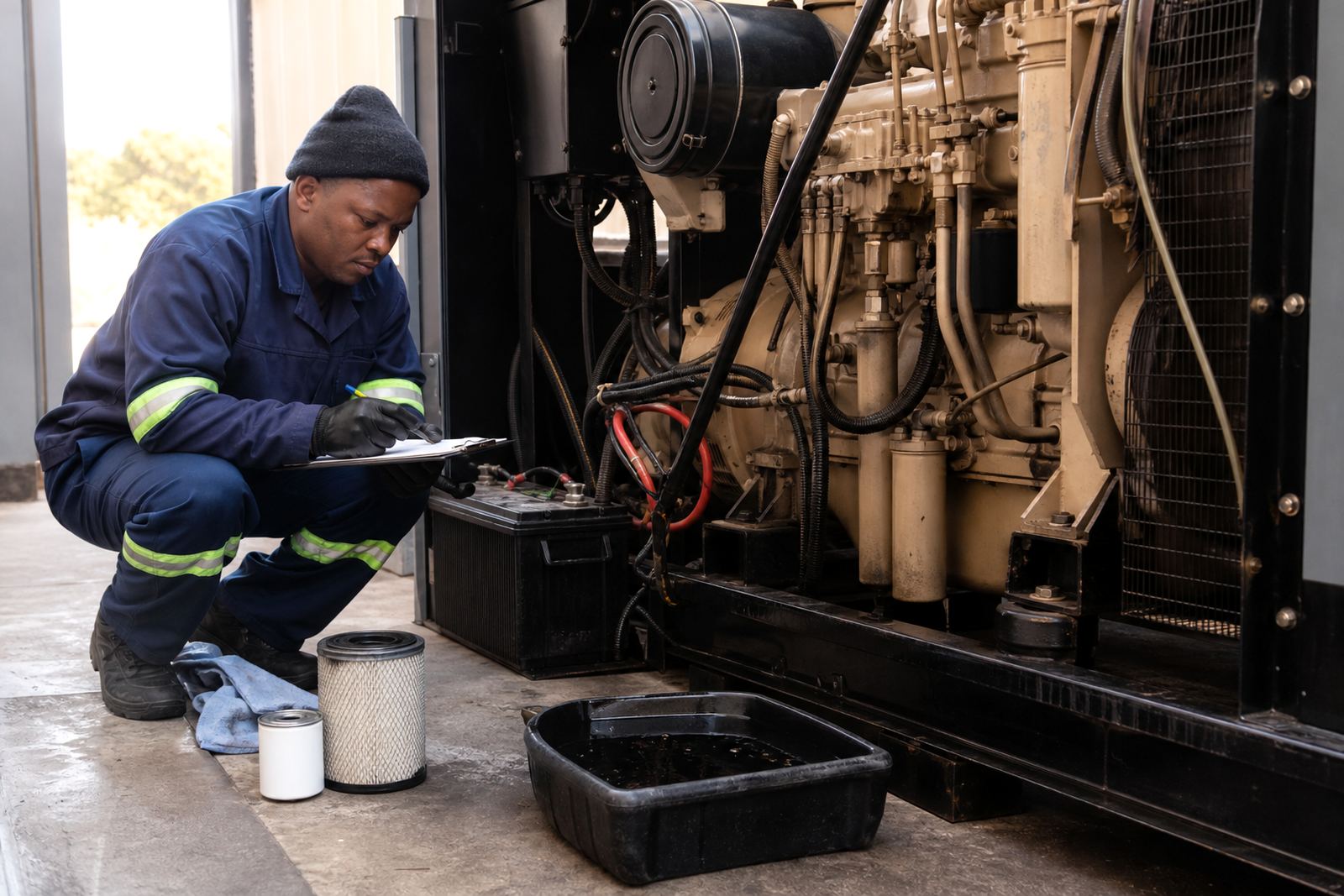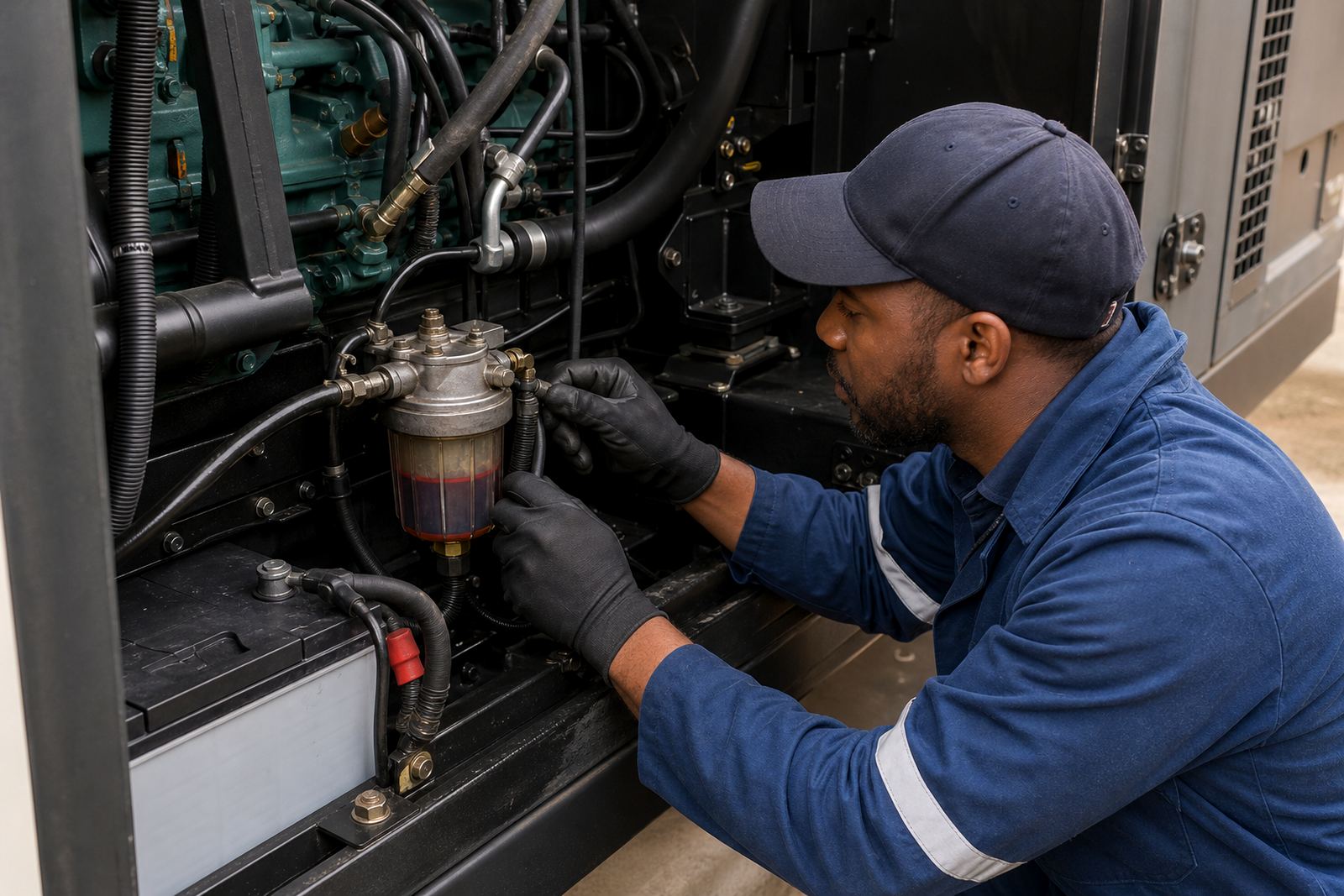
When diesel stops reaching the engine properly
A generator fuel system has a small job but it must do it without fail: move clean fuel from the tank to the engine at the right pressure and without air, water, dirt or restriction. When there is a leak, blocked filter, sticky valve, weak lift pump or contamination in the tank, the set may crank but not fire, cut out under load, smoke heavily, or struggle to carry the site. We attend these faults on standby and prime generators used at factories, depots, offices, retail sites, clinics and construction yards.
Our work covers the full fuel path from tank to engine, including visible line damage, flexible hoses, clamps, filter heads, sediment bowls, water separation issues, priming problems and delivery faults caused by age, vibration or poor fuel quality. On some sites the issue is minor, like a chafed hose or blocked secondary filter. On others, especially where diesel has sat for too long or water has entered the tank, the repair needs a proper clean-out and fault tracing from start to finish.
- Leak tracing on lines, joints, seals and hose connections
- Filter replacement where blockage or collapse is found
- Fuel pressure and delivery checks during cranking and running
- Inspection of tanks, breathers, drains and pick-up points
- Checks for air ingress, contamination and sediment build-up
The faults we repair before they turn into downtime
Fuel system issues usually show themselves in a few predictable ways. The generator may start after repeated attempts, then die a short time later. It may alarm on low fuel pressure, show uneven running, or need hand priming more often than it should. Sometimes the engine runs, but the fuel smell around the set or a damp patch under the skids points to a leak that must be dealt with quickly. In a coastal area like Durban, corrosion can make fittings fail earlier than expected, while in dusty inland sites around Gauteng fine dirt can clog filters faster.
We work on problems linked to the generator fuel supply and not on unrelated site piping outside the set unless it forms part of the installation we are contracted to maintain. Electrical work is carried out by qualified people and within local regulations when the fault overlaps with controls, alarms or shutdown circuits.
- Fuel leaks at hoses, unions, seals and filter housings
- Blocked primary or secondary fuel filters
- Water, sludge or microbial contamination concerns
- Fuel starvation, air locks and failed priming
- Tank pick-up issues and restriction in delivery lines
- Injector feed concerns where diagnosis points to supply fault
How our repair process is handled on site
We start by isolating the set safely and confirming the complaint against the actual fault. The technician checks the fuel path from tank to engine, examines the condition of the diesel, inspects filter condition, verifies line integrity and looks for signs of contamination or water. If a repair can be done on site, we replace the failed part, re-prime the system, bleed air where required and test the generator under load. If the fault needs deeper cleaning or component replacement, we report it clearly and plan the next step with the client.
For contract clients in Midrand, Johannesburg, Pretoria, Sandton, Centurion, Durban, Cape Town and Polokwane, this process is supported by service records so repeat faults can be tracked. We also note any external cause, such as poor fuel storage, loose caps, failing hose clamps or a damaged breather, so the same problem does not keep returning.
- Fault report and visual inspection
- Fuel sample check where contamination is suspected
- Repair or replacement of damaged fuel components
- Bleeding, priming and restart test
- Load test to confirm stable fuel delivery
Turnaround on emergency callouts and planned repairs
Turnaround depends on the fault, access to the set and whether parts are already on hand. Many common fuel repairs can be completed on the same visit, especially where the issue is a blocked filter, loose fitting, perished hose or air ingress at a connection. More involved jobs, such as contaminated fuel removal, tank cleaning support or replacement of a damaged delivery assembly, may need a second visit once the site is safe and the correct parts are ready.
We keep a practical stock of common service items in Midrand so we can move quickly across Gauteng and arrange site visits further afield with less delay. On industrial sites, we also work around shift changes, access rules and any generator cover requirements. If a set is critical for production or security, we plan the repair around the site’s operating window rather than forcing an awkward stop-start approach.
Where fuel faults are linked to load issues or repeated alarms, we may also check changeover switching, battery condition and service history so the repair is not narrowed down too early. That extra step often saves time later, although it adds a bit more testing on the day.
Pricing that follows the fault, not the guesswork
Fuel system repair pricing is based on what the inspection shows, the labour needed, access to the generator, the parts required and whether a site can be fixed during one visit. We do not quote blindly over the phone for a fault that still needs diagnosis. A blocked filter is not priced the same as a contaminated tank or a line failure hidden inside a crowded plant room, so the work is assessed properly first.
For maintenance contract clients, pricing follows the agreed service arrangement and the scope of covered work. If a repair falls outside that scope, we spell out the additional cost before proceeding. This keeps the process clear for facilities managers, operations teams and site supervisors who need straight answers without surprises.
- Inspection-first pricing for unknown faults
- Separate labour and parts where needed
- Contract clients handled under agreed scope
- Clear approval before extra work starts
After the repair, we stay with the fault a bit longer
Once the fuel system is repaired, we do not just hand over the set and leave it at that. We check for leaks again after running, confirm the engine starts cleanly, observe pressure and response under load, and inspect the surrounding area for seepage or residue. If contamination was present, we advise on tank hygiene, fuel storage practice and signs to watch for during the next operating cycle. This is especially useful at coastal sites, where damp and salt air can make fittings deteriorate quicker than expected, and at remote facilities where a small fault can sit unnoticed for too long.
RelGen supports clients on an ongoing contract basis across South Africa, with a base in Midrand and service coverage into Johannesburg, Pretoria, Durban, Cape Town and Polokwane. Thabo Engelbrecht leads the business, with Naledi Shezi, Johan Matlala, Ayanda Khoza, Muneerah Daniels, Sibusiso Wessels and Rikus Botha supporting the operation from scheduling through to parts control and technical work. If a site needs follow-up checks after a repair, we build that into the service record so the next visit starts with proper context.
Key facts
| Generator types | Standby and prime diesel generators |
|---|---|
| Faults covered | Leaks, blocked filters, contamination, delivery faults, air ingress |
| Typical components | Fuel lines, hoses, fittings, filters, pumps, tanks, breathers |
| Testing carried out | Pressure checks, bleeding, priming, restart and load verification |
| Service areas | Midrand, Johannesburg, Pretoria, Durban, Cape Town, Polokwane, Centurion, Sandton |
| Compliance note | Electrical overlap handled by qualified people under local regulations |