What the cooling circuit gets checked for on site
Cooling problems often start small: a slight hose seep, low coolant level, blocked fins, tired clamps or coolant that has lost its protective properties. On a generator, that can lead to overheating, nuisance shutdowns, warped components and avoidable downtime during a load-shedding event or a busy production shift.
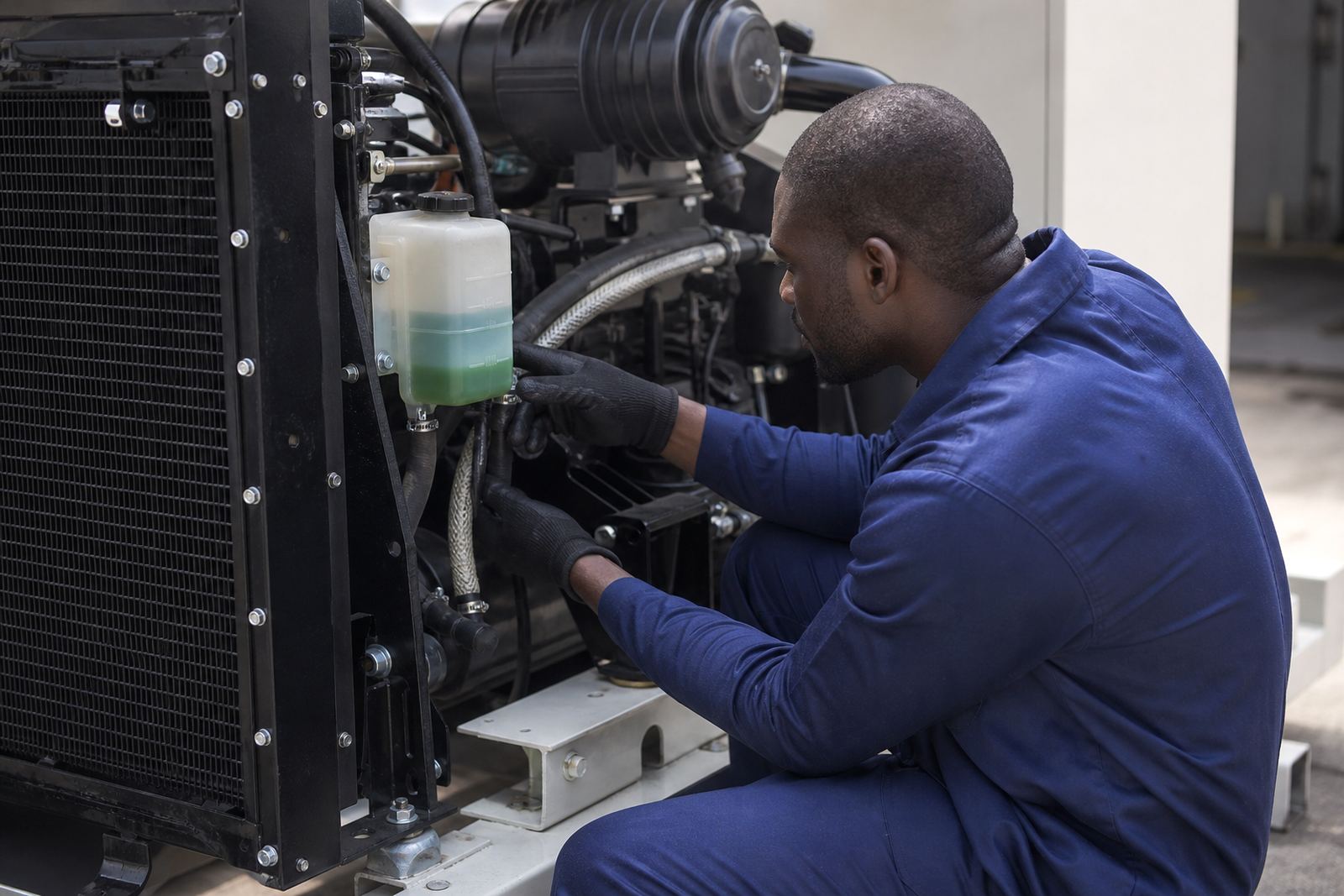
Our coolant system service is built around the actual condition of the set. We inspect the radiator, header tank, hoses, hose clips, fan area, belts where fitted, filler cap, pressure cap and visible pipework. We also look for staining, crusting, air pockets, corrosion and signs of contamination from oil or fuel.
- Coolant level and visible condition
- Hose integrity, clamp security and seepage
- Radiator face blockage from dust, fluff and insects
- Evidence of corrosion, scale or mixed coolant types
- Temperature gauge behaviour during running checks
The service work we carry out on the cooling system
The work carried out depends on what the generator needs, but the focus stays on safe temperature control and clean heat transfer. Where required, we drain and replace coolant, flush the circuit, clean the radiator fins, tighten or replace worn clips and inspect the cap for proper pressure holding. If the set uses a remote radiator or a day tank arrangement nearby, we check the surrounding area for airflow restrictions too.
Radiator cleaning is done carefully so fins are not bent over. In dusty inland areas like Midrand, Johannesburg and Pretoria, fine grit and building dust can block airflow faster than many owners expect. On coastal sites in Durban and Cape Town, salt air and moisture can also accelerate external corrosion, so the cleaning method and corrosion check matter just as much as the refill.
- Coolant drain and refill where required
- System flush to remove sediment and old residue
- Radiator fin cleaning and airflow clearing
- Hose, clamp and cap replacement recommendations
- Leak tracing around joints, pump area and pipe runs
How RelGen approaches the job from first inspection to handover
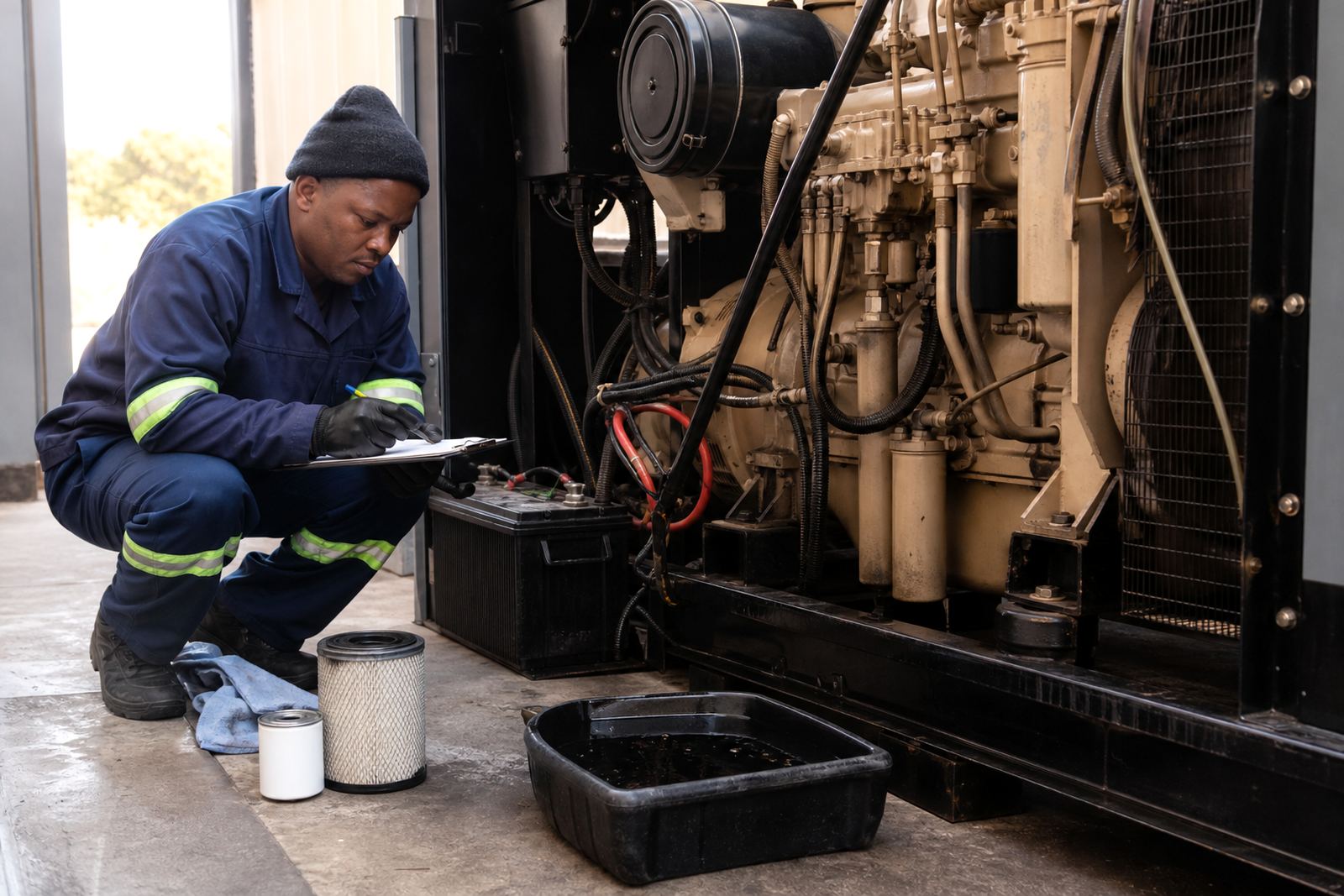
We start with a site inspection and a running check where the generator can be safely tested. Our technician confirms the engine is cold enough for opening the system, then checks the fluid condition, level and obvious physical wear. If the unit has a history of temperature alarms or repeated topping up, we trace the cause rather than just adding coolant and moving on.
After the inspection, we explain what was found and what needs immediate attention versus what should be scheduled next. Electrical work linked to sensors, shutdowns or changeover equipment is handled only by qualified people under local regulations. If the issue points to a thermostat, temperature sender, fan circuit or changeover control fault, that gets treated separately from the coolant system itself.
- Initial visual and running inspection
- Safe cool-down and controlled opening of the system
- Condition report with findings and next steps
- Functional check after refill and restart
Turnaround times for plants, offices and site generators
Turnaround depends on the size of the set, the condition of the cooling system and whether parts are needed. A straightforward inspection and coolant top-up can usually be handled quickly during a scheduled site visit. A full flush, radiator clean and hose replacement will need a longer stop, especially if access is tight or the set is installed in a plant room with restricted working space.
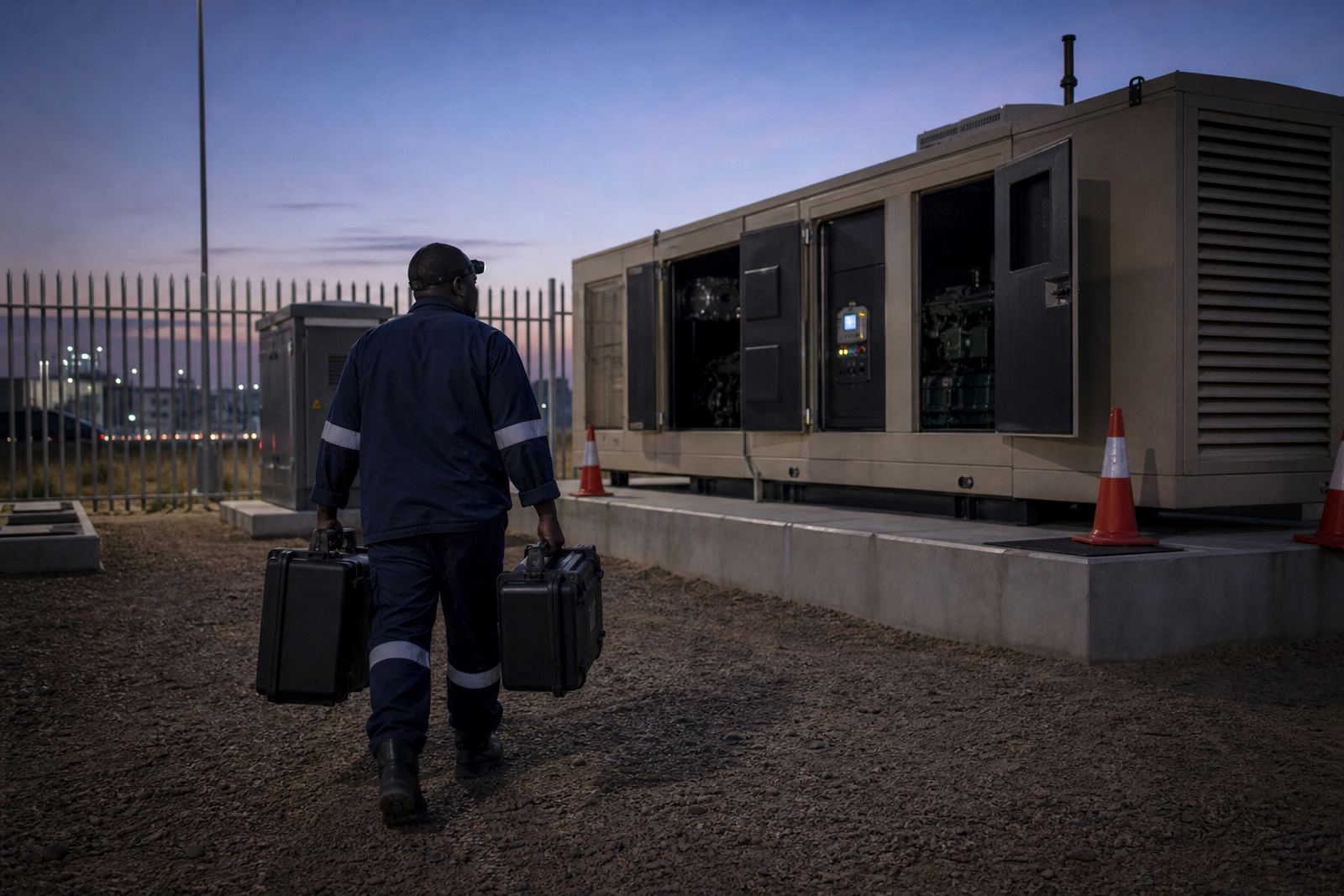
For clients in business districts, factories, construction sites and estates, we plan the work to reduce disruption. Midrand, Centurion and Sandton often need tight scheduling around office hours or shift changes. For Durban, Cape Town and Polokwane, travel time and site access are built into the plan so the team arrives with the right tools and consumables on hand.
- Minor inspection and top-up work: often same visit
- Flush, clean and refill jobs: scheduled in advance
- Fault tracing and repeated overheating: allow longer site time
- After-hours support available where the contract calls for it
Pricing that matches the condition of the set
We do not use one flat figure for every generator because no two cooling systems are in the same state. Pricing is based on the set size, access, fluid volume, the work required and whether the job needs flushing, cleaning, replacement parts or follow-up testing. A set that only needs inspection and coolant condition testing will cost less than one with corrosion, blocked radiator fins and failed hoses.
Before work starts, we outline the scope clearly so you know whether the callout, consumables and labour will cover a routine service or a more involved repair. That gives our clients a practical way to plan for service contracts, plant budgets and emergency events without surprises.
Where the system is already showing temperature alarms, coolant loss or contamination, we recommend getting the root cause sorted before the next shutdown or storm season. That approach is usually cheaper than repeated top-ups and unplanned stoppages.
Aftercare once the coolant system is back in shape
Once the service is complete, we record the findings and the work carried out so your service file stays current. We can note top-up quantities, coolant condition, leak points found, hose wear and any radiator cleaning completed. If a replacement part is still needed, the record makes it easier to track what was discussed and what remains outstanding.
We also advise on what to watch for after the visit. A sudden drop in coolant level, fresh staining under the set, repeated fan noise or an engine that runs hotter than usual should be checked quickly. In coastal humidity and in dusty inland yards, a clean system can still pick up problems from the site itself, so a quick visual check by the operator helps catch issues early.
- Service notes added to the generator record
- Follow-up recommendations listed clearly
- Operator watchpoints explained on handover
- Contract clients can link the job to scheduled servicing
Key facts
| Service type | Generator coolant system service for standby and prime sets |
|---|---|
| Core checks | Coolant level, condition, hoses, clamps, radiator face, cap and visible leaks |
| Typical work | Flush, refill, radiator cleaning, leak tracing and component condition checks |
| Generator sizes | Small commercial sets through to larger plant and process units |
| Site coverage | Midrand, Johannesburg, Pretoria, Durban, Cape Town, Polokwane, Centurion and Sandton |
| Compliance note | Electrical testing and any live electrical work only by qualified people under local regulations |