What the test is meant to show
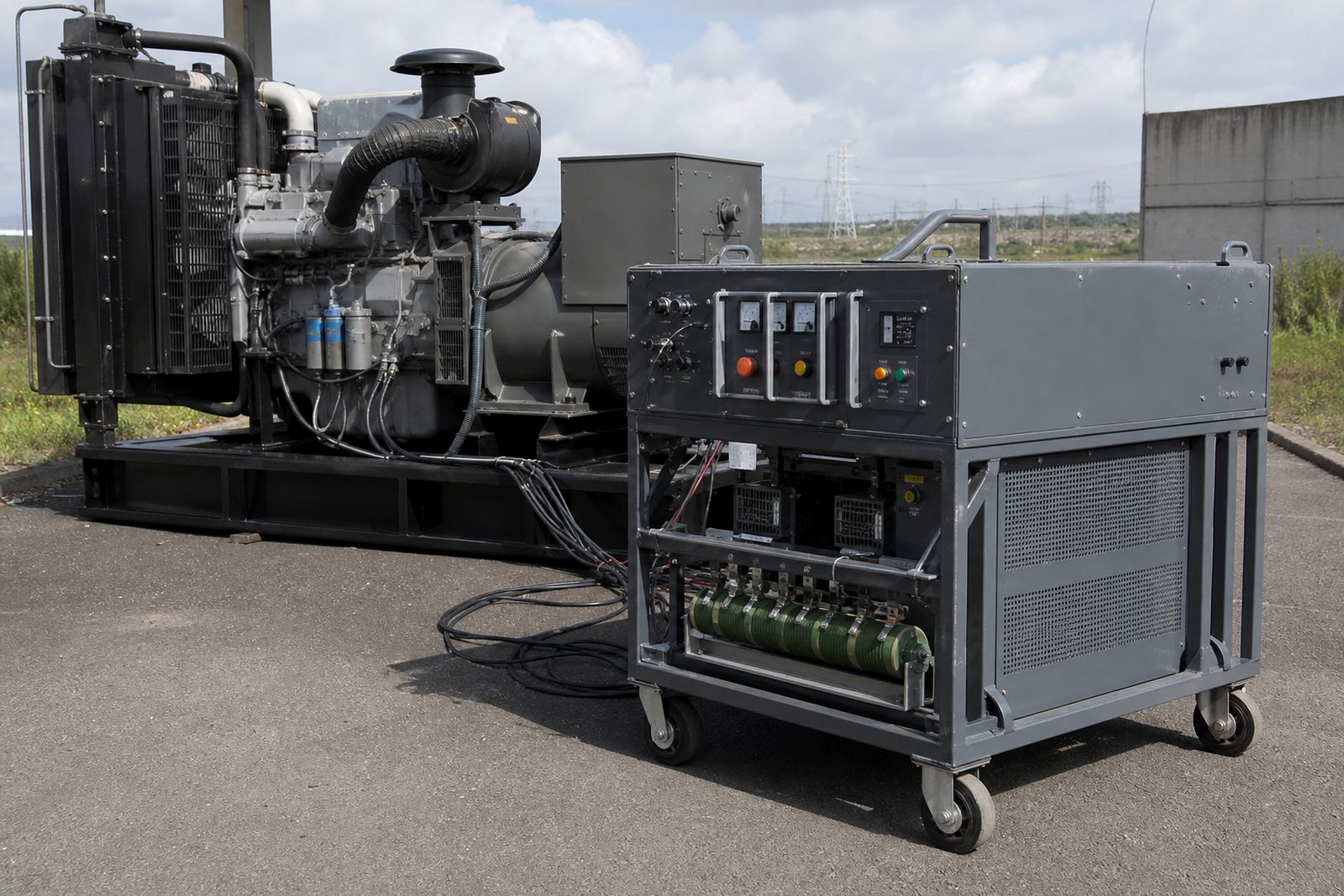
Load bank testing places a controlled electrical load on the generator so the engine, alternator and control systems can be checked under working conditions, not just during a short no-load run. It is a practical way to confirm that a generator can carry rated demand, respond correctly to step loads and hold stable voltage and frequency when the site needs it most.
On many sites we find units that start cleanly but never get pushed hard enough to reveal hidden issues. Wet stacking, uneven fuel delivery, poor coolant circulation and weak batteries often stay hidden until a proper load test is done. For factories, warehouses, data rooms, medical facilities, retail centres and construction projects, that sort of check can save a lot of trouble later.
How RelGen carries out the test on site
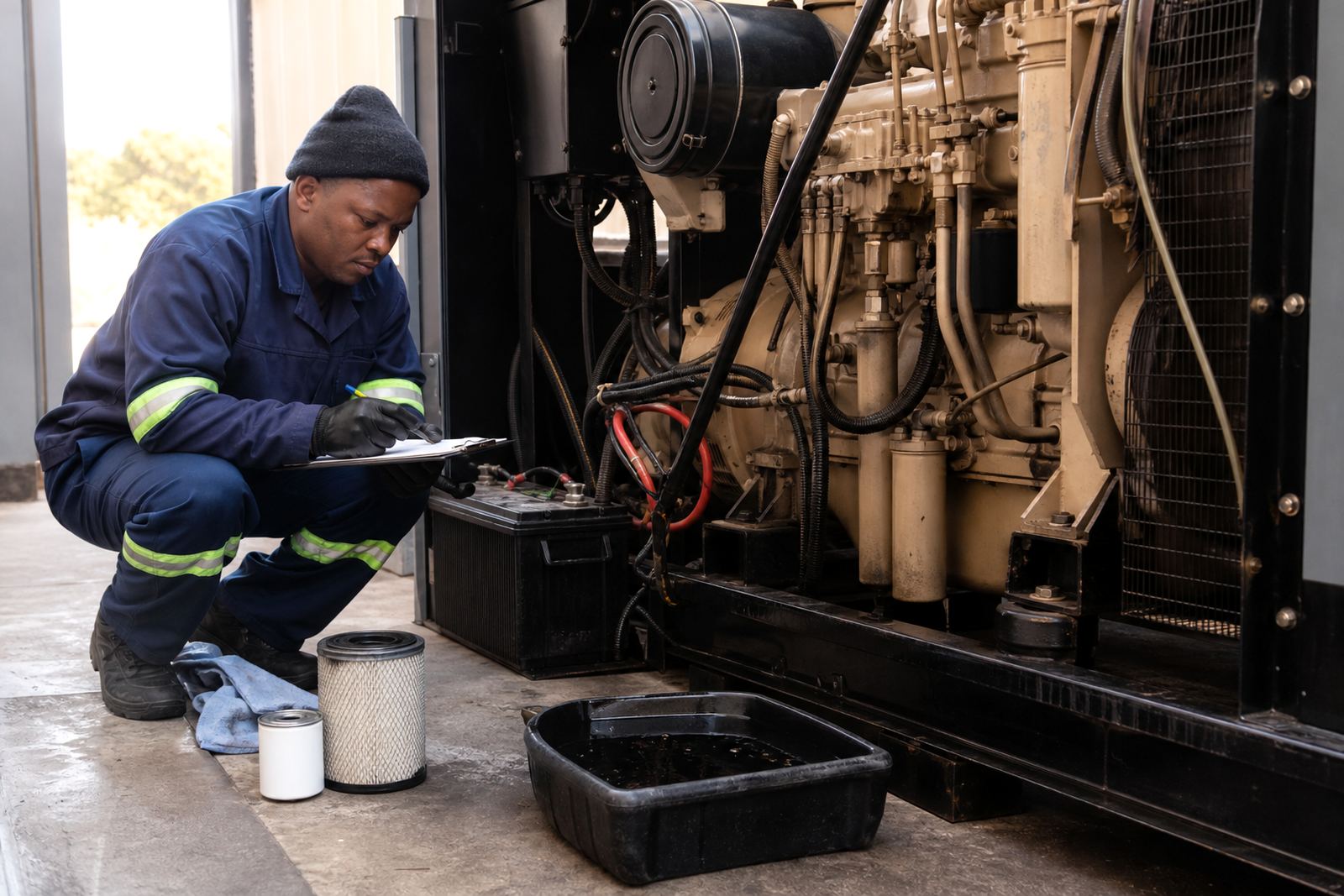
We begin with a visual inspection of the set, the changeover arrangement and the immediate working area. Electrical work is handled by qualified people and in line with local regulations, because generator testing has to be done safely and correctly. Where needed we confirm that cabling, earthing and changeover switch conditions are suitable before load is applied.
A typical test includes the following steps:
- Record starting condition, fluid levels and battery condition
- Connect the load bank and confirm safe routing of cables and exhaust discharge
- Apply load in stages, usually 25%, 50%, 75% and 100% where the site and set allow it
- Hold each stage long enough to watch voltage, frequency, temperature and exhaust behaviour
- Check for alarms, uneven running, smoke, leaks or unstable governor response
- Remove the load, cool the set down and verify the restart and recovery process
We also watch for signs of under-loading, which is common on standby units that only run briefly each month. A proper test helps clear carbon build-up and shows whether the engine is working in the range it was built for.
What is included in a standard load bank visit
Every site is different, so the scope is agreed around the generator size, access, fuel arrangement and how long the set can be out of normal use. Our standard visit is built around controlled testing and practical fault finding, with clear notes on what we see during the run.
- Inspection of generator condition before the test starts
- Load bank connection and safe test setup
- Monitoring of volts, Hertz, amperage and engine temperature during loading
- Observation of oil pressure, coolant performance and exhaust condition
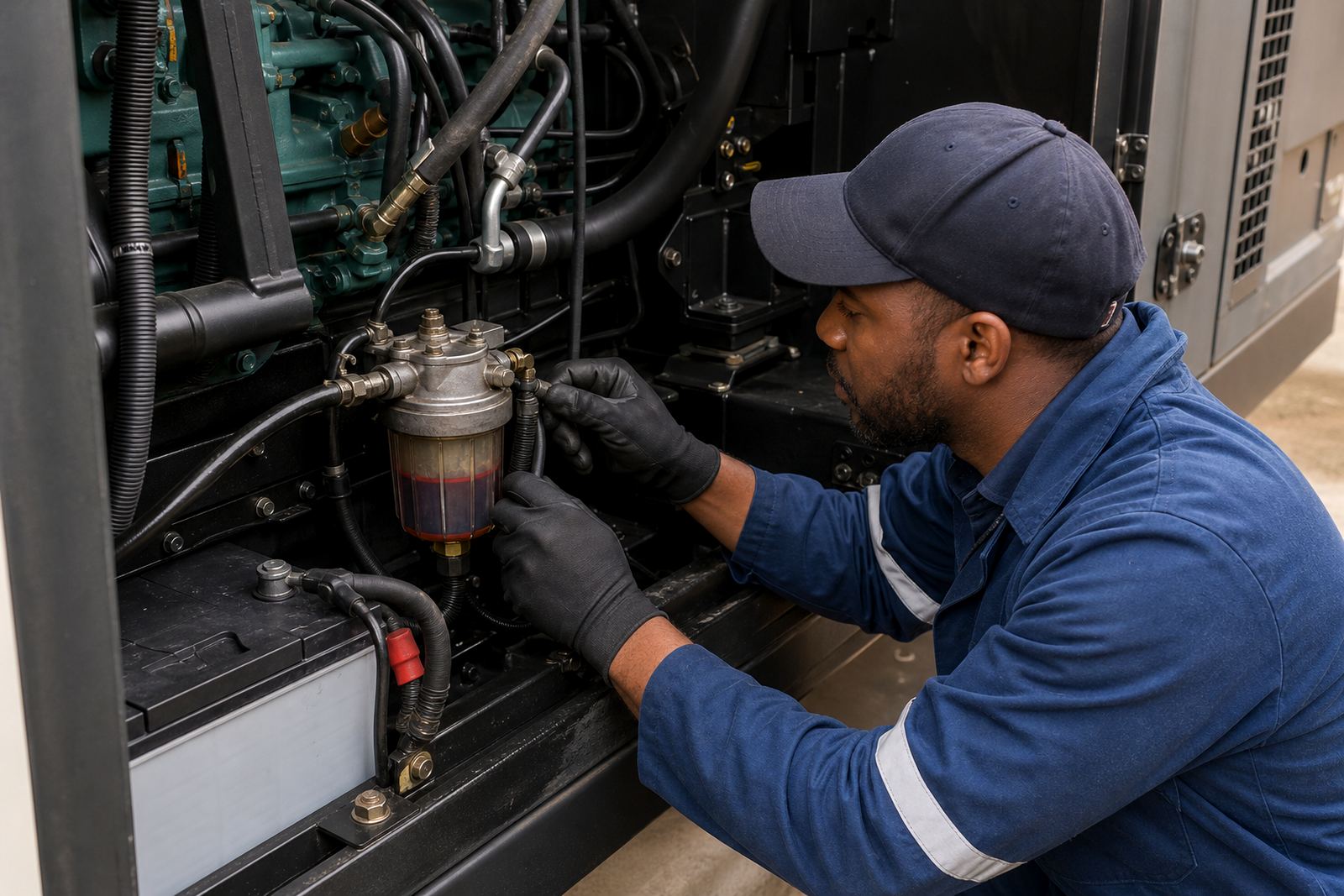
- Battery and starter system checks before and after the test
- Checks on changeover switch operation where applicable
- Written feedback on faults, wear, leaks or unstable readings
If the site has a service record, we compare the results with previous readings so patterns can be picked up early. That helps with planning oil changes, filter replacement, coolant service and battery work before a breakdown becomes more expensive.
Turnaround, planning and access on busy sites
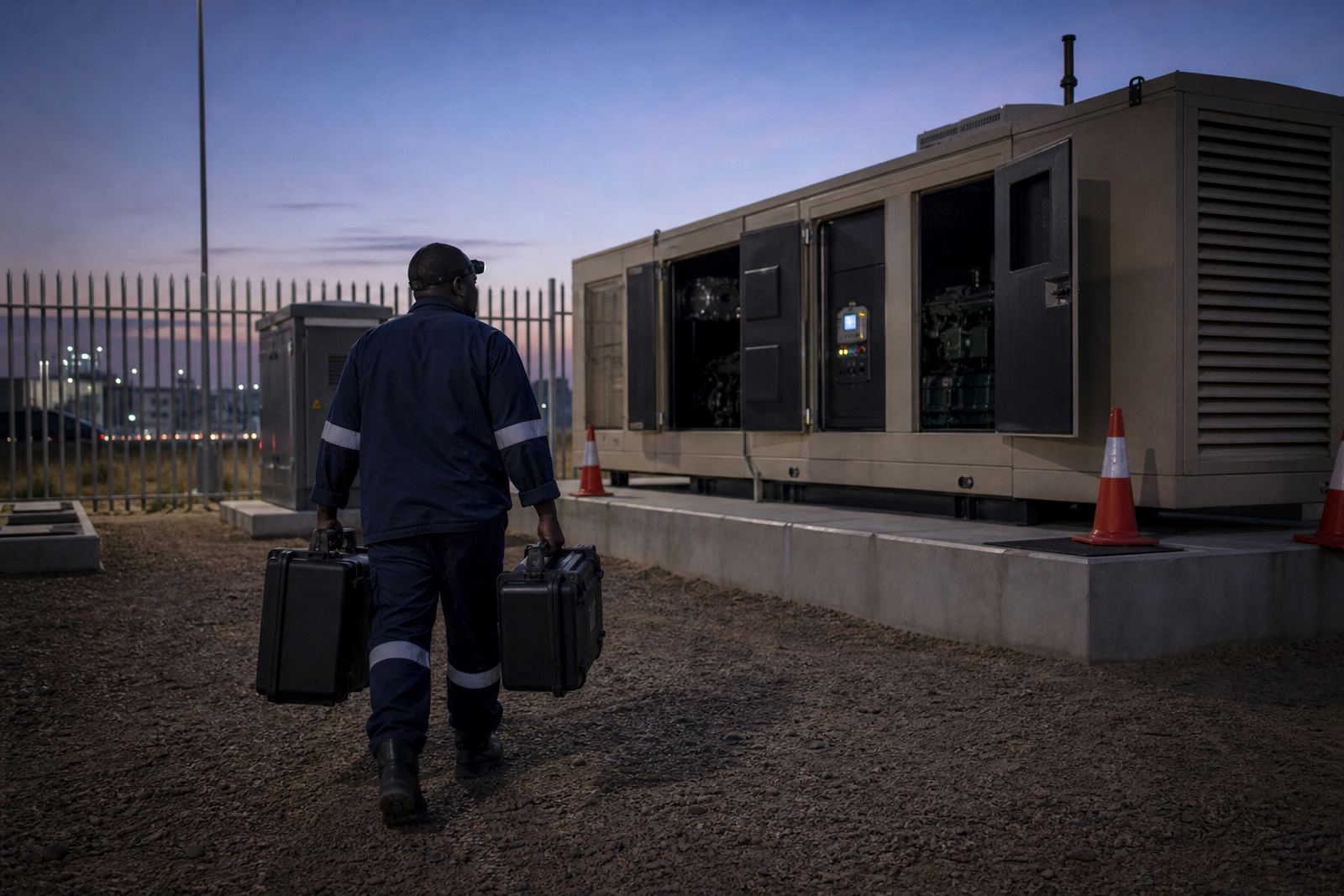
For most sites, load bank testing can be scheduled as a half day or full day visit depending on the generator rating, the level of loading required and how many sets must be tested. Larger commercial and industrial sites sometimes need an after-hours slot or a weekend run to avoid interrupting production, tenant activity or security arrangements. We plan around site rules, delivery access, noise restrictions and any municipal or estate requirements that apply.
Midrand sites often have tight access near loading bays and generator enclosures, while coastal properties in Durban or Cape Town may need extra attention to corrosion, salt residue and weatherproofing around the set. In Gauteng, dust and heat can affect cooling performance too. We factor those conditions into the test notes and the follow-up advice.
Where a site needs several generators checked, we can stagger the work to reduce disruption. If any serious fault shows up during the run, we stop and report it rather than forcing the unit through a test it cannot safely handle.
Pricing approach that fits the actual job
We do not quote load bank testing as a one-size job. The price depends on the generator size, the number of units on site, travel from our Midrand base, the hours required, the loading profile and whether the test needs special access or out-of-hours attendance. A single small standby set at a Sandton office block is very different from a multi-set plant in Durban or a remote site near Polokwane.
Our pricing approach is built around the real work involved:
- Generator kVA rating and number of units
- Length of test and level of staged loading
- Site access, security and setup conditions
- Any extra inspection work required during the visit
- Whether fault rectification must follow the test
If a site needs repeated testing as part of a service contract, we structure the visits to suit the contract terms and the plant risk profile. That gives facilities teams a clearer handle on cost and planning.
After the load drops off
A generator does not end its work when the load bank is removed. Aftercare matters because the test may have exposed weak batteries, sluggish starting, poor coolant flow or a fuel delivery issue that needs attention. We close out the visit with a practical handover that tells you what was found and what should be attended to next.
Aftercare can include:
- Service record audit and test result summary
- Advice on oil, filters, coolant or battery follow-up work
- Fault finding on starter circuits, sensors or fuel delivery components
- Changeover switch checks if abnormal transfer behaviour was noted
- Recommendations for future site inspections based on the actual test outcome
Where a unit showed overheating, smoke, low frequency hold or unstable voltage, we flag it clearly so the site team can act before the next outage. That follow-up is often what keeps a set dependable during load-shedding, scheduled shutdowns and unplanned grid faults.
Generator maintenance from Midrand nationwide
RelGen is based in Midrand and works across Johannesburg, Pretoria, Durban, Cape Town, Polokwane, Centurion and Sandton, with generator servicing and maintenance support nationwide. Our team is led by Thabo Engelbrecht, with support from Naledi Shezi, Johan Matlala, Ayanda Khoza, Muneerah Daniels, Sibusiso Wessels and Rikus Botha. That mix of field experience and contract control helps us handle planned testing and urgent site issues without losing sight of the details.
We are used to sites where power continuity is not negotiable. Factories need process equipment to hold steady, commercial buildings need systems to transfer cleanly and construction sites need sets that can carry load without tripping or overheating. Load bank testing is one of the clearest ways to see whether the generator is still fit for that duty.
Clients reach us through the enquiry form on our contact page and we work from there to set the visit, confirm access and get the right equipment on site.
Key facts
| Test method | Controlled staged loading with monitored electrical and engine readings |
|---|---|
| Typical load steps | 25%, 50%, 75% and 100% where the site and set allow |
| Generator types | Standby and prime generators for commercial and industrial sites |
| Areas covered | Midrand, Johannesburg, Pretoria, Durban, Cape Town, Polokwane, Centurion and Sandton |
| Typical checks | Voltage, frequency, temperature, oil pressure, smoke, alarms and recovery |
| Work standard | Electrical work by qualified people under local regulations |