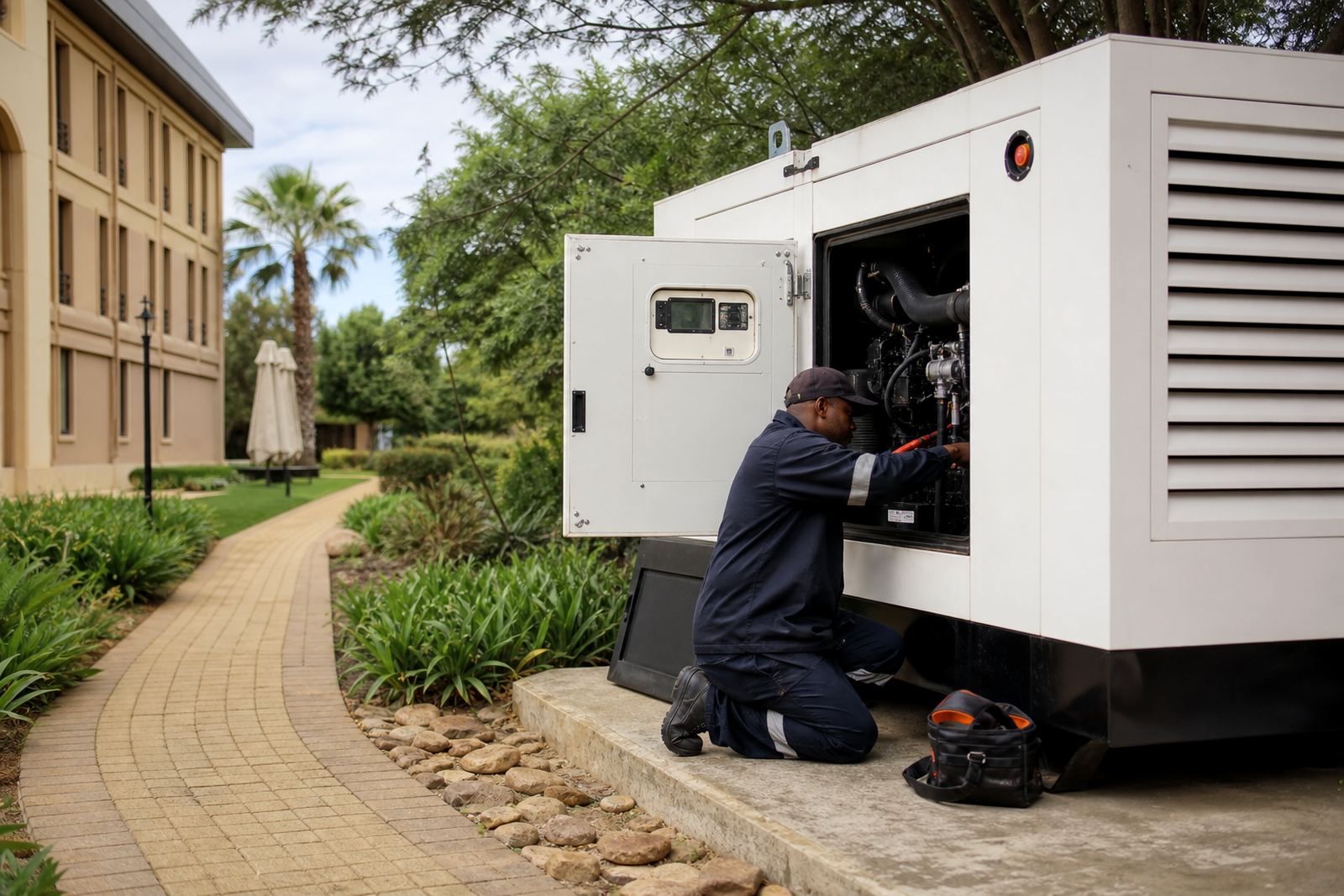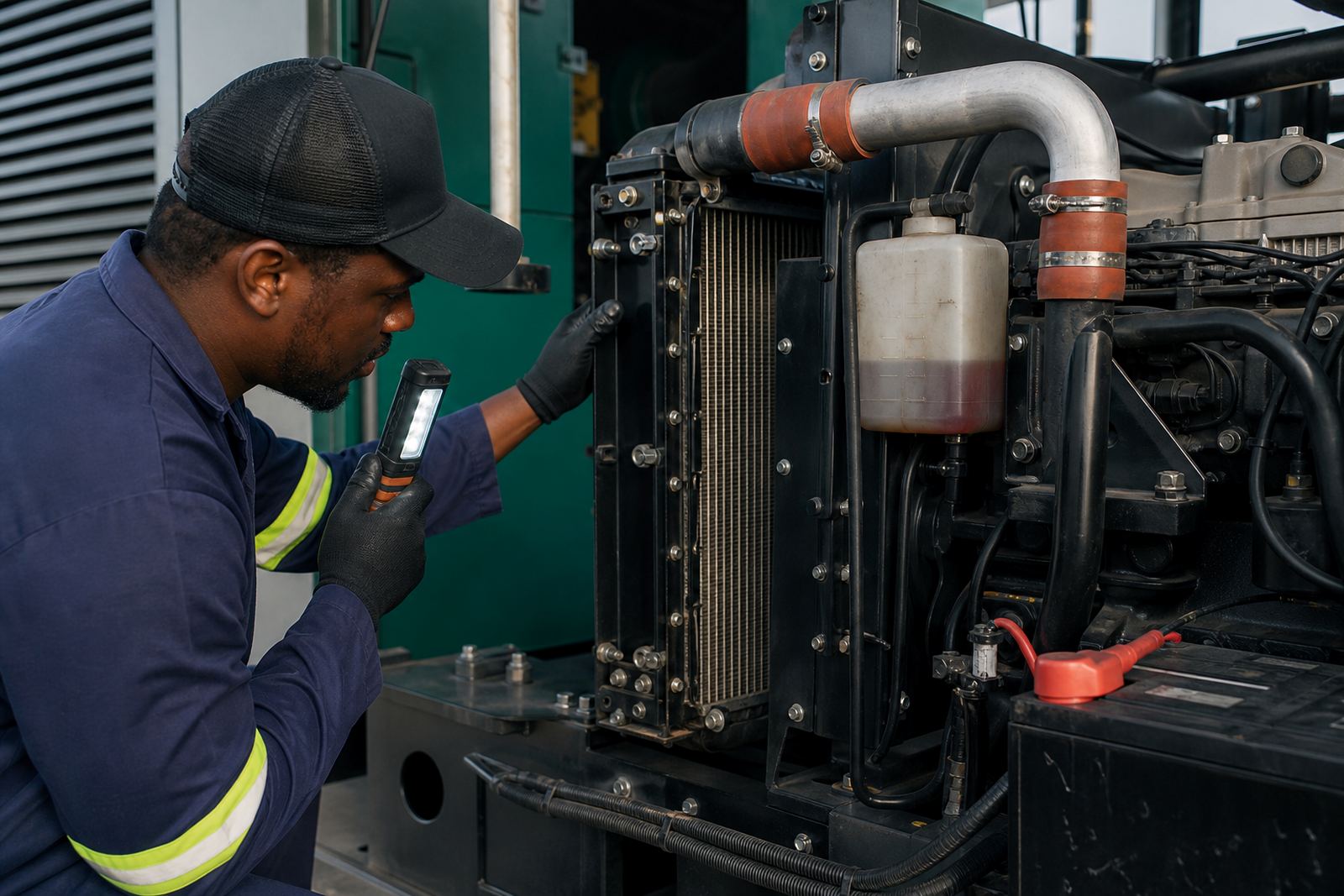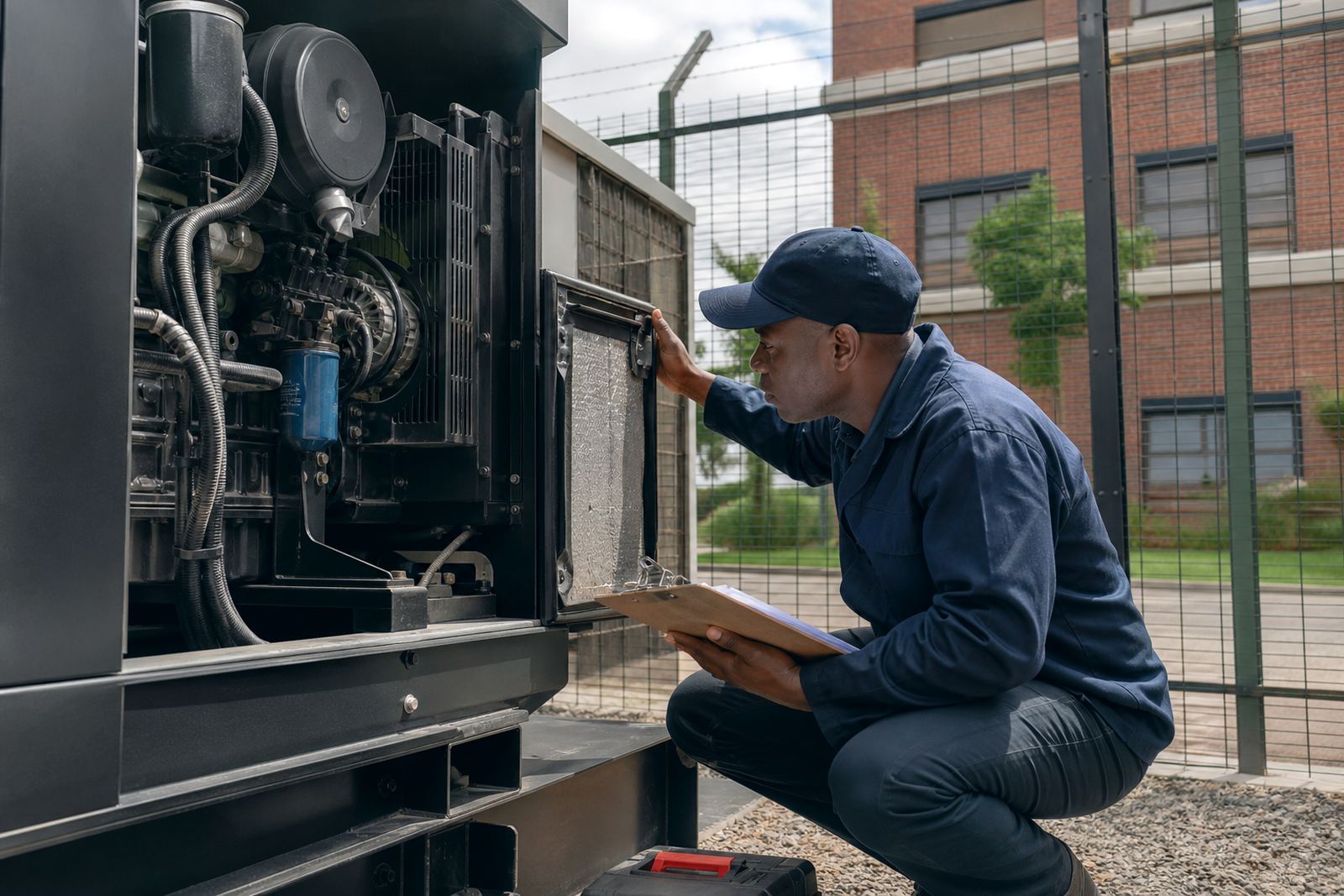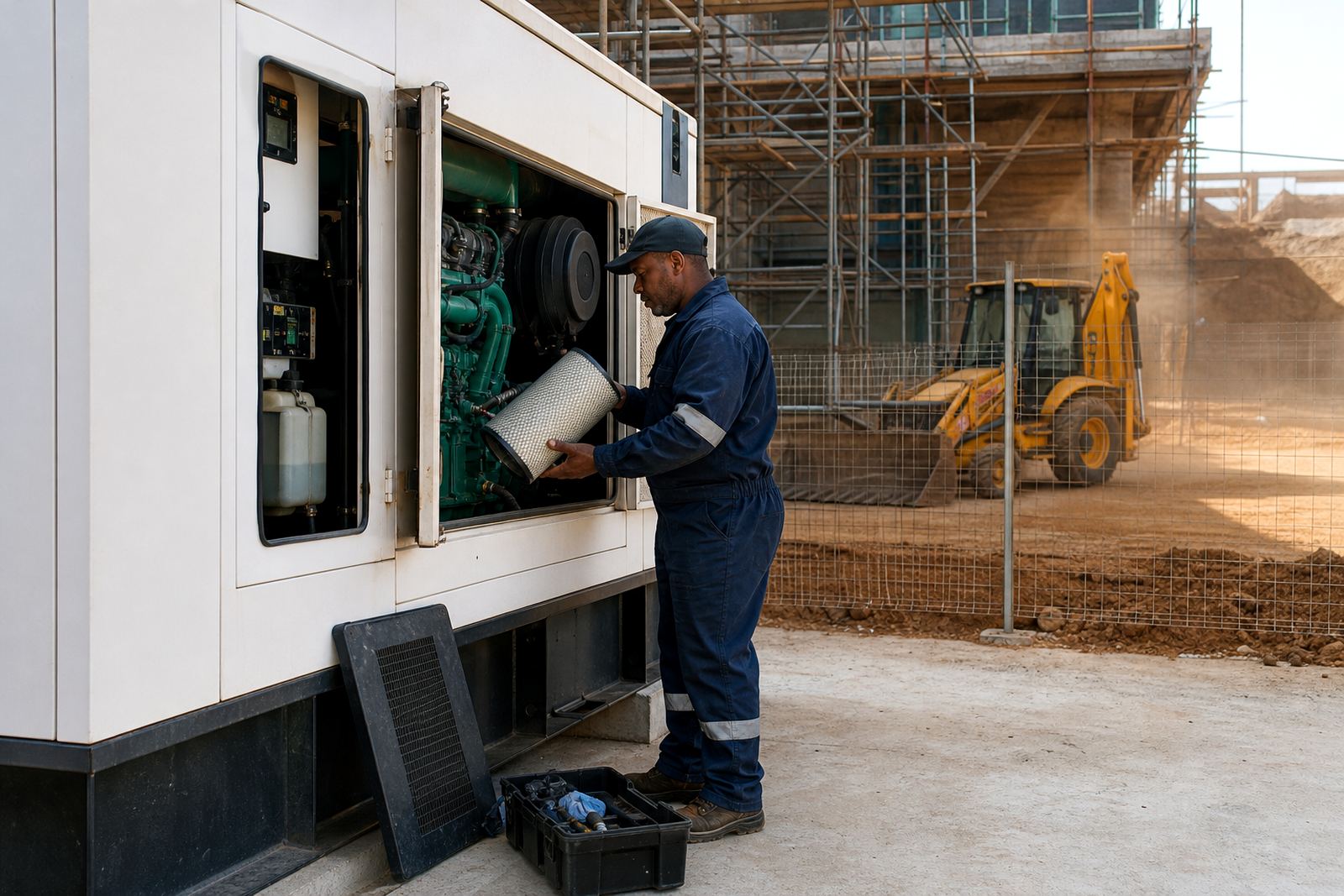
Built for site noise, dust and long shifts
Construction sites in Gauteng, coastal projects in Durban, and mixed-use developments in Cape Town all place the same pressure on generator plant: fine dust, frequent start stop cycling, changing load demand and tight access around cranes, scaffolding and temporary electrics. Our construction site contracts are set up for that reality, with scheduled servicing, fault finding and preventive inspections matched to the way the set is actually used on site.
A contract can cover one site generator or a small fleet across a project, with servicing intervals based on running hours, load profile and the site programme. We work with standby and prime units used for site offices, lighting towers, tool rooms, mixers, pumps and temporary power distribution. Electrical work must be handled by qualified people in line with local regulations, and changeover switch work is treated with the same care as the generator itself.
- For short-term projects with heavy usage and fast turnover
- For developments where the load changes as floors, services and plant rooms are added
- For sites where dust ingress and vibration shorten filter, belt and battery life
What the maintenance contract actually covers
The contract is not a once-off service, it is a planned maintenance arrangement that keeps the generator ready for the next outage or site peak. We inspect oil condition, replace filters, check coolant level and concentration, test batteries, review starter circuits and record any signs of seepage, overheating or loose connections. Where required, we also carry out load bank testing to confirm the set can carry expected demand without dropping voltage or frequency under sustained load.
On active construction work, the little things matter because they become expensive failures fast. A blocked air filter can push exhaust temperatures up, a weak battery can waste a morning, and a neglected fuel issue can stall an entire shift. Service record audits help you see what has been done, what is due next and where a site pattern is repeating the same fault.
- Oil and filter changes at set hour or calendar intervals
- Coolant system service, hose checks and cap inspection
- Battery testing, terminal cleaning and charge condition checks
- Load bank testing where practical access and site conditions allow
- Changeover switch checks and basic fault tracing by qualified personnel
Site sizes and generator ranges we cover
Construction contracts in practice range from small site-office sets to larger units supporting bulk plant, temporary accommodation blocks and multi-trade operations. We service diesel generator sets commonly used on sites from around 20 kVA for temporary admin and security to larger units above 500 kVA for full site support, depending on the project demand and the generator installation. We also handle prime running applications where the generator carries a regular workload for longer periods.
The right contract depends on what the generator is feeding and how often the load changes. A set running a few cabins and a security point does not need the same service pattern as a machine yard with welders, compressors and curing equipment. We check the nameplate data, running hours, access space and the condition of the fuel tank, exhaust routing and vibration mounts before recommending the service interval.
- 20 kVA to 100 kVA for site offices, lighting and small temporary loads
- 125 kVA to 350 kVA for mixed site services and plant support
- 400 kVA and above for bigger developments, heavy equipment support and extended running
- Single site contracts or multi-site agreements across Johannesburg, Pretoria, Durban, Cape Town, Polokwane and Centurion
Where this contract suits best on a build programme
These contracts suit main contractor compounds, subcontractor yards, temporary offices, residential developments, commercial towers, roadworks, civils depots and remote project camps. In Johannesburg and Sandton, the issue is often access and dust from surrounding works. In Pretoria and Polokwane, long runs and changing site teams mean logbooks and service planning have to be tight. Along the coast, humidity and corrosion can affect terminals, clamps and control gear faster than many teams expect.
It also suits projects with municipal or site generator arrangements where the changeover equipment must be checked regularly and the power transfer sequence kept in order. We do not treat the generator as a standalone machine only, because on site the set, transfer switch, temporary distribution and fuel handling all work together. That is where many breakdowns begin if nobody is keeping an eye on the full system.
- Projects with staged handovers and changing load levels
- Sites with long hours, night pours or security loads
- Developments exposed to dust, rain splash, coastal air or vibration
How we fit into the site setup
Before any ongoing contract starts, we confirm the generator size, access route, service clearance, fuel arrangement, earthing, transfer equipment and the location of the logbook or service file. If the set is behind hoarding, in a container, or placed near excavations and temporary barriers, the technician needs enough working room and safe access. Our team coordinates with site management so servicing does not interfere with pours, crane lifts or critical handovers.
Installation or fitting needs vary by site, but the key point is that any electrical changeover work must be completed by qualified people under local regulations. If the load bank test requires connection points, or the changeover switch needs inspection and verification, the site must allow proper isolation and safe working conditions. Fuel system repairs, starter system repairs and sensor checks are handled with the same practical approach, because a quick patch that fails during a load shift is not a fix.
- Confirmed generator make, model and kVA rating
- Site address, access restrictions and working hours
- Transfer switch type and any control wiring details available
- Fuel tank capacity and refill arrangement
- Running hours, service history and any repeat fault notes
Care routines that stop small faults turning into stoppages
Construction environments punish neglected equipment, so the care routine has to be disciplined. We look for blocked radiators, dust build-up around alternators, loose battery clamps, oil seepage, coolant loss and fuel contamination. Vibration from uneven ground or temporary plinths can loosen fittings over time, and that is why preventive site inspections matter as much as the scheduled service date. A set can sound fine and still be heading for a stoppage if the early signs are ignored.
We also keep an eye on service records because a generator that is always low on coolant or repeatedly failing the same battery test is telling you something about the site conditions or operating pattern. Sometimes the answer is better ventilation, sometimes it is a tighter service interval and sometimes it is a repair on the supporting equipment. That practical follow-through saves time when the programme is already under pressure.
- Keep the area around the set clear of rubble, timber offcuts and packaging
- Check service dates after every major load change or site relocation
- Report smoke, knocking, hunting or repeated low-voltage alarms early
- Confirm the fuel supply is clean and the tank is not taking in dirt or water
Details to confirm before a contract is issued
To prepare the right construction site contract, we need the generator size, the site location, the expected hours per week, and whether the set is used as standby or prime running equipment. We also confirm whether there is one unit or more than one on the project, because service frequency and spares planning change with the number of machines and the load pattern. If the site is moving from phase to phase, the next planned relocation date matters too.
The order details should include the current condition of the generator, any open faults, the type of load being carried and whether the set feeds temporary cabins, tools, lighting, pumps or plant. In Midrand and across South Africa, our team uses that information to set up the right service plan, arrange callouts where needed and keep the contract records in order. It is a practical process, not a paper exercise.
- Generator kVA or kW rating and serial reference if available
- Standby or prime duty, plus expected daily running hours
- Site town, suburb or project area
- Any known issues with batteries, cooling, fuel or changeover equipment
- Preferred service window around pours, night shifts or shutdown periods
Key facts
| Product type | Generator maintenance contract for construction sites |
|---|---|
| Duty | Standby and prime running generators |
| Typical size range | 20 kVA to 500 kVA plus, depending on the project |
| Service scope | Oil and filter changes, coolant service, battery testing, load bank testing, changeover checks, fault finding |
| Operating conditions | Dust, vibration, changing loads, coastal humidity and long site hours |
| Coverage | Midrand, Johannesburg, Pretoria, Durban, Cape Town, Polokwane, Centurion and Sandton, with South Africa-wide service support |