What cooling system care covers on a working set
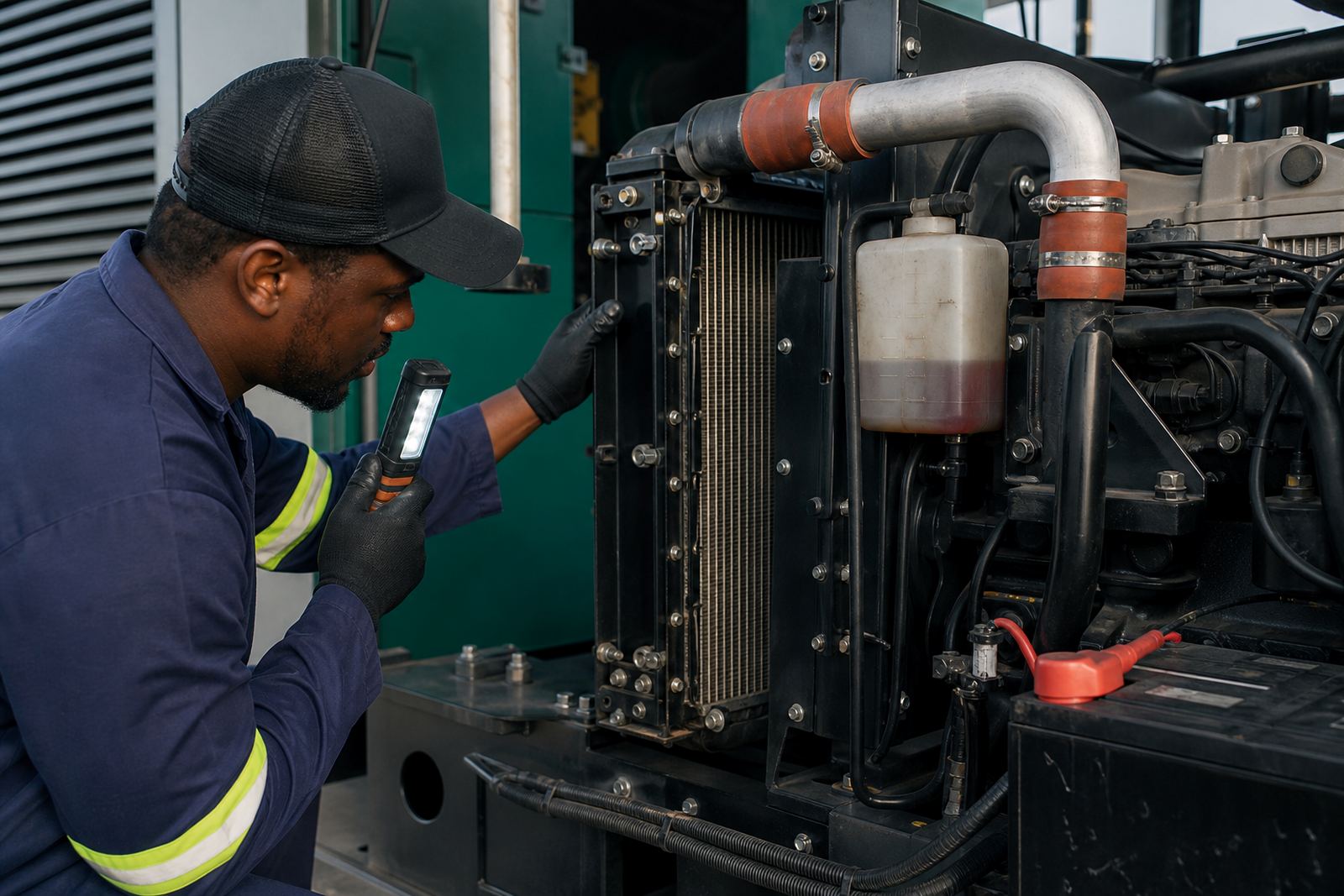
Generator cooling system care is the routine attention given to the parts that control engine temperature during idle periods, load transfer and longer duty cycles. On most sets this means checking coolant level and condition, inspecting hoses and clamps, testing for leaks, cleaning the radiator core and making sure the fan path is clear of dust, oil residue and debris. If the system is neglected, engines can run hot, trip on high temperature or suffer avoidable wear on seals, belts and bearings.
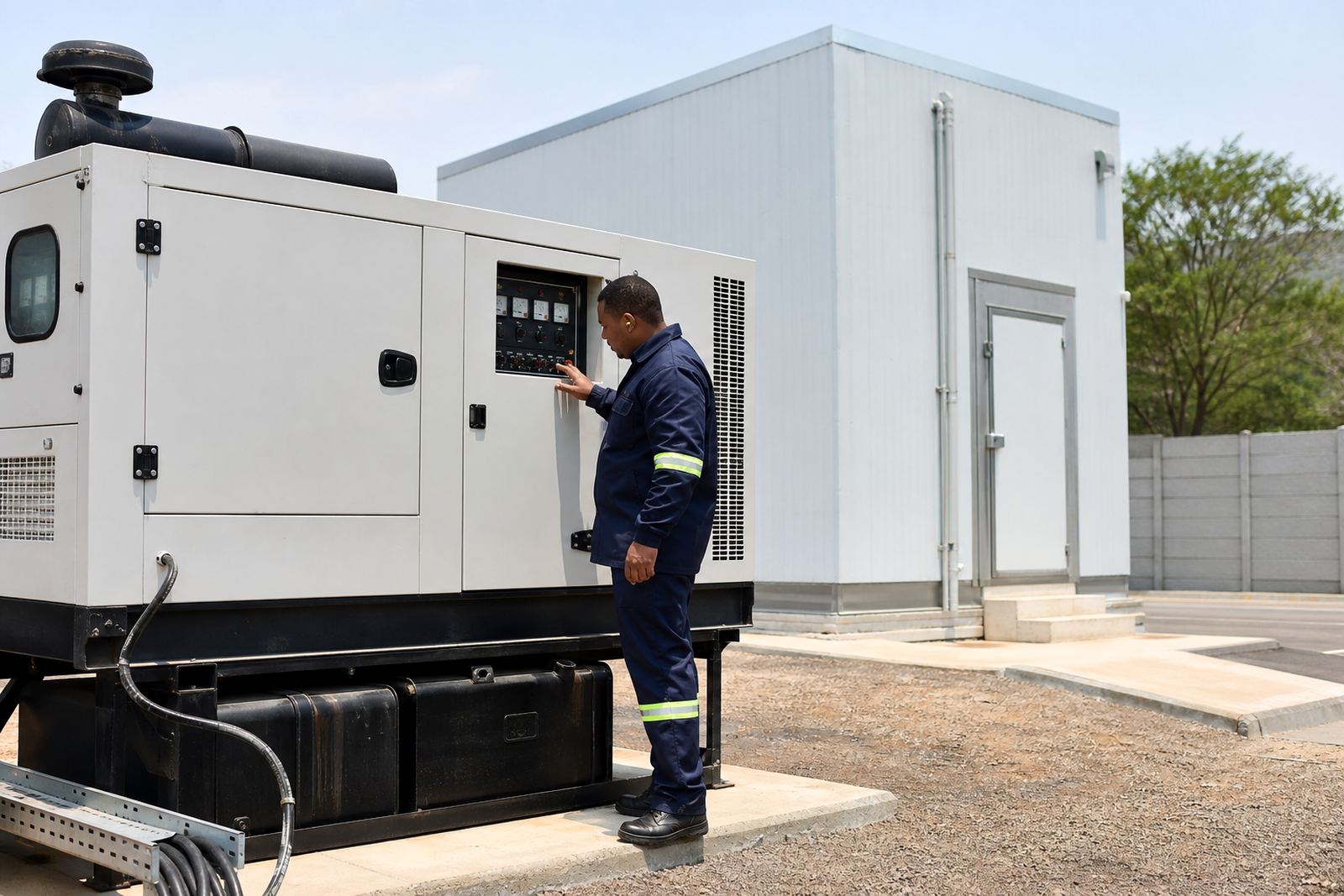
RelGen handles cooling system care as part of scheduled servicing or a wider maintenance contract. We work on standby and prime generators in commercial buildings, industrial plants, warehouses, retail sites, farms and construction operations. The work is planned around the site’s load pattern and access, so the unit can be inspected without disrupting business more than necessary.
- Coolant level checks and top-up with the correct mixture for the engine and climate
- Hose, clamp and join inspection for swelling, cracking, rubbing or seepage
- Radiator exterior cleaning to clear dust, chaff and trapped debris
- Expansion tank and cap inspection where fitted
- Leak checks around the pump, thermostat housing and pipework
When it makes sense to fit this into a contract
Cooling system care suits sites that run on standby power during outages and load shedding, as well as prime power installations that operate for longer hours. Midrand sites with heavy traffic dust, coastal humidity in Durban and Cape Town, and hot plant rooms all need regular attention because heat, dirt and vibration shorten the life of hoses and seals. Even a well-run generator can start to overheat if the radiator fins are blocked or if coolant quality has broken down.
This service is particularly useful for businesses that cannot afford sudden shutdowns, including production lines, server rooms, cold storage, water treatment, healthcare facilities and busy commercial premises. It also helps where the generator sits outdoors or in a cramped enclosure with limited airflow. If your set is used only during outages, it still needs the cooling system checked on a calendar basis, not only after a fault appears.
- Standby generators that sit unused for weeks then start under heavy load
- Prime generators running for extended periods at variable load
- Installations exposed to dust, salt air, heat or chemical vapour
- Sites where access is tight and airflow around the radiator is restricted
Typical sizes, layouts and options we work with
We service small single-set installations through to larger multi-unit sites. Cooling system care is not tied to one frame size, but the process changes with engine capacity, radiator layout and access. A compact 20 kVA unit in a store room will not need the same handling as a 500 kVA set with a remote radiator, ducting or skid-mounted cooling package. The right checks depend on whether the system uses a header tank, a pressurised cap, an expansion bottle or an engine-mounted radiator assembly.
Where needed, we can include cooling system checks as part of a service schedule built around monthly, quarterly or six-monthly visits. For sites with higher temperatures, long runtime or poor airflow, more frequent inspections may be appropriate. We also handle associated items such as belt condition, fan operation and signs of coolant contamination. If a system has been run with wrong water quality or mixed coolant types, we will flag the issue and advise on the next safe step.
- Small commercial sets from roughly 20 kVA to 100 kVA
- Mid-size industrial units from 100 kVA to 350 kVA
- Larger standby and prime units above 350 kVA
- Air-cooled and liquid-cooled engine arrangements, depending on the set
Fitting and site work that should be handled properly
Any work on a generator cooling system needs care, clean handling and the right shutdown procedure. Hot coolant can scald, and opening a pressurised system before it has cooled is unsafe. Where draining, refilling or pressure testing is needed, the unit must be isolated and the work done by people who understand the machine and the site rules. Electrical lock-off and related checks must be carried out by qualified people in line with local regulations, especially when there is a risk of the set starting automatically or transferring load during work.
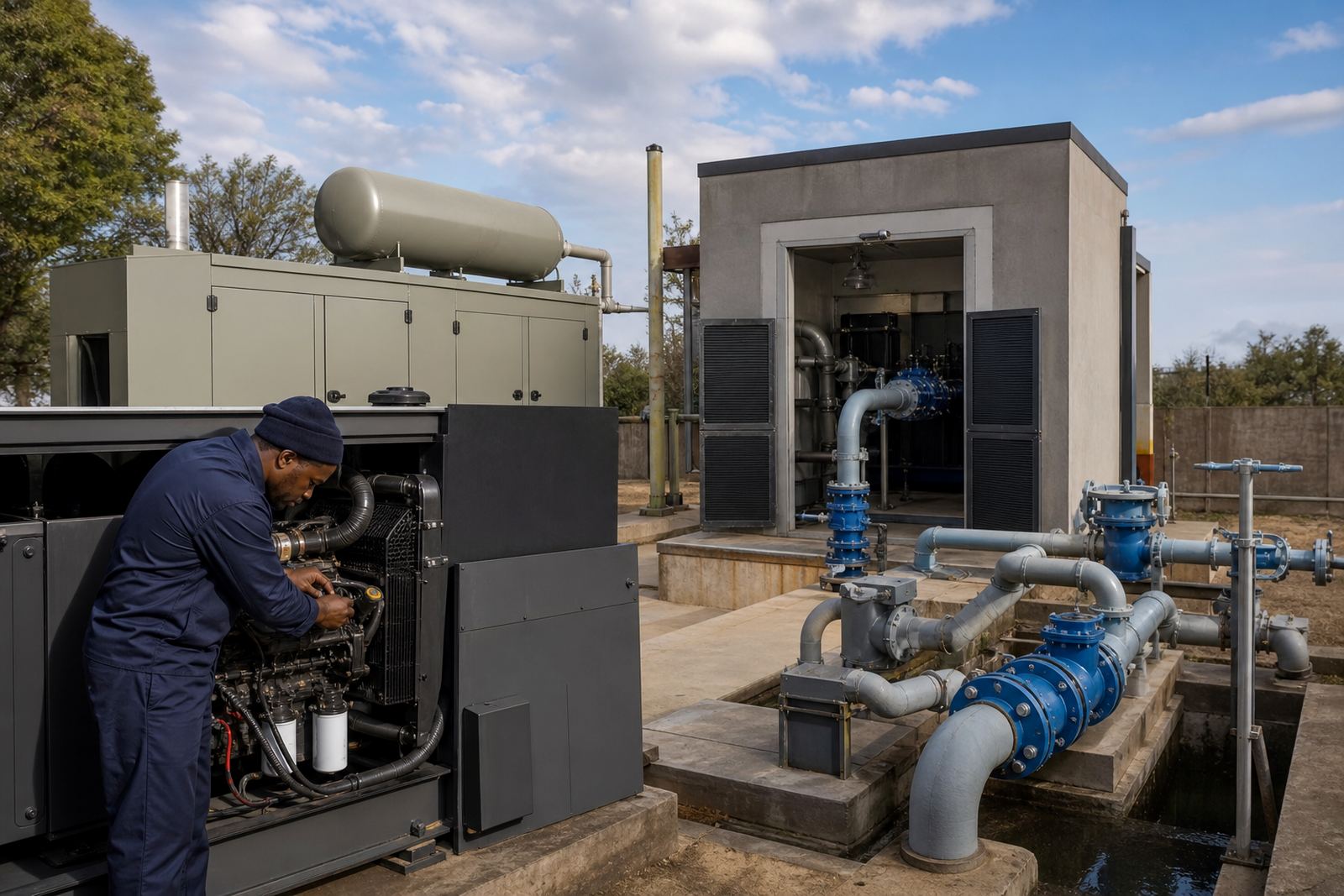
Our technicians check the site access, enclosure ventilation and service clearances before starting. If hoses, clips, thermostatic parts or fittings need replacement, we source them to match the existing setup and the engine requirement. On sites with generator enclosures, acoustic rooms or rooftop plant, we also check for dust build-up and blocked air paths that can trap heat. A neat fit matters, because one poorly routed hose or loose clamp can create a recurring fault.
- Safe isolation before opening the cooling circuit
- Controlled draining and refilling with the correct coolant mixture
- Pressure testing when leak symptoms point to a hidden fault
- Ventilation and radiator clearance checks after reassembly
How we keep the cooling side from turning into a breakdown
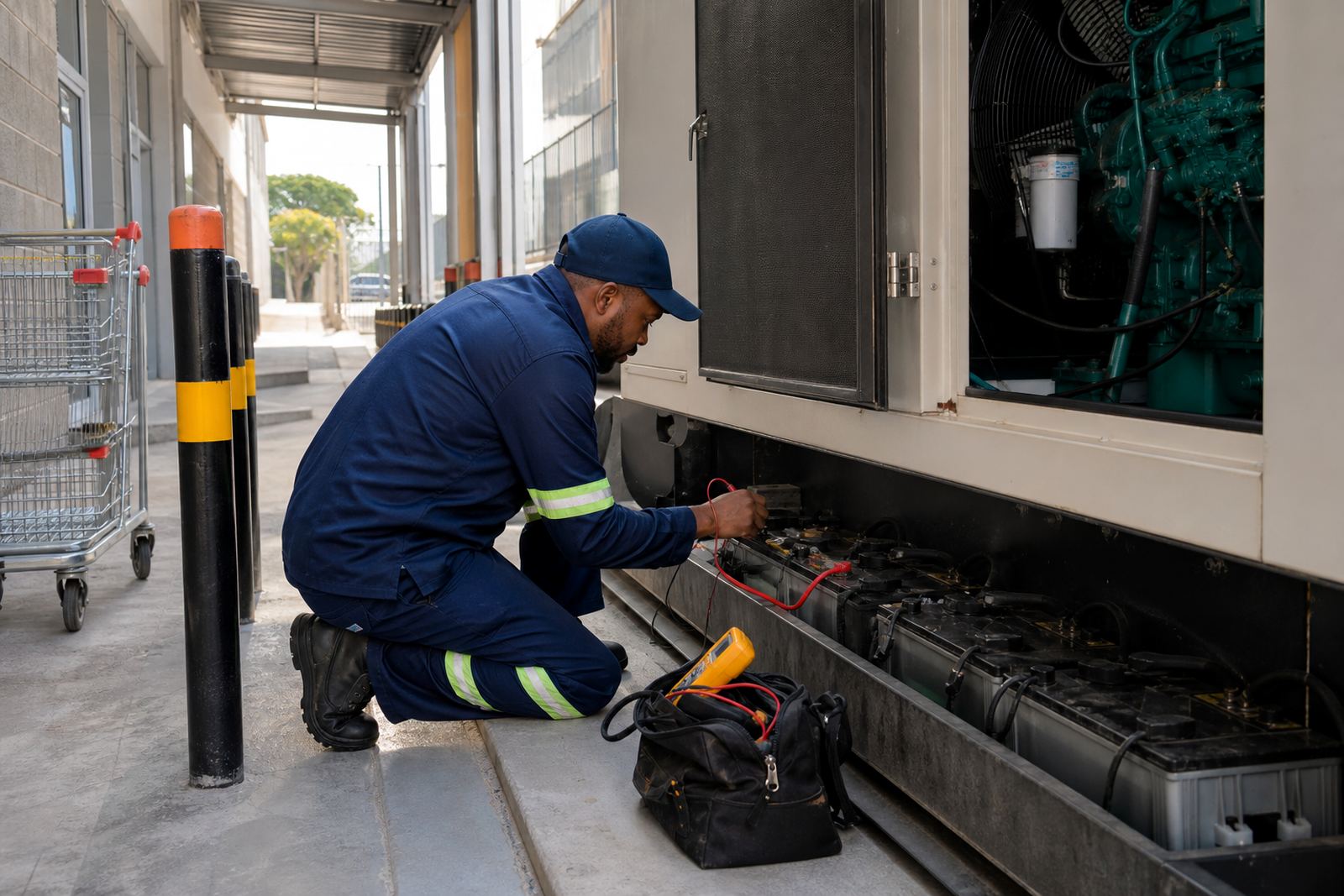
Cooling system care is at its best when it is treated as preventive work, not a reaction after the machine has overheated. During a service visit, we look for early warning signs such as coolant staining, soft hoses, rust traces, blocked fins, damaged hose ends and a cap that is no longer holding pressure correctly. We also check whether the cooling circuit has any signs of contamination from oil, scale or old coolant that has been left in too long. This kind of detail helps avoid an avoidable shutdown later on.
If a generator has already tripped on high temperature, we can investigate the likely cause and combine that with fault finding, starter system checks or fuel system repairs where needed. Cooling problems sometimes show up alongside other service issues, so the inspection must be proper not rushed. In a real plant room, one fault can hide behind another, and the only way to keep on top of it is through regular checks and clean service records.
For sites in Johannesburg, Pretoria, Sandton, Centurion, Durban, Cape Town and Polokwane, we schedule visits to suit operating hours and access rules. That helps site teams avoid unnecessary stoppages and keeps the generator ready when utility supply drops out.
What to confirm before we schedule the work
To match the cooling system care to the right generator and site conditions, please confirm the machine type, access details and any known fault history. The more accurate the information, the better we can plan parts, labour and the inspection sequence. If the unit has had overheating, coolant loss or repeated alarms, tell us whether the issue happens under load, after a long idle period or only on hot days.
Useful details include the generator rating, make-up of the cooling circuit and whether the set is part of a maintenance contract, an emergency callout or a scheduled service visit. If the site has limited parking, security control or rooftop access, say so early. It saves time and helps us arrive prepared.
- Generator kVA rating and whether it is standby or prime duty
- Any recent overheating, leaks or low coolant alarms
- Whether the unit has a radiator, remote cooler or enclosed plant room layout
- Site access details, working hours and any permit or induction requirements
Key facts
| Service type | Scheduled generator cooling system care for standby and prime units |
|---|---|
| Core checks | Coolant level, hose condition, clamps, radiator core, cap, fan path and leaks |
| Common intervals | Monthly, quarterly or six-monthly, depending on runtime and site conditions |
| Suitable sites | Commercial, industrial, retail, healthcare, construction and water infrastructure |
| Coverage | Midrand, Johannesburg, Pretoria, Durban, Cape Town, Polokwane and surrounding areas |
| Related works | Emergency callouts, scheduled servicing, fault finding and service record audits |