Why refrigeration loads need a different contract
Cold rooms place a hard, steady demand on generator sets, especially when compressors kick in together after load shedding, a grid failure or a site transfer. A cold room contract is built around that duty cycle, with scheduled servicing timed to suit storage and processing shifts, product movement and the season when doors are opening all day.
At RelGen, we service standby and prime generators that support cold stores, abattoirs, packhouses, fruit depots, beverage stores and food processing plants. The focus is on keeping the set ready for repeated starts, stable running under load and proper transfer through the changeover switch. Electrical work is handled by qualified people under local regulations, because the changeover side of the system must be treated with care.
What the contract covers on a working site
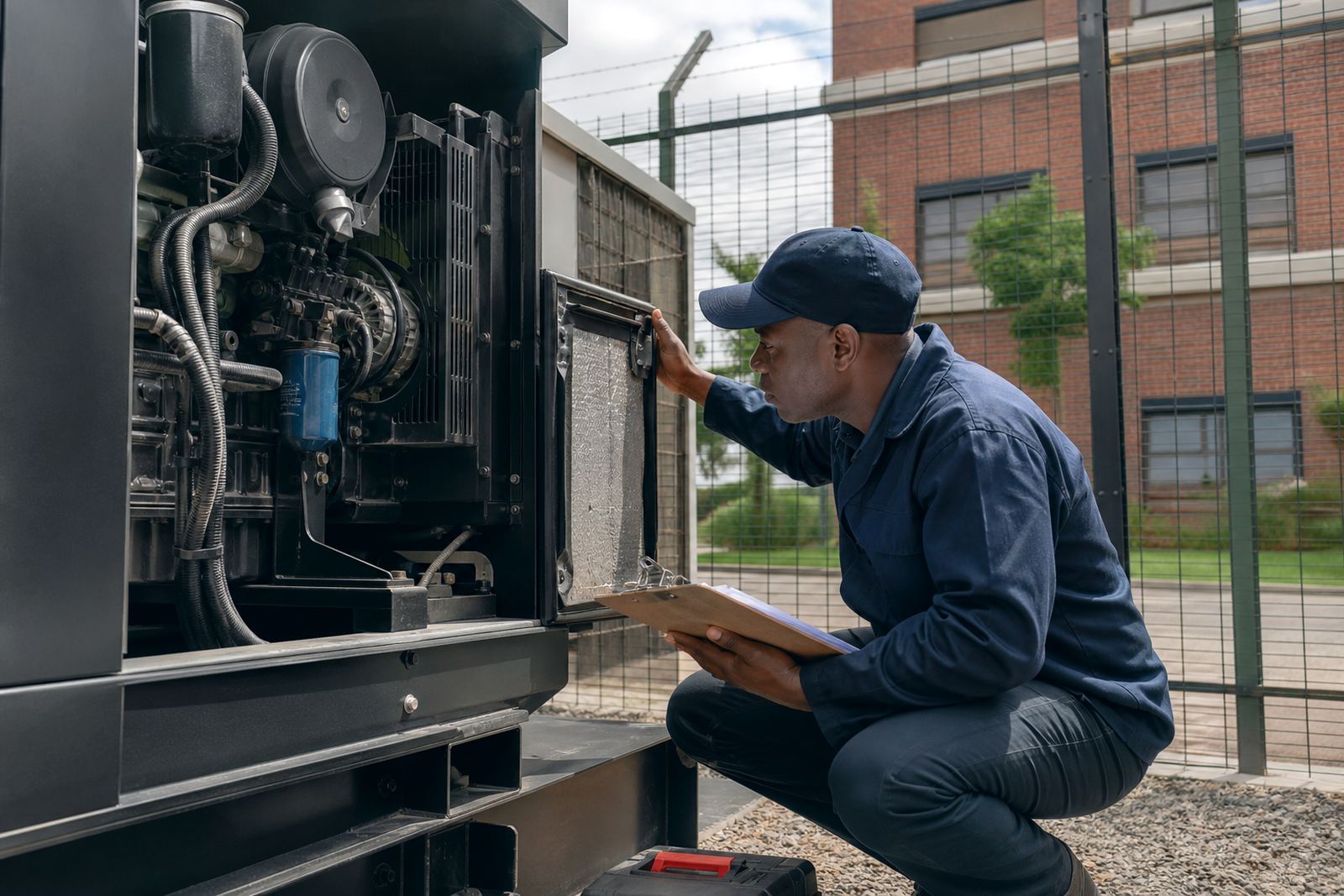
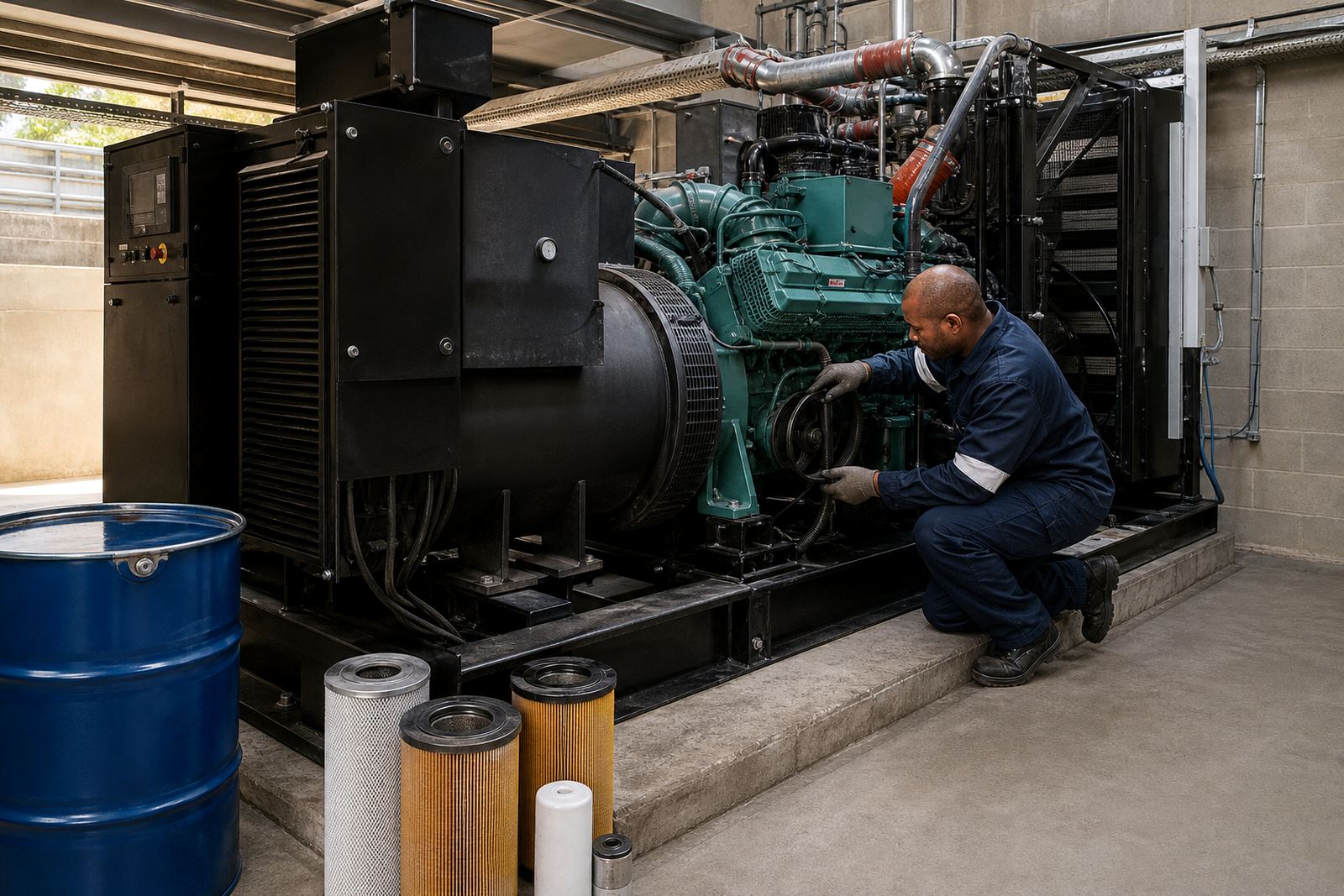
Every contract is built around the actual equipment on site and the hours the plant runs. We inspect the generator, the transfer arrangement and the support systems that keep refrigeration loads protected during an outage. That includes oil condition, filters, coolant levels, battery condition, belts, starter system health and visible signs of vibration or leakages.
- Oil and filter changes on a planned interval
- Coolant system service and pressure checks
- Battery testing and charger condition checks
- Load bank testing to confirm engine response under controlled load
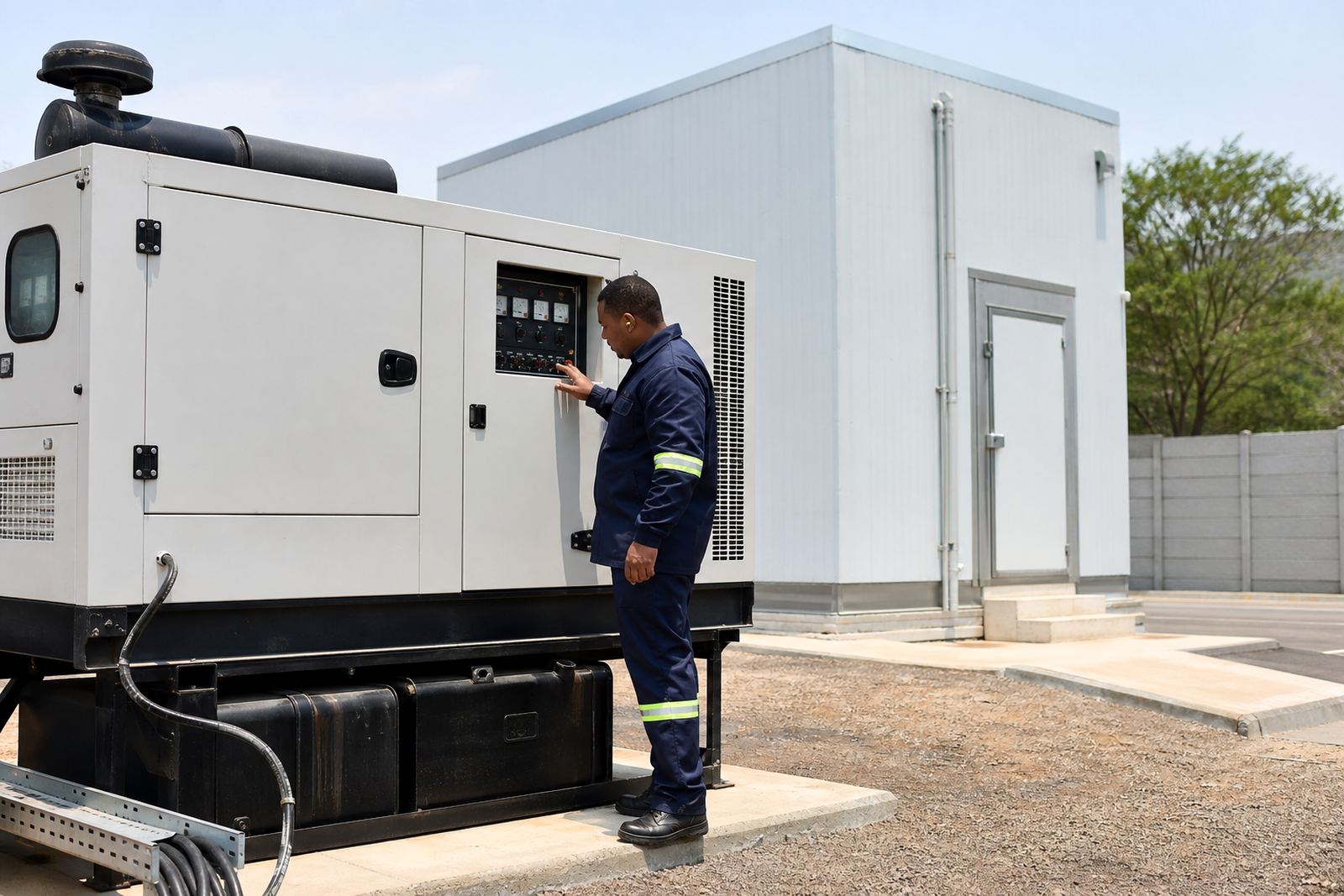
- Changeover switch checks and safe transfer observations
- Fuel system repairs, starter system repairs and fault finding
We also record what was found, what was done and what needs attention before the next service. For cold storage sites that run through long summer days in Gauteng or humid conditions on the coast, that paper trail matters when you are tracing repeat faults or planning spares.
Sizes and service options for different cold stores
Cold room contracts are not one size fits all. A small urban store with a single pack room needs a very different maintenance pattern to a large processing plant with multiple compressors, pull-down rooms and dock doors opening all day. We work on generator sets used for light commercial backup right through to larger industrial units serving multi-room refrigeration plants.
Options are usually set up around the duty of the generator and the risk profile of the site:
- Monthly preventive inspections for busy sites
- Quarterly servicing for lower-use standby units
- Tailored schedules for prime-rated sets supporting regular production
- Emergency callouts for starting faults, low battery issues and transfer problems
- Service record audits for sites that need tidy maintenance history for internal checks or municipal compliance
If your cold room sits in Midrand, Sandton, Centurion or Johannesburg, we can plan visits around dispatch times and receiving hours. For coastal sites in Durban or Cape Town, we often include closer checks on corrosion, terminals and battery condition because moisture and salt air can shorten component life.
Fitting and site setup details that matter
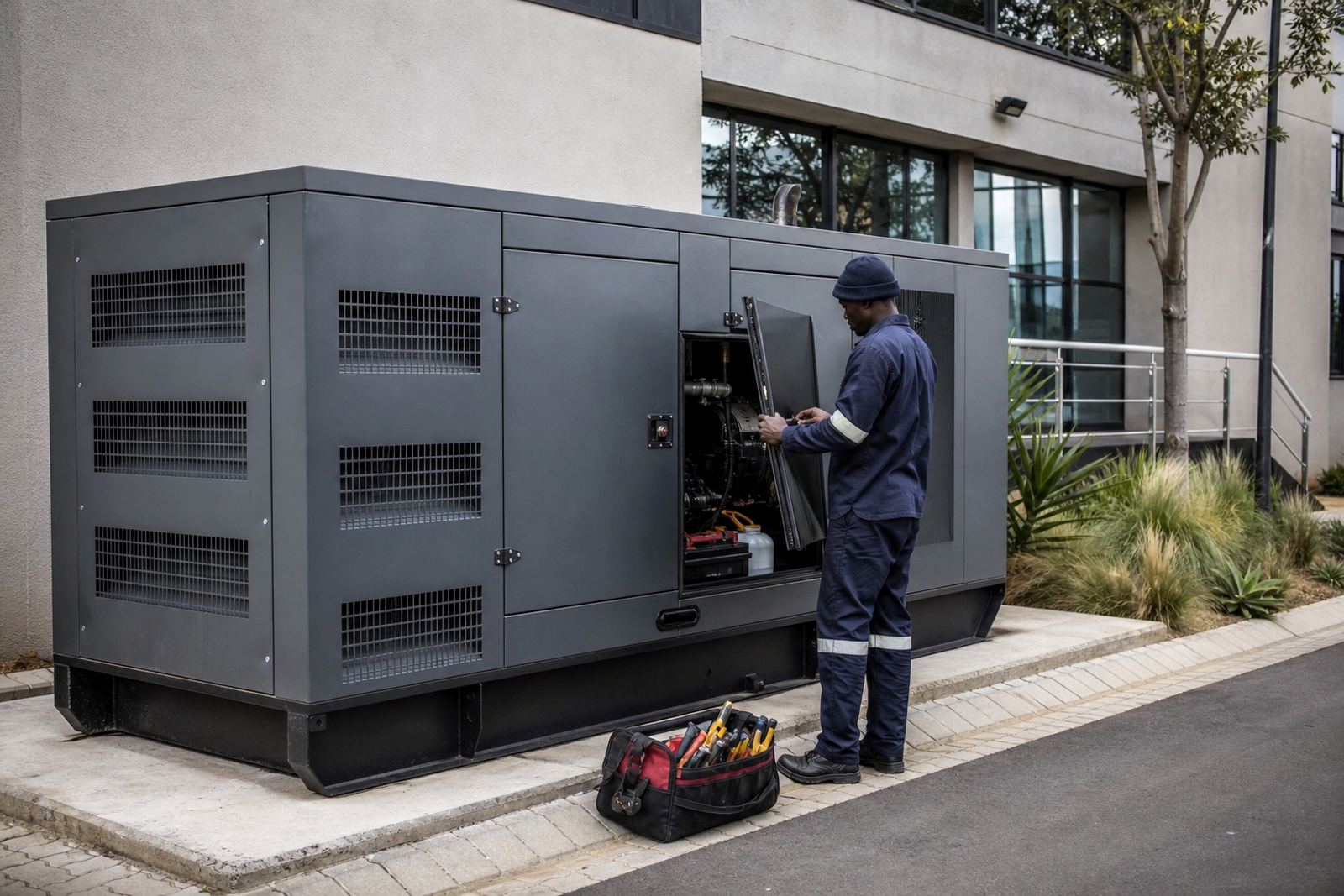
When a generator supports refrigeration equipment, the installation side has to allow proper access for servicing and safe operation. We look at clear working space, exhaust routing, cooling air flow, fuel access, the position of the changeover switch and how the set is isolated for maintenance. If the site has an older control layout, we check whether the service points are still practical for regular work.
For cold room contracts, the details that usually make or break ongoing reliability are practical ones: enough room to remove filters, a safe route to drain oil, battery access, and clean separation between plant movement and technician access. On some industrial sites in Pretoria or Polokwane, the generator room also needs better housekeeping so dust does not build up around the radiator and control panel.
Any electrical connection, transfer work or remedial repair must be handled by qualified people in line with local rules. That protects the site, the staff and the equipment, and it avoids problems when the generator has to carry refrigeration load at short notice.
How we look after the set between callouts
A cold room contract should do more than react when something fails. The goal is to catch the small things early, before they become a spoilage risk. We pay attention to battery state, oil leaks, loose clamps, dirty filters, low coolant, fuel contamination signs and any irregular starting pattern. If a site has had load shedding or repeated transfer events, that history is folded into the next visit plan.
Typical care steps include:
- Preventive site inspections during operating hours
- Checking for warning lights, alarms and low pressure readings
- Cleaning around the base frame and service points
- Confirming that previous defects were properly corrected
- Noting wear that could affect the next cold season or peak harvest period
In hot inland weather or during long power interruptions, batteries and coolant systems take the strain first. A contract that keeps an eye on those items can save a lot of trouble when stock is full and the rooms must hold temperature without drift.
What to confirm before we build the service plan
To set up a cold room contract properly, we need the generator details and the way the refrigeration plant is used. That includes the make and model if available, rated output, whether the unit is standby or prime, service history, and how often the changeover equipment is operated. We also need the site address, access instructions and the best time to attend when stock movement is light.
Have these details ready:
- Generator kVA rating and engine serial number
- Type of load being carried, especially compressor start-up demand
- Service interval currently in use
- Any recurring alarms, starting faults or transfer issues
- Fuel storage arrangement and visible contamination concerns
- Whether the site needs after-hours work or daytime access only
If a contract is being arranged for more than one site, we can keep records separate while still planning the visits from our Midrand base. That helps when you have cold rooms in Johannesburg, Pretoria, Durban, Cape Town or Polokwane and need one maintenance picture across the group.
Key facts
| Contract type | Planned generator maintenance for cold room and refrigeration support loads |
|---|---|
| Generator use | Standby and prime units serving storage and processing facilities |
| Typical service items | Oil, filters, coolant, batteries, load bank testing and changeover switch checks |
| Support range | Single site and multi-site contracts across South Africa |
| Callout support | Emergency fault response for starting, transfer and running issues |
| Base area | Midrand, Gauteng, with work in Johannesburg, Pretoria, Durban, Cape Town and Polokwane |