What a standby contract actually covers on site
A standby generator contract is a planned service arrangement for a generator that is expected to start when the supply fails and carry agreed essential loads without fuss. It suits premises where a short interruption can stop billing, cold storage, pumps, security systems, access control, servers or production support, especially where load shedding or municipal outages keep testing the installation harder than it was originally intended.
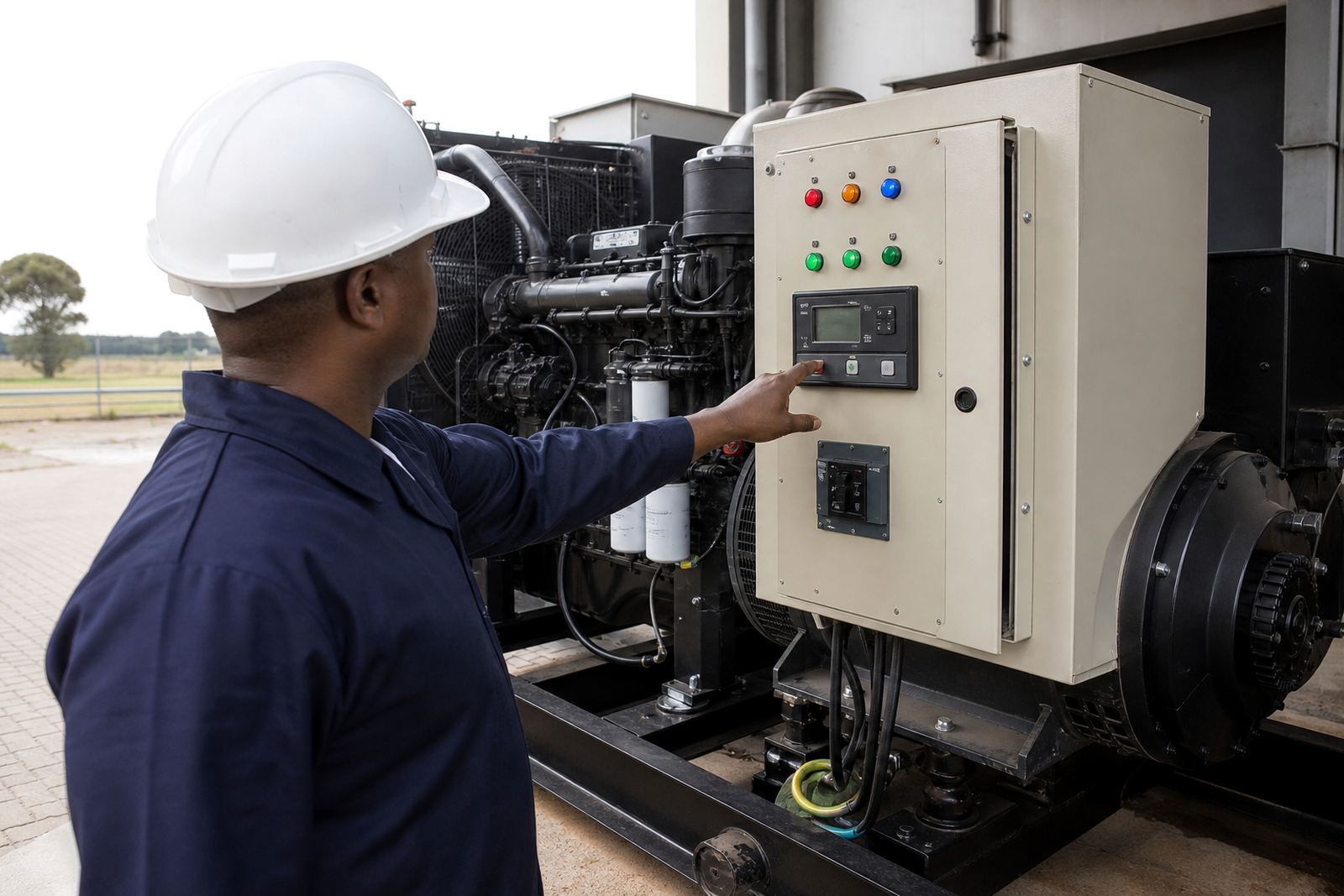
We set the contract around the machine size, run hours, fuel arrangement and the way your site changes through the year. That can include monthly or quarterly visits, oil and filter changes, coolant checks, battery testing, starter checks, fuel system repairs, changeover switch inspections and fault finding after a failed start or nuisance trip.
- Emergency callouts for no-start, alarms and post-outage checks
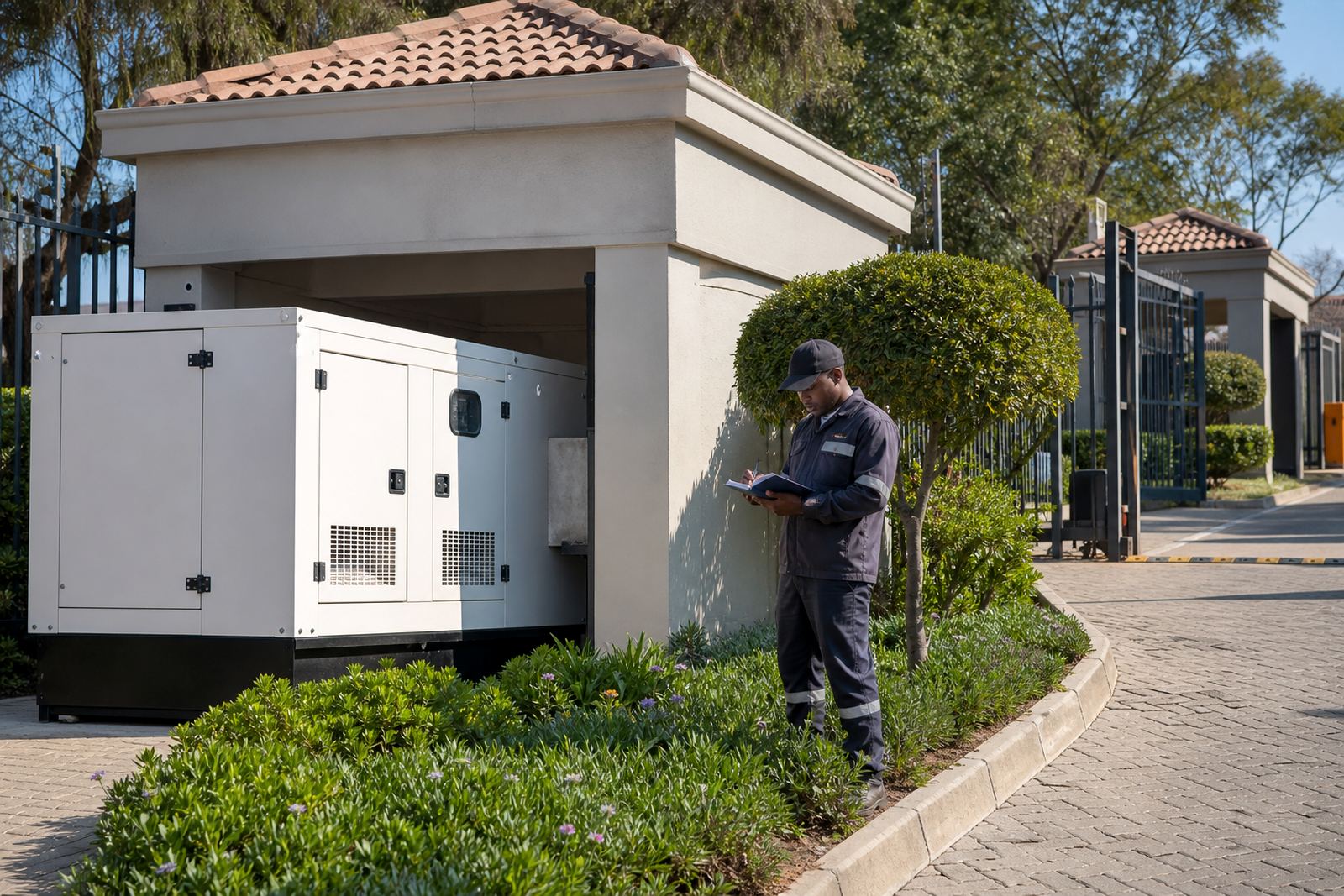
- Service records kept for audit trails and internal maintenance files
Generator sizes and duty patterns we contract for
Standby contracts are arranged for small office units, medium commercial sets and larger site or plant applications. We service air-cooled and water-cooled diesel sets, as well as prime-rated machines that are used regularly and need tighter monitoring of oil condition, coolant quality and fuel cleanliness.
The right contract depends on kVA rating, number of cylinders, daily start demand, ambient heat and whether the set is indoors, in a container or under a weather canopy. Coastal humidity in Durban and Cape Town can affect terminals, batteries and control components, while dust and heat around Midrand, Centurion and Polokwane often call for more regular cleaning and inspection. A generator that stands for long periods also needs attention because seals dry out, batteries weaken and fuel can degrade if it is left unchecked.
- Smaller office standby sets for essential lighting and ICT loads
- Mid-range commercial units for shops, depots and sectional title sites
- Larger standby or prime sets for processing, cold rooms and production support
How the contract service visit is carried out
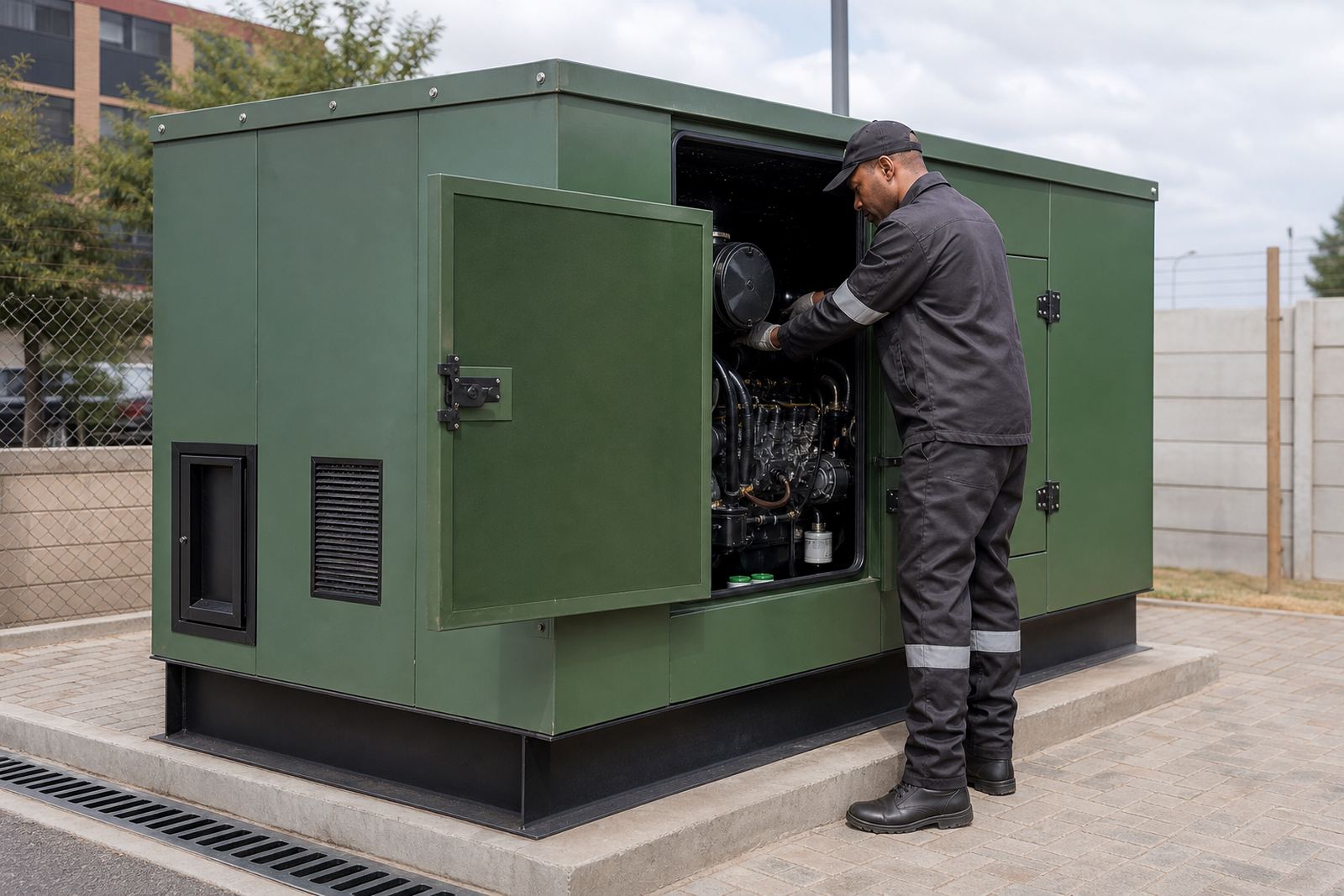
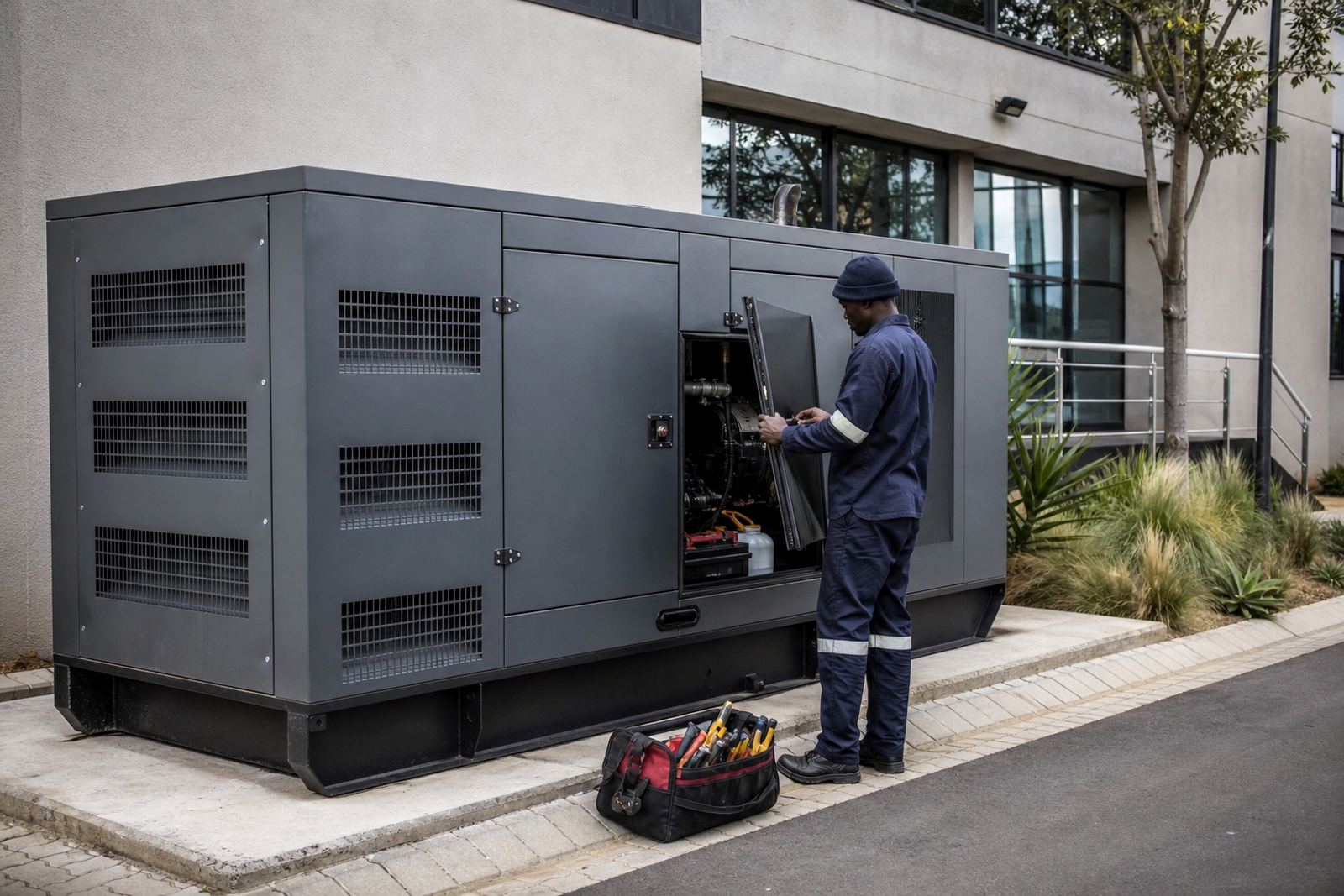
Each visit is planned to keep the machine ready without unnecessary interruptions to your operations. A standard service can include draining and replacing oil, changing filters, inspecting belts and hoses, topping up coolant with the correct mix, checking battery condition, cleaning terminals and confirming the charger output. Where the site has a transfer system, changeover switches are checked for signs of wear, overheating or poor operation, and the installation is referred for qualified electrical attention if a defect falls outside routine servicing.
Load bank testing is used where a controlled test under load is needed to confirm the engine can carry the rated demand and recover properly. That matters on sets that sit idle for months, or where the actual building load is lower than the generator capacity and wet stacking can become a problem. We also look at exhaust smoke, starting speed, alarms, vibration and any signs of fuel starvation.
- Oil and filter changes with service-grade consumables
- Battery testing, charger checks and terminal cleaning
- Load bank testing for verification under controlled conditions
Where these contracts fit best
Standby generator contracts suit businesses that need continuity during outages, switching events or utility faults. We work with offices, schools, retail centres, medical rooms, small plants, workshop sites, communication rooms and property portfolios where one failed start can create a knock-on problem for staff, security and service delivery.
For businesses in Johannesburg and Sandton the main concern is often downtime during peak trading hours. In Pretoria and Centurion, many sites need dependable backup for administration, access control and essential services. Durban and Cape Town sites often need closer attention to corrosion and coastal moisture, while Polokwane and surrounding areas may need stronger focus on dust, heat and battery life.
We also support construction sites and temporary facilities where the unit moves between projects and the contract needs to track that movement. In those cases, the service history matters because the machine may have had different run patterns, fuel quality and operating conditions from one site to the next.
Installation, fitting and compliance details that matter
A standby contract works best when the installation is sound from the start. The generator should have proper ventilation, safe fuel storage where applicable, suitable cable sizing, a stable base and enough access for servicing. If a changeover switch or automatic transfer equipment is part of the setup, the electrical work must be handled by qualified people in line with local regulations and the site should keep the required records in order.
RelGen can take over existing equipment or support a new installation after it has been fitted by the appropriate trades. We check whether the room layout allows enough space to open panels, remove filters, drain oil and reach the batteries without fighting against the walls. Good access saves time on every visit and reduces the risk of a rushed job, which helps when load shedding hits unexpectedly and the set has to perform without warning.
What to confirm before we put a contract in place
To set up the right maintenance contract, we need the key details of the generator and the site. That lets us plan parts, intervals and response times properly instead of guessing. If you are managing more than one property, it also helps us separate the schedules so each set is tracked on its own service history.
- Generator kVA rating, make-up of the installation and approximate age
- Fuel type, tank arrangement and average running hours
- Whether the set is manual start or automatic start with changeover equipment
- Site address, access controls and any after-hours callout rules
- Known faults, alarm history and last service date
- Any special conditions such as coastal exposure, dust, heat or restricted access
Our team in Midrand supports contracts through Johannesburg, Pretoria, Centurion, Sandton, Durban, Cape Town and Polokwane, with scheduled visits and emergency response aligned to the needs of business sites across South Africa.