Trading floors do not forgive a slow start
A shopping centre needs generator support that is ready for tills, lighting, security systems, lifts and essential tenant services when municipal supply fails or voltage dips. These contracts are set up for standby sets and, where sites run more often, prime units that support longer operating hours and heavier daily cycling.
RelGen structures the work around the centre’s load profile, operating hours and access windows. That means planned shutdowns are kept tight, changeover checks are coordinated with site teams, and any electrical work is handled by qualified people under the applicable local regulations. In practice, that keeps the service work practical for centres in Sandton, Centurion, Johannesburg, Pretoria, Durban, Cape Town and Polokwane.
What sits inside a retail centre contract
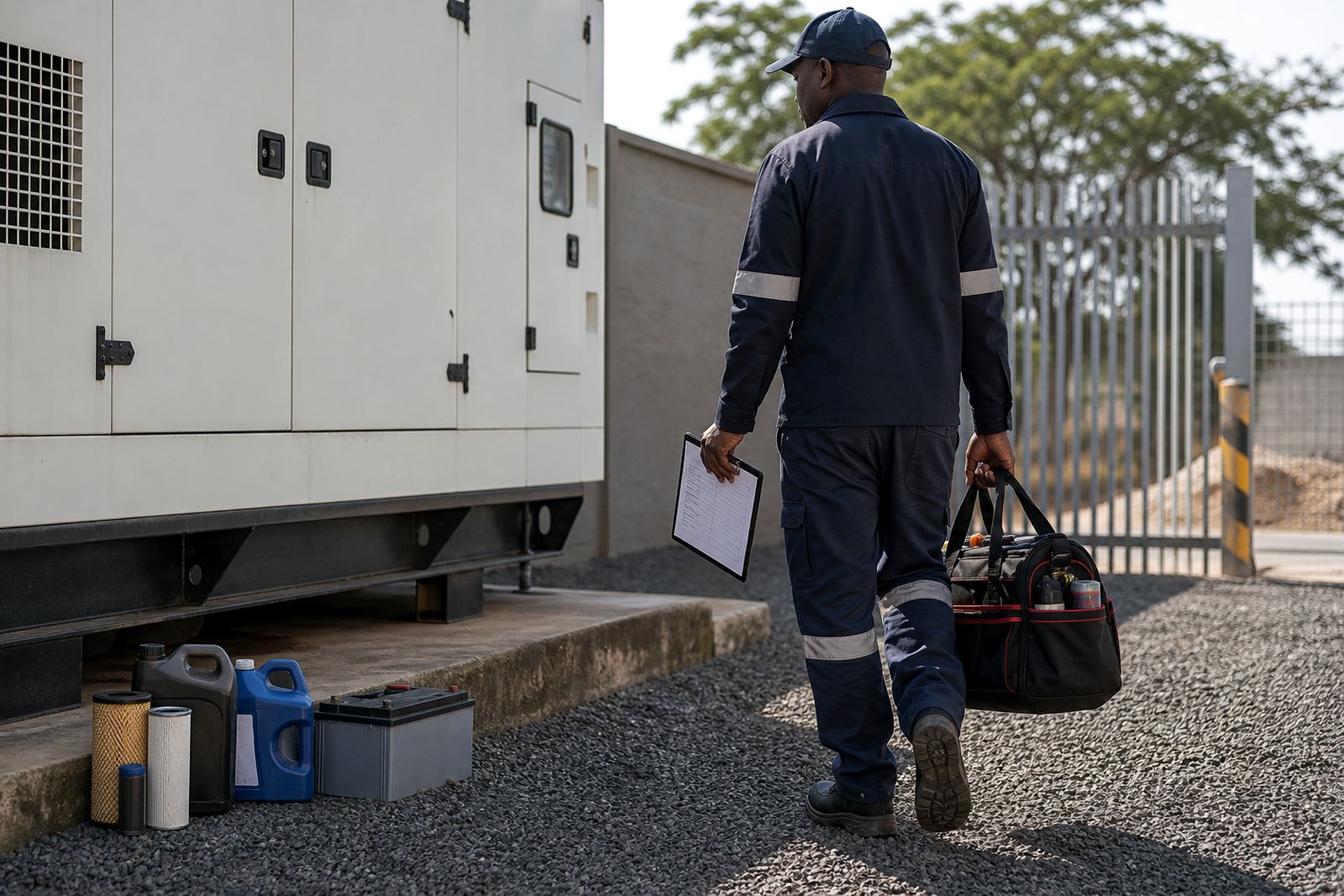
The contract covers the core items that keep a retail generator reliable over long service cycles, especially where load-shedding, bad weather or local network faults can happen without warning. Oil condition, filter changes, coolant levels, battery health and starting performance are checked at set intervals, with records kept so the site team can track trends before a fault becomes a trading problem.
- Scheduled servicing aligned to the generator’s running hours and the site’s trading calendar
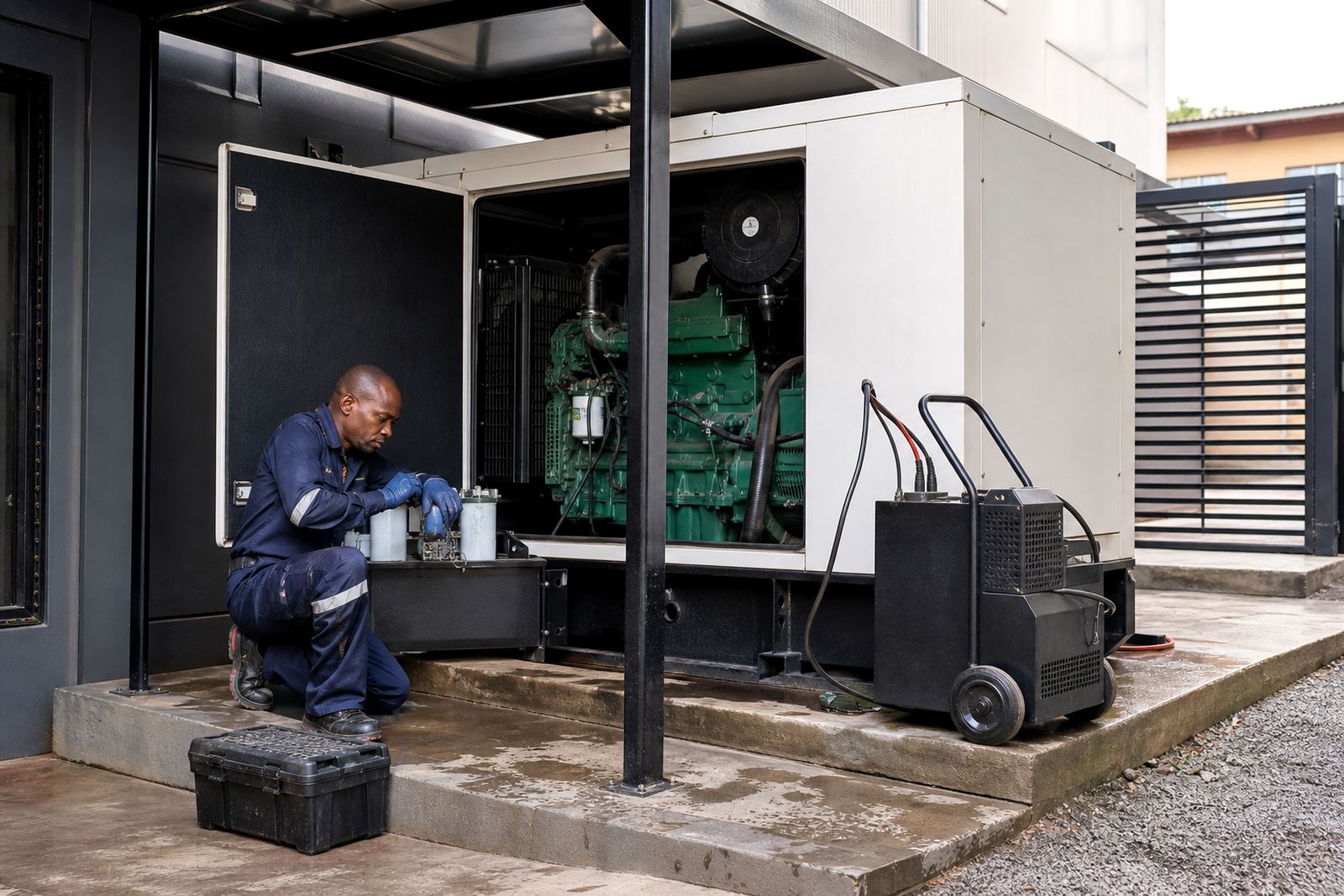
- Oil and filter changes using the correct grade for the engine set
- Coolant system checks, hose inspection and top-up where required
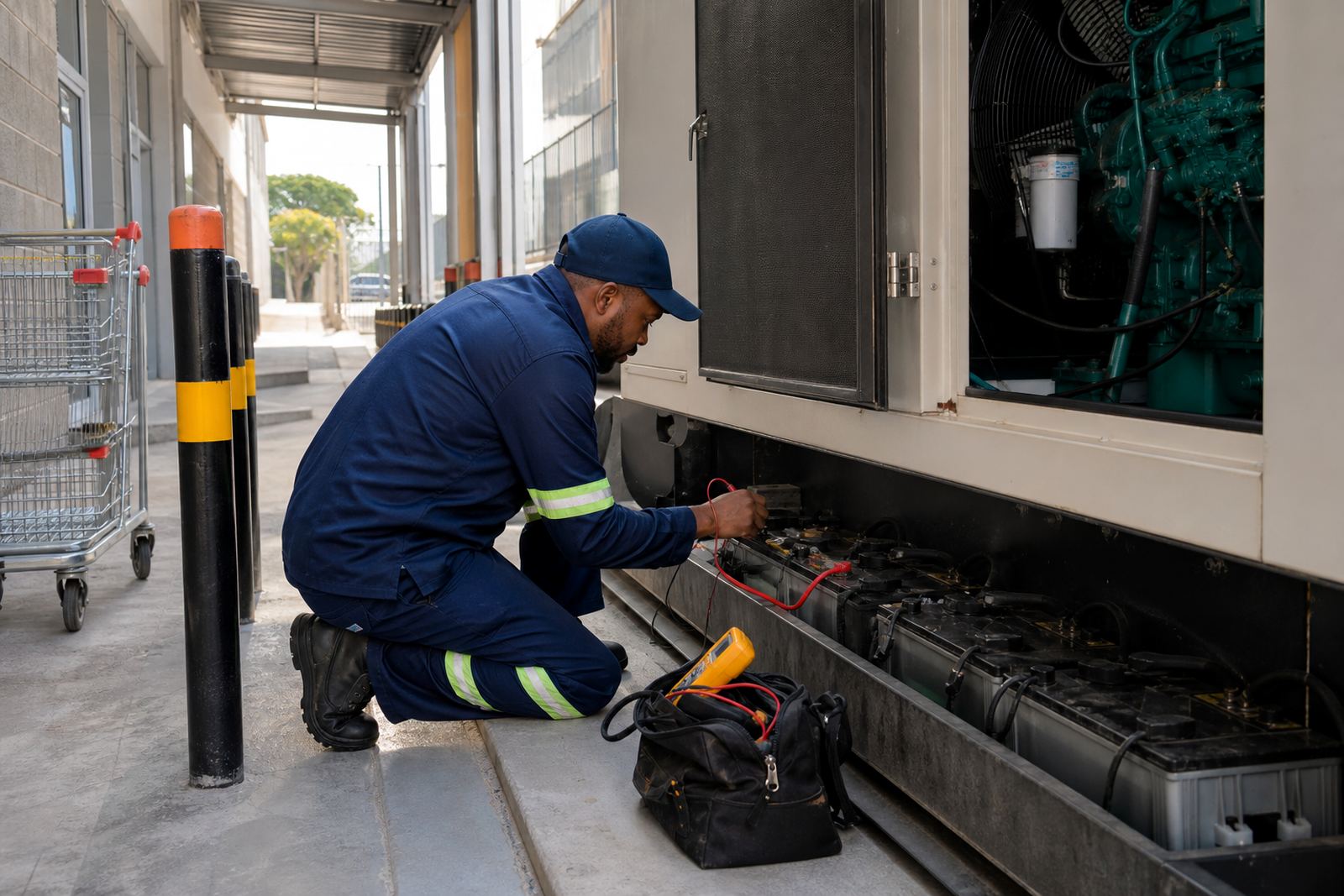
- Battery testing, charging checks and terminal cleaning
- Load bank testing to confirm the set can carry a proper load under test conditions
- Changeover switch checks and functional testing
- Fuel system repairs, starter system repairs and fault finding when needed
These contracts are suited to centres that want one maintenance plan instead of piecemeal callouts after every issue. That approach also helps with budgeting, because the major service tasks are already mapped out rather than left to chance.
Sizing and service options for centres of different scale
Retail centres vary a lot. A neighbourhood centre with a handful of tenants may need one smaller standby set, while a regional mall may run multiple generator sets in parallel with separate essential loads. RelGen works with compact units, mid-size commercial sets and larger installation groups, depending on the site layout and the amount of critical plant that has to stay live.
Options are usually shaped around the number of generators, the duty pattern and the level of testing required. Where a centre has a long service corridor, rooftop plant, basement plant room or multiple tenant boards, the plan can include more frequent inspections and staggered servicing so the site is not left exposed. Coastal centres, especially in Durban and Cape Town, may need tighter attention to corrosion and battery condition because humidity and salt air are hard on metal fittings and terminals.
- Single generator service plans for smaller retail centres
- Multi-set contracts for larger malls and mixed-use retail sites
- Prime set support for sites with high daily operating hours
- Standby set support for emergency-only operation
- Custom inspection intervals for busy trading periods and month-end trading peaks
Fitting work and site coordination without the fuss
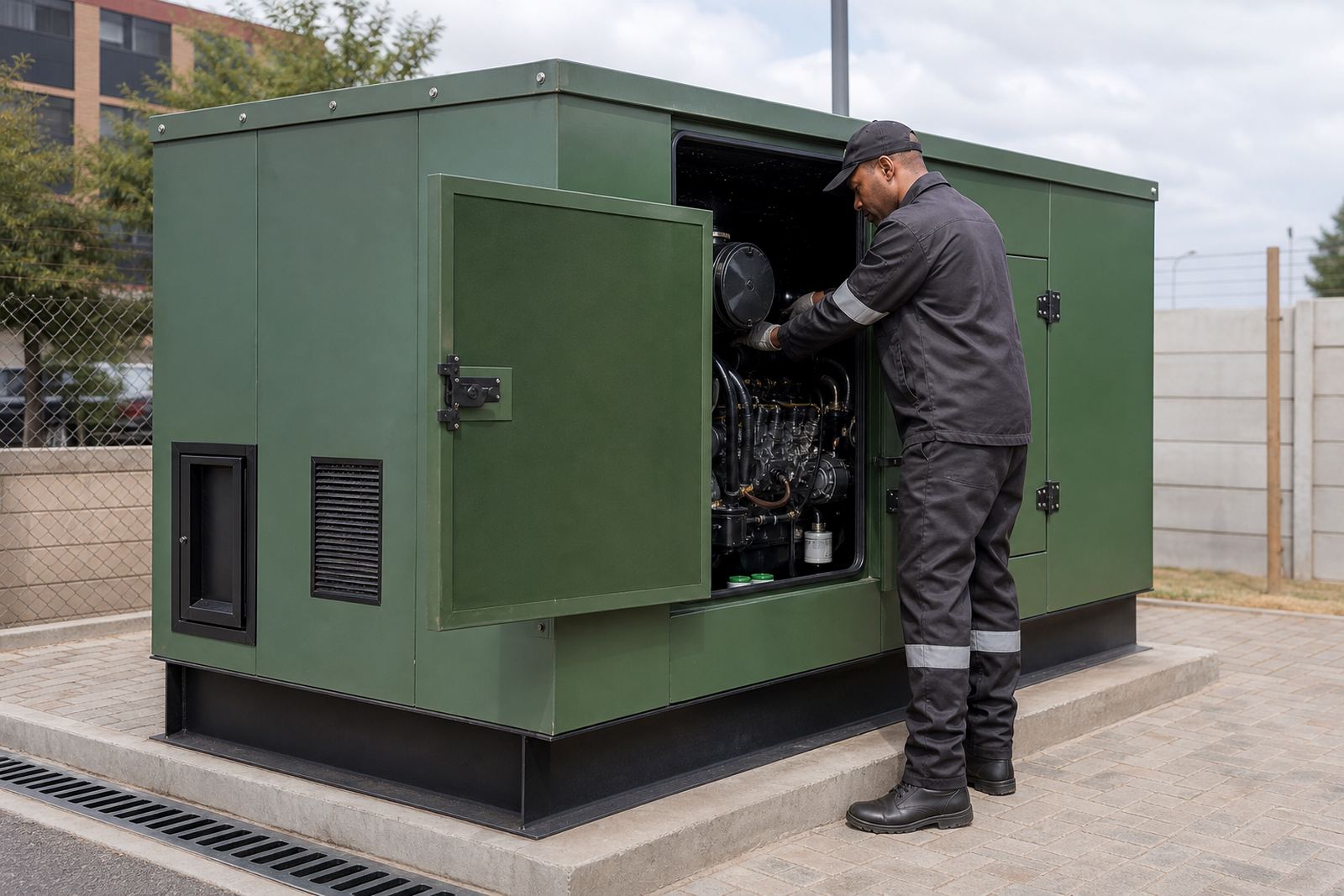
Generator maintenance at a retail centre is not only about the engine itself. Access, lifting points, service clearance and changeover arrangements all matter, especially where tenant deliveries, parking control and public safety have to stay in place. Any fitting work is planned around the equipment already on site, the approved working area and the centre’s own rules for after-hours access.
When a service includes replacement parts or minor fitting tasks, the team confirms what can be done during normal maintenance windows and what needs a separate planned shutdown. Electrical work is only carried out by qualified people under local requirements, and where a changeover switch or associated control gear needs attention, the work is treated as a controlled task rather than a quick patch-up. That is the cleaner way to handle retail premises where a mistake can affect multiple tenants at once.
How the contract keeps pace through the year
Retail centres in Gauteng, KwaZulu-Natal and the Western Cape often face different pressures through the year. Load-shedding can come and go, rainfall can affect basement plant areas, and long public holidays can change the load pattern. The service plan is built to account for those shifts, with preventive inspections and service record audits helping to spot repeat issues.
Good care is mostly about steady basics. Clean filters, correct coolant strength, good batteries, no diesel contamination, tidy terminals and a changeover system that actually responds when called. If the set has been sitting for a while, load bank testing helps confirm the engine and alternator are still healthy under demand instead of only idling through a light no-load run.
- Keep the plant room clean and accessible for service visits
- Report fuel smell, coolant loss, black smoke or slow cranking early
- Leave enough clearance around panels, radiators and exhaust routes
- Record every shutdown, trip and manual start on site
- Plan servicing before peak trading periods where possible
Details to confirm before a retail centre contract starts
To set up the right maintenance plan, the centre team needs to confirm the generator count, kVA rating, engine type, current condition, access arrangements and the site’s essential load list. It also helps to know whether the set serves only the mall common areas or whether tenant loads, security systems, lifts, fire-related controls or parking systems are tied into the arrangement. That shape of load makes a difference to test timing and to the way changeover checks are done.
RelGen also confirms service history, last oil and filter change, battery age, coolant condition, fuel storage setup and any past starting trouble. If the site has municipal supply changes, frequent tripping or seasonal flooding in low-lying areas, that is worth noting too. The more complete the site picture, the cleaner the contract plan and the fewer surprises during a load change.
- Generator size in kVA and the number of sets on site
- Standby or prime duty, and the expected running hours
- Exact site location and access hours for the plant room
- Changeover switch arrangement and control panel layout
- Last service date and known faults, if any
- Preferred service interval and trading blackout windows
Key facts
| Service type | Retail centre generator maintenance contract |
|---|---|
| Coverage | Standby and prime generators |
| Typical site sizes | Single-set to multi-set mall installations |
| Core checks | Oil, filters, coolant, batteries, load bank testing, changeover switches |
| Service areas | Midrand, Johannesburg, Pretoria, Durban, Cape Town, Polokwane, Centurion, Sandton |
| Support modes | Scheduled servicing, emergency callouts, fault finding, preventive inspections |