What a monthly service contract actually covers on site
A monthly service contract is a planned maintenance agreement for generator installations that work hard, sit on critical loads, or need tighter oversight than a once-off service can give. For many sites in Gauteng, Durban, Cape Town and industrial areas around Pretoria and Polokwane, it means a technician visits on a set cycle, checks the unit in place, records the condition of key parts and flags wear before it becomes a breakdown. It suits standby sets that may sit idle for weeks, and prime units that run for longer periods or under varying loads.
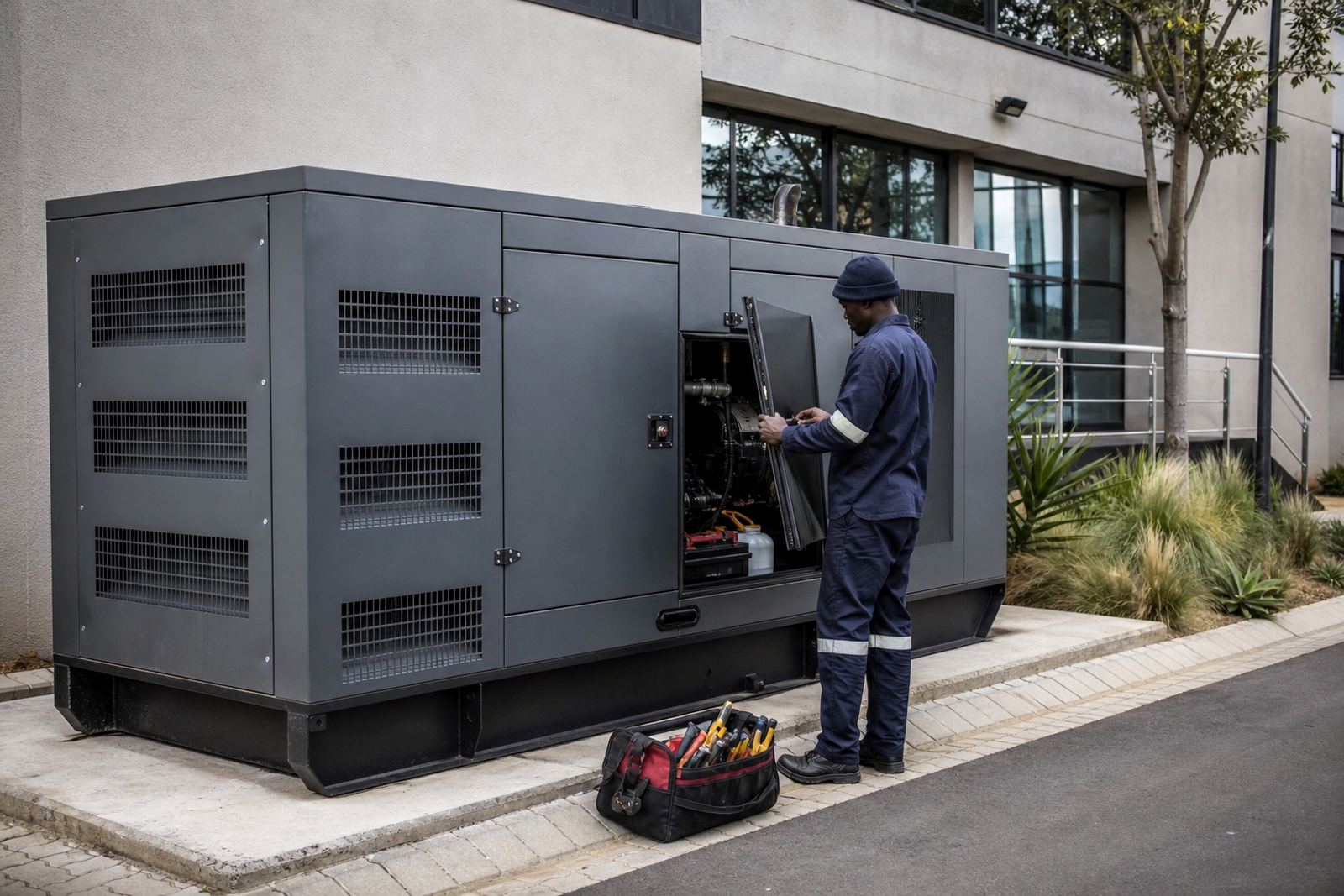
On a routine visit we look at oil level and condition, filters, coolant strength and level, battery health, charger output, belts, hoses, leaks, loose connections, control panel readings and the general state of the enclosure or container. Where the installation has an automatic changeover arrangement, we inspect the switch operation and confirm that the sequence is working as intended. Electrical work is handled by qualified people in line with local regulations, which matters on any site with motors, pumps, process equipment or controlled shutdowns.
- Monthly, fortnightly or custom visit cycles available
- Suitable for one generator or multiple units on one site
- Useful where access is tight, fuel use is irregular or loads change often
- Can include service records for internal audits and maintenance files
The contract sizes and service rhythms we set up
Every site does not need the same service rhythm, so the contract is matched to the duty of the generator and the risks around downtime. A small office block in Sandton may only need one planned visit each month with battery checks and a quick operational run, while a production site in Midrand or a cold room facility in Johannesburg may need more frequent attendance, load bank testing and closer fault monitoring. Larger estates, logistics hubs and construction compounds often choose several units on one contract so the records stay together.
We set the contract around generator size, running hours, site access and the type of load the set carries. Typical arrangements include single unit contracts, multi-unit contracts and site-wide maintenance plans for properties with more than one standby or prime generator. For heavier duty installations, load bank testing is often added at agreed intervals so the engine can be assessed under controlled demand instead of only light running. That helps expose weak batteries, fuel delivery issues and temperature problems that may not show up in a short no-load run.
- Single generator contracts for small to medium premises
- Multi-set contracts for complexes, factories and estates
- Higher frequency plans for prime power and critical standby loads
- Optional service intervals based on monthly, bi-monthly or quarterly attendance
Sizes are confirmed in kVA and engine hours, then matched to the maintenance budget and operating risk. If the set is indoors, in a yard, or mounted in a weathered enclosure near the coast, that also affects how often the cooling system, terminals and external fittings should be checked.
Where monthly maintenance pays off fastest
This product suits places where a generator must be ready at short notice or where an interruption would disrupt staff, tenants, production or cold storage. In Gauteng, many sites use it for office parks, retail centres, small factories and medical rooms. In Durban and Cape Town, coastal humidity and salt in the air can speed up corrosion on terminals, brackets and housings. In Polokwane and inland industrial areas, dust and long hours of summer running can put strain on filters, radiators and batteries. Load-shedding has also made many businesses more aware that a unit sitting untouched for long periods still needs attention.
It is also a practical option for temporary or mobile installations, construction sites, warehouses with seasonal peaks, and plant rooms where alarms have to be cleared quickly. Monthly visits help catch slow coolant loss, battery decline, starter faults and switch problems before an outage. For many customers, the biggest benefit is not only fewer failures, but fewer surprises when the unit is called on after weeks of quiet.
- Warehouses, office parks and sectional title properties
- Manufacturing, processing and packaging sites
- Medical rooms, security operations and telecom support rooms
- Construction compounds and temporary power installations
The fittings, tests and adjustments included in the work
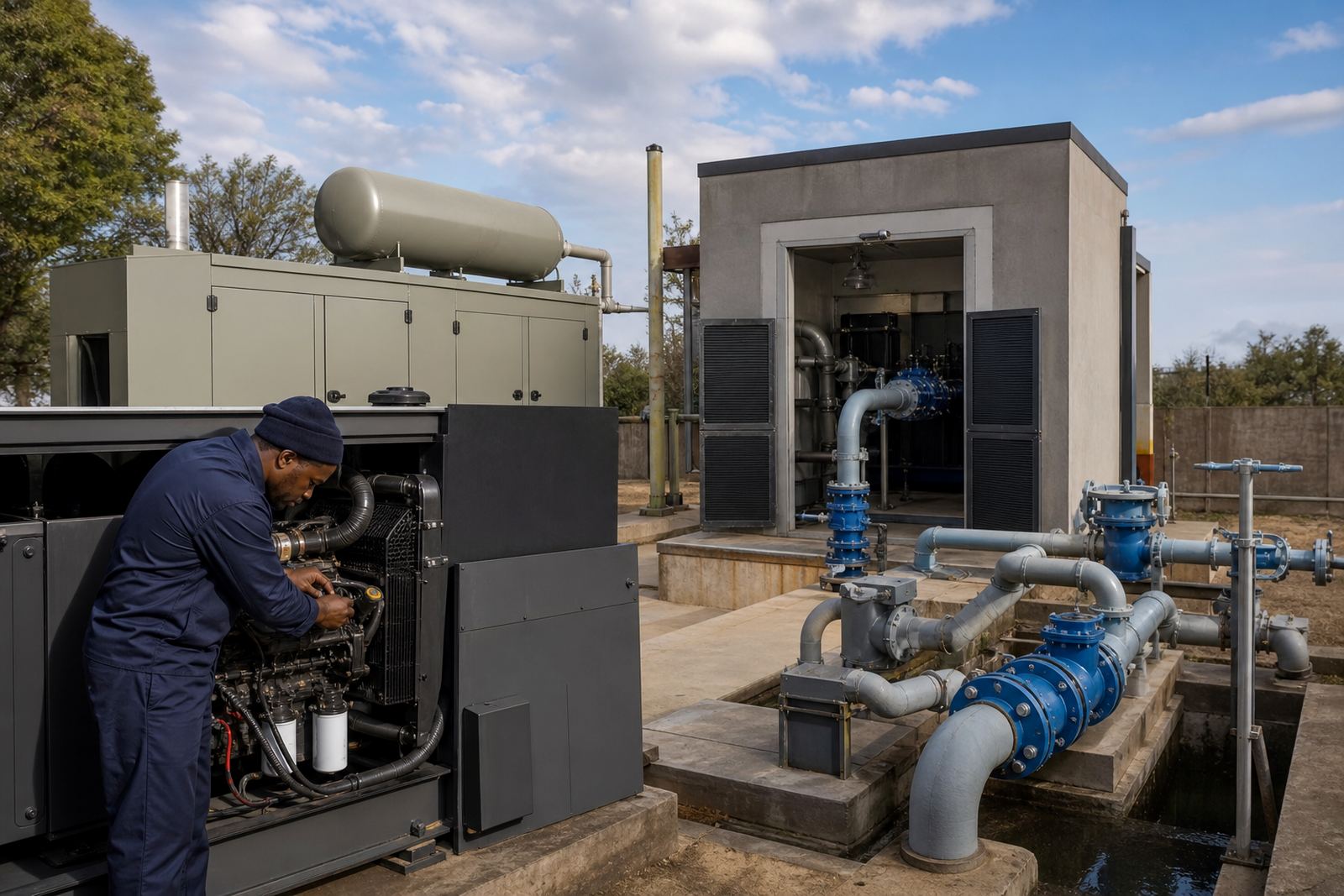
Each visit is built around practical checks that keep the set serviceable. Oil and filter changes are done at the correct hours or condition, coolant is checked for level and protection, and battery testing confirms whether the starting system is holding charge properly. Where the site can support it, we carry out load bank testing to place the generator under a controlled electrical demand and verify temperature control, exhaust response and stability. Changeover switch checks are done with care, because a poorly set or worn transfer arrangement can create faults that look like engine trouble when the issue is actually in the switchgear.
Fault finding is included when a warning lamp, alarm or starting issue shows up during the monthly visit. That may point to a starter relay, fuel supply problem, charging fault, sensor issue or blocked airflow. Service record audits are also useful, especially where more than one technician has worked on the same machine over time. We compare the logbook, running hours and site notes so that overdue items do not get missed.
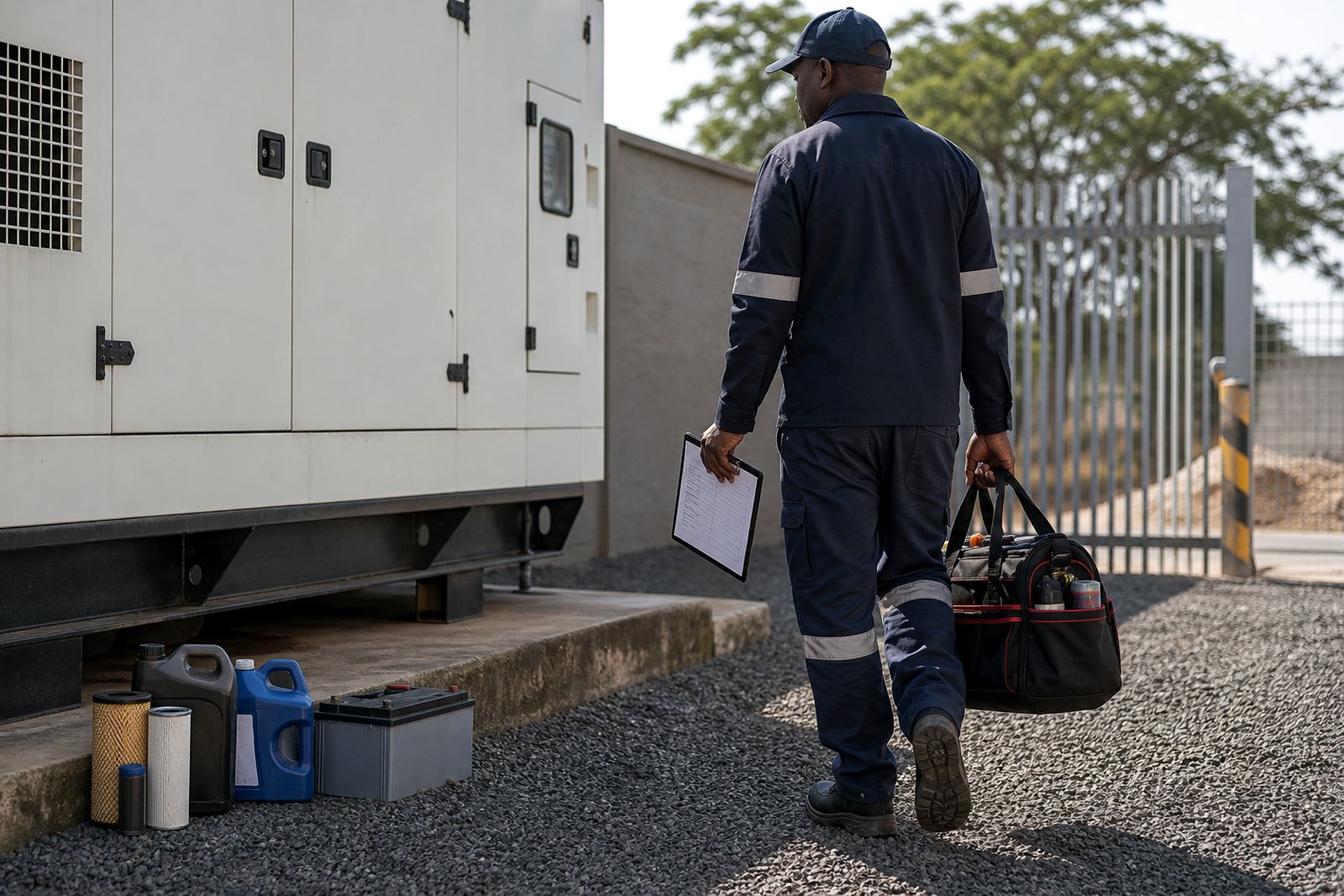
- Oil and filter changes with correct service intervals
- Coolant system service and leak inspection
- Battery testing, charger checks and terminal cleaning
- Load bank testing for controlled performance checks
- Changeover switch checks and functional verification
Installation access, site readiness and who should handle the electrical side
A monthly contract works best when the site is set up for safe access. That means clear access to the generator room or outdoor enclosure, enough working space around the set, and a known path for technicians to reach fuel points, batteries, service doors and control panels. If the installation is in a municipal area with noise restrictions, after-hours access rules or estate controls, those details should be noted in advance so the visit can be planned properly. On busy industrial sites, especially where shift work or security control applies, access timing is just as important as the service itself.
Any electrical isolation, live testing, transfer equipment work or re-connection must be handled by qualified people under local rules. This is not the place for guesswork, and a generator connected to critical circuits can present serious risk if handled badly. For that reason, we ask for the relevant site contact, the exact location of the set, whether there is automatic or manual changeover, and any lockout procedure before attendance. If fuel tanks, pumps or day tanks are part of the installation, those details should also be recorded so inspections are accurate, not assumed.
- Access route to the generator room or enclosure
- Type of changeover arrangement in use
- Engine make, model, kVA rating and running hours
- Site safety rules, permit requirements and contact person on arrival
Keeping the contract in good shape through the year
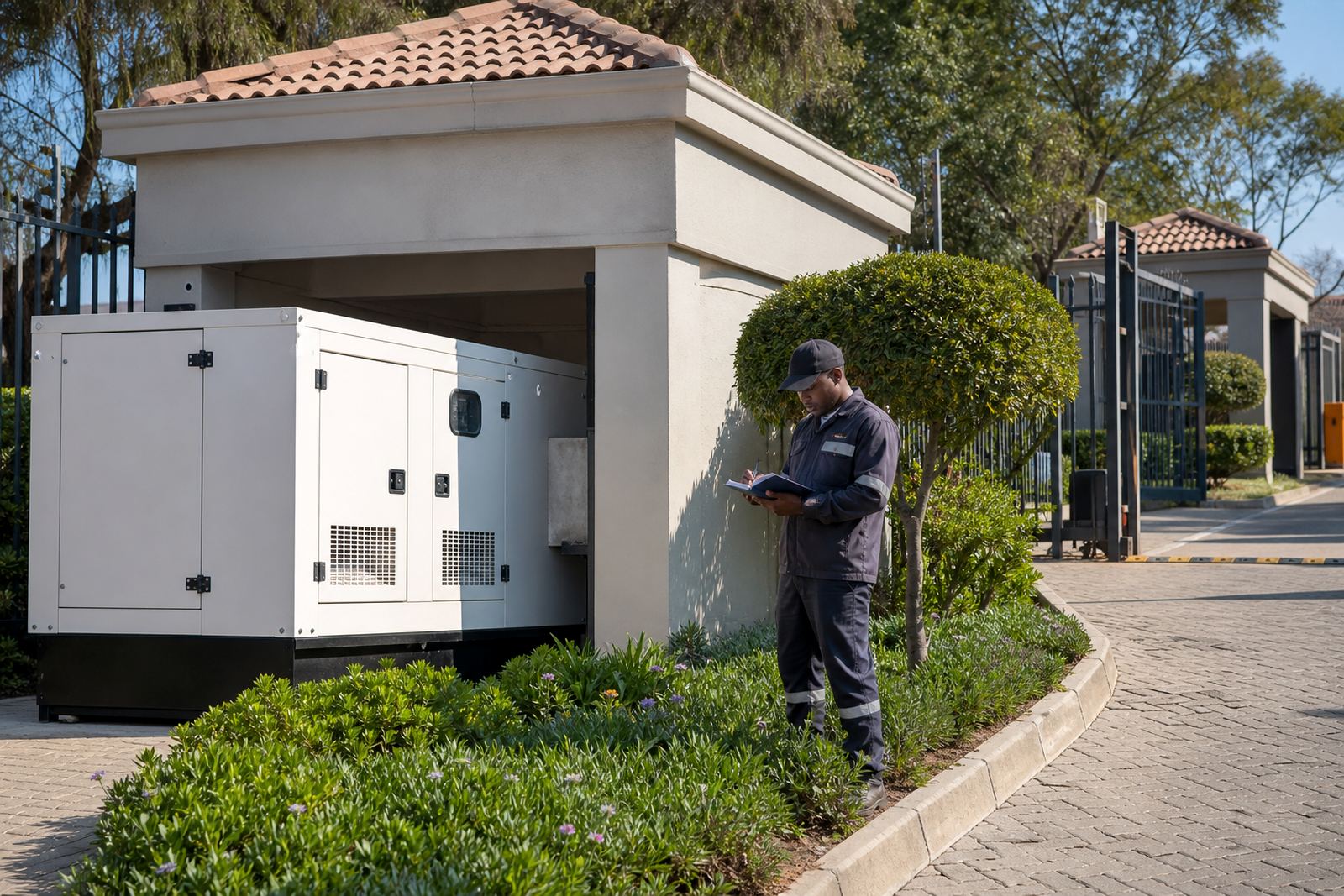
A monthly service plan should not be a box-ticking exercise. It works best when the same records are kept from one visit to the next, with clear notes on oil condition, coolant top-ups, battery readings, smoke, vibration, unusual noise and any parts replaced. Over time, that history shows whether a set is steady or whether it is drifting toward repeat faults. For a business with a single standby generator, that can be the difference between a short repair and a major stoppage. For a site with several machines, it helps control spares and planning.
RelGen manages monthly service contracts from Midrand and supports businesses across Johannesburg, Pretoria, Durban, Cape Town, Polokwane and Centurion. Our team handles scheduled servicing, emergency callouts, preventive site inspections and the records that go with them. If you are sorting maintenance for a new site or trying to bring an older installation back into order, we will need the generator details, service history if available, the site location and the kind of operation it supports. A clean contract is easier to run than a messy one, and it saves time when the load is under pressure.
Key facts
| Service cycle | Monthly, bi-monthly or custom contract intervals |
|---|---|
| Generator type | Standby and prime generator sets |
| Typical rating range | Single units and multi-unit sites, sized by kVA |
| Core checks | Oil, filters, coolant, batteries, charger, belts, hoses |
| Testing options | Load bank testing and changeover switch checks |
| Coverage area | Midrand, Johannesburg, Pretoria, Durban, Cape Town, Polokwane and surrounding business districts |