What a clinic contract keeps under watch
A clinic generator contract is a fixed maintenance agreement for one or more sets on a site that must keep lights, refrigeration, medical devices and basic admin running during outages. We service diesel generator sets used as standby support or for regular prime use, with attention to oil condition, filters, coolant level, batteries, starter circuits and the transfer equipment that moves the load across safely.
In healthcare spaces there is little room for guesswork. A set can idle for weeks, then be called on without warning during load-shedding or a local fault. That is why the contract is built around scheduled checks, fault finding and recorded findings, not only emergency repairs after a failure.
- Standby sets for clinics, medical centres and small procedure rooms
- Prime-use sets on sites with long operating hours or weak utility supply
- Single-phase and three-phase installations, depending on the site load
- Maintenance records for audit trails and internal compliance files
Sizes and set-ups we service on care sites
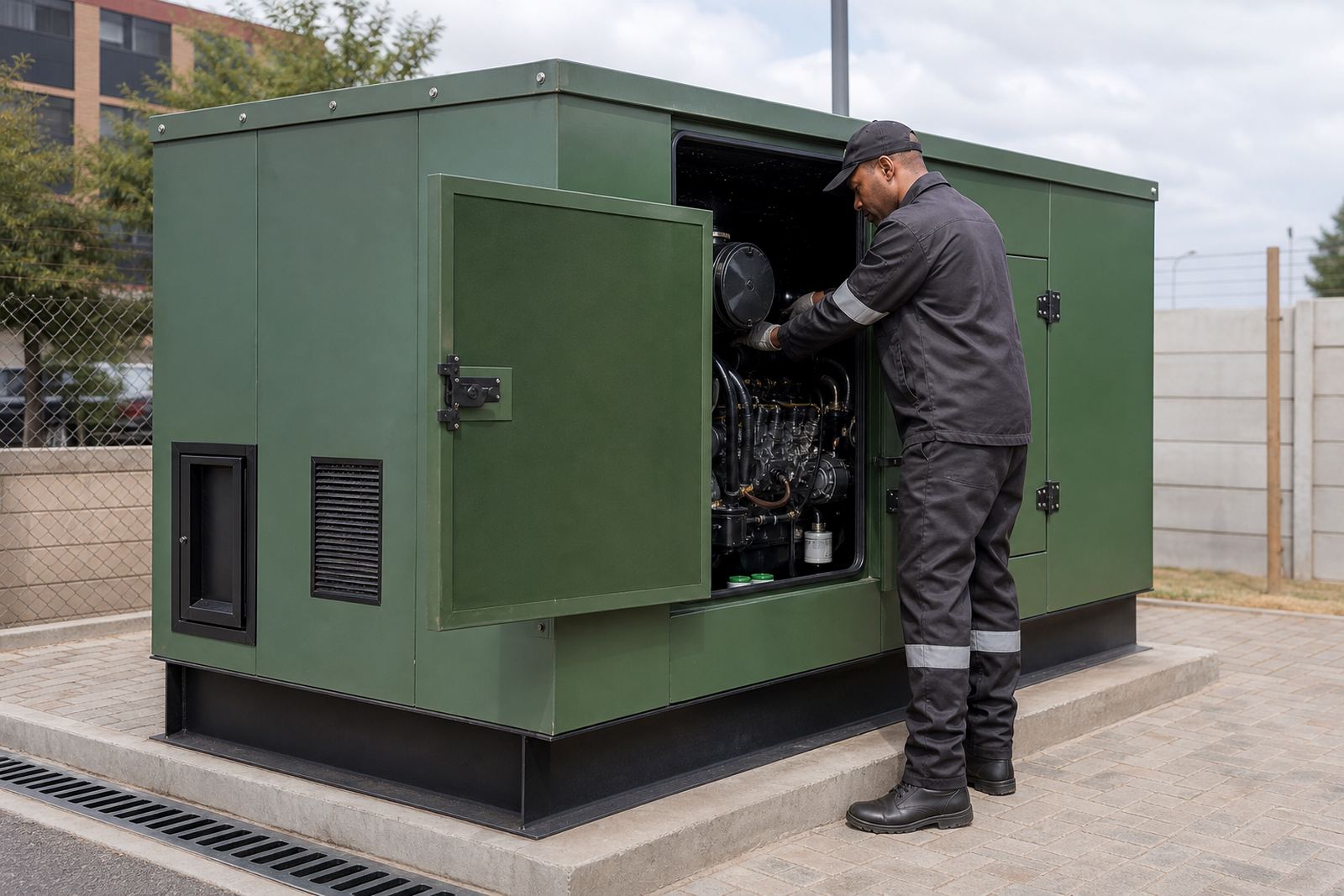
We work on compact units that support a few essential circuits, as well as larger packaged sets feeding a full clinic or a cluster of consulting rooms. The right arrangement depends on running load, starting load, phase balance, fuel storage and whether the transfer is manual or automatic. In many Midrand and Johannesburg sites, the generator room is tight, hot and not ideal for skipped servicing, so access and ventilation matter as much as the set size.
Common contract cover includes sets in the small portable-to-stationary range, medium cabinet-enclosed units and larger site units with day tanks or bulk fuel arrangements. We also inspect changeover switches, cable terminations and battery condition, because a perfectly good engine can still fail if the transfer gear or starter system is neglected.
- Small backup sets for consulting rooms, labs and reception areas
- Medium sets for multi-room clinics and treatment spaces
- Larger prime or standby sets for high-demand healthcare facilities
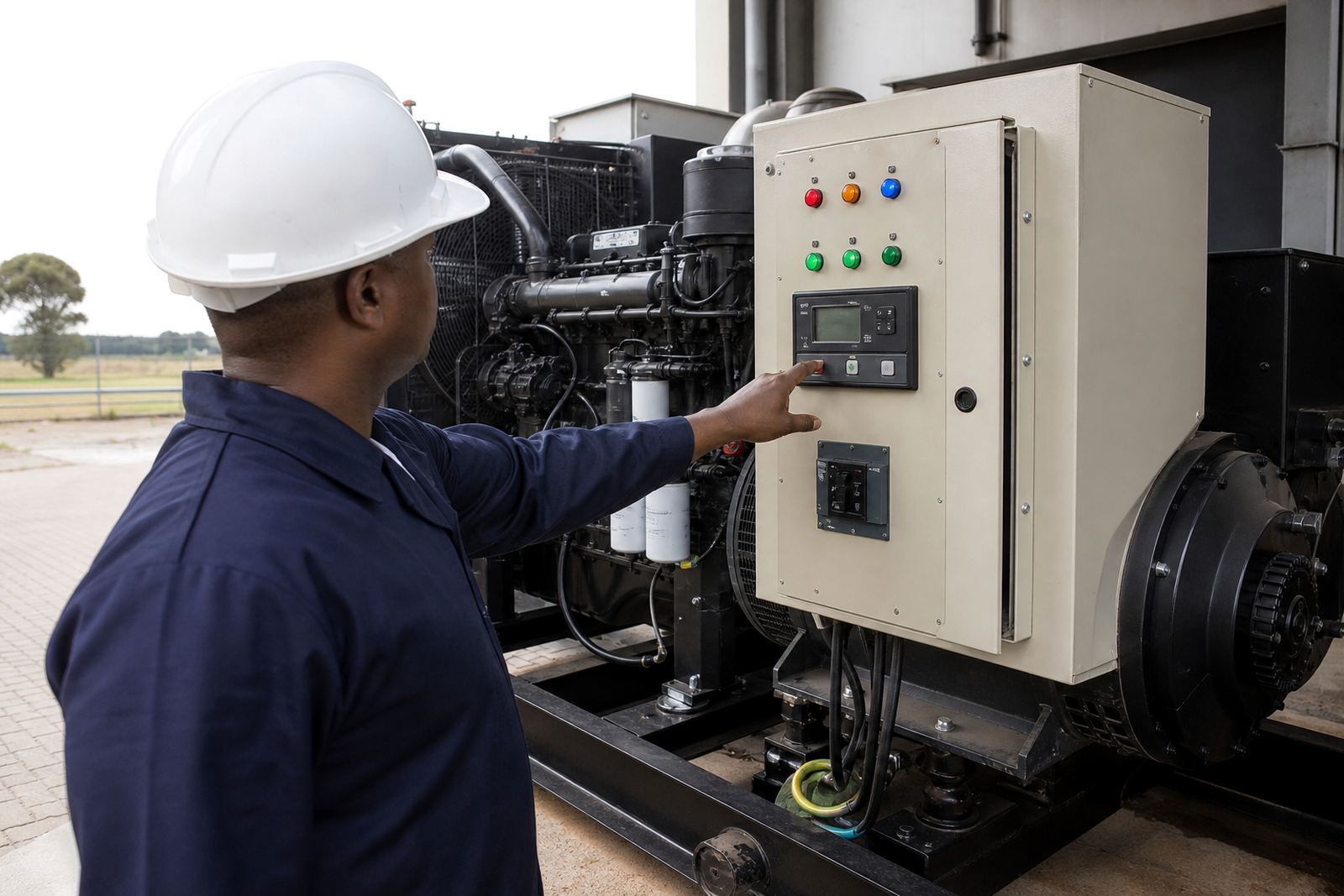
- Automatic or manual changeover arrangements, checked during service visits
Where these contracts fit best
This contract suits clinics, day hospitals, dental rooms, practices, community care centres and mixed-use medical buildings where a power interruption affects patient flow or cold storage. It also works well for sites in Durban and Cape Town where coastal humidity can affect terminals, batteries and control gear, and for Gauteng areas where dust and vibration take a toll on fittings.
For care sites in Polokwane, Pretoria, Sandton and Centurion, the value is often in predictability. Servicing can be planned around quieter clinic hours and municipal rules, with qualified people handling the electrical work under local regulations. Fuel-related work stays limited to the generator installation and service side, with checks for contamination, leaks and blocked lines where needed.
- Primary care clinics with vaccine fridges and essential treatment rooms
- Private practices needing quick recovery after utility interruptions
- Care facilities where alarms, lights and communication must stay available
- Sites that need scheduled records for owners, managing agents or facilities teams
What our servicing visits actually cover
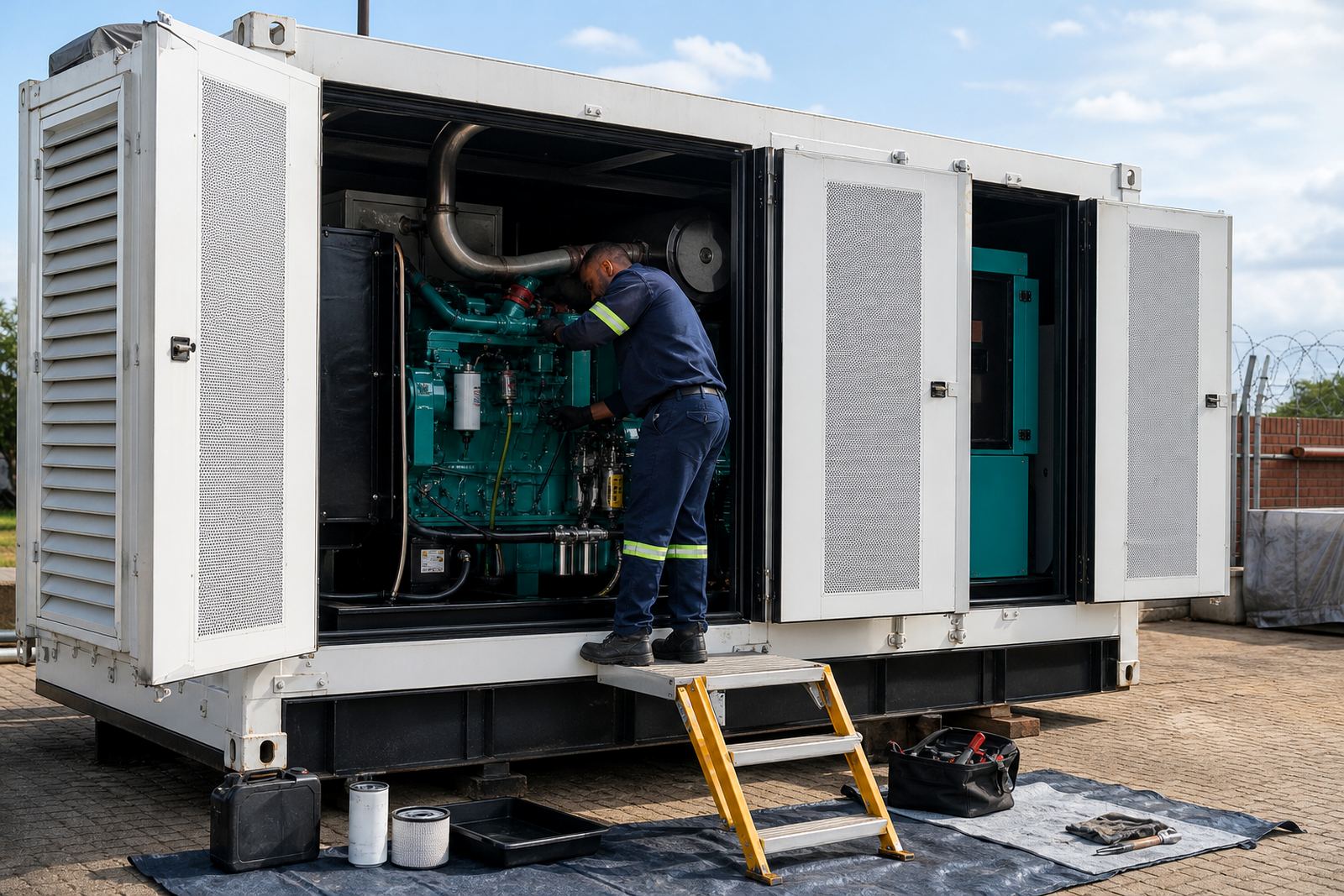
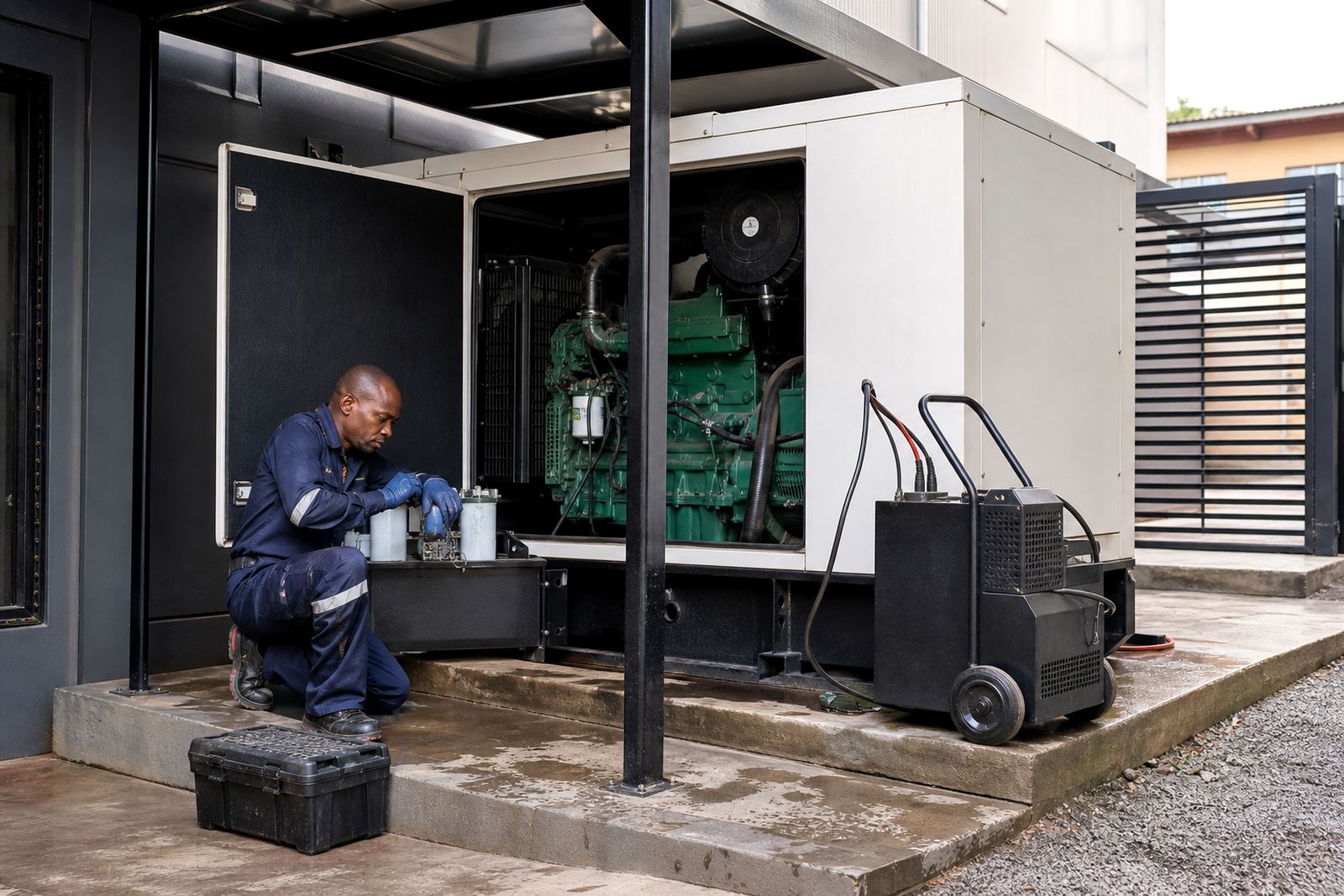
Every maintenance visit is set around the condition of the generator and the site risk. We carry out oil and filter changes at the correct intervals, inspect coolant condition and hoses, test batteries and charging systems, confirm starter performance and review the changeover switch or automatic transfer equipment. Where the site requires it, we also run load bank testing to check how the set behaves under working load rather than idle conditions.
Fault finding is included when a set shows slow starting, low oil pressure, overheated coolant, charging issues or irregular transfer. Service record audits help spot missed work or repeated faults, which is useful for clinics that cannot afford guesswork when an outage lands on a busy morning. A small typo here or there is nothing compared to a dead set at 6am.
- Scheduled servicing with oil, filters and general condition checks
- Battery testing, charger checks and starter system repairs
- Coolant system service, leaks checks and hose inspection
- Load bank testing for proof under real working load
- Changeover switch checks and controlled transfer verification
Install and fit details the site must confirm
Before any contract starts, the site needs to confirm the generator make-up, electrical arrangement and physical access for service work. If the set is newly installed or being moved, the fitting area must allow safe working space, clear exhaust routing, proper ventilation and secure fuel storage. Electrical connections must always be handled by qualified people under the relevant local regulations, especially where transfer switching and fixed wiring are involved.
For clinics, we also check whether the critical circuits are separated from non-essential loads. That helps the set carry the important bits first, rather than everything on site. If the generator room is cramped, has poor airflow or stands in a damp coastal position, the maintenance plan should allow for more frequent checks on corrosion, belts, terminals and control panels.
- Exact generator kilovolt-amp rating and phase type
- Automatic or manual changeover arrangement
- Fuel storage size, daily consumption and access to refilling points
- Room dimensions, ventilation, noise limits and service access clearance
- Any critical loads such as fridges, sterilising equipment or IT circuits
How to keep the set clinic-ready between visits
Good upkeep starts with regular operation checks, clean surroundings and a log of alarms or unusual behaviour. The unit should stay free of dust, standing water and loose stored items that block access to panels or filters. Where batteries are in service, they need proper charging and terminals that are tight and free of build-up. The same goes for fuel lines, which can be troubled by old fuel, water contamination or blocked filters if a set sits too long.
We recommend keeping service records together with the site’s emergency contacts and load schedule. That makes it easier to see when a battery is fading or a transfer switch is taking too long. Clinics in high-use areas often find that a preventive site inspection saves a lot of trouble later, especially when the next outage comes without warning.
What to confirm when you ask for a contract
To price and plan the right maintenance agreement, we need the generator size, location, running hours, service history and whether the site is standby or prime use. It also helps to know if the set supports only essential circuits or a wider clinic load, and whether there are separate issues with the starter system, fuel system or changeover equipment. The more exact the details, the better the schedule can be matched to the site.
Clients in Midrand, Johannesburg, Pretoria, Durban, Cape Town, Polokwane, Centurion and Sandton reach us through the enquiry form on our contact page. From there we can line up routine servicing, emergency callouts or a maintenance contract that suits the clinic’s operating pattern and the level of cover required.
- Generator rating in kVA and whether it is single-phase or three-phase
- Standby or prime duty, plus expected operating hours
- Fuel type and fuel storage arrangement
- Age of the set and any fault history or missing service records
- Whether load bank testing, transfer checks or remedial repairs are needed
Key facts
| Service type | Generator maintenance contract for clinics and care sites |
|---|---|
| Equipment covered | Standby and prime diesel generator sets |
| Common ratings | Small backup units through larger site generators, size confirmed per installation |
| Routine work | Oil and filter changes, coolant checks, battery testing and service record audits |
| Testing options | Load bank testing, fault finding and changeover switch checks |
| Area covered | Midrand base with service support in Johannesburg, Pretoria, Durban, Cape Town, Polokwane, Centurion and Sandton |