Built for harsh sites, not gentle weather
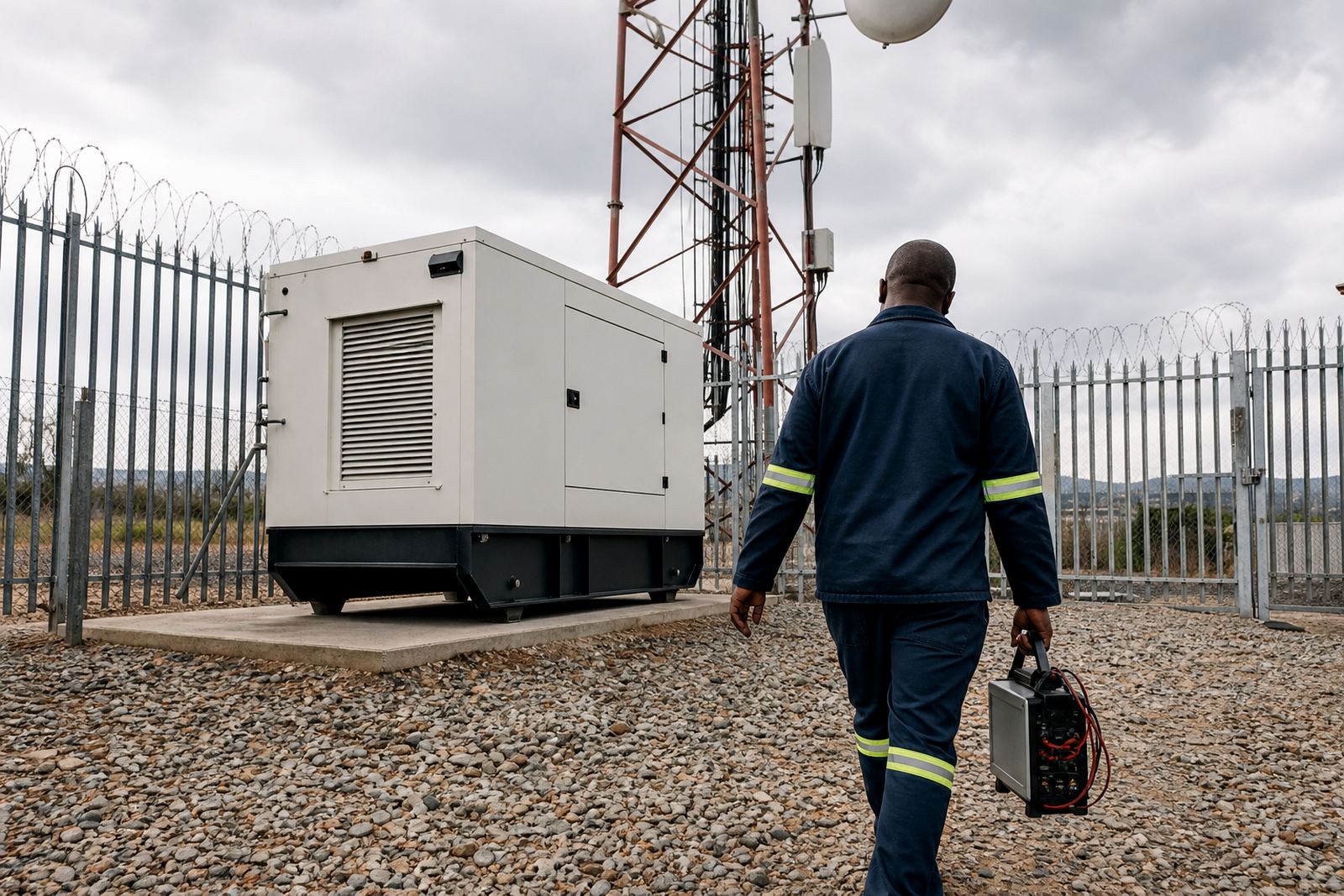
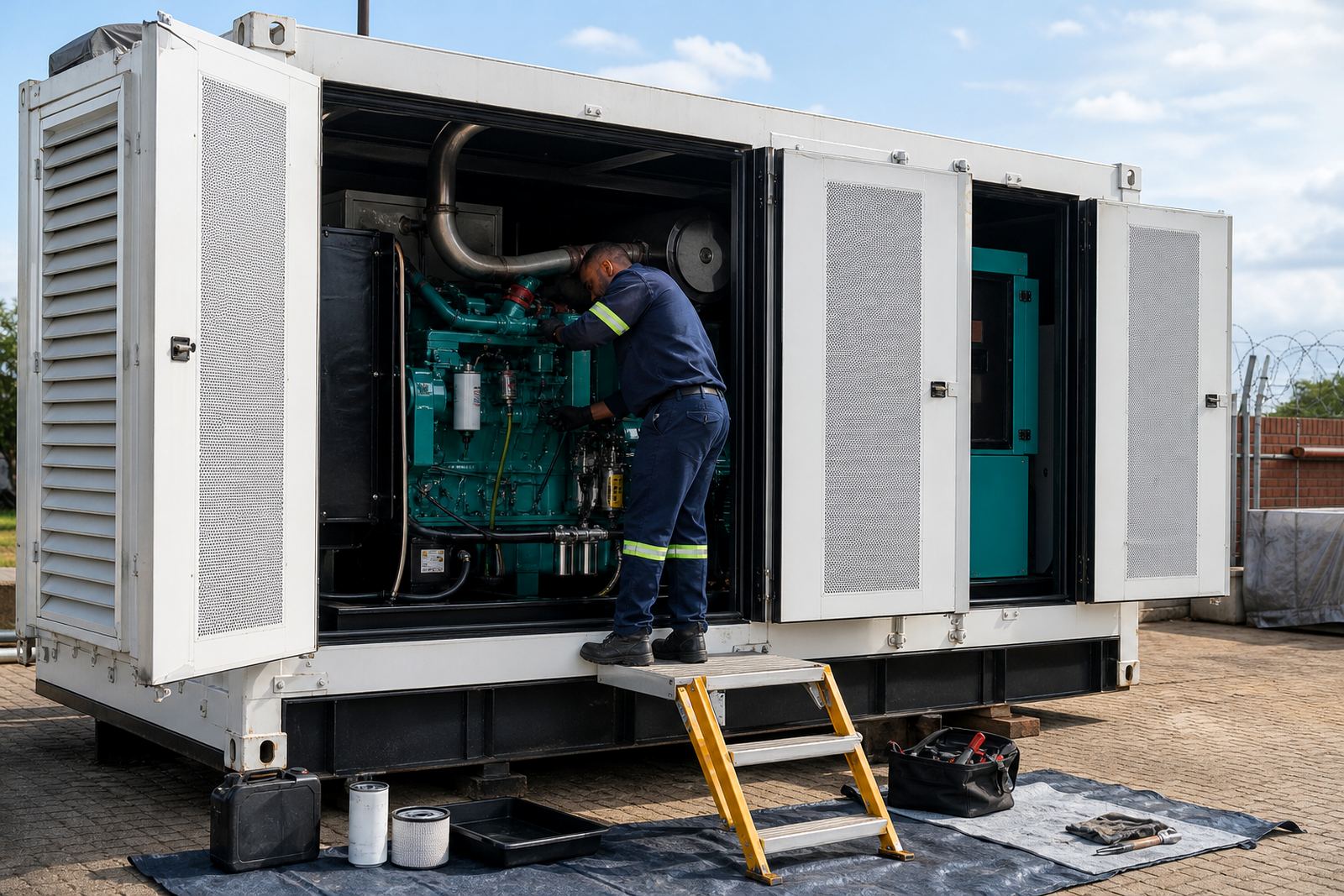
A containerised unit is a generator set housed in a steel enclosure, usually set up for outdoor placement where dust, rain, noise control and security matter. These units are common on construction sites, mines, depots, water works and remote facilities where the plant has to cope with heat, coastal humidity, vibration and long operating hours. The enclosure normally includes ventilation louvers, acoustic lining, lockable access doors and a skid or baseframe that makes handling easier by crane or forklift.
RelGen looks after maintenance contracts for these sets so the housing, engine and auxiliary systems are checked as one working package. That matters because a good generator can still give trouble if the container is blocked by debris, the cooling path is restricted, or the batteries and changeover gear are left unchecked for too long.
- Common enclosure sizes range from compact 2 m units through to larger 6 m and 12 m containerised builds.
- Options may include weatherproof lighting, fire suppression interfaces, fuel day tank arrangements and acoustic upgrades.
- We service sets used for standby support as well as prime duty on planned operating hours.
How these units are usually specified
Containerised generator sets are selected around the site load, the space available for delivery and the access route for installation. Some clients need a single unit for a factory backup room, while others need paired sets for remote plant, telecoms, pumping stations or temporary industrial power. The enclosure size, alternator rating, cooling layout and exhaust routing all need to suit the duty cycle and the local conditions. In Gauteng a unit may face dust and summer heat, while on the coast the same set has to handle salt air and moisture build-up.
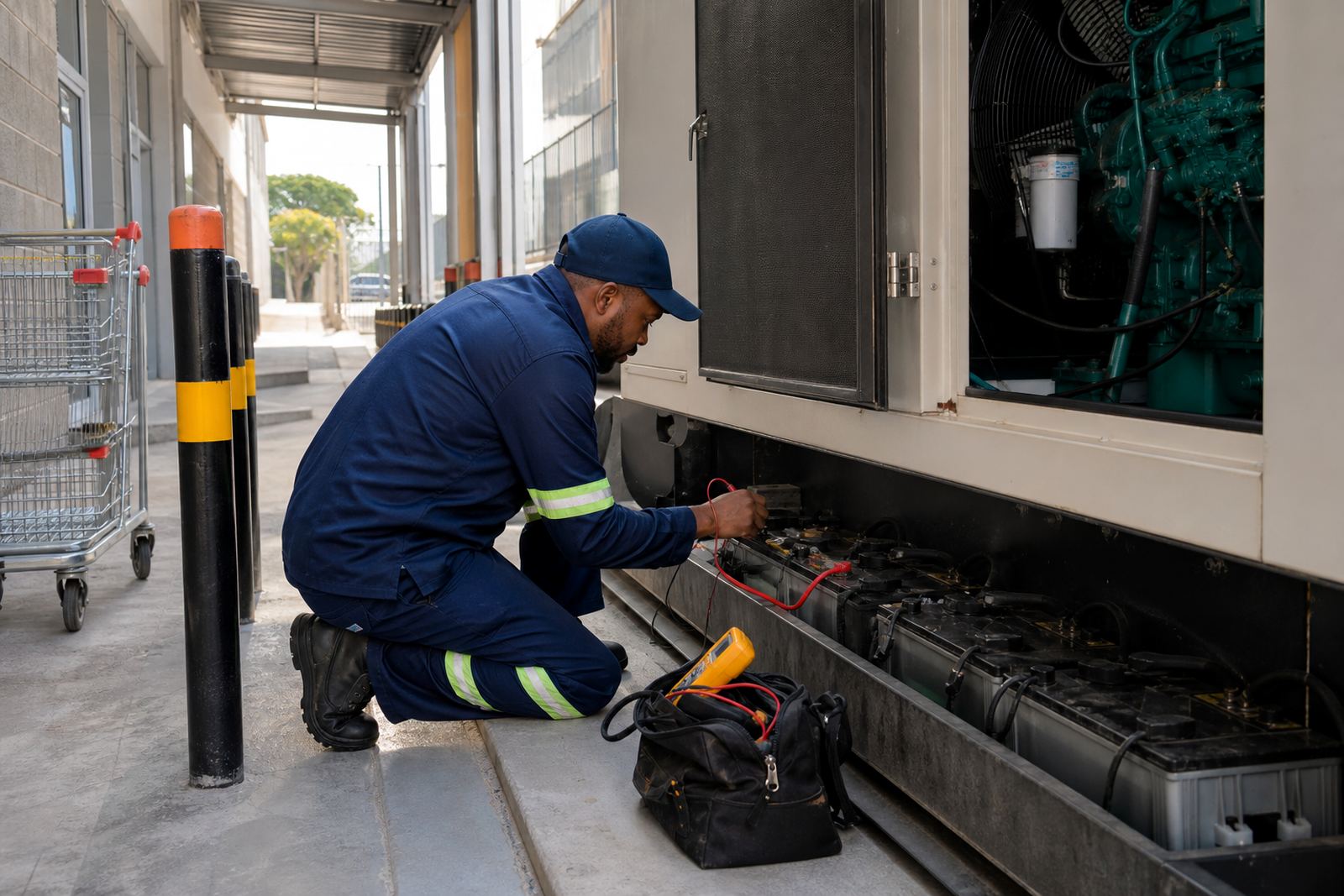
When we manage a maintenance contract, we also look at how the unit was fitted. A tight installation with poor airflow or a blocked service side can shorten component life and make routine work difficult. The container should allow safe access to filters, belts, battery terminals, drains and control panels without having to strip half the enclosure each visit.
- Typical specifications to confirm include kVA rating, voltage, phase and frequency.
- Container dimensions, lifting points and access clearance should match the site entry route.
- Ventilation, exhaust outlet position and cable entry points need to suit the final stand location.
What our contract servicing covers
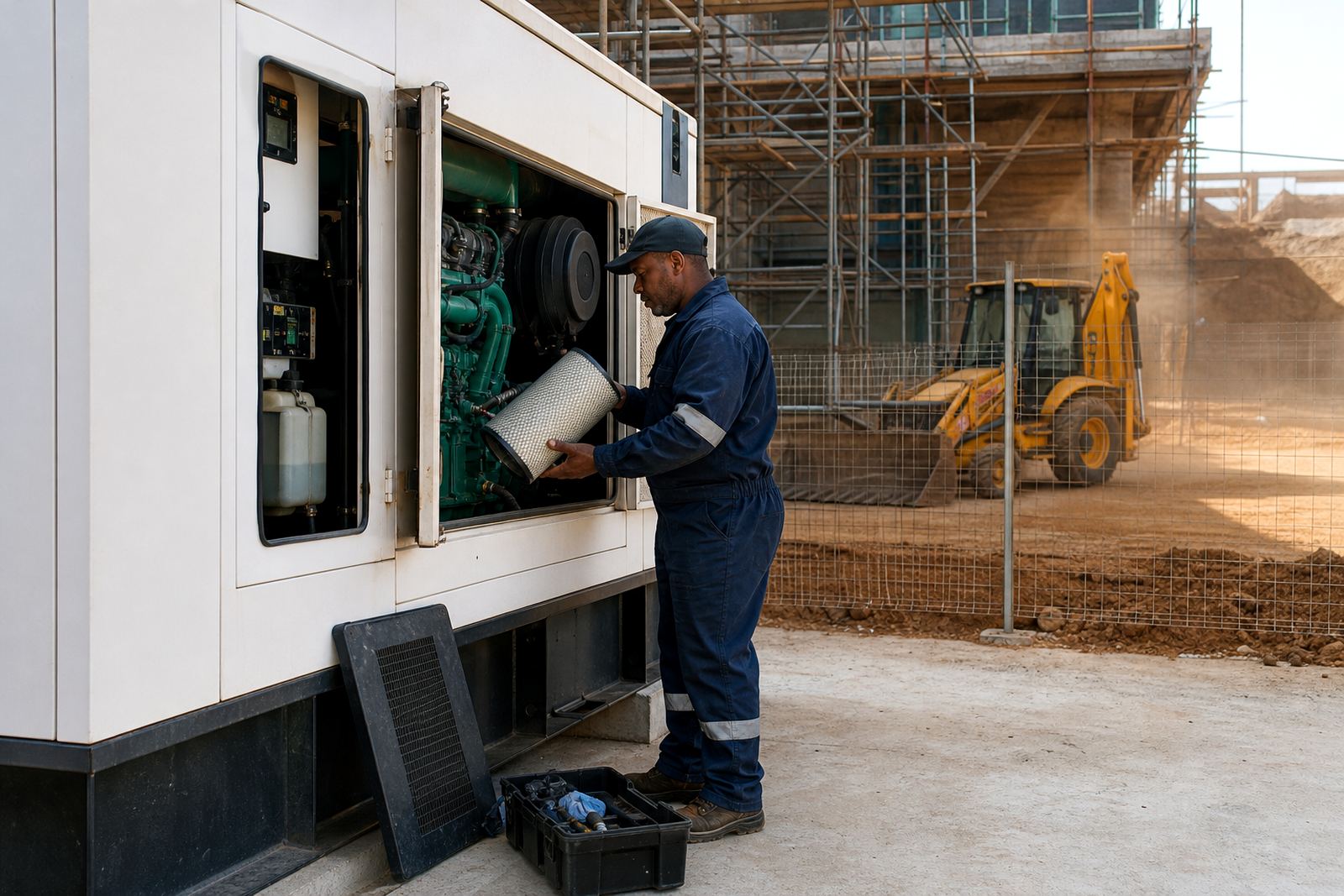
Our maintenance contracts for containerised units are built around regular checks and practical fault prevention. That includes oil and filter changes, coolant system service, battery testing, starter system repairs, fuel system repairs, load bank testing and changeover switch checks where applicable. We also carry out service record audits so the history of the set is clear and overdue items are not missed. On bigger sites this is often the difference between a machine that runs on demand and one that only looks ready.
Electrical work connected to generator systems must be handled by qualified people in line with local regulations, especially where changeover equipment and controls are involved. We treat that side with the right discipline because a neat enclosure does not mean the wiring inside is sound. Fault finding is done methodically, with checks on alarms, sensors, starting circuits and control logic before parts are replaced.
- Scheduled servicing intervals are set around runtime, site conditions and manufacturer guidance where available.
- Load bank testing helps confirm the set can carry real demand, not just idle in the enclosure.
- Preventive inspections can pick up leaking hoses, loose terminals, blocked louvers and worn starter components early.
When a containerised unit suits the job
These units are a strong fit where weather exposure, theft risk or noise control are part of the brief. Industrial yards use them because the enclosure gives better protection than an open skid. Remote sites use them because the full package can be placed outdoors and tied into the site infrastructure with less fuss. They also suit temporary or semi-permanent applications where the same unit may be moved later, provided lifting and cable arrangements are planned properly.
In practice, containerised sets are often chosen for manufacturing plants, roadworks compounds, logistics yards, commercial estates, wastewater works and agricultural operations. If a site has load-shedding pressures or weak municipal supply, the key point is not only getting the generator installed, but keeping it ready with proper servicing and records. A missed battery check or neglected coolant issue can leave the whole setup stranded at the wrong time.
- Useful where the generator is exposed to dust, rain, vandalism or regular relocation.
- Good for sites that need quieter running than an open-frame arrangement.
- Suitable where service access and security can be managed through locked, enclosed panels.
Fitting, access and site readiness
Before a containerised unit is put into service, the site has to be ready for the weight, ventilation and service access it demands. That means a level base or plinth, enough clearance for doors and panels, and a practical route for fuel delivery, cable entry and exhaust discharge. If the unit is on a raised slab or in a cramped plant area, maintenance becomes slower and more expensive over time.
We often get involved where a set was installed quickly and later the real problems appear: blocked airflow, poor drainage around the container, difficult battery access or a changeover switch that was mounted where it cannot be reached safely. RelGen can work through those details during scheduled servicing and preventive site inspections so the unit remains practical to run.
- Confirm the access route for crane, telehandler or forklift movement before delivery.
- Allow space for filter changes, coolant checks and door opening on all required sides.
- Check that the site can handle exhaust routing, rain run-off and any cabling or trenching work.
Ordering details we need before contract work starts
To quote and schedule maintenance properly, we need the unit model details, the generator rating, the container dimensions and the duty type, whether standby or prime. It also helps to know the site address, the access restrictions, the service interval already in use and whether the set has a day tank, remote alarms or a changeover switch arrangement linked to the load. If the unit has had recent issues, a short fault history helps us plan the first visit properly.
For sites in Johannesburg, Pretoria, Durban, Cape Town, Polokwane, Centurion, Sandton and Midrand, we can plan contract work around operating hours and local access rules. For coastal and remote sites, we may suggest shorter inspection gaps because corrosion, dust and long run times can affect filters, belts, terminals and coolant condition faster than expected. The aim is to keep the unit ready, not just repaired after a breakdown.
- Provide the kVA, voltage, phase, frequency and enclosure size.
- Note any site rules for working hours, security access or permit control.
- Tell us if the set feeds critical process equipment, emergency loads or both.
A maintenance partner for the enclosed set on the yard
RelGen services containerised generators from our Midrand base and supports businesses across South Africa with emergency callouts, scheduled servicing and ongoing contract care. Our team handles the practical side of these units, from oil and filter changes through to load bank testing and service record audits, so the enclosure and the machinery inside are looked after together. That keeps the unit easier to maintain and less likely to fail when the site needs it most.
When a containerised set is part of your operating plan, the service contract should match the reality on site, not just the nameplate. We work in that way, with clear records, sensible scheduling and field support that fits industrial conditions. Small slips on container units tend to become expensive quickly, especially where downtime affects production or remote supply.
Key facts
| Enclosure type | Steel containerised housing with lockable access and weather protection |
|---|---|
| Common sizes | Compact 2 m units through to larger 6 m and 12 m container builds |
| Duty types | Standby and prime duty generator applications |
| Typical service points | Oil, filters, coolant, batteries, starter system and changeover checks |
| Testing options | Load bank testing, fault finding and preventive site inspections |
| Coverage areas | Midrand, Johannesburg, Pretoria, Durban, Cape Town, Polokwane, Centurion and Sandton |