Guesthouse power cannot be left to chance
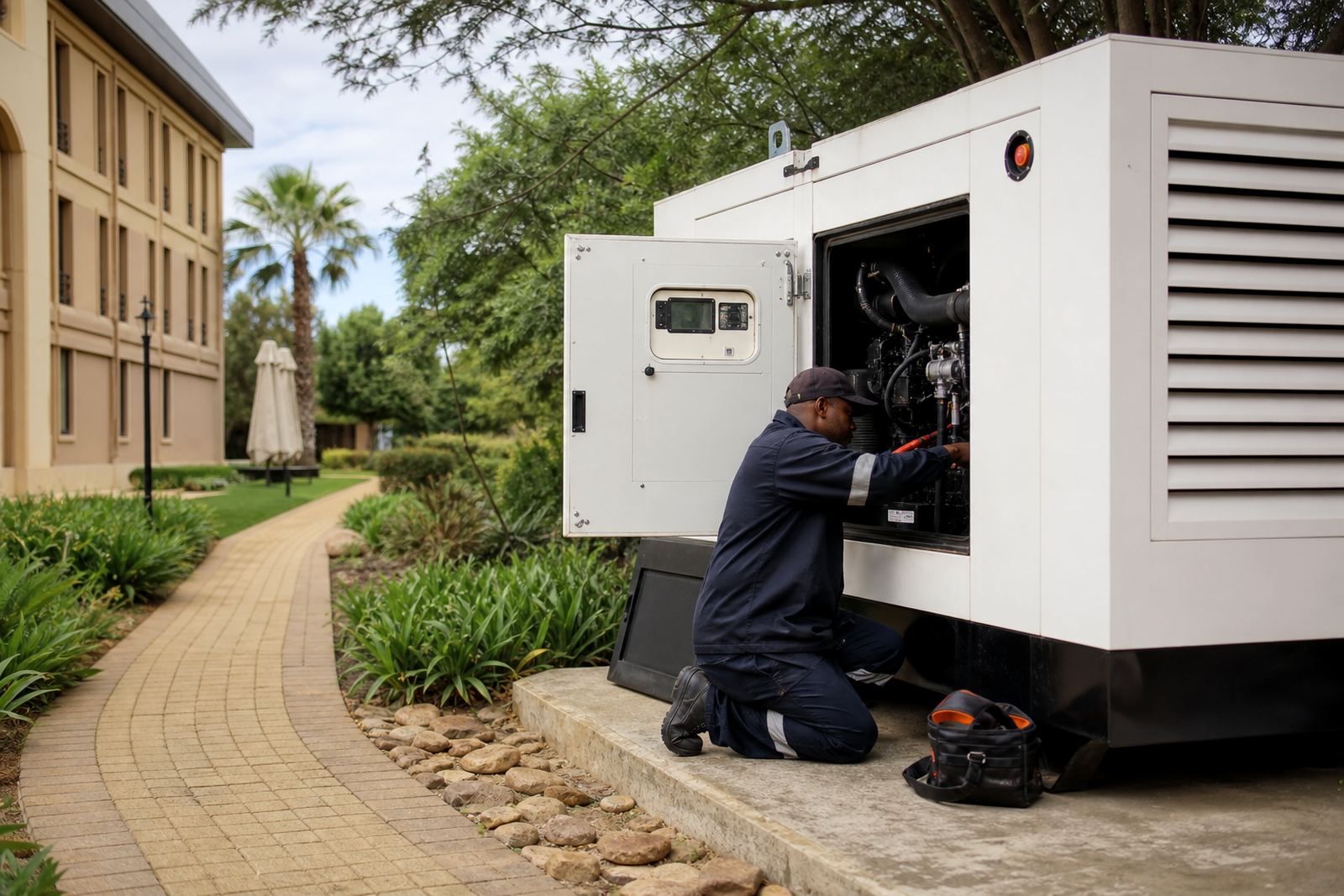
A hospitality site contract is a planned maintenance arrangement for standby or prime generators that support guest rooms, kitchens, laundries, reception areas and security systems. The work is set up around your occupancy patterns, night shift needs and peak booking periods so servicing happens with less disruption to guests and staff.
For hotels, lodges and boutique guest venues, the concern is not only whether the generator runs. It must start when called on, accept load without hesitation, hold voltage and frequency within working range, and remain reliable through long running hours during load-shedding or local supply faults. That is where routine checks, load bank testing and service record audits matter. Electrical work on changeover gear and related circuits must be done by qualified people in line with local regulations and site procedures.
RelGen structures hospitality contracts around the real site conditions you deal with in Midrand, Sandton, the inner city, coastal Durban humidity or drier inland sites. We also factor in long idle periods, seasonal occupancy swings, and the pressure that comes with a full house during busy weekends.
Contract options built around room count and runtime
Hospitality generators vary a lot. A small guest lodge may only need a compact standby set for essential circuits, while a larger hotel may rely on a larger unit with automatic transfer and longer run hours. We work on different capacity ranges, from smaller site units through to larger commercial sets used for kitchens, lifts, laundry plant and common areas. The contract is matched to the installation, not a one-size plan.
Service schedules can be monthly, quarterly or at longer planned intervals, depending on hours worked, site exposure and fuel quality. Sites in coastal areas may need tighter attention to corrosion, battery condition and control gear than inland sites. Where the set is used for prime duty or long parallel running periods, we adjust the inspection list and change intervals to suit actual use.
- Scheduled servicing for low-use standby sets and higher-hour prime units
- Emergency callouts for failed starts, overheating, low battery voltage and control faults
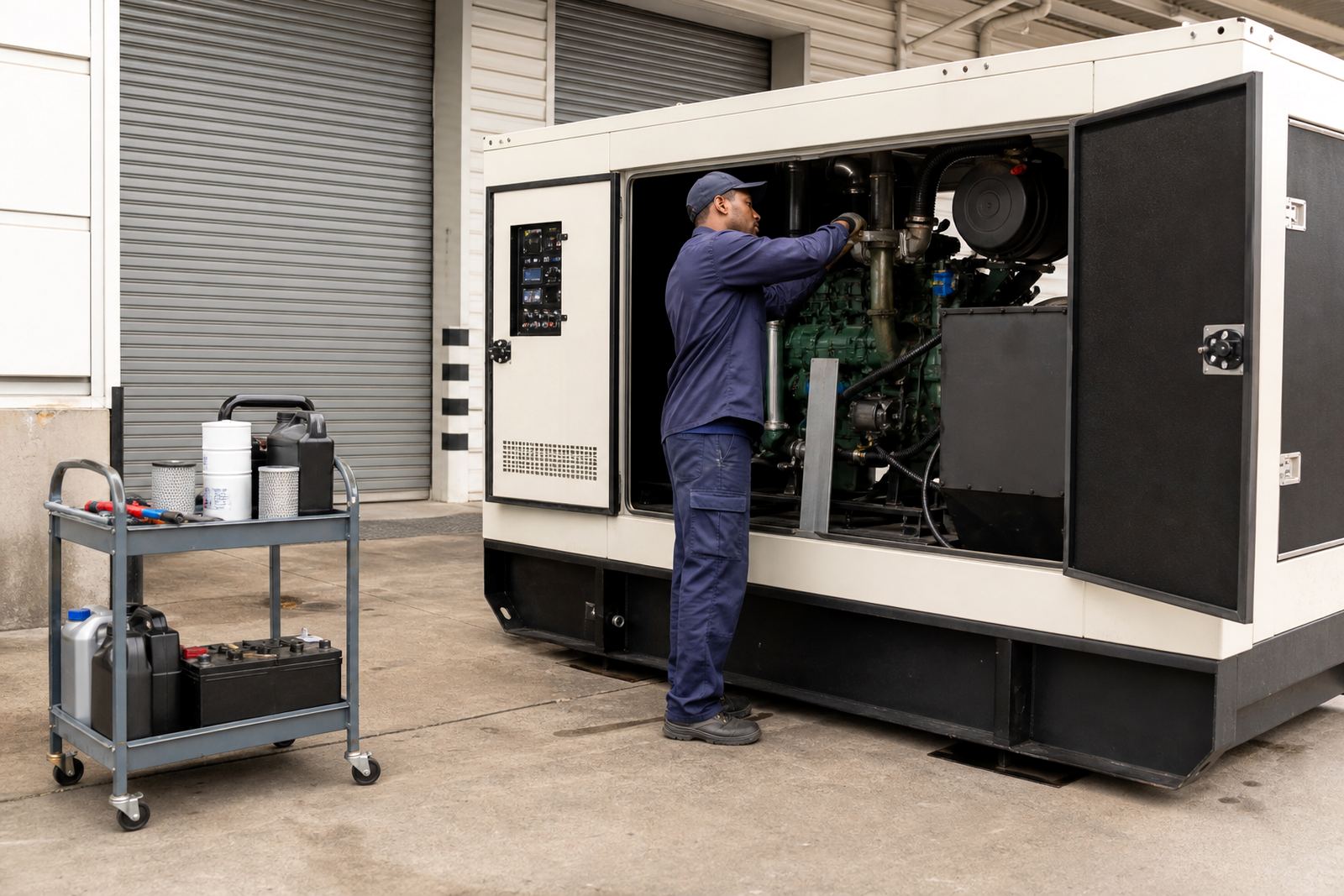
- Oil and filter changes, coolant checks, battery testing and starter circuit checks
- Load bank testing for sets that spend long periods on light load
- Changeover switch inspections and service record audits for compliance files
Where hospitality contracts make the biggest difference
These contracts suit hotels, safari lodges, guesthouses, conference venues, wedding venues and serviced apartments where guest comfort depends on uninterrupted backup supply. They also suit properties with key systems that must stay on during municipal outages, including access control, CCTV, refrigeration, water pumping and point-of-sale equipment.
On hospitality sites, power quality matters as much as uptime. A generator that starts but trips under load can affect kitchens, bar fridges and room lighting at the worst possible moment. A unit that starts but smokes, runs hot, or shows weak frequency control can be just as disruptive. Regular inspections help catch fuel leaks, perished hoses, loose terminals, blocked radiators and tired batteries before a night-time failure turns into a complaint counter full of guests.
- Sites with generators near guest rooms, where noise and vibration need to be kept under control
- Buildings with automatic transfer switches and schedule-based start controls
- Properties with long running hours during peak season or extended utility outages
- Hospitality venues near the coast, where salt air can shorten the life of terminals and enclosures
What is checked during a visit
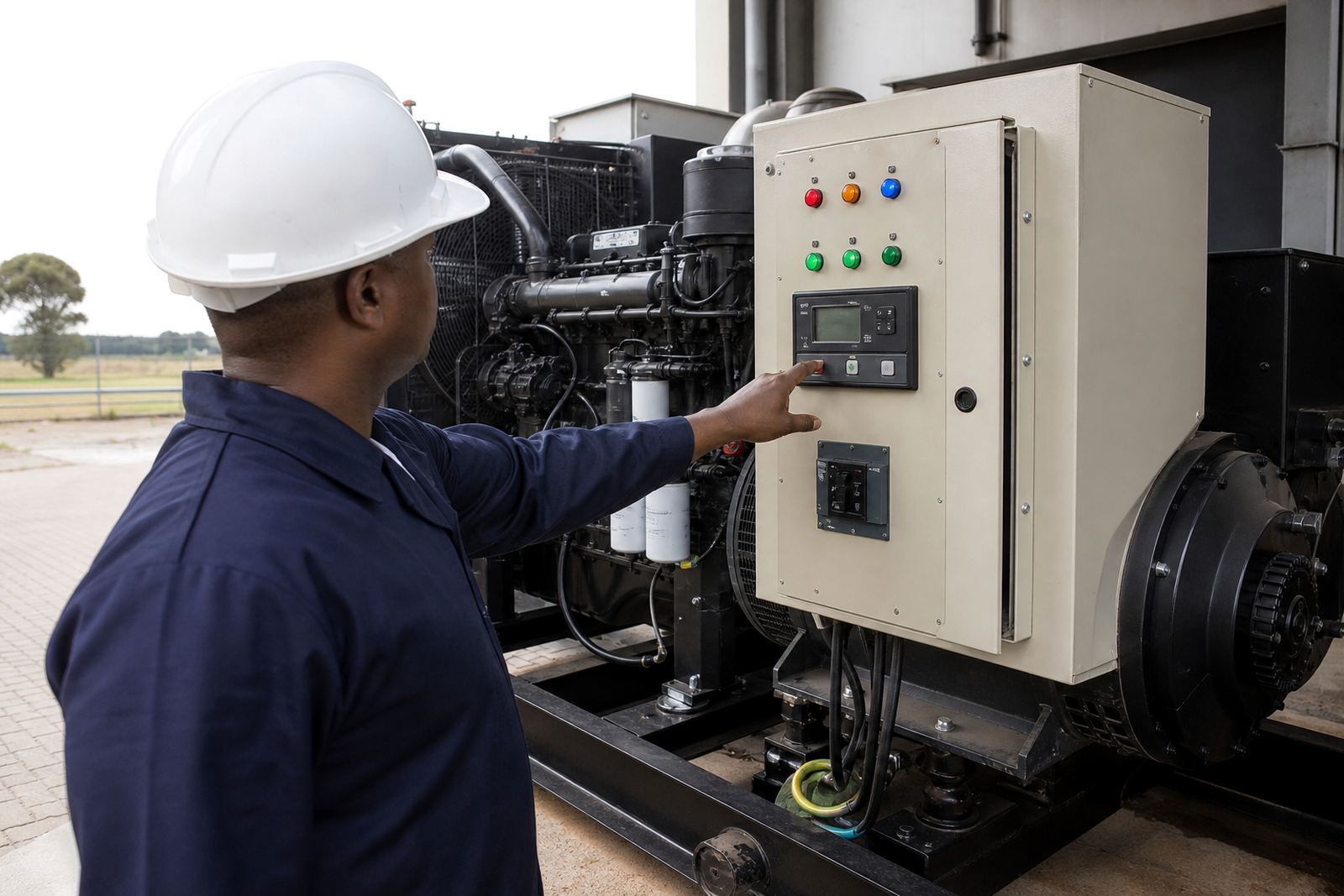
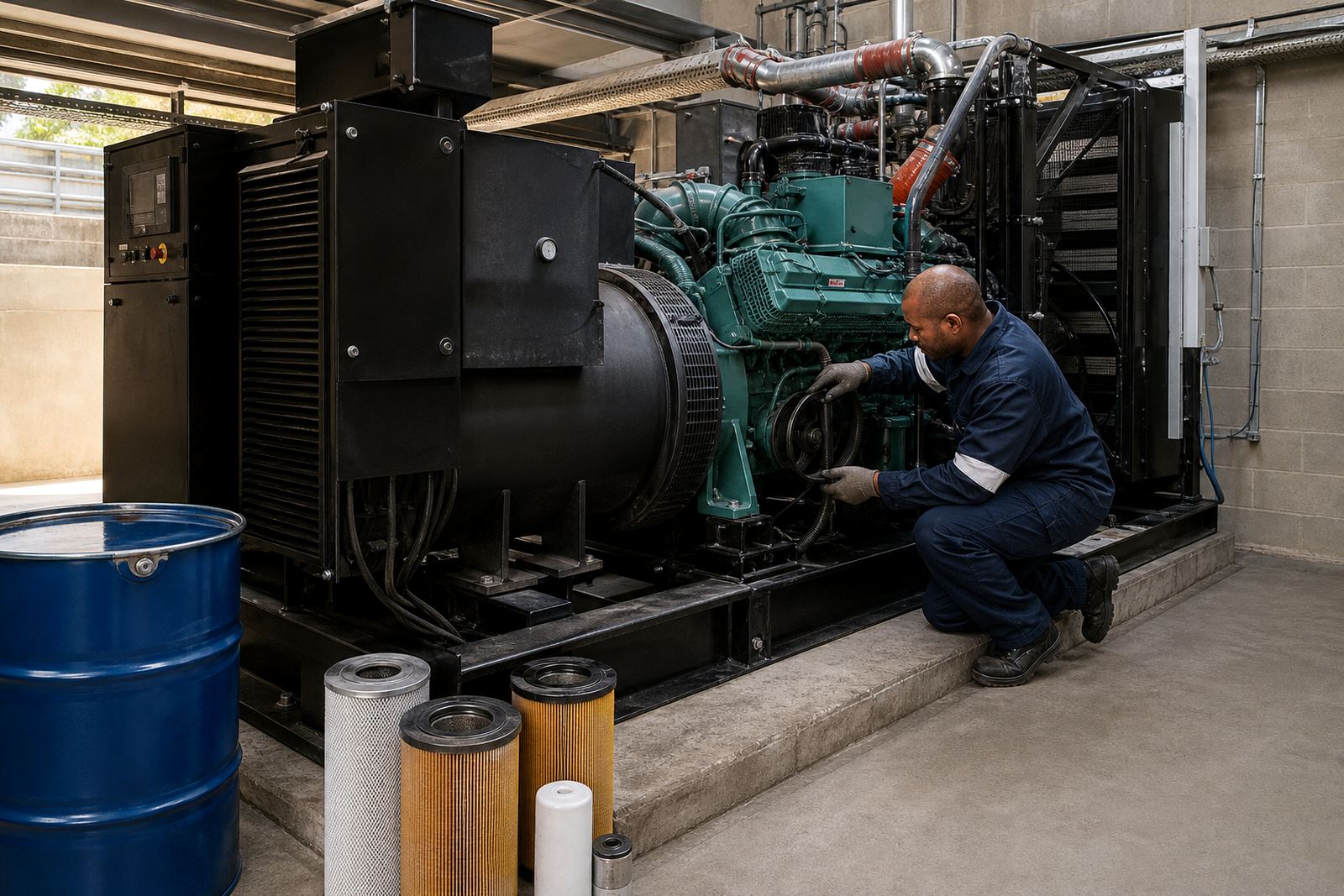
Each service visit is handled as a proper working inspection, not a quick walkaround. We check the oil condition, filters, coolant level and hoses, battery health, charging performance, belts, fuel delivery, leaks, alarms and visible wear on starting and control components. If load bank testing is required, the unit is run under controlled load to confirm that it can carry demand instead of only idling for a few minutes.
We also inspect the changeover switch and related control functions so the transfer between supply and generator is dependable. That part is especially important on hospitality sites where there may be no room for awkward manual intervention at 2am. If a fault is found, our team traces it properly and reports what needs repair, what can be monitored, and what should be replaced before the next service window.
- Oil and filter changes matched to running hours and site conditions
- Coolant system service with pressure and leak checks
- Battery testing, terminal cleaning and charger checks
- Starter system repairs and fault finding on no-start complaints
- Fuel system repairs where contamination, leaks or poor delivery are affecting operation
Midrand support for hotels across South Africa
RelGen is based in Midrand, Gauteng, and services hospitality sites in Johannesburg, Pretoria, Durban, Cape Town, Polokwane and surrounding business areas including Centurion and Sandton. That spread matters because guest venues often need a provider that can plan site work across branches, seasonal openings and multiple properties without losing track of service history.
Our team includes Thabo Engelbrecht, together with Naledi Shezi in operations, Johan Matlala managing service contracts, Ayanda Khoza coordinating field service, Muneerah Daniels leading technical support, Sibusiso Wessels as senior generator technician, and Rikus Botha handling stores and logistics. That mix helps with scheduling, parts control and the practical follow-through that hospitality sites need when a backup set is under pressure.
We keep to the service record side as well, so you can show maintenance history when insurers, auditors or property managers ask for it. On busy properties, records often tell the story before a fault does.
Before the first service date is set
When arranging a hospitality site contract, it helps to confirm a few site details so the maintenance plan matches the installation and the way the property actually operates. The more accurate the information, the better the service intervals and the easier it is to plan access without upsetting check-in or meal service.
- Generator size, phase arrangement and whether it is standby or prime duty
- Approximate running hours per month and any peak-season changes
- Fuel storage setup, tank size and whether there are known contamination issues
- Changeover arrangement, automatic or manual transfer, and any site-specific controls
- Access limits, security procedures and preferred service windows
- Previous service records, outstanding faults and any recent repair work
For hospitality operators, it is also worth confirming whether the set supports only essential circuits or the whole property, because that affects testing, start frequency and the tolerance for interruption during maintenance. Our team uses that information to set the plan up properly from the first visit.
Key facts
| Service types | Scheduled Servicing, Emergency Callouts, Preventive Site Inspections, Service Record Audits |
|---|---|
| Generator applications | Standby and prime generators for hotels, lodges, guesthouses and conference venues |
| Typical capacity range | Small hospitality sets through to larger commercial units used for kitchens, laundry and common areas |
| Testing options | Load bank testing, battery testing, changeover switch checks and fault finding |
| Maintenance items | Oil and filters, coolant system, starter system, fuel system and visible wiring checks by qualified people |
| Service area | Midrand, Johannesburg, Pretoria, Durban, Cape Town, Polokwane, Centurion and Sandton |