Built for racking aisles, loading bays and night shifts
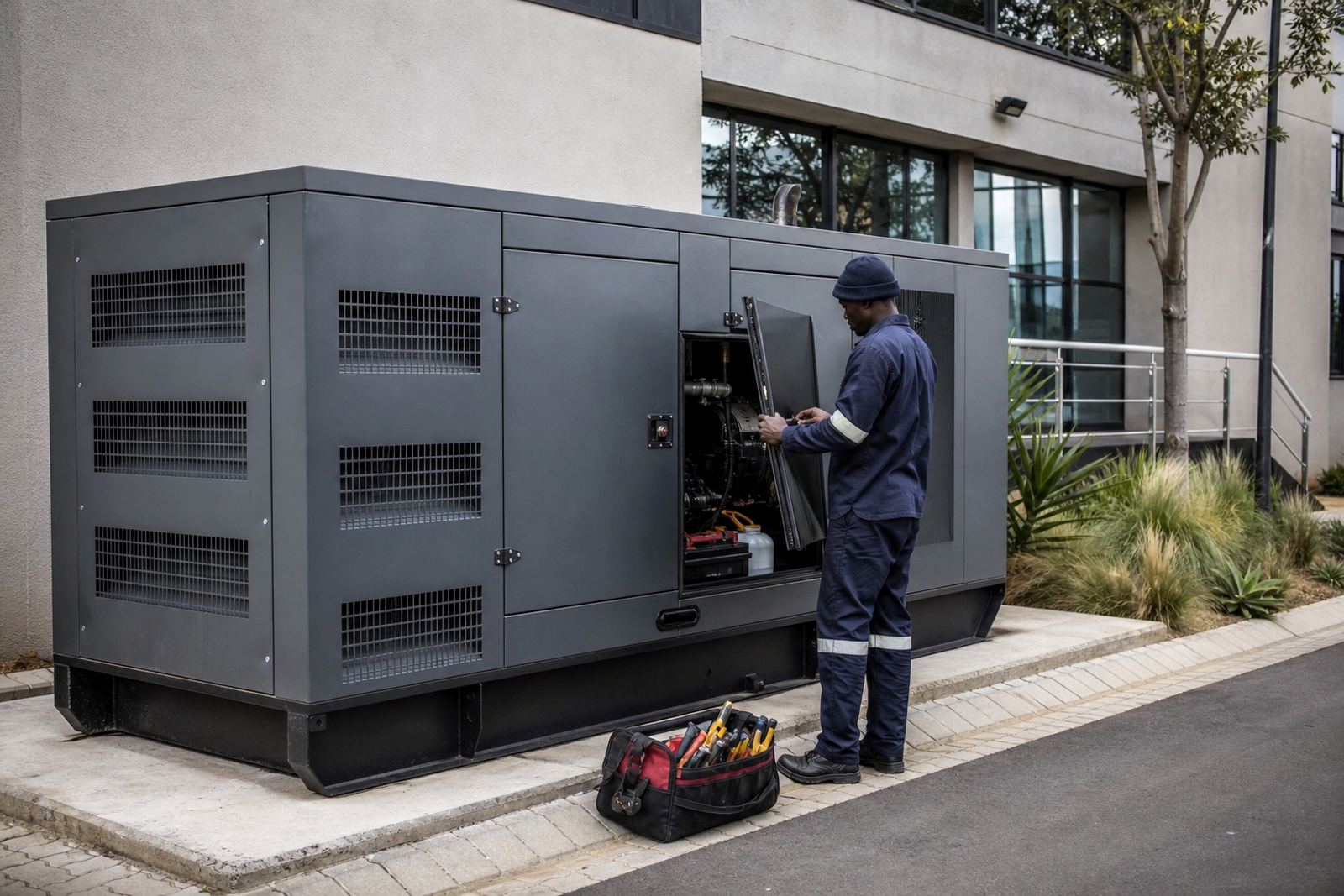
Warehouse Site Contracts are maintenance agreements for standby and prime generators that support warehouse operations when supply is interrupted or when generators form part of daily running. The work covers routine servicing, fault response, service records and scheduled inspections so the set is ready for lighting, CCTV, alarm panels, pallet movement and dispatch equipment. In a warehouse, a dead generator can mean spoiled stock, late trucks and security risk, so the contract is set up around your operating hours and access controls.
We handle generator servicing for sites in Midrand, Centurion, Sandton, Johannesburg, Pretoria, Durban, Cape Town and Polokwane, including larger distribution centres and smaller storage yards. Work is planned to suit shift changes, receiving windows and municipal restrictions, with attention to dust, heat, coastal humidity and load-shedding exposure. Electrical work connected to the installation or changeover gear is only carried out by qualified people and in line with local regulations.
What the contract covers on a working warehouse floor
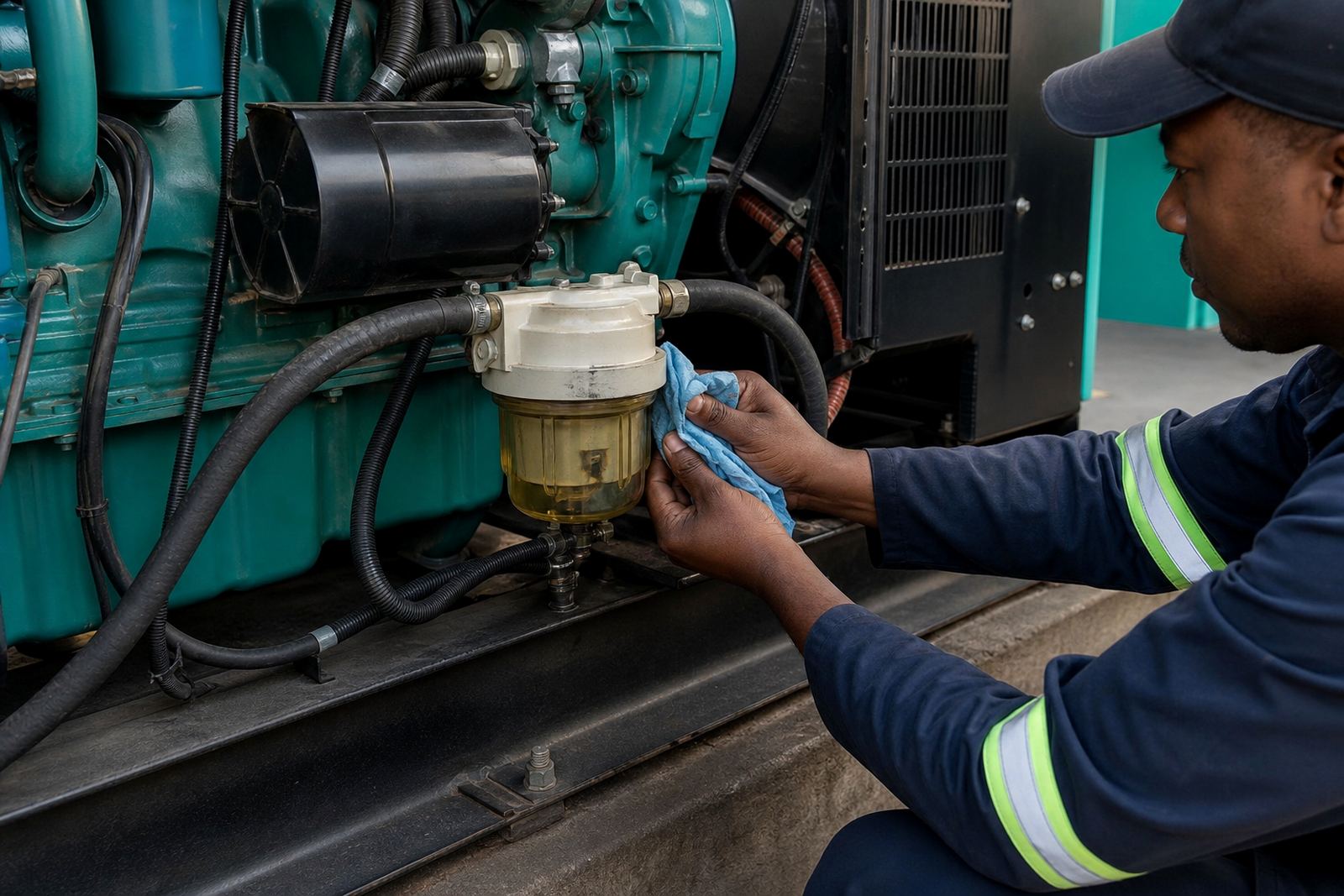
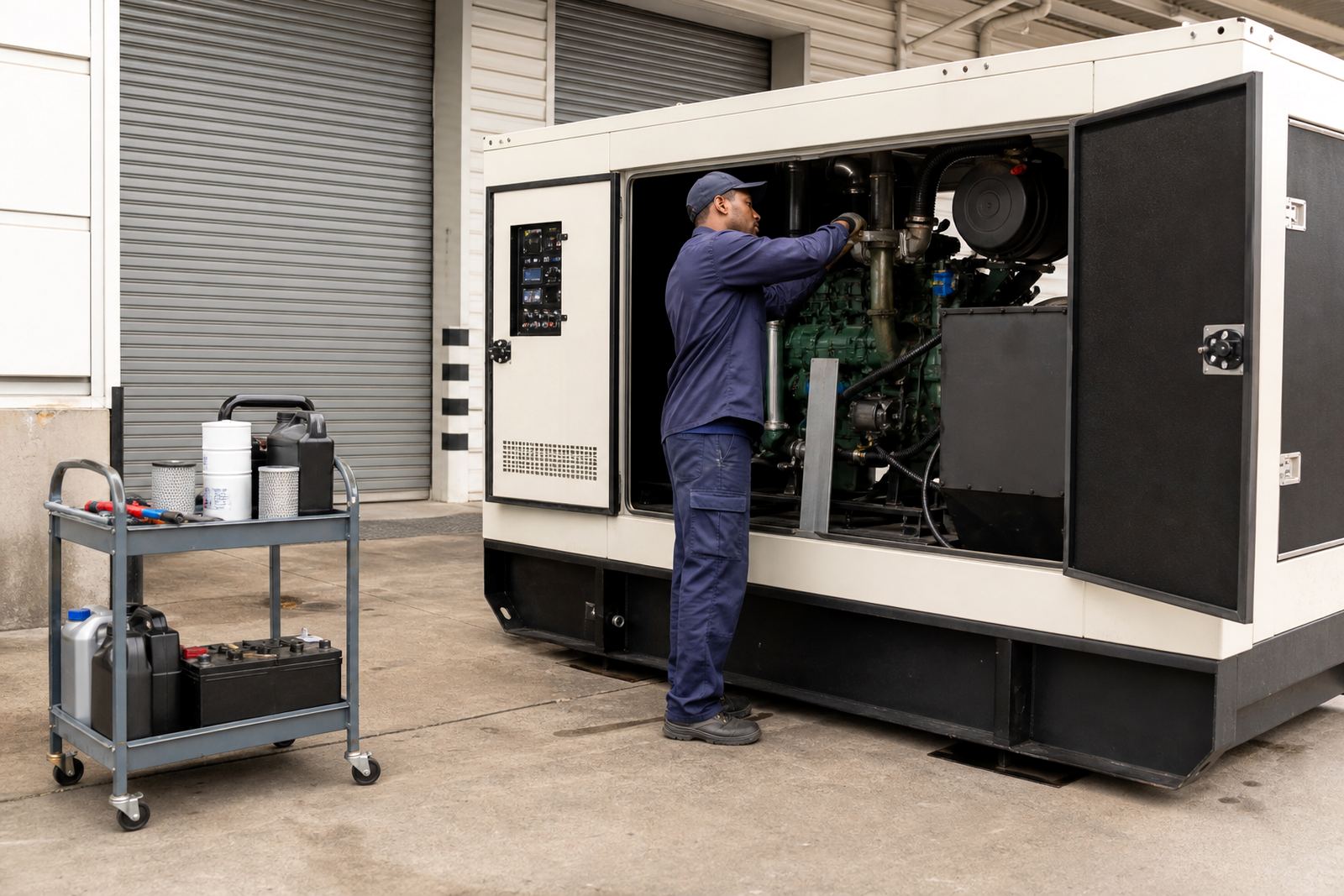
A warehouse contract usually includes oil and filter changes, coolant checks, battery testing, fuel system repairs, starter system repairs, load bank testing, changeover switch checks, fault finding and service record audits. Where needed, we also carry out preventive site inspections to pick up oil leaks, loose terminals, blocked breathers, coolant loss and signs of vibration before they turn into an outage.
- Scheduled servicing at agreed intervals for standby or prime sets
- Emergency callouts for no start, alarms, low voltage and trip faults
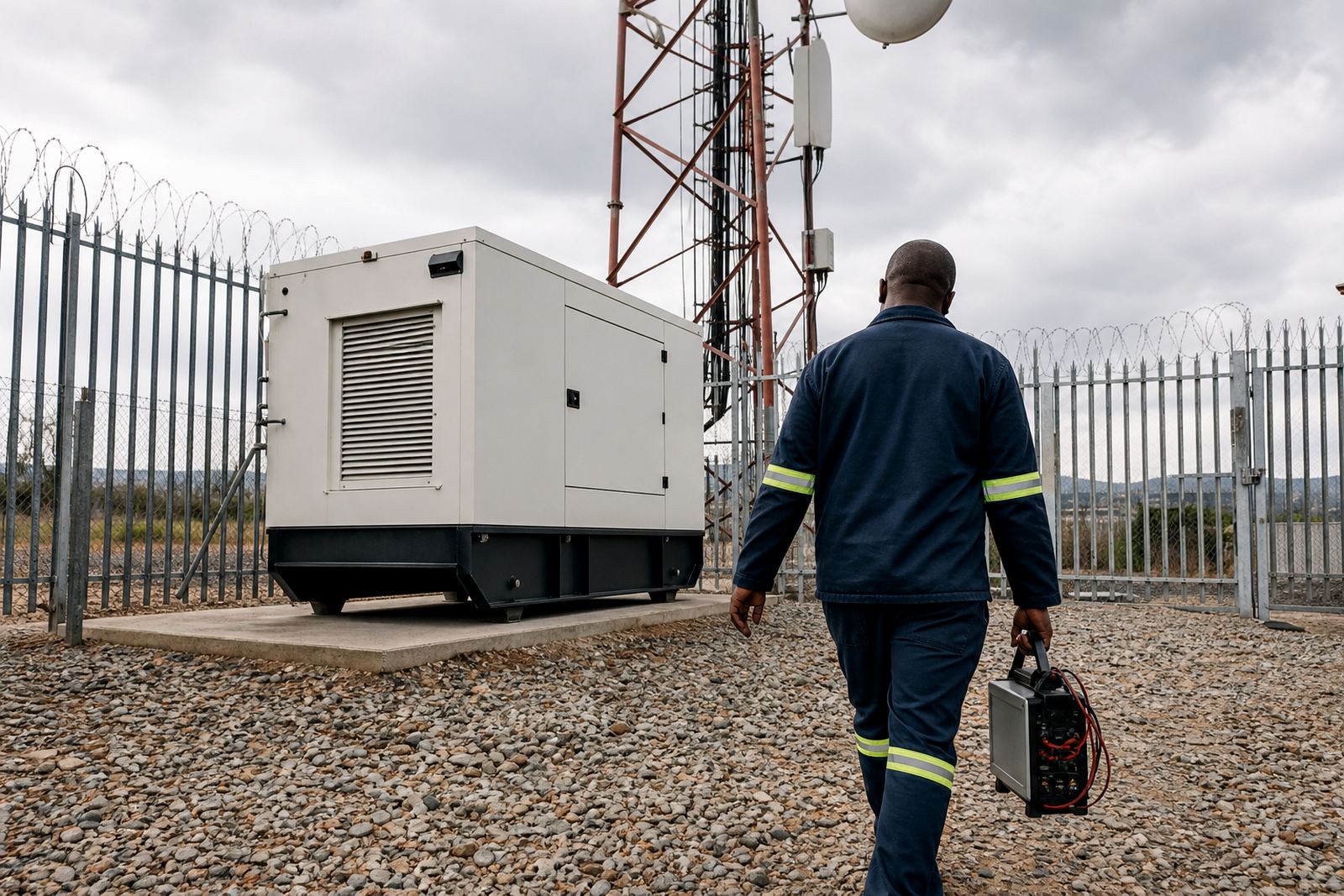
- Load bank testing to confirm the set carries load under controlled conditions
- Changeover switch checks and operational verification by qualified personnel
- Battery condition checks, terminals, chargers and cranking performance
- Fuel, coolant and oil condition monitoring with service notes kept on file
For warehouses that run long shifts or operate over weekends, the contract can be matched to your actual run hours rather than a general calendar only. That helps with equipment used in dispatch, cold stores, bulk storage or high-bay lighting where a short failure can affect the whole site.
Sizes and options that fit different sites
Warehouse generators vary from compact backup sets for small storage units to larger packaged units that carry a full distribution centre. We service diesel sets used for standby support and prime duty applications in a wide range of frame sizes, canopy types and controller arrangements. Some sites need a single generator with automatic transfer, while others use a bank of units on staggered maintenance plans. The right contract depends on the number of buildings, the critical loads and how often the set is exercised.
Typical options include monthly, quarterly or half-yearly maintenance, with the servicing interval set by hours run, site risk and the age of the equipment. Where a site has older switchgear, multiple panels or a high dust load from loading and packaging, we may recommend shorter inspection intervals. If the warehouse is near the coast, corrosion checks, terminal cleaning and enclosure condition become more important, especially where salt air gets into louvres and fixings.
- Small warehouse backup sets for security, lighting and office support
- Medium units for racking, conveyors, scanning and dispatch areas
- Large prime or standby installations for multi-bay warehouse complexes
- Single set or multi-set sites with staggered servicing dates
Fitting and commissioning details that need to be right
When a warehouse generator is installed or moved onto contract, the fitment details matter. The set must be positioned with clear access for filters, coolant checks and fuel draining, and there must be enough space for safe maintenance and airflow. If the system uses an automatic changeover arrangement, the controls, interlocks and protection settings need to be verified by qualified people under local regulations. Poor access around the generator or switch panel slows down maintenance and can lead to missed faults.
We confirm the site layout, cable route, venting, exhaust routing where applicable, fuel storage arrangement, earthing provisions and the start signal arrangement before work begins. In a warehouse, forklift routes, delivery docks and security boundaries often affect where a generator can sit, so the contract should match the actual layout not just the plan on paper. A clean, labelled installation makes service visits faster and safer for the people on site.
How we keep warehouse units ready between outages
Generator care is not only about the day of failure. Warehouses often sit under heavy dust, with temperature swings, vibration from traffic and long periods where the set only runs during tests. Regular care keeps seals, belts, batteries and fuel systems in better condition, and it also helps spot issues before they interrupt a shift. We record readings, note alarms and compare service history so recurring faults do not get missed.
- Check oil level, oil condition and leak signs around the base and filters
- Inspect coolant level, hoses, clamps and signs of overheating
- Test batteries, charger output and crank performance under load
- Inspect air paths, radiator condition and signs of dust buildup
- Run load bank tests to verify performance under controlled conditions
- Check changeover operation, indicators and alarm response where fitted
For sites with long operating hours or sensitive stock, regular maintenance can be paired with site inspections after storms, power interruptions or extended load-shedding periods. That is especially useful in Gauteng industrial zones where multiple interruptions in a week can leave a set under strain.
What to confirm before a contract is set up
Before the contract is put in place, we need a clear picture of the generator and the warehouse site. The key details are the generator make and model, rated kVA, fuel type, controller type, hours run, service history and the number of units on site. We also need to know whether the generator supports lighting only, security and access control, or broader warehouse operations such as dispatch and packing areas.
It helps to confirm the site address, access hours, security process, nearest utility point, the presence of changeover equipment and any municipal or site rules affecting work. If the set has had recurring alarms, low battery issues, fuel contamination or switch faults, those should be noted so the first service plan can be set correctly. The more accurate the information, the better the maintenance schedule will fit the site and the less down time you face when the power goes out.
RelGen’s warehouse servicing rhythm
RelGen is based in Midrand, Gauteng and services warehouse generators on maintenance contracts across South Africa. Our team is led by Thabo Engelbrecht, with support from Naledi Shezi, Johan Matlala, Ayanda Khoza, Muneerah Daniels, Sibusiso Wessels and Rikus Botha. The work is organised around planned visits, clear records and practical follow-up, so warehouse managers know what has been checked and what still needs attention. When a unit needs emergency attention, the response is handled through the enquiry process on our contact page and then scheduled according to the site priority.
Warehouse operations do not leave much room for guesswork. A well-kept generator keeps the lights on, the perimeter secure and the dispatch line moving, even when the grid is unstable or the site is under pressure from heavy use.
Key facts
| Service type | Warehouse generator maintenance contracts |
|---|---|
| Generator range | Standby and prime duty diesel sets |
| Coverage | Midrand, Johannesburg, Pretoria, Durban, Cape Town, Polokwane and surrounding business areas |
| Contract options | Monthly, quarterly or half-yearly servicing |
| Core checks | Oil, filters, coolant, batteries, load bank testing and changeover switch checks |
| Site fitment notes | Access, airflow, earthing, exhaust routing, fuel arrangement and qualified electrical verification |