What gets checked when a fuel system starts acting up
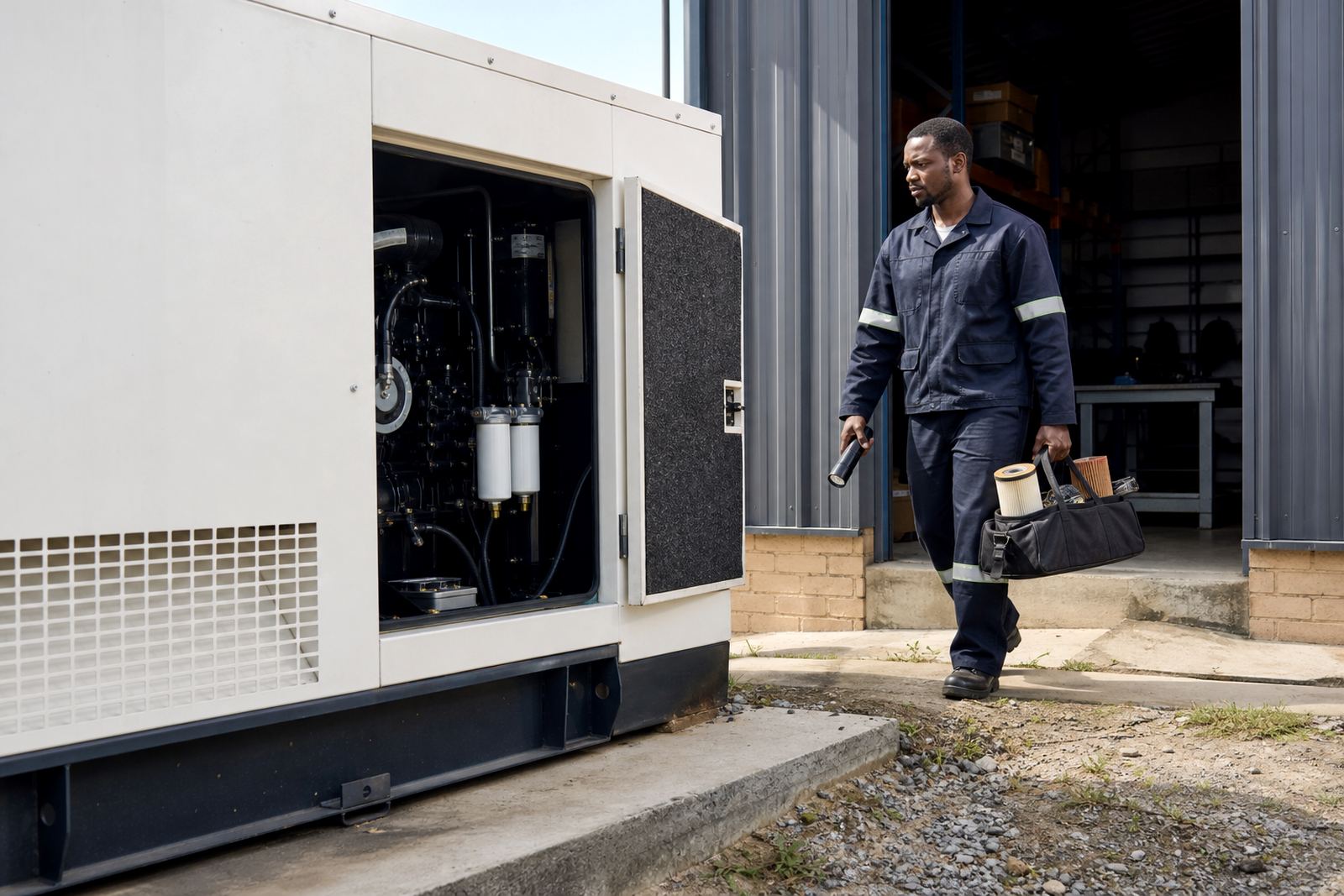
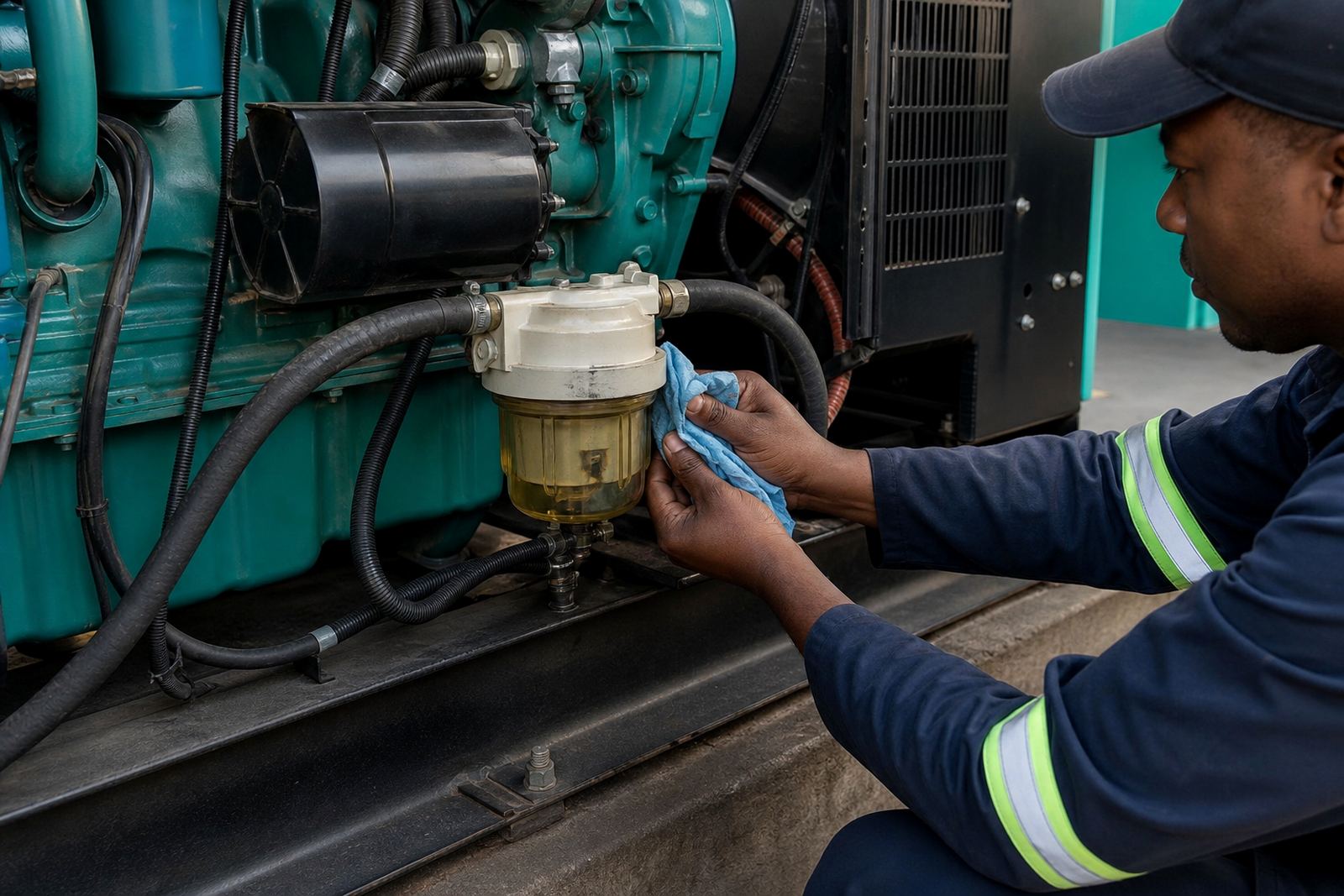
A generator fuel system needs more than a quick glance at the tank. Our checks cover visible fuel lines, hose clamps, joints, filters, water traps where fitted, tank breathers, fill points, day tanks and the condition of seals around fittings. We also look for staining, damp spots, diesel odour and signs of air ingress that can cause hard starting, rough running or repeated trips.
On Gauteng sites and coastal premises in Durban or Cape Town, moisture and temperature swings can affect stored fuel faster than many teams expect. Water contamination, sludge build up and corrosion inside fittings often show up only after a unit has already started to misfire. A proper check catches the issue early and keeps the set ready for service.
- Fuel line condition and support clips
- Visible leaks, seepage and wet connections
- Filter housing condition and service intervals
- Water contamination risk at tanks and drains
- Breather, cap and filler condition
Where these checks fit into a contract schedule
Fuel system checks suit standby generators and prime sets on maintenance contracts for factories, warehouses, clinics, office parks, schools and construction sites. They are especially useful where the unit starts often, carries long operating hours, or sits through the rainy season with fuel in storage for weeks at a time. Sites in Midrand, Sandton, Centurion, Pretoria and Johannesburg often benefit from tighter inspection intervals because of heavy load demand and frequent run requests.
For businesses on the coast, we often increase attention to tank tops, filler areas and external pipework because humidity can speed up corrosion. On inland sites, dust and poor housekeeping around the set can block breathers or contaminate caps and seals. A fuel system can look fine from outside, yet still hold water or debris that shows up in the filter bowl or injectors later.
- Standby generators with weekly or monthly test runs
- Prime power sets running long shifts
- Sites with bulk tanks and day tanks
- Generators that have had repeated fuel alarms
- Systems exposed to dust, rain, or coastal air
How the fitting work is handled on site
Any repair or fitting on the fuel system must be done by qualified people, in line with local regulations and site safety rules. Our technicians isolate the generator properly, inspect the affected section and then carry out the needed work on hoses, clamps, filters or transfer fittings. If a line is split, hardened or sweating fuel, it is replaced with the correct size and rating rather than patched and left to fail again.
We also check that the fuel system is supported correctly and that no line is rubbing on frame members or sharp edges. A loose hose or poor routing can create vibration wear over time. Where valves or changeover related fuel components are involved, we work methodically so the set can return to service without introducing air, leaks or contamination.
- Isolation and safe access to the generator set
- Removal and replacement of worn fuel hose sections
- Cleaning of fittings and connection points
- Checks for correct support and routing
- Verification of tightness after reassembly
Sizes, options and the bits that matter most
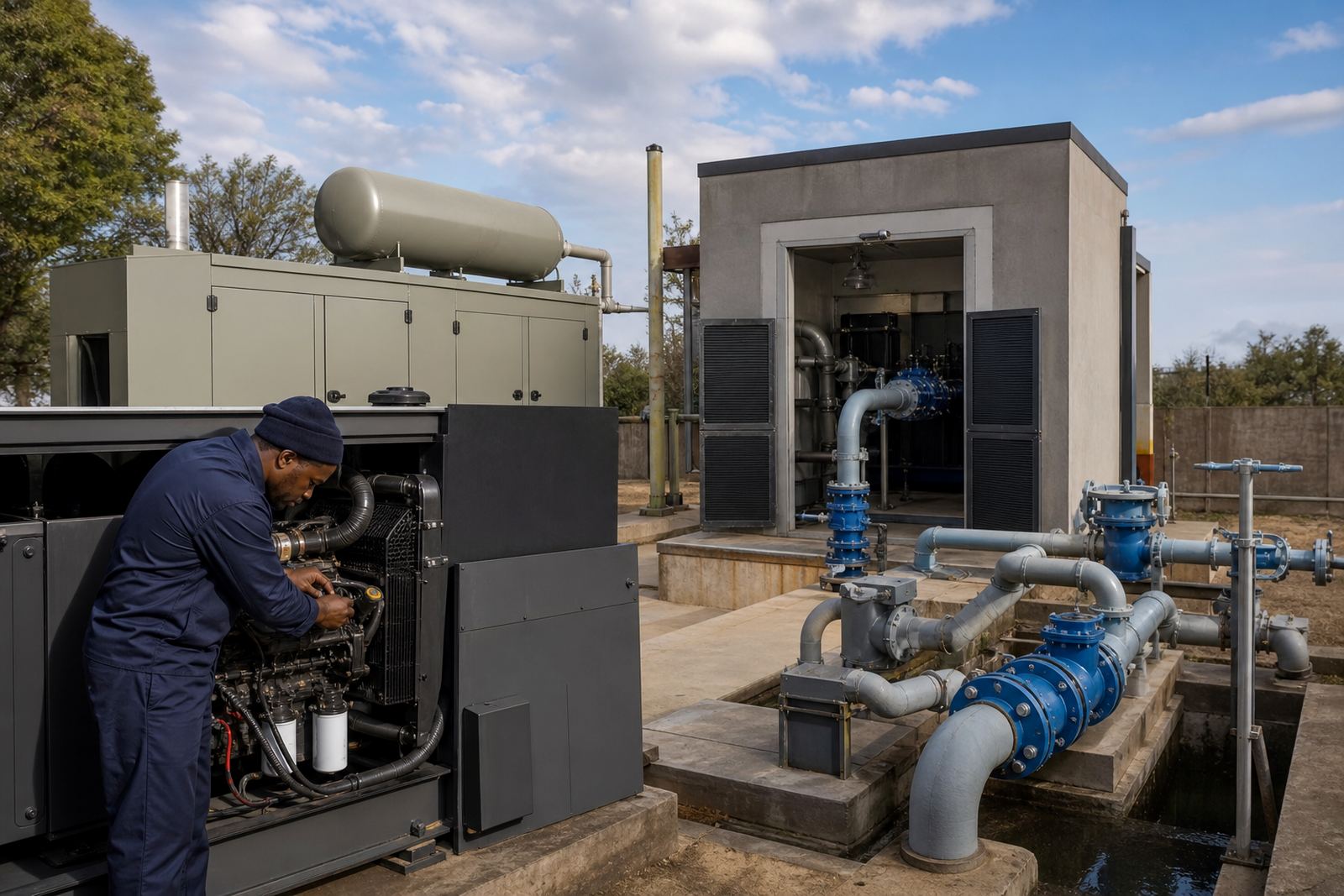
Fuel system checks are not one size fits all. Smaller standby units usually have short hose runs, inline filters and compact tanks, while larger industrial sets may have transfer pumps, water separation equipment and more involved pipework between the storage tank and engine. We match the inspection to the layout on site so nothing is missed between the main tank, day tank and engine supply side.
Options depend on how the generator is used. A site with frequent load shedding may want fuel checks folded into monthly servicing. A plant running prime power can need more frequent visual checks and filter monitoring. If the system has alarms, gauge senders or transfer components, those are checked as part of the same visit so the whole fuel path is covered.
- Short-run hose and clamp checks for compact sets
- Tank to engine supply line inspections
- Day tank and transfer line checks
- Filter, bowl and drain inspection
- Alarm and sender verification where fitted
Care that helps fuel stay usable for longer
Good fuel care starts with clean storage, regular water draining and keeping the fill area free from dirt. If a generator stands idle for long periods, condensation can form in the tank and settle at the bottom. That moisture then moves through the system and can block filters or cause corrosion in sensitive parts. We advise routine drain checks and record keeping so the same problem does not keep returning.
Service records matter as much as the spanners. If a filter is changed, the date, running hours and any contamination found should be logged. That helps track patterns, especially on sites with fluctuating use or long shutdowns over weekends and holidays. A neat record trail also makes it easier to spot when fuel quality or tank cleanliness is the real issue rather than the engine itself.
- Drain water from low points on a set schedule
- Keep fill caps and breathers clean
- Inspect after any long outage or relocation
- Log filter changes and contamination findings
- Keep the surrounding area free of dust and standing water
Details to confirm before we inspect your system
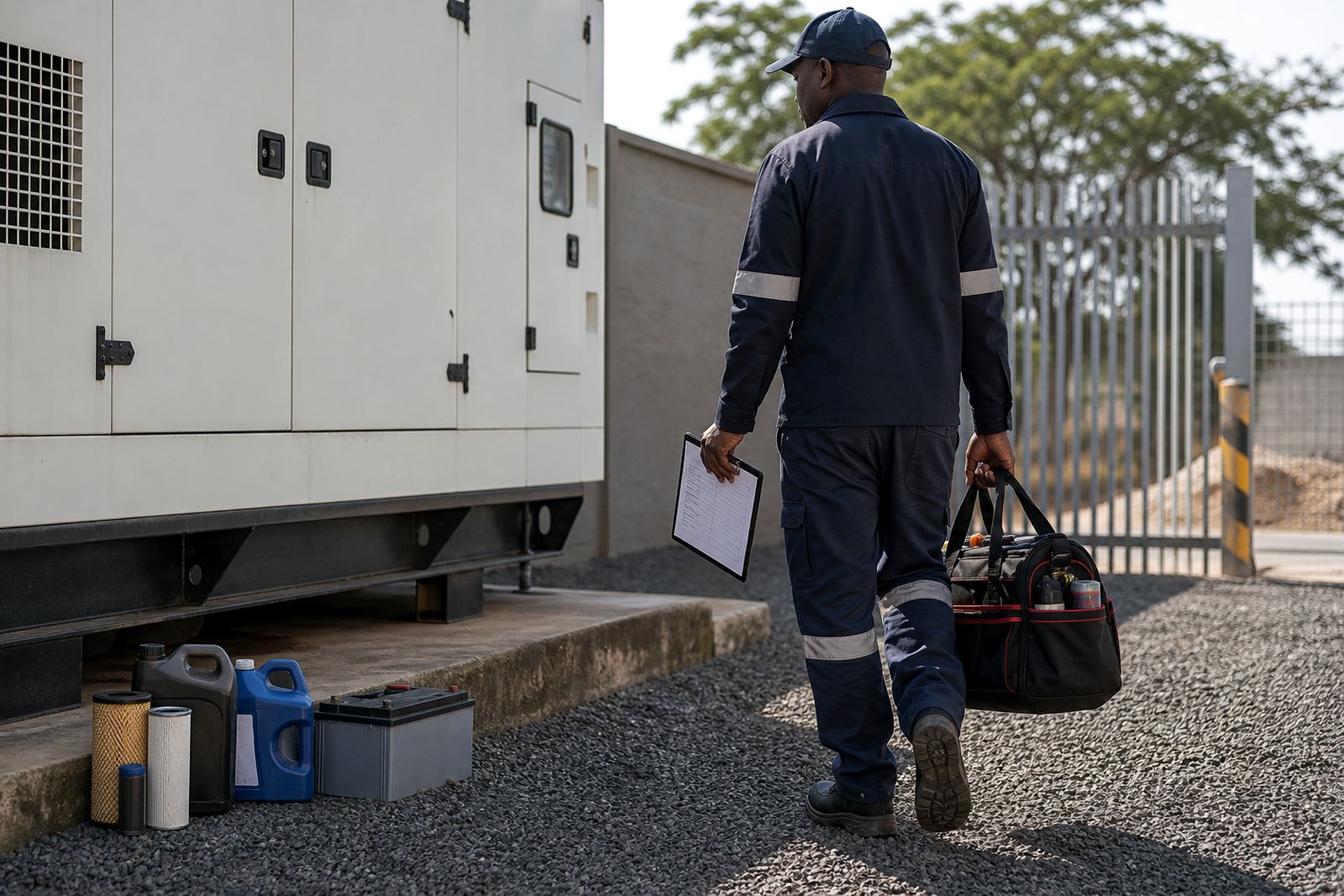
When arranging fuel system checks, it helps to confirm the generator make and model if available, the site location, whether the unit is standby or prime, and what fuel storage setup is in place. We also need to know if the set uses a day tank, bulk tank, transfer pump or water separator. That lets us arrive with the right service parts and access plan for the site.
Please also note any recent symptoms such as hard starting, fuel smell, visible leaks, filter blocking, low fuel alarms or unexplained shutdowns. If the site is in a high-risk area for water ingress, dust or corrosion, mention that too. It saves time on arrival and helps us focus on the section most likely to need attention.
- Generator type and operating duty
- Fuel storage layout and tank size
- Recent faults, alarms or shutdowns
- Access restrictions and site safety rules
- Preferred service interval on the contract
Key facts
| Service type | Routine generator fuel system checks and corrective servicing |
|---|---|
| Applies to | Standby and prime generators on maintenance contracts |
| Typical checks | Fuel lines, leaks, water contamination, filters, tanks, breathers, clamps and fittings |
| Common system sizes | Compact single-set installations through to larger industrial bulk tank arrangements |
| Site use | Factories, warehouses, offices, clinics, schools, construction sites and process plants |
| Compliance note | Any electrical work linked to the set must be handled by qualified people under local regulations |