What these contracts keep an eye on
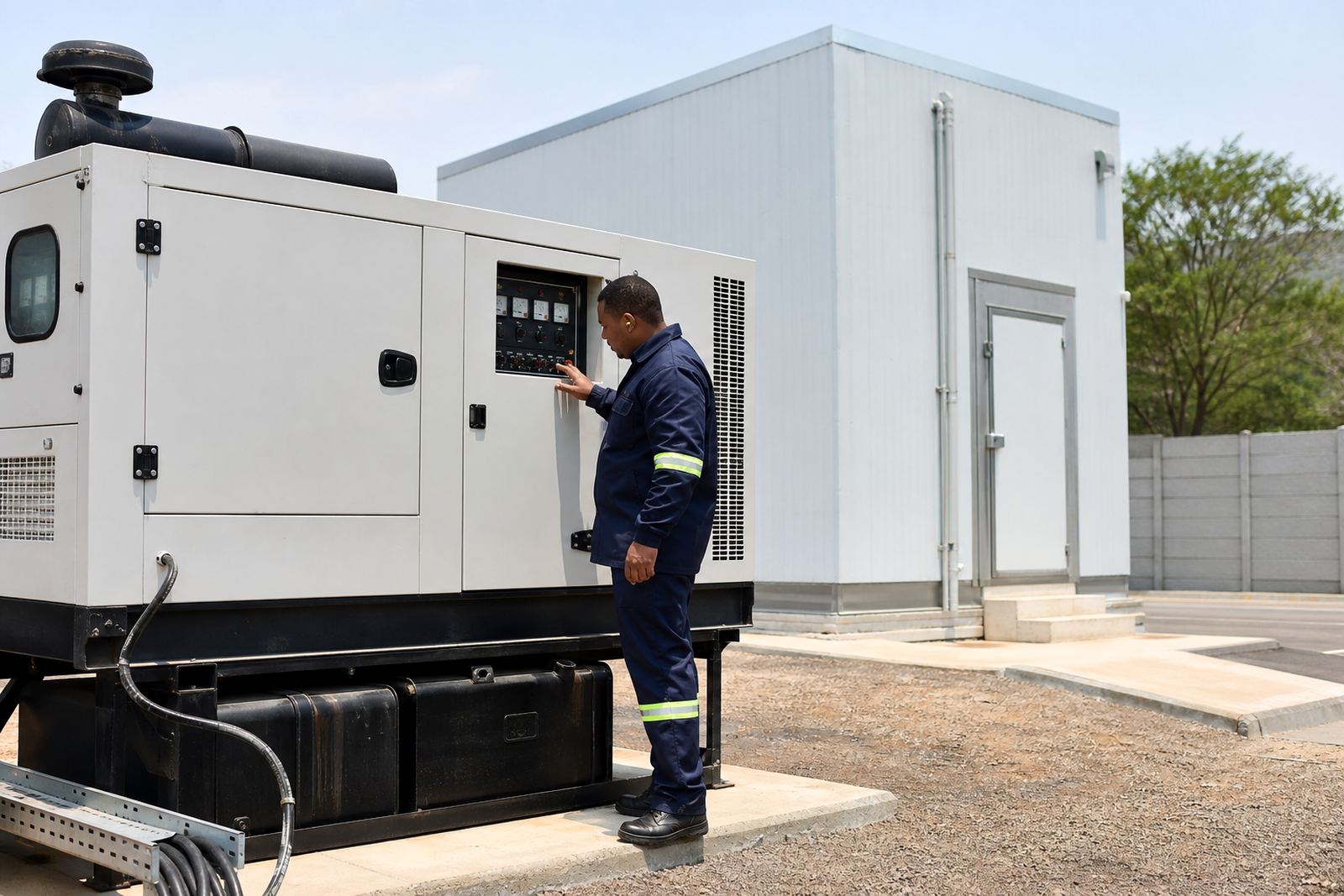
Small generator contracts suit units that sit on standby for load shedding, municipal interruptions and network faults, or run for set shifts where a dependable supply matters. The work covers routine servicing, wear checks and corrective attention before a minor issue turns into an avoidable stoppage.
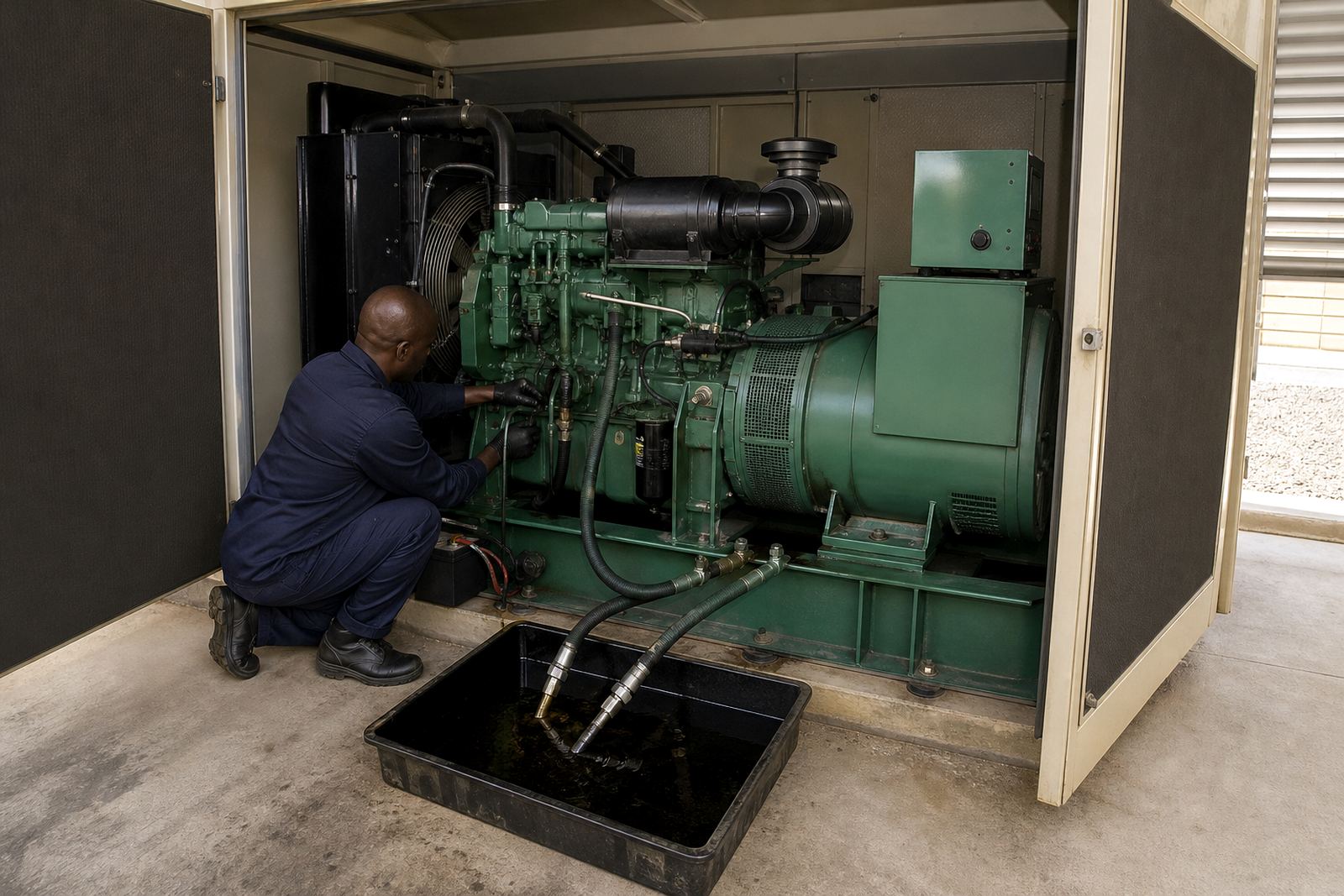
We handle the practical items that make the biggest difference on smaller sets: oil and filter changes, coolant condition, battery health, starter checks, fuel system condition and changeover switch operation. Electrical work is done by qualified people in line with local regulations, and where the generator is tied into a site distribution board or automatic transfer arrangement that side is checked properly too.
- Standalone standby sets for small offices and retail units
- Prime units supporting light production or workshop equipment
- Older generators that need closer monitoring and records
- Sites where brief downtime carries a real cost to trading
Sizes and operating ranges we normally cover
We work on smaller generators commonly found at commercial and light industrial sites, from about 5 kVA through to 100 kVA and sometimes a little above where the application still calls for a compact set. Single-phase and three-phase units are both supported, and the contract can be set around weekly, monthly or quarterly run patterns.
For a set that only starts during outages, a contract usually focuses on readiness: battery condition, automatic start response, fuel level stability, cooling performance and a clean service record. For a unit that runs more often, we build in tighter intervals, closer fault finding and more frequent fluid checks, because heat and dust in Gauteng or coastal humidity in Durban can change what the machine needs.
- 5 kVA to 100 kVA as a common working range
- Single-phase or three-phase configuration
- Manual start, auto start or changeover-linked systems
- Indoor plant rooms, outside enclosures or small generator bays
Where small generator contracts fit best
These contracts are well suited to offices in Sandton, warehouses in Centurion, clinics, schools, retail centres, body corporate sites and smaller workshops that cannot afford repeated interruptions. They also help businesses in Durban and Cape Town manage salt air corrosion, while inland sites in Midrand, Pretoria and Polokwane often need more attention to dust, heat and battery wear.
Many smaller sites do not have a full on-site maintenance team, so a contract gives them a set service rhythm and a record of what was done. That record matters when there are landlord requirements, insurance queries or municipal compliance checks, because it shows the machine has been looked after and the changeover arrangement has been kept in working order.
What the contract work includes on each visit
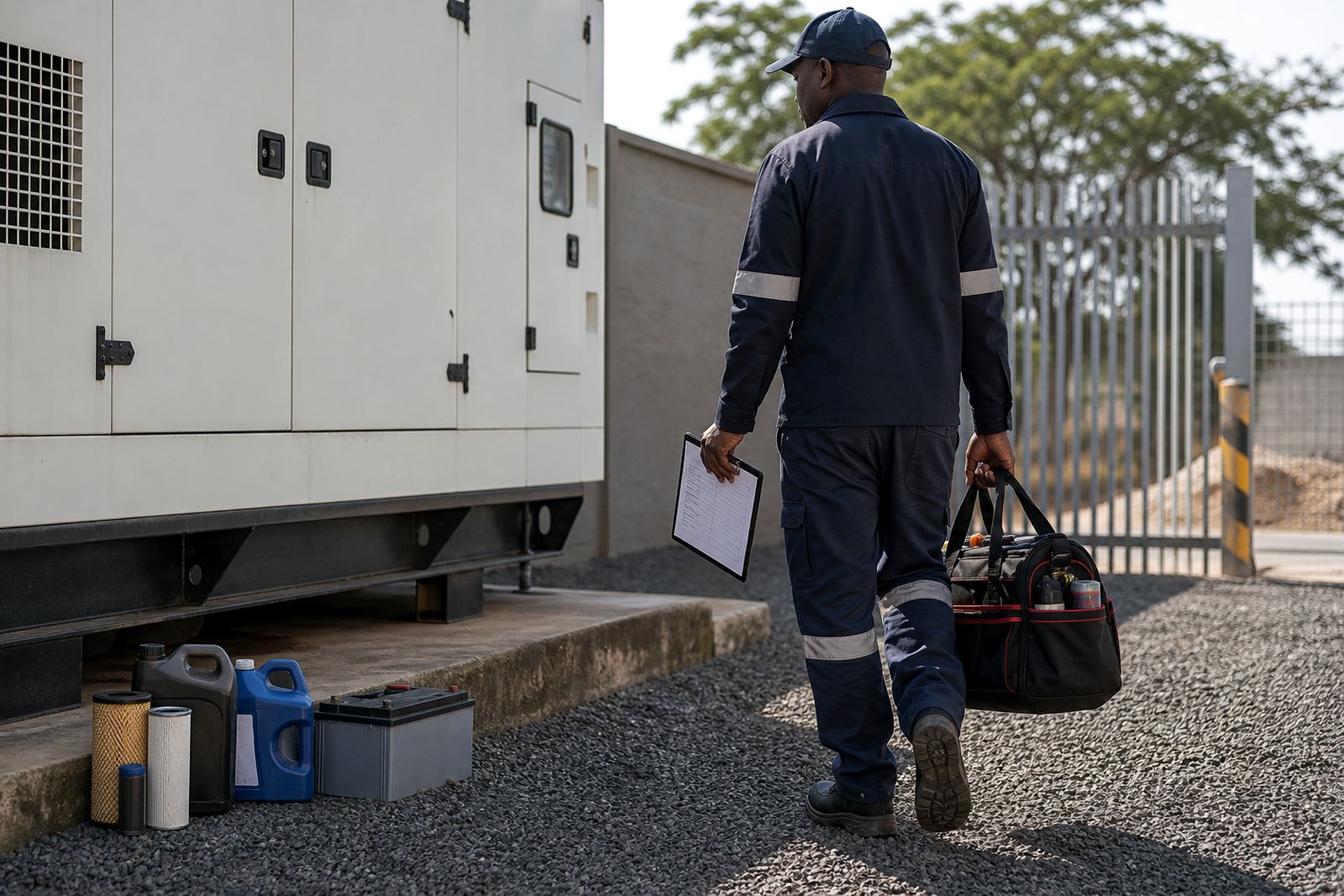
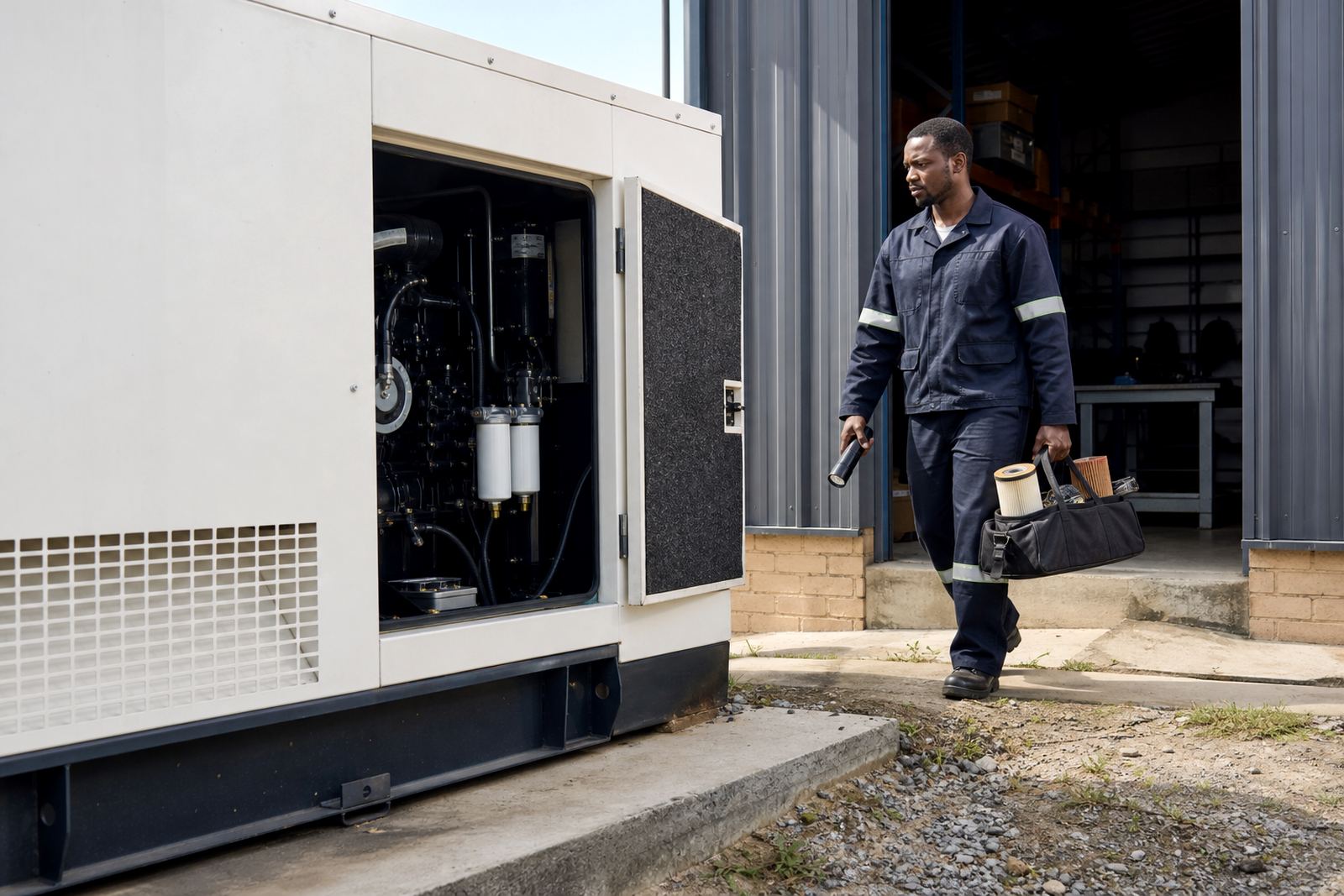
Each plan is built around the actual use of the set. Some clients want a short monthly inspection, others need a full service every 250 hours or 6 months, depending on the machine and how often it runs. We check the machine as a whole, not just the obvious bits, because a loose battery terminal or a dirty filter can cause a start failure at the worst time.
- Oil and filter changes according to service interval
- Coolant top-up, condition check and leak inspection
- Battery load testing and terminal cleaning
- Load bank testing where scheduled runtime verification is needed
- Changeover switch checks and basic control review
- Fuel system repairs and starter system repairs when faults are found
- Service record audits and preventive site inspections
On request, we also look at run hours, alarms and service history so the next visit is planned properly. That helps avoid a situation where the set is opened late, parts are overdue and the machine has been left in a state that takes longer to sort out than it should.
Fitting, access and site conditions to plan for
When a compact generator is newly installed or shifted to a different spot, the physical layout needs clear access, safe approach routes and enough room around the enclosure. For changeover-linked setups, the work should be carried out by qualified people and the switching layout must be marked clearly so staff know what is active and what is isolated.
In practice, the best sites are the ones that leave room for service access, keep the unit out of standing water and protect it from theft or accidental impact. In coastal areas we also look at corrosion on terminals, fasteners and exposed metalwork, while on dusty sites we check air pathways and cooling surfaces more often than usual.
Key facts
| Contract type | Scheduled maintenance for small standby and prime generators |
|---|---|
| Common size range | 5 kVA to 100 kVA, subject to application |
| Service intervals | Monthly, quarterly or hour-based plans |
| Typical inclusions | Oil, filters, coolant, batteries, load bank testing and switch checks |
| Site coverage | Midrand, Johannesburg, Pretoria, Durban, Cape Town, Polokwane and surrounding areas |
| Support options | Emergency callouts, fault finding and service record audits |