Contract cover for generators that carry real site loads
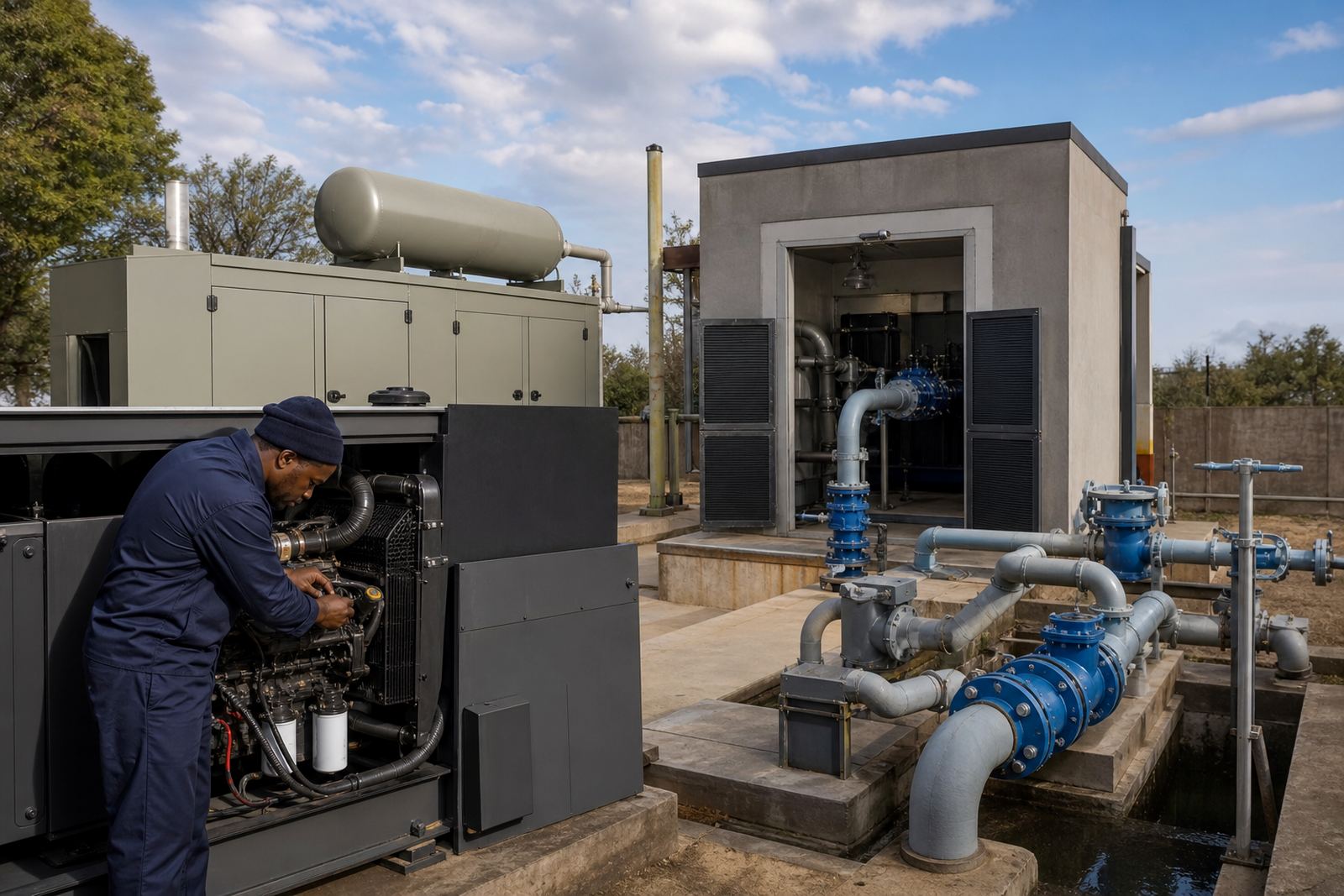
Medium generator contracts suit sets that support lighting, security systems, refrigeration, office blocks, pumps, packing lines and day to day site continuity. These are normally the units that sit in the middle ground between small backup sets and large plantroom machines, so the service plan must be tight enough for business use but practical for a working site. We set up scheduled maintenance for standby and prime applications, with attention to operating hours, start frequency and the way the load behaves during cuts or utility changeovers.
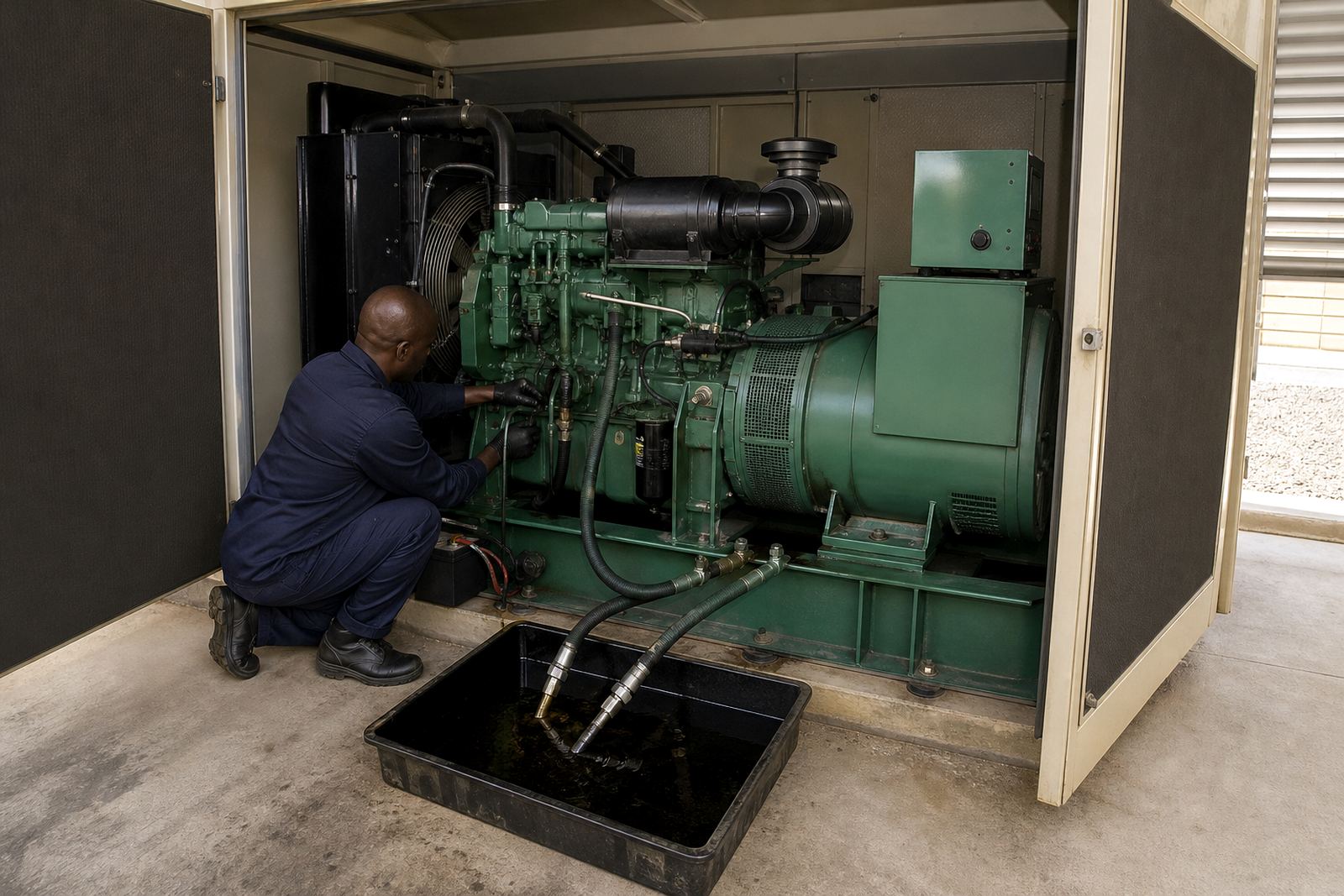
On these contracts we look after oil and filter changes, coolant checks, battery condition, starter systems, fuel system repairs, changeover switch checks and fault finding. If the set is connected through an automatic or manual transfer arrangement, that interface is checked by qualified people under local regulations. The aim is to keep the machine ready, safe and properly recorded without leaving surprises for the next outage.
- For medium output sets serving 24 hour operations
- Suitable for sites with regular load transfer and short interruptions
- Built around service intervals, not guesswork
Sizes and duty ranges that usually fall into this bracket
Medium contracts are commonly arranged around gensets in the roughly 50 kVA to 500 kVA range, though the exact service approach depends on the installation, running hours and type of load. A warehouse with forklifts, dock doors and cold room backup will not be treated the same way as a retail centre with light loads and peak trading periods. We match the maintenance schedule to the machine, not only the nameplate size.
Options can include monthly, bi monthly or quarterly visits, plus emergency callouts when a unit trips, fails to start or shows warning alarms. Where the site has long utility outages, generator duty can rise quickly and load bank testing becomes important. That test helps confirm the set can carry its rated load, handle heat and hold voltage and frequency within normal working limits.
- 50 kVA to 500 kVA as a practical planning band
- Standby units for outages and prime sets for heavier duty use
- Service frequency matched to hours, site conditions and fuel quality
Where these contracts earn their keep
Medium generator service contracts are a good fit for warehouses in Midrand, Centurion and Johannesburg South, retail sites in Sandton and Pretoria, distribution yards near Durban, and mixed facilities in Cape Town and Polokwane. They also suit building complexes, production support areas, workshops and properties where load shedding, municipal interruptions or process stoppages put pressure on operations. Coastal humidity, dust and repeated start cycles all shorten service life if the set is left unchecked.
We work on sites where access may be tight, parking is limited or the generator room shares space with other plant. That means clear scheduling, proper isolation, clean housekeeping and a service record that your facilities team can actually use. If the machine sits in a warm plantroom or near a loading bay, we pay close attention to ventilation, belts, hoses, battery health and cooling efficiency.
- Warehouses and logistics depots
- Retail centres and mixed use commercial buildings
- Light industrial sites, workshops and support plant
What gets done on each scheduled visit
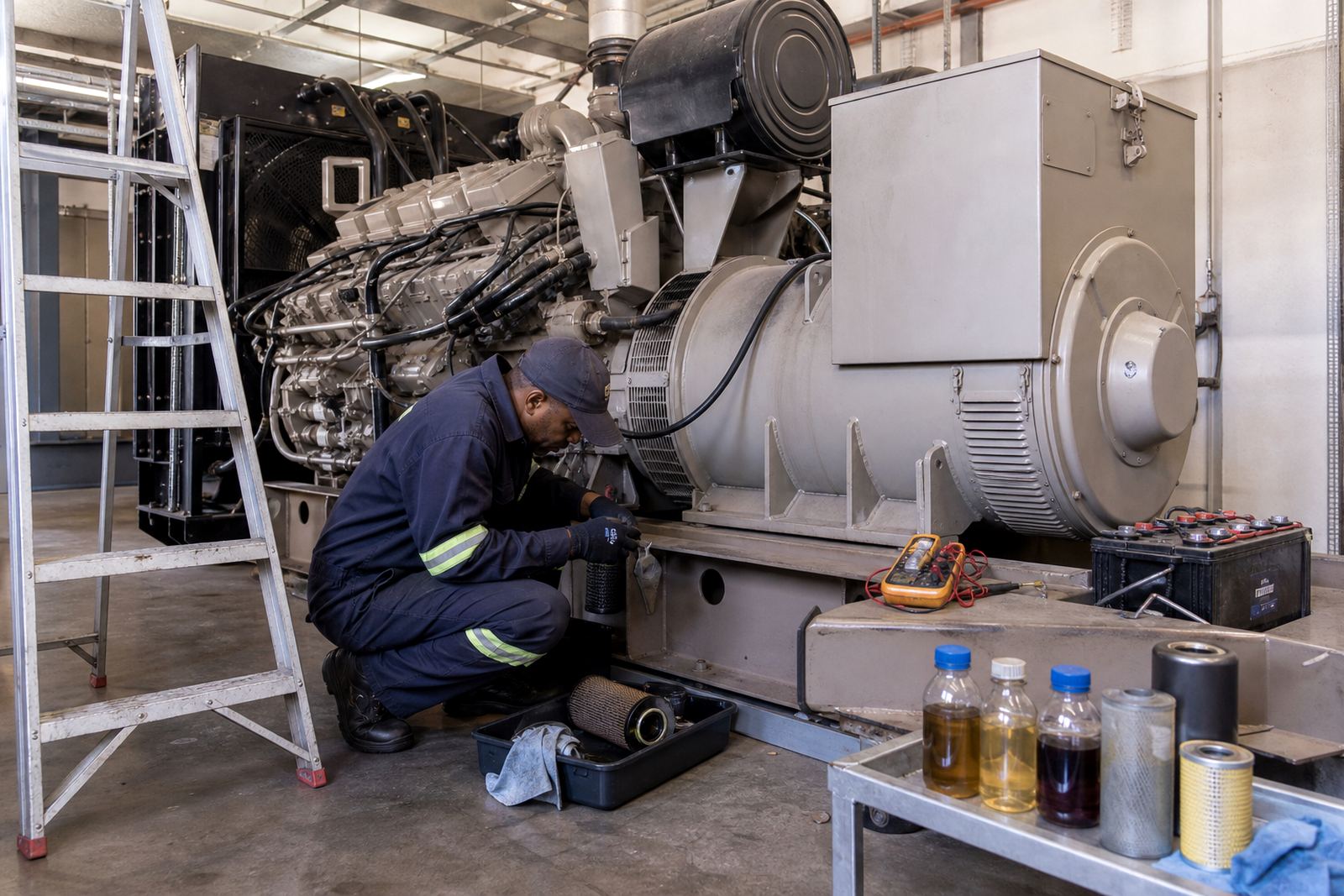
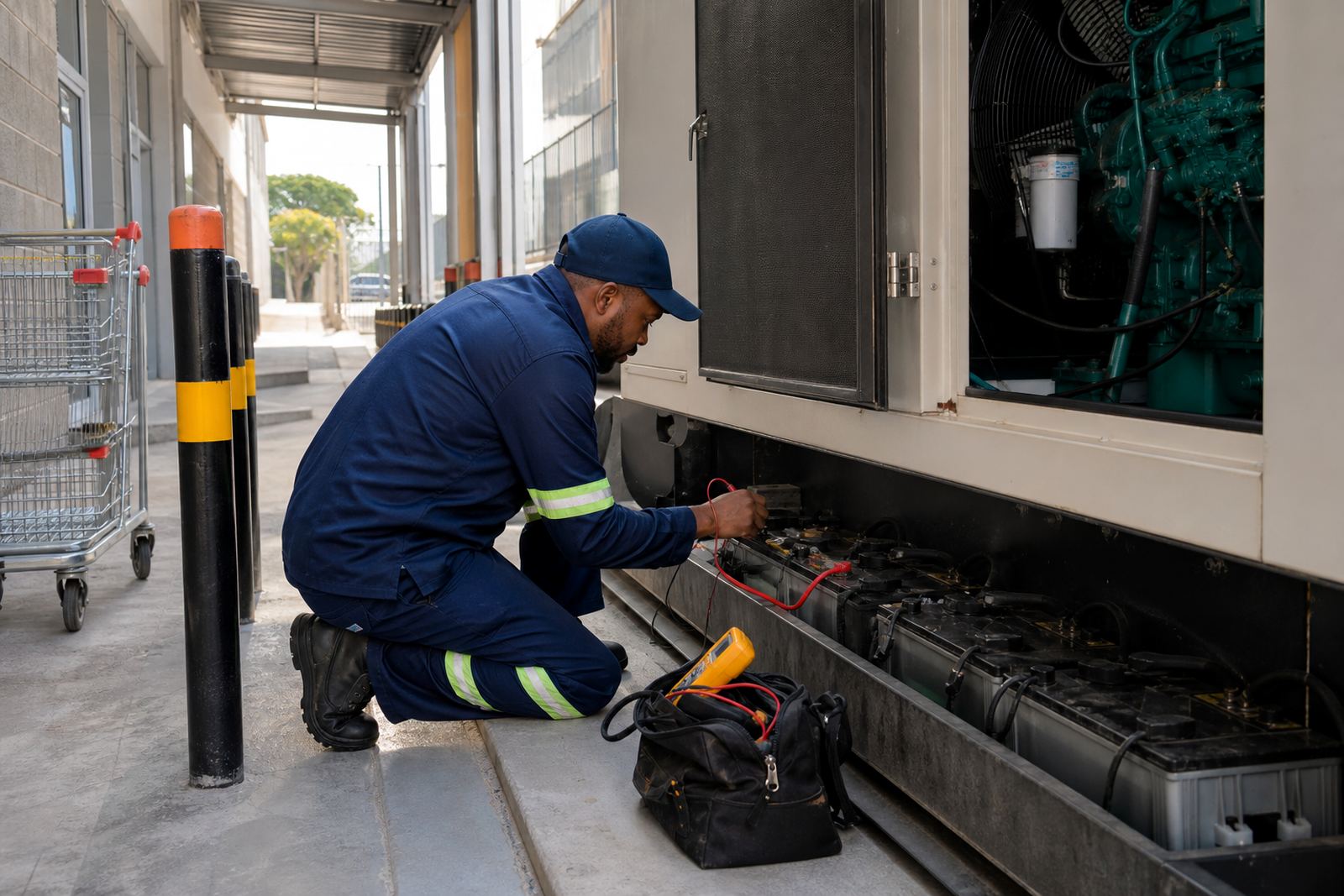
Routine service work is where most problems are caught early. On a medium generator contract, that usually means oil and filter changes at the correct interval, coolant system service, battery testing, terminal cleaning, belt inspection, air intake checks and a close look at leaks, corrosion or vibration. We also inspect fuel lines, drains, tanks and return arrangements where they form part of the set up, because stale fuel and contamination are common causes of hard starting and poor running.
Load bank testing is used where the site needs proof that the generator can take load properly, especially after long periods of light running or where the actual site load is lower than the unit's rated capacity. Changeover switch checks are included where the transfer arrangement is part of the supply chain, and those checks are carried out in line with the correct electrical practice. Fault finding and preventive site inspections help spot loose connections, blocked airflow, weak batteries and control issues before they turn into downtime.
- Oil and filter changes with service record updates
- Battery testing, coolant checks and starter system checks
- Load bank testing and transfer switch inspections where needed
Fitting needs, access and electrical sign off
When a medium generator is installed or connected into service, the fitting details matter as much as the machine itself. We look at base frame position, access for servicing, cable routes, ventilation, exhaust direction, safe fuel handling and room for future maintenance. If the set uses automatic transfer equipment, the electrical work must be done by qualified people under local regulations and site rules. That includes checking isolation, protection and transfer logic before the unit is placed into regular service.
For sites that already have a generator, we can take over an existing maintenance contract after a site inspection and service record audit. That helps us see what has been done, what is overdue and which parts of the system need attention first. If the plantroom is cramped or the site runs during trading hours, we plan access so servicing causes the least disruption possible, no one wants a torn up loading bay at 7am.
- Safe access for filters, batteries, coolant and test gear
- Ventilation, exhaust and fuel storage reviewed before service starts
- Electrical transfer equipment handled by qualified personnel only
Keeping the contract healthy between visits
A medium generator lasts better when the site team keeps an eye on the basics between scheduled services. That means checking for warning lights, unusual noise, low fuel, visible leaks and any change in start behaviour after power cuts or test runs. Batteries need regular attention, especially in hot rooms or on sites where the generator sits idle for long periods. Coolant level, belt condition and clean airflow are also worth checking because small issues often show up before the unit trips.
We also help with service record audits so you can see what was done, when it was done and what still needs attention. That is useful for property managers, warehouse supervisors and operations teams that juggle several sites at once. If a unit has repeated faults or short run times, we can trace the problem back through fuel quality, starting circuits, cooling, control issues or poor maintenance history.
- Watch for alarms, leaks, smoke and hard starting
- Keep the surrounding area clean and free of stored items
- Make sure records stay with the site, not only with the keys
The details we need before we schedule a contract
To set up the right medium generator contract, we need the machine size, make, model, serial number and whether it is standby or prime duty. We also need the running hours, fuel type, service history, site address and whether there is a transfer switch or other changeover equipment in place. If the set serves critical loads like refrigeration or security, tell us which circuits matter most so the inspection and test plan can be shaped around that.
It helps to know where the unit is based, how easy it is to access during business hours, and whether the site is in Midrand, Johannesburg, Pretoria, Durban, Cape Town, Polokwane, Centurion or Sandton. We can then schedule the right technician team and carry the parts that are most likely to be needed. For repeat service visits, clear site contacts and a proper service window save time on the day and reduce call backs.
- Generator rating, duty type and running hours
- Fuel type, service history and control arrangement
- Site location, access notes and critical load details
Key facts
| Service band | Medium output generator contracts for business sites |
|---|---|
| Typical capacity range | About 50 kVA to 500 kVA |
| Service items | Oil, filters, coolant, batteries, fuel systems and starter systems |
| Testing | Load bank testing, fault finding and changeover switch checks |
| Contract types | Scheduled servicing, emergency callouts and preventive inspections |
| Coverage | Midrand, Johannesburg, Pretoria, Durban, Cape Town, Polokwane, Centurion and Sandton |