Contract cover built for yards, pumps and pack sheds
A farm generator contract is a planned service agreement for keeping a generator ready for work, not just for fixing it when something goes wrong. We service standby and prime sets used on farms, pack houses, cold rooms, workshops, irrigation points and staff housing across Gauteng, KwaZulu-Natal, the Western Cape and Limpopo.
On farms, dust gets into air filters and alternators, batteries sit unused for weeks, and fuel can age in tanks when the unit only runs during outages. A contract keeps these checks on a proper cycle, with service records that make it easier to track what was done and when. That matters when the generator is the back-up for livestock water, cooling rooms or borehole systems and you cant afford guesswork.
- Routine servicing at agreed intervals
- Emergency callouts for faults and failed starts
- Inspection of control panels, cabling and battery health
- Service records for farm audits and internal maintenance logs
Sizes and options farmers usually ask for
Generator contracts are arranged around the unit already on site, or the units spread across different buildings on the property. We cover smaller single-phase sets for office blocks or gate systems, through to larger three-phase generators used for pumps, grain handling or production equipment. The contract is adjusted to the running hours, the amount of dust around the site and whether the machine is used daily or only during load shedding and planned shutdowns.
Options can include scheduled servicing only, or a fuller contract with breakdown support and preventive inspections. For farms with several generators, we can separate the visit plan by site, for example one set at the main yard and another at a distant shed or cold store. If your equipment uses automatic changeover equipment, we also check the changeover function and the transfer sequence so the generator comes in when it should.
- Single-phase and three-phase units
- Standby sets for outages and emergency use
- Prime sets used more regularly on remote sites
- Multi-generator sites with separate service intervals
What gets checked during each visit
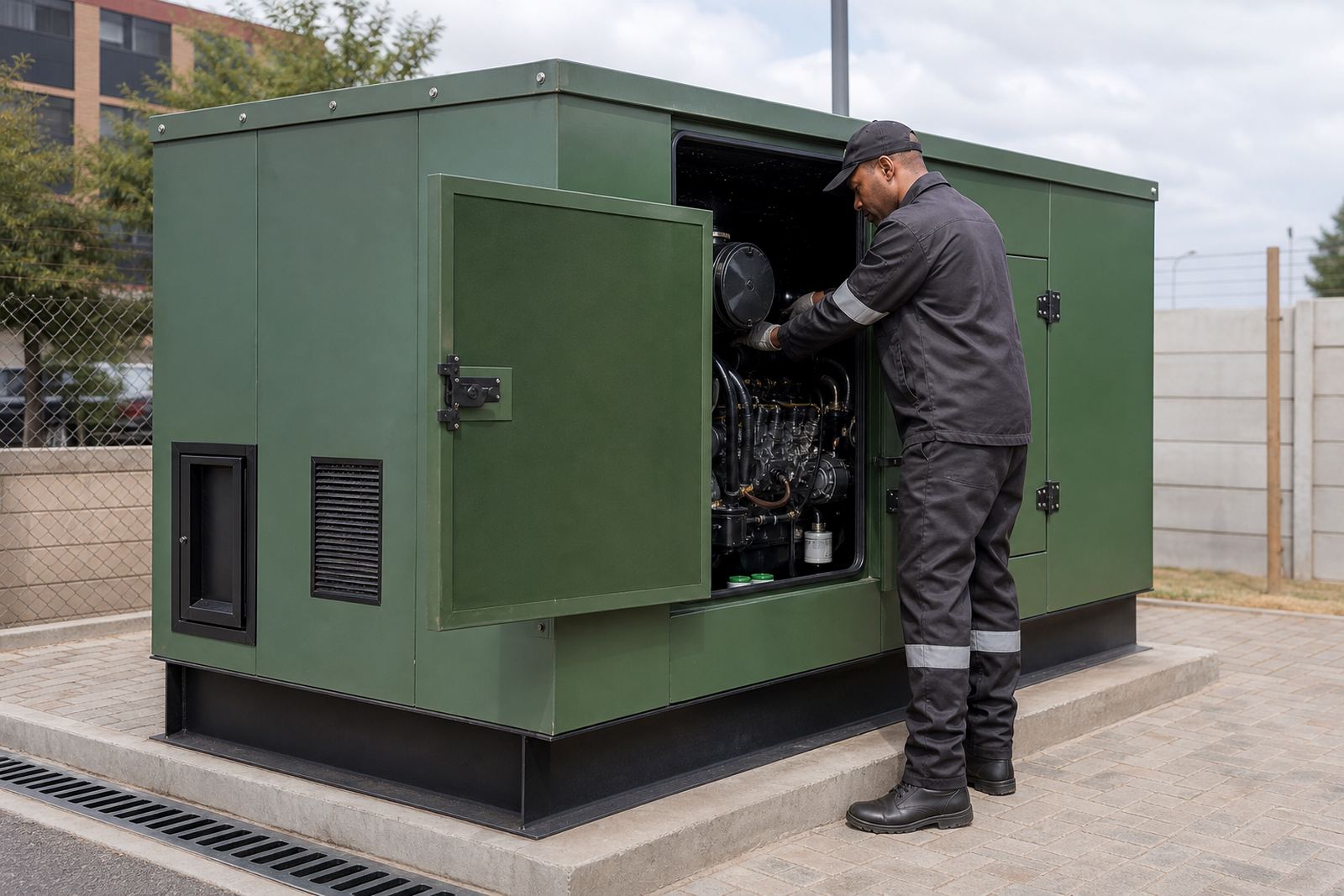
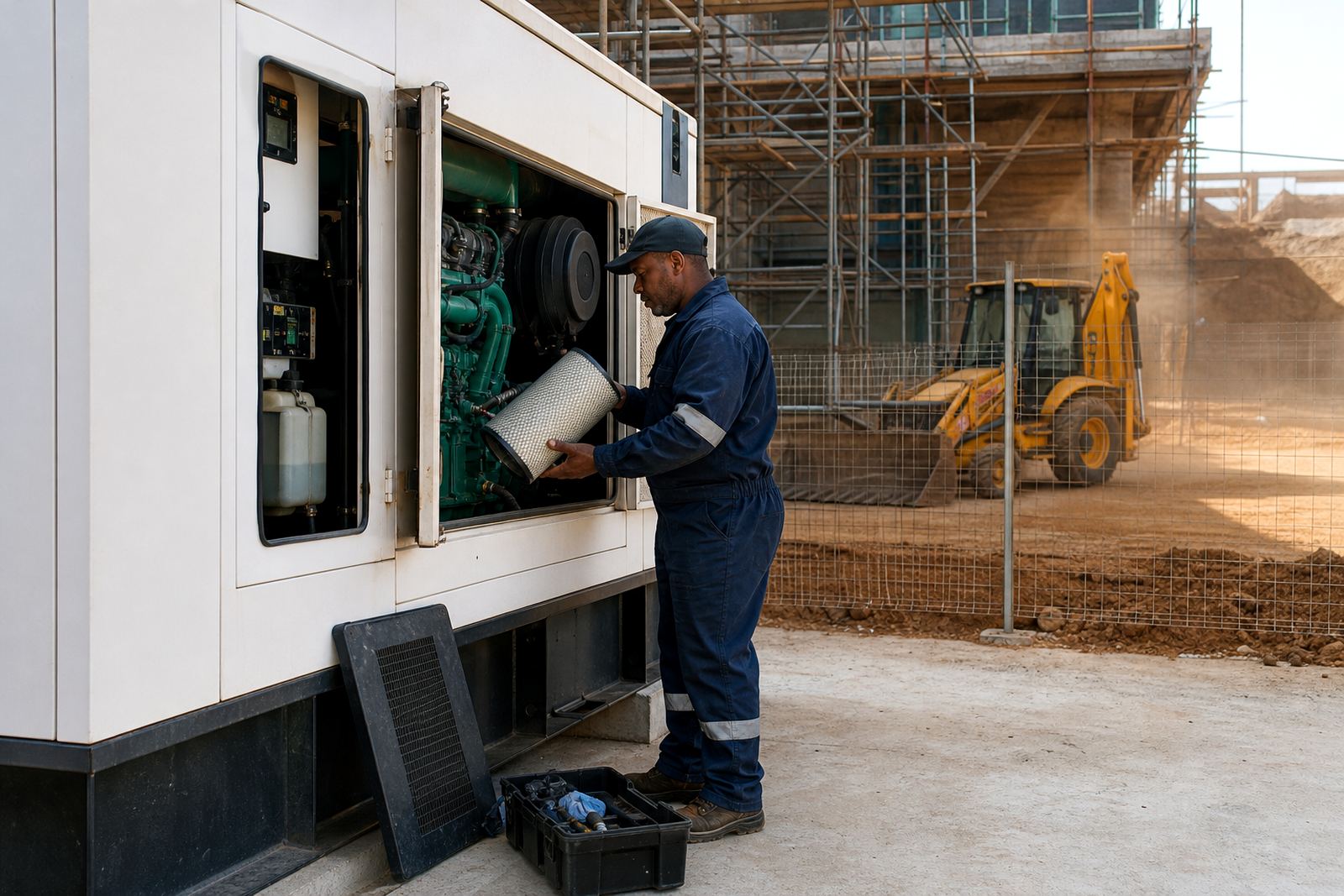
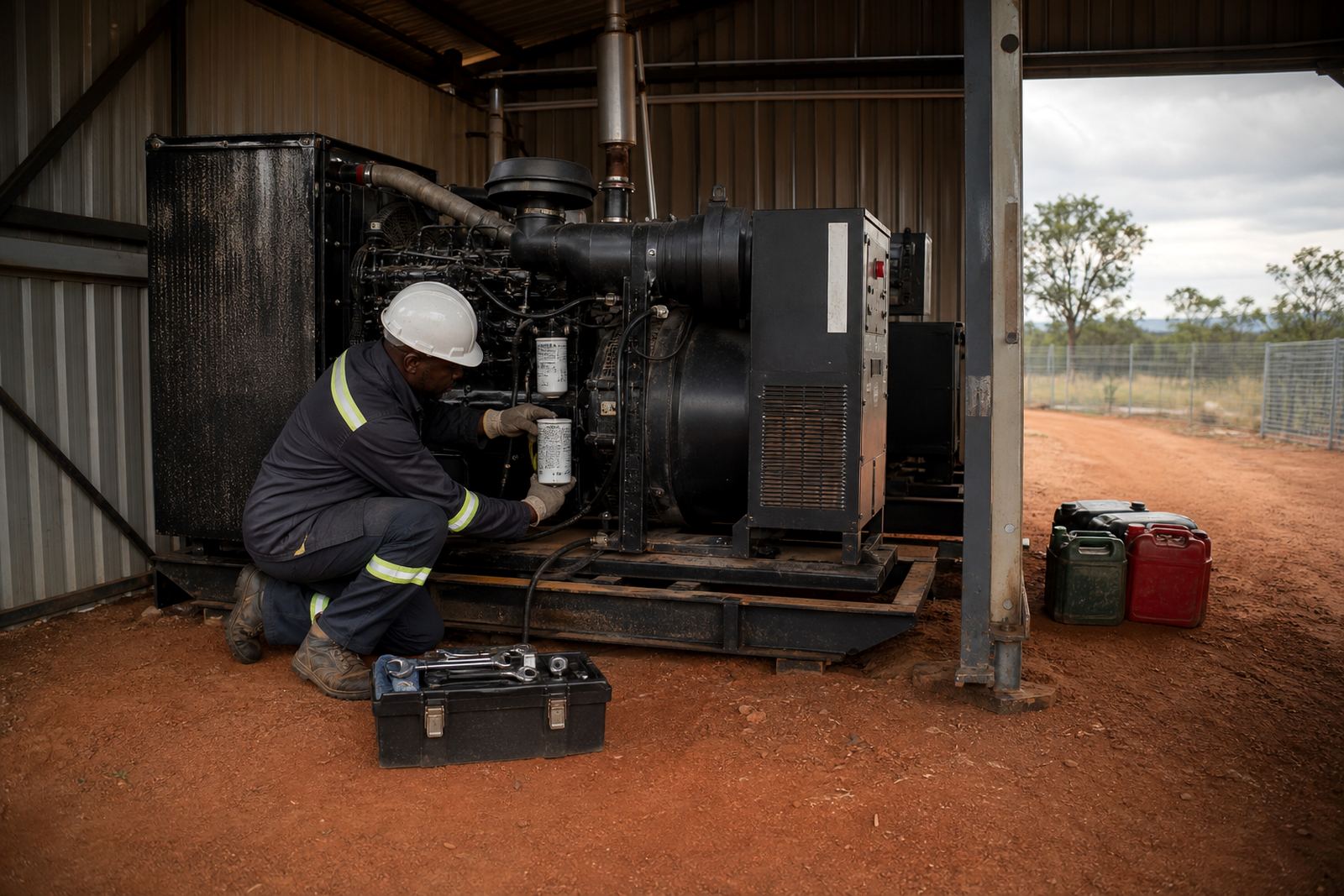
A proper farm service goes beyond an oil change. We look at the engine, cooling system, battery condition, starting arrangement, fuel system, mounts, belts and visible wiring, then record anything that shows wear or contamination. Oil and filter changes are done to schedule, coolant levels and hose condition are checked, and the battery is load tested so weak starting is picked up before a failure.
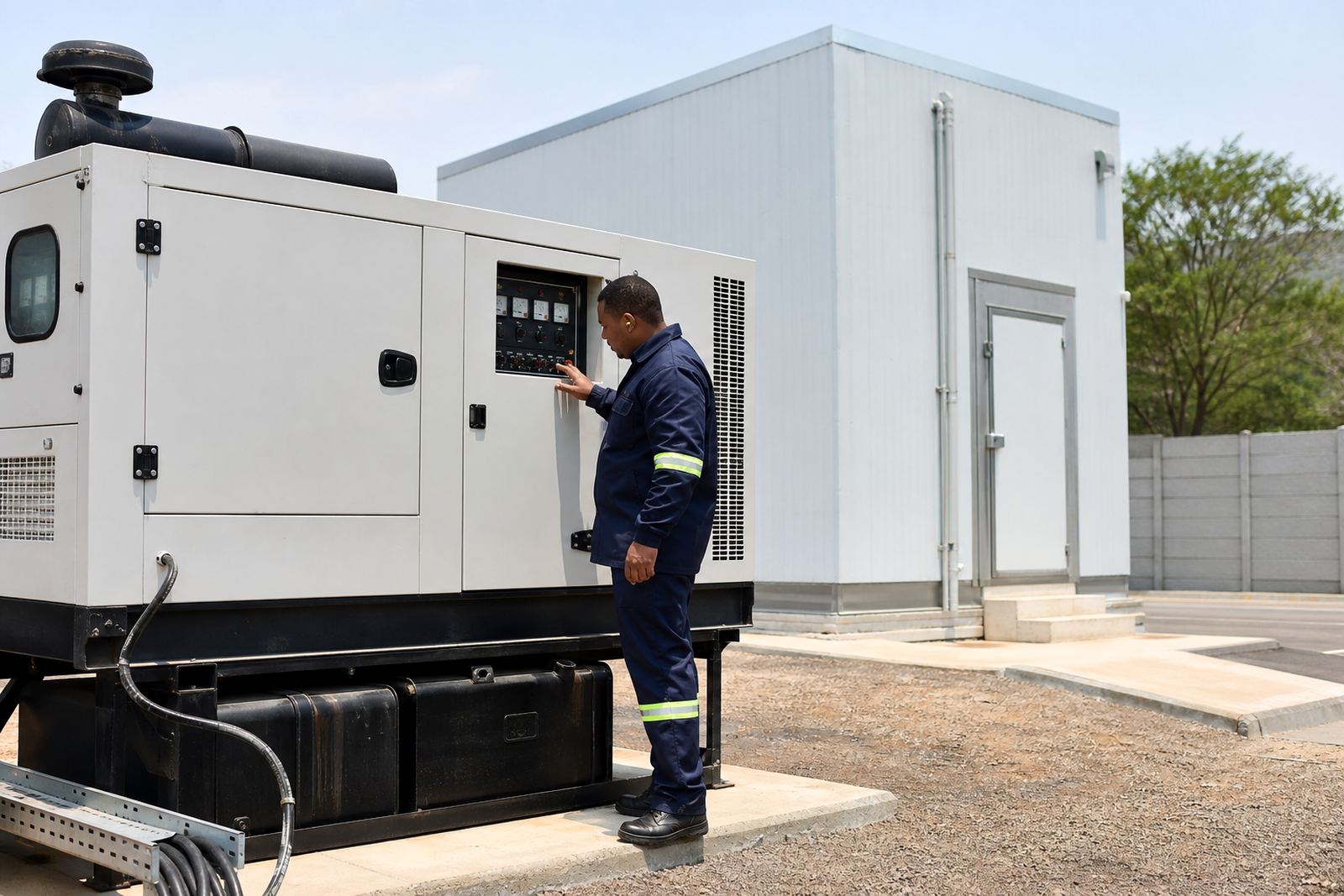
Where the site has an automatic transfer setup, the changeover switch or control interface is checked by qualified people working within local regulations. Electrical work is handled by properly trained staff, because there is no room for shortcuts around switchgear and live equipment. For farms in dusty or coastal areas, we also keep an eye on corrosion, blocked breathers and fine dust build-up that can affect cooling and alternator performance.
- Oil and filter changes
- Coolant system service
- Battery testing and charging checks
- Load bank testing where practical for the site
- Changeover switch checks and fault finding
Where this contract suits best
These contracts suit farms that rely on electricity for water, cooling, grading, lighting, security and administration. That includes fruit and veg operations, dairy farms, poultry units, mixed farms, seed stores, wine farms and remote facilities with long cable runs or repeated switching between utility power and generator supply. In places like Polokwane, Midrand and the wider Gauteng belt, dust and fast turnaround times often make scheduled maintenance more useful than waiting for a breakdown.
Seasonal use matters too. A generator that sits for months can suffer flat batteries, stale fuel and sticking relays, then fail the first time the farm needs it. On busy sites, frequent starts and longer run times mean filters, coolant and belts need closer attention. That is why the contract is set around the way the farm actually runs, not a generic service calendar. A little planning saves a lot of lost time during a bad outage.
- Farms with cold rooms, irrigation pumps or borehole systems
- Sites with seasonal peaks and long idle periods
- Properties with dusty yards or coastal humidity
- Operations that need service records for compliance and maintenance control
Fitting access and site details we need first
Before a contract starts, we need the generator details and enough site information to plan the visit properly. On farms that means access gates, road conditions, the distance from the main yard to the generator room or container, and whether the unit sits indoors, outdoors or in a weatherproof enclosure. We also need to know if the set is on a day tank, bulk tank or another fuel arrangement so the service plan suits the actual installation.
If there is an automatic transfer system, the panel layout and changeover arrangement should be identified before the first visit. That helps our team bring the right test gear and allows the visit to move without delay. It also matters where the unit is sited, because poor ventilation, blocked louvres or tight clearance around the enclosure can affect cooling and service access. We work around real farm conditions, not showroom conditions and that makes a diffrence.
- Generator make, model, kVA rating and serial number
- Single-phase or three-phase supply
- Fuel arrangement and tank location
- Exact site position and access conditions
Looking after the set between visits
Between services, the best care is steady and practical. Keep the area around the generator clear of chaff, grain dust, rags and stored chemicals, and check that vents and radiators are not blocked by weeds or debris. If the unit is used only for standby, it still needs regular starting and inspection so battery issues and warning faults dont wait for a blackout to show themselves.
Our maintenance plan can include service record audits and preventive inspections, which help spot repeating faults such as poor battery health, dirty filters, loose terminals or a changeover that is not performing as expected. If a farm is in a high-dust region or near the coast, the intervals may need tightening because the environment works against the machine every day. The generator should be ready when the farm needs it, not after a long search for the problem.
- Keep service hours and outage starts logged
- Watch for coolant loss, smoke, leaks or slower cranking
- Do not store fuel-contaminated rags near the set
- Report repeated tripping, alarms or failed starts early
What to confirm when you place the contract
To set up the right contract, confirm the generator size, whether it is standby or prime, how often it runs, and what the farm depends on it for. We also need the service history if there is one, plus the site location so the visit pattern matches the farm layout. If several units are involved, list each one separately with its kVA size and the equipment it supports.
For contract planning, it helps to know if the farm needs emergency callouts, scheduled servicing only, or a more complete arrangement that includes preventive inspections and battery checks. The more exact the details, the easier it is to avoid missed items, repeat trips or last-minute delays during a storm or outage. We keep the process straight and practical so the site knows what is due and when.
- Generator size and type
- Number of units on site
- Running pattern and service interval
- Any automatic changeover or control issues already noticed
Key facts
| Service range | Standby and prime generator contracts for farms |
|---|---|
| Sizes covered | Single-phase and three-phase units, small to large site systems |
| Typical service items | Oil, filters, coolant, batteries, belts, starter checks |
| Testing | Load bank testing and changeover switch checks where suitable |
| Areas | Midrand, Johannesburg, Pretoria, Durban, Cape Town, Polokwane |
| Contract support | Scheduled servicing, emergency callouts, fault finding, service record audits |