What a municipal site contract actually keeps on track
A municipal site contract is the planned service agreement that keeps standby generators ready for public facilities and utility sites. It covers routine inspection, oil and filter changes, coolant checks, battery testing, fuel system repairs, starter checks, load bank testing where required, and changeover switch checks so the set is prepared for load-shedding, outages and planned maintenance shutdowns.
These contracts suit sites where service continuity matters every day, not only during emergencies. That includes water and sewer pump stations, traffic control rooms, clinics, libraries, depots, housing offices, emergency centres and treatment plants. We service standby and prime units used on municipal work, with attention to the site conditions that affect performance, from coastal humidity in Durban to dust and heat around Gauteng and the North West border towns.
Generator sizes and contract options for public facilities
Municipal sites do not all run the same size generator, so the contract has to match the actual set and the duty cycle. We handle compact backup units for small offices, mid-size sets for community buildings, and larger packages for water and utility plants that run for longer periods under heavier site loads. The service plan is set around the machine hours, fuel quality, access, and whether the unit is used only in outages or carried as prime support during planned works.
- Standby sets for clinics, community halls, admin blocks and libraries
- Prime-rated sets for utility sites with longer running periods
- Single-set or multi-set sites with shared changeover systems
- Indoor and outdoor installations with different corrosion, ventilation and access needs
- Daytank and bulk fuel arrangements where the site uses managed fuel storage
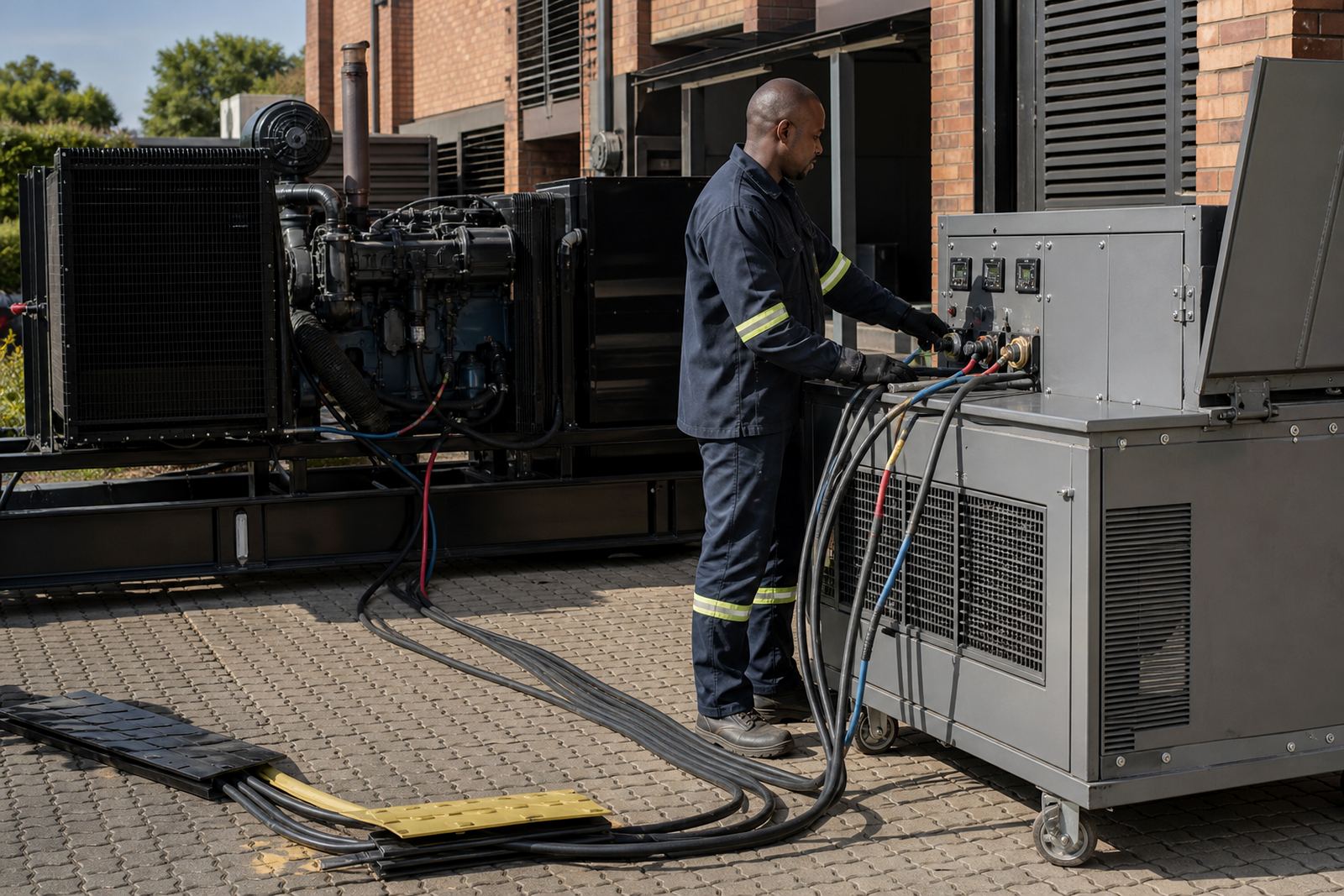
Load bank testing is important on many municipal contracts because a generator that only idles during interruptions can look fine while underperforming under real load. A proper test checks voltage stability, frequency, cooling, exhaust behaviour and the way the set responds when demand is stepped up.
Where these contracts fit best on municipal ground
RelGen supports sites where an interruption affects the public directly. That includes council offices, refuse depots, library branches, public toilets, clinics, depots, borehole stations, sewer lift stations, water treatment areas and road maintenance yards. These places often face uneven usage, stop-start running, winter cold starts in the interior, and long idle periods followed by sudden demand. A contract keeps that pattern under control.
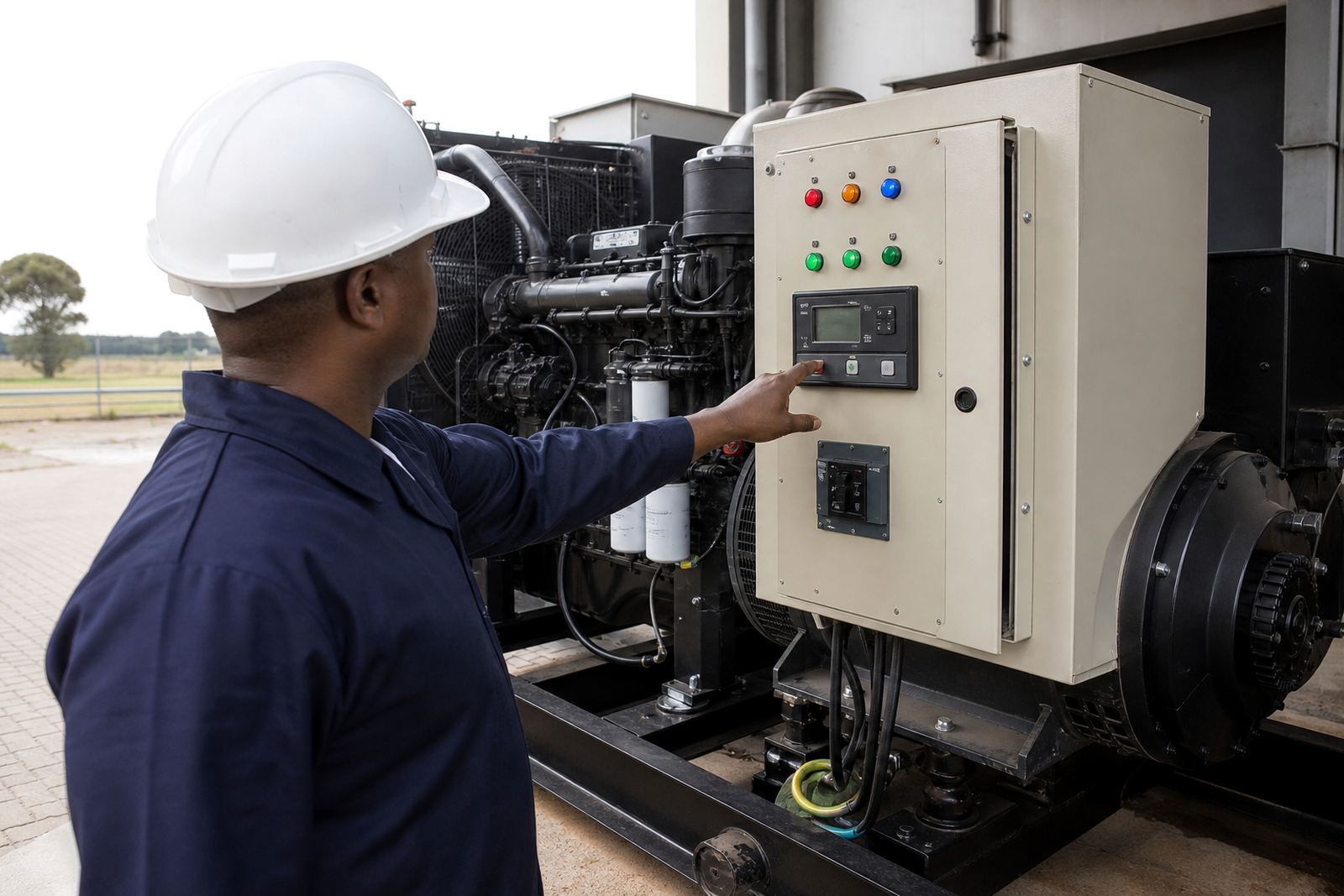
We also work where access is tight and the site is regulated, such as fenced utility yards or facilities with visitor control and permit rules. Electrical work must be done by qualified people under local regulations, and changeover switch checks are handled with that in mind. If the site has shared panels, remote alarms, battery chargers or automatic start controls, those details need to be part of the service record from the start.
- Community facilities with limited after-hours access
- Utility sites that need clear service logs and fault history
- Plants exposed to dust, vibration or coastal air
- Sites where generator room ventilation and housekeeping affect reliability
How the fitting and site setup are handled
A municipal contract works best when the installation details are known before the first service visit. We need to understand how the generator is connected, how the changeover switch is arranged, whether there is an auto-start system, and how access is managed on site. If the generator room is cramped, hot or poorly ventilated, that affects service intervals and what the technician checks each visit. The same applies where the set sits outside in a weather-exposed enclosure.
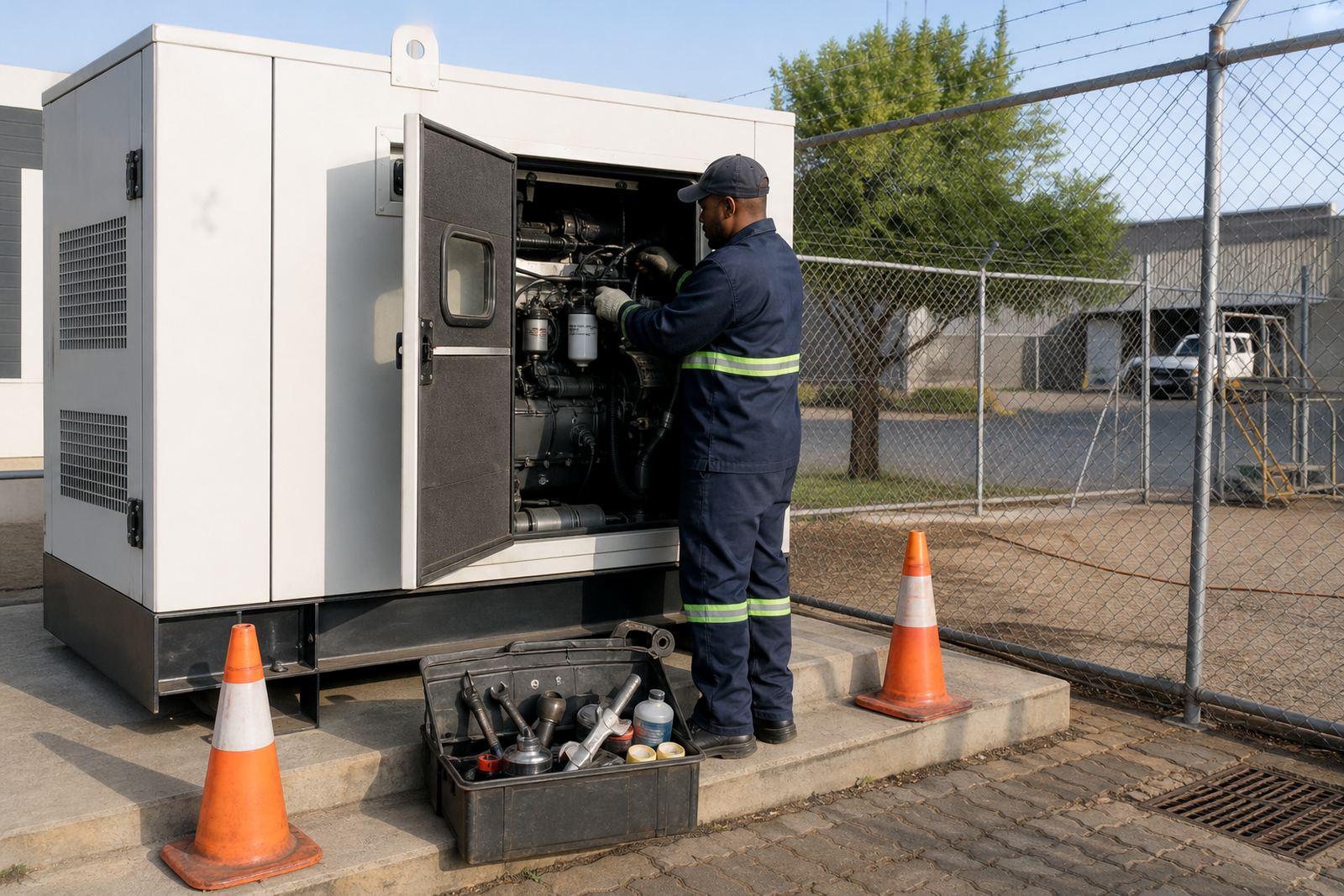
Fitting and maintenance work may involve filter access, battery replacement, coolant top-up, starter circuit checks, fuel line inspection, and testing of alarms and control settings. Where the generator forms part of a larger utility system, the site should confirm lock-off procedures, responsible persons, and any municipal permit or safety steps before work begins. That keeps the job orderly and avoids delays when a callout lands during load-shedding or after hours.
Care that keeps the set ready for the next interruption
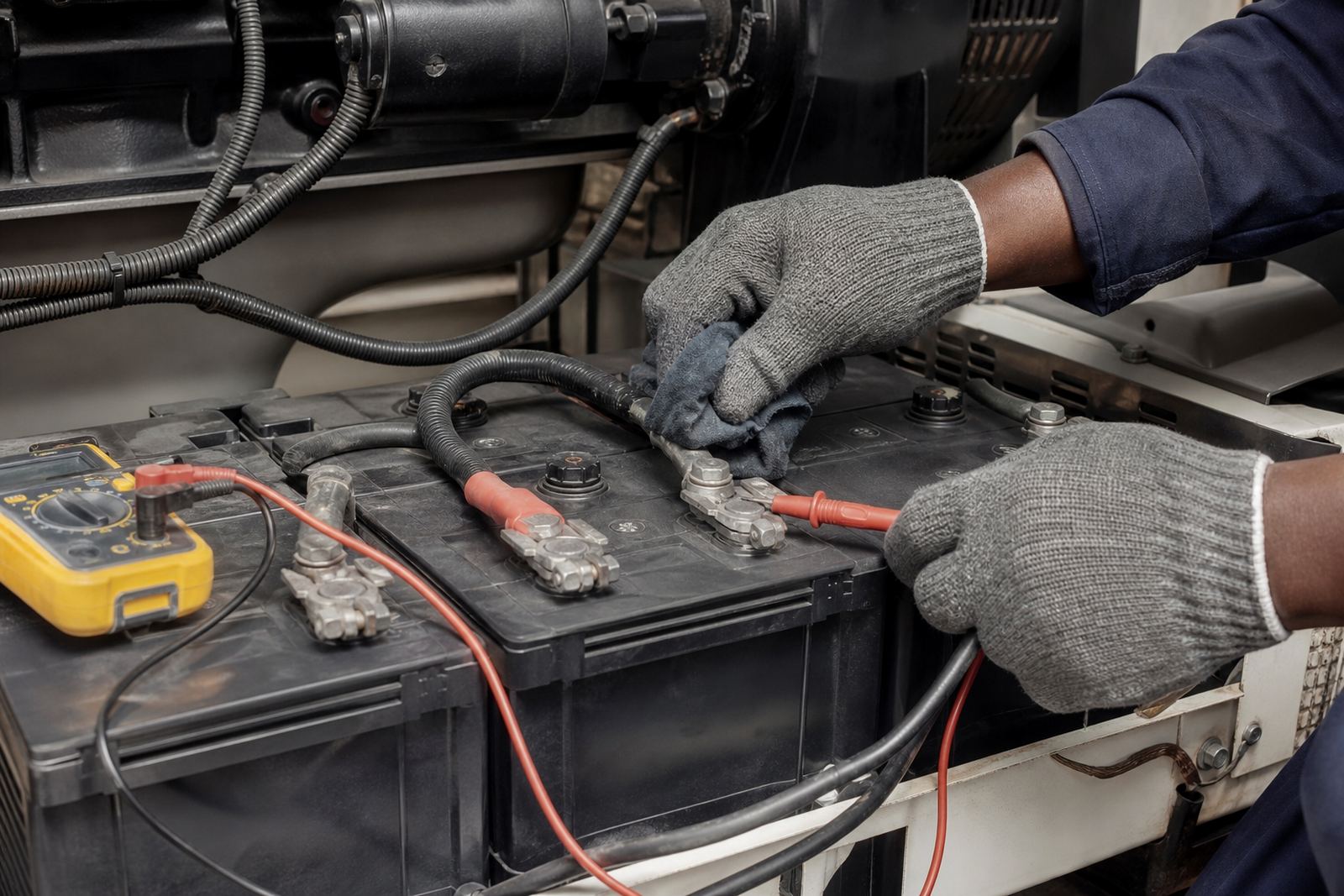
Good care is not only about turning up for a service. It is also about catching the small things that become failures: contaminated fuel, blocked filters, weak batteries, coolant loss, loose terminals, leaks, or a changeover switch that is not operating cleanly. On municipal sites, a missed fault can leave a clinic dark or a pump station idle, so the service sheet needs to be accurate and easy to audit.
Our maintenance work is planned to suit operating hours and access windows. That can mean monthly visits, quarterly checks, or a tailored schedule for sites with heavy demand. We also carry out preventive site inspections and service record audits, which helps when the municipality needs proof of what was checked, what was replaced, and what must be followed up. A tidy record often saves time later when different managers or contractors rotate through the site.
- Oil and filter changes at the correct interval
- Coolant system checks for leaks, concentration and level
- Battery testing and starter system checks before winter peaks
- Fuel system repairs where contamination or age affects running
- Load bank testing to prove the set under working demand
Details to confirm before a municipal order is placed
To set up the right contract, we need the generator make-up, site condition and service scope. The more exact the details, the better the contract planning, parts holding and callout response. For municipal work, that usually means confirming the generator size, whether it is standby or prime duty, the service history, the access arrangement and the type of fuel system on site. If the unit has a changeover switch, automatic controls or multiple starting batteries, those points matter too.
Please confirm these details when placing the order: generator kVA rating, site address and area, operating duty, fuel type and tank arrangement, whether load bank testing is required, the number of units on site, and the preferred maintenance window. If there are local rules for gate access, inductions or escorting, include that as well. It helps us plan the visit properly and reduces time wasted at the gate.
- Generator kVA and whether it is standby or prime duty
- Exact site type, such as clinic, pump station, depot or office block
- Fuel arrangement, tank size and refuelling access
- Control type, changeover switch arrangement and alarm setup
- Service interval and whether emergency callouts are included
Who handles the contract work on our side
RelGen’s municipal contract work is managed from our Midrand base with support across Gauteng and major routes nationwide. Thabo Engelbrecht leads the business, with Naledi Shezi overseeing operations, Johan Matlala managing service contracts, Ayanda Khoza coordinating field service, Muneerah Daniels handling technical support, Sibusiso Wessels as senior generator technician, and Rikus Botha supervising stores and logistics. That structure helps with parts planning, visit scheduling and follow-through when a site needs attention fast.
We support clients in Johannesburg, Pretoria, Durban, Cape Town, Polokwane, Centurion and Sandton, and we also travel to surrounding municipal sites across South Africa. For public facilities, the real value is having a service team that knows the pressure of an outage, the paperwork that goes with it, and the need to keep the set ready without drama.
Key facts
| Service type | Municipal standby generator maintenance contracts |
|---|---|
| Supported duty | Standby and prime generator sets |
| Common site sizes | Small facility units through to larger utility plant packages |
| Core servicing | Oil and filter changes, coolant checks, battery testing, fuel system repairs |
| Testing options | Load bank testing, changeover switch checks, service record audits |
| Coverage | Midrand, Johannesburg, Pretoria, Durban, Cape Town, Polokwane and nearby municipal sites |