When a pump site needs power to stay moving
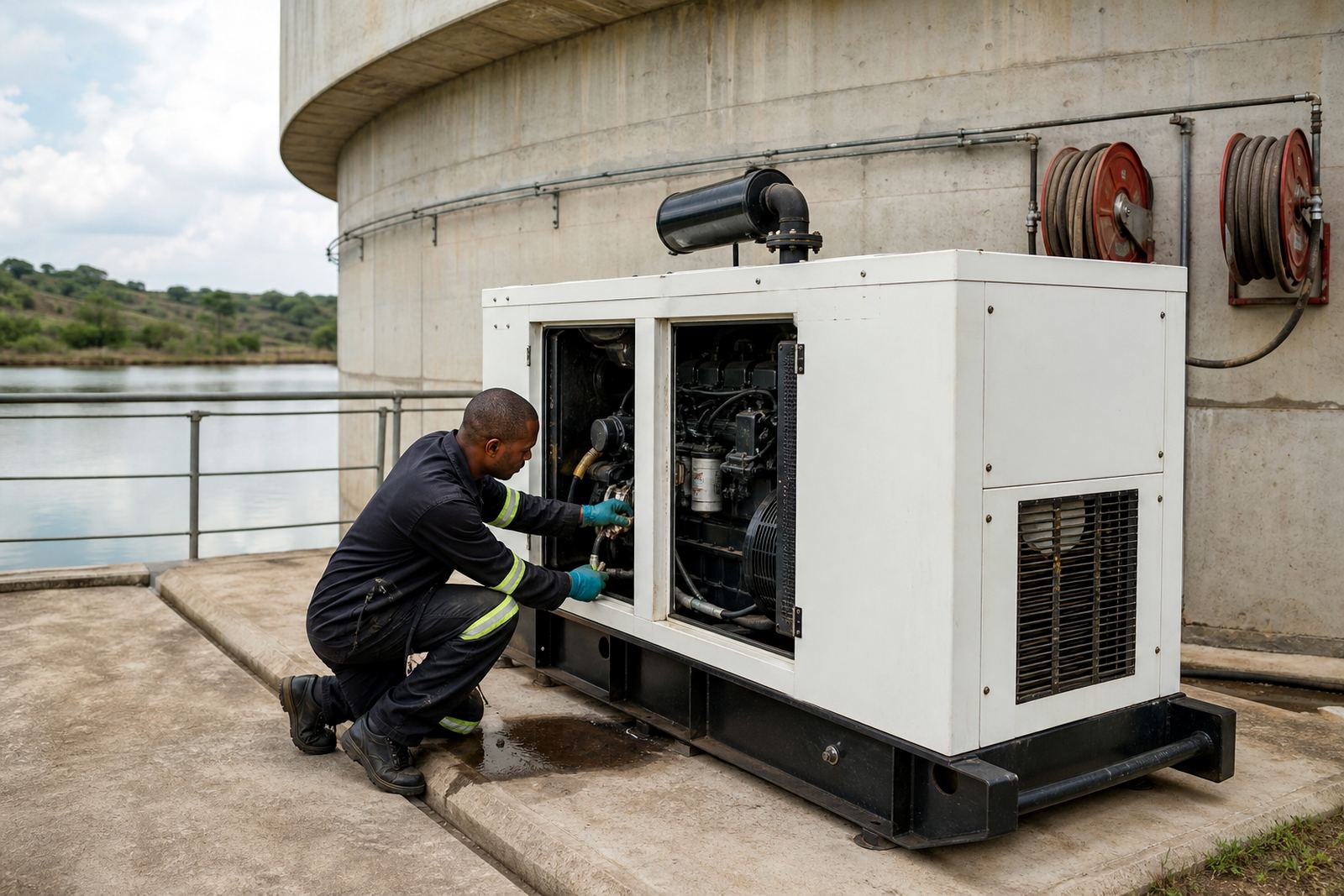
Water pump sites put a different strain on a generator than a typical office or retail backup set. Starts can be frequent, loads can swing sharply, and if a site is tied into municipal supply, reservoirs or irrigation, there is often no room for drift in voltage, frequency or starting response.
We work with pump stations, borehole installations, booster systems and water transfer sites where the generator is part of the daily operating rhythm. That includes utility sites and private developments in Johannesburg, Pretoria, Durban, Cape Town, Polokwane, Centurion and Sandton. On these sites, a missed service can show up fast as nuisance trips, slow starts, battery failure or overheating under repeated demand.
Typical equipment on a water movement site
A pump site generator package usually includes the set itself, a controller, batteries, a fuel system, changeover switching, cabling, cooling components and sometimes remote alarms linked to the site control room. The load profile is often dictated by pump motor starting, which means the generator must be able to handle the inrush without falling over.
- Standby or prime generator set sized for motor starting duty
- Automatic or manual changeover switchgear
- Battery bank and charger
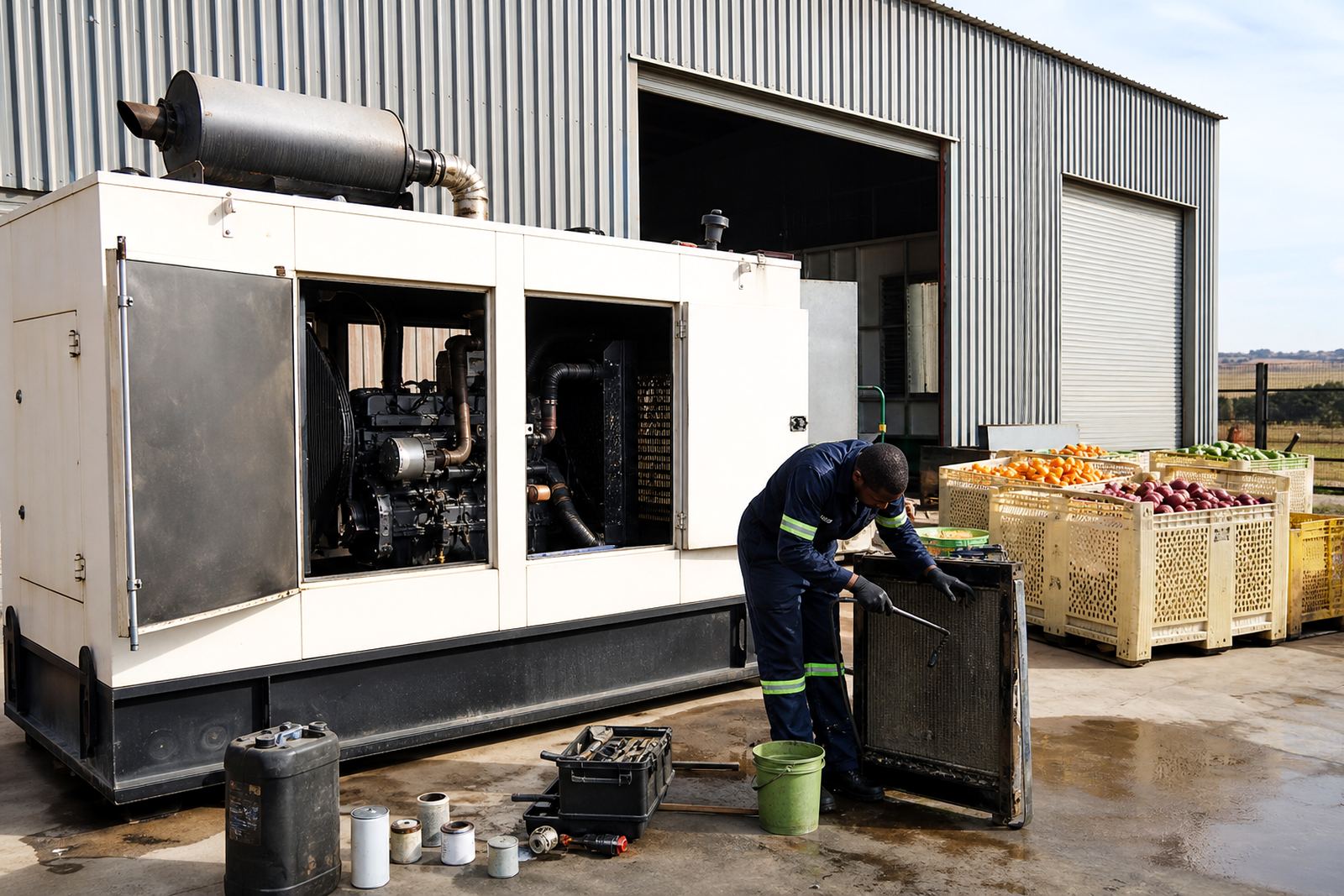
- Radiator and coolant circuit
- Fuel tank, lines and filters
- Local isolators, protection and control wiring
- Load bank access for testing where site conditions allow
All electrical work must be handled by qualified people in line with local regulations. On a water site, that matters because a small wiring fault can take out an entire pump run, or create a safety risk for staff working near wet areas.
Planning around pump starts, site access and wet conditions
Good servicing is not only about the machine, it is also about how the site is laid out. Many water sites are outside the main industrial areas, with rough access roads, dust, humidity or standing water near the plant room. On coastal sites such as Durban and Cape Town, corrosion and moisture need more attention. In Gauteng, heat, dust and load-shedding related run hours can increase wear on batteries and filters.
When we plan a maintenance contract, we look at how often the set runs, whether it supports one pump or a bank of pumps, how the changeover operates and whether the site has enough clear space for servicing. A generator squeezed into a tight plant room is harder to inspect, harder to cool and slower to repair. That is where small layout changes can save a lot of downtime.
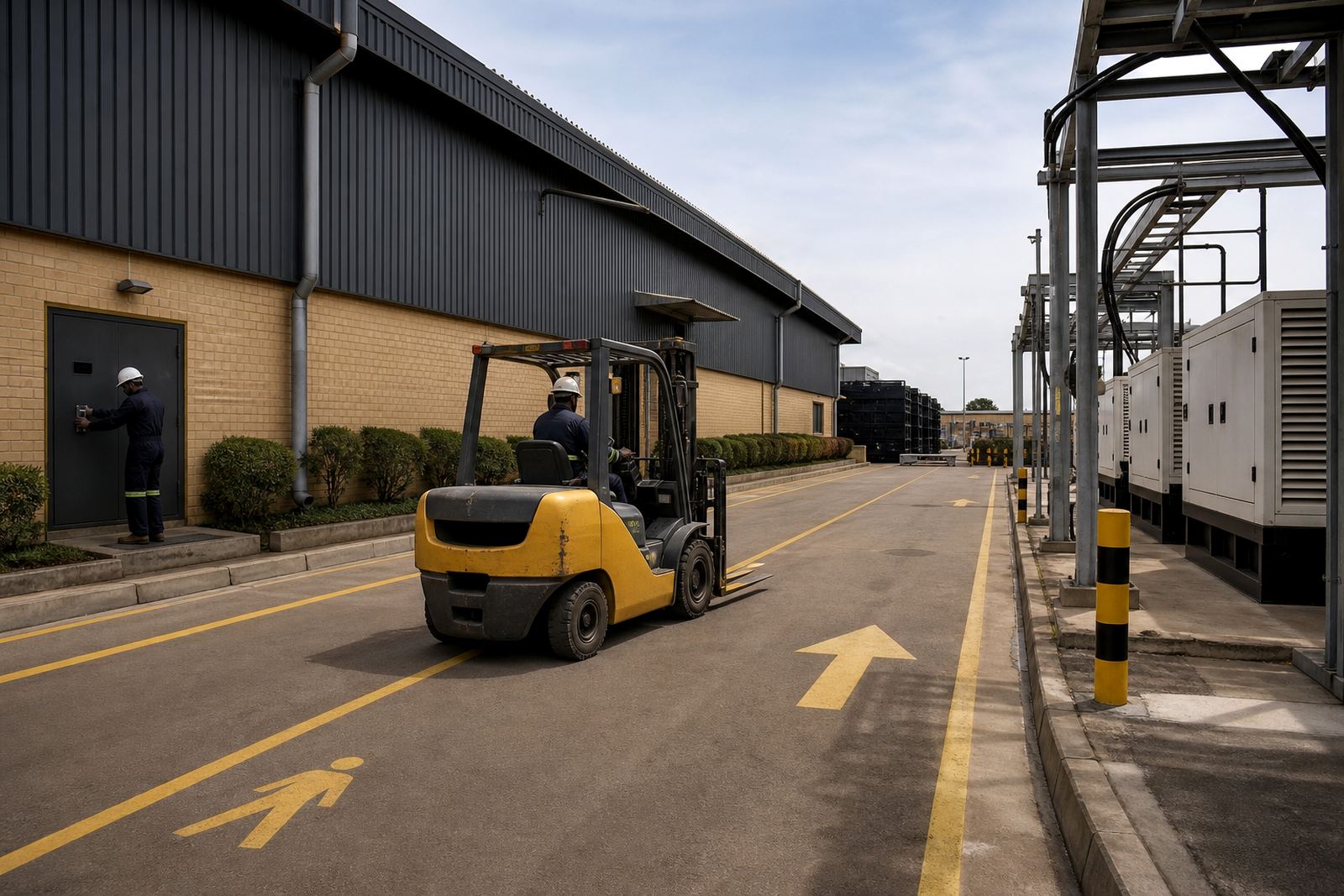
- Keep the set accessible for oil changes, filter replacement and cooling checks
- Allow space around louvers and radiator discharge
- Protect cable entries from water ingress and vibration
- Make sure battery access is safe, dry and well lit
- Separate fuel handling from traffic routes and standing water
What we check on scheduled visits
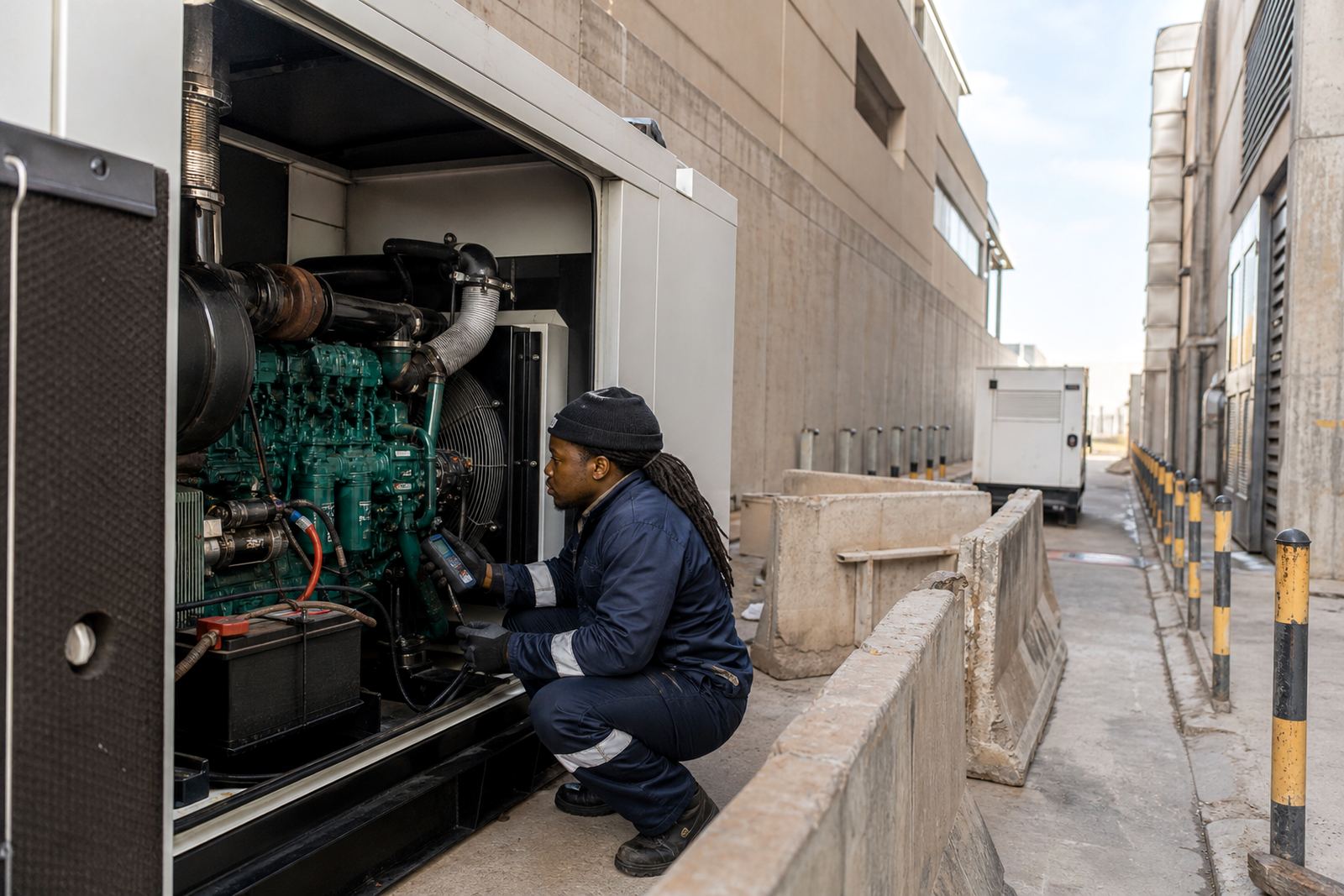
Scheduled servicing on water pump sites is built around reliability. We inspect oil condition, replace filters where due, check coolant levels and hoses, test batteries, confirm starter operation and verify that the changeover switches correctly between normal supply and generator supply. We also look at alarms, control functions and the general condition of the fuel system.
Load bank testing is useful where the site load is light for long periods or where a generator spends much of its life idling. It helps confirm that the set can carry real demand, not just start and sit there. On pump sites, that test can reveal weak cooling, fuel restriction or a battery problem before the first hard demand after a storm or outage.
Service record audits are often overlooked. Missing pages, skipped intervals and old fault notes can hide a pattern. If the same starter issue keeps returning, or if coolant top-ups are too frequent, it usually means something needs proper attention rather than another quick patch.
Common mistakes we see on water sites
Many pump site problems are preventable. A generator may be correctly sized on paper but still struggle because the pump starting load was not properly considered. In other cases, the set is serviced only when there is a fault, which usually means the fault has already caused a stoppage or an emergency callout.
Another common issue is poor fuel management. Dirty fuel, water in the tank or blocked filters can stop a set at the worst possible moment. Starter faults also get missed. A weak battery can seem fine during a quick check, then fail on a cold morning or after a long standstill.
- Undersized generator for motor starting duty
- Skipped oil and filter changes
- Corroded battery terminals and tired batteries
- Blocked cooling paths in dusty or humid conditions
- Loose changeover connections or worn switch contacts
- No planned checks after heavy rain, storms or extended outages
Budget ranges that make sense in Rand
Costs depend on the generator size, site access, run hours, callout distance and how much corrective work is needed. For water pump sites, the budget should cover both routine care and the reality of emergency attendance when a pump station is under pressure.
As a working guide, scheduled servicing for smaller site sets may sit from about R3,500 to R8,500 per visit, while larger or more heavily used sets can run from R9,000 to R22,000 or more, depending on parts and labour. Load bank testing, fuel system repairs, starter system work and changeover switch checks are usually quoted separately after inspection. Emergency callouts are priced on the fault, the distance and the time on site.
For multi-site contracts across Midrand, Johannesburg, Pretoria, Durban, Cape Town and Polokwane, a fixed maintenance plan often works better than ad hoc repairs. It gives the site a clear service rhythm, easier budgeting and fewer surprises when the pumps need power.