Where farm power usually starts to wobble
On farms and in packhouses, generator trouble often starts small. A blocked air filter, old oil, weak batteries or a coolant leak can sit unnoticed until a storm, a utility interruption or a long sorting shift puts the set under load. Dust from roads, grain, fruit bins and chemical stores gets into filters and terminals, while vibration from uneven ground works loose connections and brackets.
We see the same pattern in cold rooms, irrigation rooms, grader sheds and pump areas. The unit may still start, but it is slower, louder, hotter or smokier than it should be. That is where scheduled servicing helps, because a service contract catches wear before it becomes an outage during packing or pumping. In this environment, waiting for a fault is often the expensive option.
The equipment that keeps a packing line alive
A farm site can carry a mixed set of equipment, and each part needs its own attention. The generator itself is only one piece. Changeover switches, starter systems, battery banks, fuel lines, controls and ventilation all affect whether power comes on cleanly and stays on.
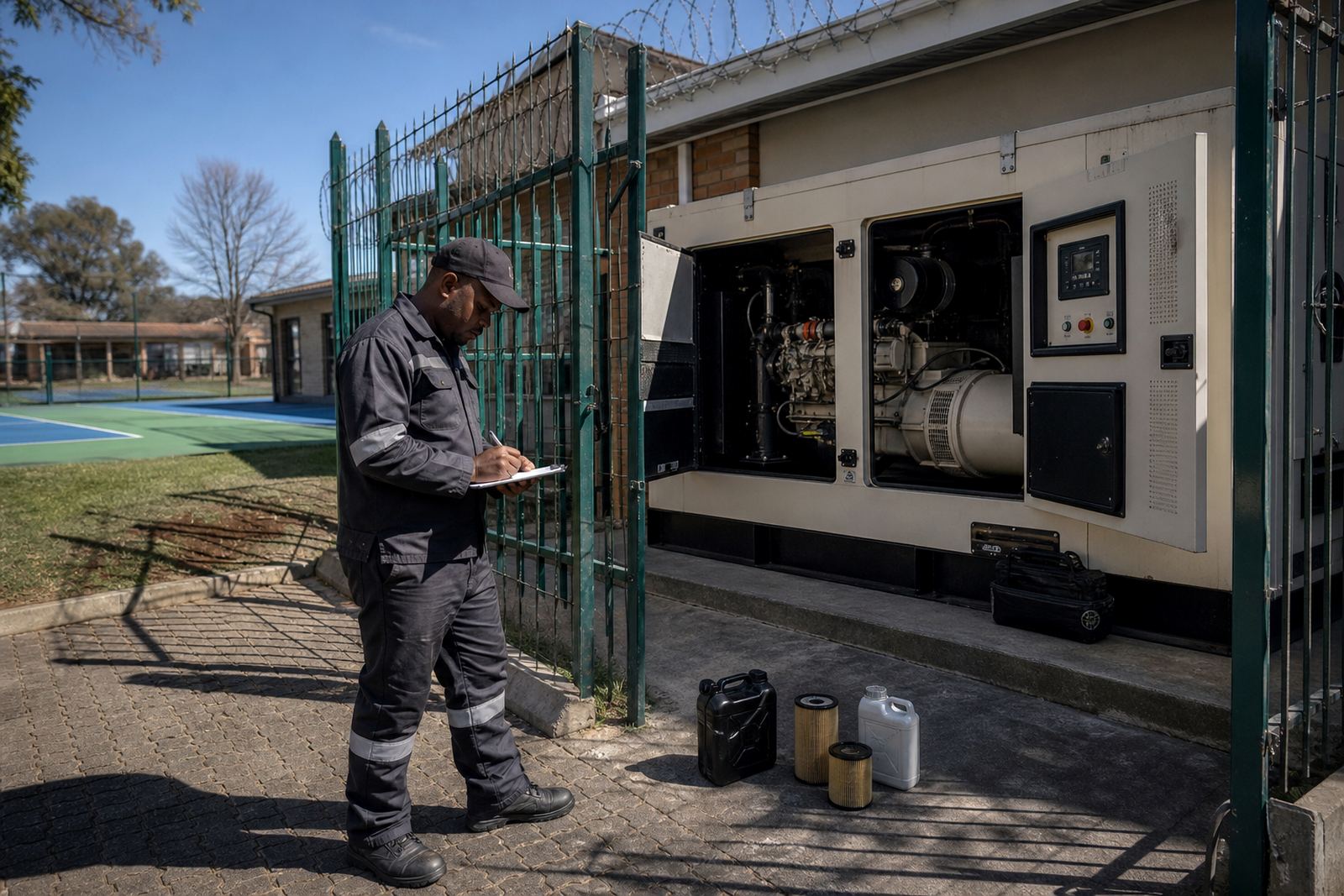
- Oil and filter changes for dusty operating conditions
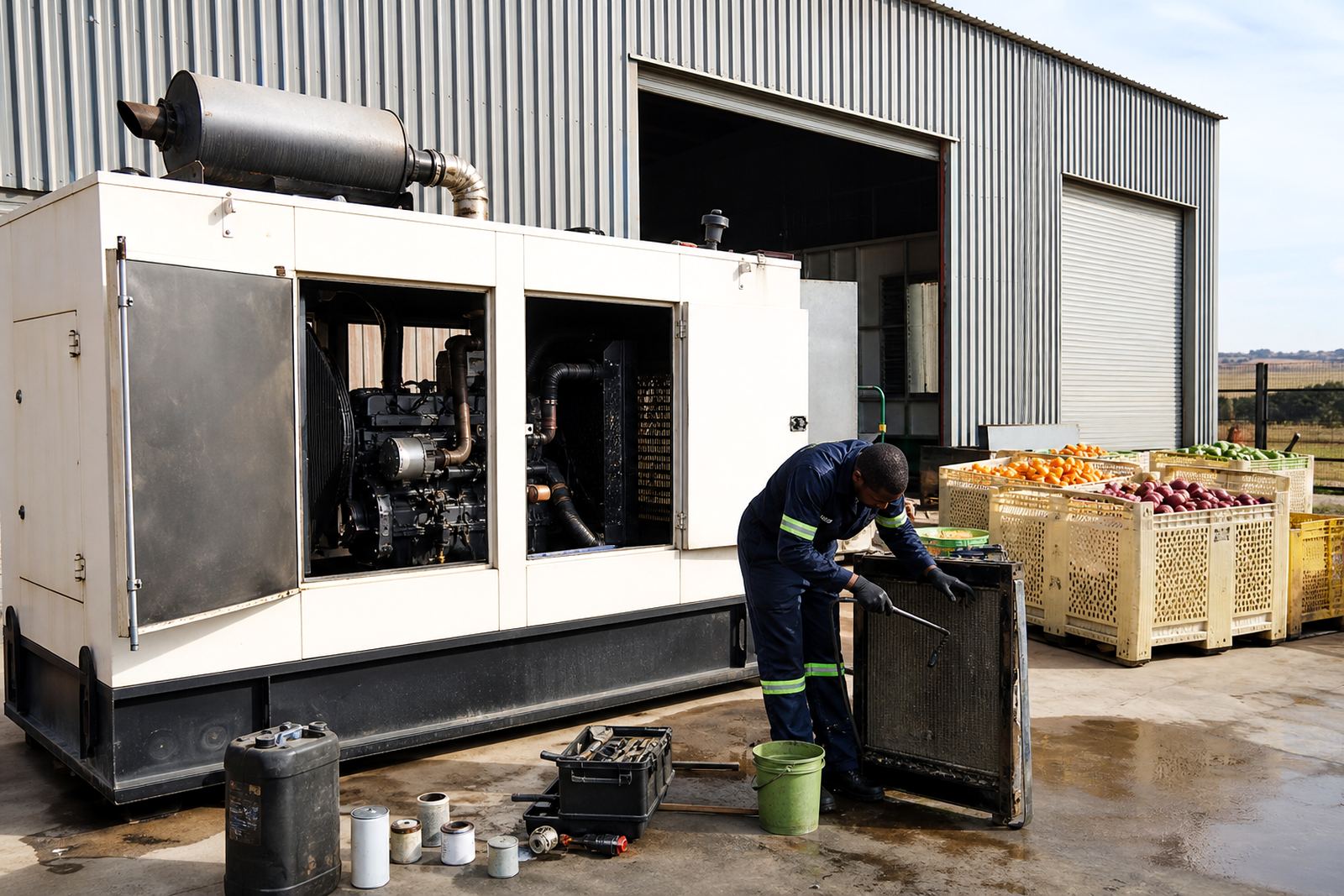
- Coolant checks for units working through hot afternoons and long shifts
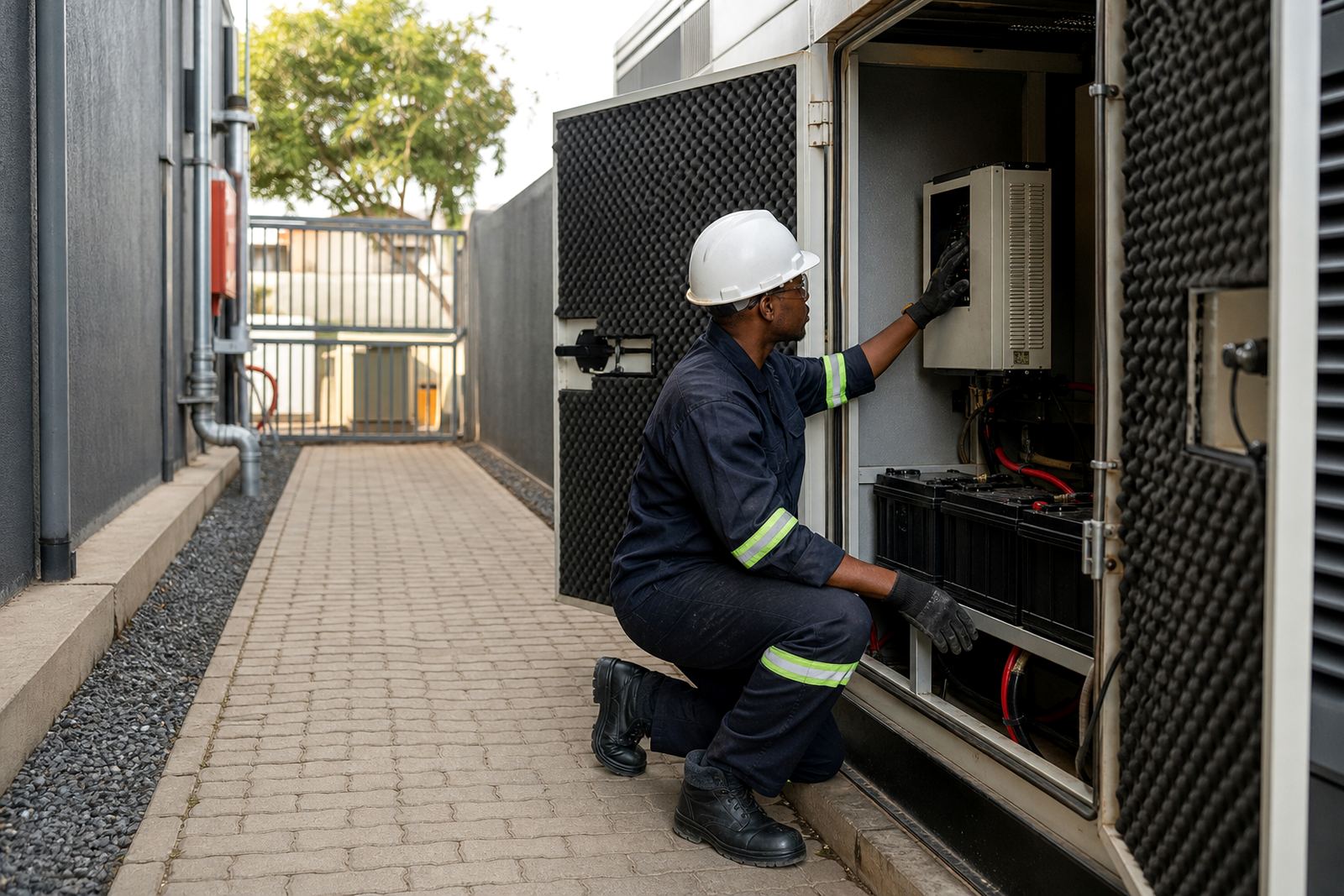
- Battery testing for sets that may sit idle then need to start instantly
- Load bank testing to confirm the machine can carry real load, not just idle in the yard
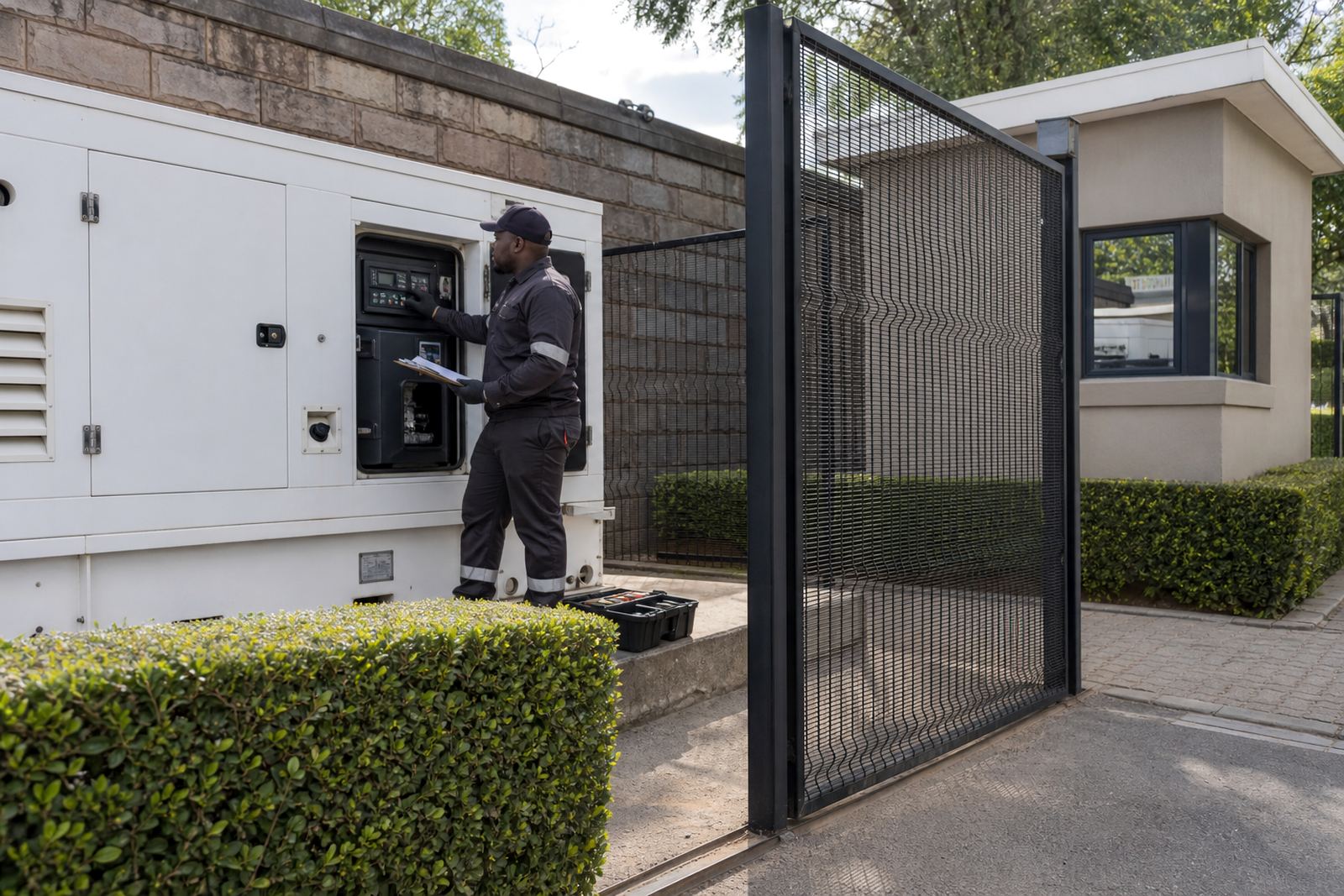
- Changeover switch checks so the transfer between utility and generator is safe and orderly
- Fuel system repairs, starter system repairs and fault finding when starting becomes unreliable
Electrical work must always be carried out by qualified people under the applicable local regulations, especially where changeover gear and controls are involved. That is not a box-ticking point, it is what keeps people safe and the site legal.
How to lay out a generator area on a working farm
A good generator area is not only about placing the set under cover. The layout has to deal with dust, access for service vehicles, ventilation, safe fuel handling and enough space for a technician to open panels and change parts. In a packhouse, that also means planning around forklift paths, washing areas and where workers move in and out during peak season.
RelGen usually advises on simple site matters that save time later. Keep the unit on level ground, out of standing water and away from loose chaff or packaging waste. Leave clear access to the radiator, filters and battery compartment. If the set is near a store room or pump room, make sure the ventilation path is not blocked by crates, shade cloth or stored fertiliser. On coastal farms the salt air adds another layer, so terminals and fasteners need closer attention.
- Allow service access on at least one full side of the unit
- Keep fuel storage neat and clearly marked
- Protect cable routes from tractors, forklifts and foot traffic
- Check that exhaust discharge will not blow into work areas or drying rooms
- Plan for safe after-hours access during harvest or load-shedding events
What packhouse managers often miss before peak season
The common mistake is to only test the generator when the season is already under pressure. By then, a weak battery or dirty filter becomes a production delay, and sometimes a cold room or grading line has to stop while the fault is traced. Another mistake is assuming the set is fine because it started last time. A machine can start and still fail under load, which is why load bank testing matters.
We also see sites where service records are incomplete or spread across old logbooks, so no one knows when oil was last changed or whether the switch gear was checked after the last fault. A proper service record audit gives the site a clear history. It also helps if you are managing more than one facility, such as a main packhouse in Midrand and satellite sites in Pretoria or Polokwane. Small admin gaps can lead to repeated maintainence issues and unnecessary callouts.
Budget bands that make sense for agricultural sites
Costs depend on generator size, access, how dirty the site is and whether the work is routine or a fault response. For farms and packhouses, a basic scheduled service on a smaller standby unit may sit in the low thousands of Rand, while larger prime sets, multi-unit sites or emergency callouts can move into higher budgets quickly. If there is load bank testing, switch checks or fuel system repair, the total rises with labour, equipment and travel.
A practical way to budget is to separate planned maintenance from breakdown work. Planned servicing is usually easier to control, and it helps avoid the sharp costs that come with spoiled fruit, interrupted cooling or a stopped pump station. For a busy agricultural operation, a maintenance contract is often cheaper over the season than repeated emergency callouts, especially when the site is spread out or the generator room is hard to reach.
- Smaller routine service visits: budget a few thousand Rand each time
- More complex multi-point servicing or switch checks: budget higher, depending on access and parts
- Emergency fault finding and repairs: allow extra for after-hours response and replacement components
- Load bank testing: set aside a dedicated testing budget, especially on prime-use sites
The contract rhythm that suits harvest pressure
Farm operations do not run on office hours. Irrigation, cooling, sorting and loading can all change by the week, especially in harvest periods. That is why service plans need to match the site rhythm rather than a generic once-off visit. RelGen sets up scheduled servicing, preventive inspections and emergency callouts around how the operation actually runs, whether the base is in Johannesburg, Centurion, Sandton, Durban, Cape Town, Pretoria or Polokwane.
Our team in Midrand works with farms and packhouses that want one accountable maintenance path for standby and prime generators on contract. That can include oil and filter changes, coolant system service, battery testing, changeover switch checks, fault finding and service record audits. When a site has a few moving parts and a short window to keep product moving, the service plan has to be practical, not fancy.
For farms, the real test is not whether the generator looks ready. It is whether it starts cleanly, carries the load and keeps going when the day runs long and the weather turns. That is the job.