When a clinic cannot wait for the lights to flicker
Healthcare facilities need more than a generator sitting in the yard. The set must start cleanly, carry the load it was built for and hand over through the changeover switch without upsetting sensitive equipment. In a small practice that may mean lights, fridges, sterilising gear and computers. In a larger care facility it can also include oxygen support rooms, laundry equipment and pump rooms that must stay online during load shedding or a local fault.
RelGen services standby and prime generators for clinics and care facilities across Midrand, Johannesburg, Pretoria, Durban, Cape Town, Polokwane, Centurion and Sandton. Our maintenance contracts are planned for businesses that need predictable visits, clear records and fast fault response. The team is led from Midrand by Thabo Engelbrecht, with support from Naledi Shezi, Johan Matlala, Ayanda Khoza, Muneerah Daniels, Sibusiso Wessels and Rikus Botha.
- Scheduled servicing around visiting hours and shift changes
- Emergency callouts for non-start, alarms and low output
- Preventive inspections for battery, fuel and cooling issues
- Service record audits for facilities that need clean compliance files
What a medical backup set usually needs looked after
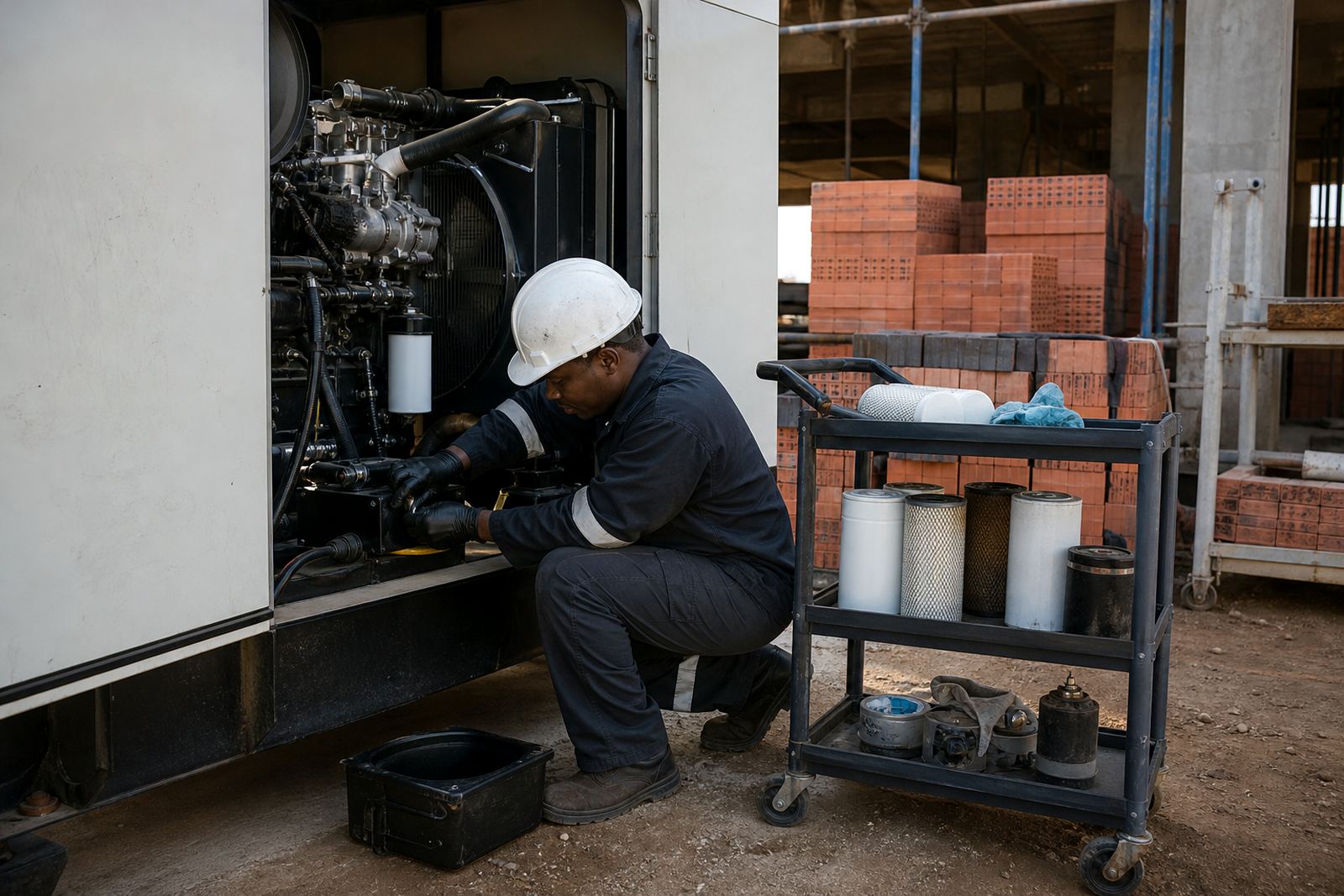
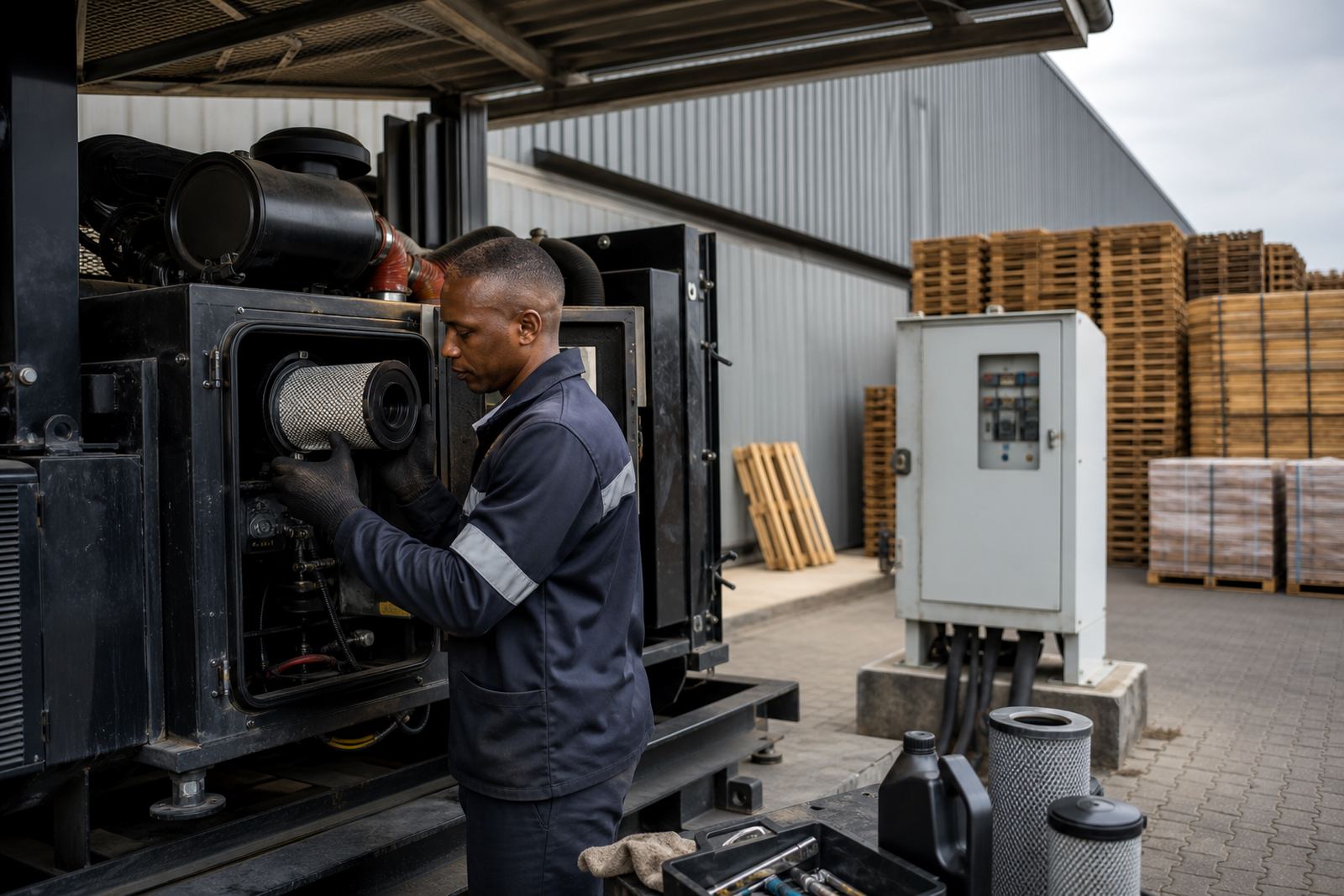
A healthcare site usually runs on a practical mix of equipment rather than one large machine. The generator itself is only part of the picture. Oil condition, filters, coolant levels, battery health, fuel quality, starter systems and the changeover arrangement all need attention if the set must start after weeks of sitting idle. On some sites we also find old isolators, loose terminations or a changeover switch that has not been tested under load in ages.
Electrical work must be done by qualified people working within local regulations. That matters in a medical environment where a hurried repair can create a bigger problem than the original fault. We work methodically, test after each service and note anything that needs follow-up so the facility manager has a proper trail.
- Oil and filter changes on service intervals suited to running hours
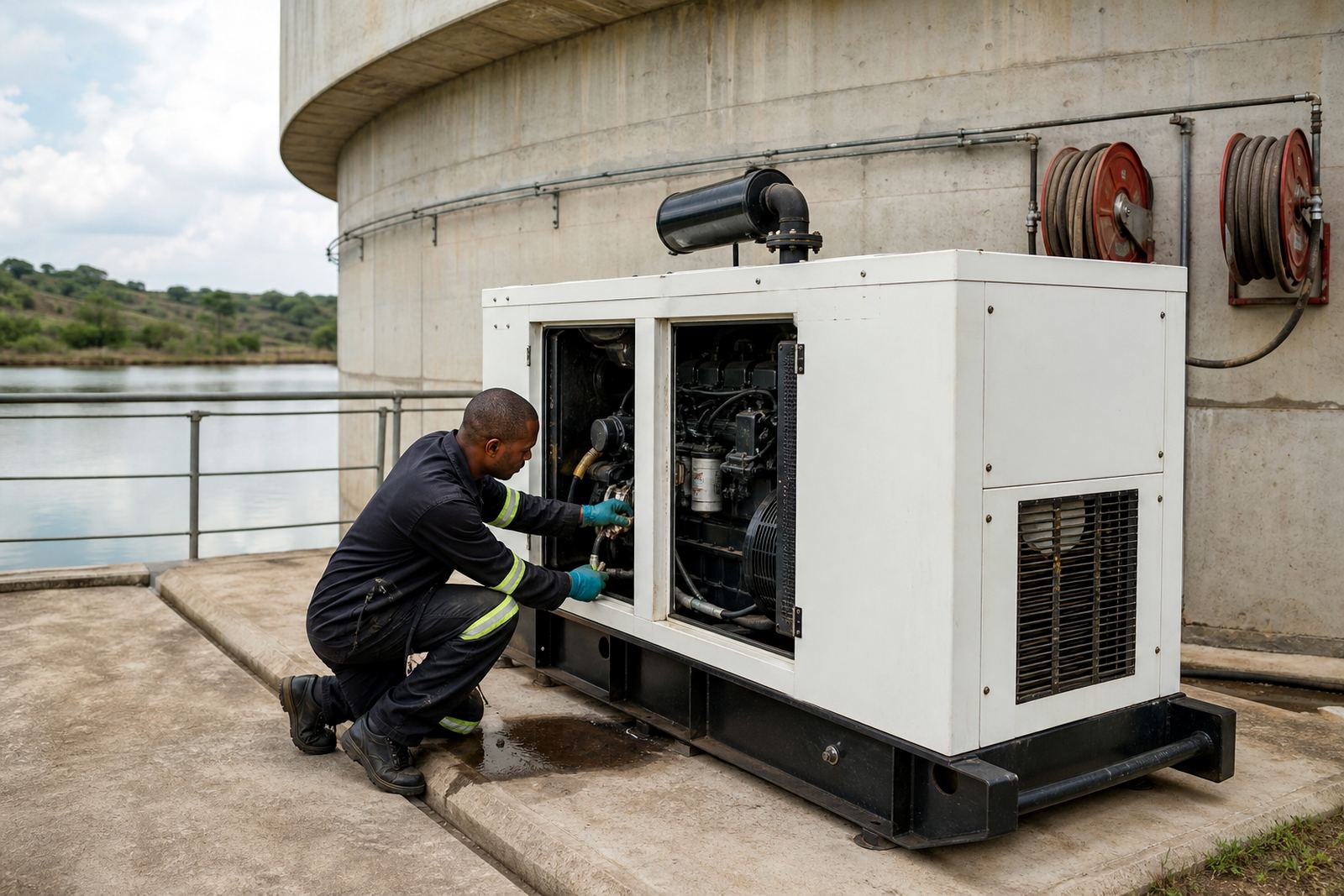
- Coolant system checks for leaks, hoses and overheating risk
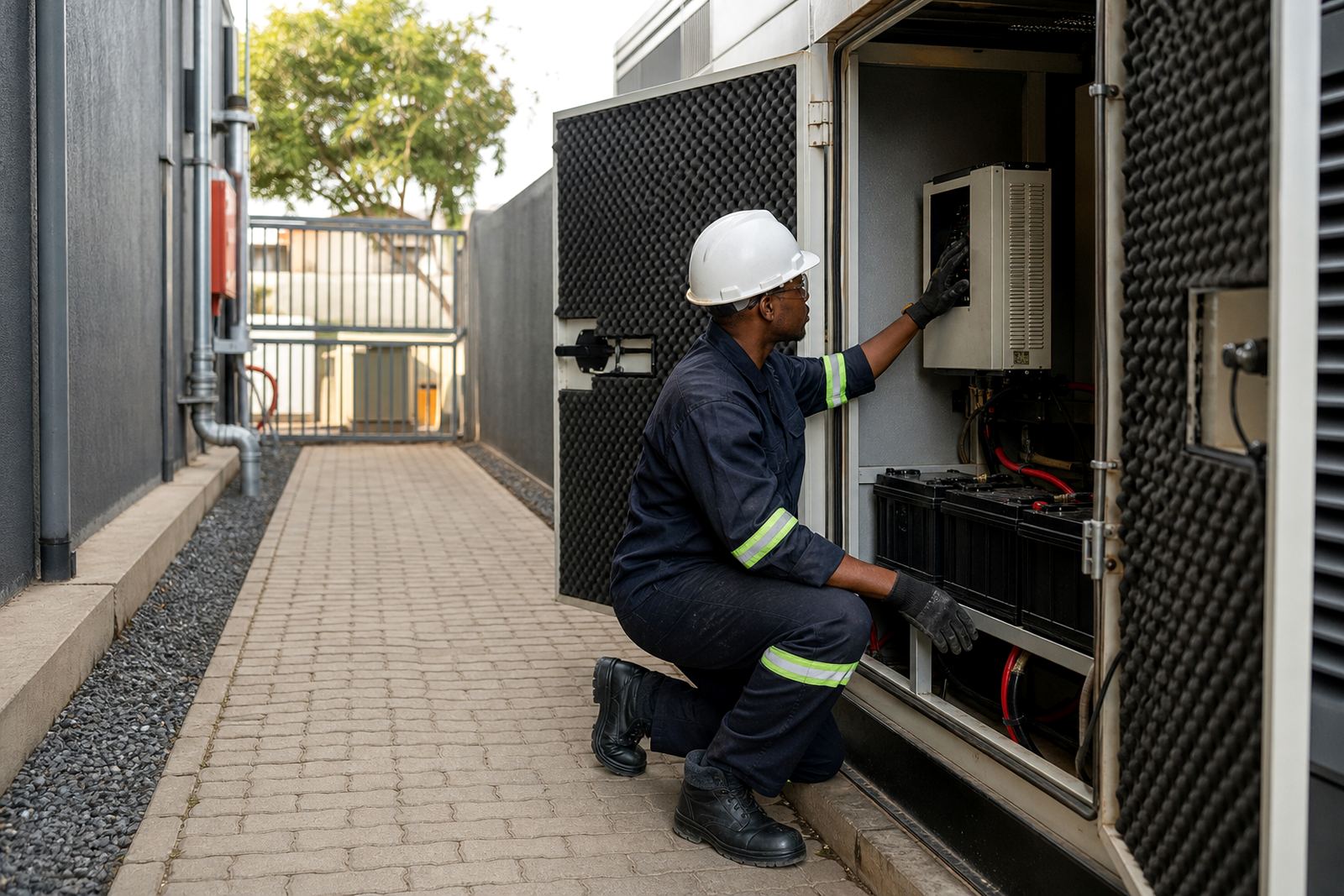
- Battery testing and charger checks before the unit is needed
- Load bank testing where a light actual load is not enough to prove performance
- Changeover switch checks to confirm transfer and return are reliable
Planning the plant room, yard and access route
In a clinic the generator is often tucked behind a wall, in a side yard or in a plant room with limited access. That layout makes servicing harder if nobody planned for filters, drain points, inspection space and safe manoeuvring. We recommend leaving enough room for a technician to open panels, replace consumables and inspect belts, hoses and cable terminations without moving half the facility around.
In coastal towns like Durban or Cape Town, humidity can accelerate corrosion and fuel contamination if the site is neglected. In Gauteng the bigger issue is often dust, heat and heavy stop-start use during outages. For healthcare facilities, it helps to keep the generator area dry, lit and locked, with a clear path for service teams and fuel deliveries where applicable.
- Allow working space around the set and the changeover gear
- Keep fuel, oil and cleaning materials stored in a controlled area
- Protect the unit from water, dust and unauthorised access
- Label isolation points and keep the service log where staff can find it
The mistakes we see most in care facilities
The most common problems are rarely dramatic. They are usually small oversights that add up until the unit refuses to start or carries the load badly. A battery left to age out. A fuel system with water contamination. Filters overdue. A generator that starts, but trips when the load steps up. In a healthcare setting those faults become urgent very quickly.
Another common mistake is treating the generator as an emergency-only asset. If the machine only runs during outages and nobody checks it in between, small faults stay hidden. Site inspections, service audits and planned testing are what keep surprises down. It also helps to train facility staff on the signs of trouble, such as unusual smoke, slow cranking, low battery voltage or a changeover switch that sounds rough when operated.
- Leaving batteries on borrowed time until a power cut exposes them
- Skipping load bank testing because the generator seems to start fine
- Ignoring fuel issues in sets that sit for long periods
- Not recording service dates, findings and repairs properly
- Running without checking the changeover switch under real conditions
How maintenance contracts are usually structured for clinics
For clinics and care facilities, maintenance works best when it is scheduled around the facility’s own rhythm. That can mean monthly checks for a heavily used site, or quarterly servicing for a smaller practice with lower run hours. RelGen prepares custom service plans that can include oil and filter changes, coolant system service, battery testing, fuel system repairs, starter system repairs and preventive site inspections.
Routine visits are useful because they catch wear before it turns into downtime. When a fault does appear, the same team that knows the site can respond faster and with the right parts on hand. That is especially useful where a generator supports refrigeration, records systems or patient care spaces that cannot sit without power for long.
We also review service records properly. If the paperwork is messy, it is often a sign that the site has not been watched closely enough. A clean log helps the facility manager plan replacements, budget for repairs and keep internal checks in order.
Budget ranges that make sense for healthcare sites
Budget depends on generator size, access, number of service points and how hard the unit works. A small practice with a modest standby set may only need a basic scheduled service package, while a larger care facility with multiple backup systems and more frequent testing will need a fuller contract. On healthcare sites the cost is usually best viewed as planned upkeep rather than an occasional repair bill.
As a general working guide, planned generator servicing for smaller medical sites can start from a few thousand Rand per visit, with more involved inspections, load bank testing and repair work increasing the total. Larger facilities, or sites needing after-hours attendance and more than one set, will sit higher. The important part is to compare the cost of servicing with the cost of spoiled medicines, interrupted procedures or a patient area losing backup power.
RelGen works from Midrand and supports healthcare clients across South Africa with the kind of steady maintenance that keeps the lights on when the grid drops out. No drama, just proper servicing and records that make sense.