When a warehouse outage starts costing pallet moves
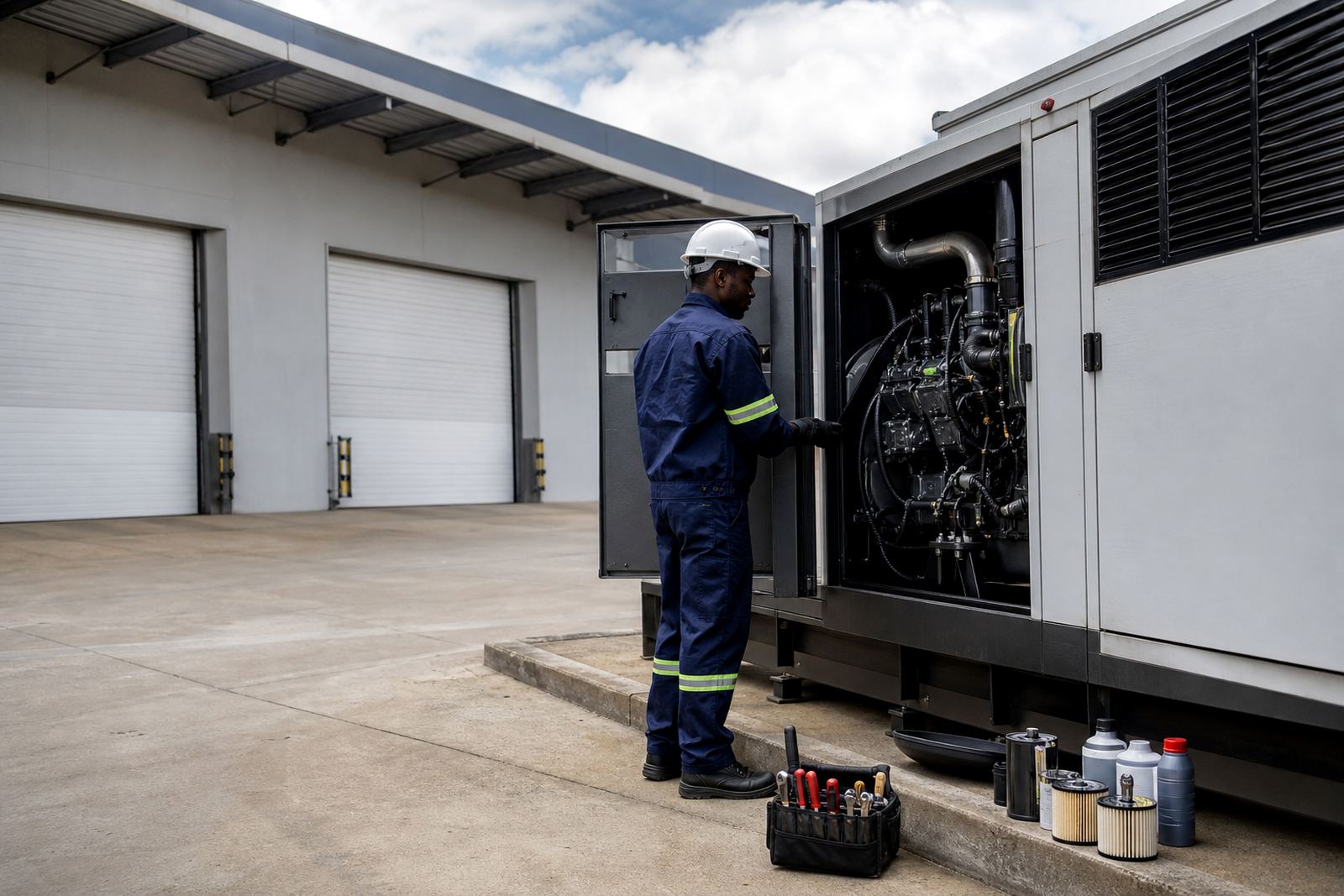
In a warehouse, a power cut is never just about the lights. It can stop receiving, packing, loading, CCTV coverage and the charging of forklifts or handheld scanners, while a warm room full of stock can quickly become a security risk. For sites in Midrand, Johannesburg, Pretoria, Durban, Cape Town and Polokwane, the generator has to start cleanly, take load without hesitation and keep running through load-shedding, storms or utility faults.
RelGen handles maintenance contracts for storage and dispatch environments where the generator protects essential operations rather than the whole building. That usually means keeping the emergency lighting, alarm panels, gate motors, access control, racking area lights and selected equipment circuits ready. Our work is practical and scheduled around shift patterns, receiving times and truck movements so the site is not blocked by service activity.
Thabo Engelbrecht leads the business, with Naledi Shezi, Johan Matlala, Ayanda Khoza, Muneerah Daniels, Sibusiso Wessels and Rikus Botha supporting day-to-day contract delivery from our Midrand base. The team plans servicing for busy warehouses that may be running split shifts, night loading or weekend dispatch. Good maintenance is not about a quick once-over, it is about keeping the generator ready when a bay door is open and stock is waiting.
The equipment set usually found behind the loading bay
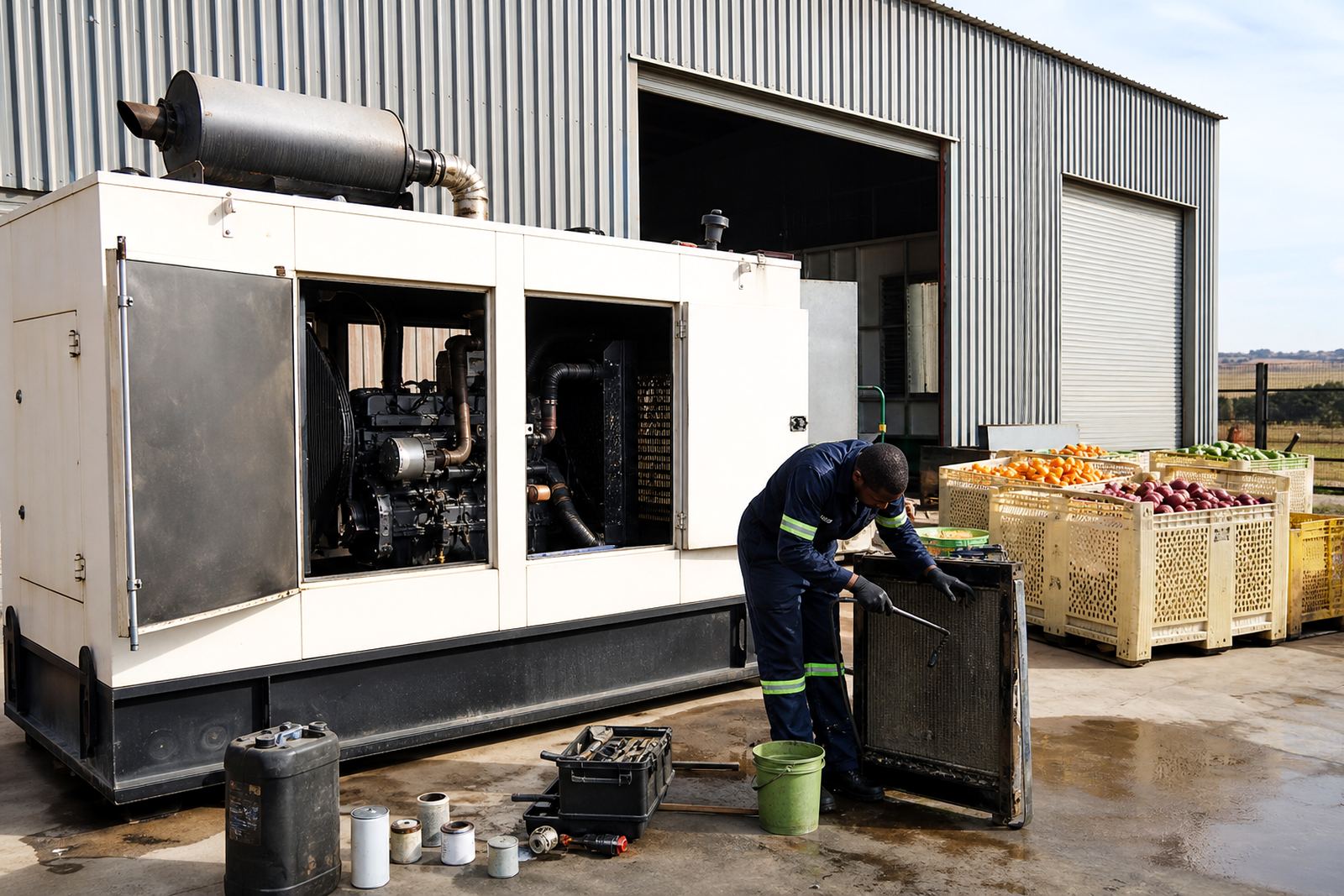
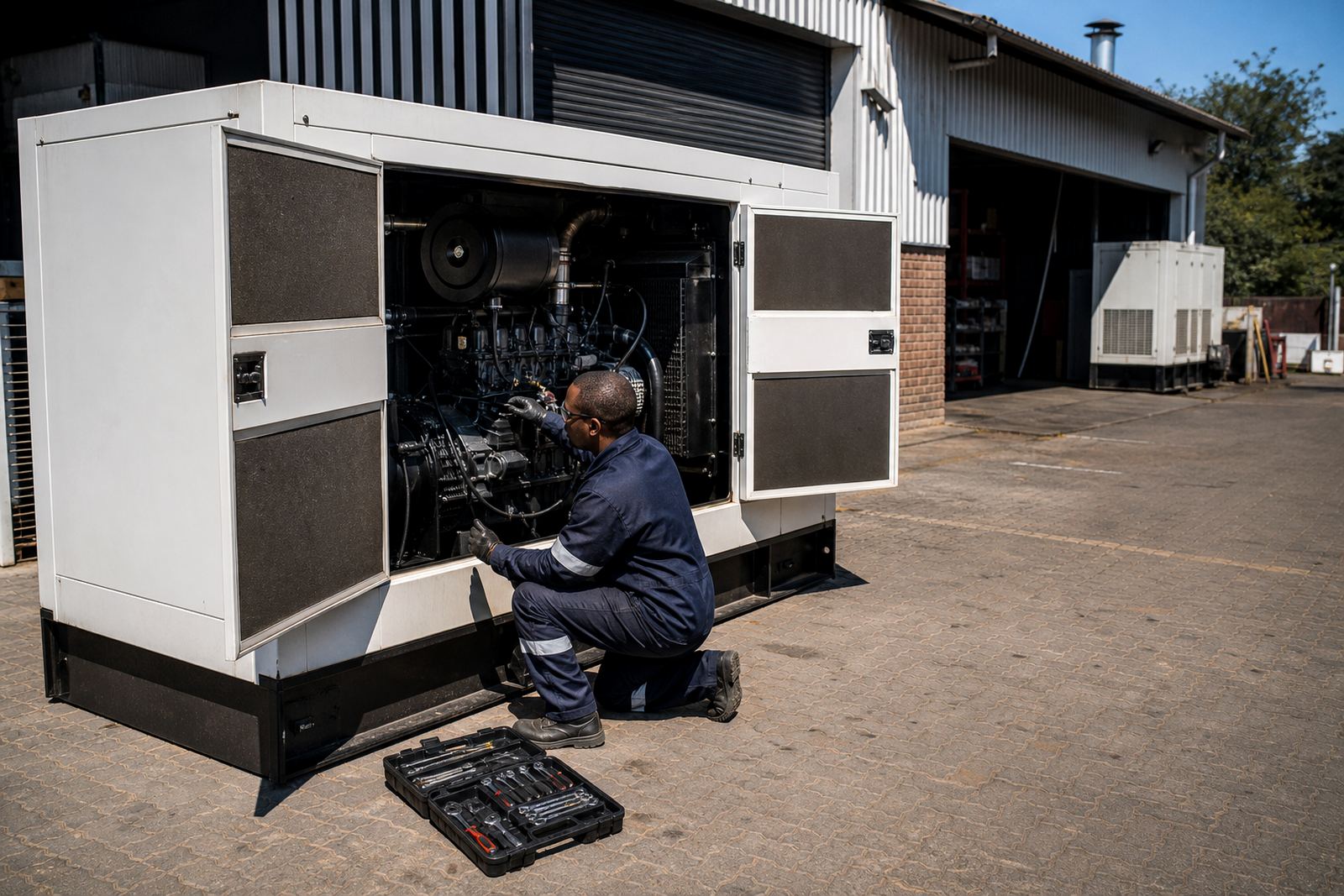
Warehouse generator systems are often straightforward but they depend on each part working properly. The set may include the generator itself, an automatic changeover switch, battery charger, fuel system, exhaust, control panel and separate circuits for lighting and security. Some sites also have load bank test points, remote alarms or a manual bypass arrangement for maintenance periods.
- Oil and filter changes at the right service interval
- Coolant checks and topping up with the correct mix
- Battery testing, terminals cleaned and voltage confirmed
- Load bank testing where a real connected load is not enough
- Changeover switch checks so transfer works when utility power fails
- Fuel system repairs if air leaks, blockages or contamination show up
- Starter system repairs where cranking becomes slow or unreliable
Warehouses near the coast, especially around Durban and Cape Town, often need closer attention because humidity and salt air can attack terminals, enclosures and exhaust parts. Inland sites in Gauteng can have dust issues from yard traffic and bulk handling, while Polokwane sites may see hot conditions that put extra strain on cooling. The maintenance plan should match the site, not a generic checklist copied across every depot.
How to lay out a service plan without blocking the floor
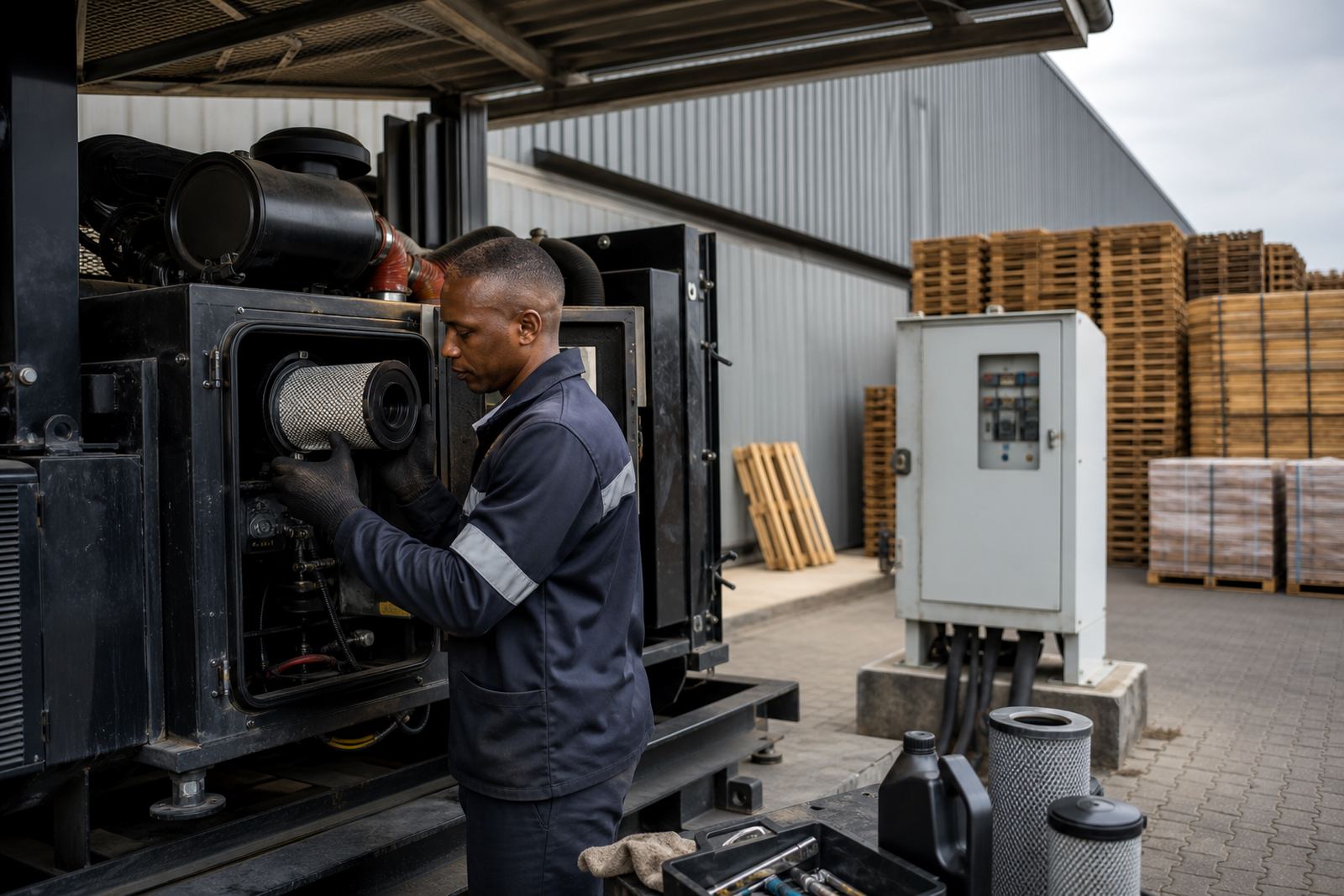
Most warehouses work better when generator access is separated from daily vehicle movement. If the set sits near loading bays or fire exits, there must still be enough space for safe inspection, filter changes and testing. Keep the area clear of pallets, shrink-wrap, cartons and loose packaging. A generator hidden behind stock tends to get neglected, and that usually shows up when the first fault arrives.
It helps to map the critical loads in advance. Not every socket or machine must be on backup, but lighting over storage aisles, perimeter security, alarm panels and the office network for dispatch often need priority. Qualified electrical people must handle changeover work and any alterations to the installation under local regulations. That is not a place for guesswork, especially where a warehouse uses multiple boards, extensions or separate tenant areas.
For bigger sites, preventive site inspections should also include the fuel storage setup, the condition of cable runs and whether the starting batteries are charging properly between runs. A generator that starts during testing but fails after a week of idling is no use to a dispatch team waiting on a truck at 5am. Good planning keeps the site ready without creating a safety risk.
Mistakes that leave stock under torch light
One common mistake is treating the generator as if it only needs attention when it fails. Warehouses tend to run busy schedules and when maintenance is skipped, the first problem may be old oil, clogged filters, flat batteries or a stuck changeover switch. Another mistake is testing under no-load conditions and assuming that proves the set can carry the real warehouse demand.
- Allowing dust build-up around vents and control panels
- Using the generator for long periods without checking fuel quality
- Ignoring coolant condition until overheating starts
- Leaving batteries untested during long shutdown periods
- Letting unqualified staff interfere with changeover wiring
- Skipping service record audits, then losing track of faults and intervals
Service record audits are especially useful for storage and dispatch sites with multiple shifts or seperate teams using the same equipment. They show what was done, what parts were replaced and what still needs attention. If a site has a history of starter faults, low battery voltage or dirty fuel, that pattern should be visible before the next outage catches everyone off guard.
What a warehouse maintenance contract usually includes
A sensible maintenance contract for a warehouse should cover scheduled servicing, emergency callouts and preventive inspections. It should also spell out what gets checked each visit, how often the generator is loaded for testing and how faults are reported. For some sites, monthly servicing is enough; for high-traffic depots with cold rooms, security systems or long operating hours, the contract may need tighter intervals.
RelGen offers support for standby and prime generators serving warehouses across Johannesburg, Pretoria, Durban, Cape Town, Polokwane, Centurion and Sandton. The aim is to keep the site operational through planned maintenance rather than repeated breakdowns. Our team works with building managers, warehouse supervisors and operations staff to fit service windows around deliveries and shift handovers.
Budget depends on generator size, access, testing requirements and the condition of the installation. As a working range, smaller warehouse maintenance contracts may start from about R3 500 to R8 000 per visit, while larger sites with load bank testing, fuel repairs or more frequent callouts can move into the R12 000 to R35 000 range or more depending on scope. Emergency repairs are quoted after fault finding because the cause, parts and time on site can vary widely.
When the site needs help before the next truck arrives
Warehouse power systems should never be left to chance, because the next outage does not wait for a convenient moment. If the lights are flickering, the batteries are ageing, the changeover switch feels unreliable or the set has not been tested under load recently, the safest move is to arrange a proper inspection. That inspection can confirm whether the generator is ready for dispatch bays, security loads and critical office systems.
RelGen supports warehouse clients across Midrand and the main logistics corridors in Gauteng and beyond. We service the equipment, record what was done and keep the maintenance plan tied to real site conditions, not wishful thinking. A warehouse with a dependable backup system stays calmer, safer and far easier to run when the grid gives trouble.