Public sites need power that starts cleanly after a long idle
At municipal buildings the generator often sits for weeks, then has to carry lighting, server racks, gate motors, pumps or small office loads the moment there is an outage. That kind of duty is hard on oil, batteries and fuel systems, especially where units stand outdoors, near dust, diesel vapour and coastal humidity in places like Durban or Cape Town.
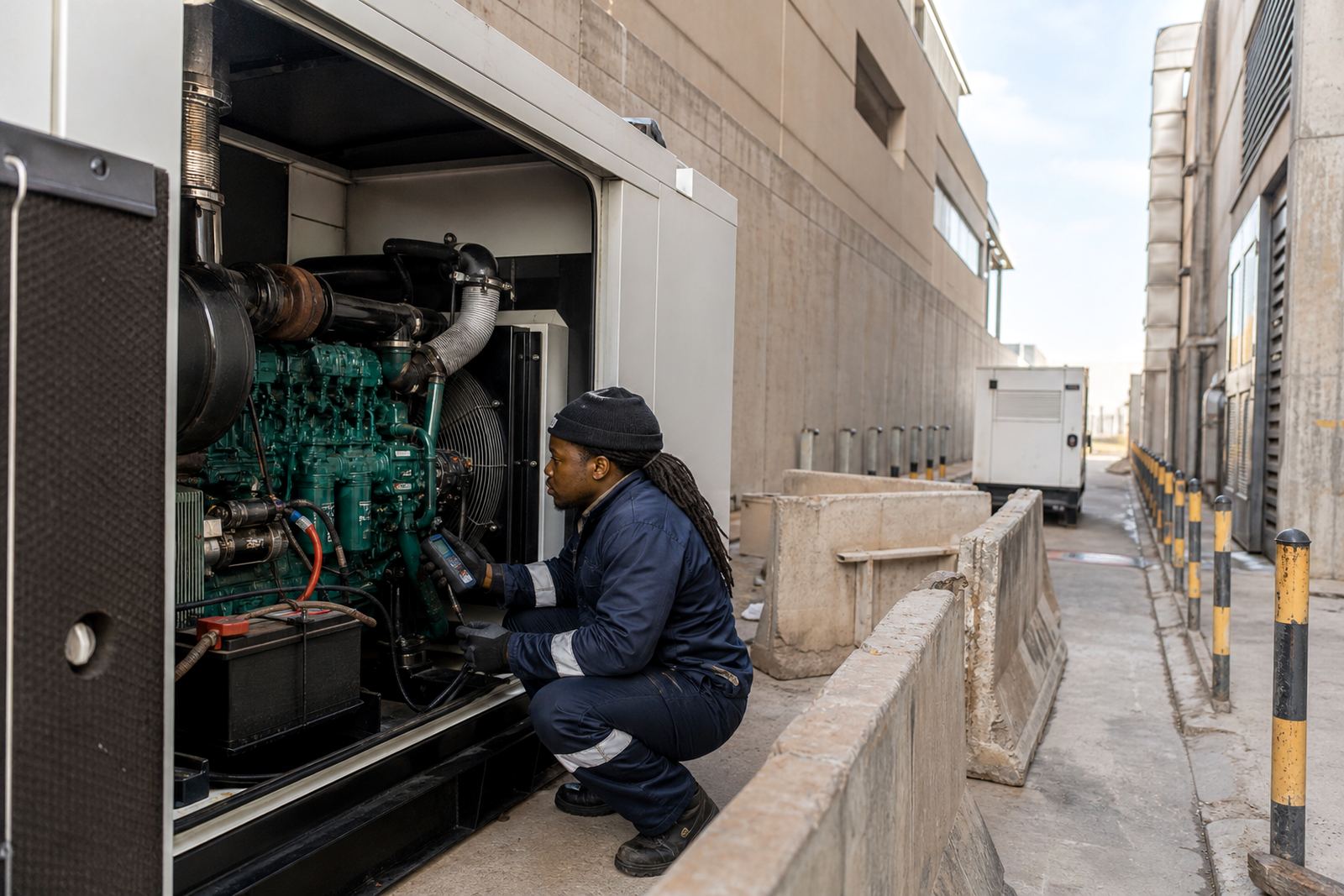
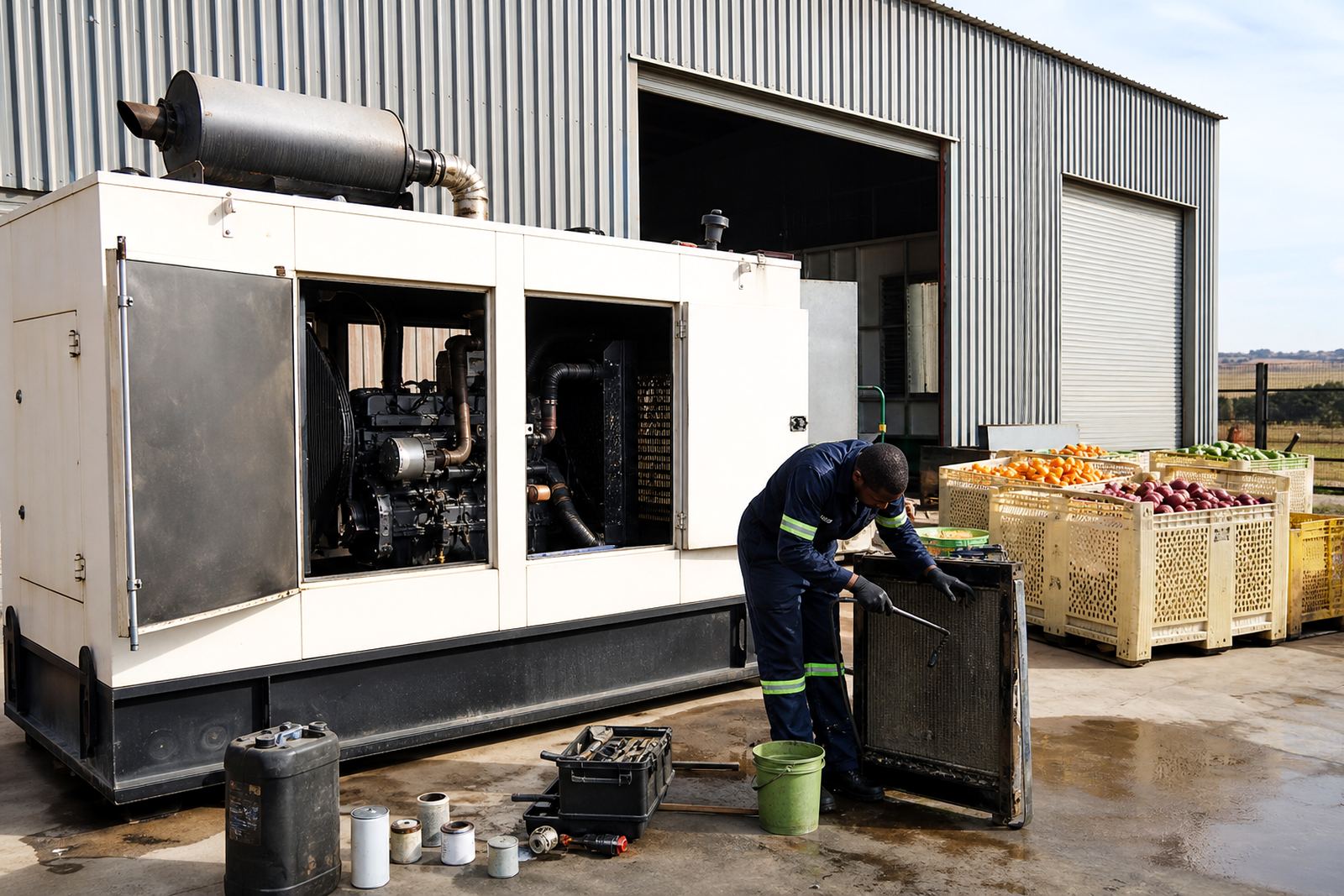
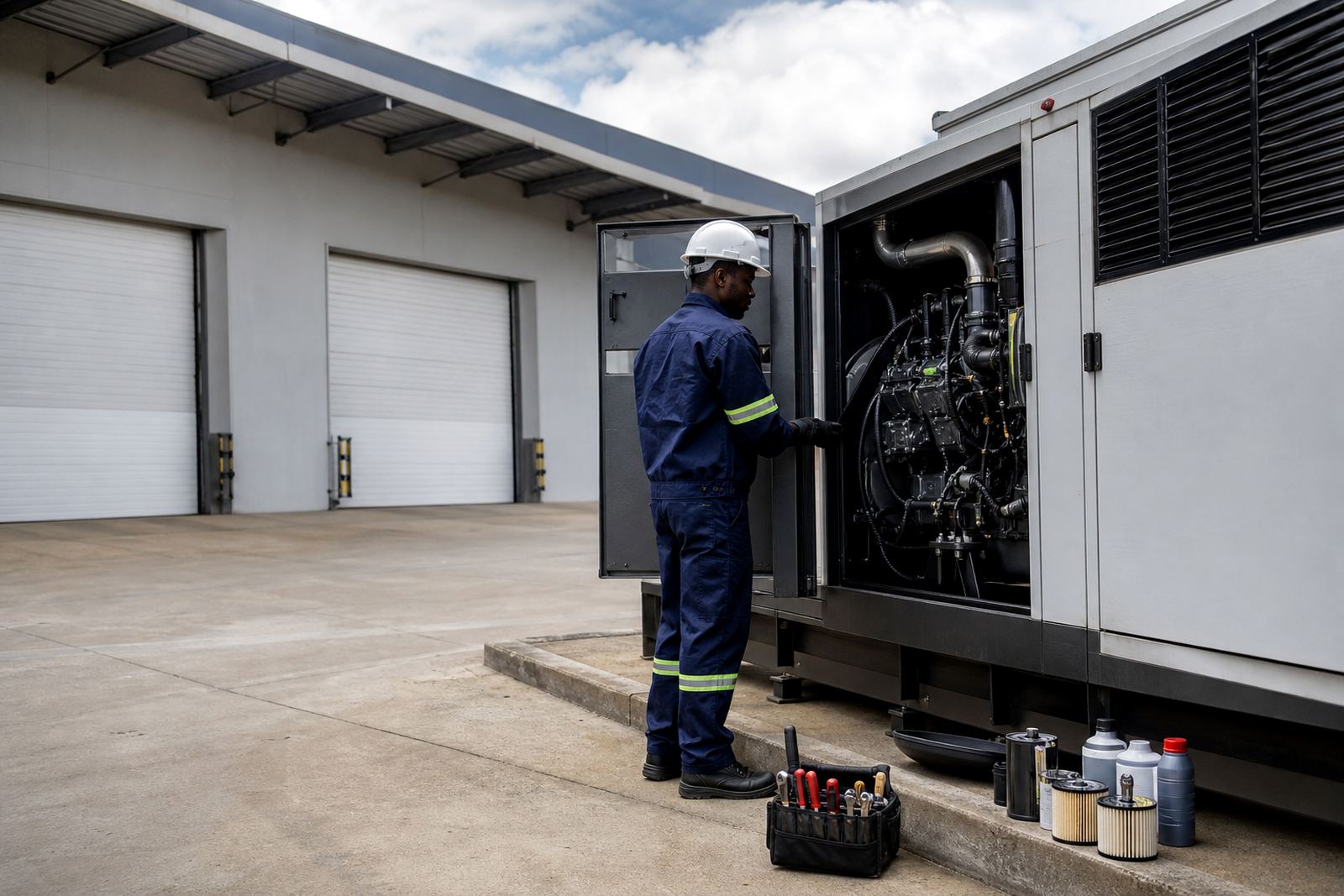
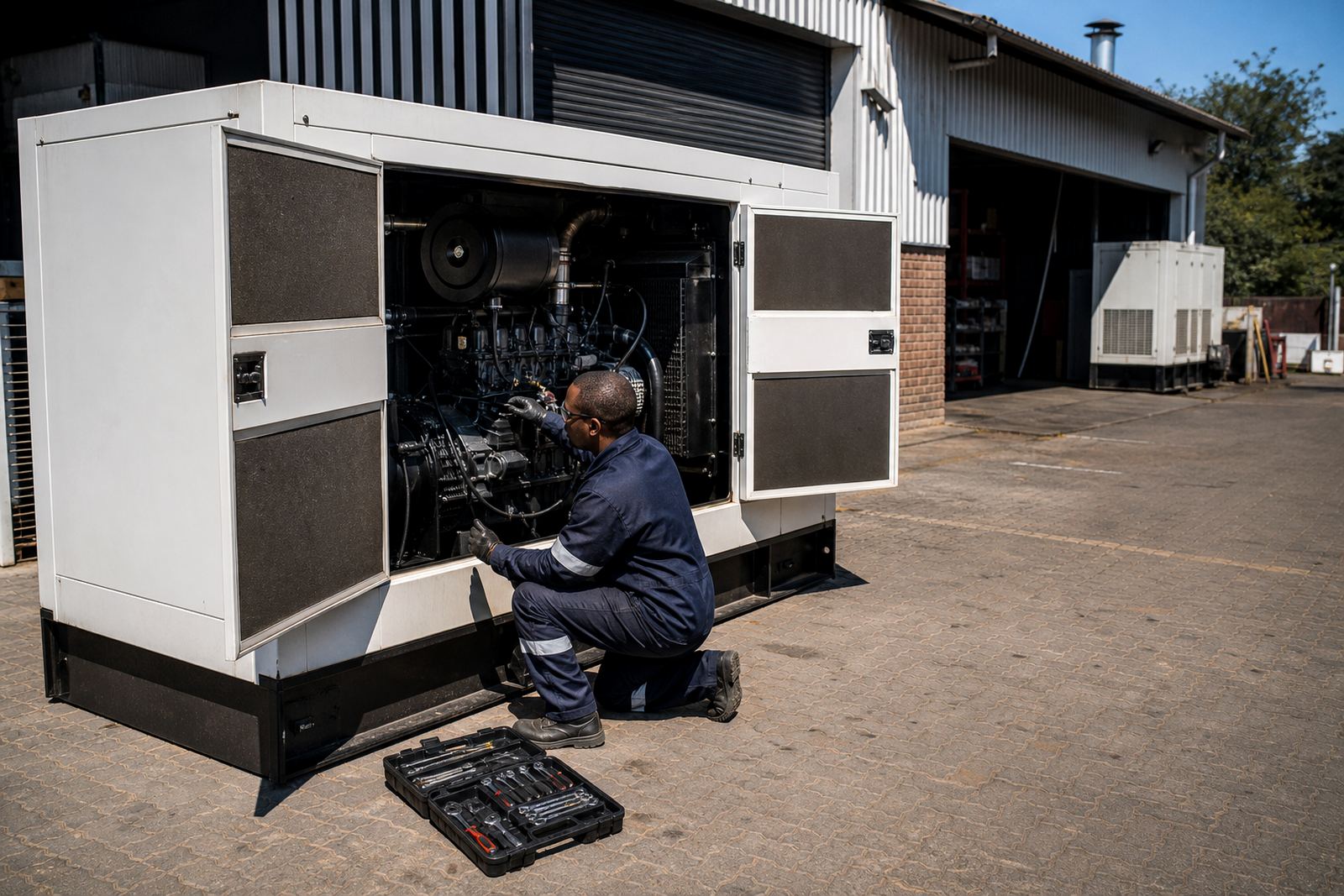
We service standby and prime generators used at depots, administration blocks, parking sites and service centres. The work usually includes oil and filter changes, coolant checks, battery testing, starter system repairs and a careful inspection of the changeover switch arrangement. Electrical work must be done by qualified people under local rules, so we keep every repair tied to proper isolation, testing and handover notes.
The gear usually found at a municipal generator point
Most municipal installations are not complicated, but they do have a few weak points. A single missed connection or overdue service can stop the unit from taking load when the supply drops. We check the full set-up, not only the engine side, because a generator that starts but does not transfer load still leaves the site in trouble.
- Standby generator sets feeding office blocks, pump rooms or security posts
- Automatic changeover switches and manual bypass arrangements
- Fuel tanks, day tanks and transfer piping
- Battery chargers, starting batteries and earth connections
- Control panels, alarms and service hour counters
- Exhaust routing, ventilation openings and sound control panels
On some sites the generator room is shared with telecoms or water equipment, so layout matters. Clear access for service tools, safe fuel storage, and enough working space around the panel make future inspections faster and safer.
How we plan maintenance around municipal routines
Municipal sites often have security gates, restricted access and multiple departments using the same building. A good maintenance plan has to fit around council meetings, public counters, cleaning schedules and after hours access. It also has to take account of load-shedding, because a unit that starts too often without proper checks will wear out quicker than expected.
For contracts in Johannesburg, Pretoria, Centurion, Sandton, Midrand, Polokwane, Durban and Cape Town, we usually set a service calendar that separates routine work from deeper testing. This lets the site manager know when a technician is due, what spares are likely to be needed and when the generator should be available for a controlled test run.
- Weekly or monthly visual inspections where site risk is higher
- Quarterly service visits for most standby sets
- Annual load bank testing where the unit does not carry enough real load
- Battery and charger checks before storm season or winter peaks
- Service record audits for audit trails and internal sign off
The mistakes that usually cause trouble on public equipment
Many municipal breakdowns start with small things that were missed for months. Old filters, weak batteries, blocked ventilation and stale fuel are common. So are switchgear faults that stay hidden until the first outage of the month. In a busy depot, one missed service can leave the whole site scrambling for a backup plan.
Another common problem is treating the generator as if it only needs an oil change. That misses the cooling circuit, battery health, fuel condition, control wiring and the changeover switch. We also find sites where no one kept proper records, making it hard to see when the last service was done or which fault kept repeating.
Where a generator is used for prime duty, meaning it runs often and not only during outages, wear rates are higher and inspections must be tighter. Fuel contamination, loose terminals and belt issues can turn into a callout at the worst time if they are not caught early. A little attention now saves a very expensive stoppage later, especially on sites that cannot close to the public.
Budget ranges that make sense for municipal planning
Costs depend on generator size, service frequency, access conditions and whether the work is routine or urgent. A small site with one standby set and straightforward access will not carry the same maintenance cost as a depot with multiple units, remote plant areas or round the clock use. Emergency work also costs more than planned servicing because the response is immediate and the fault is often already affecting operations.
For budgeting, many municipal clients plan around service visit costs, parts, labour and testing separately. A routine inspection and service on a smaller generator may sit in the lower thousands of Rand, while larger sets, load bank testing and fuel system repairs can move into higher bracket work. Full maintenance contracts for several sites are usually structured to spread cost over the year, which helps with procurement and planned municipal budgets.
- Routine servicing: lower thousands of Rand per visit for smaller sets
- Mid sized units with testing: often several thousand Rand more depending on parts
- Emergency callouts: usually higher than scheduled work because of response time
- Annual testing packages: priced around site count, generator size and access
We do not force one pricing model onto every site. A municipal building in Pretoria with good access and a single unit is different from a coastal depot with corrosion, dust and long cable runs. The right number comes from the equipment list and the actual service route, not guesswork.
What RelGen handles on contract work
RelGen supports municipal facilities with planned servicing and fault response across Gauteng and other major centres. Our team includes operations, contract management, field coordination, technical support, senior technician oversight and stores control so the site can get a proper sequence of work and parts follow through. That matters when a changeover switch needs checking, or a battery bank fails after a long idle period.
We keep the work practical: record the condition, service the set, test the start up, check the transfer points and leave a clear report for the responsible person. For municipal buildings, depots and public service sites, the goal is not fancy language, it is power that behaves when the grid does not. If a unit needs repairs, we explain what is safe to fix on site and what must be isolated and handled under proper electrical rules.