When trading hours depend on the changeover
In a retail centre, generator servicing is not only about keeping the lights on. It protects tills, access control, refrigeration, tenant back-up systems, security lighting and the small electrical loads that keep shoppers moving. A site can look fine for weeks then a battery fails, a filter blocks up, or a changeover switch starts sticking when the load comes on, and the result is instant pressure at tenant level.
We work on maintenance contracts for centres of different sizes, from compact neighbourhood retail nodes to larger mixed-use developments. The aim is to keep the standby set ready for a real outage, while also making sure prime running equipment stays stable where sites use generator power for longer periods. Electrical work must be handled by qualified people under local regulations, especially where changeover gear and controls are involved.
What a retail site usually has in the room and outside it
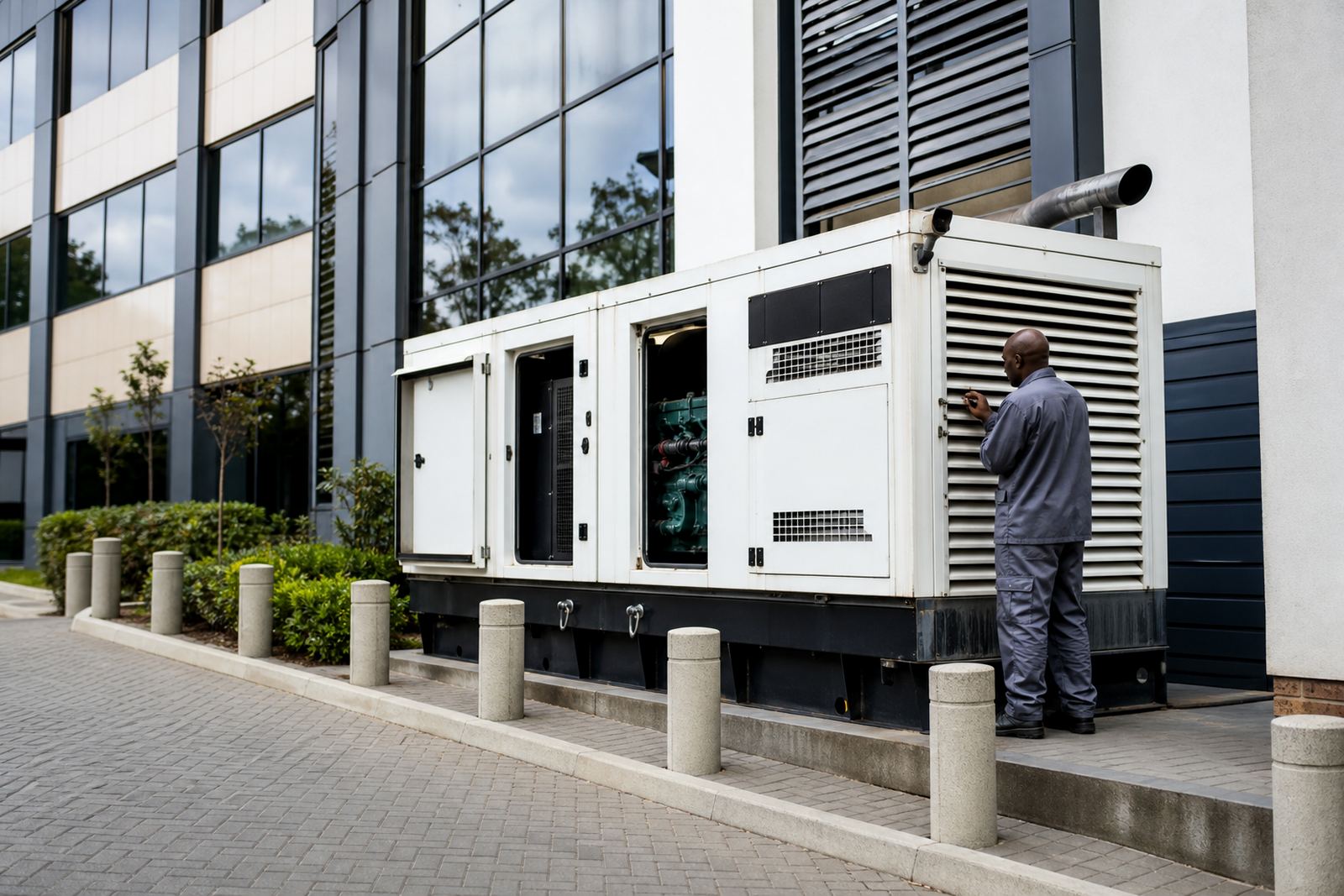
Most retail centres have a mix of equipment rather than one neat package. The set may sit in a plant room, in an acoustic enclosure outside, or in a service yard with limited access for deliveries and maintenance. Some sites have more than one generator, especially where there are separate feeds for tenant areas, parking, lifts, pumps, or critical security systems.
- Diesel standby generator or a prime-rated set for extended use
- Automatic changeover switch and control panel
- Day tank or bulk fuel arrangement with lines and fittings
- Starter batteries, battery charger and cabling
- Cooling system parts such as hoses, belts, coolant and clamps
- Load bank connection point where testing is planned
Access routes matter too. If a service truck cannot get close, even a routine filter change takes longer and the risk of delays goes up. In some centres the better layout is the one that gives a technician 2 metres of clear working space at the front and side, not the one that looked tidy on paper.
Layout choices that save a retail manager grief later
Good planning starts with the generator room and its surroundings. Keep the area dry, well ventilated and free of stored stock, trolley bays, cardboard, or cleaning chemicals. In coastal areas such as Durban and Cape Town, salt air and humidity can shorten the life of terminals, fasteners and battery connections, so inspection access needs to be easy. In Gauteng, dust from parking areas and construction nearby can clog filters and cooling cores faster than expected.
Where possible, the fuel point, exhaust route and service access should all be separated from shopper movement. That reduces noise complaints and lowers the chance of a maintenance visit interrupting trade. For centres with landlord and tenant responsibilities split between different teams, we often recommend a clear service register so everyone knows who signs off on alarms, test runs and shutdown windows.
- Leave enough clearance for oil, filter and coolant work
- Provide safe access to batteries and the control panel
- Keep the changeover switch clearly labelled and physically reachable
- Allow a testing window outside peak trading times
- Store service records where the centre manager and contractor can both find them
The checks that keep retail loads from catching you out
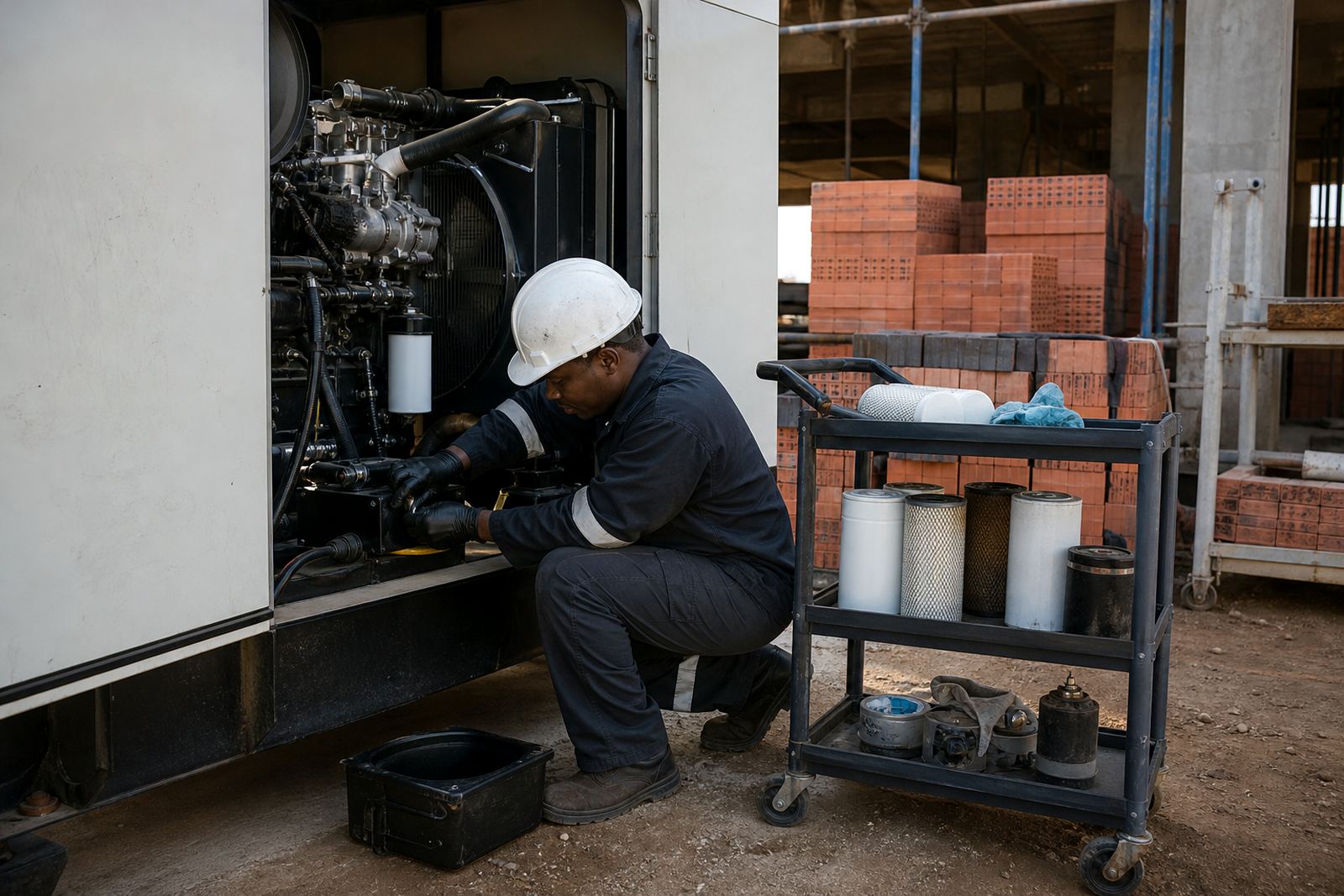
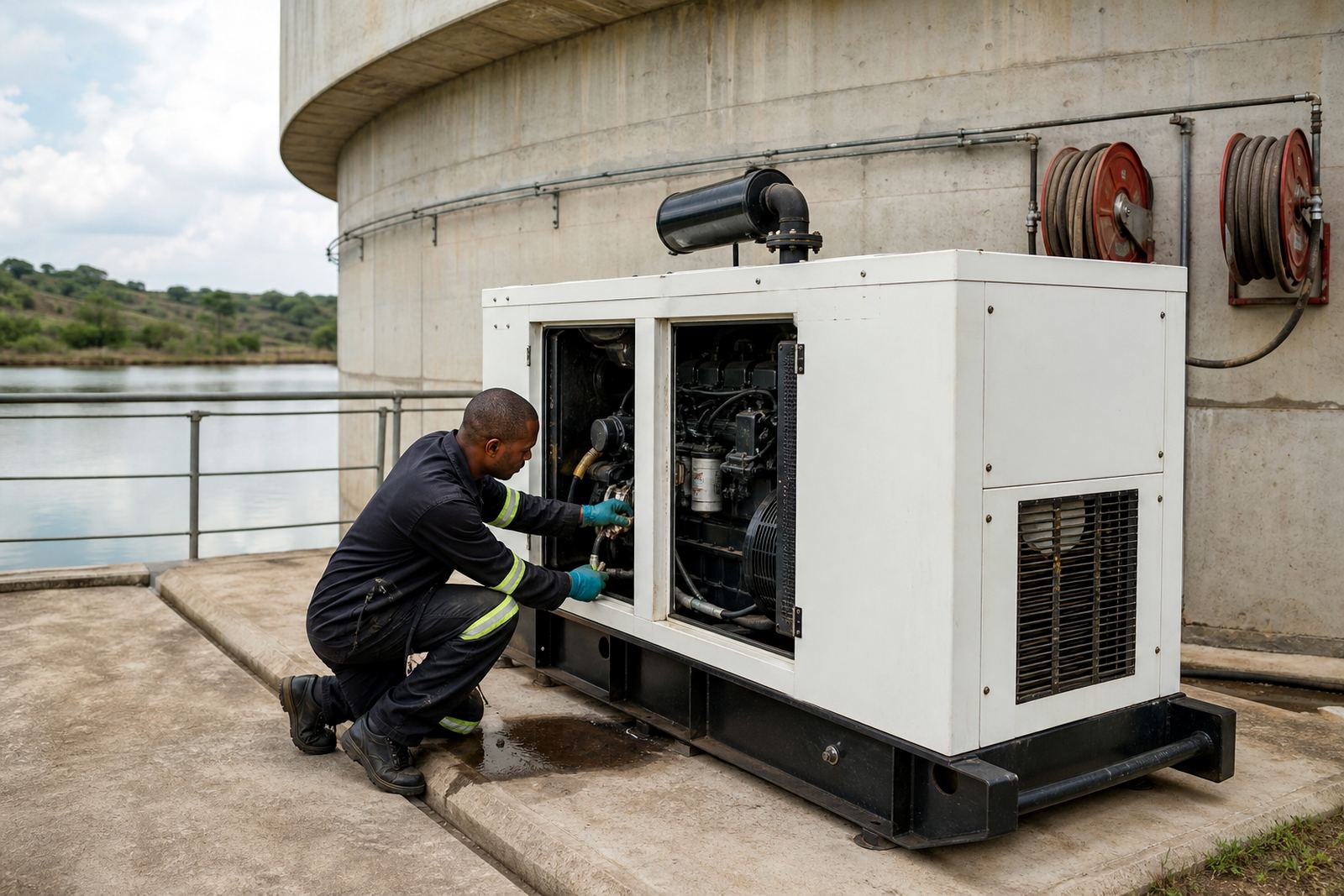
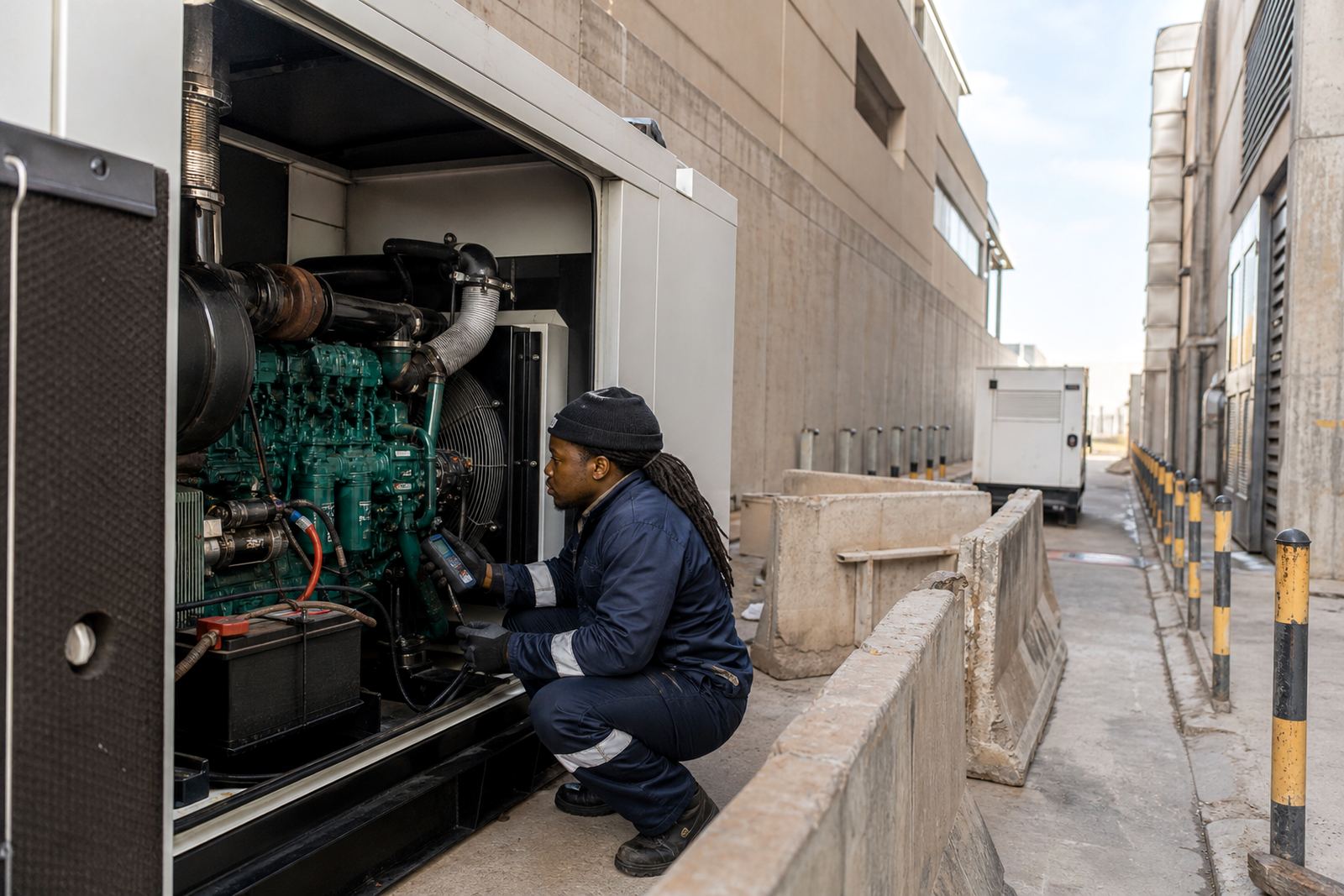
Retail loads are often less forgiving than people expect. Lighting circuits may be fine, but tills, router equipment, fire systems and CCTV do not like voltage dips or repeated transfer events. That is why scheduled servicing should include oil and filter changes, coolant system checks, battery testing, starter system repairs where needed, and service record audits so small issues are caught before they become a shutdown.
Load bank testing is especially useful where the generator does not run often enough under real load. It shows whether the set can carry the site demand, and whether the engine reaches proper working temperature. Changeover switch checks are just as important because a healthy engine with a faulty transfer system still leaves a retail centre in the dark. Fault finding on alarms, fuel system repairs and preventive site inspections round out the picture.
Common slips in retail centres and how they show up
Some problems are repeated over and over on retail sites. A centre might run a generator only when there is load-shedding, then discover the batteries are flat or sulphated when the first real outage arrives. Another common issue is servicing done without checking the control panel history, so repeated low oil pressure or temperature warnings are missed. Dirty fuel, water in the tank, or a clogged breather can also create nuisance trips.
We also see changeover gear that has not been exercised for months. It may appear fine until a proper transfer is needed, then contacts stick or the sequence is slow. On busy sites that can mean tills reset, security systems drop, and traders lose sales in a matter of minutes. A retail generator should not only start, it must transfer cleanly and settle under load.
A final mistake is treating the generator room like a storage cupboard. Boxed stock, cleaning gear and spare signage should not sit against hot surfaces or block access to the set. It sounds obvious, but on a rushed centre the small things are often what trip the whole plan.
What maintenance contracts usually cost to plan for
Budgeting for retail centre generator servicing depends on size, access, runtime, and whether the site needs standard scheduled servicing or more frequent attention. As a working range, smaller retail sites may plan from about R8 500 to R18 000 per service visit, while larger centres or multi-set sites can sit from about R20 000 to R45 000 or more, especially when load bank testing, fuel system work, or after-hours attendance is included.
Emergency callouts are usually costed separately because the time, travel and fault type are different from a planned visit. The better approach is to match the contract to the site risk. If tenants rely on refrigeration, security, or high foot traffic, the monthly service schedule needs to reflect that pressure rather than a once-off annual fix.
How RelGen supports retail operations from Midrand to the coast
RelGen services standby and prime generators for retail centres from our Midrand base, with work arranged across Johannesburg, Pretoria, Centurion, Sandton, Durban, Cape Town and Polokwane. Our team is led by Thabo Engelbrecht and includes Naledi Shezi on operations, Johan Matlala on service contracts, Ayanda Khoza on field coordination, Muneerah Daniels on technical support, Sibusiso Wessels on generator technical work, and Rikus Botha on stores and logistics.
Retail managers usually want a practical service relationship: clear reports, honest fault notes, and a plan that fits trading hours. That is what our maintenance contracts are built around. If your centre needs scheduled servicing, preventive inspections, battery testing, load bank testing or changeover checks, the enquiry form on our contact page is the usual starting point for a proper site discussion.