When an office block cannot afford a dead start
In an office building, generator failure is not just a comfort issue. It affects workstations, servers, lift operation, access control, fire interfaces, parking gates, and the reception flow that keeps tenants and visitors moving. Our Midrand base supports office properties in Johannesburg, Pretoria, Durban, Cape Town, Polokwane, Centurion and Sandton, with service planning that suits multi-tenant sites and occupied buildings.
Most office setups use standby generators sized to carry essential circuits only, not every single load in the building. That usually means lighting to common areas, selected plug points, communications, security, one or more lifts, and any plant needed to protect the property. Where the site also runs prime duty equipment, the servicing plan needs tighter checks on oil condition, coolant, filters, belts, battery health and running hours. Electrical work must be handled by qualified people under the applicable local regulations, especially where changeover equipment and distribution boards are involved.
What we usually find in office generator rooms
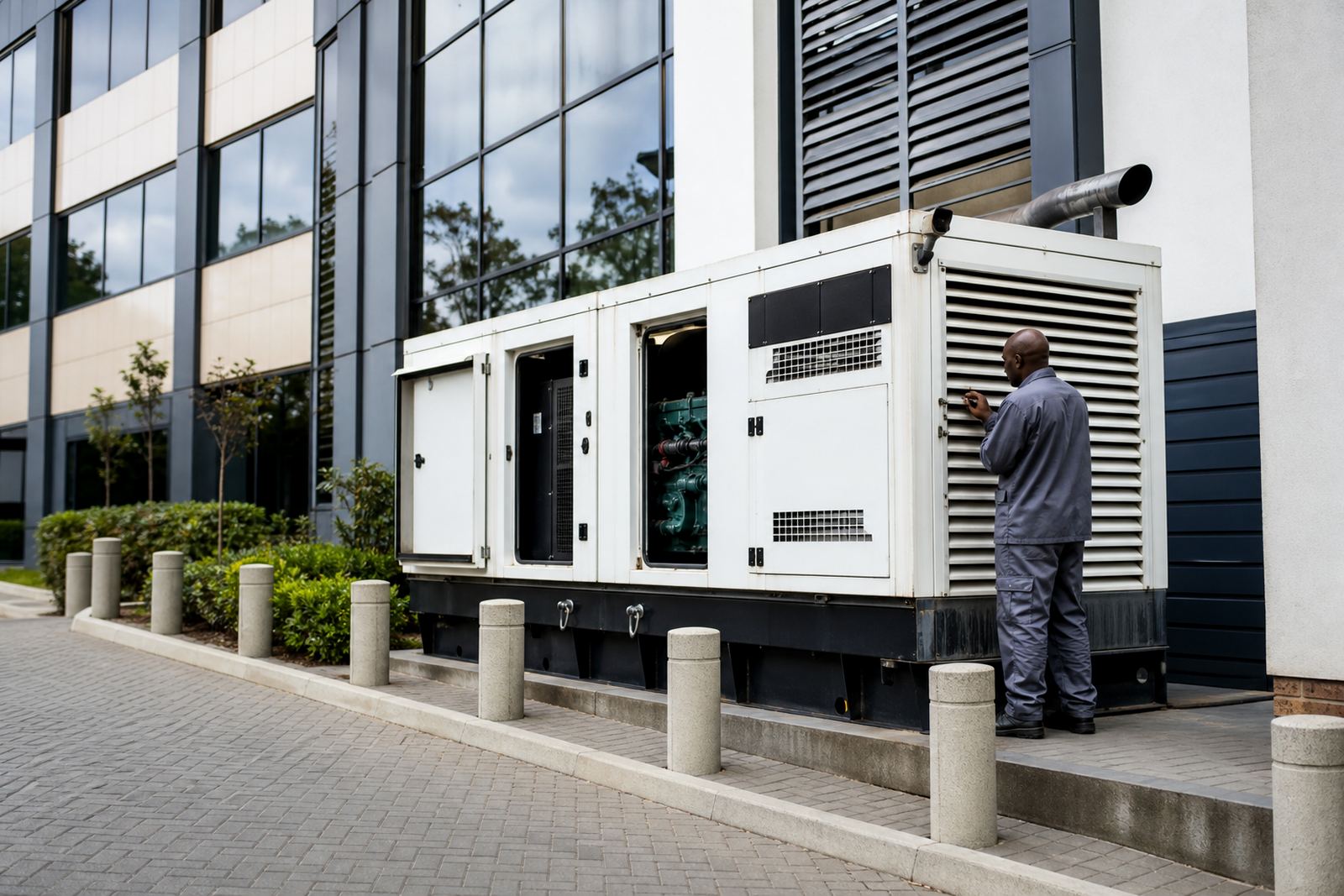
Office buildings vary, but the hardware around the generator room tends to be fairly predictable. A proper maintenance plan has to cover the machine itself, the transfer gear, the fuel side, and the controls that tell the unit when to start and stop. If the room is cramped or poorly ventilated, servicing gets harder and heat builds up quicker, which shortens component life.
- Standby or prime generator set with control panel
- Automatic changeover switch or manual changeover arrangement
- Fuel lines, day tanks or bulk fuel feed piping
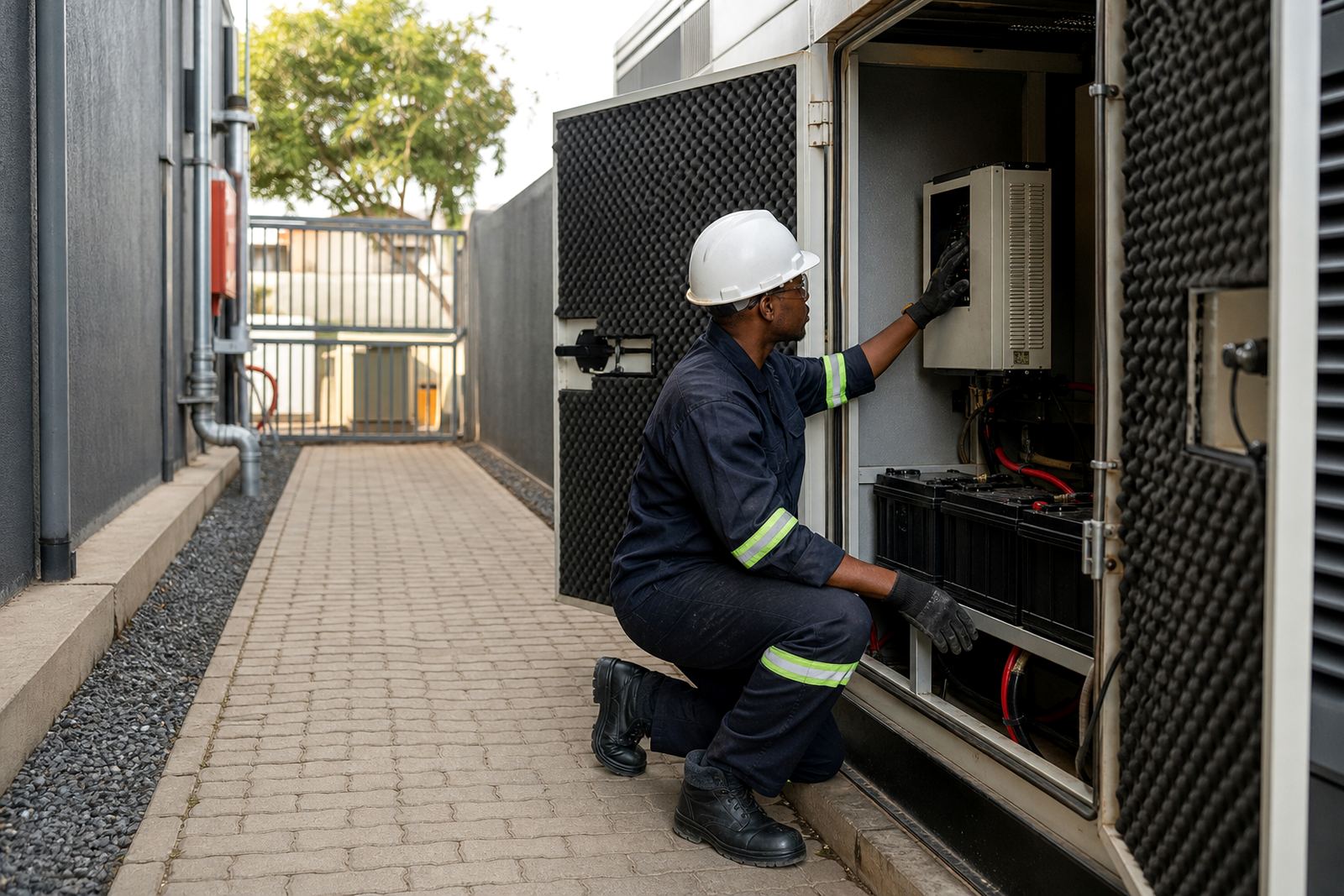
- Starter batteries and battery charger
- Radiator, hoses and coolant circuit
- Air, oil and fuel filters
- Exhaust run and silencers
- Load bank connection point where fitted
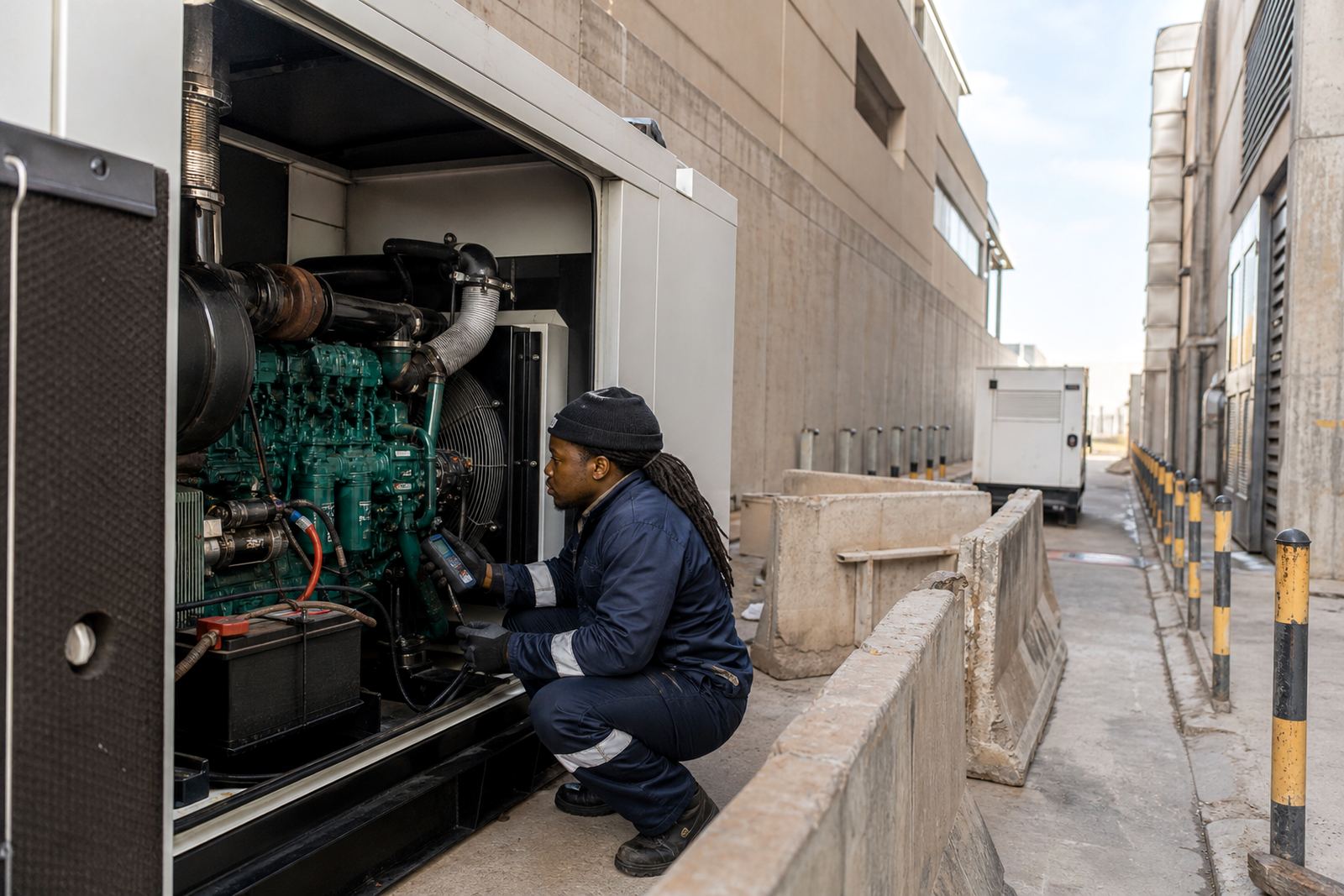
We also look at how the unit sits in relation to other plant. A generator tucked too close to a wall, store room or refuse route can become a nuisance during servicing. Good access matters for oil changes, filter replacement and fault finding, and it helps when a unit has to be tested after hours with tenants still in the building.
How to plan around tenants, lifts and access control
Office blocks usually need servicing outside peak business hours, and sometimes over a weekend to avoid disturbing occupiers. The best layout is one where the generator room can be reached without crossing busy tenant areas, and where the contractor can inspect the set without interrupting reception or security points. On multi-storey buildings, coordination with building management is important because a small delay in testing can hold up lift checks, access systems and after-hours cleaning teams.
We recommend building the service plan around actual site behaviour, not only the nameplate rating of the generator. A 400 kVA set in a tall building may only be carrying a controlled portion of the load, while a smaller unit in a compact office park may be working much harder during every outage. That affects oil intervals, battery testing and how often load bank testing should be done. Coastal sites such as Durban and Cape Town also need closer attention to corrosion, moisture and cable terminations, while inland sites often see more dust and dry air.
- Schedule servicing outside tenant arrival and departure times
- Keep a written access list for plant rooms and roof areas
- Confirm which lift and security circuits are essential during outages
- Check that fuel deliveries do not block loading bays or fire lanes
- Record who can authorise shutdowns for testing
That kind of planning cuts down on complaints and helps the generator test tell you something useful instead of creating another problem for the building manager.
Service tasks that keep office standby systems dependable
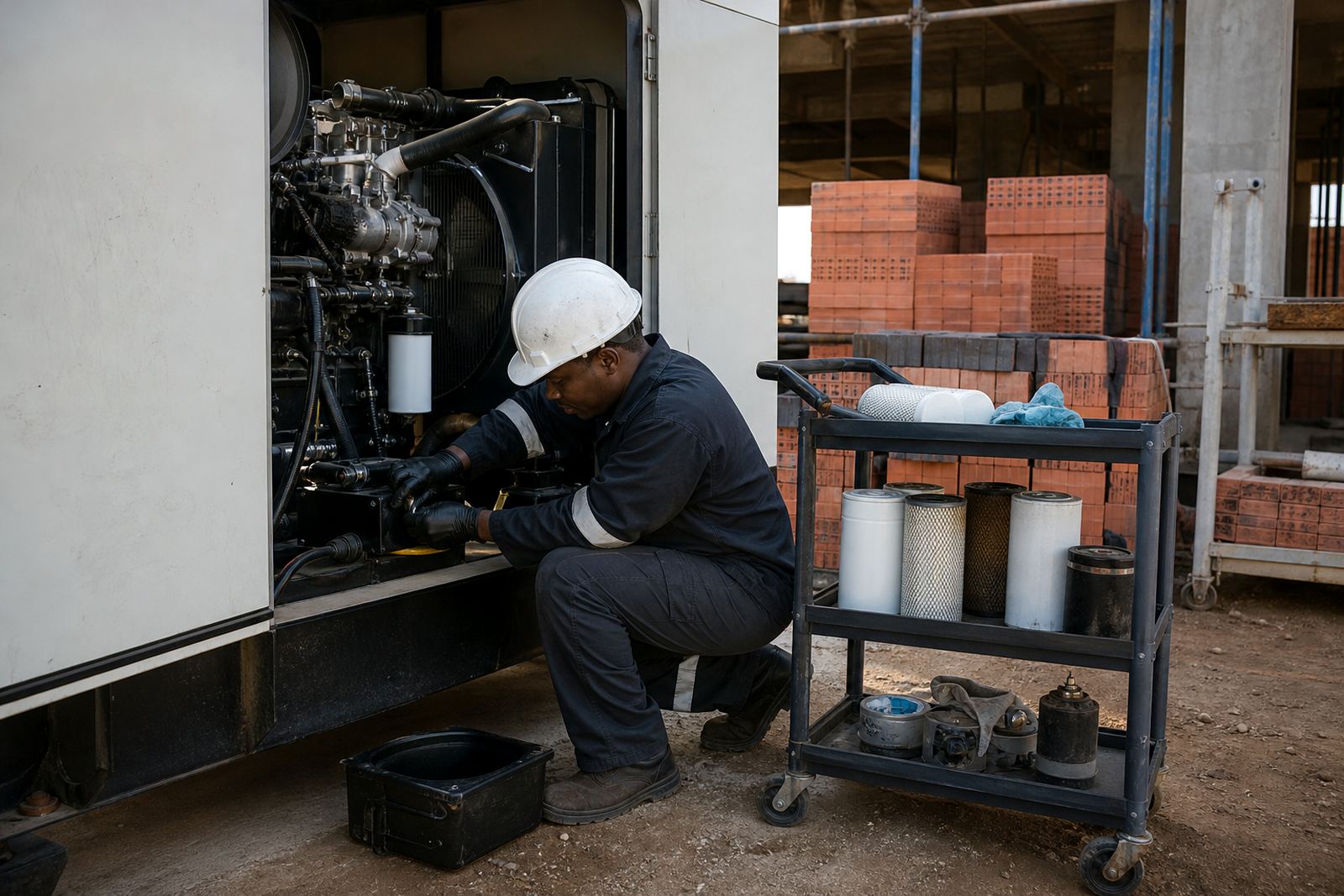
RelGen handles scheduled servicing, emergency callouts and preventive site inspections for office properties under maintenance contract. The routine work usually includes oil and filter changes, coolant system service, battery testing, starter system repairs, fuel system repairs, service record audits and changeover switch checks. Load bank testing is important where the building rarely sees a full outage, because a lightly loaded set can glaze up, carbonise and give false confidence if it is never exercised properly.
Fault finding often starts with the basics: a weak battery, a dirty filter, a low coolant level, a charging problem, or a transfer switch that is not closing cleanly. In office buildings, a small fault can sit unnoticed until the first long outage and then the whole site feels it. We also check whether service records match the actual operating hours and whether previous repairs were completed properly. If records are missing, or the set has been patched up a few times, that usually shows up in the condition of hoses, terminals and wiring neatness. Not fancy, just practical.
The mistakes that cost office managers the most
The common mistake is treating the generator as emergency-only kit that can be ignored until the lights go out. Another is sizing the service plan only around the machine and forgetting the transfer gear, batteries, fuel quality and room ventilation. Office buildings often run into trouble when the generator starts but the load transfer does not happen cleanly, or when a changeover switch has not been checked for wear and heat marks.
- Skipping load bank testing for years on end
- Letting batteries age until the first cold morning reveals the problem
- Ignoring fuel contamination and water build-up
- Not checking the coolant condition before summer or heat waves
- Leaving faults on the service record but not closing them out
- Allowing unqualified people to interfere with changeover equipment
Those mistakes are avoidable with a proper contract and a site that keeps tidy records. Office buildings also benefit from a preventive inspection before heavy rain, school holiday slowdowns, or periods of higher load-shedding, because those are the times when the system gets tested hardest.
What a sensible maintenance budget looks like
Budgeting for generator servicing in an office building depends on size, hours run, site access, and whether the set needs after-hours support. A smaller office property with a straightforward standby generator may only need routine servicing and periodic battery testing, while a larger multi-tenant block with lifts and access systems can require more frequent inspections and more complex testing. As a working guide, annual maintenance contracts for office sites often sit from about R18 000 to R120 000 or more, depending on the number of units and the depth of service.
Emergency callouts, major repairs, fuel-related faults and changeover switch issues can push costs higher, especially if the problem is left until the building is under pressure. The better approach is to keep a planned contract in place and spread the work across the year. That makes it easier to manage spare parts, service intervals and labour, and it also helps avoid unpleasant surprises during a long outage when the building needs every system to behave.
RelGen works from Midrand and services office buildings across South Africa with practical maintenance contracts and clear records. If your property needs standby generator care for workspaces, lifts or access systems, our team can plan the servicing around the building and not the other way around.