Why site generators work harder than yard units
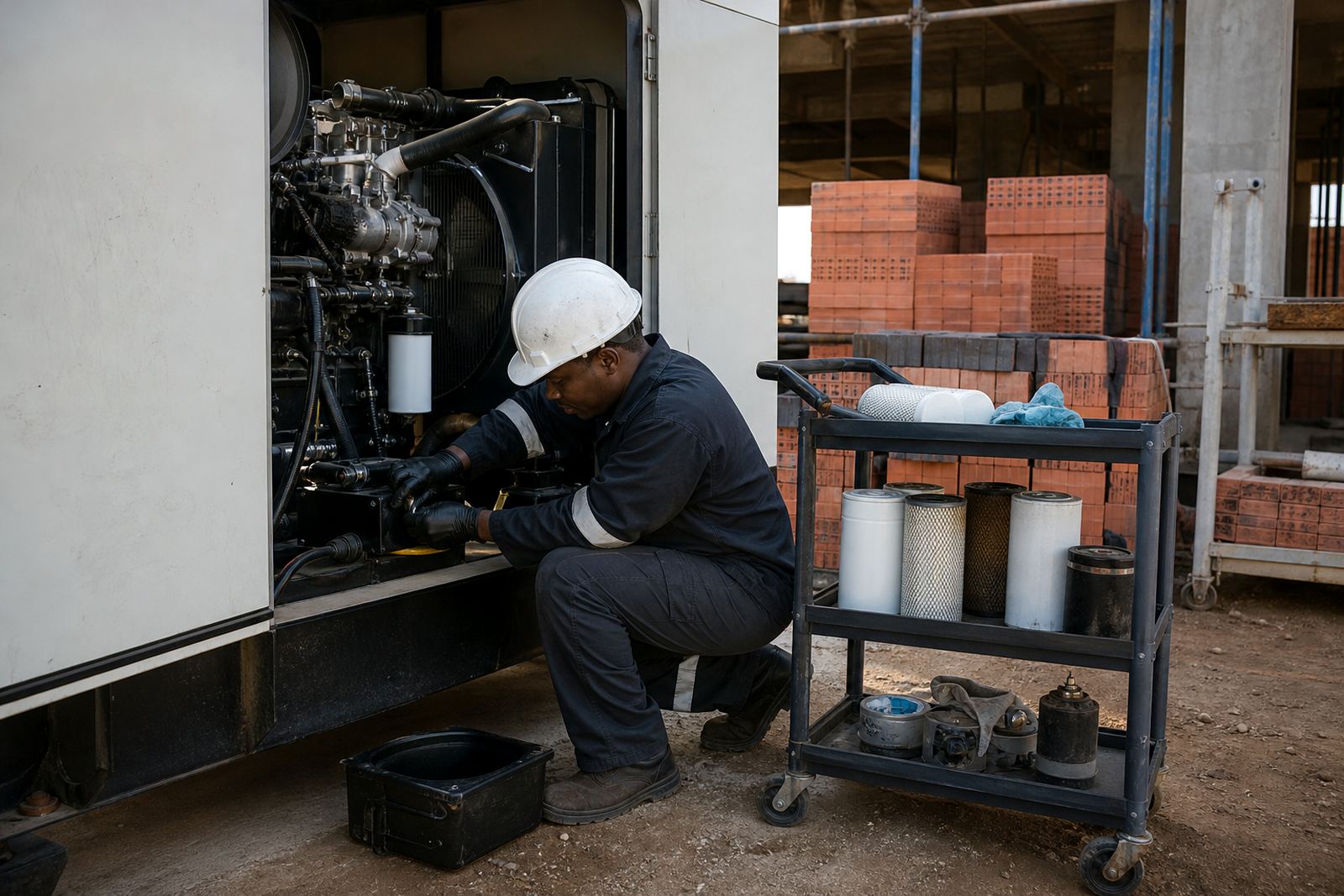
A building site is a rough environment for standby and prime generators. Units are often moved between slabs, stored near access roads, and exposed to cement dust, windblown sand, rain splash and constant vibration from nearby plant. On many projects the load changes through the day too, with tower cranes, mixers, temporary lighting, pumps and site cabins all switching on at different times. That kind of cycling puts strain on the engine, alternator, batteries and control gear.
RelGen supports construction sites on maintenance contracts across Midrand, Johannesburg, Pretoria, Durban, Cape Town, Polokwane, Sandton and Centurion. We work on scheduled servicing, fault finding and emergency callouts so the generator does not become one more delay on the programme. Electrical work is handled by qualified people in line with local regulations, especially where changeover switches and live circuits are involved.
What is usually on site
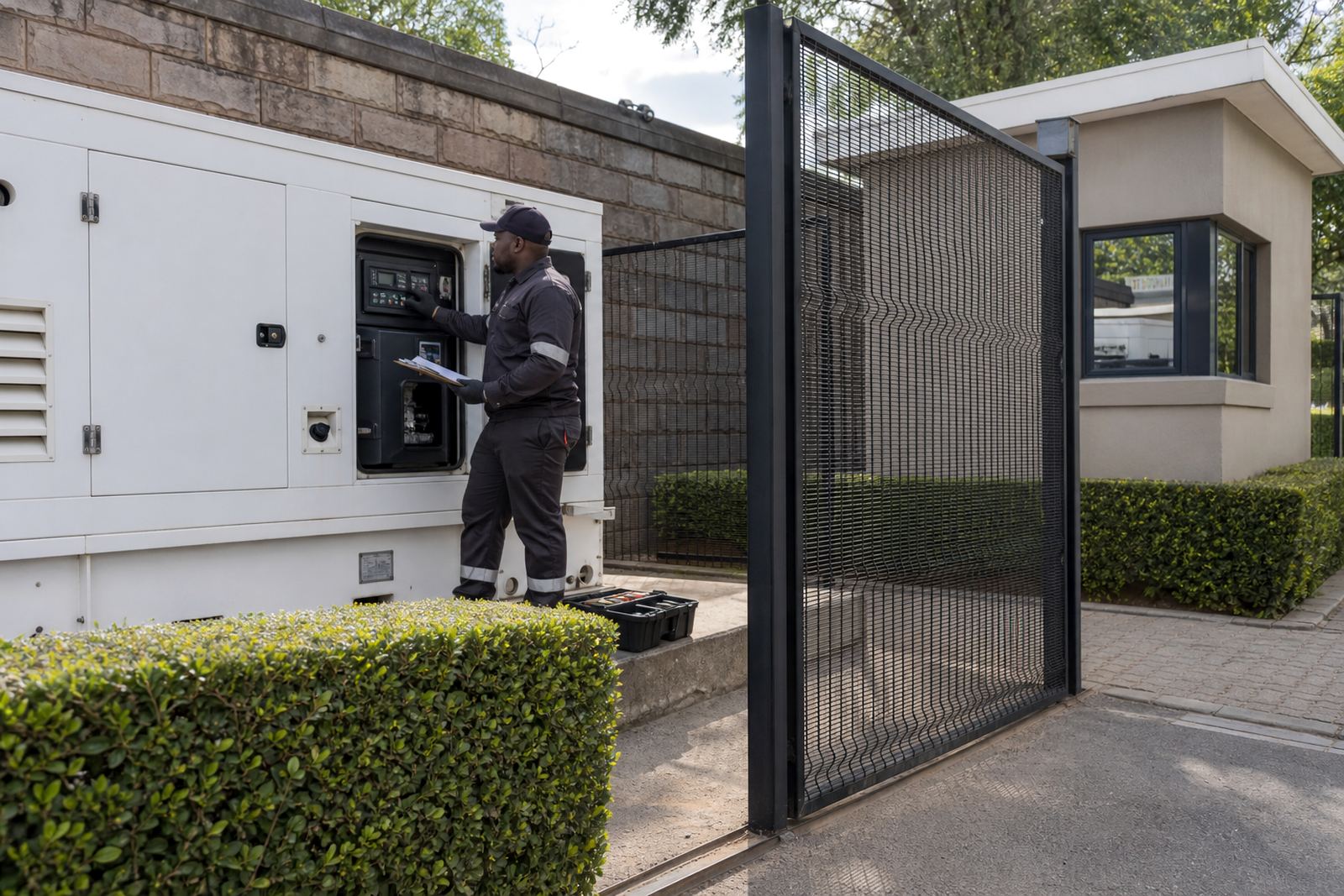
Most construction sites run one or more diesel generators, sometimes in a fixed plant room and sometimes on a skid or trailer where the unit can be repositioned as the site grows. The usual set-up includes the generator itself, a day tank or bulk fuel arrangement, battery starter system, control panel, automatic or manual changeover switch, cable runs to temporary distribution boards and, where needed, a load bank point for testing under controlled conditions.
- Small site support units for lighting, offices and security
- Mid-size generators for tools, mixers and small pumps
- Larger sets for cranes, hoists, welders or multiple site cabins
- Changeover equipment that must be checked for correct operation
- Fuel lines and filters that can pick up dirt from rough handling
We also inspect service records and previous fault notes. On a busy site, the history of repeated alarms, short runtimes or battery issues often tells the story before a strip-down even begins.
Layout choices that save hassle later
Good planning starts with access. The generator should be reachable for servicing without blocking deliveries, concrete pours or scaffold movement. Leave enough working space for filter changes, belt checks and testing, and make sure the exhaust route, air intake and fuel handling points are not boxed in by materials or temporary fencing. Dust control matters too. A unit sitting close to cutting, grinding or earthmoving zones will need more frequent cleaning and inspection.
In coastal towns such as Durban and Cape Town, humidity and salt air can speed up corrosion on terminals, fixings and control components. On inland sites around Gauteng, fine dust is often the bigger problem. Either way, the unit needs a dry, stable base and clear airflow. It is also worth planning where the changeover switch and distribution boards sit, so the electrical installation stays neat and easy to isolate when the site is under pressure.
A practical rule is to place the generator where fuelling, servicing and cable routing can happen without workers crossing active lift paths or open trenches. That sounds basic, but on a live site it gets missed more often than it should.
The servicing tasks that matter most on a building site
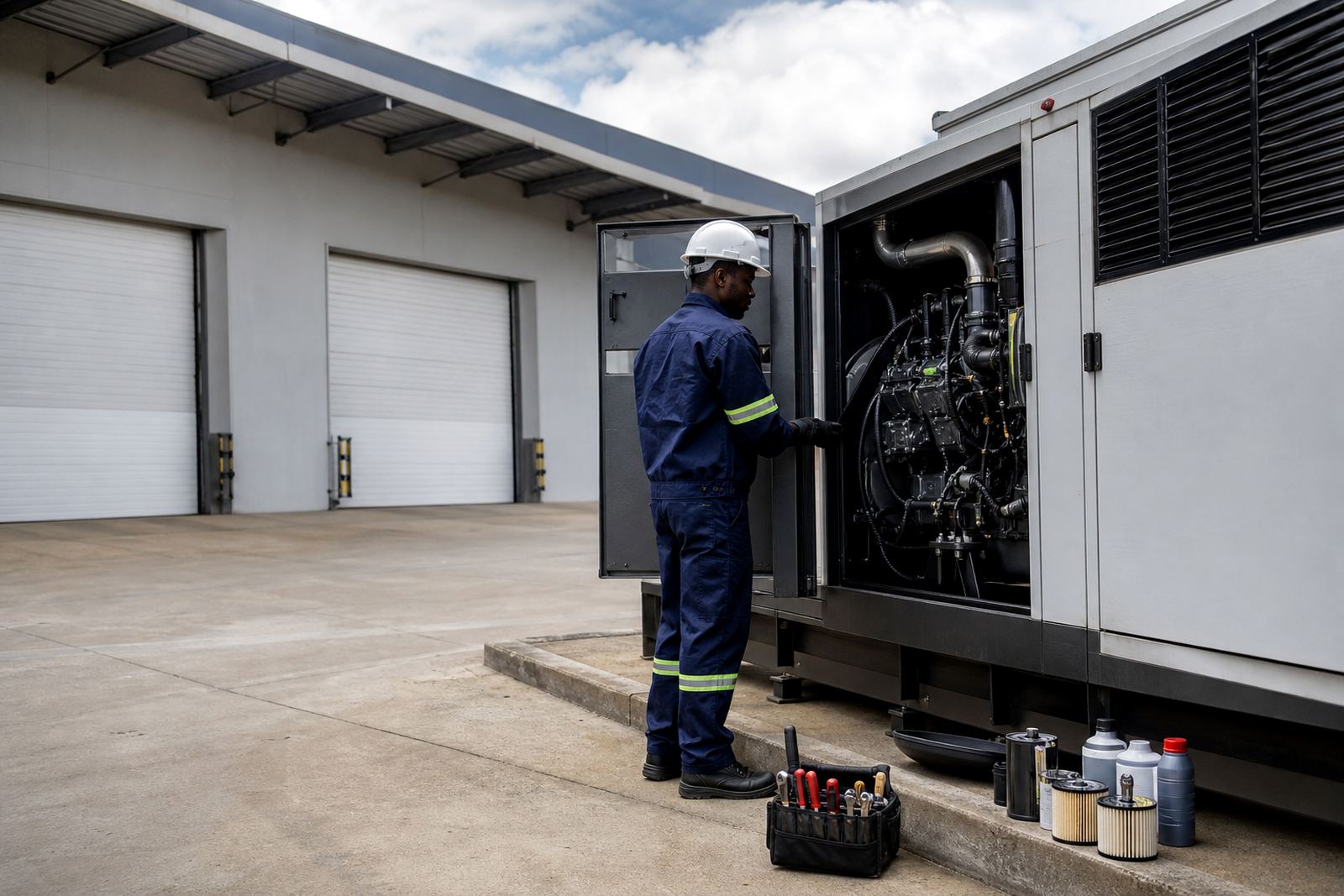
Construction work creates a pattern of wear that is different from office standby use. Oil breaks down faster under long run times, filters clog earlier in dusty conditions, and batteries can suffer if the set is used irregularly between peak demand periods. Load bank testing is useful where the generator spends too much time at light load, because wet stacking and carbon build-up can show up long before the site notices a problem.
- Oil and filter changes at sensible intervals for the load pattern
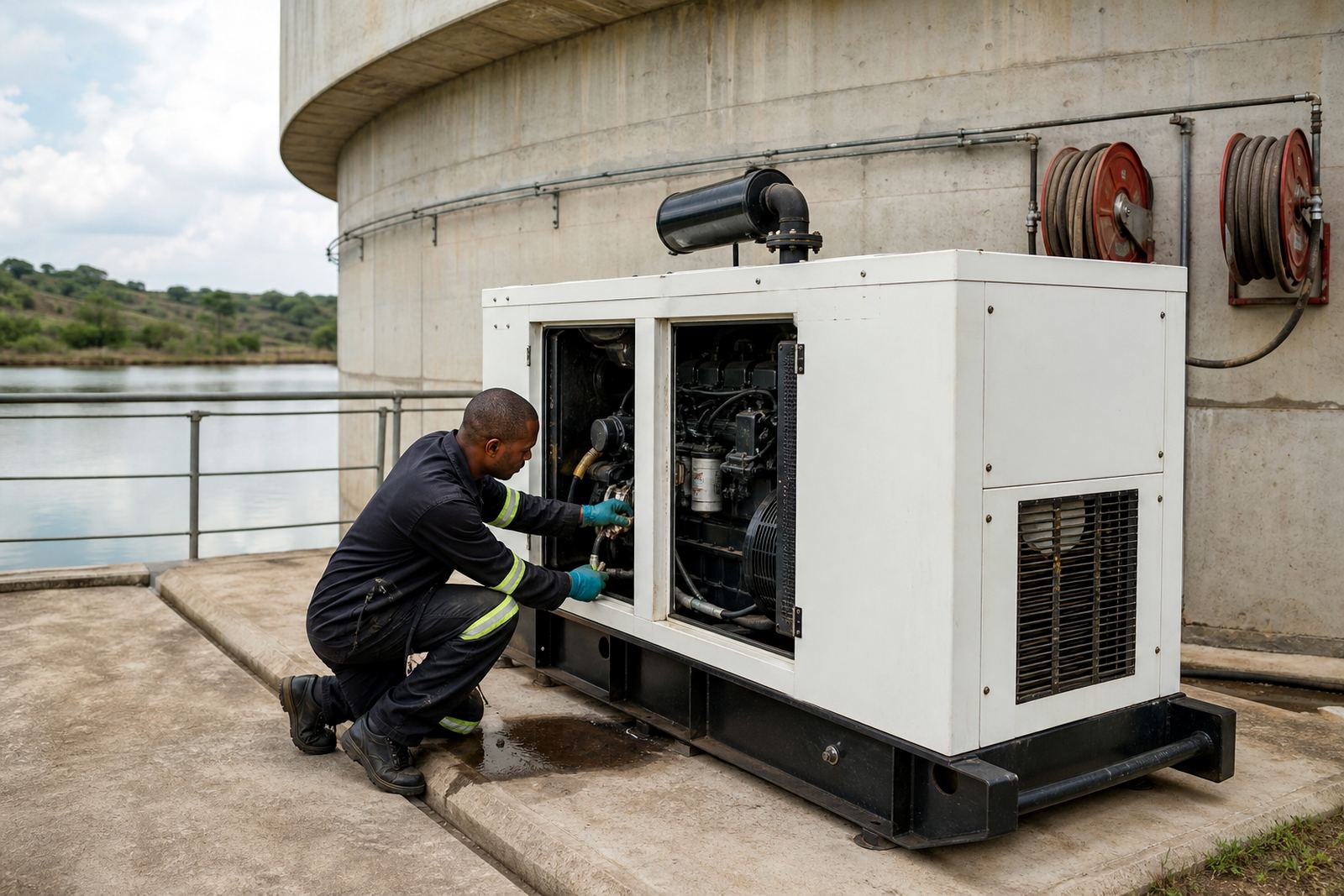
- Coolant checks, hose inspection and leak spotting
- Battery testing and terminal cleaning
- Starter system repairs when crank speed drops off
- Fuel system repairs for blocked lines, dirty filters or water contamination
- Changeover switch checks so the transfer gear works properly under local rules
- Preventive inspections to catch vibration damage, loose mounts and cabling wear
Where a site runs generators as prime power, not just standby, we normally look more closely at service intervals and loading pattern. Variable demand can hide a fault until the unit is suddenly asked to carry more than it has been handling.
Common mistakes that cost time on active sites
One of the biggest problems is stretching service intervals because the site is busy. Dust and vibration do not wait for a convenient week. Another common issue is poor storage of spare oil, filters and batteries. If parts are left in dirty containers or in direct sun, they can be compromised before they are even fitted. Loose housekeeping around the generator area can also block vents, trap heat and make inspections difficult.
We also see changeover equipment left unchecked after site modifications. A new cabin, added lighting run or rearranged distribution board can change the load picture and expose weak points in the system. Electrical alterations must be handled by qualified people, not improvised on site. Small shortcuts here can lead to nuisance trips, damaged components or unsafe conditions.
Another mistake is running the unit flat-out without ever testing it under proper controlled loading. A generator that has only seen low demand may look fine right up to the day a major pour or lift schedule puts it under pressure.
Budget ranges that make sense for site planning
Costs depend on generator size, service history, site access and whether the work is planned or urgent. For construction sites, a basic scheduled service on a smaller unit may sit in the low thousands of Rand, while larger sets, additional filters, coolant work or battery replacement can move the cost up quite a bit. Load bank testing, fault finding and emergency callouts are usually priced separately because the time, transport and equipment involved are different from routine maintenance.
A full service plan for a site with one generator is often more cost-effective than repeated emergency repairs. The same is true where there are multiple units spread across one development or across several phases of the same build. It is easier to budget for regular inspections and records audits than to absorb a failed starter motor, contaminated fuel system or a switchgear fault that stops work for a full day.
RelGen can set up maintenance contracts for sites in Midrand and across South Africa, including Johannesburg, Pretoria, Durban, Cape Town and Polokwane. The right plan depends on whether the generator is backup only, or carrying a large part of the site load day to day.
What a proper site support visit should leave behind
After a service visit, site teams should know what was checked, what was replaced and what still needs watching. A clear service record helps the project manager, the electrician and the plant team stay aligned. It also helps when the same unit moves from one phase of the project to the next, because the next check starts from proper information rather than guesswork.
Our team includes people who handle operations, service contracts, field coordination, technical support, stores and logistics, so the job is not just about turning up with tools. It is also about keeping the right parts moving, tracking findings and making sure the generator is ready for the next shift. On a site where deadlines are tight, that matters more than fancy talk ever will.