When the estate runs on more than the grid
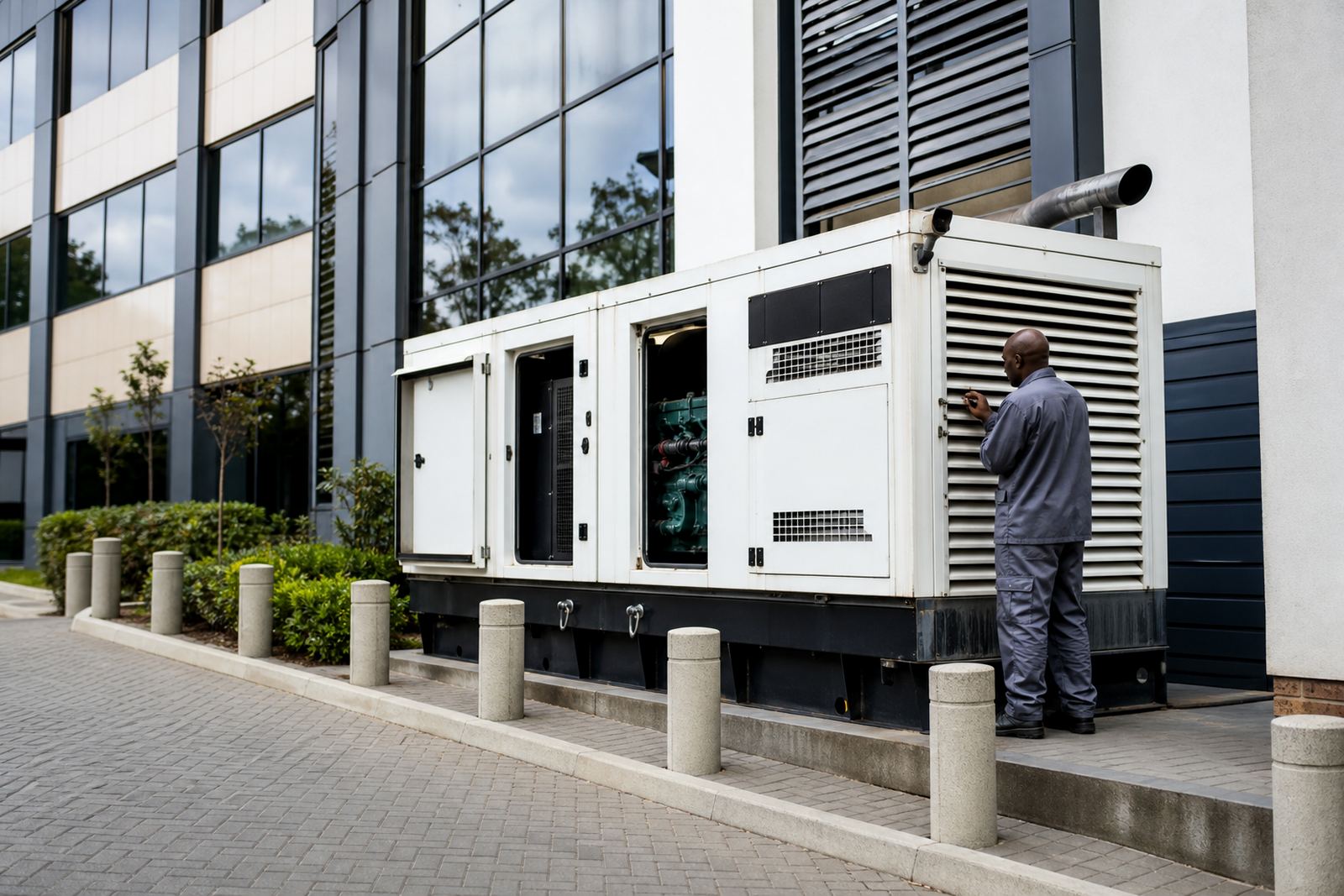
In a residential estate, one generator can carry the gatehouse, perimeter lighting, access control, pumps, security radios and common area lighting. When that unit is neglected, residents feel it first at the boom gate, the cameras, or the stairwell lights during load shedding. Coastal humidity in Durban and Cape Town can also be hard on batteries, terminals and alternator components, while dust and heat around Midrand and Pretoria can shorten service intervals if the set is left unchecked.
We work with estate managers, trustees and managing agents who need a practical servicing plan, not guesswork. Our team handles routine maintenance, emergency repairs and record keeping so the generator is ready for evening peak times and planned outages alike.
The generator room and what usually sits inside it
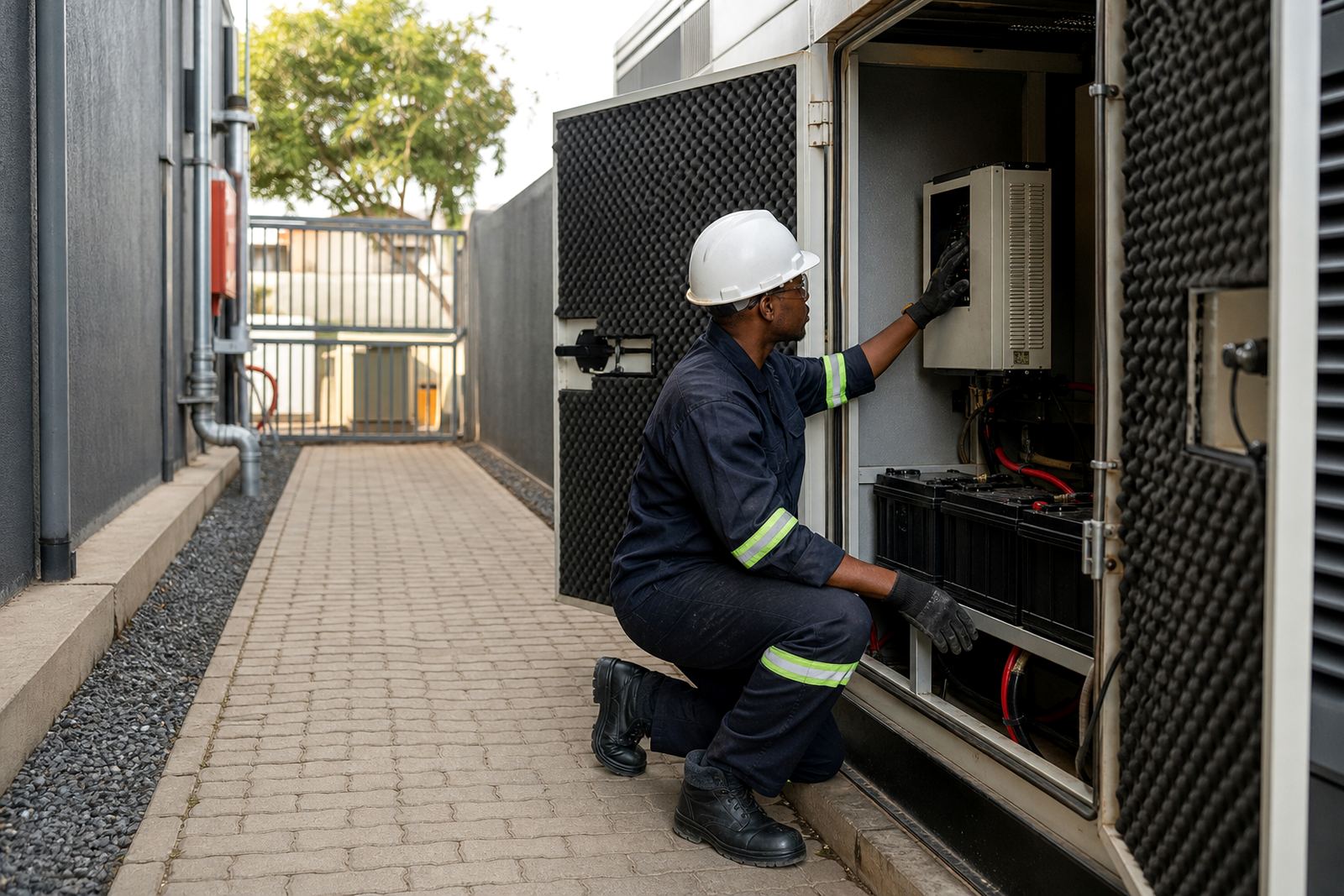
Most estate generator rooms are not complicated, but they do need orderly planning. A typical installation may include the generator set, automatic transfer or changeover equipment, fuel storage, batteries, starter circuits, control panels and sometimes a remote monitoring point at the guardhouse. If the room is cramped or poorly ventilated, heat builds up and the unit struggles under repeated starts.
- Standby generators for gates, security and essential common area supply
- Prime running sets where the estate has a more demanding daily duty cycle
- Automatic or manual changeover switches for switching between utility and generator supply
- Battery banks and chargers that need regular testing, especially after long idle periods
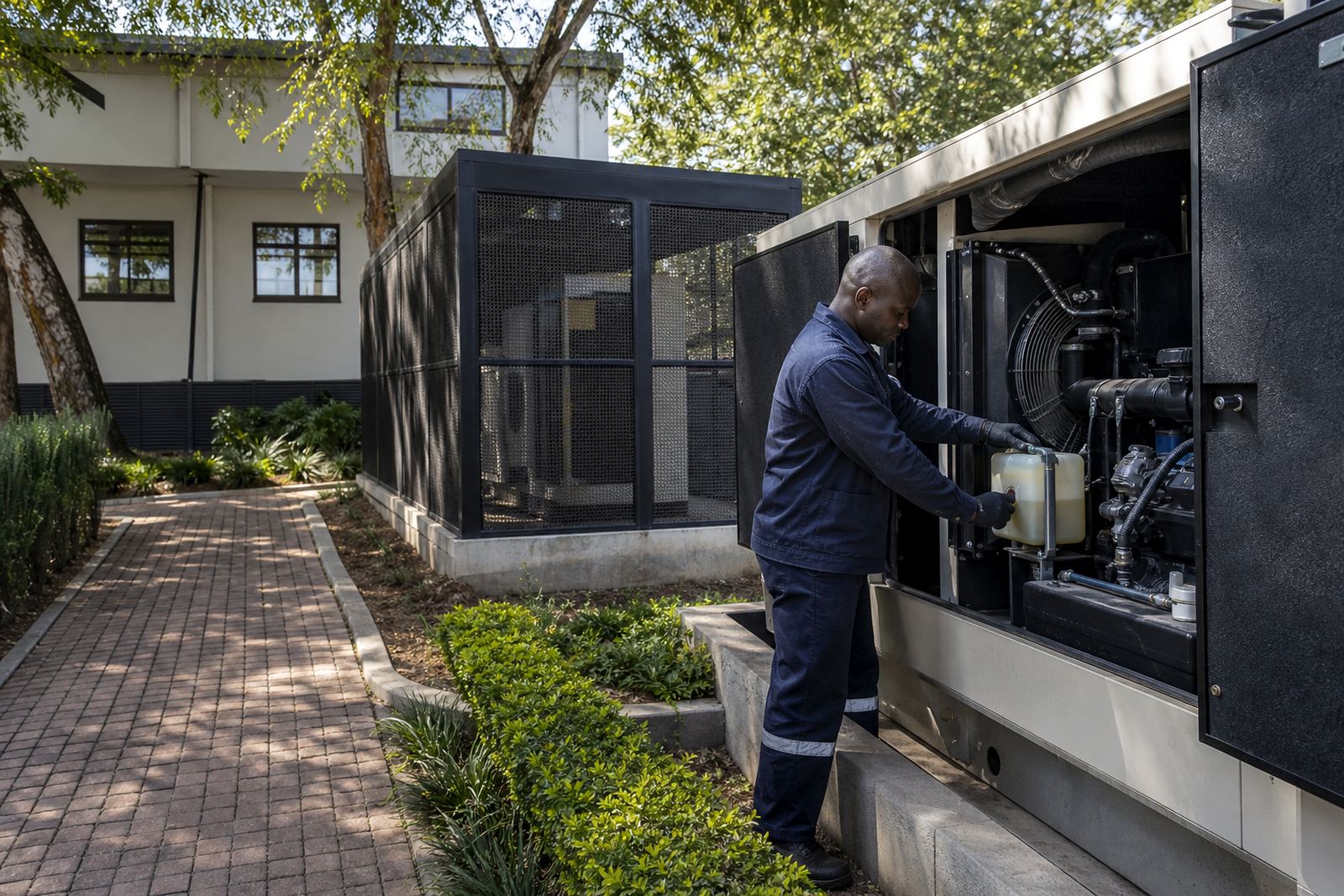
- Fuel lines, filters and tanks that must stay clean and free of contamination
Electrical work must always be handled by qualified people and in line with local regulations. That includes changeover checks, control gear work and any repairs connected to the supply system.
How we plan servicing around residents, guards and quiet hours
Estate servicing works best when it is planned around security shifts, resident traffic and municipal noise limits where they apply. A service visit should not block the only access lane or leave a boom gate out of service for longer than necessary. We arrange scheduled servicing so the generator can be run, tested and checked without upsetting the flow of the estate.
For larger estates in Sandton, Centurion and Johannesburg North, a service plan often works better than reactive callouts only. That way, oil changes, filter changes, coolant checks and battery testing happen before the set is pushed into full duty during an outage.
- Choose a service time when resident traffic is light, such as mid morning
- Keep the generator room clear for technicians and spares access
- Allow time for a proper test run under load, not just a start and stop
- Keep maintenance records with the estate log book and incident notes
The mistakes that usually cost estates the most
Most generator problems in estates do not start with a major breakdown. They start with skipped checks, weak batteries, dirty fuel, or a set that has been left to idle too long between outages. Another common issue is assuming the generator is fine because it starts once in a while. A unit can still fail under load if the coolant level is low, the filters are blocked, or the changeover gear is not checked properly.
We also see estates where the generator room becomes a storage area for paint tins, old mops and spare furniture. That creates a fire risk and makes fault finding slower when the set misbehaves. A tidy room, clear access and up to date service records usually save time and money.
- Running the set without proper load bank testing
- Ignoring battery age, loose terminals or slow cranking
- Not checking oil condition and filter history after extended use
- Leaving fuel contamination issues until the unit stalls
What an estate should budget for in Rand
Budgeting depends on the size of the set, how often it runs and how far the estate is from our base in Midrand. Smaller sectional title schemes may only need periodic servicing and occasional repairs, while larger estates with high security demand may need a more formal contract with scheduled inspections and test runs. A sensible maintenance budget should cover routine labour, consumables, callouts and reserve funds for parts that wear out with age.
As a practical guide, many estates set aside annual maintenance budgets that start in the low tens of thousands of Rand for smaller units and can move into higher amounts for larger systems with frequent use. If the generator has been neglected, the first year may need extra spending on batteries, filters, coolant work or fuel system repairs. It is better to plan for service now than pay for a dead set during a week of outages.
Trustees often prefer a contract because it spreads the workload and makes budgeting easier. It also helps with planned inspections after storms, long outages and seasonal demand changes.
What RelGen checks on a residential estate visit
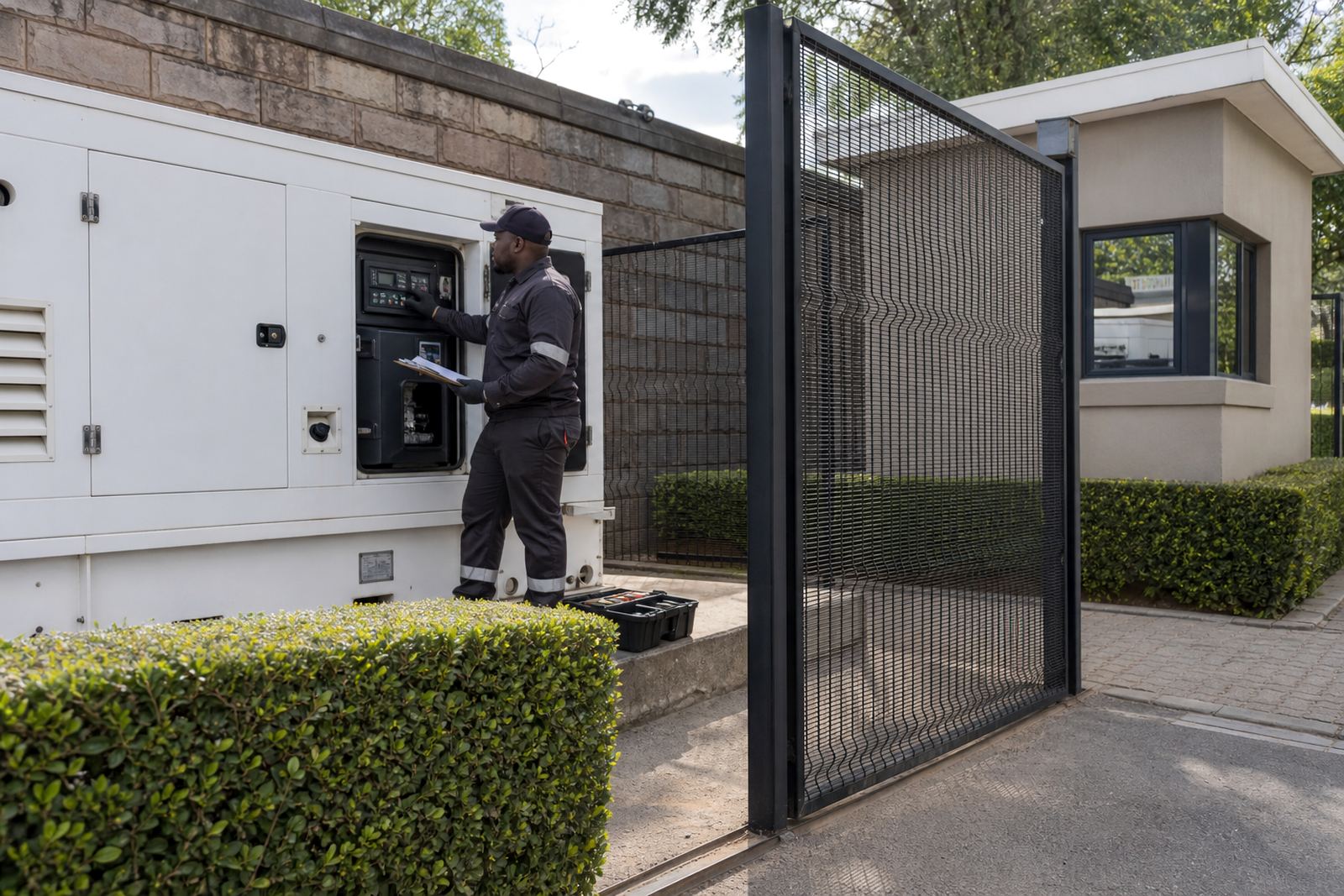
Our servicing for residential estates is built around the day to day reality of common areas and security systems. We inspect the unit, record faults, test starting performance and check the systems that keep the estate running when mains supply drops away. Where required, we also support fault finding and emergency callouts so the estate is not left waiting while gates or security lights sit dead.
- Oil and filter changes at the correct intervals
- Coolant system service and leak checks
- Battery testing and starter circuit checks
- Load bank testing to confirm the generator can carry the required load
- Changeover switch checks and service record audits
- Fuel system repairs and preventive site inspections
Our Midrand base supports estates in Johannesburg, Pretoria, Durban, Cape Town, Polokwane, Centurion and Sandton. If your generator supports residents, security and access control, it needs a maintenance plan that is practical, tidy and properly documented.