Guest-facing power can not sound like a workshop
In hospitality, a generator is judged by what guests hear, smell and feel. A rough start-up near a dining room, or a unit that trips when the kitchen is under load, will be noticed straight away. For hotels, lodges and conference venues, servicing needs to protect reception lighting, room aircon, lifts, cold rooms, POS systems and the back-of-house supply without creating extra noise or smoke.
We work with sites that need standby power for load shedding and prime support for remote operations, game lodges and outdoor functions. The practical goal is steady starting, correct transfer through the changeover switch, and clean running under the actual site load. That means attention to oil condition, filters, coolant level, battery health and the wiring and control points that local regulations require qualified people to handle.
What a hospitality set usually includes on site
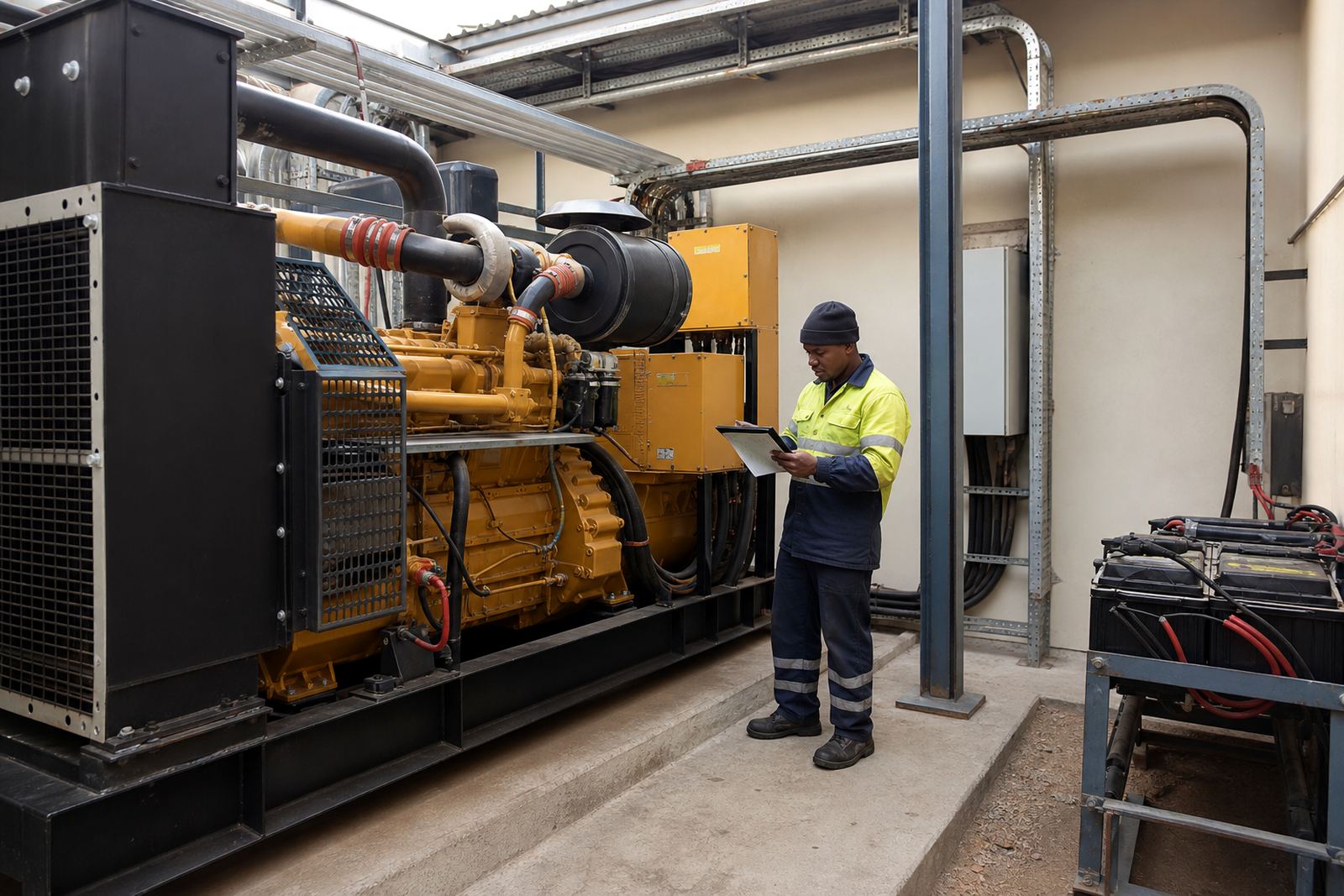
Most venues run more than one critical circuit, so the generator is only part of the picture. A typical setup may include the generator itself, an automatic or manual changeover switch, battery charger, fuel system components, exhaust arrangement, and a distribution board feeding priority loads only. In larger hotels there may be separate circuits for lifts, kitchen equipment, fire and security systems, laundry, guest room services and admin areas.
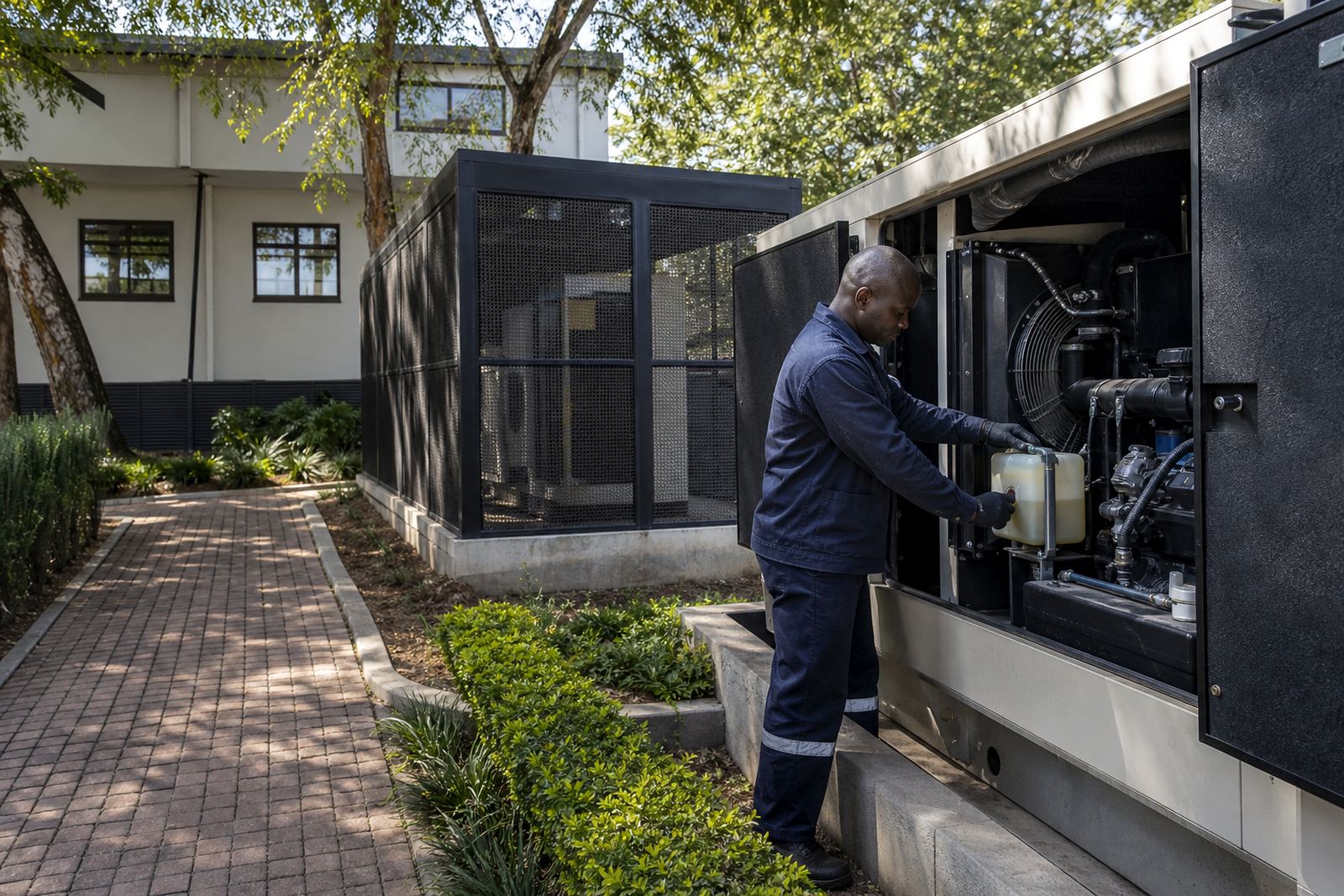
- Oil and filter changes to keep the engine clean under regular starts
- Coolant system checks for hot rooms, coastal humidity and long run times
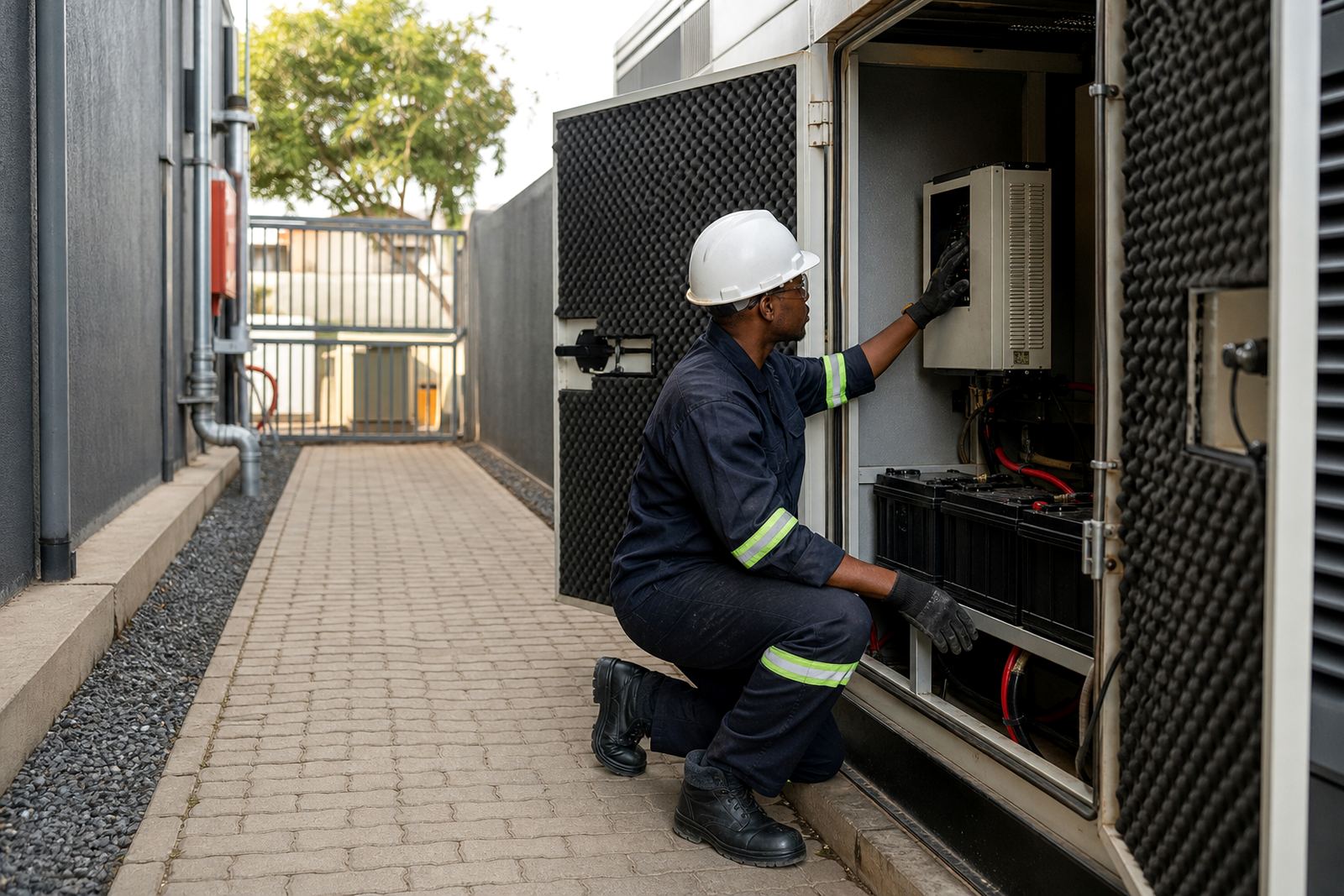
- Battery testing and charger checks for reliable starting after overnight outages
- Load bank testing to confirm the set can carry load, not just idle
- Changeover switch inspections for safe transfer and return to mains
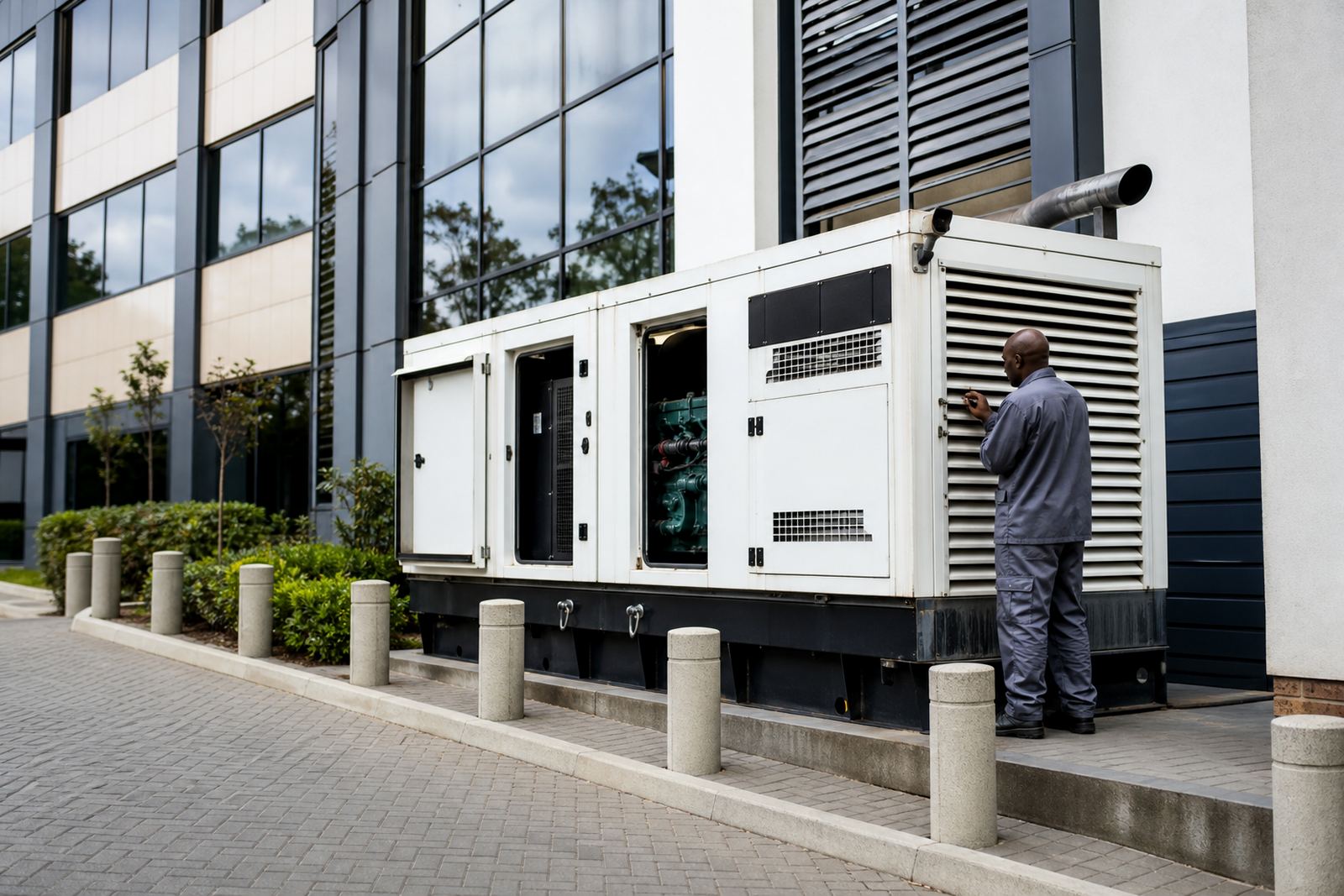
Where rooms are close to the plant area, vibration mounts, enclosure condition and air intake layout matter too. A well planned service schedule reduces nuisance faults that often show up during peak check-in periods or during a wedding weekend, which is exactly when nobody wants a problem.
Planning for hotels, lodges and event venues
The right maintenance plan starts with how the venue actually operates. A city hotel in Sandton has different needs from a lodge outside Polokwane or an event venue in Durban with salt in the air. We look at operating hours, guest occupancy, laundry cycles, kitchen demand, stage or sound equipment, and whether the generator runs only during outages or for longer blocks during testing and site events.
Good planning also means clear access. The plant room should have enough working space around the set for filter changes, hose checks and panel inspections. Fuel storage must be kept tidy and compliant, with no leaks or blocked vents. If the set is close to guest areas, the timing of testing should suit the venue and local noise rules, not the other way round.
- Keep the generator away from bedrooms, dining terraces and conference entrances where possible
- Allow proper ventilation and exhaust clearance to prevent heat build-up
- Label critical circuits so the wrong loads do not get tied in during an outage
- Record every service, test result and fault for audit trails and handovers
Faults that cause the most trouble on busy weekends
Hospitality sites often call us after a battery failure, a failed start, a dirty fuel system or a changeover issue. One weak battery can leave a whole building in the dark, and a blocked filter can cause rough running right when the kitchen or laundry is under pressure. Fault finding on these sites needs a methodical approach, not guesswork.
Common mistakes include leaving servicing until after the unit has already struggled, skipping load bank tests because the generator appears to be running fine, and ignoring small warning signs like slow cranking or coolant losses. In some venues, staff also assume the generator will automatically protect every circuit. It wont if the transfer logic or load allocation has not been set up properly.
For older venues, service record audits are often useful. They show whether the set has been overworked, whether past repairs were done in the right sequence, and whether the site has enough contingency for a power cut that lasts longer than expected. That is important in places where load shedding and local supply interruptions can still overlap.
Budget ranges that make sense for hospitality owners
Maintenance budgets vary with generator size, access, run hours and whether the site needs emergency callouts or a full contract. A small guesthouse with a single standby set will usually spend less than a large hotel with multiple priority circuits and longer testing windows. The cost also changes if the fuel system, starter system or changeover gear needs repair at the same time as routine servicing.
As a practical guide, monthly contract servicing for a smaller hospitality site can start from the low thousands of Rand, while larger venues with several sets or more frequent inspections can move into the mid thousands or higher depending on scope. Load bank testing, emergency attendance and major repairs are usually quoted separately after inspection, because the work required depends on the condition of the unit and the layout of the site.
It is usually cheaper to service on time than to deal with fridge losses, room refunds or a failed conference day. A proper contract spreads the cost and gives the venue a clearer view of what needs attention before peak season hits.
How RelGen supports venues across South Africa
RelGen services standby and prime generators on maintenance contracts for hospitality venues in Midrand, Johannesburg, Pretoria, Sandton, Centurion, Durban, Cape Town and Polokwane. Our work covers scheduled servicing, emergency callouts, oil and filter changes, coolant system service, battery testing, load bank testing, changeover switch checks, fault finding, fuel system repairs, starter system repairs, service record audits and preventive site inspections.
Electrical work linked to the generator, transfer gear and distribution must be handled by qualified people under the relevant local regulations. That matters on hospitality sites where guest safety and business continuity sit side by side. Thabo Engelbrecht leads the business from our Midrand base, with support from Naledi Shezi, Johan Matlala, Ayanda Khoza, Muneerah Daniels, Sibusiso Wessels and Rikus Botha across operations, service coordination, technical support and logistics.
If your venue needs quieter running, better starting reliability and proper records for each service, the right contract makes the difference. It also helps when a site has more than one owner, manager or duty roster, because everyone knows what was checked and when. That cuts confusion during the next outage, which is when clear records really matter.