When a server room needs generator support that does not wobble
Data rooms usually sit inside offices, warehouses, campuses, call centres or mixed-use buildings where a short outage can interrupt storage, backups, CCTV, access systems and customer-facing work. The generator has to respond cleanly, carry the load for long periods and accept repeated starts without complaint. In Gauteng, that also means handling heat, dust and load-shedding patterns that can hit more than once in a day.
We set up maintenance around how the site actually runs. Some clients need weekday service windows before staff arrive, others need after-hours work so technicians can get into plant rooms, rooftop spaces or basement generator bays without disrupting the building. On sites with strict security, our team works through access logs, escort rules and inductions so the job is handled properly from the gate to the switch room.
What sits in the room beside the server cabinets
Most continuity-focused sites rely on more than one item of equipment. The generator is only one part of the chain. The other parts are what decide whether the transfer is clean and whether the set will still start after sitting through a long quiet spell.
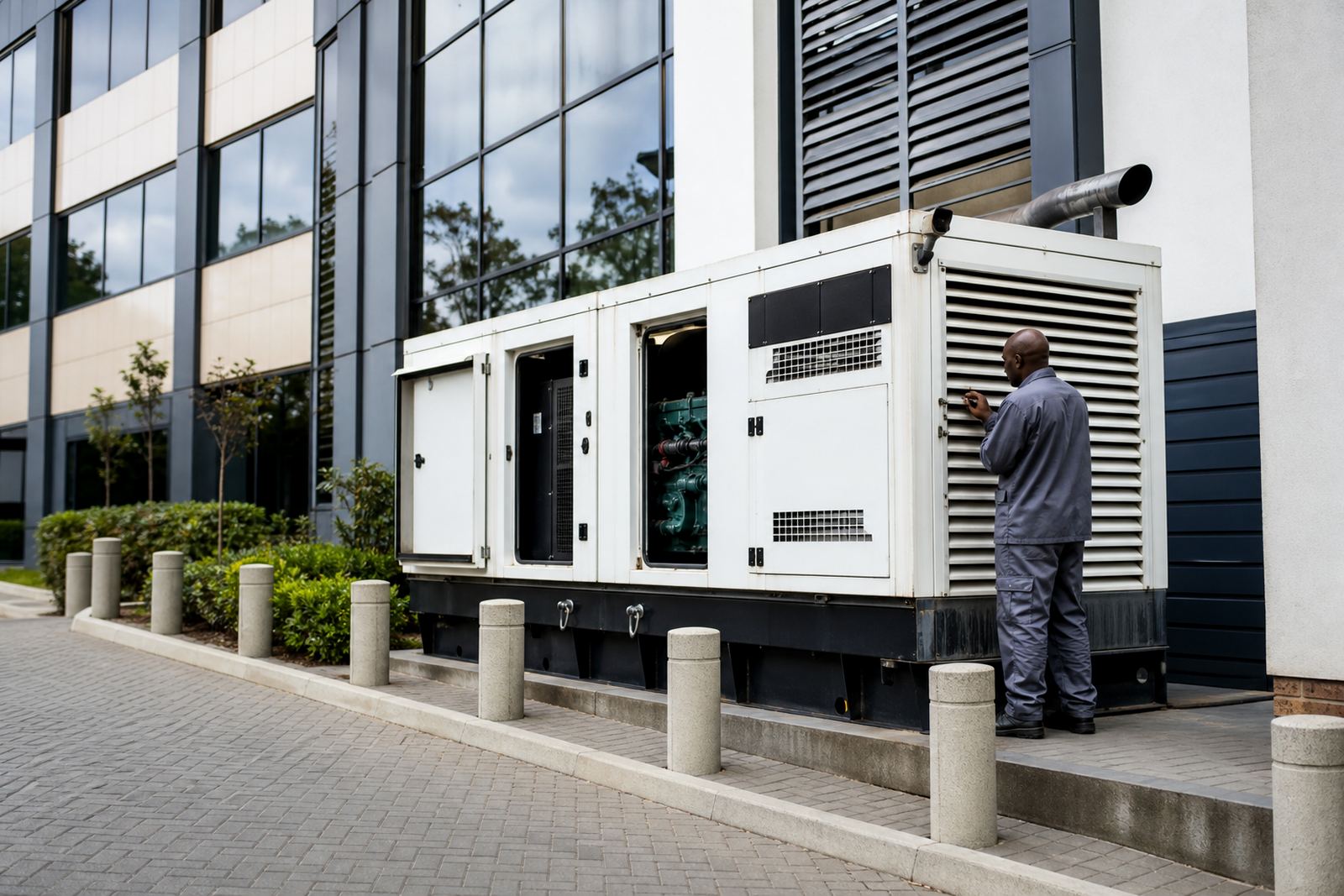
- Standby or prime generator set, often enclosed for noise control
- Automatic transfer or changeover switches
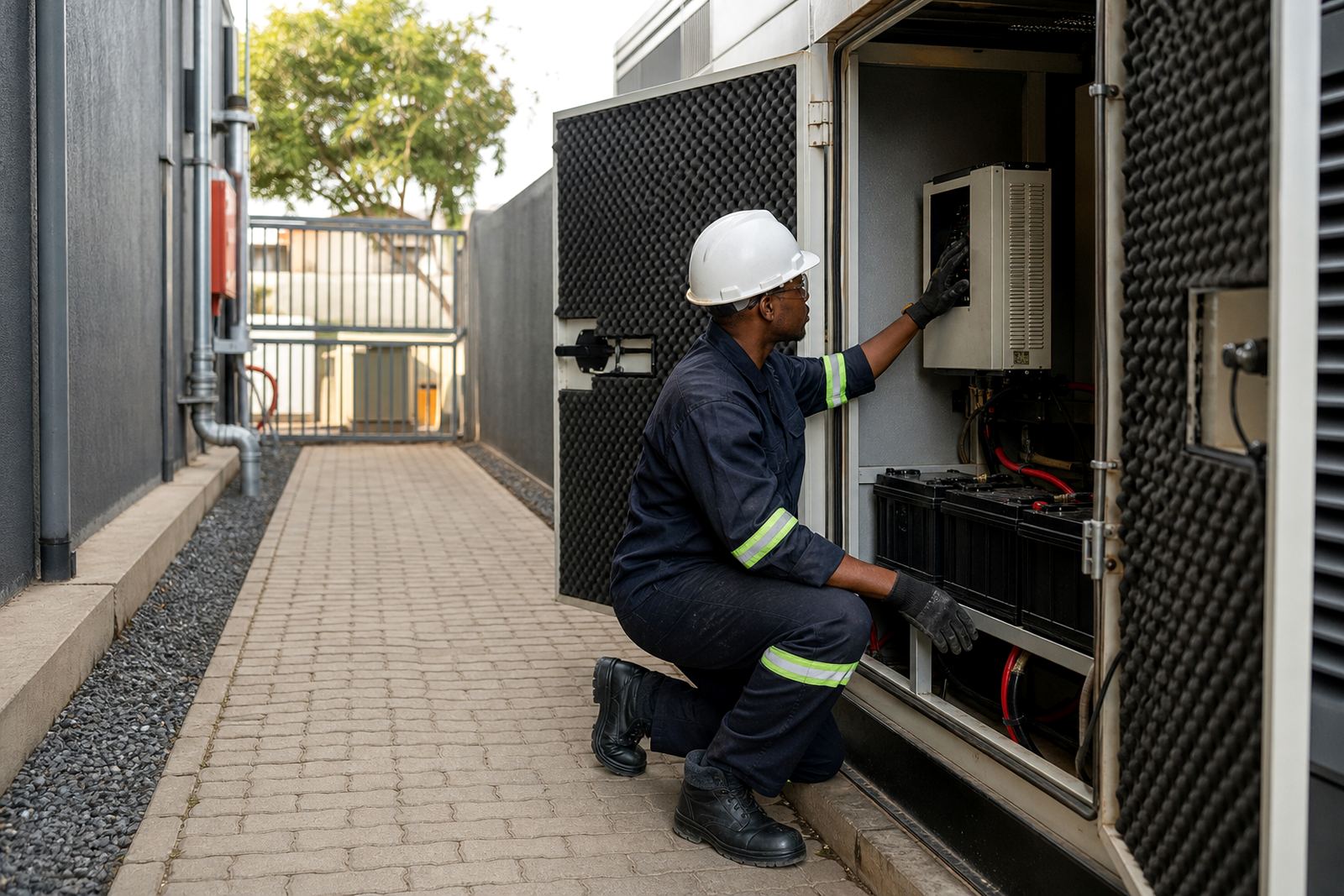
- Battery system and charger
- Day tank or bulk fuel arrangement
- Coolant circuit, hoses, belts and clamps
- Exhaust route, ventilation louvres and fresh air intake
- Monitoring points for alarms, run hours and fault history
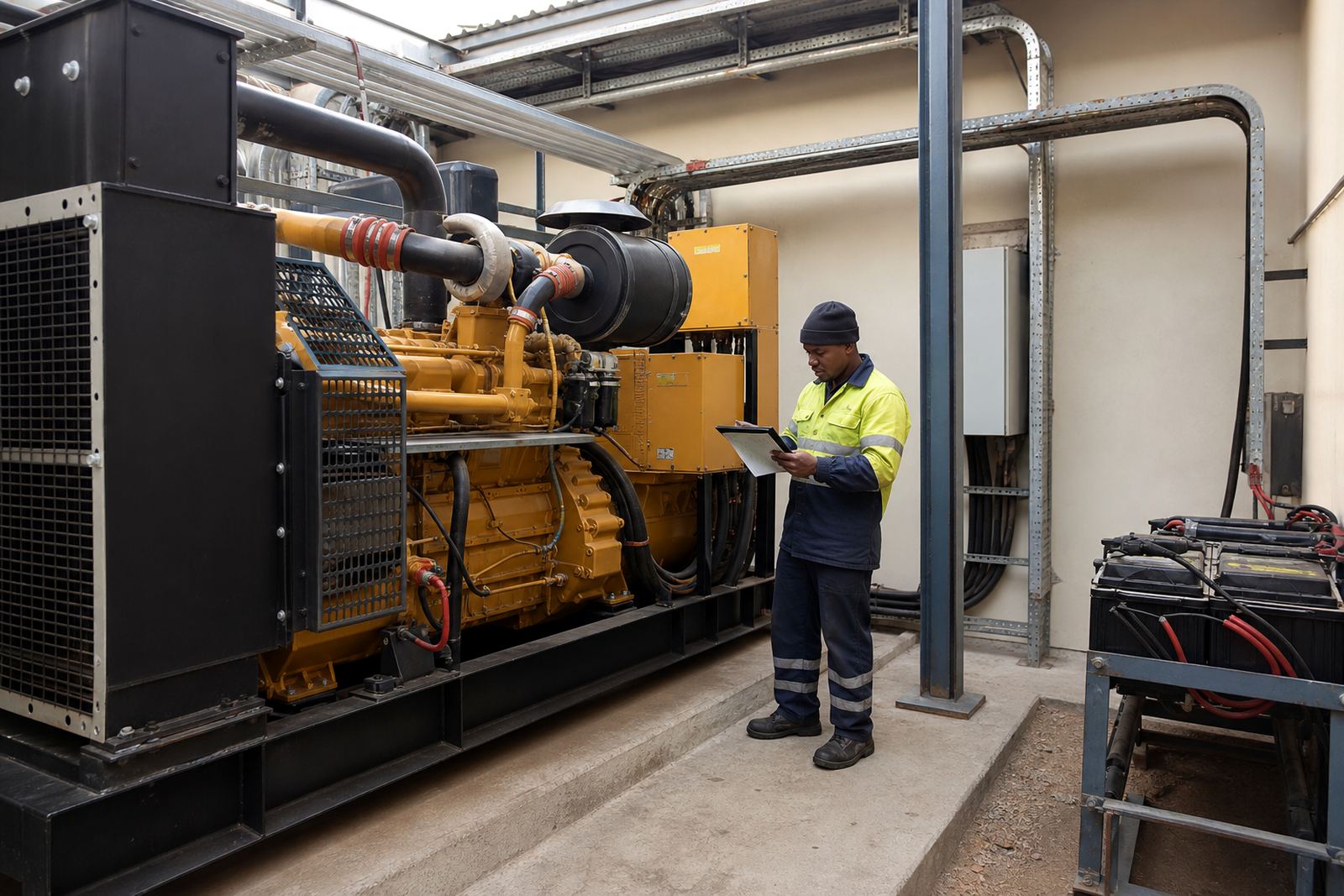
Where the site has raised floors, tight plant rooms or limited access, planning matters as much as the service itself. A filter change is straightforward on an open pad; it is very different when the set is tucked beside UPS gear, cable trays and a fire suppression system.
How we plan servicing around continuity windows
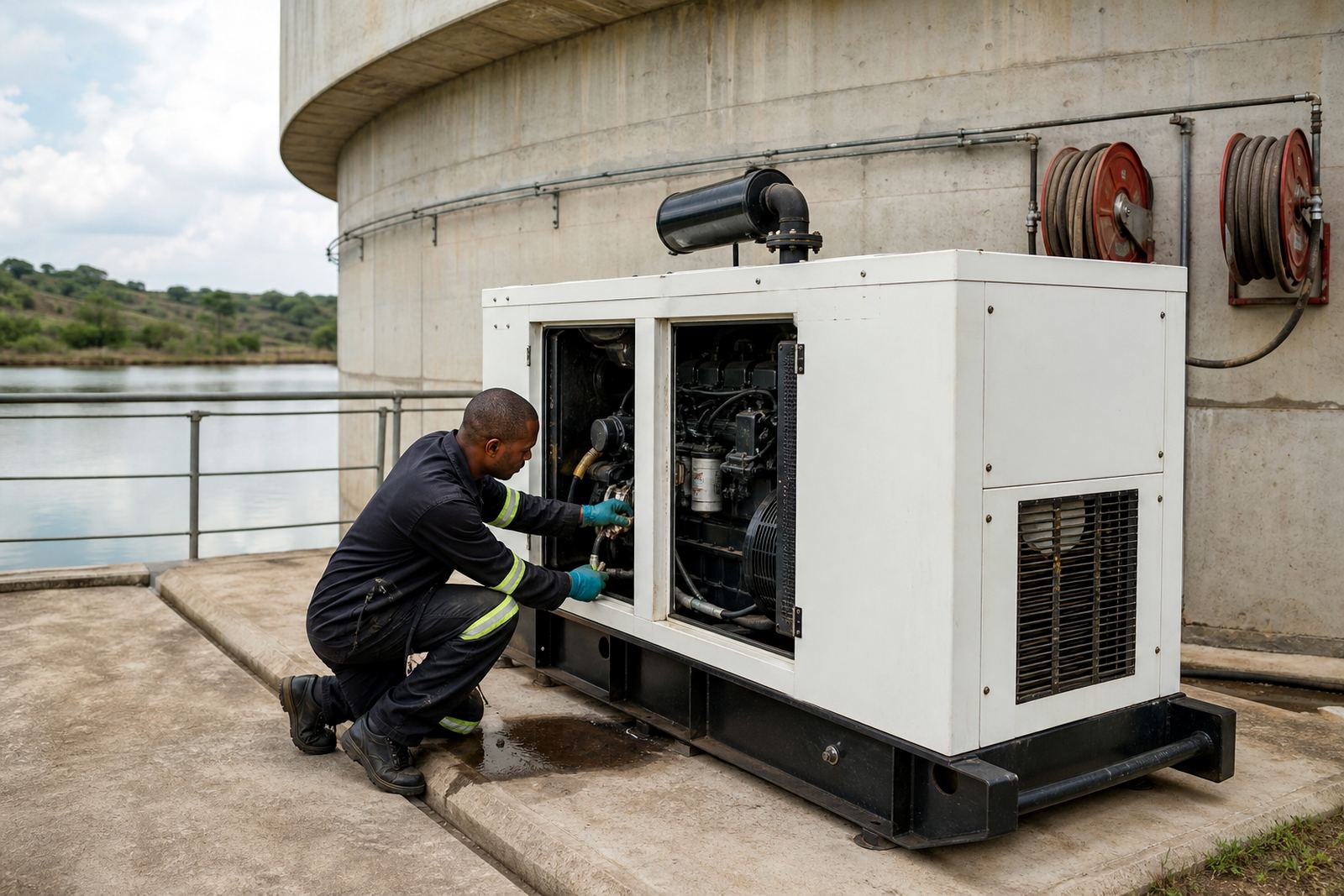
Routine work for data rooms is best handled on a contract, not when the set has already failed. Scheduled servicing lets us track oil condition, replace filters, check coolant strength, test batteries and inspect starter components before a small issue becomes a shutdown. If the building has multiple critical loads, we can separate the work into stages so the client knows which systems are being tested and when.
Load bank testing is often useful where the actual building load is light, or where the generator has not carried a proper demand for a long time. It helps confirm that the set can take heat, accept load and stabilise without smoke, trip faults or voltage problems. In some cases, we also check service records to see whether repeated alarms or missed intervals point to a deeper issue.
- Oil and filter changes on time, not only after discolouration appears
- Coolant checks for level, leaks and condition
- Battery testing and terminal cleaning
- Fuel line inspection for sludge, air leaks or blocked strainers
- Changeover switch checks so transfer happens correctly
- Starter system checks for weak cranking and relay faults
The mistakes that usually show up in server-critical buildings
One common mistake is treating the generator like a once-off purchase instead of an operating asset. Another is leaving the set to idle for months and hoping the next outage will tell the truth. That is a bad habit in any area, but especially in coastal towns like Durban and Cape Town where humidity and corrosion can attack terminals, fittings and exhaust parts faster than people expect.
We also find sites where the room is tidy but the service path is blocked. You cannot do proper fault finding if a fuel valve is buried behind boxed stock or the access panel is sealed off by other trades. The same applies to changeover equipment. If nobody can inspect it safely, nobody can prove it will perform when municipal power drops out.
- Skipping battery checks because the generator still starts sometimes
- Ignoring coolant because no leak is visible on the floor
- Running with dirty fuel that clogs filters and injectors
- Letting alarm logs pile up without review
- Assuming the transfer switch will work just because the building still has power
What a maintenance contract covers in practical terms
Our contracts are built for businesses that need predictable service visits and clear fault reporting. That usually includes scheduled servicing, emergency callouts, preventive inspections, service record audits and fault finding. Where a site needs more regular attention, we tailor the interval to the equipment hours, the building profile and the level of continuity risk.
Electrical work on generator systems and changeover gear must be carried out by qualified people in line with local regulations. That includes the right isolation steps, safe testing and proper handover after the job. For data room sites, we keep the paperwork in order because the site manager, facilities team and security staff often need a record of what was checked and when.
Our Midrand base supports clients across Johannesburg, Pretoria, Centurion, Sandton, Durban, Cape Town and Polokwane. For multi-site operators, that means one service standard across different buildings, whether the generators are in basement plant rooms, external enclosures or rooftop access areas.
Budget ranges that make sense for continuity work
Costs depend on generator size, access, service interval, parts needed and whether the site needs after-hours attendance. For smaller data room support sets, routine servicing may fall in the lower tens of thousands of Rand over a contract period. Larger sites with multiple generators, load bank testing and regular callouts can move into a much higher bracket, especially where fuel system repairs or starter system faults are involved.
As a practical guide, many businesses budget separately for planned servicing, corrective repairs and testing days. A basic scheduled visit is usually far cheaper than waiting for a failure that knocks out server rooms, security systems or tenant operations. If a set has not been used under real load for a long time, budget for testing as well, because a generator that has only idled in the background can still fail under pressure.
The best approach is to match the maintenance spend to the business risk. A room with a few cabinets and low occupancy will not need the same pattern as a facilities hub with live systems, backups and overnight staffing. The question is not only what the service costs, but what a dead hour costs the building.
A service rhythm that fits real buildings, not theory
Data rooms work best when the generator, switchgear and fuel system are treated as part of the building operations plan. That means inspections before summer heat, closer attention after heavy rain, and a proper look at the set after any prolonged outage or failed start. It also means keeping the room accessible, labelled and free of clutter, even when the rest of the site is under pressure.
RelGen works with businesses that need direct, no-nonsense generator servicing across South Africa. For sites where continuity is not optional, we focus on the details that keep the set ready: clean oil, sound batteries, correct coolant, healthy fuel flow and transfer gear that behaves when called on.
Small faults that turn into big trouble
Server room support often fails in stages. A weak battery becomes a hesitant crank. A dirty filter turns into poor running. A tired coolant hose becomes an overheat alarm. If those warnings are missed, the generator may still appear fine on a quiet day and then collapse exactly when the building needs it most.
That is why we prefer steady maintenance over last-minute patching. The goal is not only to repair what has failed, but to keep the set ready for the next interruption, whether it is load-shedding, municipal work or a local supply fault.