When the bell rings the power still has to stay steady
Schools, colleges and training centres have a mixed load that changes through the day. Morning arrival, lunch breaks, evening study sessions, exam periods and residence use all pull differently on the supply, so the generator must be ready for sudden demand and long run hours. On some sites the issue is not only outage cover, but also keeping fridges, server rooms, pumps, access control and security lighting going without interruption.
RelGen works on maintenance contracts for standby and prime generators at campuses in Midrand, Johannesburg, Pretoria, Durban, Cape Town, Polokwane, Centurion and Sandton. We plan around school terms, holiday shutdowns and exam timetables so servicing does not clash with teaching time. Where a site has a noisy residential area or shared boundary line, we also factor in local noise controls and after-hours access rules.
What a campus generator room usually needs looked after
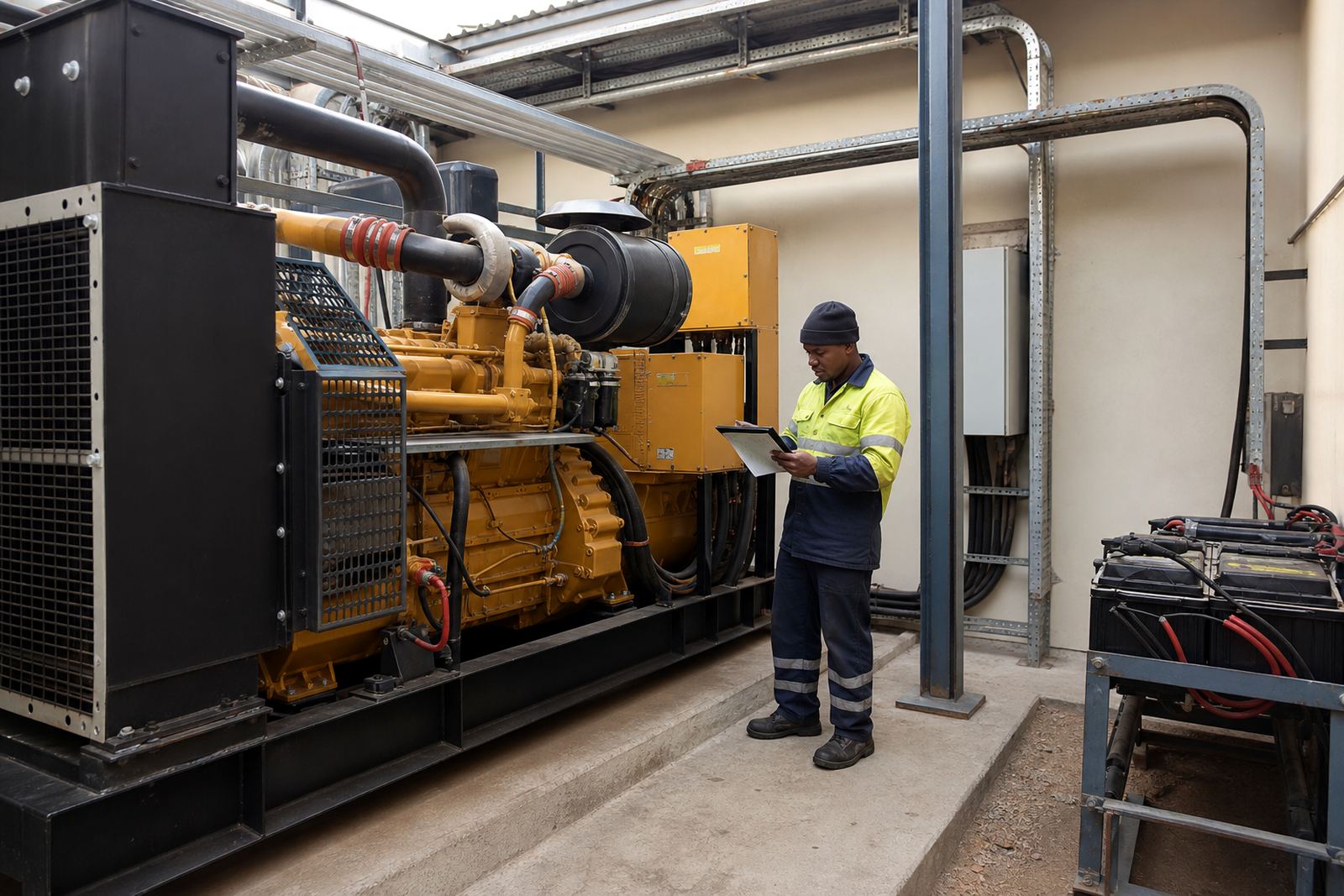
Most education sites run one or more diesel generator sets linked to an automatic changeover switch, with fuel storage, batteries, ventilation and a control panel that must all work together. Smaller schools may only need backup for admin and lights, while larger campuses often carry computer labs, catering areas, borehole pumps, security systems and hostels. Electrical work must be handled by qualified people under local regulations, especially when changeover equipment or fixed wiring is involved.
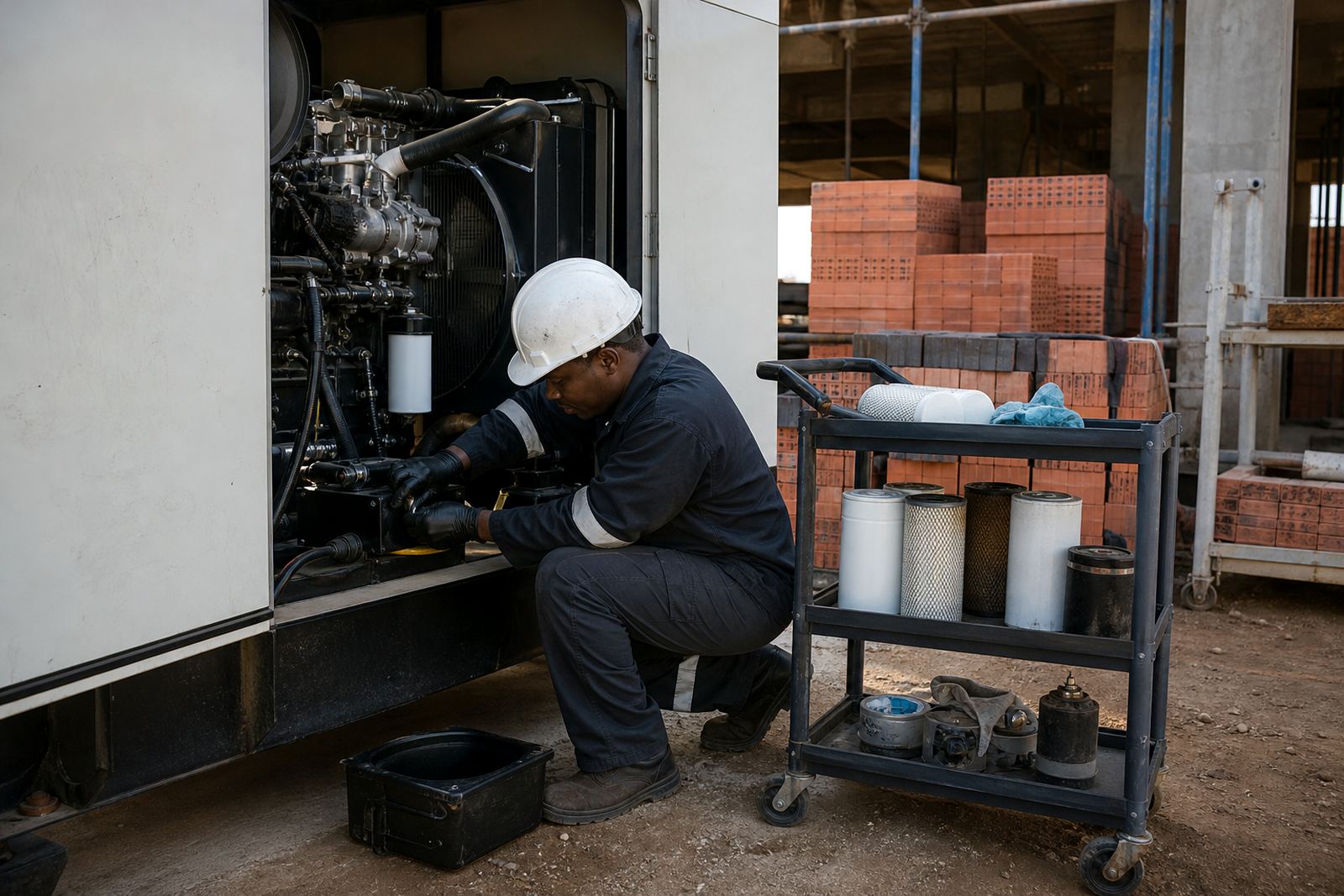
- Oil and filter changes at set intervals, not only when there is visible smoke or noise
- Coolant system service to manage heat in long summer runs and stop-start use
- Battery testing and starter system checks before the term starts
- Load bank testing where a set must prove it can carry load, not just idle on site
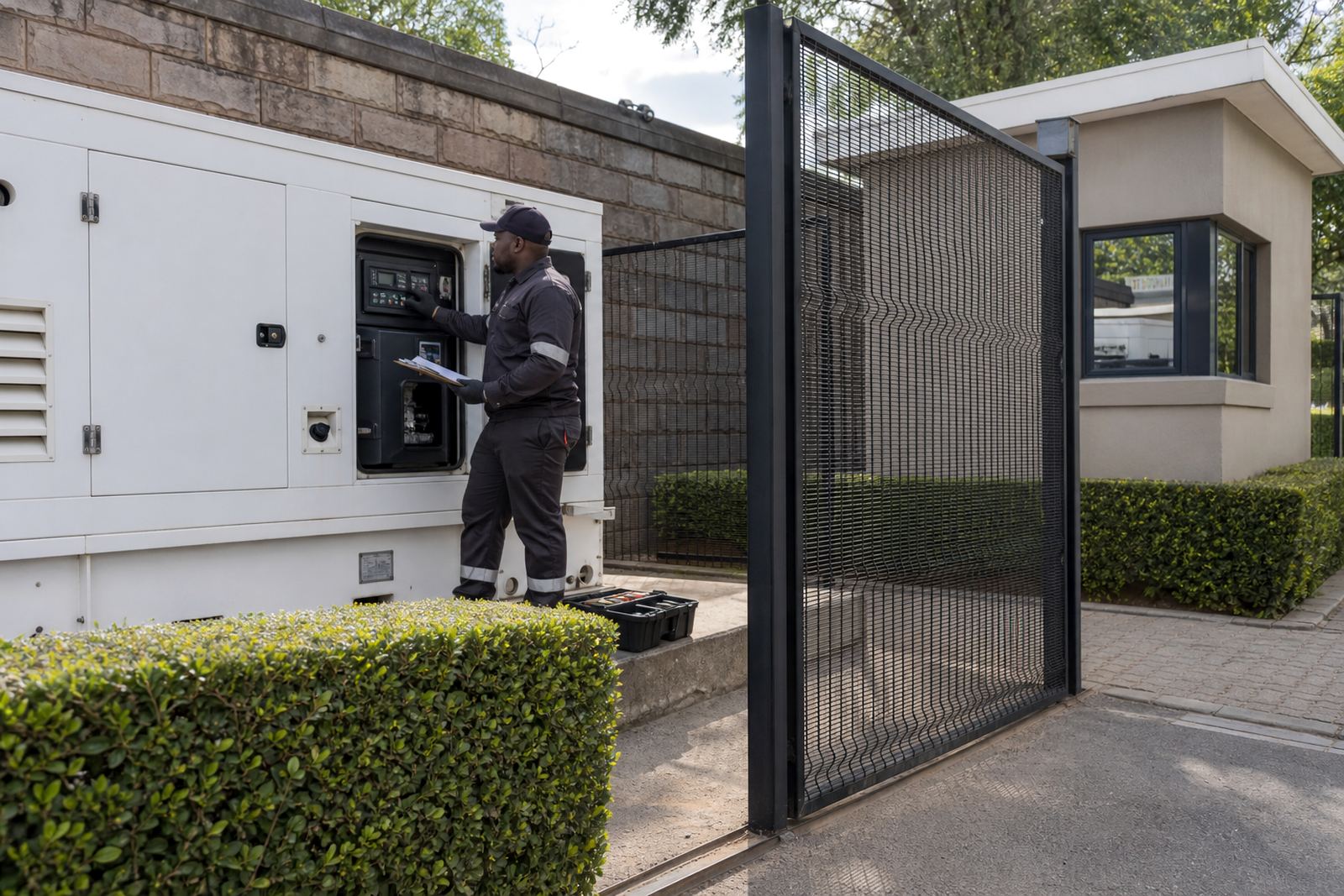
- Changeover switch checks so the transfer between mains and generator happens correctly
- Fuel system repairs and cleaning where dirty diesel or water contamination has caused trouble
How to plan for classrooms, hostels and labs without overcomplicating it
A good layout starts with deciding what must stay on, what can wait and what should never be tied to the generator. A school does not always need every plug point backed up. It often makes more sense to protect lighting, gate motors, IT rooms, alarms, borehole pumps and a few essential admin circuits, then leave non-critical loads off until the mains returns. That approach keeps fuel use lower and reduces stress on the set.
In hostels and boarding facilities, runtime planning matters. If the generator supports laundry, cooking or hot water systems, the fuel supply and service intervals need to match occupancy. Coastal humidity in Durban and Cape Town can also affect batteries, connectors and control panels, so cabinets and terminals should be checked for corrosion. In Gauteng, dust and long dry spells can work against filters and cooling fins, so preventive cleaning matters too.
- Separate essential circuits from general classroom sockets where practical
- Place the generator where exhaust, noise and maintenance access are managed properly
- Make sure the fuel tank arrangement suits real run time, not only emergency hours
- Keep access clear for servicing, refuelling and emergency callouts
The faults we see most in education sites
Many generator problems at schools and campuses start long before a power cut. A set may stand idle for weeks, then fail when it is needed because the batteries have weakened, the fuel has gone stale, or a switch has not been exercised. We also find sites where the generator starts but cannot carry the load because the system has never been load tested under real conditions.
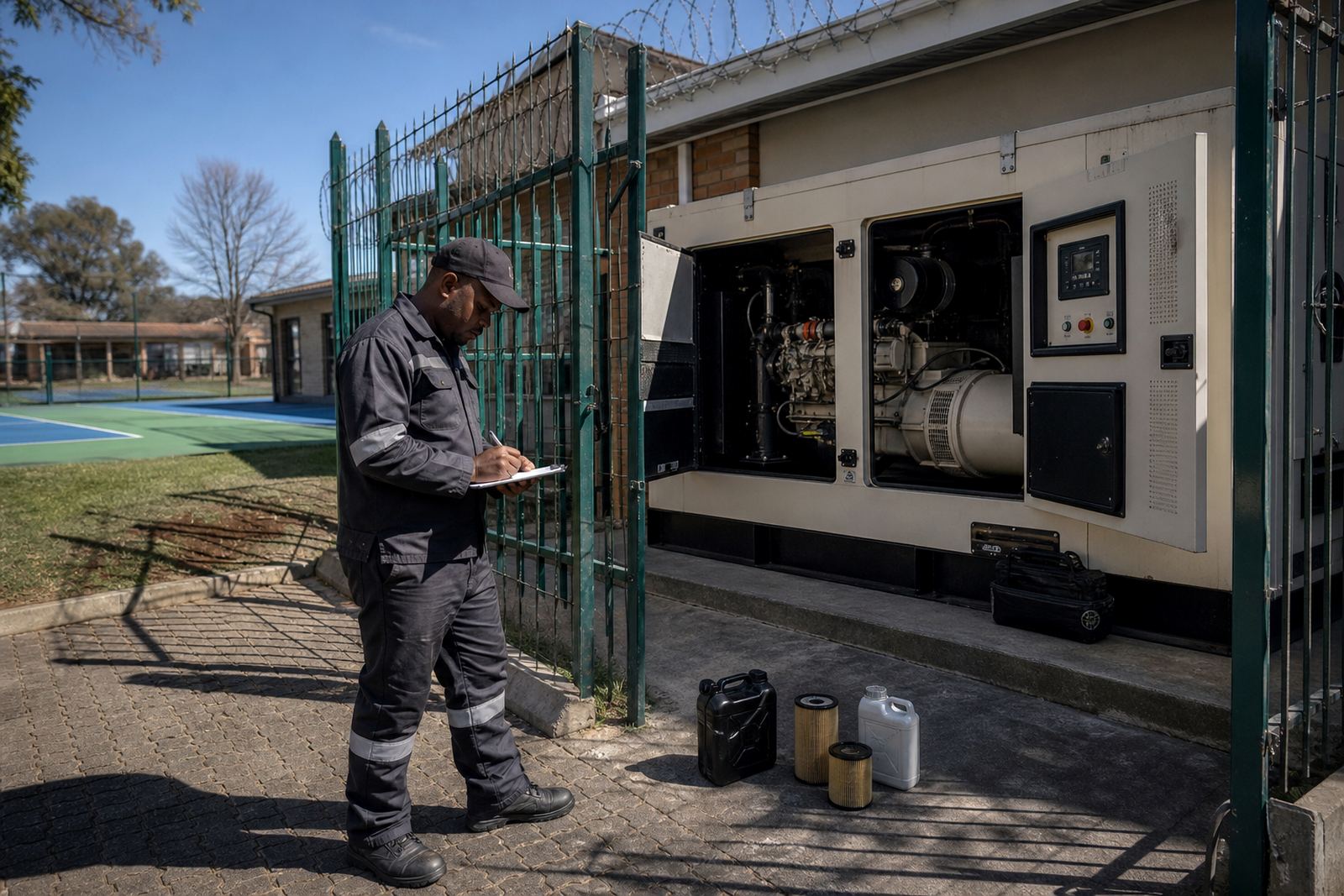
Another common issue is poor record keeping. If service logs are incomplete, faults repeat and small problems turn into expensive repairs. On busy campuses, a quick visual check is not enough. Service record audits help identify overdue items, repeated alarms and parts that are wearing faster than expected. One loose terminal, one blocked filter or a tired starter can put a whole residence block at risk.
- Battery failure after long idle periods or cold starts
- Blocked air or fuel filters that reduce performance
- Coolant leaks that only show up under load
- Changeover switches that need inspection before exam periods
- Starter faults after repeated short runs and stop-start operation
Budget ranges that make sense for a school or campus
Costs depend on generator size, accessibility, number of service points and whether the site needs emergency callouts or planned maintenance only. A small school with one standby set will usually budget differently from a campus with multiple buildings, residence blocks and high weekend usage. Travel distance also matters for sites outside the main metros, particularly where parts and labour have to be co-ordinated across provinces.
As a rough working range, routine scheduled servicing for a smaller set may start from around R3 500 to R8 000 per visit, while larger units with heavier load use can move into the R10 000 to R25 000 range or more depending on scope. Load bank testing, battery replacement, fuel system repairs and changeover switch work are usually separate items. For a school with several generators, a contract is often better value than reacting to faults one by one. It also helps spread costs across the year rather than taking one large hit during term time.
Preventive site inspections are worth doing before the rainy season, before examinations and before holiday care periods. That way a loose cable, low coolant level or weak battery is found early, not on the first day of load shedding.
Why campus managers keep service planning tight
Education sites work on fixed calendars and very little can slip. When the generator is part of the safety plan, the maintenance plan has to fit around learners, staff, residents and contractors on site. RelGen supports schools, colleges and training facilities with scheduled servicing, emergency callouts, fault finding and contract-based support from our Midrand base across South Africa.
Our team handles the practical side: service scheduling, stores and spares control, technical support, field coordination and contract administration. That matters when a site has multiple blocks or different usage patterns across the day. If you manage a campus, the aim is not just keeping a generator running for one outage. It is keeping the whole support system ready for term after term, even when the weather, demand and power supply keep changing.