When a line stops, the whole shift feels it
In a manufacturing site, an outage can pause process equipment, packing lines, ventilation, compressors, pumping systems and control panels all at once. Even a short interruption can affect output, damage materials in process, or leave a line in a half-finished state that takes hours to recover from. That is why generator servicing for factories needs to be planned around actual production patterns, not just a once-off call when the unit refuses to start.
RelGen services standby and prime generators for production facilities in Midrand, Johannesburg, Pretoria, Durban, Cape Town, Polokwane, Centurion and Sandton, with support across South Africa. We work on maintenance contracts for sites that need regular checks, clean running hours and faster fault response when power cuts or local electrical interruptions put pressure on the plant. Our base is in Midrand, Gauteng, and our work is handled by qualified people where electrical work and changeover equipment require proper compliance under local regulations.
What a factory generator usually needs on a contract
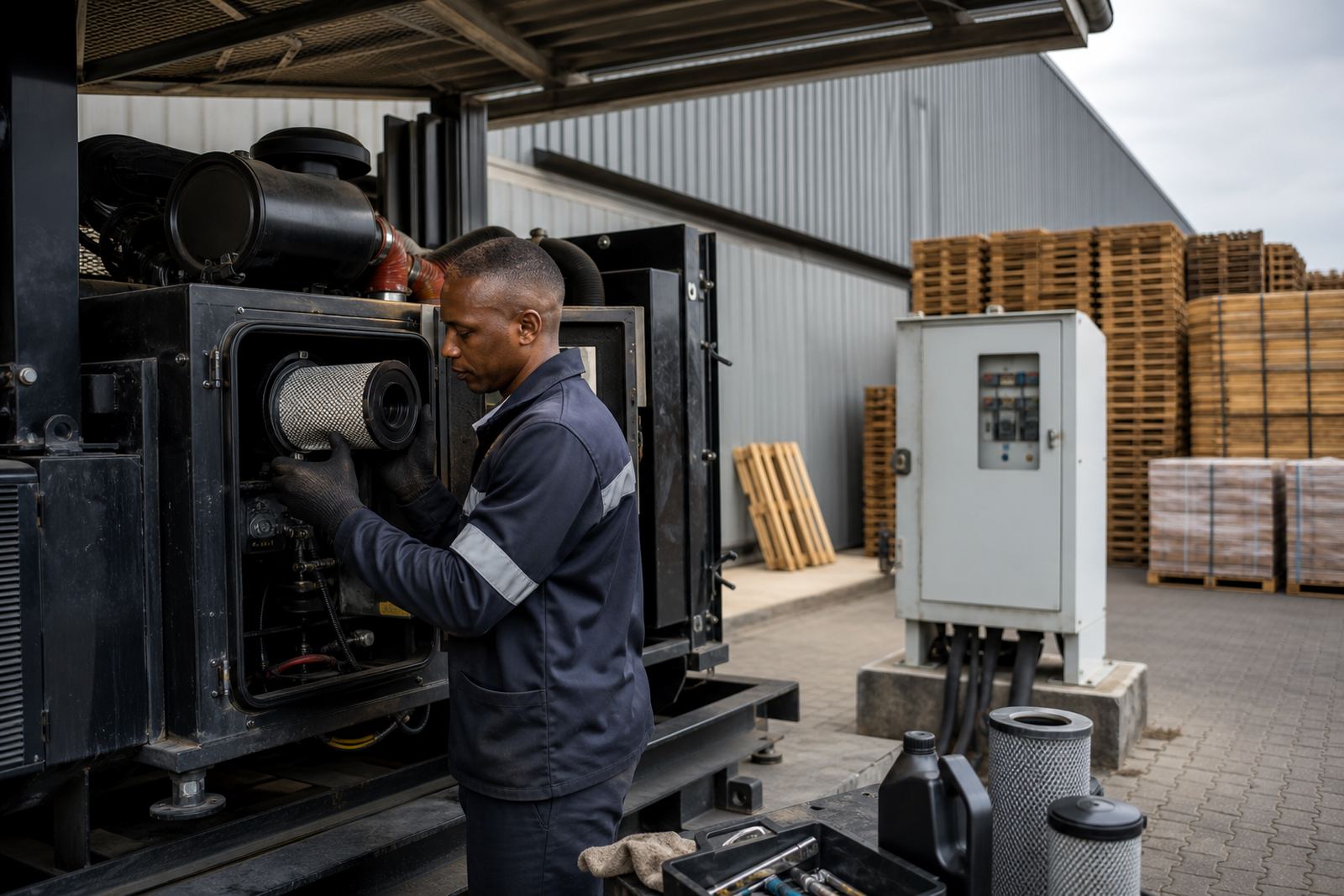
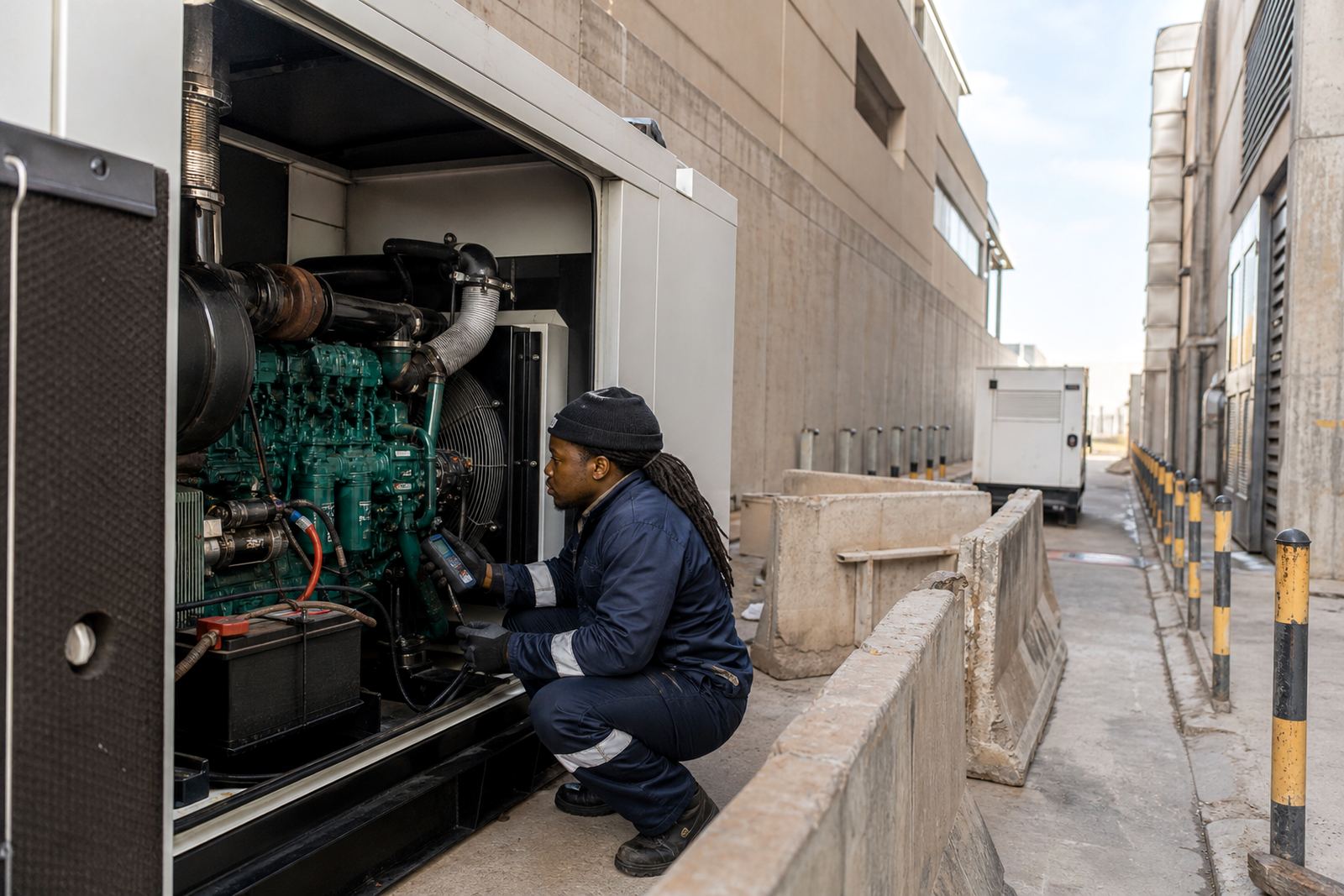
Most manufacturing sites run generator sets in dusty areas, hot plant rooms or outdoor yards where heat, vibration and long idle periods all shorten service life. A proper contract normally covers oil and filter changes, coolant checks, battery testing, fuel system repairs where needed, starter system repairs, service record audits and preventive site inspections. Where the unit carries load regularly, load bank testing is also important so the set does not look healthy on paper while struggling under real demand.
- Oil and filter changes at service intervals matched to running hours
- Coolant system service to catch leaks, poor circulation and contamination
- Battery testing and replacement planning before a dead start catches the site out
- Load bank testing to confirm performance under controlled load
- Changeover switch checks carried out by qualified people only
- Fault finding on alarms, starting issues and poor changeover response
On manufacturing sites, a small issue can cascade quickly. A weak battery, dirty filter or low coolant level may look minor but it can stop a generator from carrying the plant through a peak shift. That is why scheduled checks work better than reacting only when there is smoke, warning lights or a no-start callout.
Layout choices that make servicing easier later
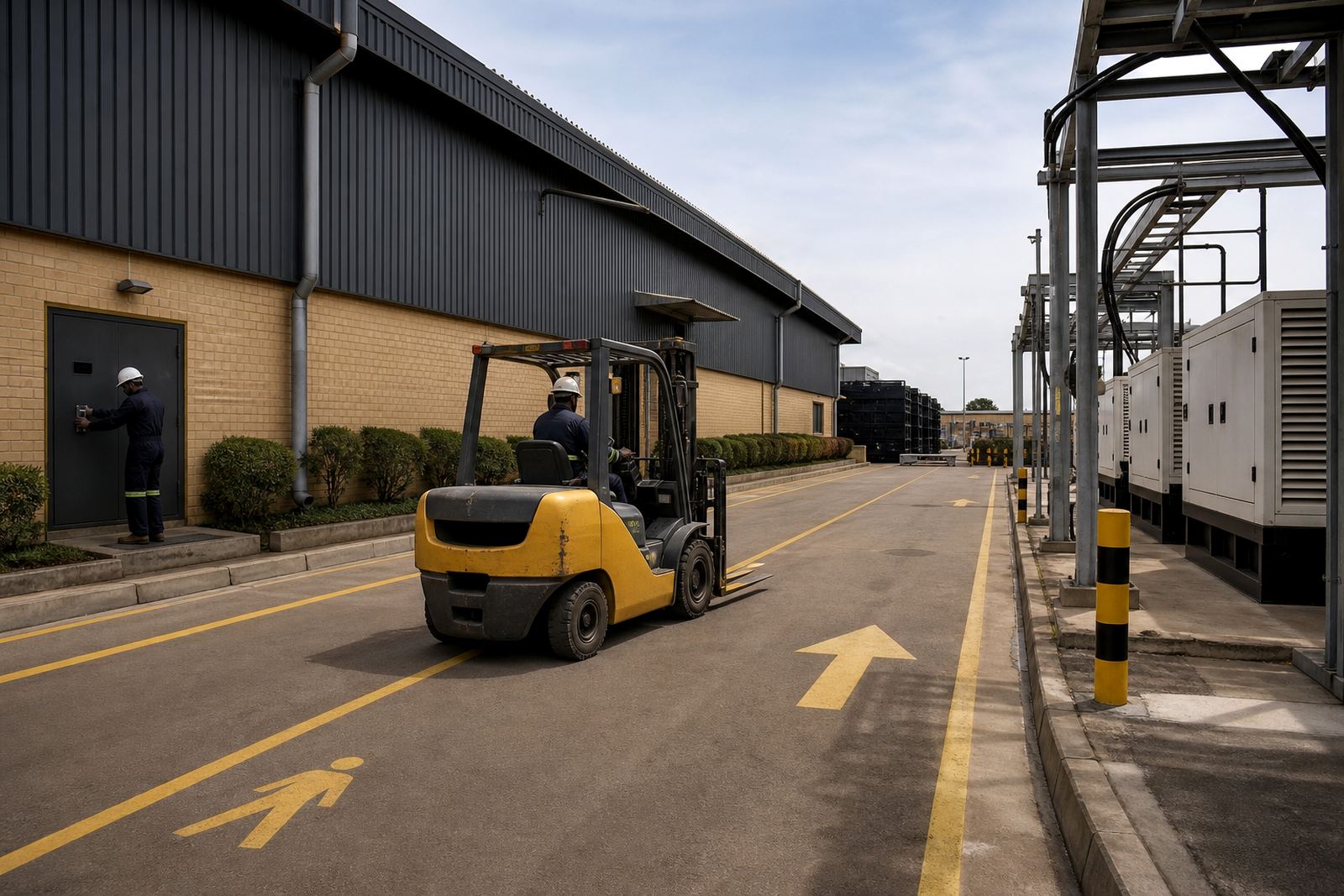
Many factory problems begin with the original layout. A generator squeezed too close to a wall, radiator discharge blocked by stored pallets, or a cable route that makes inspection awkward will cost more to maintain over time. When we plan a service contract, we look at access for filters, battery reach, coolant top-ups, oil drains, exhaust routing and the safe space needed around the set for air flow and inspection. In coastal areas like Durban and Cape Town, humidity and salt air can also speed up corrosion on terminals, housings and switchgear, so the inspection plan needs to match the environment.
It also helps when the site keeps the generator area clear and labelled. A locked room is fine, but technicians still need safe access for testing and repairs. If the plant relies on a changeover switch, the switching sequence must be documented and understood by the site team. We often find that a clean room with poor records causes more delays than a dusty room with proper labels and current service notes.
- Leave enough clearance around the generator for airflow and maintenance access
- Keep fuel lines, battery terminals and hose runs visible for routine checks
- Separate generator storage from general warehouse stock and scrap bins
- Mark isolation points, changeover routes and emergency shut-off locations clearly
- Keep service logs on site so repeat faults can be traced quickly
The mistakes that cost factories the most
The most common mistake is waiting for a breakdown before setting up a maintenance contract. Another is assuming that because the generator starts once a month, it will carry a full production load when needed. A set can idle through months of light use and still fail on the day a plant loses supply. Flat batteries, blocked filters, stale fuel, coolant loss and dirty connections are all common causes of failure in working sites.
We also see sites where the generator is serviced, but the changeover switch and related controls are ignored. If the automatic transfer equipment is not checked, the generator may be healthy and still fail to deliver power to the right circuits. On manufacturing sites that use process equipment, this can affect pumps, conveyors, controls and auxiliary systems, not just the lights. Records matter too. A missing service log makes it harder to spot a repeat defect or understand why a unit keeps tripping under load. A proper audit can save a lot of time and expense later, which is often overlooked.
Budget ranges for plant managers and project teams
Maintenance budgets for manufacturing sites vary with generator size, number of sets, access, running hours and whether load bank testing is included. Smaller service plans for a single standby unit may sit in the low thousands of Rand per visit, while broader contracts for larger plant sites with multiple units, callout cover and regular testing can move into the tens of thousands of Rand over a contract period. Fuel system repairs, starter repairs, battery replacement and switchgear work are usually priced separately after inspection because the fault has to be confirmed first.
It is worth budgeting for a planned service contract rather than waiting for emergency repair work. Emergency callouts often cost more because they happen under pressure, after hours, or during a production stop. A contract gives the site a steadier maintenance rhythm and makes it easier to plan downtime during a quiet shift or a scheduled shutdown window. For factories in places with frequent municipal interruptions or heavy seasonal load, that planning becomes even more important.
RelGen, founded in 1992, is managed by Thabo Engelbrecht with support from Naledi Shezi, Johan Matlala, Ayanda Khoza, Muneerah Daniels, Sibusiso Wessels and Rikus Botha. That team structure helps us keep service contracts organised across Midrand, Johannesburg, Pretoria, Durban, Cape Town and Polokwane without leaving the client guessing who is handling the next visit.
How a maintenance visit is handled on site
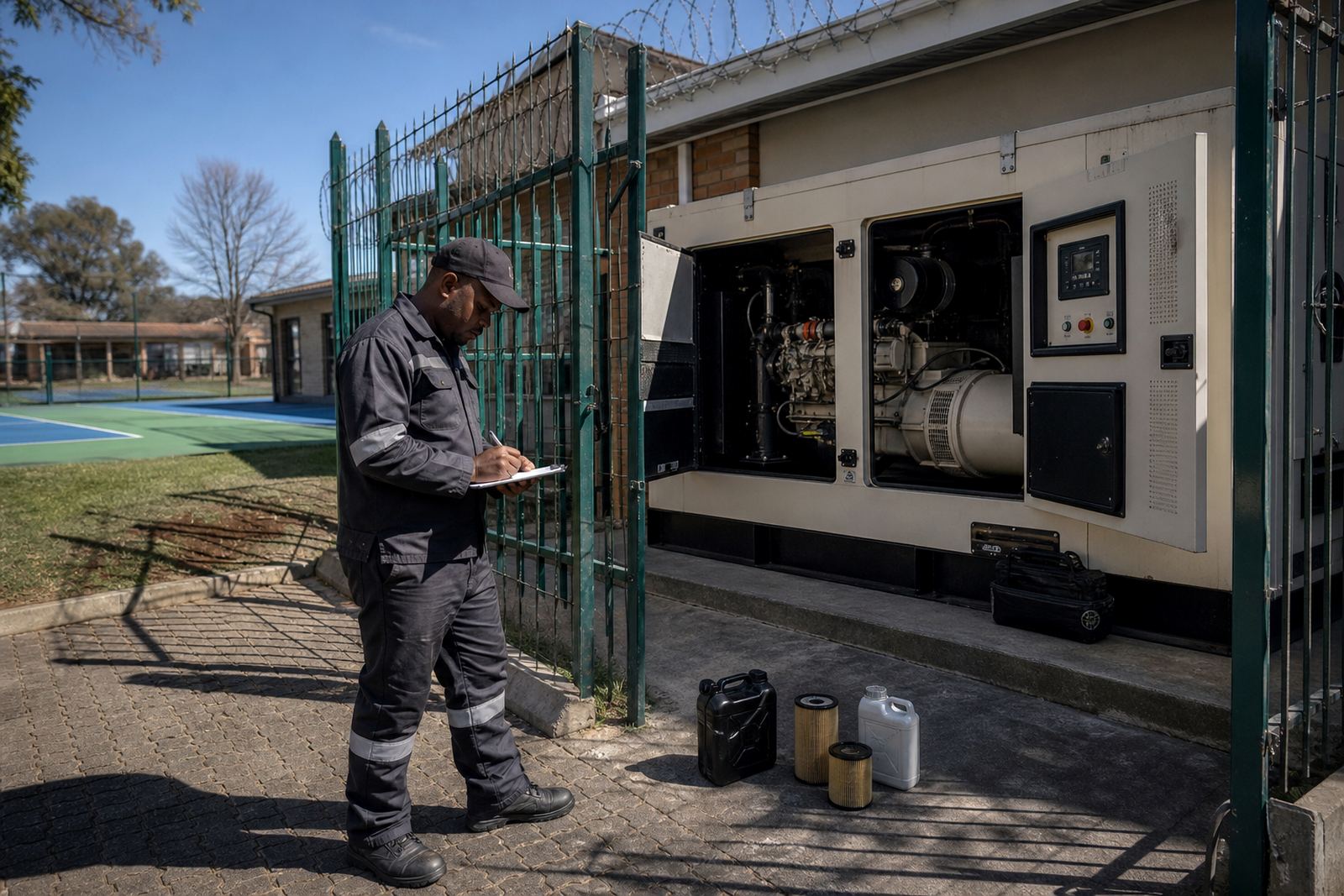
A normal site visit starts with a visual check, service record review and a look at recent faults or alarms. From there we move through oil, filters, coolant, batteries, starter components and the load transfer arrangement as required by the contract. If load bank testing is due, it is arranged to suit the site and to limit disruption to production where possible. We also check for fuel leaks, loose fixings, signs of corrosion and any issue that could affect the next start.
For manufacturing clients, the real value is not only in repair work but in keeping the site ready for the next interruption. That means clearer records, better timing, and practical follow-through when a defect is found. Clients reach RelGen through the enquiry form on our contact page, and we schedule work around the realities of plant operation, not around a one-size-fits-all routine.
- Scheduled servicing for planned plant shutdown windows
- Emergency callouts for no-start, trip and fault conditions
- Preventive site inspections to pick up wear before it stops production
- Service record audits to track repeat problems and missed intervals