
Guest hours, quiet plant room and one clear service window
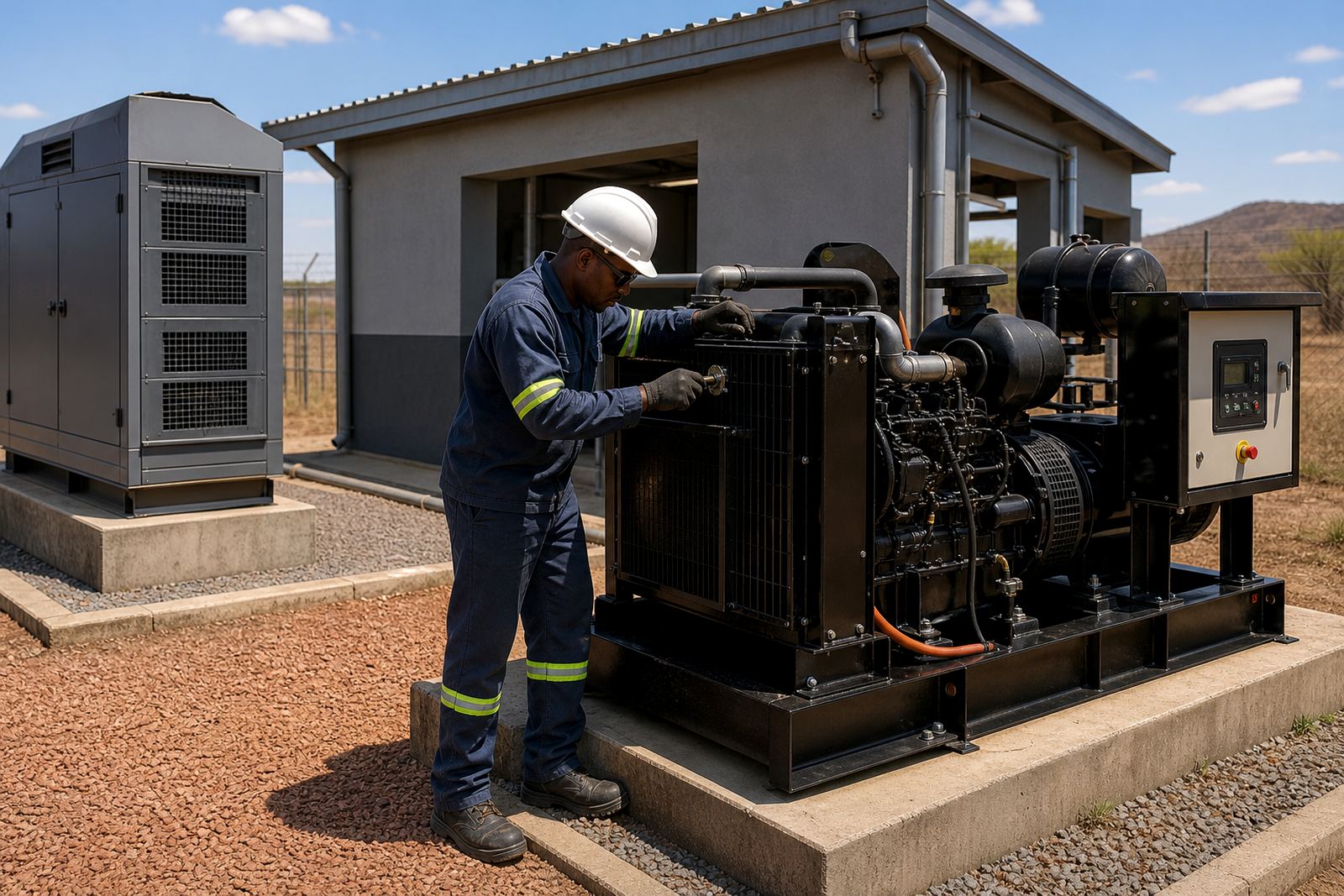
The site was a mid-size hospitality property in Umhlanga, Durban North, with a standby generator set used for lifts, lighting, kitchen support and critical back-of-house loads. The brief was plain enough: keep the unit ready for outages without upsetting guests, and make sure the changeover equipment stayed dependable when the municipal supply flickered during peak evenings.
We worked from a scheduled maintenance contract and arranged the visit in a short window between breakfast turnover and the evening prep period. Access to the plant room was tight, the air around the set was warm and humid, and the team had to move carefully around stored linen, chilled equipment and housekeeping traffic. That meant a measured approach, clear sign-off points, and no unnecessary stopping and starting.
- Site type: hotel, hospitality use
- Location: Umhlanga, KwaZulu-Natal
- Generator use: standby backup for guest and service areas
- Service mode: planned contract visit with low disturbance
What the hotel needed from the generator set
The generator had to be ready for short interruptions as well as longer outages, with stable voltage delivery and clean transfer back to utility supply. In a hotel setting the biggest concern is not only whether the set starts, but whether it carries load without dips that can trip sensitive equipment or leave common areas in the dark.
We inspected the full service path from the engine side through to the changeover arrangement. Electrical work was handled by qualified people in line with local rules, and anything beyond routine servicing was reported for the client’s own electrical contractor where required. On a coastal site, corrosion and moisture are constant factors, so terminals, housings and cable terminations need closer attention than they would inland.
- Engine fluids checked and topped up where needed
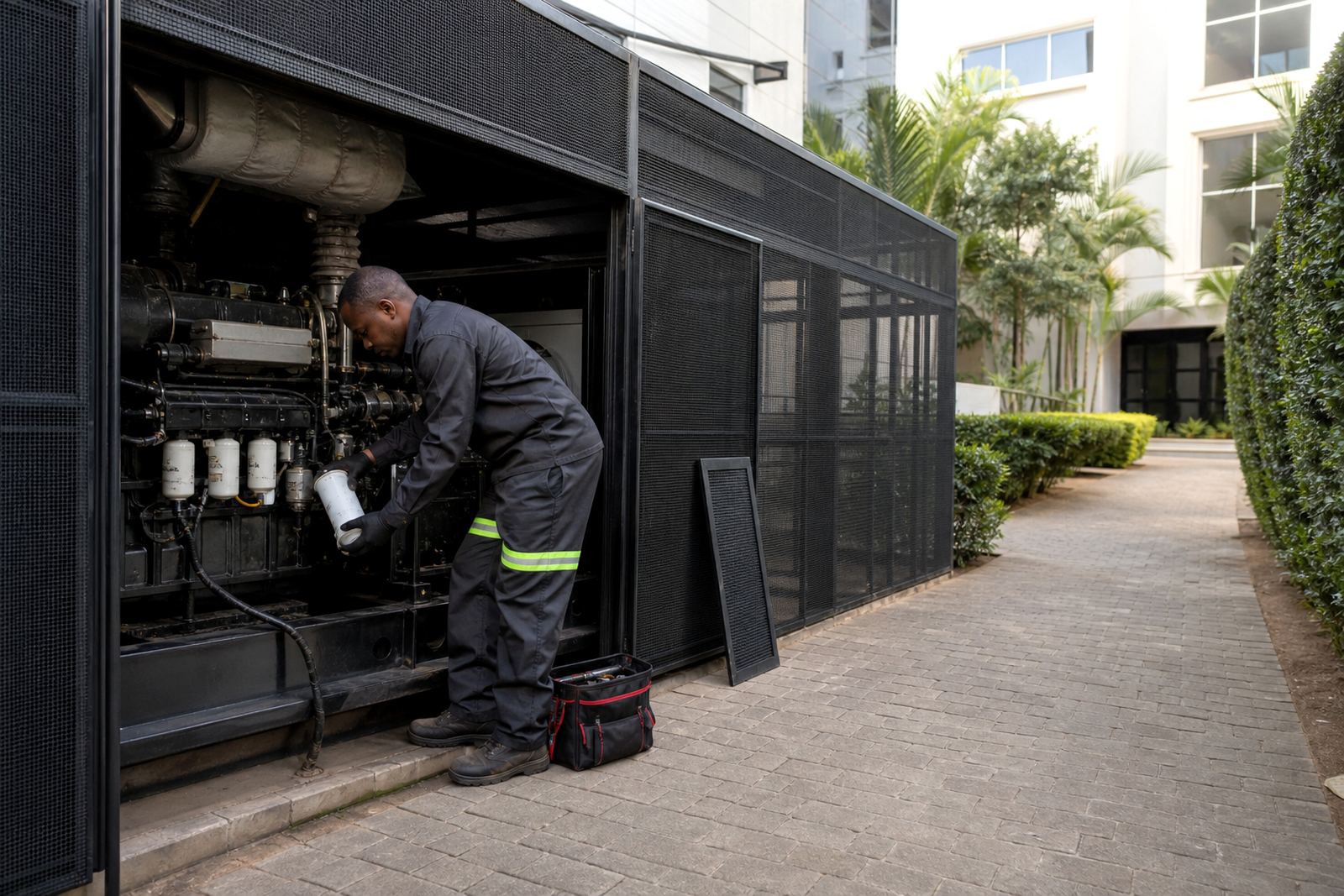
- Filters inspected and replaced on schedule
- Battery condition tested under load
- Transfer and changeover operation checked under controlled conditions
The contract scope we carried out on site
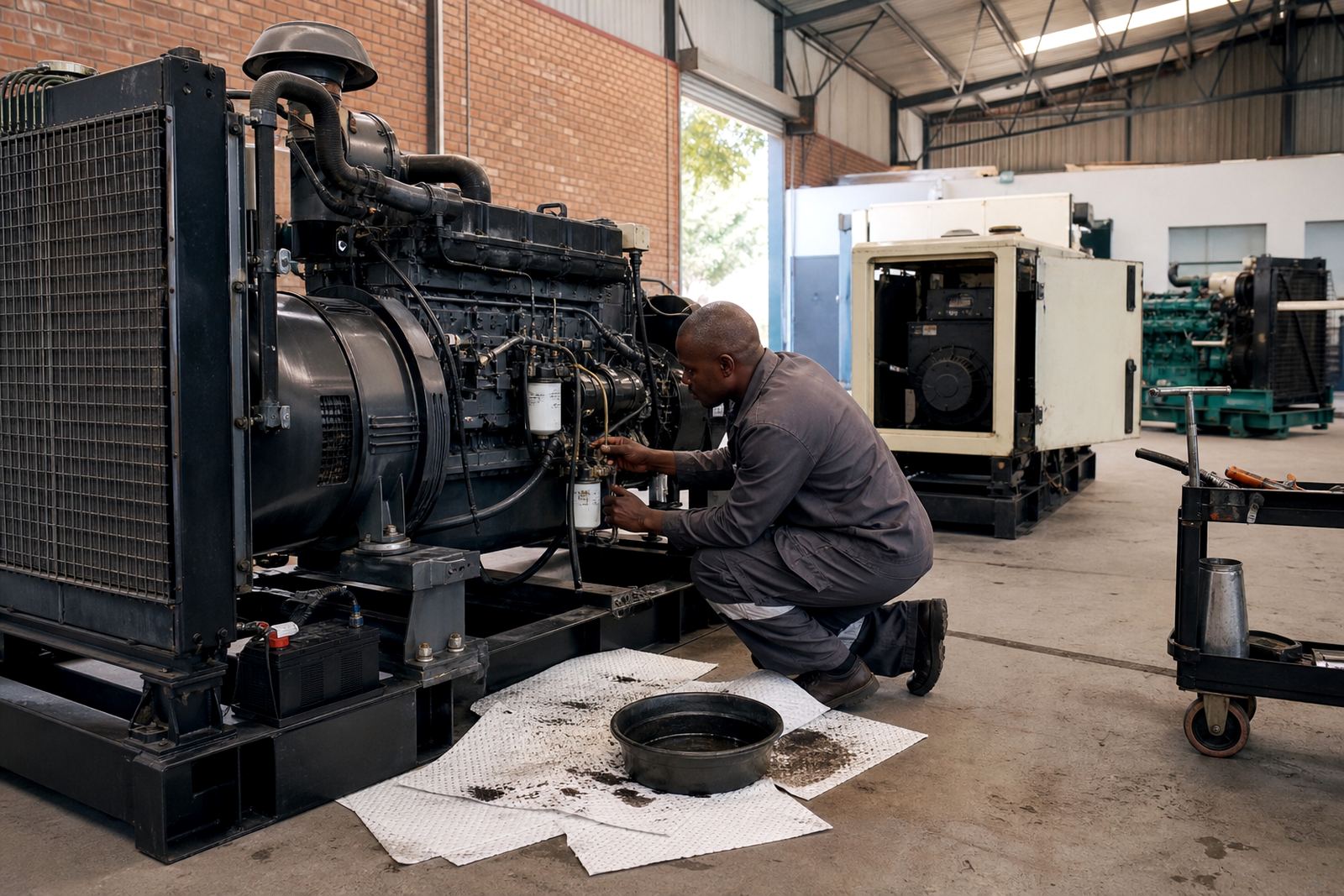
The service visit covered scheduled servicing, oil and filter changes, coolant system checks, battery testing, load bank testing, changeover switch checks, fault finding and a service record audit. We also carried out a preventive inspection of the starter system and fuel system so the set would not be caught out by long idle periods between outages.
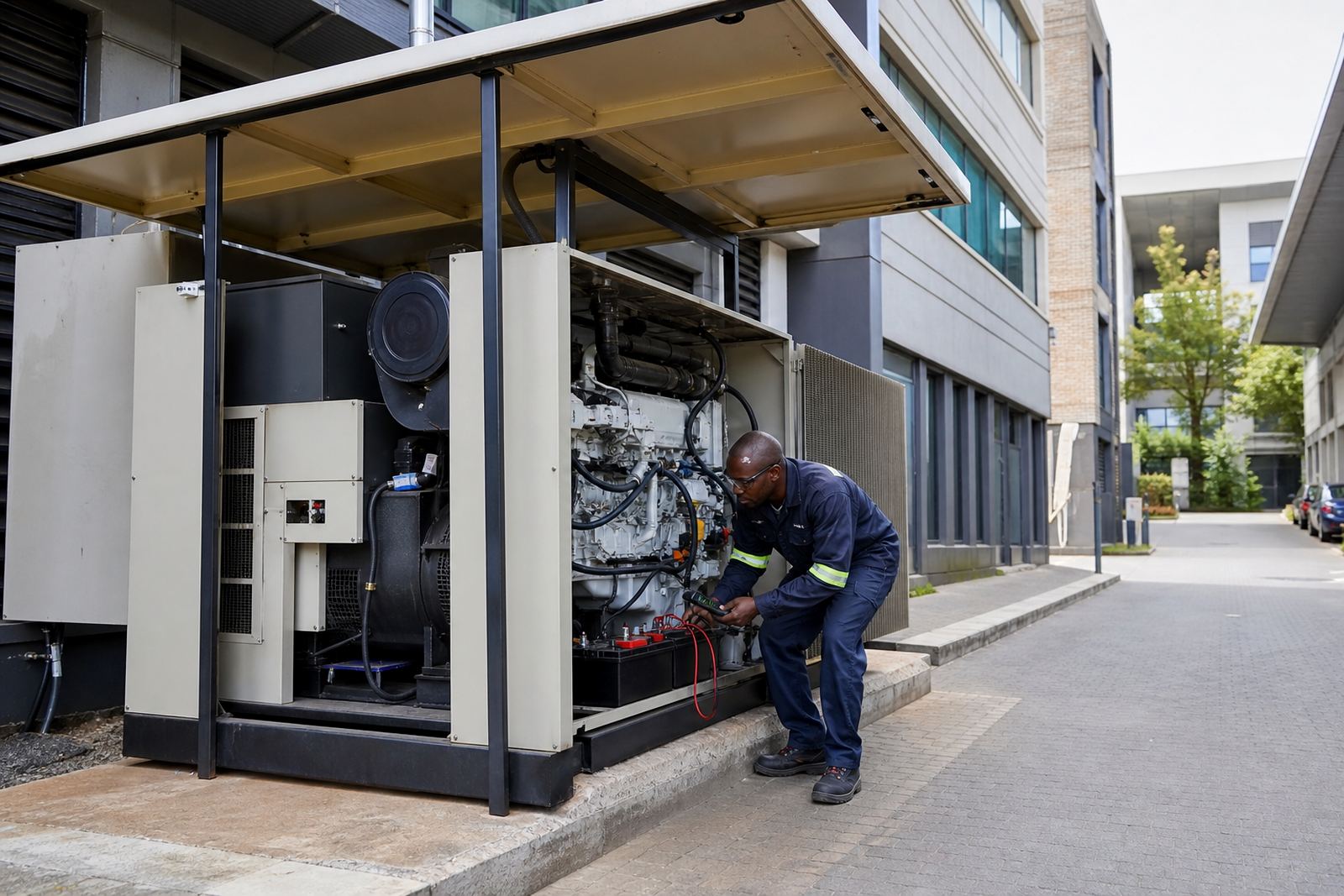
Oil condition was checked against the service interval, filters were changed, coolant hoses and clamps were inspected for seepage, and battery terminals were cleaned and tightened where needed. The load bank test gave the hotel a clear picture of how the set behaved under controlled demand, not just during a no-load start. That matters on the coast where a generator can start fine, then still struggle once a full load is applied.
- Oil and filter change completed
- Coolant system service completed
- Battery test and charging system check completed
- Load bank test completed to confirm carrying ability
- Changeover switch checks completed
Working around kitchens, lifts and late check-ins
The hotel could not afford noisy downtime during busy guest periods, so the service sequence was planned in stages. We checked the set while the property was still on utility supply, then carried out the more active testing when the operational team had enough warning to manage guest movement and kitchen scheduling. That sort of planning avoids confusion when a property is running at full pace.
The load bank test was done with attention to ventilation and heat dissipation, because plant rooms in Umhlanga can hold heat well into the evening. We also reviewed the service history with the hotel’s maintenance staff and logged any repeat findings, including minor gasket weeps and a tired battery that had not yet failed but was not where it should be. No drama, just useful facts the team could act on.
- Service carried out over 1 planned week, with checks split across the visit
- Minimal disturbance to guests and housekeeping flow
- Issues logged for follow-up maintenance planning
Key facts from the unit and the test results
The generator set on site was a medium-size diesel standby unit serving essential hotel loads. It was fitted with an automatic changeover arrangement and supported by a local battery start system. The service showed that the engine side was generally sound, but the battery and a section of terminal hardware needed attention to keep the start sequence dependable.
After the servicing work the set started cleanly, carried the test load without unstable movement, and transferred back to utility supply in a controlled way. The hotel team was shown the service notes and advised on the next inspection point, especially because coastal air can shorten the life of exposed parts if they are left unchecked.
- Generator type: diesel standby set
- Application: hotel essential loads
- Control: automatic changeover arrangement
- Testing: load bank and transfer checks
What the hotel gained after the service
The main result was confidence. The site had a generator that was quieter in operation, cleaner in its service condition and better prepared for the sort of outages that can hit coastal business districts without warning. The maintenance team also had clearer records, which helps when a property has to answer to internal audits, insurance questions or guest comfort concerns.
There was also less risk of a small fault turning into a late-night callout. Fresh oil, sound filters, better battery condition and verified switch operation all add up to fewer surprises. For a hotel, that means no scrambling when a supplier trip or municipal interruption arrives during dinner service or a full check-in period.
- Improved starting confidence
- Cleaner service records
- Lower risk of unplanned downtime
- Better readiness for load shedding and utility trips
How we would approach the next hotel contract
For another hospitality site in Umhlanga or Durban, we would take the same practical route: lock in a clear service window, inspect the changeover gear early, and test the set under load rather than relying on a quick idle start. That approach suits hotels because the day is driven by check-ins, meals, deliveries and guest movement, not by a service team’s convenience.
We would also keep a closer eye on coastal wear points from the first visit, especially battery terminals, hose clips, exposed steel and any control wiring near warm, humid airflow. In places like Umhlanga, that extra attention saves time later and keeps the generator ready for the days when the grid does not hold up.
- Best fit: scheduled maintenance contract with planned access
- Useful extras: service record audit and preventive site inspections
- Recommended rhythm: regular checks before peak season and before heavy holiday occupancy
Key facts
| Project location | Umhlanga, Durban North, KwaZulu-Natal |
|---|---|
| Client type | Hotel and hospitality site |
| Service period | 1 planned week |
| Generator use | Standby backup for essential hotel loads |
| Key works | Oil and filter changes, coolant service, battery testing, load bank testing, changeover switch checks |
| Operating constraint | Guest-facing site with tight access and low noise tolerance |