When the office park went dark, the set stayed silent
The site was a multi-tenant office park in Randburg with a single standby generator feeding common-area lighting, access control, gate motors and selected tenant circuits. The brief was straightforward: find why the generator would not start, restore dependable operation fast, and put a maintenance plan in place so the park was not left exposed again.
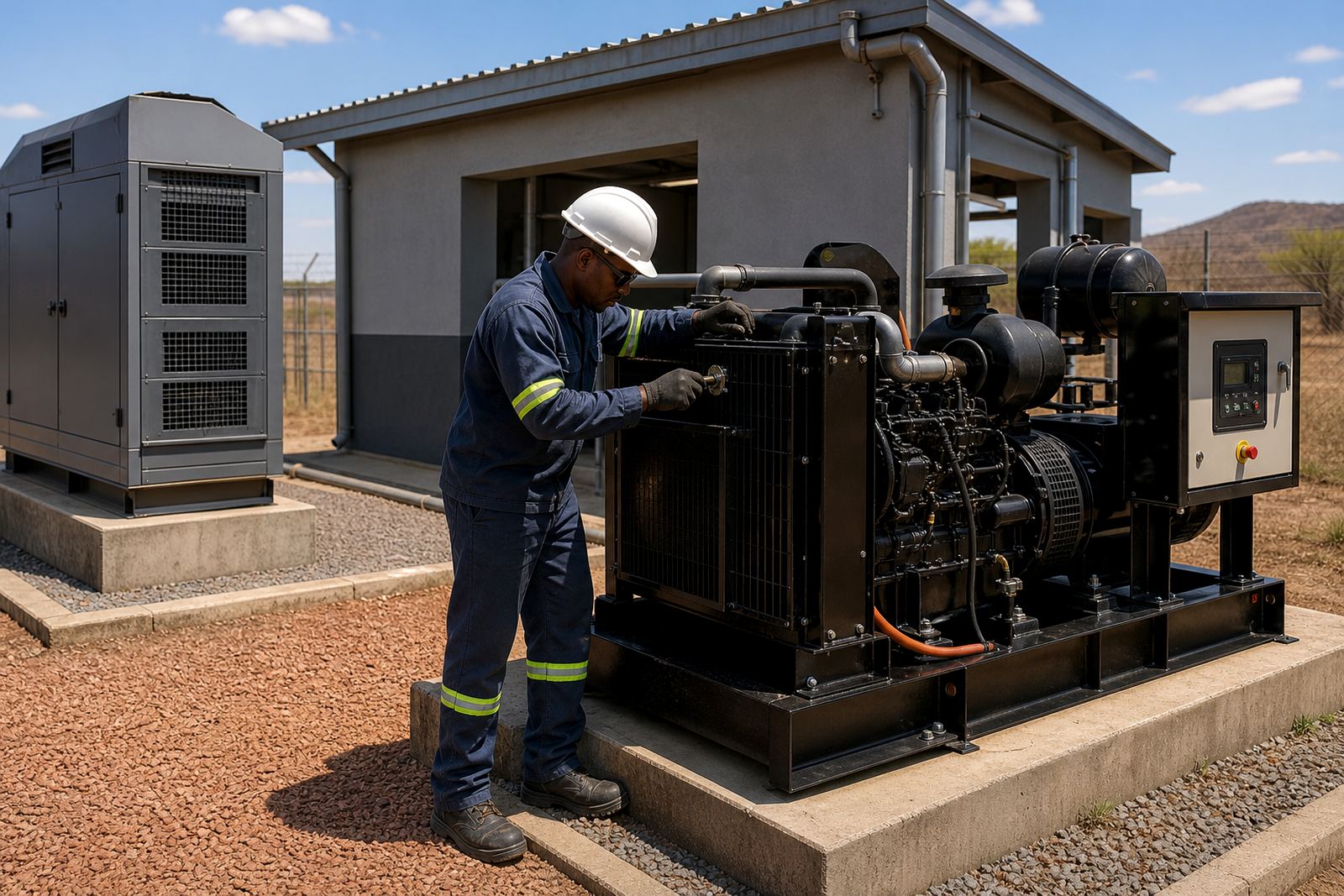
The unit was a mid-size diesel standby set mounted outdoors in a fenced service yard, with an automatic changeover arrangement and battery starting. The tenant mix meant the property manager needed a repair that was tidy, fast and compliant, because several businesses in the block could not afford repeated interruptions during load-shedding or local supply faults.
What we found on the first visit
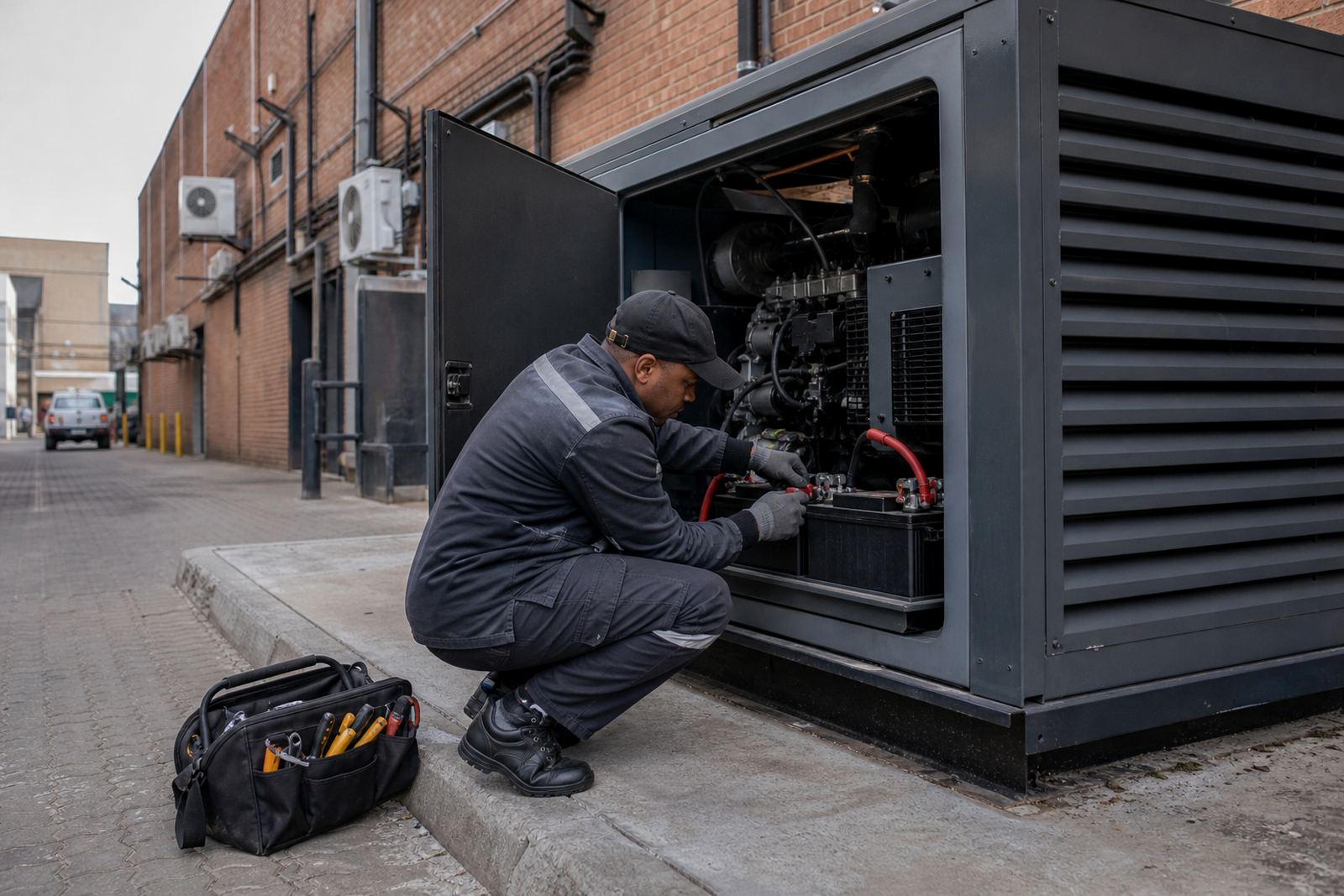
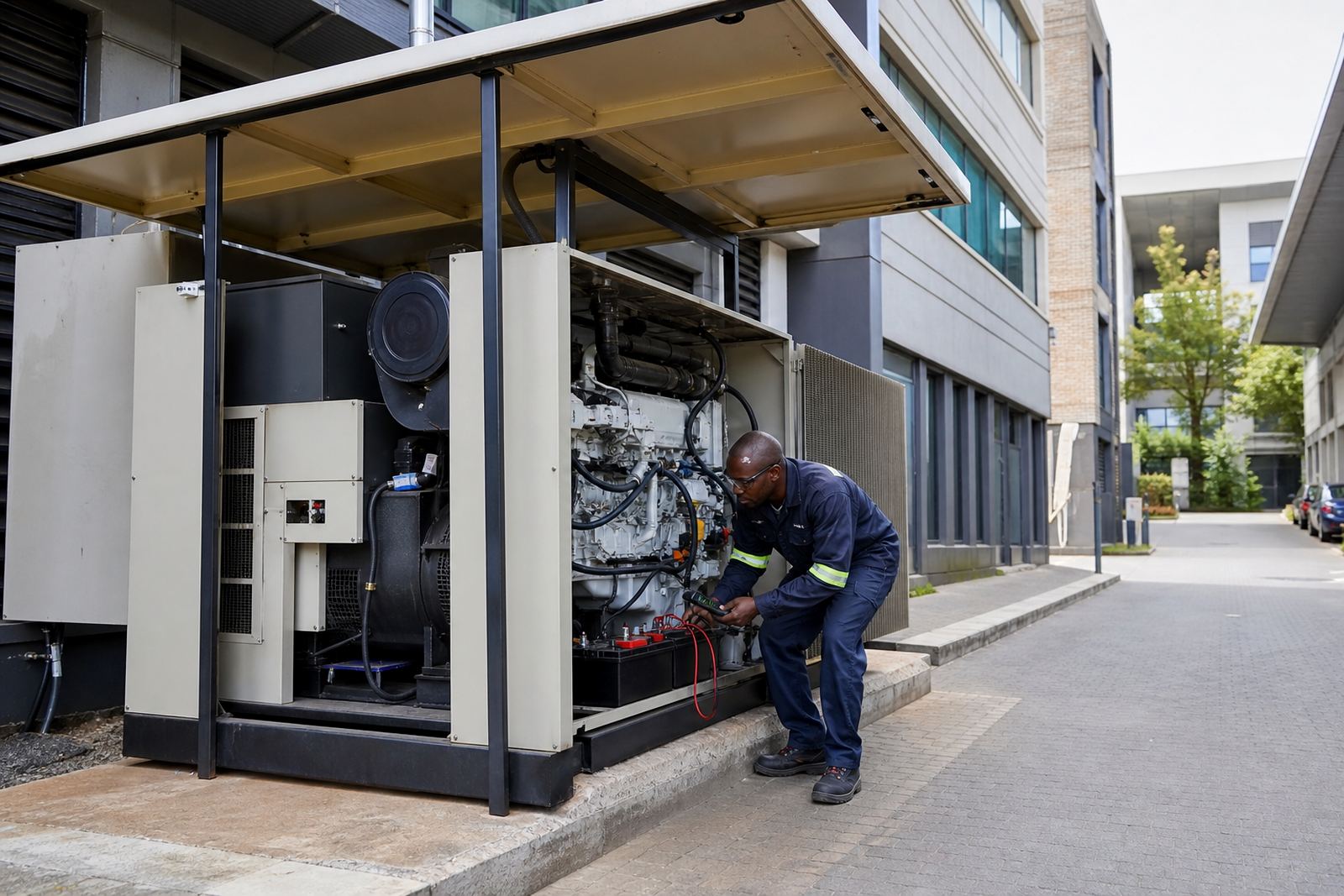
On arrival we checked the starting circuit, battery condition, control panel indications and visible fuel supply components before attempting a start. The immediate issue was a weak starting system combined with overdue servicing items, so the engine was not cranking at the speed needed to fire cleanly. We also picked up contamination in the service history and signs that the set had been left without proper follow-up after earlier runtime issues.
- Battery voltage under load was below acceptable starting range.
- Air and fuel filters were past their service interval.
- Coolant level and condition needed attention.
- The changeover switch required inspection after failed starting attempts.
Electrical work and changeover equipment checks were handled by qualified people in line with local regulations, because that is not a guessing game and the panel work must be correct first time.
The repair plan we put in motion
Once the fault was identified, we split the work into an immediate repair and a follow-up service. The first stage covered start-up recovery, battery replacement and the checks needed to get the generator running under controlled conditions. The second stage covered the service items that were overdue, plus a record audit for the property manager so the site had a clearer maintenance trail.
- Replaced the failed starting batteries and tested charging output.
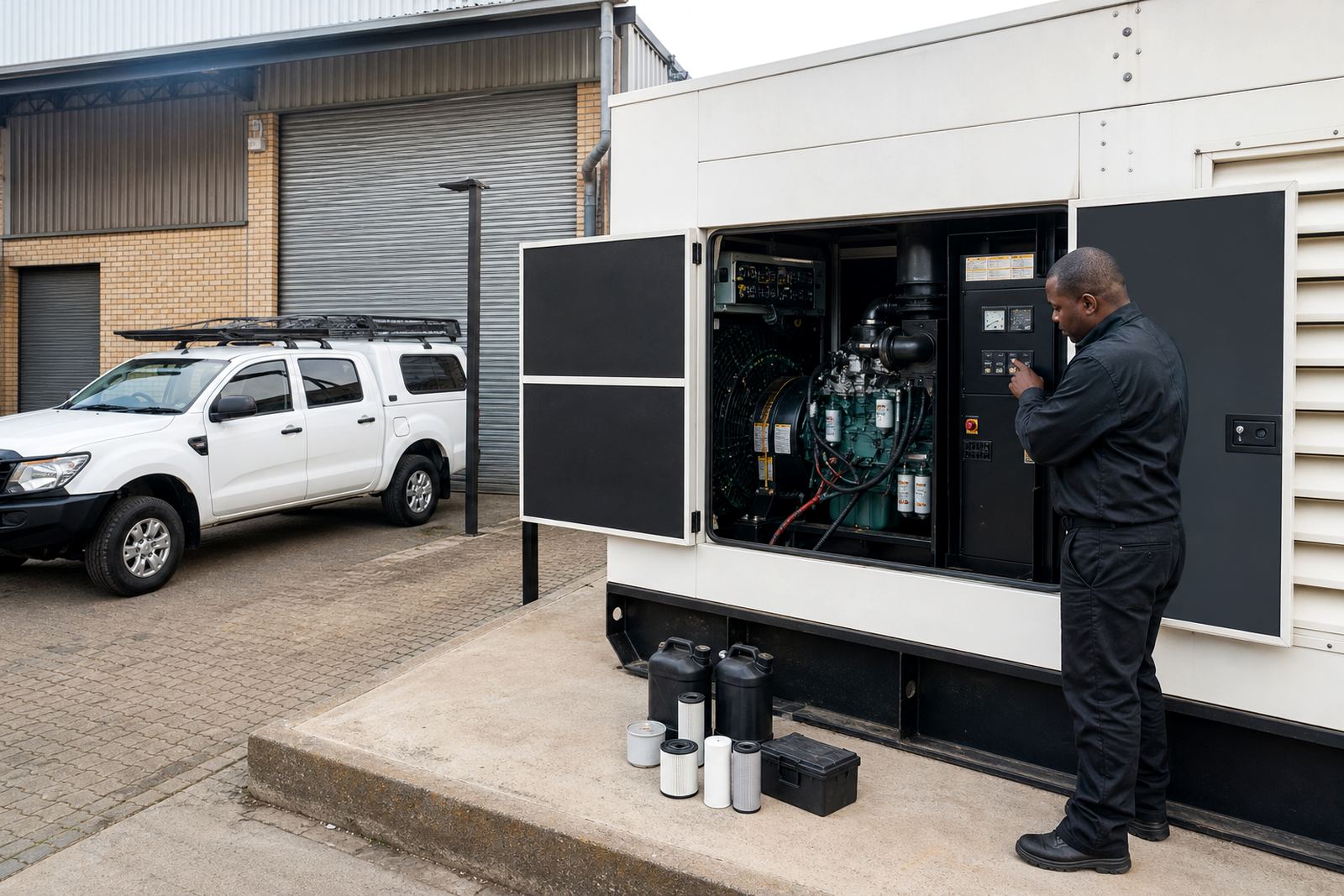
- Changed oil and filters to restore proper engine protection.
- Serviced the coolant system and checked hoses, caps and levels.
- Tested the starter circuit and cleaned minor corrosion at terminals.
- Inspected the automatic changeover switch and verified transfer logic.
The work was carried out with the site still occupied, so we planned around office hours and kept noise and access disruption down. That matters in Randburg where parking, deliveries and tenant movement can make a small repair turn into a logistik problem if nobody plans properly.
Two weeks from first fault to full follow-through
We attended the site within the first week, completed the fault finding and restored the generator to service the same day. During the second week we returned for a scheduled follow-up inspection, verified the start sequence again, and completed the remaining service checks after the unit had proved itself under load.
That second visit also allowed us to confirm that the earlier starting fault had not damaged the starter system or left the batteries in a poor state of charge. We carried out a short run test and checked the control alarms, so the client had a clean handover and not just a temporary fix.
Load testing and the bits people forget
Office park generators often fail at the small details before they fail at the engine. A set can look fine on paper but still trip, hesitate or refuse to transfer if batteries are weak, fuel lines are restricted, coolant is neglected, or the changeover arrangement is not tested regularly. We have seen that plenty of times across Gauteng, especially where businesses rely on one standby unit to carry the common services.
For this site we recommended a proper maintenance cycle that covered the practical items the manager could measure and check, not just a quick oil change. That included scheduled battery testing, load bank testing at agreed intervals, and regular inspection of the changeover switch and starter system. It also meant keeping service records up to date so a problem can be spotted before it becomes a callout.
- Start test under no-load and transfer confirmation.
- Load bank test to exercise the engine away from the building demand.
- Inspection of fuel quality, filters and any signs of leakage.
- Record keeping for every service and repair visit.
What the client had working again
By the end of the job the generator was starting cleanly, transferring as intended and supporting the office park’s essential services without further intervention. The property manager had a clear service record, a working backup system and a follow-up plan that matched the way the site actually operates.
The result was less uncertainty for tenants and fewer sleepless nights for the managing agent. With regular maintenance in place, the generator is now far better prepared for Gauteng outages, summer storms and the sort of sudden utility failure that can catch a building off guard.
What worked well
Key facts
| Project | Office park standby generator repair and follow-up service |
|---|---|
| Town | Randburg, Gauteng |
| Client type | Multi-tenant office park |
| Timeline | 2 weeks from first callout to follow-up close-out |
| Scope | Emergency repair, scheduled servicing and maintenance planning |
| Key systems | Starting batteries, oil and filters, coolant circuit, changeover switch, starter circuit |