Dispatch lines could not stop for a single test window
The site was a warehouse serving a high-volume dispatch operation in Bellville, with goods moving in and out through the day and night. The generator was there to protect lighting, security systems, gate motors, IT equipment and selected plug circuits while the main supply was off. The client needed proof that the standby set could support the load without nuisance trips or dirty changeover, because a missed dispatch slot in Cape Town can ripple through the rest of the week.
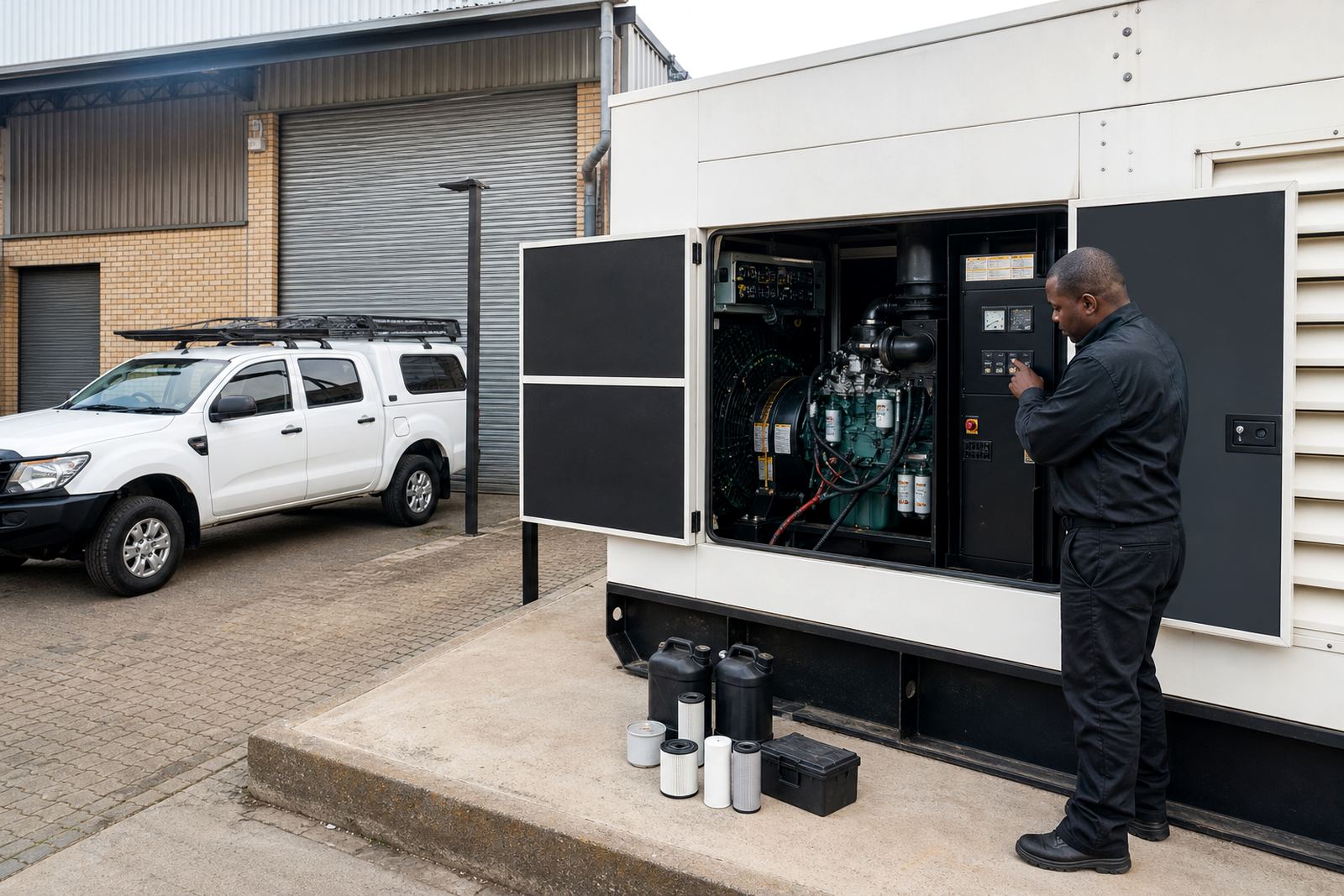
The generator was a diesel standby unit in the 200 kVA class, installed outdoors in a weather-exposed yard with coastal humidity and dust from constant vehicle movement. We arranged the work around low-traffic periods and kept the test sequence tight so the warehouse team could continue loading trucks and receiving stock. The electrical changeover work was handled by qualified people in line with local regulations, and we kept all live testing controlled and documented.
What the Bellville brief asked us to check
The client wanted a proper service visit, not just a quick start-up. The generator had to be inspected, serviced and then tested under realistic loading so any weakness would show up before an outage did. We also had to verify the automatic changeover operation and confirm that the batteries, fuel system and cooling circuit were in decent order for the months ahead.
- Oil and filter change with a fresh service inspection
- Coolant system check, including level, leaks and cap condition
- Battery testing and charger verification
- Changeover switch inspection and functional test
- Load bank test to prove output under controlled load
- Service record audit for missing entries and overdue items
The warehouse wanted a report that their maintenance team could file with the site records and use for future planning. They also asked us to flag anything that could affect winter starting or long run times during load-shedding periods, which is a fair request for any business on the Cape side where wind, damp and salt in the air can work against equipment.
The constraints around a working warehouse floor
Bellville warehouses are not forgiving places for shutdown work. Forklifts move fast, loading bays stay busy and there is usually a strict separation between vehicle movement and pedestrian routes. We planned the visit in phases so the generator could be isolated, tested and returned to service without blocking the dispatch rhythm. The site also had limited space around the plant room, so our team had to stage tools and test equipment carefully and keep the area tidy.
Another constraint was the condition of the installation itself. The unit had been in regular service and showed the usual signs of a hardworking machine: dust build-up, minor staining around service points and a battery bank that had not been tested on a proper schedule. The fuel system was serviceable but needed closer inspection for sediment and hose condition. None of it was dramatic, but each small issue can become the reason a standby set refuses to start when the mains fail.
- Work had to fit around dispatch peaks and security procedures
- Noise from testing had to be managed near offices and loading doors
- Access to the generator room was tight, so sequencing mattered
- Any electrical isolation had to be clear and signed off before testing
How the service and testing were carried out
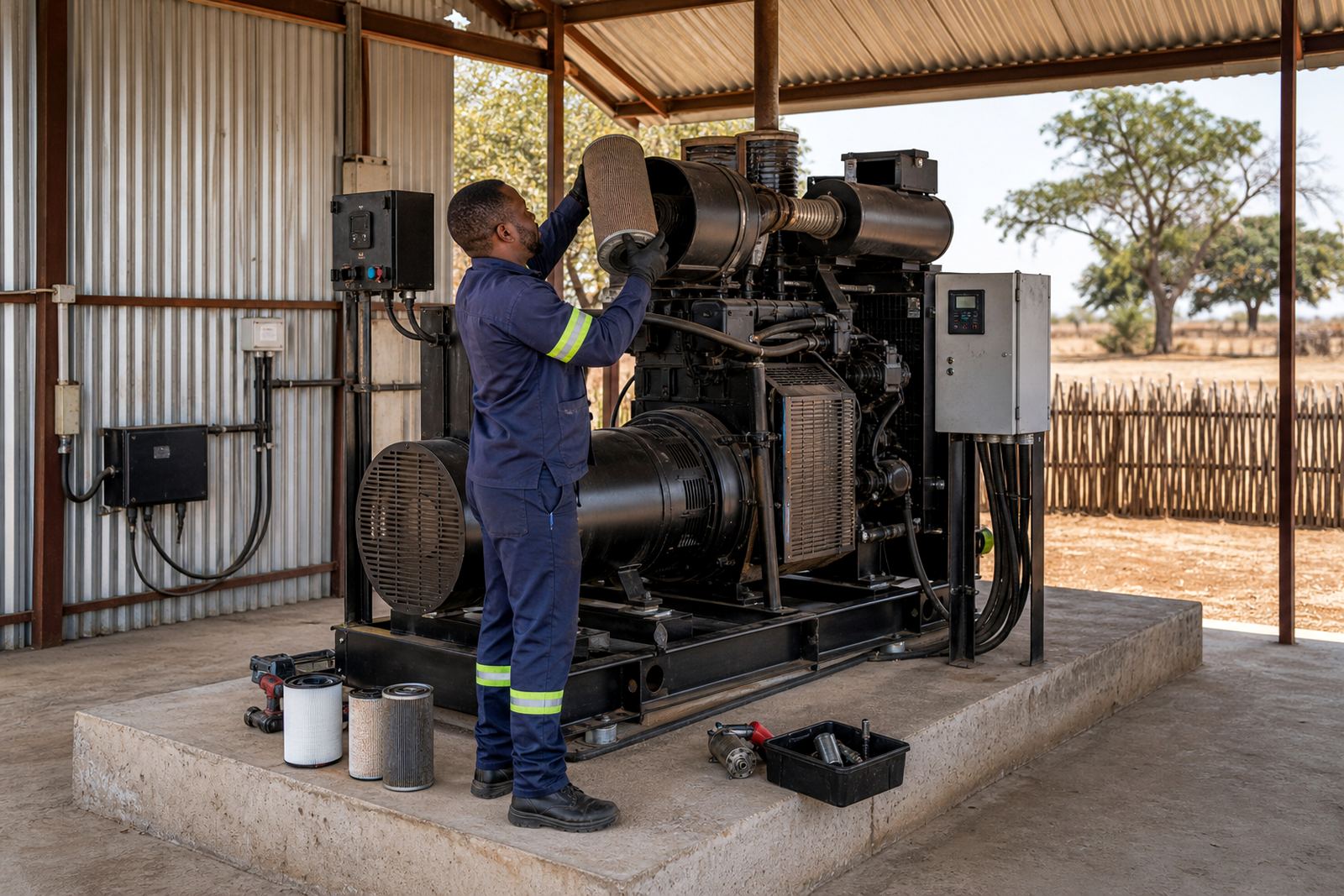
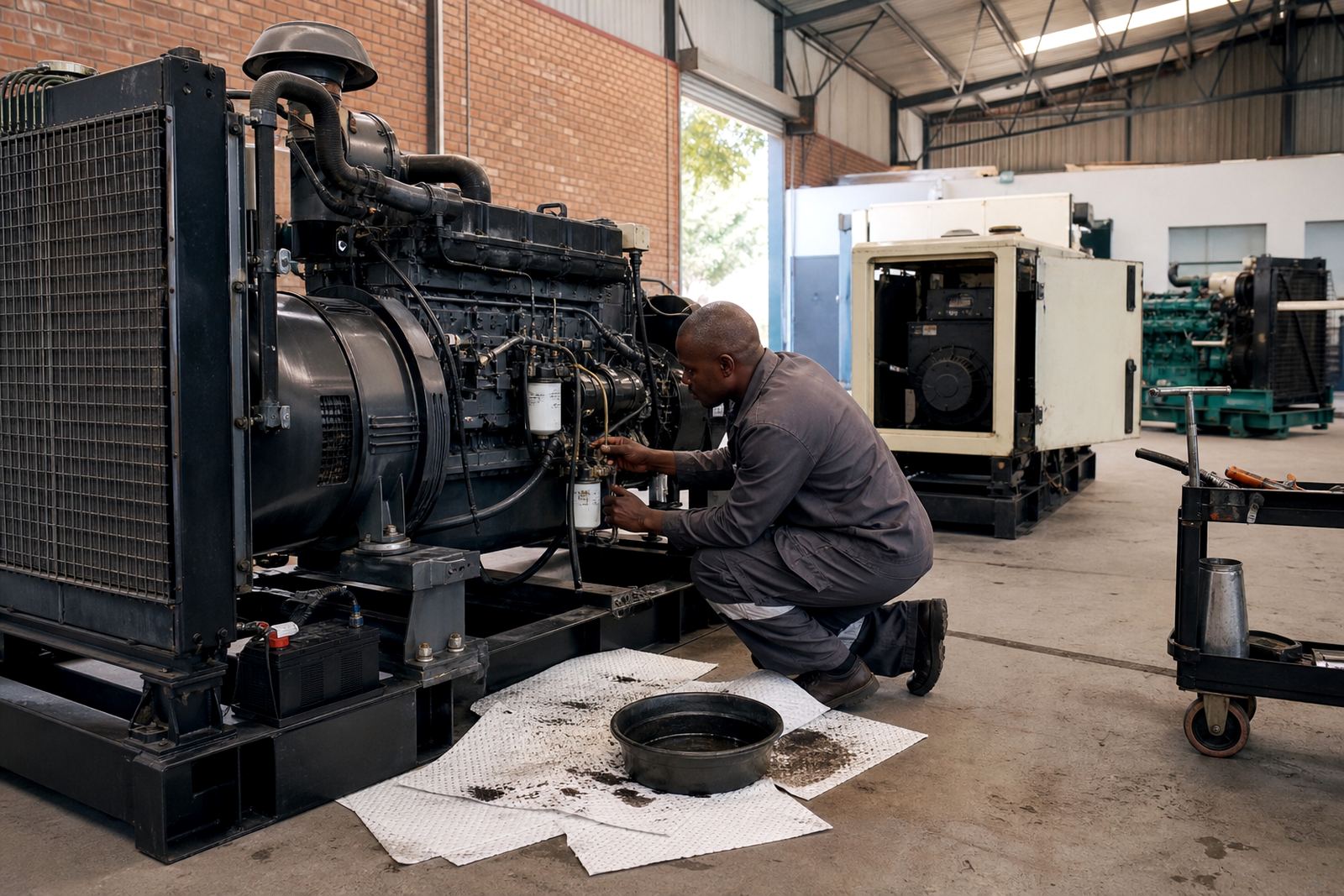
We started with a visual inspection and service checks on the engine side, then moved through the normal consumables and condition items. Oil was drained and replaced, filters were changed, and the cooling circuit was checked for proper level, circulation and signs of contamination. Battery terminals were cleaned and tightened, and the battery condition was tested under load so we could see whether the set would crank confidently after a delay or cold start. In a warehouse environment, weak batteries are a common cause of frustrating faults.
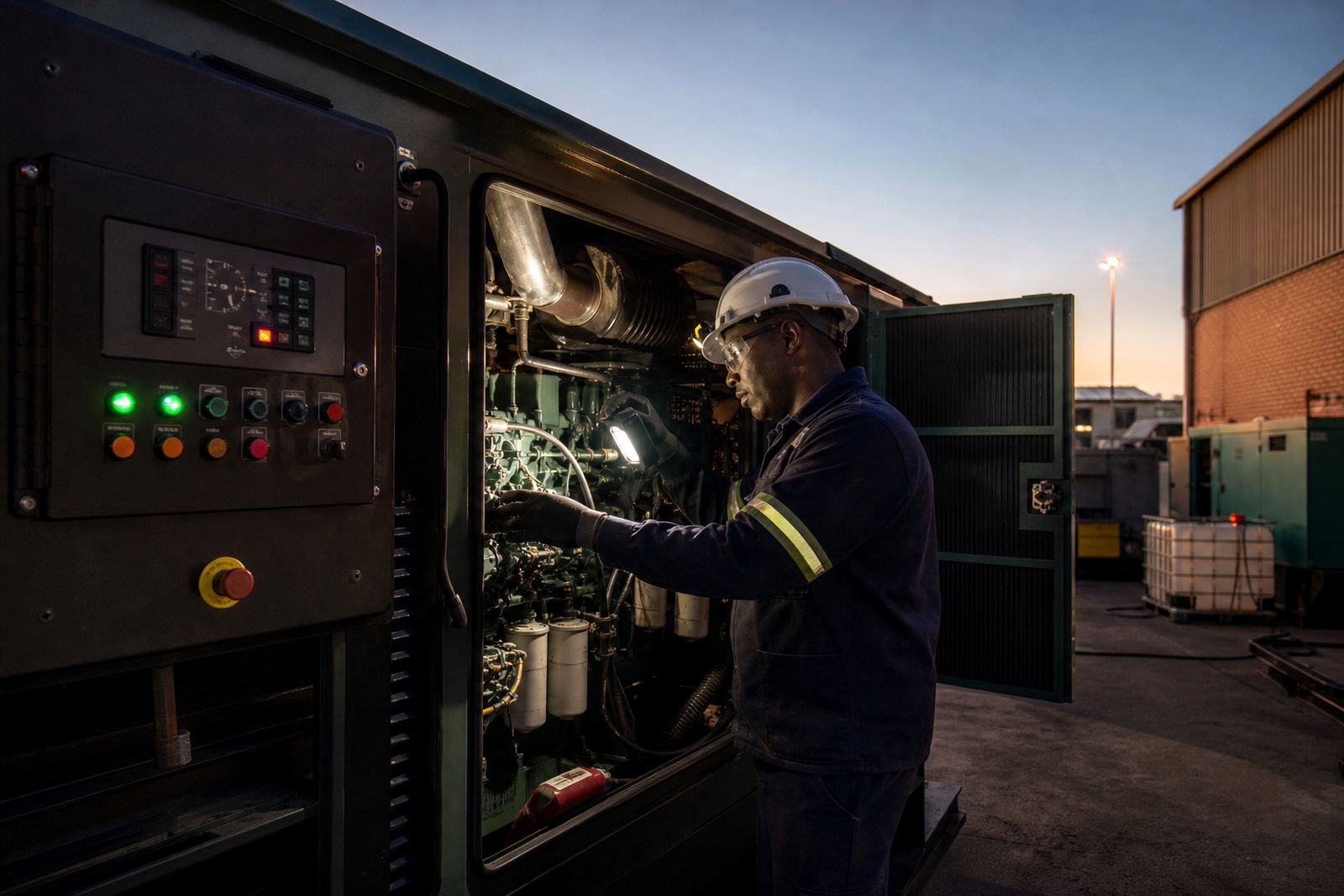
After the service work, we carried out a controlled start and monitored voltage, frequency, oil pressure and temperature rise. The changeover switch was tested through the normal transfer sequence to confirm that the supply moved cleanly between mains and generator without excessive delay. We then used load bank testing to simulate real demand, stepping through the load in stages so the engine and alternator could settle properly. That is the part that tells the truth, because a generator may start easily yet still struggle once the warehouse begins drawing current from conveyors, lighting and office load at the same time.
Fuel system checks included drain points, lines and any evidence of water or dirt in the tank side of the installation. Starter system items were also inspected so the unit would be ready for the next emergency callout. A final service record audit was done before handover, and we made a few notes on future filter intervals and battery monitoring. The site team appreciated that we explained what had been found in plain language, not jargon.
Timeline from first visit to handover
The project ran over two weeks from initial inspection to final reporting. Week one covered the site assessment, scheduling and service work. Week two was used for load bank testing, changeover checks and the preparation of the maintenance report. Because the warehouse remained active throughout, the job had to be done in a sequence that left the client with full operating capacity each day.
- Week 1: inspection, oil and filter changes, coolant and battery checks
- Week 1: fuel system and starter system repairs to minor defects identified on site
- Week 2: load bank testing and automatic transfer verification
- Week 2: service record audit and handover with findings
There were no long stoppages and no need to pull the unit out of service for extended repairs. That mattered because the warehouse could not risk being without standby protection while stock moved through the yard and into the dispatch lanes. We kept the process practical and to the point, with each step confirmed before moving on to the next.
What the warehouse gained from the testing
By the end of the job the generator was starting cleanly, transferring as expected and carrying test load without hesitation. The client had a clearer picture of the unit’s condition and a service record that matched the work done. Small items were picked up before they became larger faults, which is the real value of scheduled servicing on a standby set. It reduces surprises, especially in a coastal city where damp air can speed up battery and connector problems if they are ignored.
The warehouse team also had a better understanding of what to watch for between service visits: battery health, coolant level, fuel quality and any change in starting behaviour. The result was not just a passed test, but a generator that had been checked in a way that suited a busy dispatch site. For a business handling constant movement, that confidence matters more than any marketing line.
What worked well
We would use the same staged approach again on another Bellville warehouse or anywhere else in Cape Town. Start with a proper inspection, service the consumables, prove the batteries, then run the load bank before handing the set back. That order works because it shows whether the problem is mechanical, electrical or just maintenance neglect. It also keeps the site team informed at each stage, so there are no surprises when the mains fail.
For a dispatch environment, the key is not only whether the generator runs, but whether it will run after a weekend of rain, a dusty week of truck traffic or a long spell of municipal interruptions. That is where routine servicing and test discipline pay for themselves. If the unit can start, transfer and carry the required load under observation, the warehouse can carry on with less risk of downtime, and that is the point of the contract work we do.
Key facts
| Project type | Warehouse standby generator testing and servicing |
|---|---|
| Town | Bellville, Cape Town |
| Generator class | Diesel standby unit, approx. 200 kVA |
| Duration | 2 weeks from inspection to handover |
| Main works | Oil, filters, coolant, batteries, load bank testing, changeover checks |
| Site use | Busy dispatch warehouse with truck loading and receiving |