A farm brief shaped by dry months, rain and sudden power cuts
The site was an agricultural operation near Polokwane with seasonal standby demand. During harvest and irrigation periods the generators had to carry short but critical runs, then sit unused for weeks at a time. That pattern can hide problems in batteries, fuel quality, coolant level and starter circuits, so the brief was not just to service the machines but to make them dependable after quiet spells.
The farm team wanted practical support for two standby generators, one fixed load set for essential services and one unit used as back-up during higher demand. Both sets fed into installed changeover equipment, so the electrical switching needed to be checked without interfering with normal farm work. All electrical work was handled by qualified people in line with local rules, and any live switching was planned around the site schedule.
The operating environment added a few constraints. Dust from sheds and access roads, heat in the afternoons, and the kind of stop start use that leaves diesel systems dirty if they are ignored. There was also limited downtime available, so the work had to be split into short visits rather than one long shutdown.
What we found before the first service turn
Our first site inspection showed typical issues for a rural standby installation. One set had tired batteries, one had overdue filters, and both units showed signs of long idle storage. The coolant condition was uneven, and the fuel system needed a proper clean-out around the bowls and lines. The changeover switches were functioning but had not been tested under a proper operating load in some time.
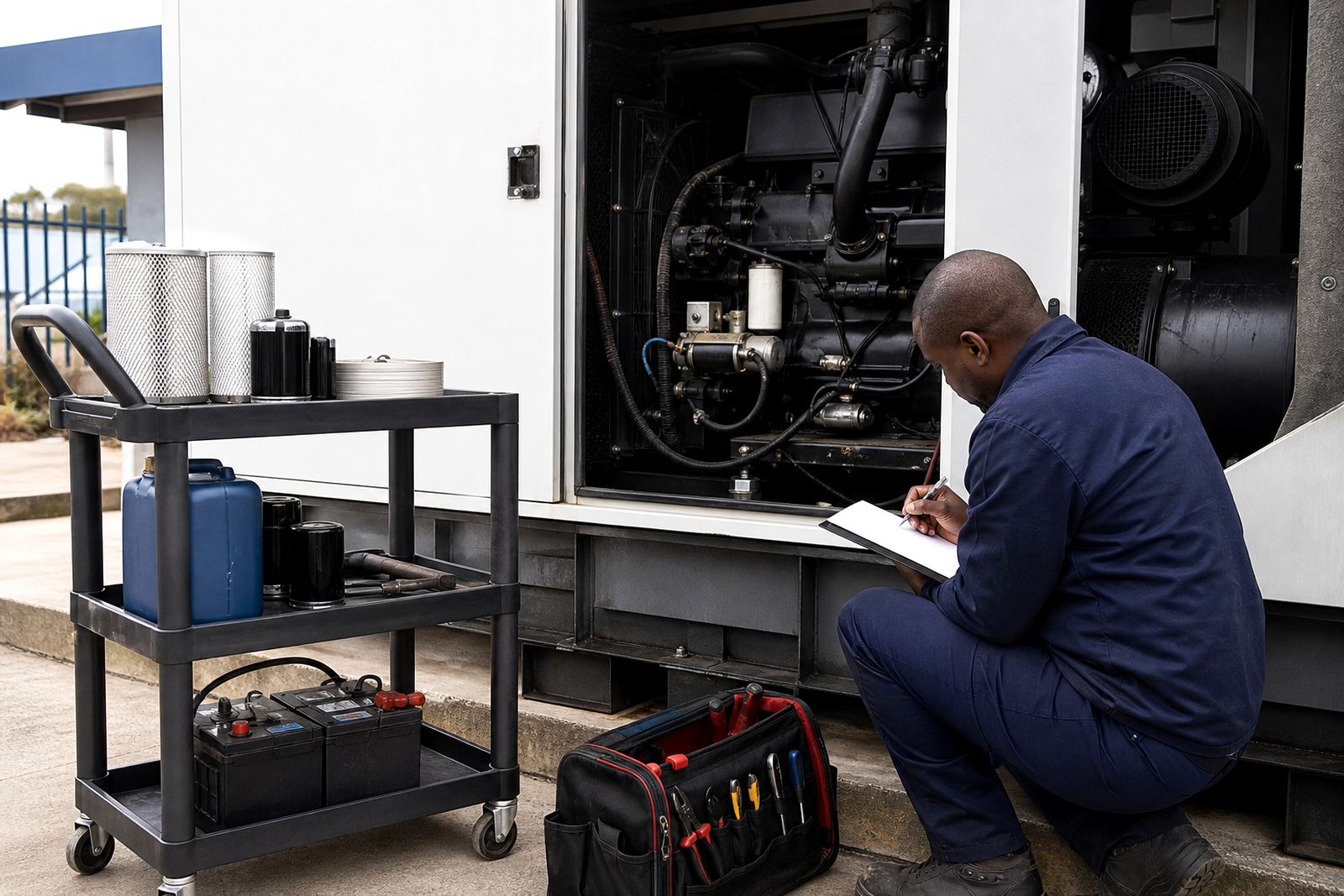
We logged the key facts on arrival and used them to build a maintenance schedule around the farm’s seasonal pattern. That included service intervals, expected run hours and an order for the work so the most urgent items were handled first.
- Two standby generators on the property
- Planned maintenance window set for 2 weeks
- Service tasks focused on oil, filters, coolant and batteries
- Load bank testing included for both sets
- Changeover switch checks carried out under controlled conditions
The service work we carried out on site
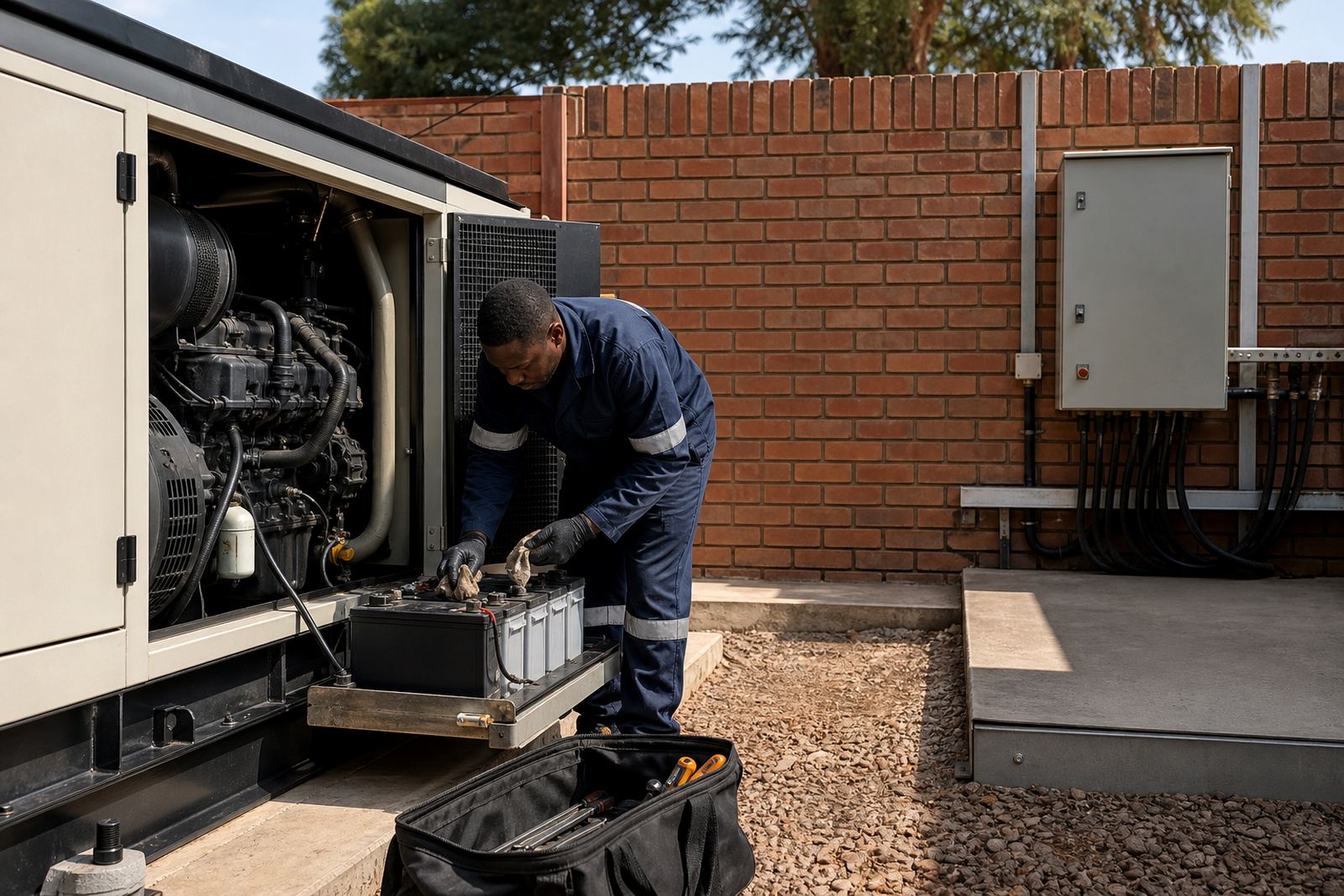
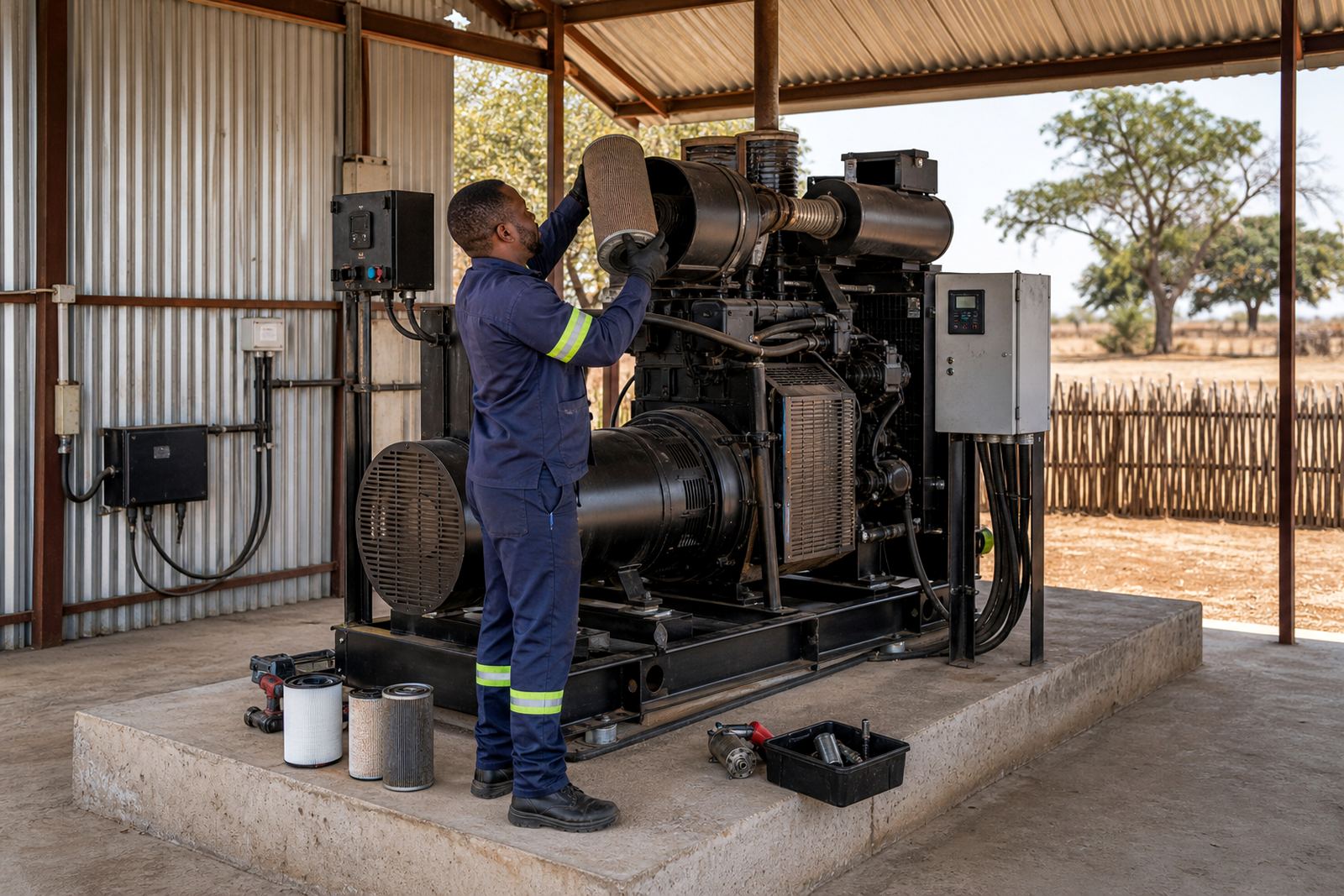
Over the first week we completed oil and filter changes, coolant checks, battery testing and visual inspections of belts, hoses and wiring. Where the fuel system showed contamination we cleaned the relevant components and checked for leaks, blocked lines and air ingress. Starter system faults were traced and corrected before they could become an after-hours callout.
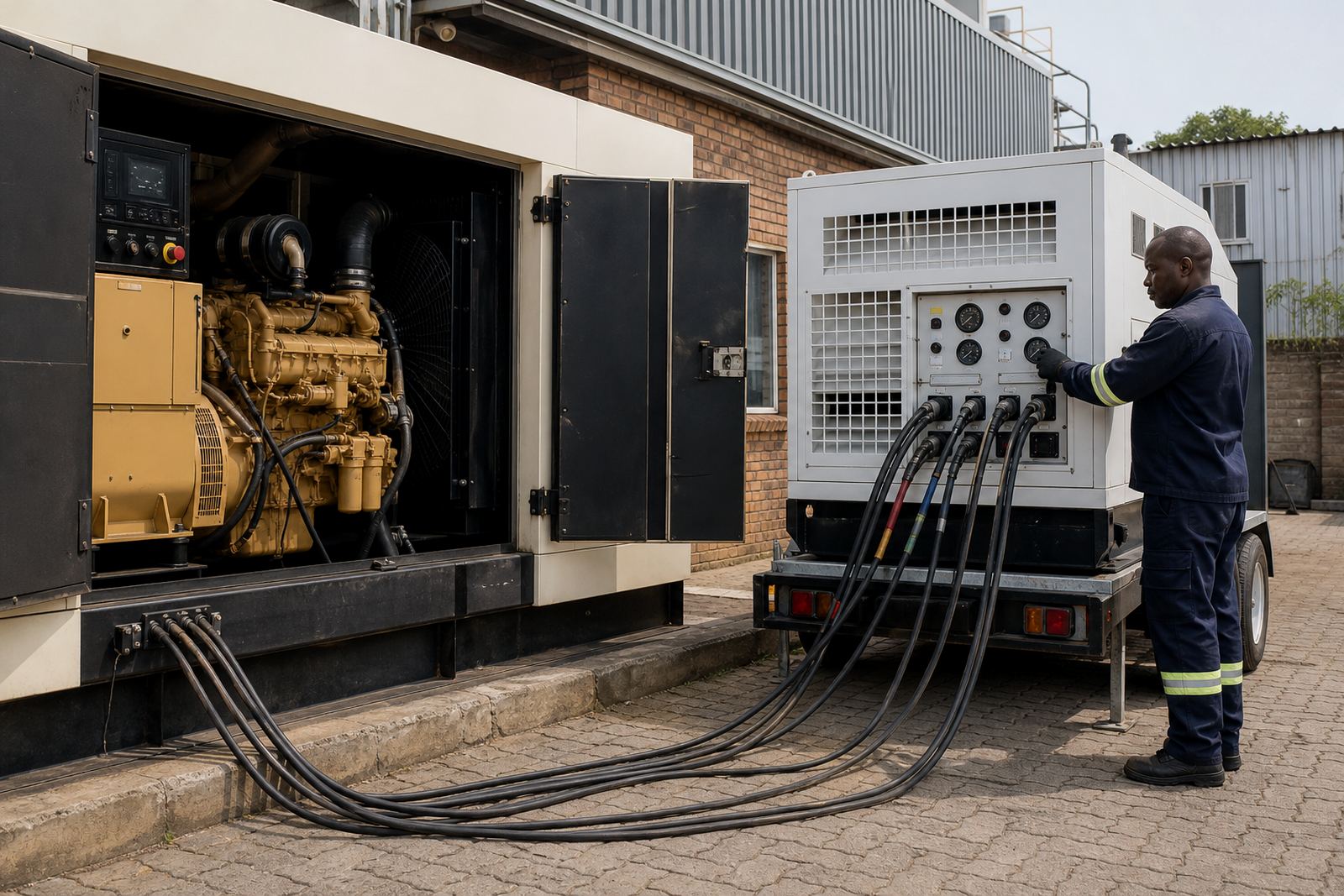
In the second week we returned for load bank testing and a full changeover switch check. The load bank test allowed us to see how the engines behaved under demand rather than only at idle, which is important on a farm where a generator may be called on suddenly after load-shedding or a local supply fault. We also ran service record audits so the site had a clean paper trail for each unit.
- Oil and filter changes on both generators
- Coolant system service and top-up where needed
- Battery testing and terminal cleaning
- Starter system repairs and fault finding
- Load bank testing to confirm output under load
- Changeover switch checks and functional testing
How the contract was timed around farm work
The maintenance plan was arranged around the working week on the farm, with visits timed for low activity periods so the generators could be isolated without affecting irrigation or cold storage tasks. Because the site had seasonal peaks, we built the contract around pre-season readiness and a mid-season inspection rather than waiting for a fault.
We also kept a close eye on parts movement and stock on hand. On a farm, a battery or filter that is not available at the right time can lead to an avoidable delay, so our stores and logistics planning was part of the job, not an afterthought. That helped us turn up with the needed consumables, seals and service items ready to fit.
The result was a neat two-week programme with no wasted return visits. The team on site could keep moving with their own work, while we completed the generator side in a way that fit the farm’s routine.
What changed after the last test run
After servicing, both units started more cleanly and held stable during test runs. The load bank tests showed improved response under stepped demand, and the changeover checks confirmed that the transfer equipment was operating as it should. The farm team had clearer service records and a better sense of when each machine would next need attention.
There was also a practical benefit in reduced callout pressure. When batteries, filters and coolant are checked properly, the first hot weekend or cloudy day with extra demand is less likely to expose a weak point. That matters in Polokwane where weather and farm schedules can change quickly, and a generator is often expected to carry the site with very little warning.
For the client, the main result was peace of mind before the busy season. The machines were not just running, they were ready to be asked for real work.
How the Polokwane farm visits will run next season
If we were called back to a similar agricultural site, we would use the same sequence: inspect first, service the key wear items, test under load, then verify the switching gear and records. That order gives a farm the best chance of avoiding downtime when the power goes off or when the generators are required for longer than planned.
We would also keep the maintenance contract tied to the season rather than only the calendar. On standby plant, especially in dusty and hot conditions, the right interval depends on how often the set is exercised, how long it stands idle and whether the fuel remains fresh. A quiet generator can still fail if those basics are not watched.
The site in Polokwane showed why practical servicing works best on farms: direct planning, clear records and no guesswork. That is the kind of support we aim to provide across Midrand, Johannesburg, Pretoria, Durban, Cape Town, Polokwane and surrounding areas.
Key facts
| Project type | Routine generator maintenance for an agricultural site |
|---|---|
| Town | Polokwane, Limpopo |
| Site profile | Seasonal standby demand for farm operations |
| Generators serviced | 2 standby sets with installed changeover equipment |
| Timeline | 2 weeks from first inspection to final load test |
| Core work | Oil and filter changes, coolant service, battery testing, load bank testing, switch checks and fault finding |