When a clinic cannot afford a quiet failure
The clinic was in Pretoria East and relied on a standby generator to support essential services during outages and municipal interruptions. Their brief was straight forward: test the set under load, confirm that the changeover gear behaved properly, and pick up any weak points before they became an after-hours callout. The generator had been carrying light standby use only, so the main concern was whether it would perform cleanly under a proper demand test, not just idle in the yard and look healthy.
As a healthcare site, they also needed the work handled with care around patients, parking access, and noise. We planned the visit outside the busiest periods and made sure the testing sequence would not interfere with consultation rooms or pharmacy movements. The site team wanted a record they could file for internal checks and for any future compliance queries, which is fair enough when a critical system is involved.
What the Pretoria brief needed from the generator
The generator was a diesel standby unit rated at 180 kVA, fitted with an automatic transfer arrangement and used for essential lighting, admin systems, refrigeration and selected clinical equipment. The load bank test had to bring the alternator up to a controlled working range and hold it there long enough to show temperature stability, voltage behaviour and recovery after step changes. We also checked the service intervals that matter most on a clinic site: oil condition, filters, coolant level and condition, battery health, starter performance, and the condition of the fuel system lines and seals.
- Set size: 180 kVA standby unit
- Fuel type: diesel
- Application: clinic backup supply
- Test method: resistive load bank
- Changeover gear: automatic transfer switch inspection
- Site type: healthcare facility with limited downtime windows
The changeover switch work had to be handled by qualified people under the applicable local regulations, so our scope stayed within generator servicing and inspection, with any electrical isolation or corrective wiring referred through the proper trade channel. That keeps the site safe and keeps the record clean.
How we fitted the work around the clinic
The project took two weeks from initial planning to final handover. Week one covered the site visit, condition check, parts review, and timing plan with the clinic manager. Week two covered the service visit, load bank test, post-test inspections and written feedback. We kept the sequence tight so the generator was not left open or partially stripped longer than needed, which matters on a busy site in Pretoria where staff parking and delivery access can become a headache quickly.
Because the clinic is a sensitive environment, we also planned for noise, exhaust direction and safe pedestrian movement. The unit was positioned so the exhaust plume did not move toward doors or waiting areas, and we kept warning cones and barriers in place while the set was under load. The staff appreciated that the work was orderly, not noisy in the wrong places, and not drawn out over half the day.
- Week 1: site assessment and service planning
- Week 2: servicing, load bank testing and handover report
- Access control: coordinated with clinic management
- Safety: barriers, signage and controlled test area
The service sequence on the day
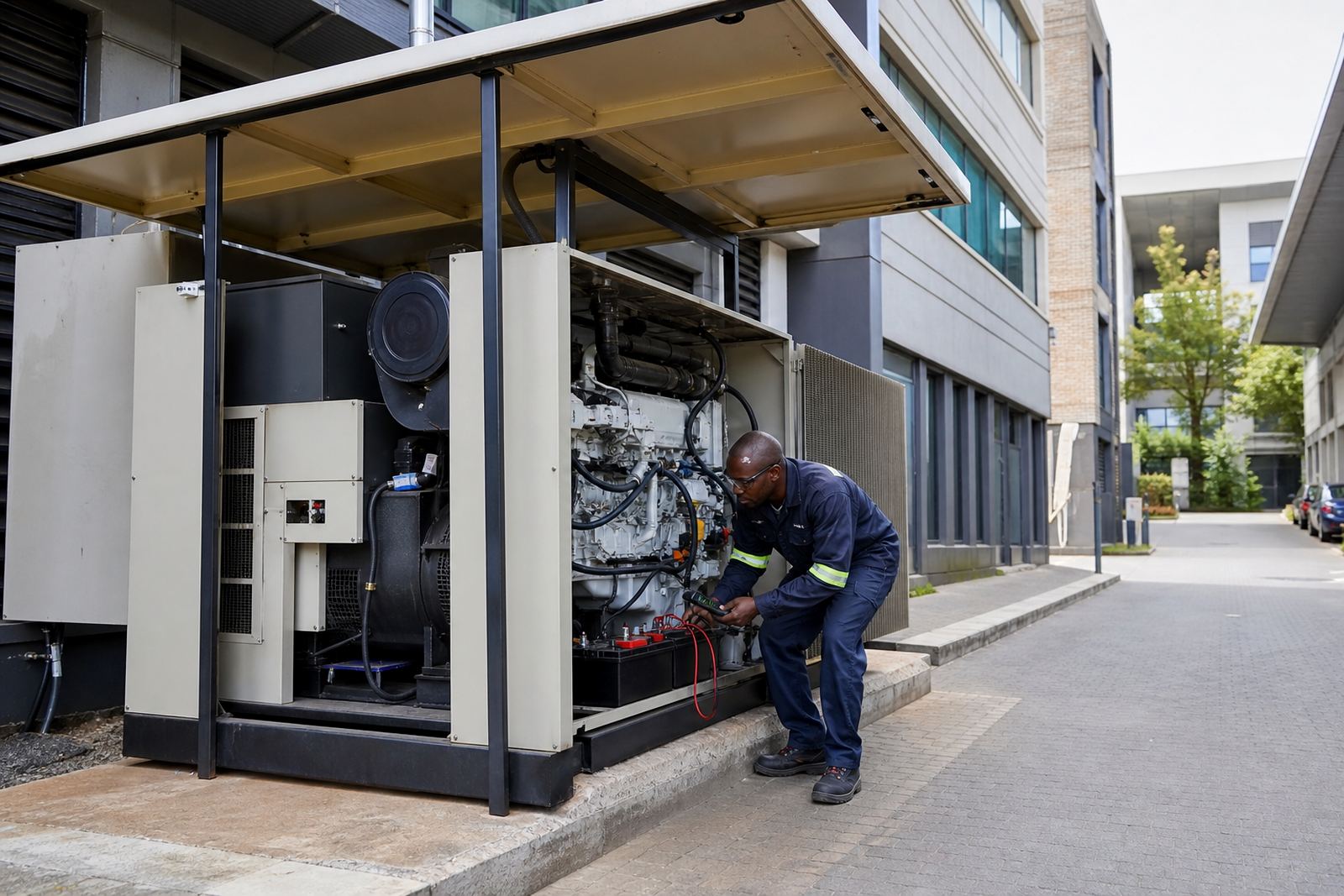
We started with a visual and operational check before any test load was applied. That included oil level, coolant level, fan belt condition where applicable, battery terminals, electrolyte condition on the battery bank if fitted, fuel lines, leak signs, air intake restriction and the condition of the enclosure. After that we checked the service records against the actual condition on site so there was no mismatch between paper and machine.
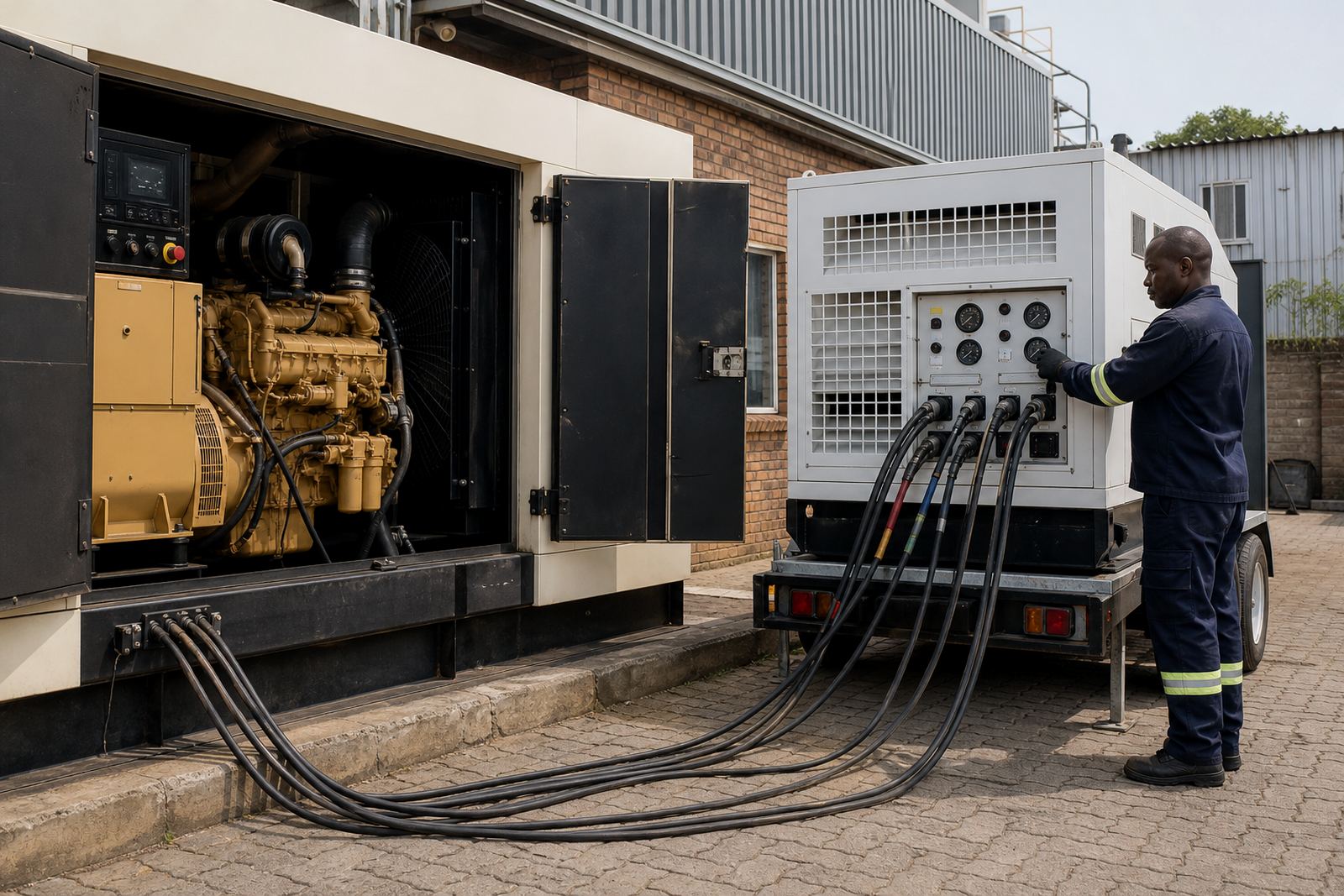
The load bank was then connected and stepped up in stages to confirm the set could accept load without hunting, tripping or showing unstable readings. We watched temperature rise, voltage balance, frequency response and recovery after each step. At the same time we checked the automatic transfer switch operation and confirmed the generator responded correctly to a simulated mains failure and restoration sequence. A small but important point: the fuel system was checked for water contamination and sediment, because a clinic unit that idles for long periods can get caught out by poor fuel quality before anything else.
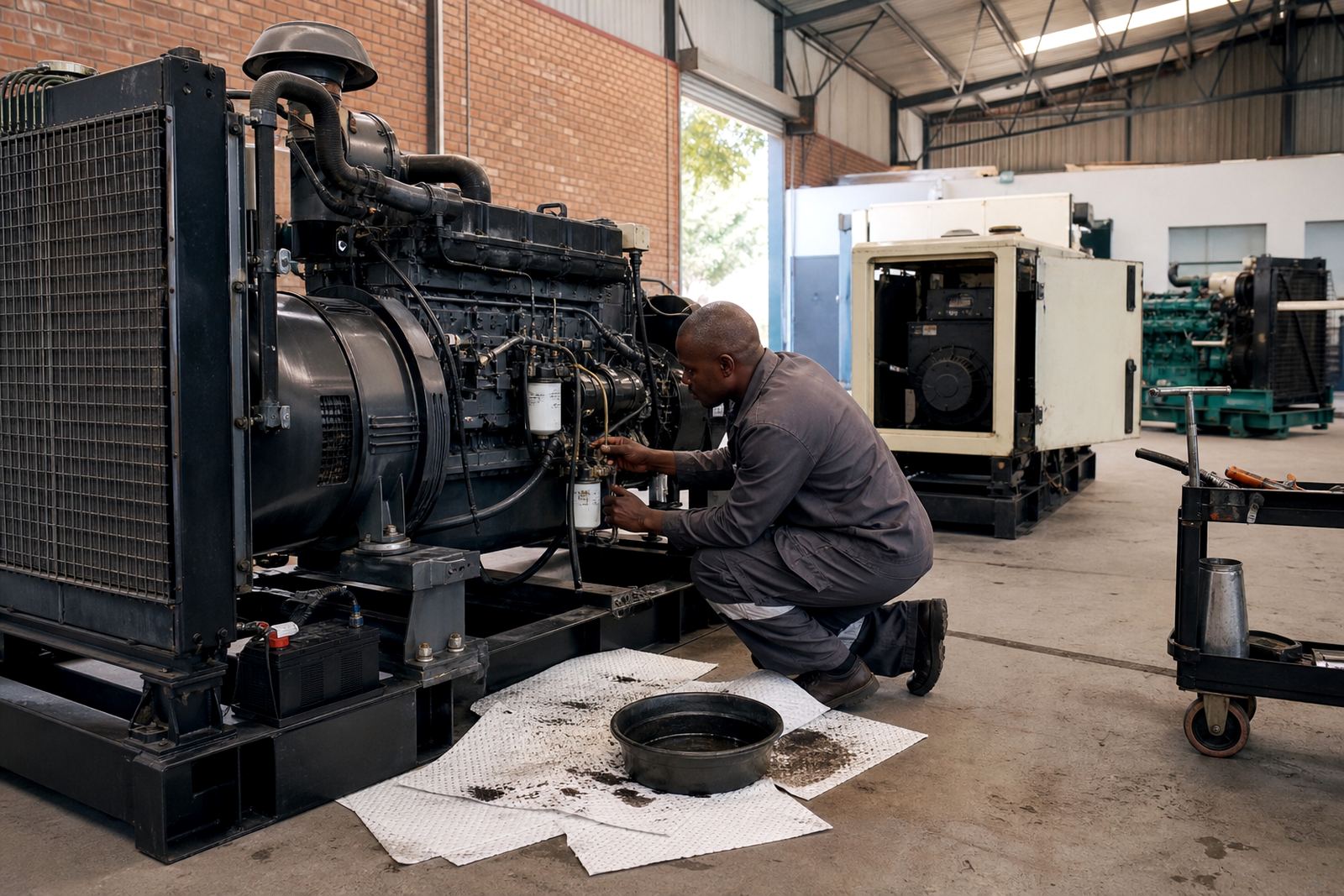
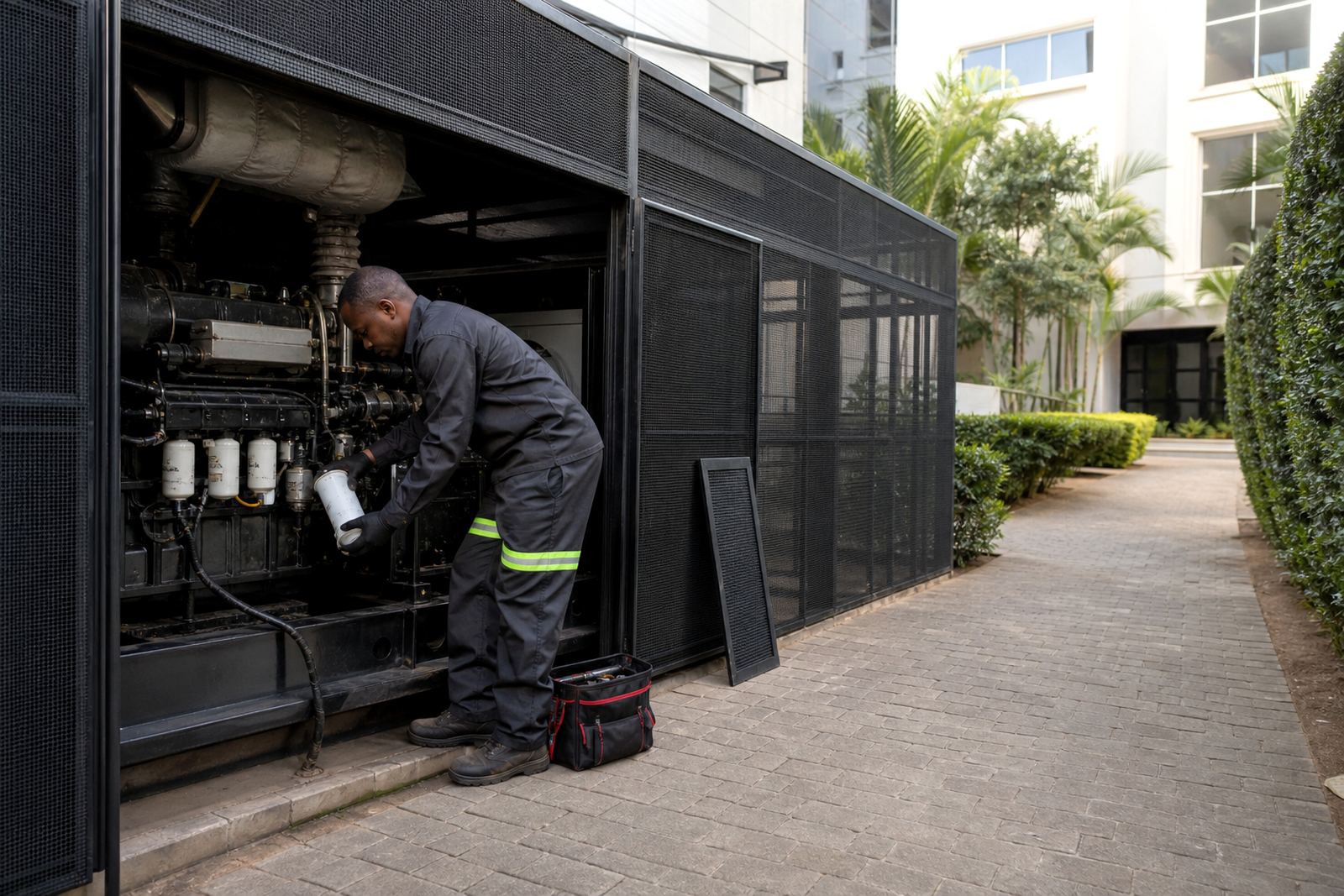
- Oil and filter condition checked and service interval confirmed
- Coolant concentration and hose condition inspected
- Batteries load tested and charging circuit reviewed
- Load bank stages applied and readings recorded
- Changeover switch operation observed during transfer sequence
- Fuel system inspected for leaks, water and sediment
What changed after the readings were in
The test showed that the set was fundamentally sound, but it did need corrective servicing items that would have been easy to miss if nobody had loaded it properly. The battery bank had one weak unit, which explained a slower cranking response on earlier starts. We also found that the coolant level was slightly below target and the oil filter condition suggested the set was overdue for a proper interval service rather than another short visual check. None of it was dramatic, but small faults build up fast on standby machines that spend their lives waiting.
After the service and retest, the generator came up cleanly, held load steadily and transferred as expected. The clinic got a clear service note with the readings, the maintenance items completed, and the follow-up points to watch on the next visit. They also received a simple service record audit showing what had been checked, what had been corrected, and what should be monitored before the next planned outage period. That kind of paperwork saves time later, especially when more than one person shares responsibility for the site.
The result for the clinic and what worked well
The main result was confidence. The clinic left the project knowing the generator would not just start on request but carry a proper load for the kind of duty it may face during a long municipal interruption or local supply fault. The testing also confirmed that the changeover process was behaving as expected, which is just as important as the set itself. A generator that runs well but changes over badly is still a risk.
If we were doing the same job again, we would keep the same approach: plan around the clinic timetable, begin with a record check, test under real load rather than guesswork, and finish with a plain written handover. For healthcare sites in Pretoria, Midrand, Sandton or anywhere else in Gauteng, that mix of planning and practical servicing usually prevents more trouble than any last-minute repair ever will.
- Generator now suitable for planned standby duty after corrective servicing
- Transfer sequence confirmed and recorded
- Maintenance log updated for the clinic file
- Follow-up service interval set for the next visit
Key facts
| Project | Pretoria clinic standby generator testing and maintenance |
|---|---|
| Town | Pretoria, Gauteng |
| Generator size | 180 kVA diesel standby set |
| Timeline | 2 weeks from planning to handover |
| Core works | Load bank testing, oil and filter checks, coolant service, battery testing, fuel system inspection |
| Electrical scope | Changeover switch checks handled by qualified people under local regulations |