Depot callout in Germiston after repeated fuel alarms
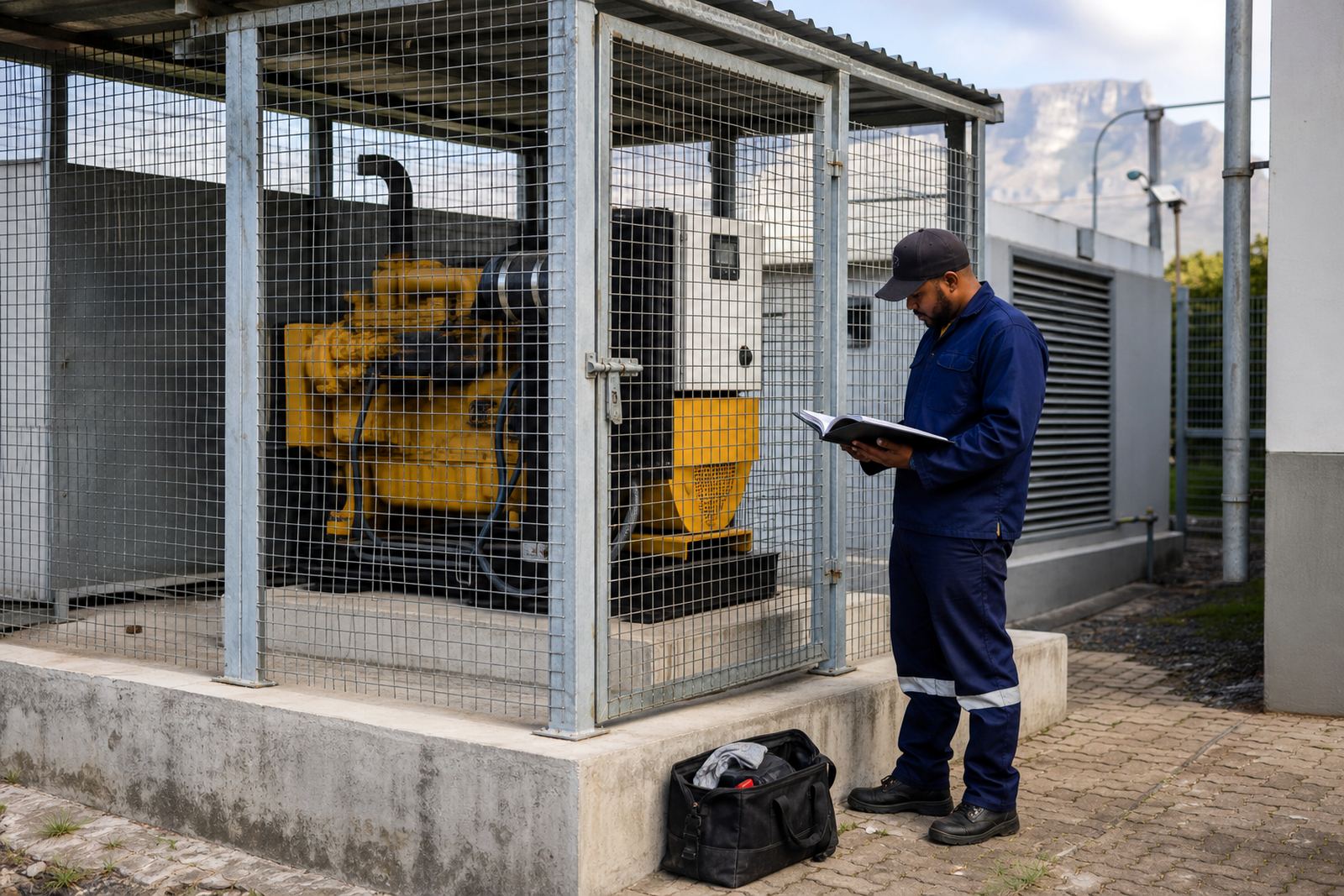
The client was a logistics depot in Germiston running a standby generator for lighting, gate access, office circuits and basic operations during outages. Their team had noticed hard starting, uneven running and a fuel smell near the set, followed by blocked filter warnings and a drop in output under load. The generator was still serviceable, but the condition meant it needed a proper inspection rather than another quick restart.
We attended the site on a maintenance contract follow-up basis and first isolated the set safely before opening up the fuel system. The brief was practical: find the cause of the fuel line issue, restore reliable starting and make sure the unit could carry the depot load without nuisance trips. The generator was a diesel standby unit with an automatic changeover arrangement, and the site is in a busy industrial area where access windows are tight and interruptions affect dispatch immediately.
- Site type: depot and storage operation
- Town: Germiston, Gauteng
- Generator use: standby supply for essential circuits
- Issue reported: fuel line seepage, clogged filter and poor running under load
What got checked before any parts were changed
We do not swap parts first and hope for the best. The team checked the service history, current oil condition, fuel contamination signs, filter restriction, battery health and starter performance before deciding on repairs. We also inspected the changeover switch operation because a healthy generator still fails a site if the transfer gear does not behave properly under outage conditions.
The depot had limited downtime tolerance, so the work had to be staged around a short service window. The generator room was also affected by dust from forklift traffic and general warehouse activity, which can work its way into filters and fittings over time. That kind of site wear is common in Gauteng and if it is left too long, the little leaks become bigger problems.
- Oil condition and service interval review
- Fuel line inspection for seepage, cracking and loose fittings
- Filter inspection for blockage and dirt loading
- Battery and starter circuit test
- Changeover switch functional check under controlled conditions
Fuel line repair and filter service carried out on site
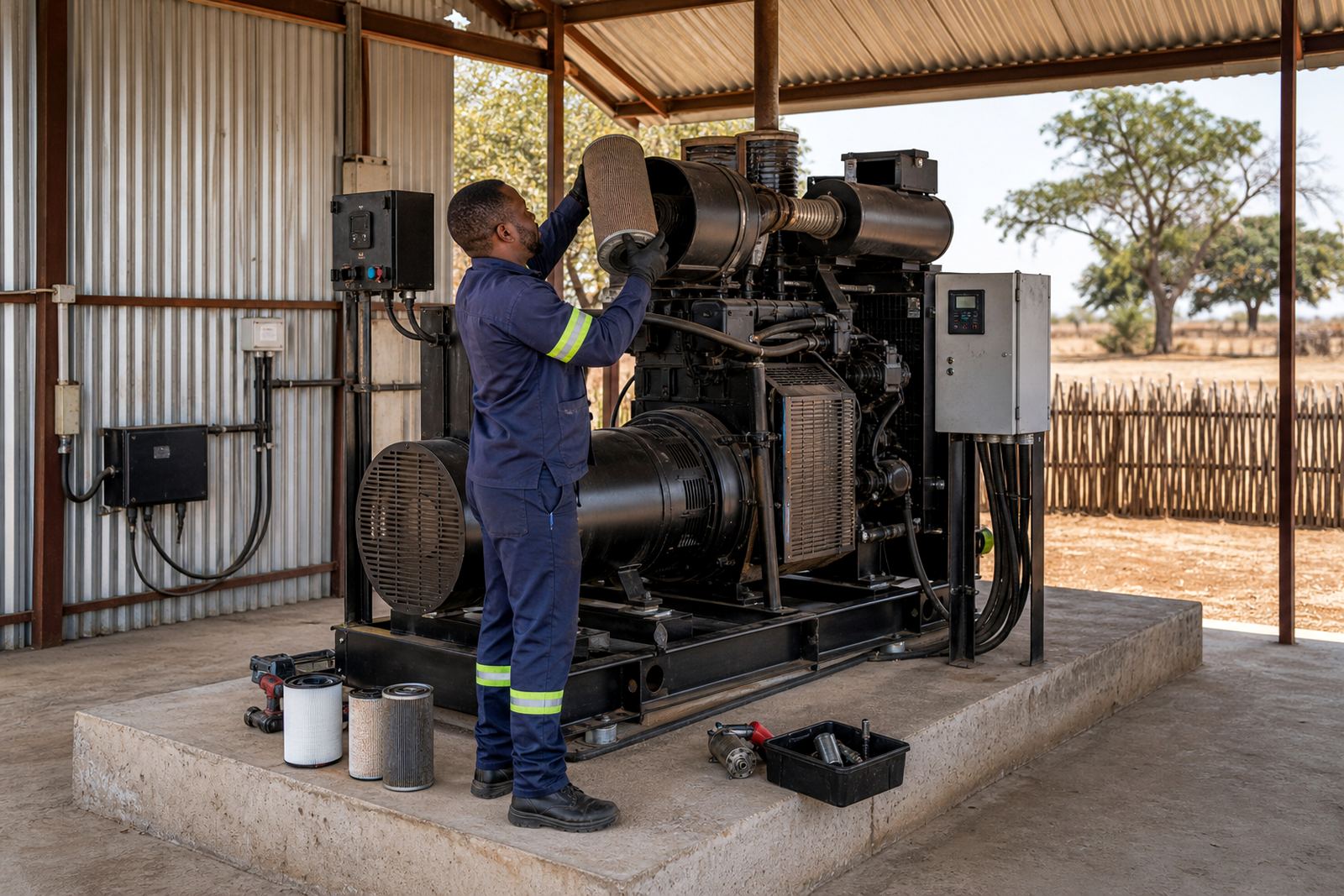
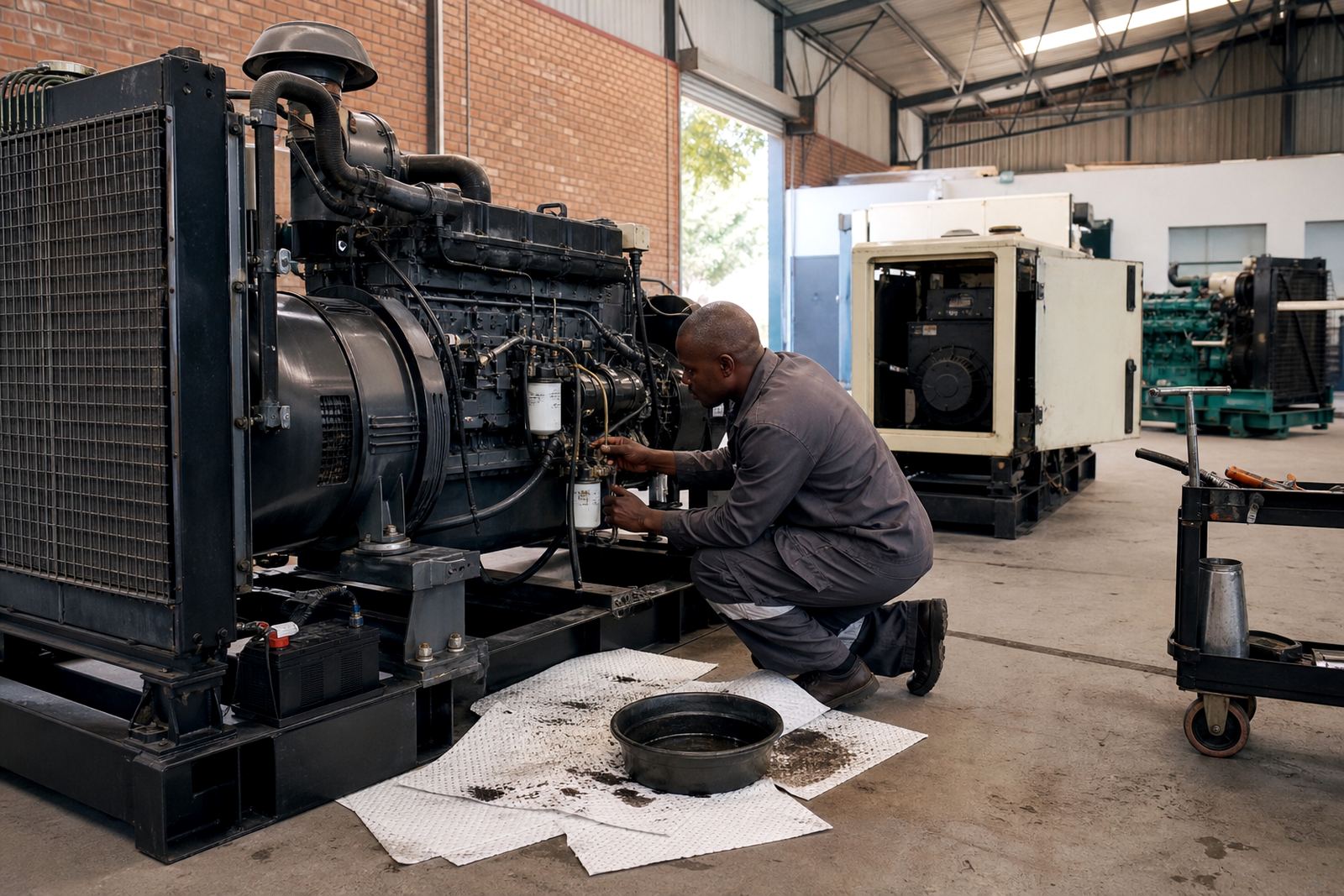
We replaced the affected fuel line section and fitted a fresh filter assembly after confirming the restriction point. The fuel side was cleaned and primed, then the set was restarted and monitored for leaks, smoke and stable speed. Electrical work tied to the transfer system was handled by qualified people only, as required under local rules and safe working practice.
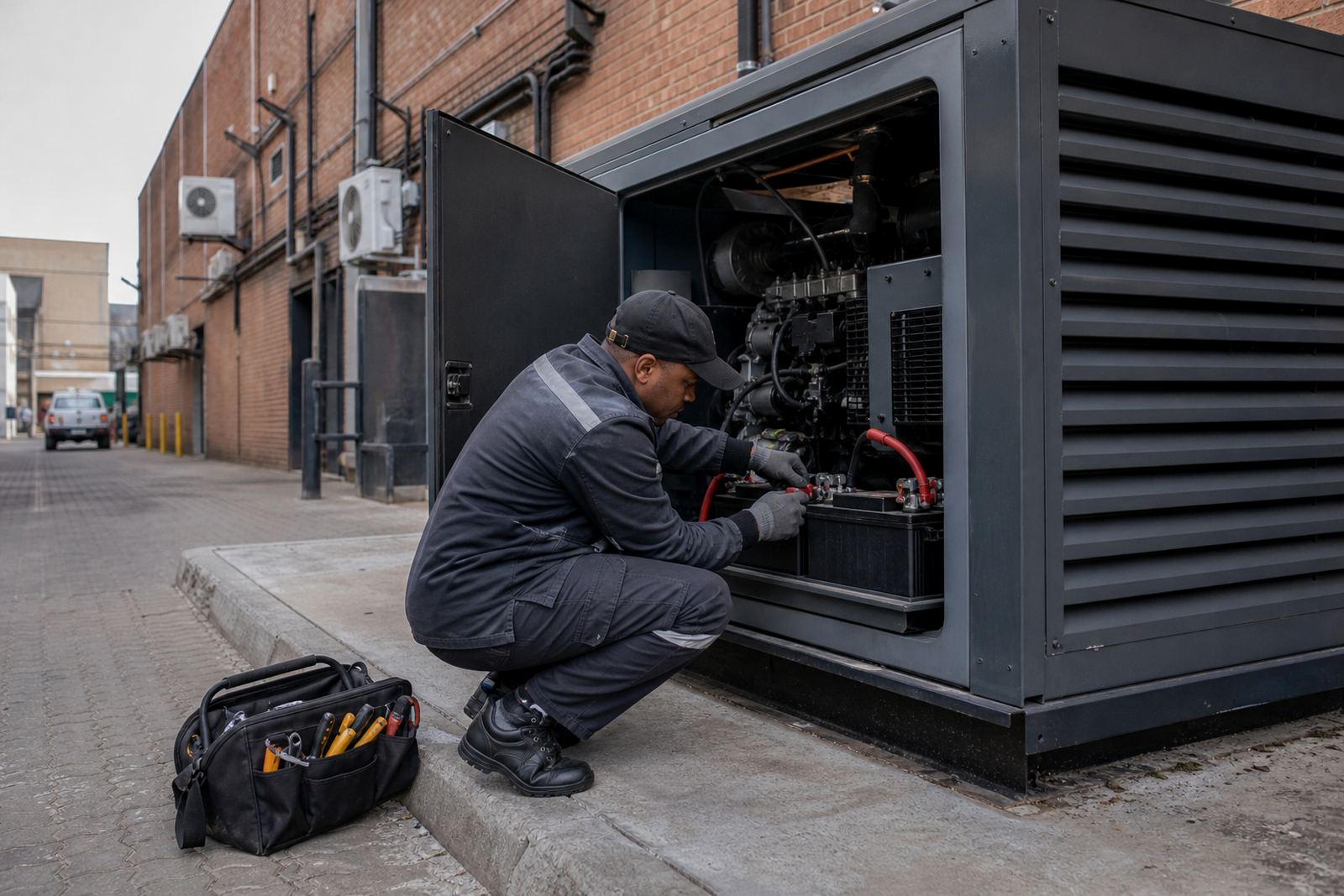
Where needed, we also carried out an oil and filter change so the service record matched the corrected fuel work. Coolant condition was checked, battery terminals were cleaned and tightened, and the starter circuit was tested again after the engine had been shut down and allowed to rest. The generator then went through a controlled load bank test to confirm that it could accept load steadily without hunting or hesitation.
- Fuel line section renewed and secured properly
- Fuel filters replaced and system primed
- Oil and filters checked, with service interval updated
- Battery terminals cleaned, voltage checked and retested
- Load bank test completed to verify running stability
How the changeover gear and control checks were handled
The depot asked for the transfer arrangement to be checked because they had seen a delay when supply failed during a previous outage. We tested the changeover switch sequence, verified control signals and confirmed that the generator responded correctly once the mains supply was simulated off. The important part here is not just starting the engine, but making sure the whole power path behaves as it should when staff are under pressure.
We also reviewed the visible wiring condition around the control panel and made sure no loose terminations or heat marks were present. Any corrective electrical task on a generator site must be done by qualified people and in line with the relevant local regulations, especially where automatic changeover equipment is involved. That point matters just as much as the mechanical side, because a generator can look fine and still fail if the transfer side is not sound.
- Changeover sequence tested from mains fail to generator supply
- Control response checked on start and stop cycle
- Visible terminations inspected for heat damage or looseness
- Transfer timing confirmed under controlled conditions
Two-week service follow-up and the depot result
The full repair and follow-up ran over two weeks, including the first inspection, sourcing the right service parts, the on-site repair visit and a return check after the unit had been run under load. That timeline suited the depot because it allowed operations to continue while the generator was being sorted properly, rather than forcing a rushed one-day patch job.
By the end of the job, the generator started cleanly, held load without drop-off and showed no further fuel seepage. The battery system was healthy, the service records were brought up to date and the depot team had a clearer maintenance trail to follow. Small things like this save a lot of money later, especially in facilities that rely on backup power for gates, lighting and critical control points.
- Starting issue resolved
- Fuel leak risk reduced
- Load stability restored
- Service records updated for the next interval
The maintenance pattern we would use again on a similar site
On a depot site like this, the best approach is a planned service routine with short inspection windows, then a follow-up test after any fuel-side repair. We would repeat the same structure again: check the fuel system first, confirm the battery and starter health, inspect the transfer gear, then run a proper load test before signing off. That sequence catches the faults that matter most and avoids unnecessary parts changes.
For busy sites in Germiston, Midrand, Johannesburg and the wider Gauteng industrial belt, the practical gain is fewer surprise callouts and better control over downtime. Coastal humidity in places like Durban can be a different story, but the principle stays the same: keep the set clean, keep the service records honest and do not ignore small leaks or filter restriction. A generator that is serviced on time tends to behave better when load is sudden and staff are watching the clock.
- Inspect fuel system before each major service interval
- Test batteries and starter components under real conditions
- Review oil, filters and coolant on every scheduled visit
- Include load bank testing in the planned maintenance cycle
Key facts
| Project type | Generator repair and service follow-up |
|---|---|
| Location | Germiston, Gauteng |
| Client type | Depot and storage operation |
| Equipment | Diesel standby generator with automatic changeover |
| Main fault | Fuel line seepage and blocked filter |
| Service period | Two weeks from first callout to final retest |