Retail Hours, Parking Bays and a Tight Maintenance Window
The site was a busy retail property in Boksburg with customer traffic through the day, deliveries at the back, and very little room for unplanned downtime. The generator was there for outage cover and had to be kept ready without disturbing trading, loading activity, or the tenants using the centre. The brief was quarterly maintenance on a contract basis, with a particular focus on battery condition because the existing set had shown signs of weakening cranking performance during cold mornings.
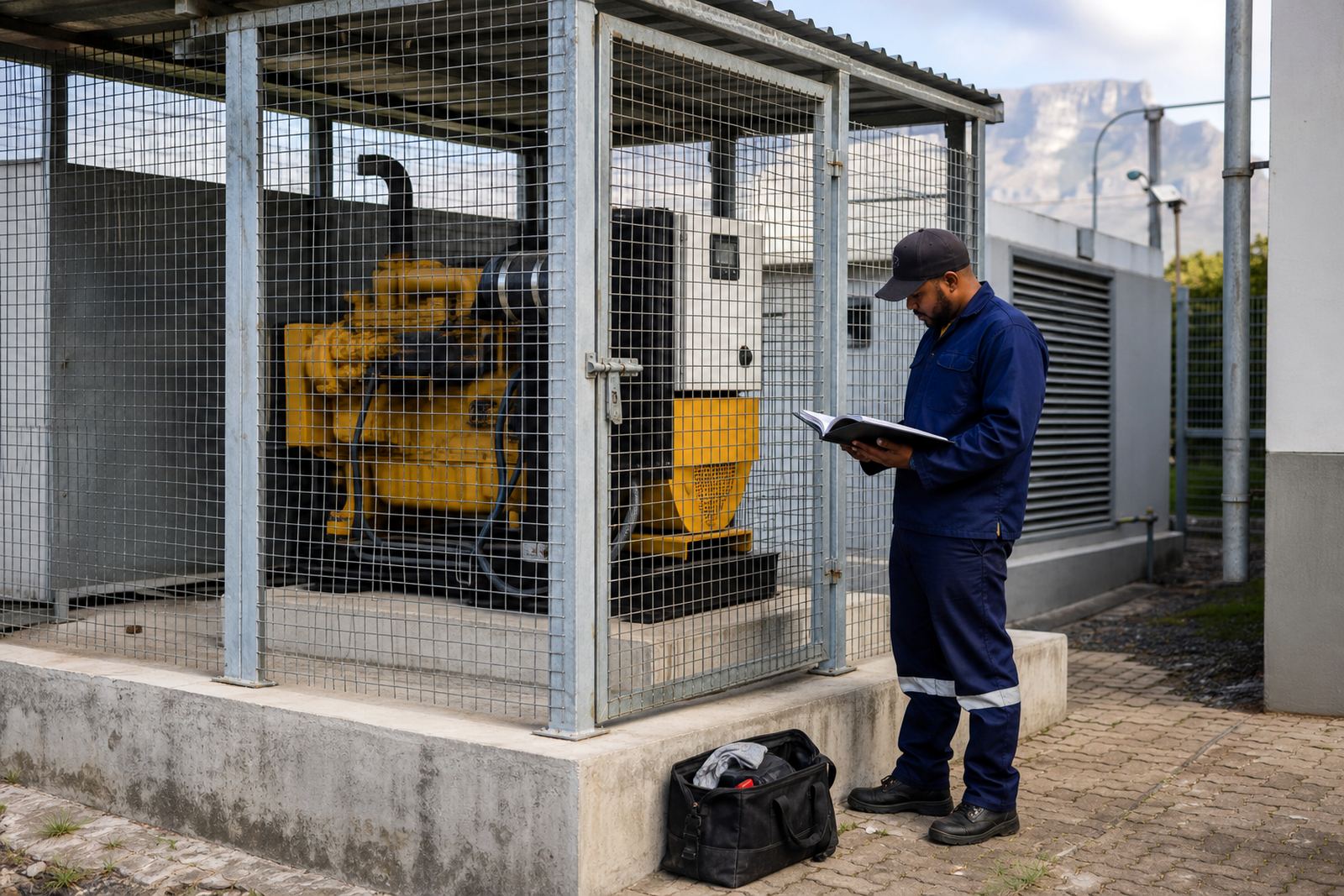
We first reviewed the service history, the visible condition of the canopy and base frame, and the way the generator tied into the changeover arrangement. The client needed a practical plan, not a once-off visit. That meant a scheduled routine, clear fault notes, and battery replacement planning that could be timed around the next service window. The site manager also wanted a record of what had been checked each quarter, because retail operations often have more than one decision-maker involved.
- Client type: retail site with daily trading and after-hours security cover
- Town: Boksburg, Gauteng
- Service arrangement: quarterly maintenance contract
- Primary concern: battery condition and starting reliability
What We Found on the First Visit
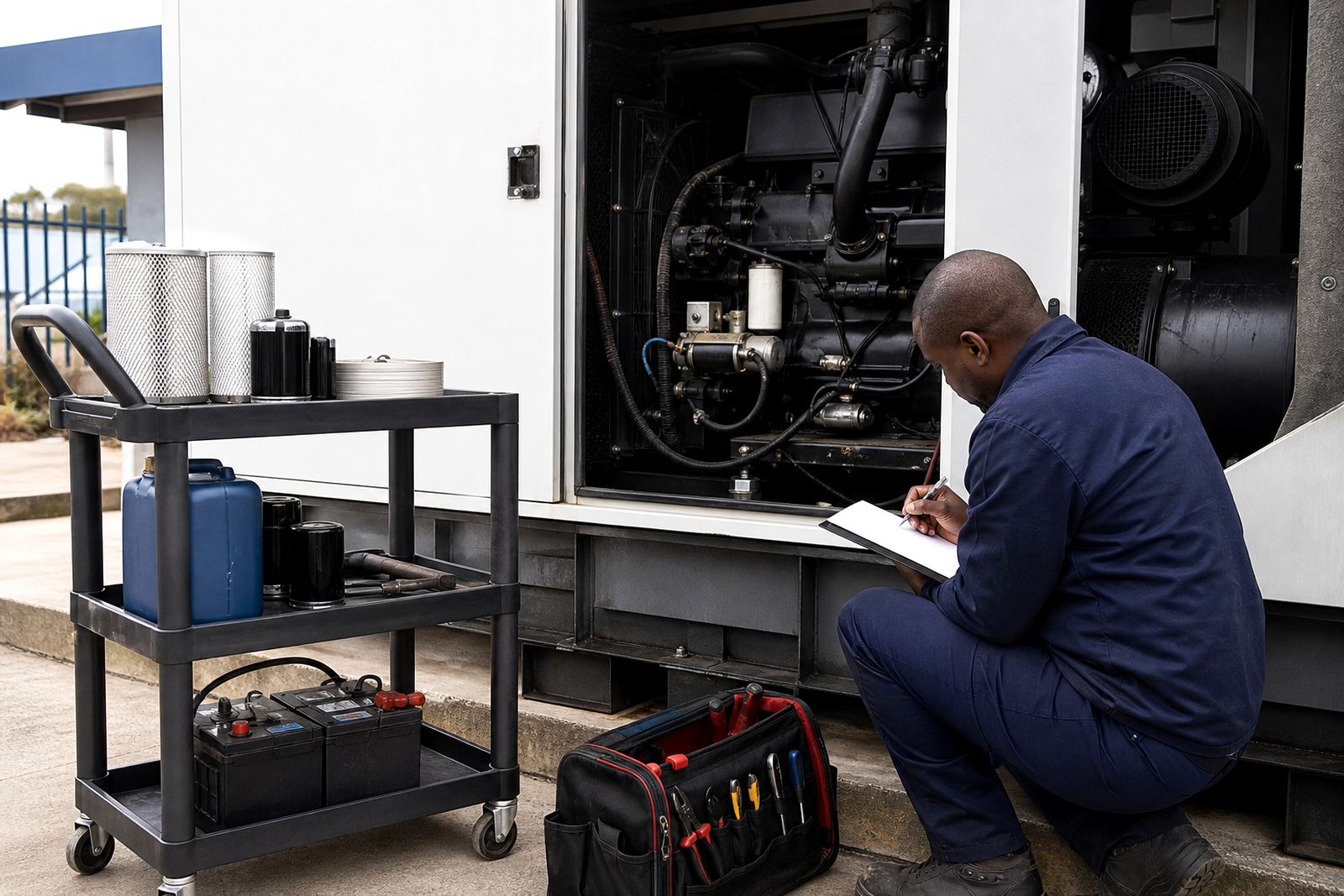
On the first inspection we treated the generator as a working standby unit that needed all the usual checks, not just a quick visual look. Oil condition was within serviceable range but due for replacement in line with the quarterly interval. Filters showed normal dust loading for an urban retail site, where stop-start traffic and construction dust in the area can affect intake and engine compartments. Coolant level and condition were acceptable, though the hoses and clamps needed a proper once-over for early signs of seepage.
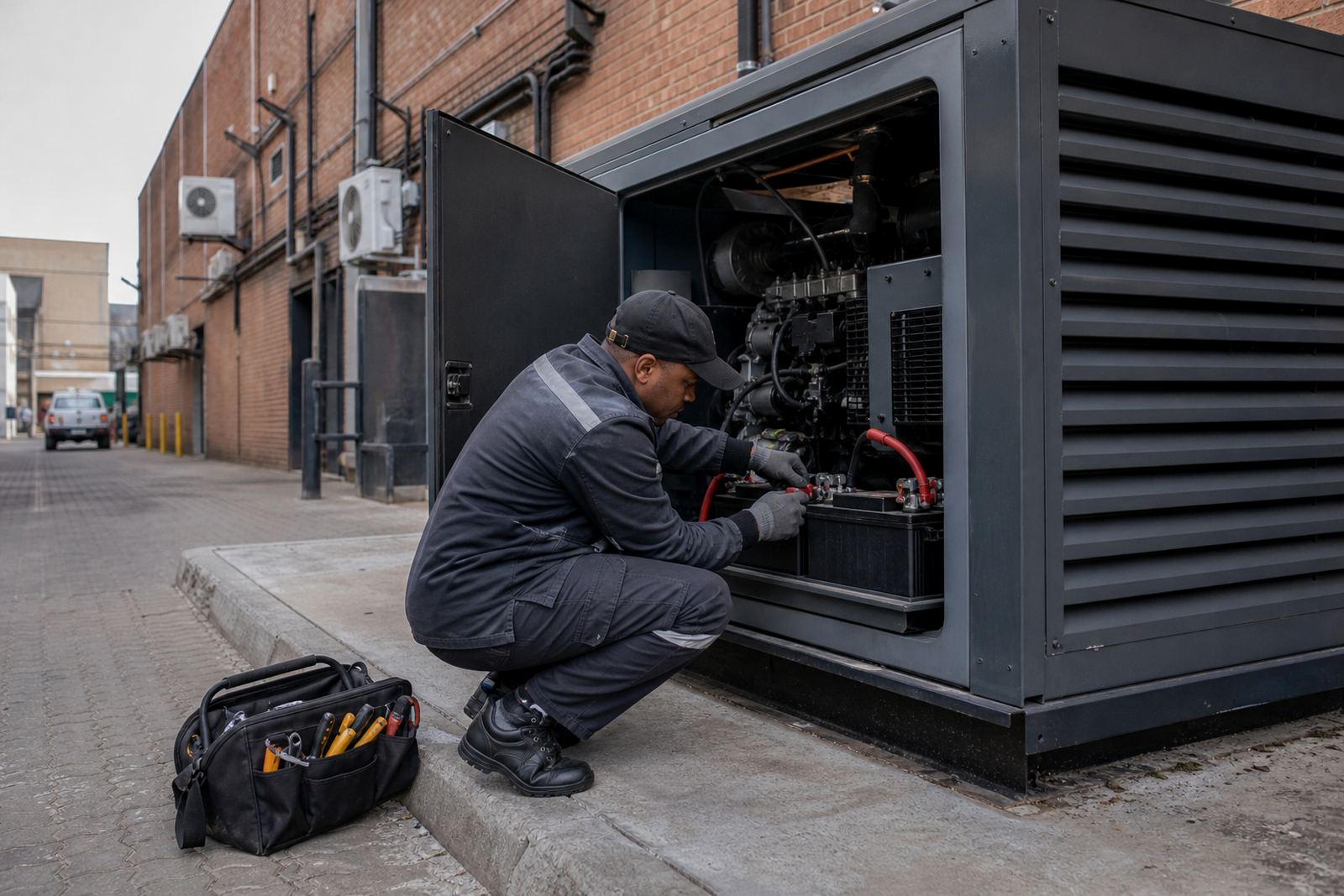
The batteries were the main concern. Voltage held, but the starting performance was not where it should be and one battery in the pair showed a weaker charge under load. We flagged it for planned replacement rather than waiting for a failure during load shedding or a weekend outage. The changeover switch assembly also needed functional checking, because a healthy generator still needs the transfer gear to operate correctly if the site is going to switch over cleanly. Electrical work on the board and switchgear was handled by qualified people in line with local rules and safe work practice.
- Oil condition: due for change at the quarterly interval
- Filters: serviceable, but ready for replacement as part of the routine
- Coolant system: inspected for leaks, clamp tightness and fluid condition
- Battery set: one weak unit identified for planned replacement
- Changeover system: checked for correct operation and safe transfer function
The Quarterly Work Pack We Put In Place
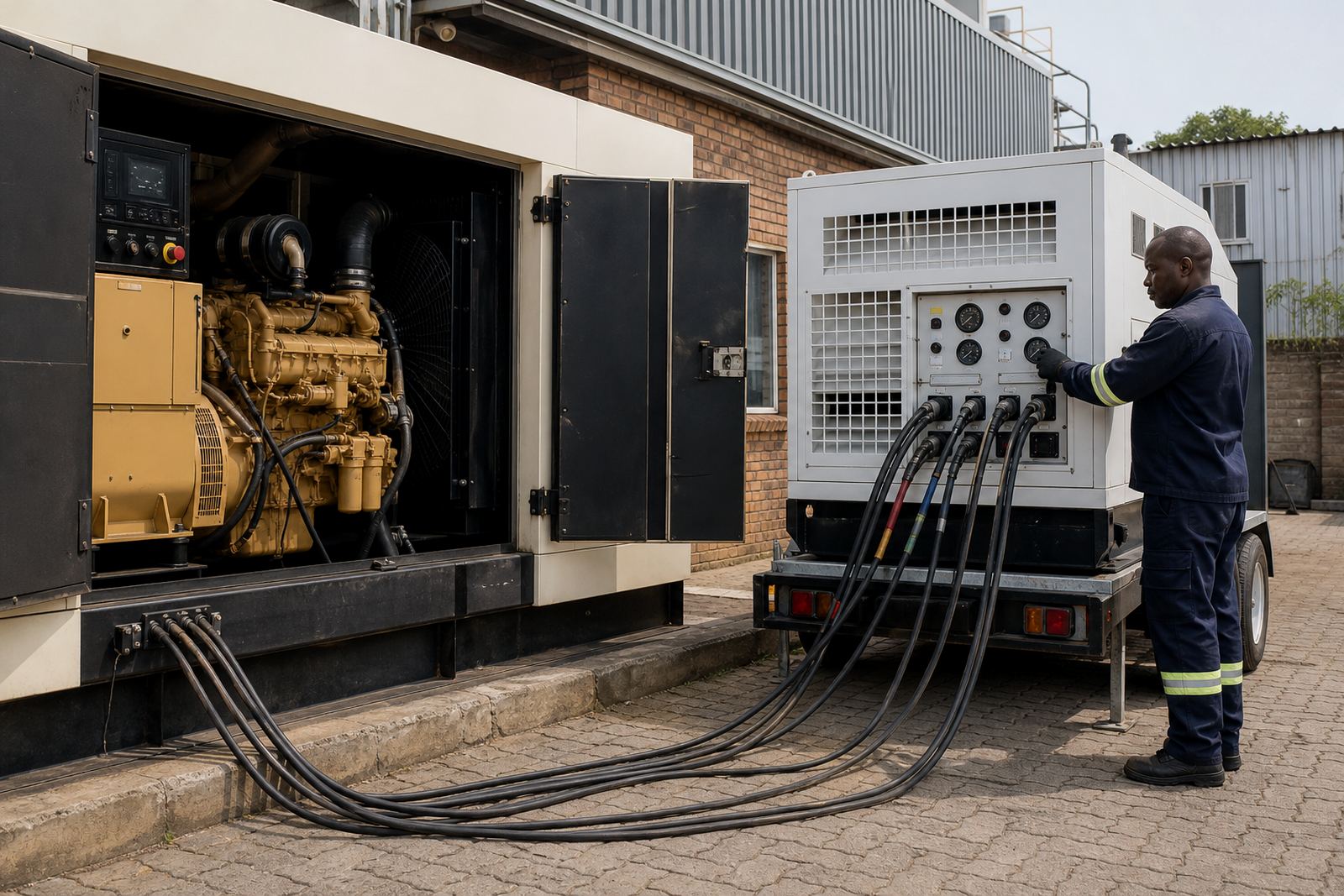
The maintenance scope covered the full quarterly service routine and a few extras that made sense for a retail property. We changed the oil and filters, cleaned around the engine bay, checked belts and hoses, and tested the battery circuit under starting conditions. The load bank test was arranged to confirm that the generator could take and hold load, not just start and run in the yard. That matters for retail sites because a unit that starts but does not carry the actual demand is no help when the lights go out.
We also carried out changeover switch checks, fault finding on minor alarms, and a service record audit so the site had a cleaner paper trail for future visits. Fuel system repairs were not needed on this round, but the tank, lines and fittings were inspected for contamination and seepage. On a retail site you want the generator ready for long evenings, winter peak use and sudden municipal interruptions. The work was completed in stages so the site could keep trading, and the plant room was left tidy after each visit. A little extra time was spent on label reading and access panels, because missing tags and mixed-up circuits are common on older installations.
- Oil and filter change completed during the quarter
- Battery testing and replacement planning added to the contract
- Load bank test used to confirm practical performance under demand
- Changeover switch checks completed under safe electrical procedure
- Service records updated after each stage
Timeline Across Three Weeks, Then Quarterly Follow-Through
The first week was the site assessment, service history review and initial fault notes. In week two we carried out the main maintenance visit and load bank test, which was booked outside the busiest retail trading period. Week three was used to finalise the service report, confirm the battery replacement schedule, and align the next quarterly call-out with the centre’s operations calendar. That sequence kept disruption low and gave the client enough time to approve the battery work before the next weather change.
After that, the quarterly contract took over. Each visit followed the same structure so the site team knew what to expect. The generator was checked for starting response, oil level and condition, coolant condition, filter status, battery health, alarms, and transfer performance. Where the client had concerns about upcoming trading weekends or public holidays, we adjusted the service date slightly to suit. It is a practical way to run maintenance on retail property, especially when foot traffic is unpredictable and tenants work different hours. The contract approach also made it easier to spot gradual decline, instead of waiting for a breakdown and then trying to fix it under pressure.
Results That Mattered to the Site Team
By the end of the first maintenance cycle, the generator was starting better, the service records were cleaned up, and the site had a proper plan for battery replacement before the next high-demand period. The load bank test gave the client confidence that the unit could carry a useful load, and the changeover checks reduced the risk of a transfer issue when power failed. For a retail site, that means fewer interruptions to tills, security systems and cold room controls, plus less stress for the people opening up in the morning.
The client also gained a clearer maintenance rhythm. Instead of waiting for a fault to force action, the quarterly contract created a steady schedule with documented checks and a known replacement path for ageing parts. The generator is still just one machine in the bigger property operation, but it has to behave every time. We kept the service practical, recorded the findings plainly, and made sure the next visit would build on what had already been found.
- Improved starting reliability after battery assessment and corrective planning
- Cleaner service trail for the site manager and maintenance file
- Better confidence in transfer performance during outages
- Reduced chance of surprise downtime from a tired battery set
What We Would Repeat on the Next Retail Contract
We would repeat the same structure on another retail generator contract in Boksburg or anywhere in Gauteng: inspect first, service properly, test under load, then leave the client with a clear next step. That sequence works because it respects the site schedule and it catches the small faults before they become expensive ones. On retail property, a missed service can show up at the worst possible time, usually when customers are already on site and the staff are stretched.
For the next round, we would keep the quarterly interval, continue monitoring the battery pair closely, and repeat the load bank test once the replacement unit is fitted. We would also keep checking the changeover gear and the service records together, because those items tell a fuller story than any one reading on its own. The result is a generator that stays ready for standby duty, with maintenance planned rather than improvised. That is the part the site team values most, along with having one contact point for the contract and clear notes after each visit.
- Keep the quarterly interval unchanged
- Replace the weak battery at the planned service window
- Repeat load bank testing after battery work
- Audit the service record at each visit
Key facts
| Project type | Quarterly generator maintenance contract for a retail site |
|---|---|
| Town | Boksburg, Gauteng |
| Generator duty | Standby power for a retail property |
| Key scope | Oil and filter changes, coolant checks, battery testing, load bank testing |
| Switchgear work | Changeover switch checks by qualified personnel |
| Timeline | 3 weeks from assessment to planned follow-through |