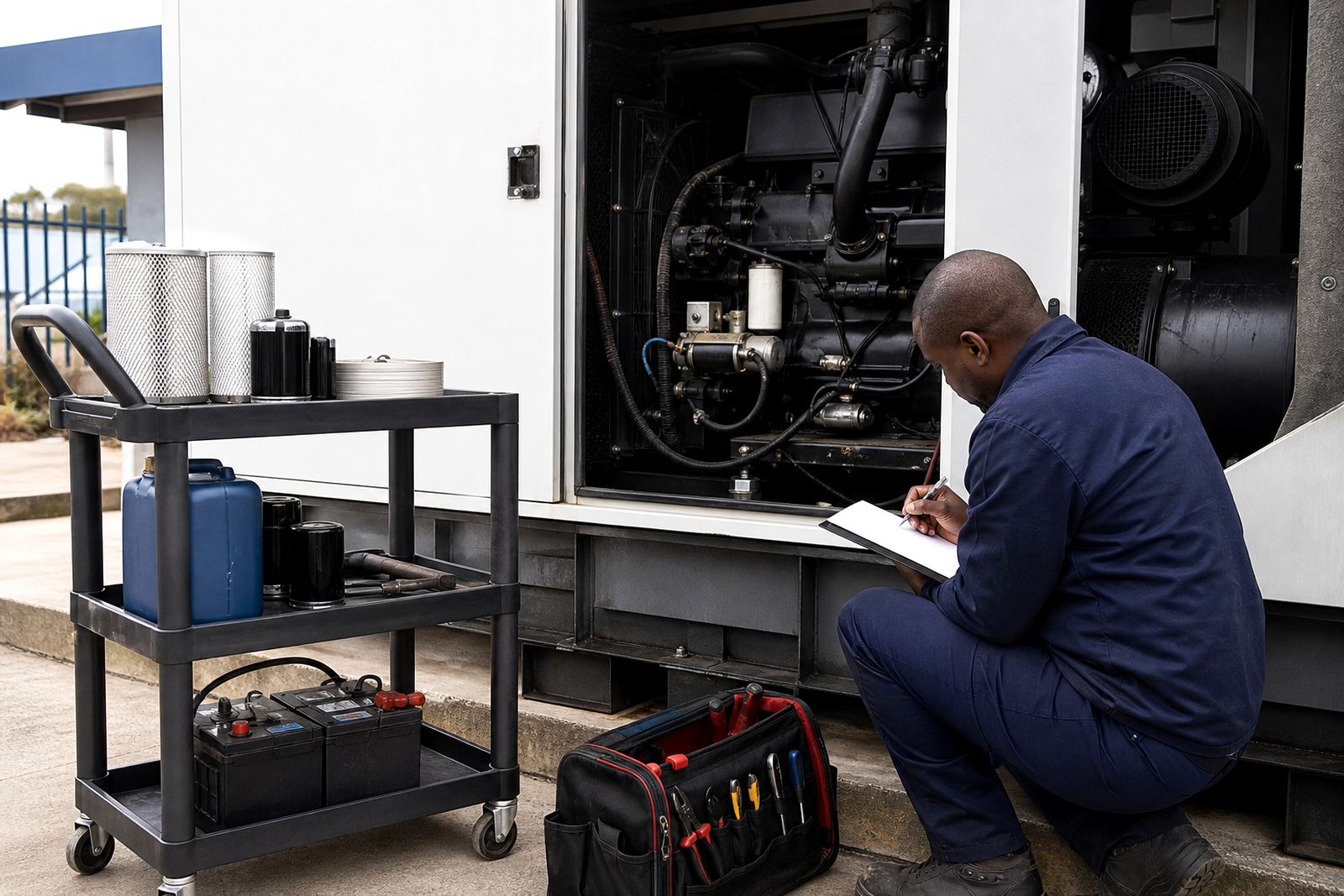
A warehouse floor cannot wait for a dead set
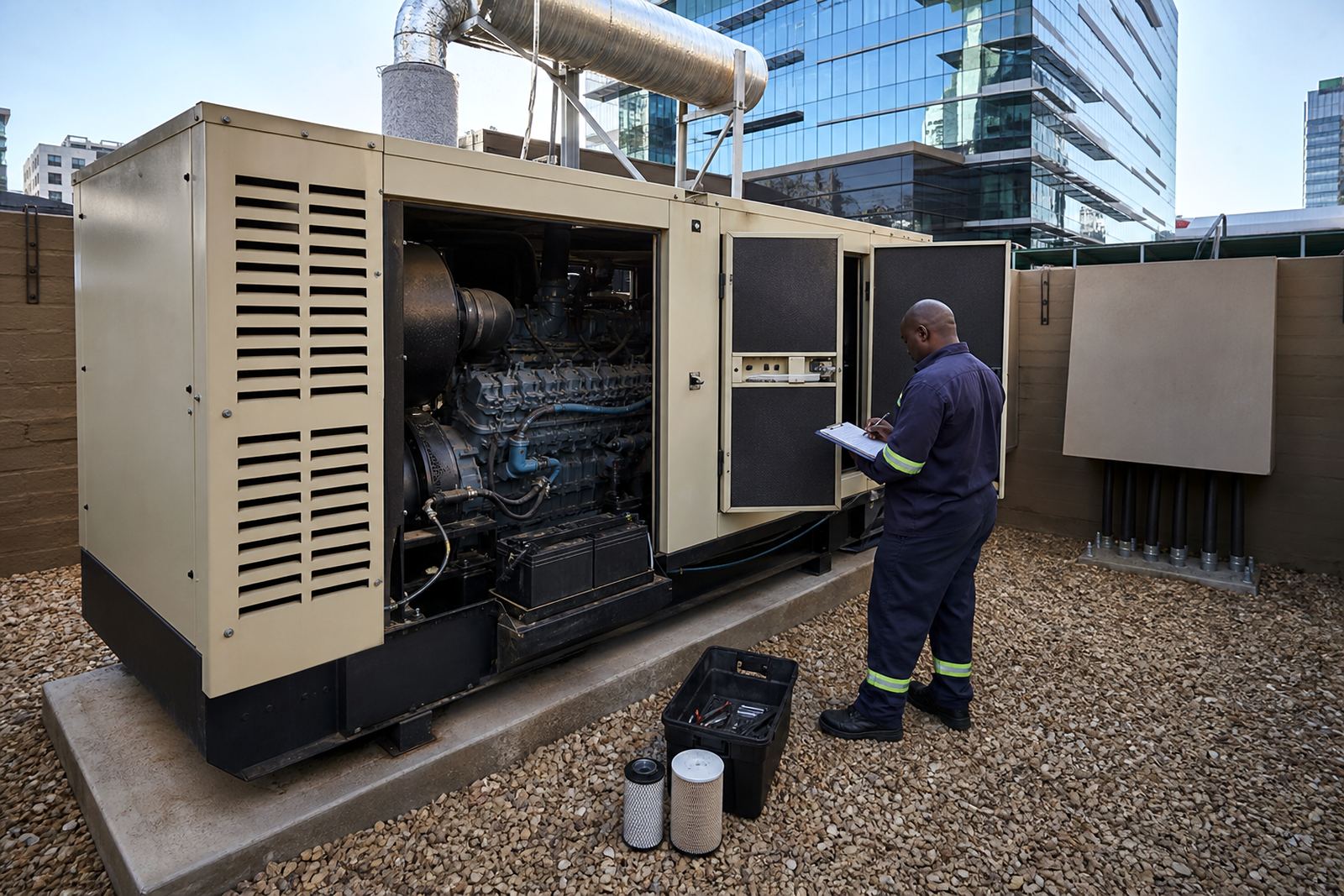
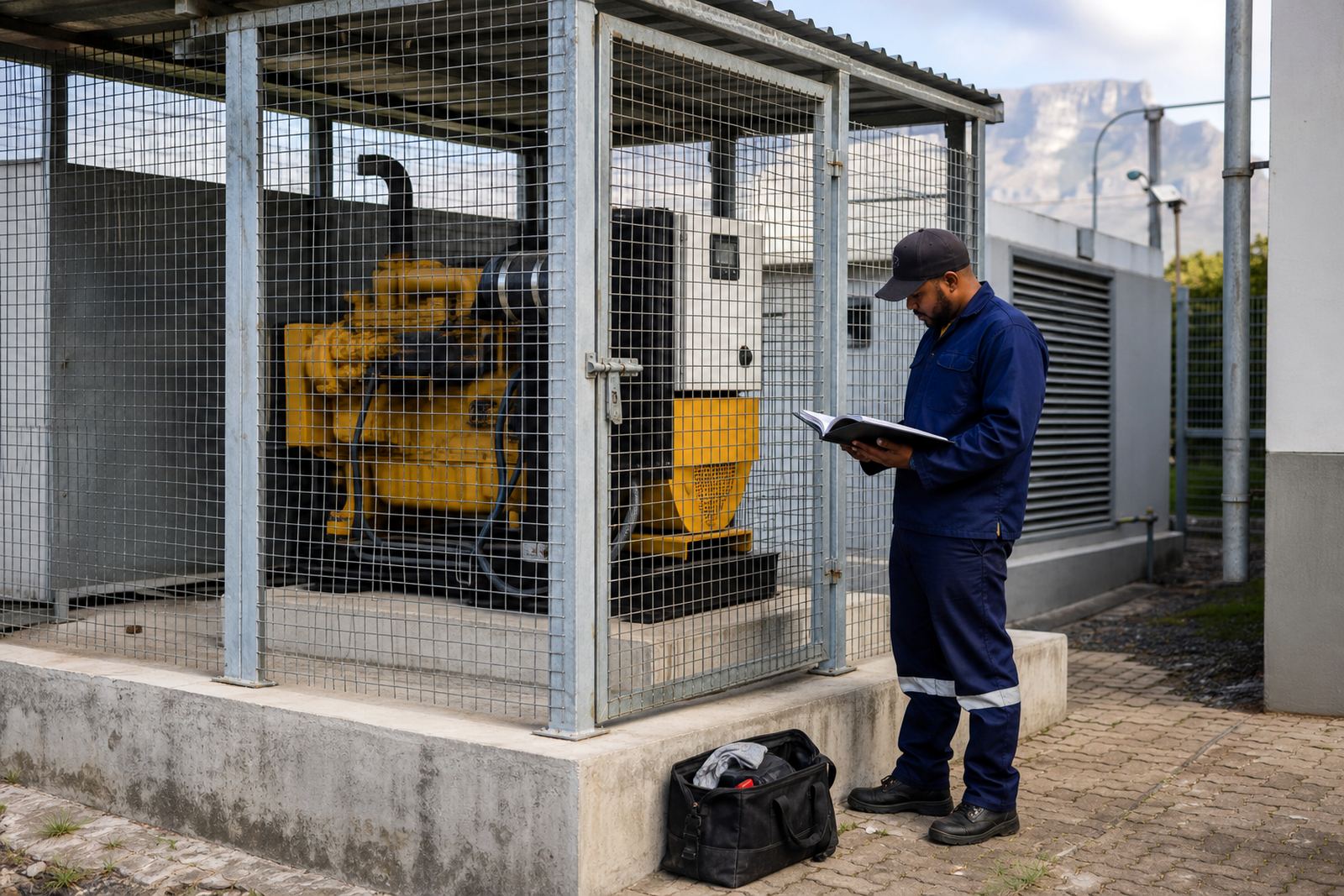
The site was a warehouse operation in Midrand handling stock movement, dispatch and evening cover, so the generator had to be ready for interruptions at any hour. The brief was straightforward on paper: inspect the standby set, confirm the service items, and make sure the unit would take load when the mains supply dropped. In practice that meant working around deliveries, forklift traffic and a tight access route at the back of the building. The plant room was clean but warm, with dust from the yard drifting in during busy periods, so the inspection had to be thorough and practical.
The contract covered a mid-sized diesel standby generator used for essential warehouse lighting, gate control, office servers and basic security equipment. It was not a full overhaul job. The client wanted preventative servicing, clear records and a proper look at anything that might become a fault later in the season. That approach suits warehouses in Gauteng where power cuts, voltage dips and after-hours operations can knock a schedule sideways if the set is ignored too long.
What the service visit had to handle
The unit was due for a routine contract visit and the client asked us to prioritise the service items most likely to affect reliability. Because the generator stood in a confined plant room with limited ventilation, we planned the work to keep the opening of panels and access covers to a minimum, while still completing the full inspection properly. Electrical work on changeover equipment was handled by qualified people and in line with local requirements, because that is not an area for guesswork.
- Oil level and condition check, with attention to contamination and service interval tracking
- Filter inspection and scheduled replacement where wear or restriction is found
- Coolant level, condition and hose inspection for leaks or staining
- Battery testing, terminals, charger condition and visible corrosion
- Changeover switch checks for operation, indicators and transfer response
- Service record audit so the next visit follows a clean service trail
The warehouse also needed the work done without disrupting trading hours. That meant a short service window, no noisy test running during peak receiving times, and a load bank test only after the client confirmed access and the site could handle it.
How the Midrand visit was carried out
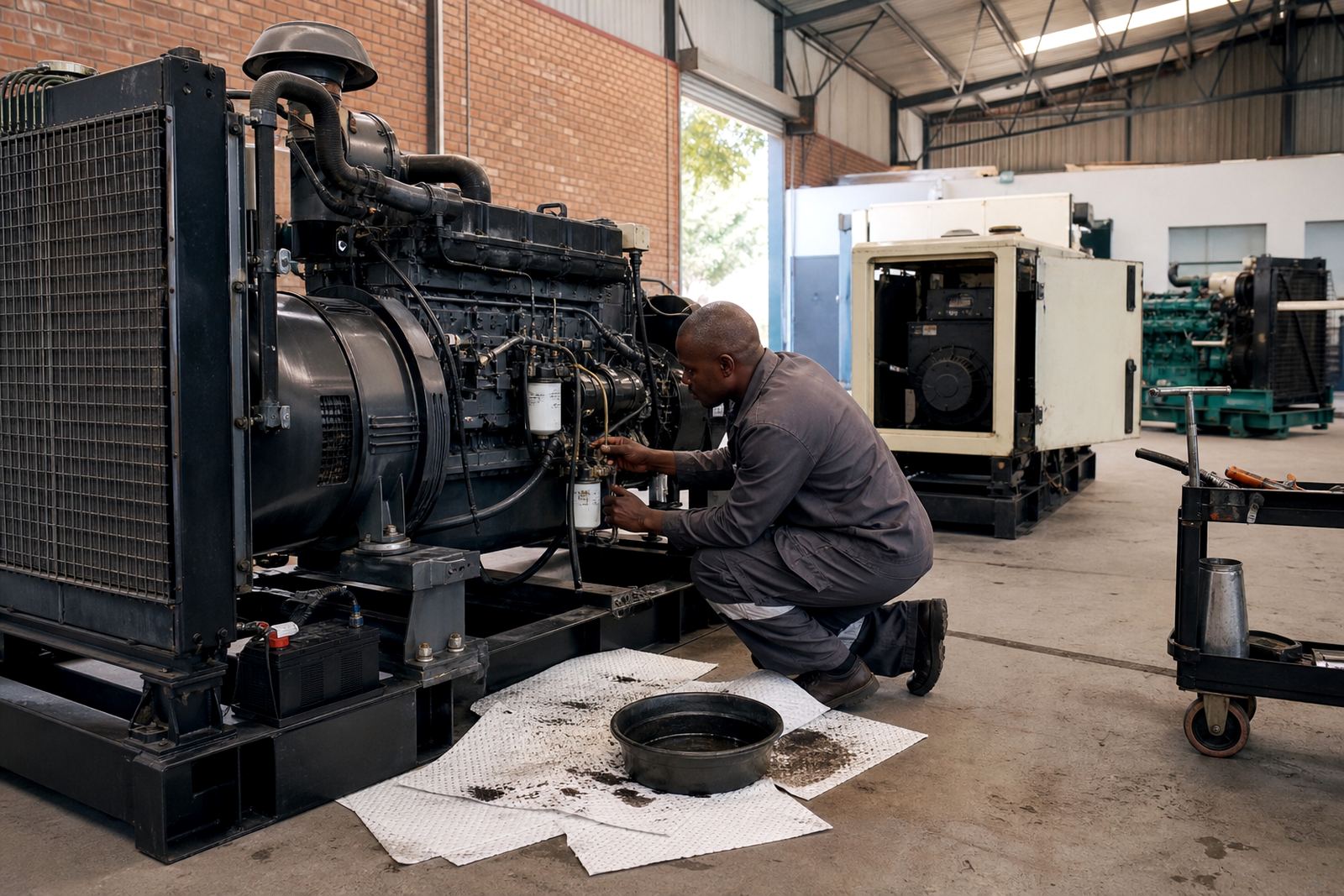
We planned the visit over one week and completed the site work in stages so the warehouse team could keep moving stock. On arrival, the generator was isolated, visual condition was checked and the service history was reviewed against the actual condition of the unit. Fluid levels were tested and recorded, then we inspected belts, hoses, clamps and around the radiator area for signs of seepage. One battery terminal needed cleaning, and the battery state was tested under load to check that it could hold up during a start demand.
The fuel system was checked for contamination and any signs of restriction, while the starter system was reviewed for slow cranking or weak response. We also tested the automatic transfer arrangement and confirmed that the changeover process was functioning as expected under controlled conditions. A short test run followed, with attention to smoke, vibration, charging rate and temperature rise. Nothing dramatic, just the sort of ordinary work that keeps a warehouse from being caught out when the grid goes off again.
- Scheduled visit completed in week 1, with access coordinated around warehouse operations
- Inspection, servicing and test running completed on site in the same window
- Service notes handed over for internal maintenance records and next interval planning
- Corrective observations logged for follow-up during the next contract cycle
Why the location mattered more than it looks
Midrand brings its own mix of dust, heat and traffic delays, so equipment in a warehouse setting tends to work harder than people assume. A standby generator may not run every day, but it still sits in a space where airborne grit, battery ageing and long idle periods can create trouble. Add in load-shedding and a site that depends on lighting, scanners and access control, and the case for maintenance becomes very practical.
The warehouse team also wanted a clearer record of what had been done. We audited the service file, noted the condition of the set and marked the items that should be watched closely. That included battery condition, hose ageing and the general state of the changeover gear. A clean record helps when a municipal inspector, landlord or internal facilities person asks what was last checked and when. It also helps if a fault appears later, because you are not trying to remember who touched what, and when.
What the warehouse got out of the visit
The result was a generator that was serviceable, documented and ready for the next interruption. The battery issue was minor and sorted during the visit, the fluids were within acceptable range after the service items were completed, and the transfer gear responded correctly during checks. The warehouse could keep its essential systems covered without carrying that nagging worry that the set might fail on a wet evening or during a long outage.
For a contract customer, the real value is not only the repair or the test. It is the steady pattern of visits that stops small faults from becoming a shutdown. In this case the client got a maintenance record that matched the condition of the equipment, plus a practical view of what should be watched before the next service cycle. That is useful for warehouses in Centurion, Sandton, Johannesburg and Pretoria too, not just Midrand.
- Improved confidence in standby readiness for essential warehouse loads
- Clear service record aligned to the actual condition of the generator
- Identified minor battery wear before it became a callout
- Verified changeover function under controlled test conditions
What worked well
On the next scheduled visit, we would repeat the same disciplined approach: inspect fluids, check filters, test the batteries, confirm the coolant system and verify the changeover operation under proper control. If the site keeps running through heavy summer demand or repeated outages, we would also recommend a load bank test at the right interval so the set is not only starting but carrying load as expected. For warehouses with prime or standby duty, that test tells a much fuller story than a quick idle start ever can.
We would also keep the service aligned to the site rules, especially where access is tight, deliveries are constant and electrical systems must be handled only by qualified people. That way the generator stays part of the warehouse operation instead of becoming an afterthought. RelGen works from Midrand, Gauteng and services contract clients across South Africa, with routine visits and emergency support where operations cannot afford silence from the power room.
People behind the maintenance log
This visit was coordinated through our contract team under Thabo Engelbrecht, with Naledi Shezi handling operations, Johan Matlala managing the service contract schedule and Ayanda Khoza coordinating the field visit. Muneerah Daniels supported the technical side, while Sibusiso Wessels handled the generator work on site and Rikus Botha kept the parts and logistics side in order. That matters on warehouse jobs because a service is not just spanners and test leads, it is timing, records, access and making sure the right parts are there before the truck leaves Midrand.
The client reached us through the enquiry form on our contact page, and the contract was set up around the warehouse's operating hours. No drama, no grand statements, just a proper maintenance visit that did what it was supposed to do. For a site that depends on standby power during outages and after-hours work, that is usually the best outcome.
Key facts
| Project type | Scheduled maintenance contract visit for a warehouse standby generator |
|---|---|
| Location | Midrand, Gauteng |
| Timeline | 1 week planned visit window |
| Generator duty | Standby power for lighting, security, office and access systems |
| Service items | Oil, filters, coolant, batteries, changeover checks, fault finding |
| Site constraints | Tight plant room access, active warehouse traffic, limited service disruption |