A Sandton building that could not afford a flat battery
The brief came from a high-priority office site in Sandton, Gauteng where lifts, access control, server rooms and essential lighting all depended on a standby generator. The building team wanted monthly test and maintenance support on a fixed contract, with one crew that could handle inspections, routine servicing and fault reporting without creating extra admin for the facilities staff.
The site had tight weekday access, limited parking for service vehicles and noise restrictions that made early morning or after-hours work the better fit. Like many Sandton properties, the building also sat under pressure from load-shedding and brief utility interruptions, so the generator had to be tested often enough to catch weak batteries, dirty filters and cooling problems before they turned into a callout.
What the office needed from the contract
The generator was a diesel standby unit serving a commercial office block, with automatic changeover equipment and a mix of essential and non-essential loads. The client asked for monthly attendance, a clear service record and a practical maintenance plan that would suit tenants working in the building every day.
- Monthly scheduled servicing with oil, filter and coolant checks
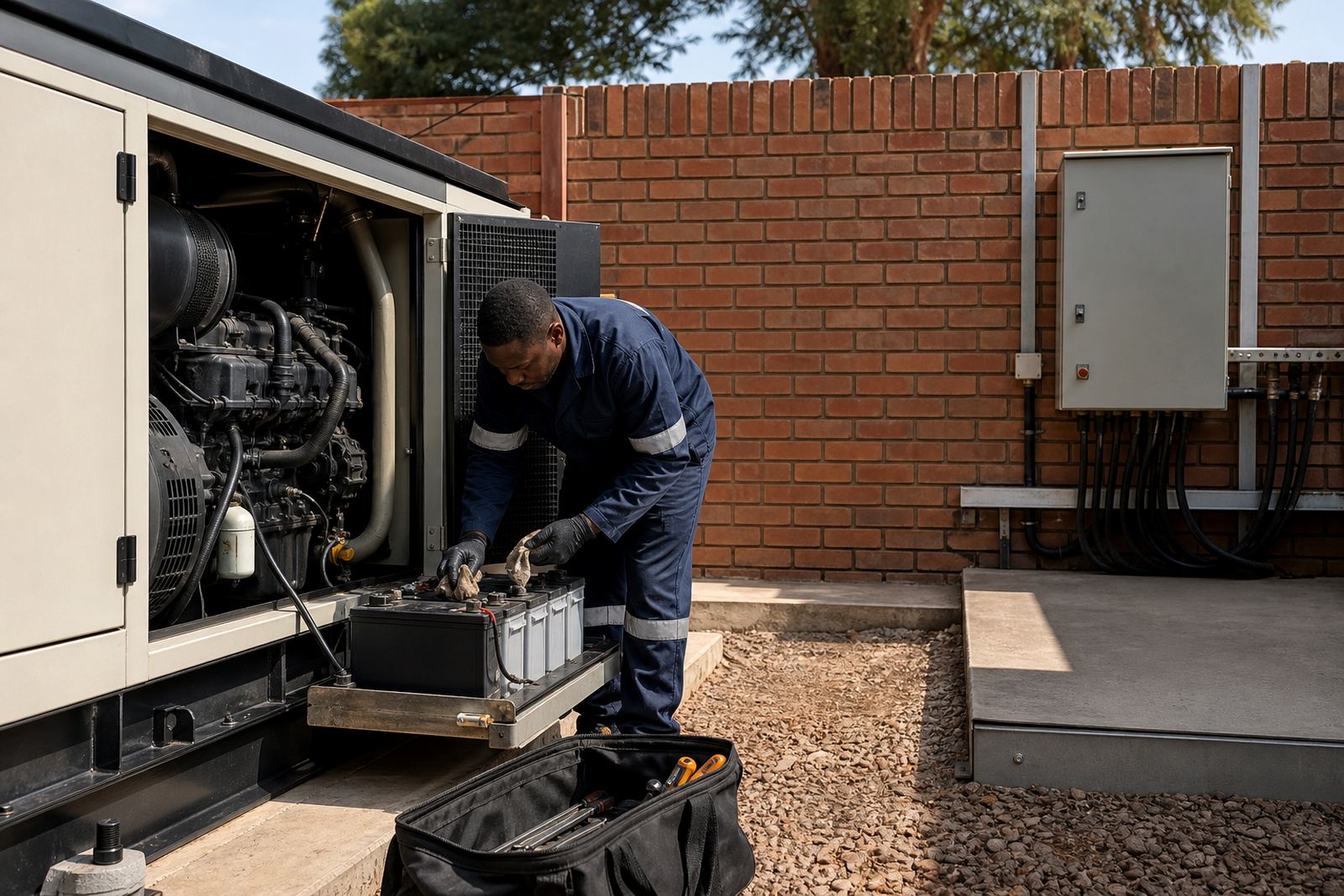
- Battery testing and starter system inspections
- Load bank testing where the site loading was too light for a true exercise run
- Changeover switch checks carried out by qualified electrical people under local regulations
- Fuel system repairs, fault finding and preventative site inspections
We also had to keep communication tight, because the site team needed to know when the generator would be on test, how long the run would take and whether any follow-up work was needed. That kind of planning matters in Sandton where parking, security access and tenant schedules can shift by the hour.
How we set up the monthly routine
The contract was set up over a 2 week start-up period, beginning with a full site walk-through and a review of the existing service records. We checked the unit’s service history, the changeover arrangement and the condition of the fuel, cooling and starting systems before agreeing the monthly maintenance sequence.
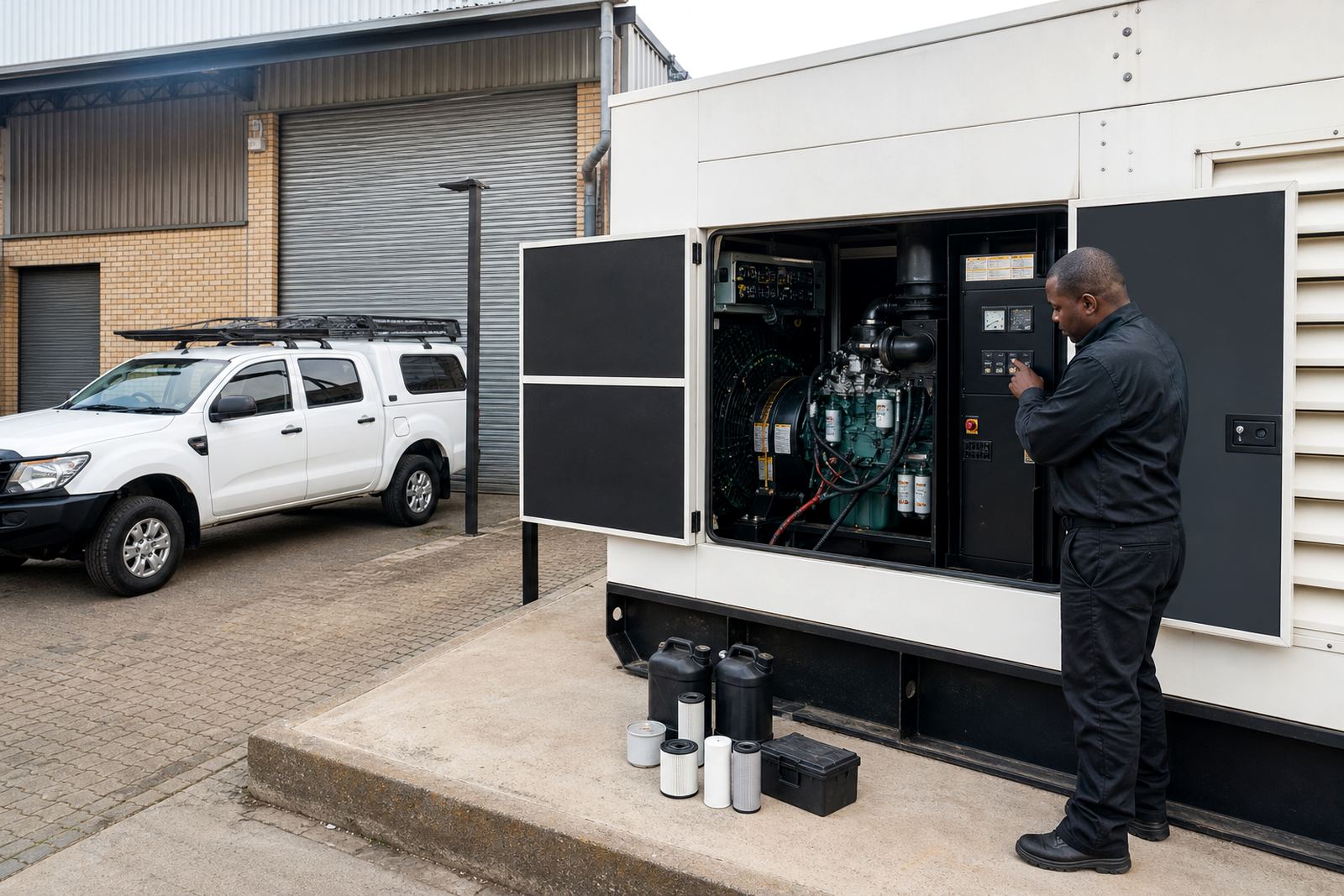
Each visit followed a practical order: isolate safely where required, inspect for leaks or loose terminations, check oil condition, replace filters when due, verify coolant level and concentration, test battery health and confirm the starting circuit was behaving as it should. If the generator did not carry enough live load during the visit, we arranged load bank testing so the engine could work at a proper rated load rather than just ticking over.
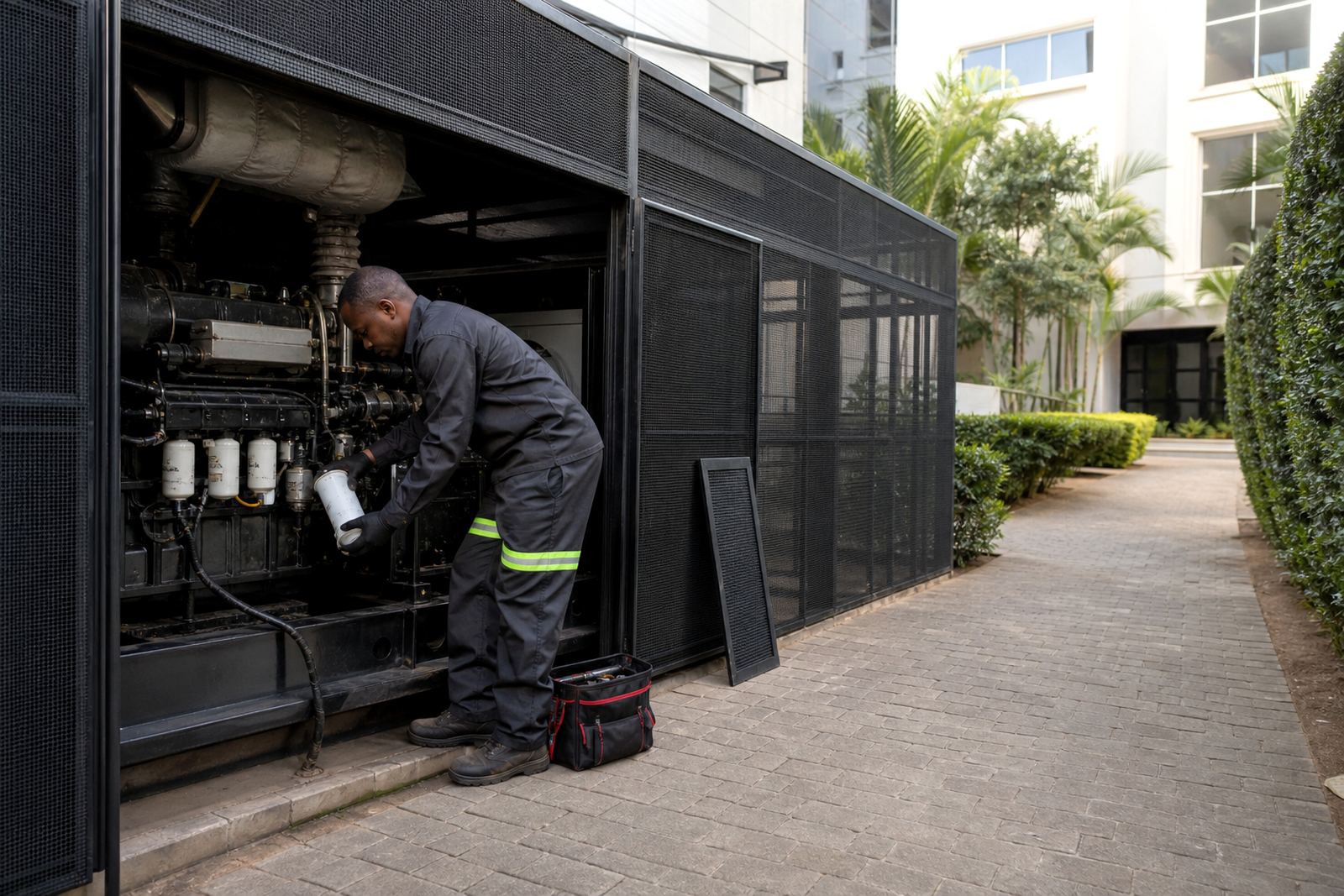
- Oil and filter changes at the correct intervals
- Coolant system service with hose, cap and clamp inspection
- Battery testing, charger checks and starter system fault checks
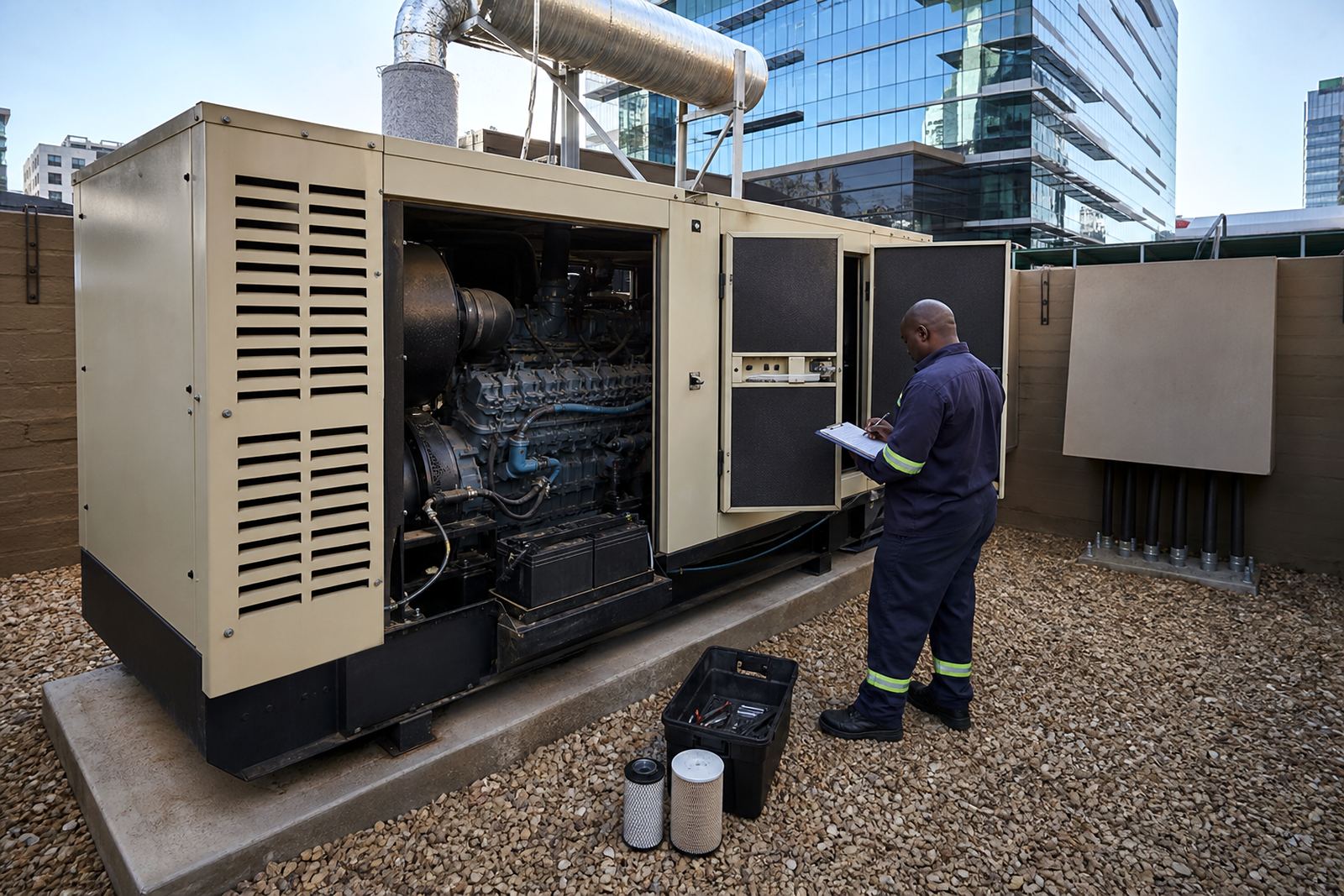
- Running hours recorded and service tags updated on site
Keeping the changeover equipment in the frame
A generator can be healthy and still leave a building in trouble if the changeover gear is not checked properly. For this Sandton office we made sure the automatic transfer arrangement was inspected each month, with qualified electrical people handling the work in line with local regulations and site rules. That included checking switching condition, signs of overheating, indicator operation and any loose connections that could cause nuisance trips.
Because the building carried office tenants, we kept disturbance low and coordinated the test windows with the facilities manager. The generator was exercised without unnecessary idling, and we used the inspection time to spot early warning signs like fuel staining, weak battery response or coolant loss. It is often small faults that cause the long outages, not one dramatic failure.
The parts, records and response support behind the visits
Monthly support is more than turning a key and listening for noise. We kept consumables ready through our Midrand base, which helped when a filter set, battery issue or hose clamp had to be dealt with during the same visit. That reduced repeat trips and made the maintenance contract easier for the client to manage.
Our stores and logistics team kept the right parts moving between jobs in Midrand, Johannesburg and Sandton, while the field team handled on-site work and reporting. The office received straightforward service notes, fault observations and follow-up actions after each attendance, so the facilities lead could track what had been done and what still needed attention.
- Service record audits to spot gaps in previous maintenance
- Preventive site inspections for leaks, vibration and abnormal heat
- Emergency callout support if a start failure or switch problem appeared
- Clear handover notes after each monthly visit
What the site gained after the first few months
Within the first few months, the building team had a steadier maintenance rhythm and far fewer last-minute questions around generator readiness. The unit started more cleanly on test days, battery concerns were picked up earlier and the monthly records gave the client a better picture of wear before it became a breakdown. That mattered on a site with tenants who expected the power to stay on and the common areas to stay operational.
There were also practical gains for the facilities staff. They no longer had to chase different people for checks, logs and follow-up notes. Instead, the monthly routine, including oil, filters, coolant, battery checks and load bank testing when needed, sat under one contract and one point of responsibility. The building got a more predictable maintenance pattern and less disruption during busy weekdays.
What worked well
On a site like this, we would again start with the records before touching the machine. That first look at service history, wiring condition and operating pattern tells you where the real risk sits. We would also keep the monthly attendance time fixed as far as possible, because office staff, security and cleaners all plan around the same equipment.
If there is one lesson from Sandton office work, it is that generator maintenance needs to suit the building, not just the machine. A good contract respects access limits, tenant timing and municipal and safety requirements while still giving the unit enough testing to prove itself. That combination is what keeps standby power ready when the lights go out.
Key facts
| Project type | Monthly generator test and maintenance support |
|---|---|
| Client type | High-priority commercial office site |
| Town | Sandton, Gauteng |
| Timeline | 2 weeks to set up, then monthly contract visits |
| Equipment focus | Standby diesel generator with automatic changeover equipment |
| Service scope | Oil and filter changes, coolant service, battery testing, load bank testing, switch checks |
| Coverage | Sandton, Midrand, Johannesburg and Gauteng support, with national contract reach |
| Compliance note | Electrical work handled by qualified people under local regulations |