Night Shift Alarm at an Industrial Yard in Kempton Park
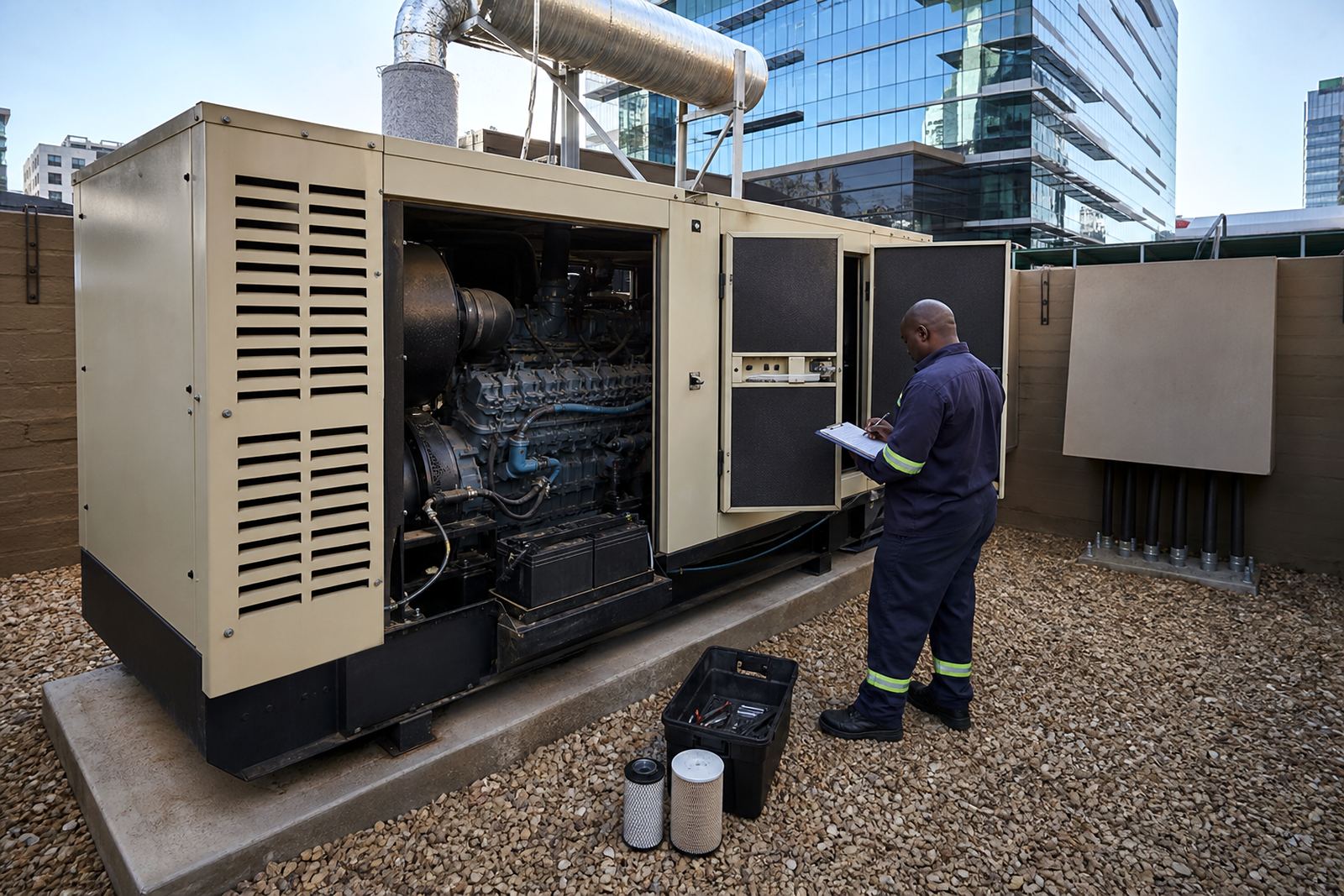
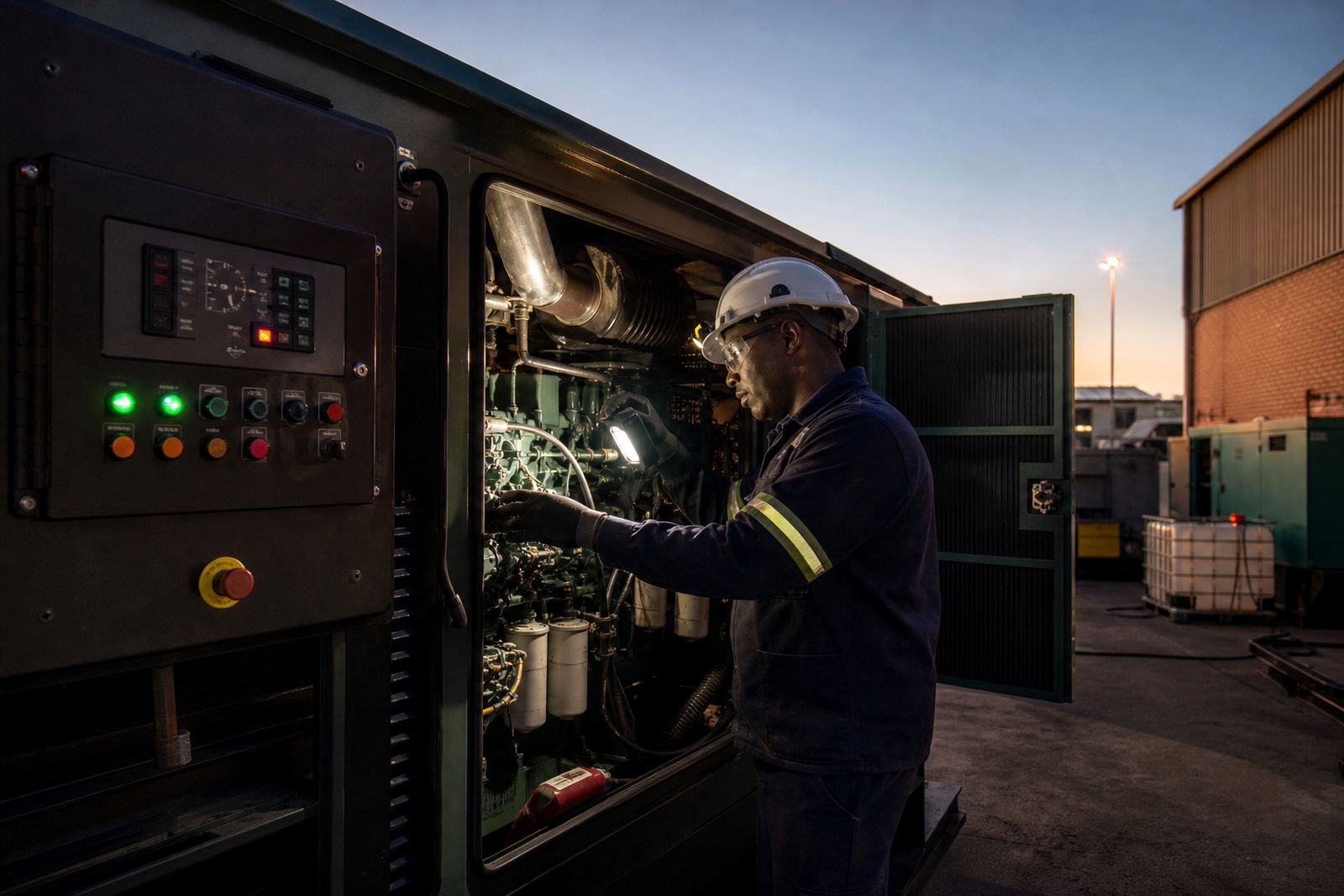
The callout came through late in the evening from an industrial premises in Kempton Park where a standby generator had raised an alarm and refused to take load. The site runs through the night and could not afford a long stoppage, especially with product in process and staff still on site. Our team was sent under after-hours conditions to diagnose the fault, confirm whether it was electrical, mechanical, or a control issue, and make the set safe before any further operation.
The generator on site was a medium-sized diesel standby unit with automatic start controls and a motorised changeover arrangement feeding critical boards. The brief was direct: identify the alarm, restore reliable standby readiness, and check whether any hidden issues were likely to cause a repeat trip. Because electrical work must be handled by qualified people under local regulations, we limited our intervention to lawful inspection, fault tracing, testing, and generator-side servicing activities within scope.
- Industrial premises in Kempton Park, Gauteng
- After-hours standby generator alarm
- Medium-sized diesel unit with automatic starting and changeover control
- Urgent fault finding and return to safe standby condition
What the Site Could Not Afford That Evening
The client’s main constraint was time. Production could not stop for long, and the building still had staff on site after normal hours. Kempton Park’s industrial areas also see plenty of dust and vibration from daily truck traffic, so we expected more than one contributing factor rather than a single neat fault. Load-shedding had already taught the site team that a standby set must be ready on demand, and a false sense of security was not useful to anyone.
Access was another issue. The plant room was tight, with limited space around the set and poor lighting in places. We had to work carefully around the unit, the battery tray, the fuel line routing, and the control panel area while keeping the area safe for the client’s own staff. Because the alarm had occurred after hours, we also had to keep noise and disruption to a minimum while still carrying out a proper check.
- Limited access around the set and control panel
- After-hours attendance with staff still on site
- Need to avoid unnecessary disruption
- Industrial dust and vibration considered during fault tracing
Fault Tracing, Battery Checks, and the Controls Path
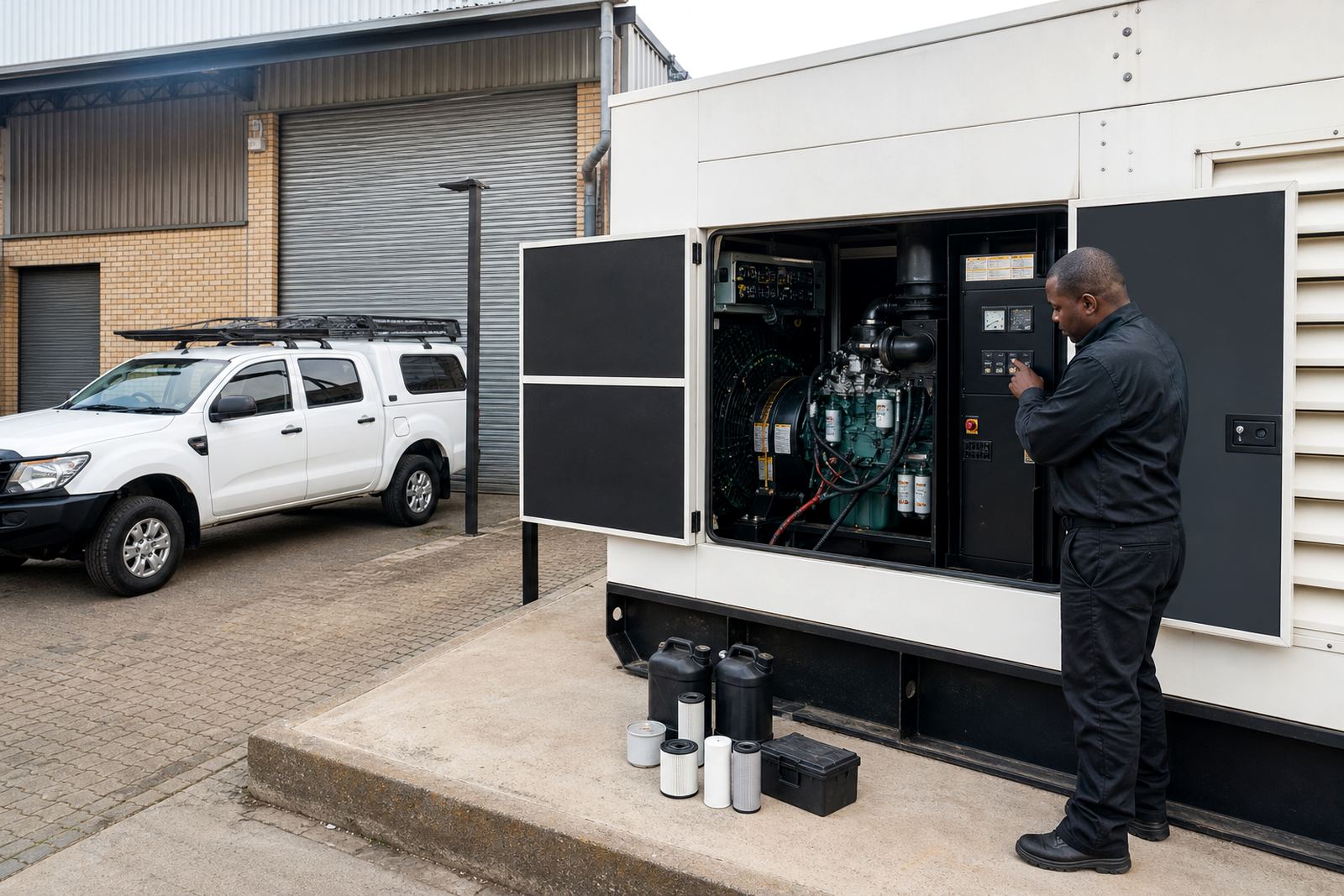
We started with a visual inspection, then moved through the usual standby sequence in a controlled way. That included checking the oil level, looking at filter condition indicators, inspecting the coolant level and hose condition, and confirming battery voltage and terminal security. The alarm pattern pointed us toward a starting and control issue rather than a hard mechanical failure, so we spent extra time on the batteries, charger condition, and starter circuit path.
The batteries had not failed completely, but the readings showed they were weak under load and not holding as cleanly as they should. In a set that is expected to start instantly, that matters. We also checked the changeover switch sequence and control signals to make sure the alarm was not being caused by an incomplete transfer or a stuck auxiliary contact. A proper trace saves time later because a generator that starts on the second or third try is not really ready for business continuity.
- Oil level and filter condition checked
- Coolant level, hose condition, and signs of seepage inspected
- Battery voltage, terminals, and charging path tested
- Changeover switch signals and auxiliary contacts checked
Servicing Done Before the Next Start Request
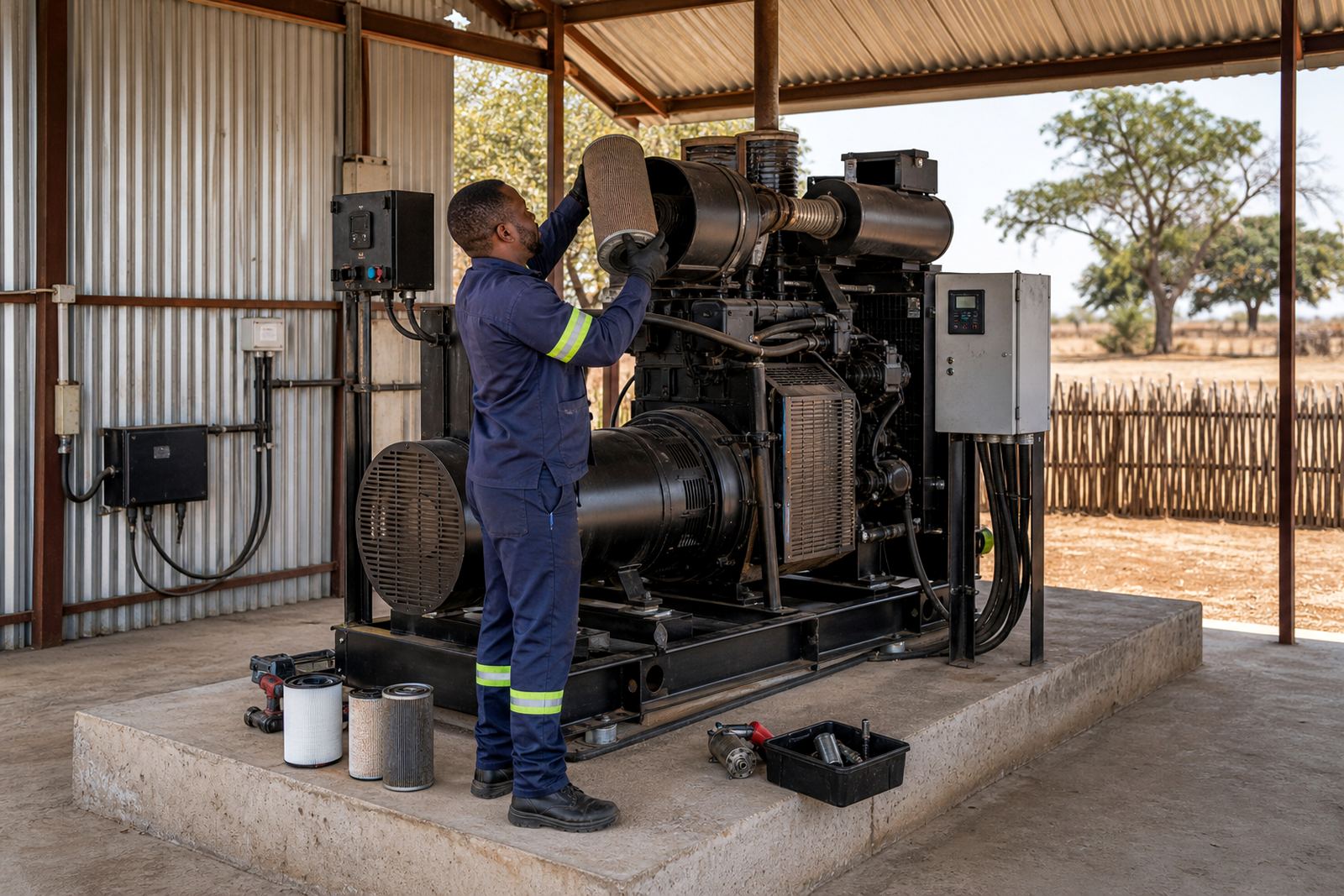
Once the fault path was clear, we carried out the work needed to improve reliability rather than just silencing the alarm. The battery terminals were cleaned and tightened, weak connections were corrected, and the starting circuit was checked again from the control side through to the starter system. We also carried out a service-side inspection of the fuel system for signs of contamination, air ingress, or restriction, since dirty fuel and poor storage can create starting complaints that only show up under pressure.
Because the site relies on the unit during outages, we also did a practical load bank test on the set to confirm stable running, frequency control, and response under demand. That test helped us verify that the engine would accept load without hunting or dropping out. The changeover gear was checked in sequence as part of the return-to-standby process, and we confirmed that the set would respond as expected if the mains supply failed again. No electrical repair outside our lawful scope was undertaken on site, and any further board-level work would need the proper qualified person if required by the installation.
- Battery terminals cleaned and tightened
- Starter system and charging path rechecked
- Fuel system inspected for contamination and air leaks
- Load bank test completed to verify running under demand
Records Left in Order for the Contract File
The job was completed in one night, with the diagnosis, servicing, and final testing finished before the client’s next operational cycle. The immediate result was a standby generator that was back in a ready state, with the alarm traced and the weak points identified clearly. The client also received a service record note for the contract file so that future visits can build on what was found during this callout rather than starting from scratch.
For sites in Kempton Park, Centurion, Sandton, Johannesburg, Pretoria, Durban, Cape Town, or Polokwane, keeping service records in order matters as much as the work itself. A generator that has been checked, tested, and logged properly is easier to manage when the next power interruption arrives. This is especially true on maintenance contracts where downtime, fuel quality, battery age, and changeover wear must all be tracked over time.
- Callout completed after hours in one night
- Alarm traced to weak starting and control conditions
- Generator returned to standby ready state
- Service notes added to the maintenance record
What We Would Do on a Similar Callout
We would use the same sequence again: secure the site, confirm the alarm path, inspect the battery and starter circuit first, and then test the set under load before handing it back. That order keeps the work practical and avoids guesswork. On an industrial premises, especially where production can be affected by even a short interruption, there is no value in rushing past the basics.
We would also keep the same focus on the maintenance contract angle. A generator in Gauteng has to deal with dust, heat, load-shedding demands, and long periods on standby. On coastal sites the challenges change, but the principle stays the same: inspect, test, record, and fix what is wearing out before it turns into an after-hours fault. That is the sort of work our Midrand base supports across South Africa, from Pretoria to Durban and the Cape, with service planning that fits real operating conditions.
- Start with safe fault tracing before any repeat start attempt
- Test batteries, charging, and starter performance first
- Verify load acceptance before closing the job
- Keep records current so the next visit is faster
Key facts
| Project type | After-hours standby generator callout |
|---|---|
| Town | Kempton Park, Gauteng |
| Site type | Industrial premises |
| Generator type | Diesel standby unit with automatic start |
| Work done | Fault finding, battery checks, changeover checks, load bank testing |
| Turnaround | Completed in one night |